
Frontera shares suspended with advisor resignation

After a recent financing update and collaboration talks, the progress of Frontera Resources (LON:FRR) and its subsidiaries have been halted, with legal proceedings earlier in the month being followed by the official resignation of their nominated advisor and as of 7:30am 24/12/18, the suspension of their shares from the AIM.
Frontera Resources are an oil and gas exploration and production firm, with a focus in Europe. The news published this morning on the LSE’s RNS stated that Cairn Financial Advisors LLP had informed the Company – amalgamation of Frontera Resources Corporation and Frontera International Corporation – that it would be resigning as Frontera’s Nomad with immediate effect.
To compound the firm’s woes, their shares have been suspended from trading on the AIM, effective as of the morning of Christmas Eve. They have been given a month to officially appoint a new advisor, and failure to do so would result in the admission of the Company’s shares to the AIM being cancelled.
This news comes only days after the Cayman Grand Court ruled that the firm’s injunction against Mr Stephen Hope and Outrider Master Fund should be discharged, but it is set to stay in place until the next hearing in January 2019.
Before their shares were suspended from trading, Frontera shares traded as low as 29p, their lowest level since August and a far-cry from their peaks in November.
RBS applies for German banking license amid Brexit concern
The Royal Bank of Scotland (LON: RBS) has applied for a German license to prepare for a no-deal Brexit.
The new license will allow RBS to retain clients and trade freely across the EU.
Amid Brexit uncertainty, an estimated 37 banks have applied for European licenses. 30 of these lenders have chosen Frankfurt as the main base, where the City of London will lose approximately 800 billion (£711 billion) of assets.
Hubertus Väth, the managing director of Frankfurt Main Finance, said: “All in all, we expect a transfer of €750 billion to €800 billion in assets from London to Frankfurt, the majority of which will be transferred in the first quarter of 2019.”
“Banks are faced with the choice of either relocating only what is absolutely necessary or preparing for the relocation of the entire business,” Väth said.
“In any case, it is clear that considerable second-round effects will follow,” he added.
“Politicians have listened, promised and delivered,” Väth said. “This is a clear sign that the banks’ relocation to Germany is desired. It is a sign that is seen and appreciated.”
Frankfurt has attracted jobs and operations from Barclays (LON: BARC), Lloyds Banking Group (LON: LLOY), Citigroup (NYSE: C) and Morgan Stanley (NYSE: MS).
Super Saturday fails to deliver as people spend less this Christmas

Whilst retailers were pinning hopes on the so-called “Super-Saturday”, overall footfall fell by 0.7% on last year.
Last minute shoppers were expected to spend £1.38 billion on the Saturday before Christmas, according to the Centre for Retail Research.
Mark Bourgeois, UK & Ireland managing director at Hammerson, said: “There’s always an uptick in footfall at this time of the year, as shoppers start to worry about whether online orders will be delivered in time for the big day.”
Hopes were pinned on the weekend to boost retailers after a dismal year on the highs street.
Julie Palmer, a partner at insolvency firm Begbies Traynor, said: “As we near the end of the crucial festive period, with many retailers pinning their hopes on a final flurry of shopper activity this weekend as more are plunged into significant financial distress, to say 2018 has been a tumultuous year is something of an understatement.”
“Even online, which has been hailed as the future of the sector, is not immune,” she added.
This year, a number of retailers have fallen into administration or closed a number of stores with CVAs.
Big fallers of the year have been ASOS, whose shares recently crashed 40% following a profit warning issued amid the run-up to Christmas.
Profit warnings have also been issued by Primark, M&S, Bonmarche and Sports Direct.
Springboard’s insight director Diane Wehrle has said that people are spending less this Christmas.
“In the past year, wages didn’t increase with price rises,” she said.
“Now that has changed a bit, wage inflation is above price inflation, but the problem is consumers have had to spend a year funding that through savings, wages, loans or credit cards, so now they’re conscious they don’t want to spend too much as they have to pay back some of those loans.”
S4 Capital completes Mightyhive merger
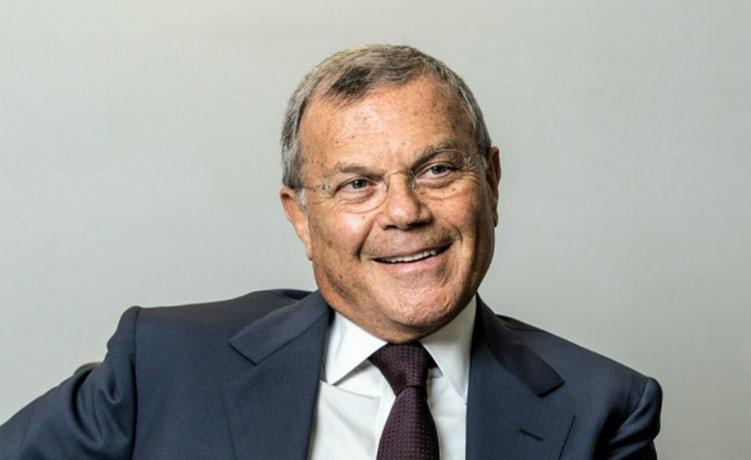
S4 Capital has completed a merger with Mightyhive, in a blow to advertising giant WPP (LON: WPP).
WPP’s former boss Sir Martin Sorrell announced the merger’s closing today, whilst also revealing three new board members.
“S4 Capital is now in a position to compete for comprehensive digital-first mandates at the highest level and is beginning to succeed meaningfully,” said Sorrell.
Peter Kim, the MightyHive Chief Executive, and Chief Operating Officer Christopher Martin have joined S4 Capital’s board. The boss of Stanhope Capital, Daniel Pinto, will also join the group’s board.
Sorrell was ousted as the WPP boss earlier this year following misconduct allegations.
“Obviously I am sad to leave WPP after 33 years. It has been a passion, focus and source of energy for so long. However, I believe it is in the best interests of the business if I step down now,” he said at the time.
Since leaving the group, Sorrell has founded his own advertising agency, S4 Capital.
S4 Capital’s acquisition of Mightyhive was worth $150 million (£117 million) and was the group’s second deal.
“This represents a significant step in building a new age, new era, digital agency platform for clients,” said Sorrell about his first deal at S4 Capital.
“The merger with MightyHive marks an important second strategic step for S4 Capital. The peanut has now morphed into a coconut, and is growing and ripening.”
“Clients of all kinds want services delivered faster, better and cheaper, by more agile and responsive organisations,” he added.
No Santa’s Rally this year as FTSE 100 falls 38 points

The FTSE 100 has fallen on Christmas Eve, dashing any hopes the City of London had of a Santa’s Rally.
The blue-chip stock was down by 38 points, or 0.6%, in early trading. December has seen the FTSE fall 3.7%.
After stocks increased on Friday by 9.34 points, there were previous hopes from analysts for a late Santa’s Rally.
David Jones, the Chief Market Strategist at Capital.com, said: “As stock markets wind down for Christmas there is only one thing that we can be sure of – there was no Santa Rally. It has been a terrible month for investors – so far the Dow Jones is on track for its worst December since 1932, having lost 12% for the month as of last Friday’s close. “
“Investors will be glad of some time off from the massive sides – but it does not bode well for 2019. Markets had risen since the financial crisis, so that’s ten years of growth that have seen many world stock markets hit fresh all-time highs. The turnaround in recent months so far has not tempted buyers back in, leaving many concerned that next year could see a full-blown bear market.”
One of the biggest fallers of the FTSE 100 was WPP (LON: WPP). The group announced earlier this month that it will axe 3,500 jobs and cut annual costs by £275 million a year. Shares are currently trading down 1.64% (1117GMT).
“The restructuring of our business will enable increased investment in creativity, technology and talent, enhancing our capabilities on the categories with the greatest potential for future growth,” said Martin Read, the group’s boss.
Other fallers include Playtech PLC (LON: PTEC), where shares dropped by 4.7% to 379p following an announcement that new Italian tax on gambling will reduce its 2019 adjusted underlying earnings. Shares are currently trading down 8.47% (1117GMT).
Debenhams PLC (LON: DEB) shares fell over 10%. Shares are currently trading at 3.93p (1117GMT).
Gama Aviation announces contract deals for year ahead

Leading aviation service provider, Gama Aviation, has announced on Monday several contract awards. These are within its European Air & Ground divisions.
The first is an eleven-year contract that is due to commence on 01 April 2019. The contract is for the provision of maintenance and spar parts logistical support for eight government special mission aircrafts. It is suspected to deliver a revenue in the rang of £66 – £88 million over the contract period.
Next, a new five-year contract is due to commence on 01 July 2019. Under the contract, the company will support four special mission aircrafts by drawing upon a range of specialist services unique to the company’s business model. These services include aircraft modification, maintenance and flight operations. Revenue delivered by the contract is expected to be roughly £27.5 million over the period.
Finally, Gama Aviation has ordered £20 million worth of Airbus Helicopters. The 3 helicopters are expected to support an existing long term contract.
Gama Aviation is a leading aviation service provider.
CEO of Gama Aviation, Marwan Khalek, commented on the announcement: “We are delighted with these contract awards which endorse the Company’s strength in the UK special mission market segment. This is as a direct result of our strategy to continue to build our depth of capability and breadth of service offerings to derive steady and profitable revenue growth for our European division. These medium and long-term support contracts, which we have a strong track record in winning, significantly improve the forward visibility of our revenues and enhance our earnings in the mid to long term.” Elsewhere in today’s stock market news, Victoria Oil & Gas announced that its subsidiary has finalized a contract deal. As a result, shares in the company have jumped over 50%. Equally, Rio Tinto has completed the sale of Indonesian Grasberg mine. In the retail sector, we take a look at what might be fuelling its current crisis. At 08:04 GMT today, shares in Gama Aviation plc (LON:GMAA) were trading at +1.67%.Victoria Oil & Gas announces subsidiary contract deal, shares jump 50%

Victoria Oil & Gas announced on Monday that’s its wholly owned subsidiary Gaz du Cameroun S.A has signed a contract with grid power producer, Eneo Cameroon S.A. Gas supply to the Logbaba 30MW Power Station will be resumed. Shares in the company jumped over 50% following the announcement.
The three-year contact was signed on the 21 December 2018. Under the agreement, gas will be provided to ENEO’s 30MW Logababa Power Station.
Victoria Oil & Gas is a Cameroon based gas and condensate producer and distributor.
Victoria Oil & Gas commented on the announcement: “We are delighted that GDC has renewed its contract with ENEO and has quickly resumed gas supply to the Logbaba Power Station in Douala. Whilst the situation in 2018 has been a challenging one for all involved, the management team remained confident that a resolution would be reached. We wish to thank the Government of Cameroon, Ministry of Water & Energy, Eneo Cameroon S.A, Société National de Hydrocarbons (SNH) and His Excellency the President for entrusting GDC and Altaaqa with such an important project for the Republic of Cameroon and its people.” “The new contract provides GDC with a stable three-year deal that immediately doubles daily average gas sales, whilst also offering a platform for further opportunities with ENEO, notably at their 20 MW Bassa Power Station in Douala.” With the resumption of the ENEO contract, the Company is in a strong position for growth during 2019. GDC ’s significant reserve base and position as the only onshore gas producer in Cameroon provides a unique opportunity to produce more power in the region for the benefit of both the Company, and the people of Cameroon. The management team has worked hard over the last 12 months to successfully diversify the product base and increase the number of clients and will continue to focus on this initiative.” Other stock market news includes Rio Tinto completing the sale of Grasberg mine in Indonesia. Elsewhere, Danske Bank shares fell following a profit warning, and we take a look at the different factors fuelling the UK retail crisis. At 08:58 GMT today, shares in Victoria Oil & Gas plc (LON:VOG) jumped 51.28%.Rio Tinto completes sale of Indonesian Grasberg mine

Leading metals and mining company, Rio Tinto, has completed the sale of its entire interest in the Grasberg mine, Indonesia. The sale was completed for $3.5 billion, as part of a series of transactions involving Indonesia’s state mining company Inalum and Freeport McMoRan Inc.
The binding agreement was announced on 28 September earlier this year. It was subject to a number of conditions, including the receipt of regulatory approvals, which have now been completed.
The Indonesian mine was previously owned by Freeport McMoRan Inc., who had a 90.64 stake in Grasberg. The remaining 9.36% was owned by Inalum before the completion of this transaction.
Founded in 1873, Rio Tinto is one of the world’s leading metals and mining corporations.
Chief executive of Rio Tinto, J-S Jacques commented on the announcement: “This sale brings the total divestment proceeds received across the last two years to over $11 billion as we continue to strengthen the portfolio. Over that same period, we have returned or announced an intention to return over $18 billion to our shareholders, demonstrating our disciplined approach to capital allocation and commitment to continuing to deliver sector leading returns.” The company will outline how the fund from the sale will be used when it releases its 2018 full year results. Earlier in November, Rio Tinto announced that it will develop its most technologically advanced mine yet. This was following the approval of a $2.6 billion investment in the Koodaideri mine in Western Australia. Equally, it also released the details of its new share buy-back programme. Indeed, the company intends to return roughly $3.2 billion of post-tax coal disposal proceeds to its shareholders. Additionally, over the summer Rio Tinto reported exports ahead of estimations for the trading quarter. Iron exports in particular looked promising. Over the period, the company saw on-year increases of iron production of 7% to 85.5 million tonnes. At 08:41 GMT today, shares in Rio Tinto plc (LON:RIO) were trading at -0.64%.The UK retail crisis: is Brexit really the problem?
The Office of National Statistics released data on Thursday outlining the latest retail sales statistics for November. Despite the well reported dire condition of the UK high street, it became apparent that retail sales increased by 0.4% for the three months to November on the back of growth in non-food stores and online retailing. Indeed, retailers reported strong growth in November as a result of Black Friday.
ING economist James Smith warned Reuters that these positive statistics must be treated “with some caution”.
“Whatever the case, it seems clear that the Christmas trading period has been a particularly challenging one for retailers,” he added.
These statistics should indeed be treated with care and assumptions regarding the revival of UK retail should not be made.
More and more retailers are releasing updates that they are suffering. On Monday, ASOS shares crashed 40% following an alarming profit warning issued during such an unexpected period – the run-up to Christmas. Seeing as ASOS is an online retailer, this indicates a sector-wide crisis rather than exclusively the UK high street.
Not to mention the harrowing 99% drop in John Lewis profits reported back in September or warnings released by Primark, M&S, Bonmarche and Sports Direct. The list of retailers struggling goes on, and what is strikingly familiar to each set of disappointing financial results is the far too often blamed Brexit uncertainty.
Rather than taking the easy option of blaming Brexit, there are other factors that might have contributed to the disappointing results issued by retailers.
Smarter shopping habits
One factor that is perhaps underestimated is the increase in smarter shopping habits. Essentially, shoppers are learning when to shop. What this means is that consumers are waiting for a specific sale to acquire a product for a cheaper amount, instead of paying the full retail price. This means waiting for sales. For example, if a consumer wishes to purchase an item in November, a smart shopper will wait until Black Friday to make the purchase. Shoppers know that retailers like ASOS will knock a certain percentage off of their products. In 2018, ASOS offered 20% off of all lines and in 2017 this figure was 30%. Therefore, any shopper with a slight awareness of the retail promotional calendar will wait for a specific sale period to acquire the product at a cheaper price. This does not exclusively apply to the Black Friday promotional period – it is applicable to year-round sales. Smart shoppers know that there is always a mid-season and end-of-season sale. It also applies to the Boxing Day sales following Christmas. In addition to shoppers learning when sales periods are, retailers are scheduling more sales throughout the year. No matter when you visit, high street shops always seem to be plastered in promotional sales offers. Even if the product is being sold at full price now, it will probably be on sale in a few weeks time. If it does not go on sale, then the smart shopper will simply look elsewhere for a cheaper alternative. This is highly applicable to the fashion industry, where similar designs of non-branded clothing from retailers such as ASOS, New Look or Topshop are be purchased elsewhere for a lesser price. Just a quick Google search of ‘cheap online clothing stores’ will direct you to online retailers such as ROMWE, Shein and Zaful. These retailers offer trending fashion lines at just a fraction of the price of the market leaders. In short, fewer consumers are paying full price for their products as they become more aware of when offers are scheduled. This hyper economic consciousness might just be an indirect consequence of Brexit, as economic uncertainty prevails. But, it is more a case of savvy shopping.Changing weather patterns
Anyone who stepped outside the house this year might have noticed a change in weather patterns. From blizzards to heatwaves, the UK climate has been one of the extremes in 2018. Indeed, snowfall was recorded as late as March 18th in some parts of the UK and summer highs reached 35.3°C in Kent. Equally, it has remained rather mild outside until the end of November. How might the weather be playing a role in the retail crisis? We already know that fashion retailers release their seasonal lines much earlier than expected. Spring clothing is often released in January/February and Autumn and Winter lines can be seen as early as July or August. There is already some kind of seasonal mismatch between the fashion retail calendar and the weather. That said, some consumers do appreciate clothing lines being dropped in advance to allow preparation for the following seasons. But, with climate change, this confusion is going to become even more apparent. A winter coat released in August won’t be needed until December if this year was anything to go by. Likewise, if it is still snowing in March then Spring clothing released in January will not be needed until April. The gap between the retail clothing calendar and the weather seasons will become even wider with global warming. Primark revealed in its financial results that “unseasonable weather in three distinct periods during the year held like-for-like sales back, especially in the Eurozone.” Will clothing lines be re-designed to consider the inevitable change in weather patterns? These are just two factors other than Brexit that may be contributing to the disappointing retail results. Of course, Brexit uncertainty is having a detrimental impact on the British economy. But perhaps Brexit is also playing a subconscious role in the psyche of shoppers. When the front page news of every media outlet is the strong negative language used to describe the UK’s departure from the EU, perhaps consumers are subconsciously spending less in fear of an economic crash.Danske Bank shares fall on profit warning
Danske Bank issued a second profit warning on Friday, sending shares in the troubled bank down to five-year lows.
Amid the money-laundering scandal, the Danish lender cut its previous forecast of 16-17 billion Kroner to 15 billion (£1.8 billion) for 2018.
“The revision to the outlook is mainly the result of worsening conditions during the fourth quarter in the financial markets compared to the first nine months of 2018,” said Christian Baltzer, the group’s chief financial officer.
“The underlying business performance is still good,” he added.
Shares in the group on Friday morning and have halved since March.
The group is facing trouble amid authorities due to an alleged €200 billion (£180 billion) money laundering scandal.
The scandal involves the Danish Bank handling up to $30 billion of Russian and Ex-Soviet money in non-resident accounts in its Estonian branch in 2013 alone. This came in addition to an earlier investigation this July, in which a Danish newspaper reported that Danske had laundered up to $8.3 billion between 2007-2015.
A Danske spokesperson said amid the scandal: “The matter is very complex, and no conclusion as to the number of suspicious customers or transactions – or indeed the extent of potential money laundering – can be drawn from any individual pieces of information taken out of context.”
This week, Estonia arrested 10 former employees of the bank.
Shares in the group (CPH: DANSKE) are trading down 1.74% (1302GMT).