DFS shares rally on strong sales

DFS shares surged on Tuesday’s opening after the group revealed a 19% increase in gross sales in the 24 weeks ending 15 December 2019.

Despite the Covid-disruptions, the furniture retailer saw impressive growth in the online channel, where sales surged 76% compared to the same period a year ago.

The group said in a statement that as a retailer, they have benefitted from people spending more money at home over the course of the pandemic.

Tim Stacey, the DFS chief executive, said: “I want to thank every colleague in our Group for their resilience, spirit and determination to overcome the many and varied operational challenges that we have faced since reopening our business after the first lockdown.

“We are working all hours focusing on what we can control to look after our people and our customers. I want to thank our customers for their patience given the ongoing disruption to our deliveries due to port congestion and raw material shortages, as well as apologise to those that have experienced delays.

“While the current environment is clearly unpredictable, our business model is resilient and we are well set for medium-term growth,” he added.

Looking forward, the group expects full-year profit to within the upper half of the current market consensus range.

“Although our financial performance will never be immune to the short term market environment, we believe our cash generation across the cycle and our overall growth prospects will drive attractive long-term financial returns for our shareholders,” said the group in a statement.

Over 25% of the retailer’s showrooms are currently closed due to Coronavirus measures and the group has also been coping with issues surrounding suppliers and lack of raw materials.

DFS shares are trading +10.00% at 231.00 (0900GMT). In the year-to-date, shares in DFS have fallen from highs of 302.00.

Oil dives as new strain triggers travel restrictions

The price of crude oil plummeted on Monday as concerns mount over the rapid spread of a new strain of Covid-19, causing a mass travel ban between the UK and more than 30 other countries around the world as leaders fight to keep the variant from spreading.

Known as VUI-202012/01, the new strain was first identified in the South-East of England in September, and has been attributed to the steep rise in cases seen in London and the surrounding counties in recent weeks.

Despite the travel restrictions, it has already been confirmed in a number of countries including Denmark, Gibraltar, the Netherlands and Australia, while authorities have reported suspected cases in Italy, France and South Africa.

With widespread travel bans coming into force this week, demand for oil has already suffered a sharp decline, with Brent Crude down 3.90% just days after rising 1.5% to reach its highest since March last Friday, while WTI Crude similarly slid 3.97% after climbing 1.5% on Friday to its highest point since February.

“The new strain of the COVID-19 virus is worrying for the market, as it is believed to be more infectious, and could lead to a host of new travel restrictions, sapping oil demand,” Pan Jingyi, market analyst at IG, told S&P Global Platts today.

Warren Patterson, head of commodities strategy at ING, added: “Over the past few weeks we have seen quite a bit of speculative money moving into the market, and the fear of more lockdowns and travel restrictions that this new virus strain has raised is causing some of that speculative money to close their positions”.

Alternative Investment trends to watch in 2021

2020 has proven to be a year of challenges, loss and opportunity for investors and wider society alike. One of the discussions being had during the pandemic has been the need to diversify holdings, and spread both risk and rewards across a wider range of asset classes. The discussion about alternative investment should not be confined to 2020, though, with prevailing political and public health risk factors facilitating a continuation of uncertainty into the medium-term.

Speaking to the UK Investor Magazine, CEO and Co-Founder of loan investment platform, Mintos, Martins Sulte, gave us his five top trends to look out for in alternative investment, through 2021.

Fast-moving fintech

First, Sulte pointed to the sharp uptake in fintech solutions as a means of money management, with consumers looking to distanced money management platforms amid lockdowns and both tighter restrictions and fewer incentives from orthodox banking groups. During the first half of 2020, 12 out of 13 fintech sectors reported year-on-year growth, with this trend new likely to extend into the New Year.

“Fintech is already booming, but the market has yet to reach its peak and will continue growing throughout the next year,” said Mr Sulte. “Our own growth plans involve Mintos becoming a regulated marketplace, which will open even more opportunities for growth.”

The adoption and investment into startups developing technology and solutions for financial institutions, SMEs or personal finance is steadily increasing, despite the dip in investment numbers this year, 2020 investment in fintech numbers were higher than in 2018 in most of the EU.

Alternative investment means diversification

As stated, the pandemic has caused investors to diversify in two broadly classifiable ways. On the one hand, existing and deeply-committed veterans have branched into new fields to spread their risk going forwards, and hedge against potential losses incurred during March-mageddon. On the other, we have the relative newbies, who invest in fledgling sectors looking to grow during the recovery – and those attempting to fill a gap in the market.

According to Sulte, these trends are here to stay, with the pandemic heralding a behavioural shift among investment culture. As opposed to sticking all your money is a supposedly unsinkable ship, many are seeing the attraction of spreading their assets out, with the knowledge that while some of the bigger players might lack manoeuvrability, newer entrants might have the flexibility to weather a storm.

“If anything, 2020 should have taught investors that well-established principles like investing for the long-term with a low-cost diversified portfolio and only checking your investment balance occasionally might not be the safest bet afterall,” said Mr Sulte. “I think that in 2021 investors will pay extra attention to see how they can future-proof their portfolios by diversifying their investments across various assets. Alternative investment options can be diversified further with many options and risk variability to choose from.”

New entrants require new regulation

Another important feature of alternative investment growth has been the rapid entry of newcomers, providing innovative tech and services. While some companies have merely complimented existing sectors, others are creating new ways of new business, with fintechs – for instance – driving a reconceptualization of the way we manage our money.

While many of these burgeoning household names are set for success, the regulatory response has (predicatbly) been hesitant about how to implement a framework of rules on this new way of doing business. This anticipated regulation might make it more difficult for new entrants to gain a foothold, but will ultimately improve the standing and public trust in existing fintech offerings.

“Going forward, the competition will become stronger because a lot of fintechs are looking at regulation as a way to reassure their clients and bring more clarity, transparency and safety,” said Mr Sulte. “As for new and small platforms, it will be more challenging for them to stay in the game if they refuse to become regulated.”

Slow value recovery

While some alternative asset classes like spirits, wines, precious metals and Bitcoin have enjoyed an upsurge in support during 2020, other alternative investments have taken a hit to their valuations during the pandemic. Sulte predicts that while initial signs of recovery in COVID-stricken classes has begun, but uncertainty about the new virus strain and Brexit might see some alternative under-performers be stuck with a slow recovery, as investors exercise caution.

“With the vaccine arriving in the majority of countries next year, optimism is felt across the investment markets,” said Mr Sulte. “Many investors will test what works for them on a smaller scale and look at sectors that are slated to rebound the fastest. At Mintos, we’ve seen very stable albeit slower investing this year, which can be interpreted as more cautious investing. This is likely to continue into 2021 with less focus on yield hunting, but more care in portfolio diversification, which will make the value regrow slower.”

Financial literacy takes centre stage

While after the 2008 financial crash, consumers were content with blaming speculative bankers and lenders for their woes, the 2020 downturn has not only affected us all, but created more interest – and less distrust – of financial services. Counting pennies has become a popular trope of a year marred by unemployment, furlough and pay-cuts, and with this, people have been looking for ways to make their disposable income and savings go further.

While on the one hand, new money management services and online investment apps have seen their popularity soar, consumers taking a more hands-on approach to money management may see increased support for alternative investments, with many wanting a stake in a possible product-of-the-future.

“It is the users’ pains, needs, and demands that drive the development of the financial industry,” said Mr Sulte. “Financial literacy can be a life-changer, impacting everything from getting a college education to starting a business. At the macro level, it can help bridge the wealth gap and support economic mobility. Since an increasing portion of the market understands the significance of financial literacy, we will see more efforts to support the new coming investors in 2021.”

Christmas shopping hit as Brits opt to save

0

New research from the Nottingham Building Society has revealed the impact of the coronavirus pandemic on how much Brits plan to spend on their Christmas shopping.

Even before the recently announced Tier 4 restrictions on London and the South-East, 19% of people said that they expect to spend ‘significantly’ less this Christmas than they did last year, with a further 28% anticipating they will spend ‘slightly’ less. Just 4% of people expect to spend more, and 43% anticipate their expenditure will be the same.

Those planning to spend less – estimated from the UK’s entire population of 52 million adults – will save a total of over £4 billion when compared to last Christmas.

In terms of how much people expect to spend in shops this Christmas compared to last year, 49% say they will cut back, with just 5% expecting to spend more than they usually would. About 45% anticipate their expenditure in shops to fall by over 10%, and 14% say it will be more than 50% less.

Despite the blow to high street stores – who usually rely heavily on Christmas trade to see them through the quiet months at the start of the year – 54% of people said that they expect to spend more online this Christmas than last year, with 43% anticipating a rise of over 10%, and 14% expecting to spend over 50% more.

Of those people who expect to spend less overall this Christmas, 48% say it’s because it doesn’t feel ‘appropriate’ to spend too much this year given the ongoing crisis. Some 34% say it will be because of restrictions around how many people are permitted to visit one household, and 18% say it’s a result of having less money due to providing more financial support to loved ones.

Some 12% say it’s because they have been furloughed and have less money, and a further 7% say it’s due to being made redundant and are unable to afford to spend as much as last year.

Overall, 32% of people anticipate they will spend less on food this Christmas when compared to last year, whilst 53% think their expenditure will be the same, and 7% expect to spend more (the remainder didn’t know).

As a result of the current crisis, 62% of people say this Christmas they will ‘focus more on the people they love’ as opposed to buying presents than in previous years, and six out of ten (60%) believe there will be a ‘bigger focus on the true meaning of the festive season’.

Ben Osgood, Senior Manager at The Nottingham, commented on the report’s findings: “People’s finances have been impacted by the Coronavirus crisis, and this coupled with the restrictions on meeting people and going out, means many will spend less on celebrating this year’s festive season than they did last year.

“However, our research shows that this year, people will place a much bigger focus on the true meaning of Christmas in terms of focusing on the people they care about as opposed to how much they spend on presents”.

Airline equities tumble amid travel ban

Shares across the UK’s largest airlines plummeted on Monday morning following the announcement of widespread travel bans to prevent the spread of the new Covid-19 variant.

Easyjet (LON:EZJ) saw its shares freefall a hefty 9.34%, while British Airways’ parent firm IAG (LON:IAG) reported an 8.89% drop, and Ryanair (LON:RYA) a 5.11% dive just after midday.

Jet2 (LON:JET2) shares were also down 4.90%, with Wizz Air (LON:WIZZ) shares sinking 4.01%.

While the situation is still rapidly developing, a number of countries across the European Union and beyond have chosen to close their borders to arrivals from the UK over fears of the newly-identified Covid-19 variant.

India has become the latest country to announce a travel ban, following Hong Kong, Canada, Switzerland and Germany. Norway, Belgium and the Irish Republic have so far suspended all flights from the UK. Austria is also expected to bring in a ban, while Bulgaria has suspended flights to and from the UK from midnight tonight.

On Sunday evening, France shut its border with the UK for 48 hours, meaning no lorries or ferries will be able to set off from the port of Dover. Queues of freight lorries began to build up in the early hours of the morning.

The French government said on Monday that it will establish a protocol “to ensure movement from the UK can resume”.

European leaders are currently holding an emergency meeting in Brussels to discuss the a co-ordinated response.

In a Twitter post by the French Embassy in the UK, French Transport Minister Jean-Baptiste Djebbari said: “In the next few hours, at European level, we’re going to establish a solid health protocol to ensure that movement from the UK can resume”.

He added that the “priority” was to “protect our nationals and our fellow citizens”.

The news follows a tough week for airlines, after London and the South-East of the UK were put into Tier 4 restrictions set to last over the Christmas period and likely into the New Year, disrupting thousands of plans to spend the holidays with families scattered across the country.

Pound slumps amid travel bans & Brexit chaos

The pound sterling plunged 2.2% this morning amid the Brexit transport chaos and fears of the new Coronavirus strain.

As the prime minister put London and other regions into Tier 4 and tightened restrictions across Christmas, the pound plunged to a month-low. 

The lack of progress in Brexit negotiations has also caused the pound to tumble.

“It was a grand weekend of Tory mishandling, one that has really done a number on the FTSE and the pound. First, on Saturday, Boris Johnson delivered news that the easing of restrictions over Christmas was done for after the emergence of a ‘new strain’ of the virus – a strain the government has been aware of since September, something confirmed by the World Health Organisation,” said Connor Campbell from SpreadEx.

“The announcement led to multiple countries banning travel from the UK, with France going once step further, imposing a 48 hour halt not only on people, but the ‘transport of goods, by road, air, sea or rail’, sparking fears about supplies over the holiday period.

“Sterling was distraught, undoing last weekend’s optimism in a flash. Cable sank 1.7%, hitting a 10-day low of $1.328, while against the euro the pound dropped 1.6%, leaving it at a 3-month nadir of €1.086.”

“Though sterling’s losses did mitigate the FTSE’s own decline, the UK index still shed 50 points, slipping under 6,470,” he added.

Amid the biggest fallers on the FTSE today were International Airlines Group, which was 16% down on opening and Rolls-Royce, which was down 9%. Holiday operators also fell with Tui shares down 6.6% while the cruise ship company, Carnival, was down by 9%.

Crude oil prices have slightly recovered after earlier dropping by as much as 5%. The price of Brent crude futures is down 3.7% at $50.37. Shares in Shell opened 4% lower on Monday as the group commented on the future of the industry.

Universe Group expects “modest level” of full-year profits

0

Universe Group shares (LON: UNG) were 11.27% lower on Monday as the group shared a trading update for the year to 31 December 2020.

Revenues for the second half of the year are expected to be in line with revenues recorded for the first half of the year – depending on the roll-out of a material project where work is ongoing.

“Revenues from this project are now expected to be recognised in the first half of 2021 but the investment made in the project must be recognised in the current financial year,” said the group in a statement.

Amid the Brexit uncertainty and Covid-related costs, Universe Group remains confident and expects to report a modest level of adjusted EBITDA profitability for the full year.

Jeremy Lewis, the chief executive of the company commented: “The Company’s employees and management have worked hard this year to keep customer service levels up in difficult circumstances. We are working on a small number of high-value projects while continuing to focus on a significant level of recurring and repeating business. We have a resilient financial position and are cautiously optimistic about our prospects for next year. We look forward to providing further updates as the new year progresses.”

Universe Group shares (LON: UNG) are currently trading -13.88% at 3.66 (1145GMT).

Trident Royalties to acquire portfolio of royalties in the Pukaqaqa Copper Project

0

Trident Royalties (LON: TRR) has announced its acquisition of three existing royalties over the Pukaqaqa Copper Project in Peru.

The company said in an update that it had entered into a binding, conditional agreement with Bellatrix Ltd, a subsidiary of Orion Resource Partners, for a total consideration of US$3m worth of new Trident ordinary shares.

Pukaqaqa is a project that is located in an established mining district of Peru. It covers 11,125.87 hectares and is made up of 34 concessions.

The three royalties are: Vaaldiam, Pukaqaqa Norte, and Pukaqaqa Sur.

Trident, the growth-focused, diversified mining royalty and streaming company shares are up this week following news of the acquisition. The group has said that as part of its strategy, it is building a royalty and streaming portfolio to broadly mirror the commodity exposure of the global mining sector and targeting attractive small-to-midsize transactions, “which are often ignored in a sector dominated by large players.”

The large-scale project advancing towards development will generate a significant revenue stream for nearly two decades, said Trident chief executive, Adam Davidson.

He commented in a trading update: “We are very pleased to announce this all-share transaction with Orion. The royalties cover a large-scale asset which is being actively advanced by an established regional operator that, once in production, will generate a significant revenue stream for nearly two decades based on the most recent technical study. On the current resource, at a processing rate of 30,000 tonnes-per-day we believe Pukaqaqa has the potential to produce around 35,000 tonnes of copper per year, along with potential molybdenum, gold, and silver credits.

“Whilst not losing sight of our priority to acquire cash generative royalties, as we plan for Trident’s long-term growth, acquiring attractive development stage royalties over significant assets such as this has the potential to catapult a royalty company from junior status to that of mid-tier / major. I would also add that it was a pleasure transacting with Orion, and we look forward to further engagement in the future. It is worth noting that Trident’s transaction pace since our June 2020 listing continues to exceed my expectations and demonstrates the robustness of our pipeline. I look forward to reporting further on our progress,” he added.

When the transaction is completed, Orion will become a 6.1% shareholder in Trident Royalties.

Trident Royalties shares (LON: TRR) are trading +4.77% at 35.60 (1054GMT).

Arcadia: Evan’s brand sold in £23m deal

0

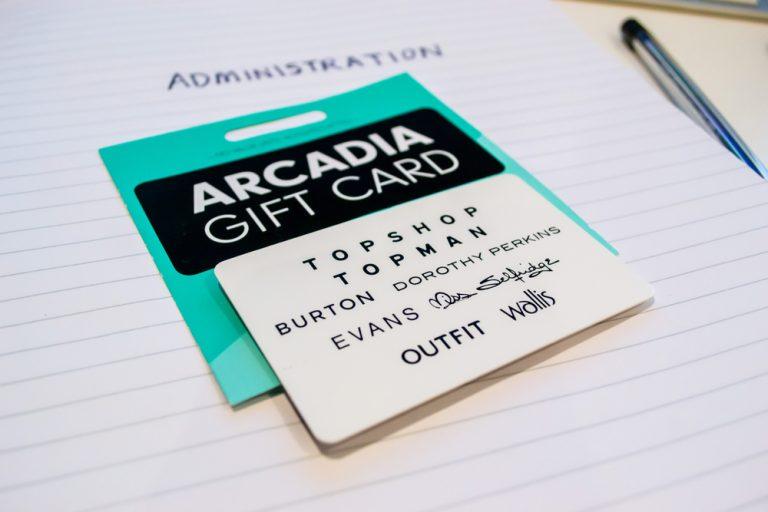
The Evan’s brand, owned by Arcadia, has been sold to Australian-listed City Chic in a deal worth £23m.

Following the collapse of Phillip Green’s Arcadia, the firm has brought Evans’ brand and wholesale business. The deal will not include any of the UK stores.

Evans is a plus-size clothes and footwear retailer. Australia’s City Chic is also a plus-size fashion retailer, which has stores across Australia and New Zealand.

Whilst the deal does not include UK stores, Deloitte has said that they will “continue to trade for the time being”.

Other Arcadia brands, including Topshop, Topman and Dorothy Perkins, are still on the market. Deloitte said: “There have been significant expressions of interest for all brands” and updates would be provided after the new year.

It was revealed by Sky News last week that Next was in talks with American investment firm Davidson Kempner about a joint bid for the rest of the Arcadia group.

Sources said that the two companies were “likely, but not certain” to make a bid in the next few weeks.

Arcadia, which has over 500 stores across the UK, fell into administration earlier this year after a last-minute rescue deal involving Mike Ashley’s Fraser Group fell through.

Guy Elliott, is the senior vice president at consultancy Publicis Sapient. He commented on the collapse of Arcadia:

“For the past few years, Arcadia and its brands have failed to be relevant to the demographics targeted by the respective brands, and Topshop in particular has lost much of its appeal to the younger generation,” he said.

“I have no doubt that Topshop will be highly fought over as part of the administration process and hopefully new owners can turn it into the retail giant it once was, with the right investment in product, digital and marketing,” he added.

FTSE 100 plunges amid Brexit chaos & new strain

0

The FTSE 100 plunged 1.8% in early trading and was down 117 points, to 6,410 points.

Due to the lack of Brexit negotiations, the new strain of the virus and chaos around borders, the blue-chip index was down almost £33bn within minutes of opening on Monday.

The biggest faller on the FTSE 100 this morning was International Airlines Group, which was 16% down on opening. Rolls-Royce was down 9%.

Banks were also down this morning. Lloyds Banking Group shares fell by 6%, whilst Barclays opened 4.7% lower.

Holiday operators also fell on Monday. Tui shares fell 6.6% while the cruise ship company, Carnival, was down by 9%.

Similar scenes to the FTSE 100 are being seen across the rest of Europe. Germany’s Dax was down 1.9%, France’s Cac 40 fell by 2.4% and Spain’s Ibex lost 2.8%.

The pound was also down 2% against the dollar this morning at about $1.3272. The pound is down by 1% against the Euro at €1.0907.

Commenting on the impact of the new strain of Covid-19 and looming Brexit deadline on the FTSE 100 and the economu, Olivier Konzeoue, FX Sales Trader at Saxo Markets, said: “A new strain of COVID-19 deemed to be 70% more contagious, pushing the U.K. Government to put new lockdown measures in place, combined with stalling Brexit talks make for a rather toxic mix that weighs on the Great British Pound.

“Let’s keep in mind seasonality will be a factor as liquidity typically gets thinner going into the end of the year, potentially causing more extreme moves. The sudden drop from GBPUSD 1.35 area to 1.3278 not only illustrates this phenomenon, but also shows markets are not positioned for a cliff-edge breakup between the U.K. and Europe. No doubt headline risks will keep sterling under pressure in the coming days.

“On the vaccine front, the U.K.’s frequent use of gene sequencing could explain the fact a new variant of the coronavirus has been identified and described as more infectious but similar studies could reveal similar conclusions on variants spreading across continental Europe. The main worry for investors remains whether these mutated versions of COVID-19 could resist the vaccine, potentially putting a lid on recovery hopes for the foreseeable future at a global level,” he added.