
Kainos shares surge 28% on “strong trading performance”

Kainos shares (LON: KNOS) surged 28% on Wednesday morning after the IT provider shared a “very strong trading performance”.
Customer demand remained high from 1 April 2020 to date and the group expects full-year results ending 31 March 2021 to be ahead of expectations.
“As referenced in our September update, our Digital Services customers continue to prioritise digital transformation programmes in the NHS and Public Sector, and as a trusted partner to the UK Government, we continue to support these critical, long-term programmes,” said the group in a statement.
“Our Workday Practice continues to benefit from its international scale and an ability to secure new consulting contracts across all our geographies. Alongside these engagements, our specialist Workday automated testing platform, Smart, continues to support over 200 international clients and to drive new client acquisition, especially within the US market.”
The FTSE 250-listed firm also said that trading had been strengthened from several changes including increased utilisation and reductions in recruitment, training and travel expenditure.
Earlier this year, the group acquired Intuitive Technologies LLC. Commenting on the acquisition Brendan Mooney, CEO, said: “I am delighted to welcome the IntuitiveTEK team to Kainos, and into our ever-expanding Workday practice. The team’s expertise, excellent reputation, and passion for building strong customer relationships aligns with our business, and we look forward to having them on board.
“As a leading Workday partner, we see this acquisition as an important step to deepen our expertise in Adaptive Insights Business Planning Cloud in the United States, where we continue to see growing demand from clients in modernizing their planning and financial management processes,” he added.
Results for the six months ending 30 September 2020 will be made on 16 November.
Kainos shares (LON: KNOS) are currently trading 27.84% higher at 1.304,00 (1051GMT).
G4S shares dip as revenue falls
G4S shares (LON: GFS) dipped 2% on Wednesday’s opening after the group reported a fall in revenue for the first nine months of the year.
Revenue fell 2% over the period, however, the group saw profits for the same period ahead of last year thanks to “tight direct and indirect cost control and reduced interest costs.”
“G4S today is a focused global business delivering integrated security solutions which combine our risk consulting, security, technology and data analytics capabilities,” said chief executive, Ashley Almanza.
“The benefits of our strategy, strong execution and rapid response to Covid-19 continue to be reflected in the group’s results during 2020 with resilient revenue, earnings and cash flow.
“I would like to thank our customers and employees for their commitment to G4S during these challenging times,” Almanza added.
The group is currently in a hostile takeover bid with Gardaworld. Gardaworld has appealed to G4S shareholders by and has criticised the firm’s directors and accused them of acting in a “cavalier manner” after directors have rejected several approaches in recent months.
G4S shares (LON: GFS) have recovered and are steady at 209,70 (1037GMT).
IMF World Economic Outlook predicts ‘deep recession’ with 4.4% global contraction
In its latest, unsurprising but painful prognostication, the IMF World Economic Outlook projected what it described as a ‘deep recession’, with global growth expected to fall to -4.4%.
Speaking ahead of the WEO forecast, IMF chief economist Gita Gopinath said:
“So we continue to project a deep recession in 2020 with global growth projected to be -4.4%. This is a small upgrade relative to our June numbers. We expect growth to rebound partially in 2021, coming back to 5.2 percent. However, with the exception of China, all advanced economies and emerging and developing economies, excluding China we are projecting output will remain below 2019 levels well into 2021. Therefore, we see that the recovery from this catastrophic collapse will likely be long and even highly uncertain,”
Gospinath argued that as world economies attempt to bounce back from COVID turmoil, there are challenges yet to be faced, but also a real opportunity for the situation to improve.
“There are broad risks to the upside and to the downside. On the upside, we could have positive development in terms of treatments and vaccines that could hasten the end of this health crisis. And we could also have more policy support that would help. But there are many downside risks. We could have worse news on the health front, and we could have greater financial turmoil at a time when debt is at the highest level in recorded history. And we have rising geopolitical tensions that could also derail the recovery,” she said from her home in Boston.
She added that the road to recovery will be a difficult one, but offered some suggestions on how policies could be designed to put economies back on a growth trajectory.
“First, it is essential that fiscal and monetary policy are not prematurely withdrawn as this crisis is far from over. Second, we need much greater international collaboration to end this health crisis by making sure that when once new treatments and vaccines are available, then it will be produced a sufficient scale to be available widely in all countries. And lastly, policies should be designed towards putting economies on a path towards more sustainable, inclusive and prosperous growth,”
Despite Gospinath’s cautiously optimistic outlook, the IMF red growth percentage will be another reason for global equities to feel the burn at the start of a challenging week.
Political tensions leave a bitter taste, with Brexit and the US Presidential Election creating opportunity for unknown downsides and poor sentiment between now and Christmas.
Pressure now mounts on policymakers, to decide whether or not lockdown part 2 is the correct path. The WHO are stressing that lockdown should be avoided if possible, and stated that the lockdown earlier in the year – as a result of diminished trade and travel – pushed around of quarter of a billion people back into poverty. All most of us can do is shelter our money, and hold on for what will likely be a harsh winter.
JP Morgan beats analysts’ expectations, profits soar
JP Morgan has a strong third quarter, with revenue and profit jumping amid the Corona-uncertainty.
Trading beat analysts’ expectations during the period, with revenues growing from $9.52bn to $11.5bn. Profit soared from $2.83bn to $4.3bn.
Jamie Dimon, Chairman and CEO, commented: “JPMorgan Chase earned $9.4 billion of net income on nearly $30 billion of revenue and we maintained our credit reserves at $34 billion given significant economic uncertainty and a broad range of potential outcomes.
“We further strengthened our capital and liquidity position, increasing CET1 capital to $198 billion (13.0% CET1 ratio, up 60 basis points after paying the dividend) and liquidity sources to $1.3 trillion. The Corporate & Investment Bank continues to be a big driver of Firm performance with Markets revenue up 30% and Global IB fees up 9%.
“CIB and Commercial Banking continue to attract and retain deposits given our strong client franchise as our clients remain liquid. Asset & Wealth Management generated record revenue and net income and saw strong net inflows into long-term products,” added the JP Morgan chief executive in a statement.
Meanwhile, rival Citigroup saw profits falling 34%, however, earnings per share of $1.40 beat analysts’ expectations. Citigroup shares fell over 3% on the news.
Johnson & Johnson shares slide as vaccine trial put on hold

American multinational medical and pharmaceutical firm Johnson & Johnson (NYSE:JNJ) has seen its shares slip 1.50% on Tuesday afternoon after it announced that its coronavirus vaccine trial has been forced to halt due to the ‘unexplained illness’ of a participant.
The company has stated that the volunteer’s illness is currently being assessed by an independent regulator to determine if their symptoms are related to the vaccine. It is not yet known if the patient had received a genuine dose or a control placebo.
Until a review is carried out, Johnson & Johnson has confirmed that it has completely suspended the crucial Phase III of its clinical human trials as a precaution. Further details of the patient’s condition are protected under privacy agreements.
This is not the first coronavirus vaccine set-back so far. Just last month, the world-leading collaboration between Oxford University and AstraZeneca was forced to halt its own clinical trials after a participant developed neurological symptoms.
Regulators later deemed the trial safe to go ahead, but not without dealing a heavy blow to hopes that the development of an effective coronavirus vaccine will be a smooth and swift ride.
Johnson & Johnson released a statement on the news, remaining tight-lipped about the details of the incident while issuing a reminder that a patient becoming ill is not necessarily unusual:
“Adverse events – illnesses, accidents, etc. – even those that are serious, are an expected part of any clinical study, especially large studies.
“We must respect this participant’s privacy. We’re also learning more about this participant’s illness, and it’s important to have all the facts before we share additional information”.
Much like AstraZeneca’s proposed jab, Johnson & Johnson’s makes use of a modified common cold virus to train the immune system to fight coronavirus infection.
There are currently nearly 180 vaccines in development around the world, but it is widely-thought that a readily-available jab for the general public will not be accessible until Spring 2021 at the very earliest.
Johnson & Johnson’s share price slipped 1.50% to USD 149.58 at GMT 14:59 13/10/20, down slightly from yesterday’s peak of USD 153.14.
However, investors should not necessarily shy away, as the firm has gained leaps and bounds since its annual nadir of just USD 111.14 on 23/03/20, and has remained relatively consistent within the boundaries of USD 140.00-157.00 ever since.
OnTheMarket reveals busiest ever quarter – shares fall

OnTheMarket shares (LON: OTMP) took a tumble on Tuesday after the group its latest results.
Despite its busiest ever quarter, shares in the property group fell by almost 4% in afternoon trading.
In the six months to July 31, OnTheMarket saw revenue rise 28% to £10.2m and achieved profitability “as a result of measures implemented to reduce costs and conserve cash.”
As lockdown restrictions were eased, the group saw pent-up demand and year-on-year visits in July 2020 increased 173% to 27.5m and average leads per advertiser increased 56% to 148.
Clive Beattie, acting chief executive, commented:
“We started the year strongly with trading in February and the first half of March in line with management expectations. However, the first half of the financial year quickly became dominated by the impact of the COVID-19 pandemic.
“Our focus during the period has been to safeguard employee well-being, provide value and support to our agent and housebuilder customers and to manage costs and conserve cash.
“We have been particularly pleased with the strong consumer engagement with the portal since the easing of national lockdown restrictions in May, with record leads indicating that those consumers most active in the property market visit OnTheMarket.com.”
OnTheMarket shares (LON: OTMP) are trading -3.56% at 97,89 (1505GMT).
New Mexico nudges towards carbon neutral future
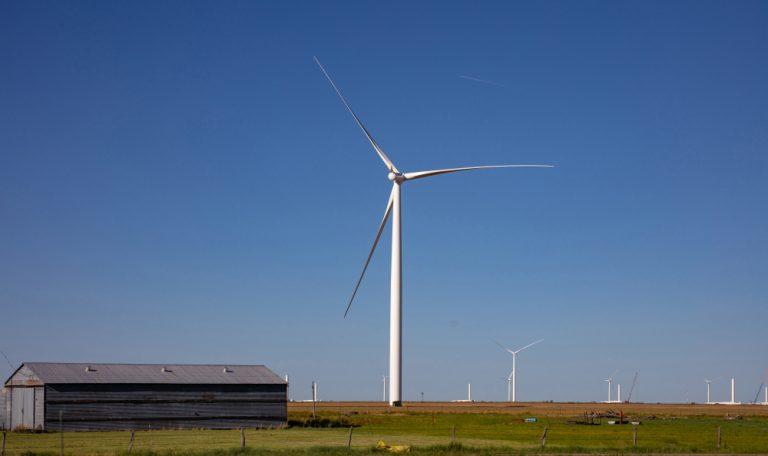
New Mexico has announced that it is set to launch a new ‘smart infrastructure’ and carbon neutral energy era alongside Agile Fractal Grid and Cityzenith, following the 2019 Energy Transition Act (ETA) granting the US state the position of global leader in the fight against climate change.
The partnership between energy supplier The Agile Fractal Grid (AFG) and software firm Cityzenith will see New Mexico develop a novel integrated power and broadband network which is expected to ‘transform life and the economy’ across the state and eventually ‘ripple outwards as other energy operators, states and nations see the benefits’.
The project’s developers have hailed its potential to generate ‘1,000s of new businesses, 100,000s of new jobs, better and faster data links, higher infrastructure efficiency, and up to six new smart cities’.
New Mexico – the 5th largest US state with a population of 2.35 million and GDP of $104 billion – has also announced its plans to replace its fossil fuel power with a cleaner ‘smart energy’ network, making use of the country’s rapidly-growing carbon neutral wind and solar energy markets.
Citizens will get to experience ‘smart’ IT benefits across ‘entertainment and hospitality venues, retail, transport hubs, health and hospitals, security, telecoms, power utilities, employment, and manufacturing’.
At the heart of the project is Cityzenith’s SmartWorldPro – the world’s most advanced Digital Twin platform – whose software will provide ‘efficient design before construction’ and also ‘streamline [the] ongoing operation and development of the new assets’.
Cityzenith CEO Michael Jansen welcomed New Mexico’s announcement:
“It’s the kind of visionary project SmartWorldPro was designed for and we are already modelling New Mexico’s biggest city, Albuquerque (915,000) before rolling out across the state over a 10-year program.
“SmartWorldPro can integrate with AFG’s futuristic portfolio of AI, smart building, and other technologies towards a ‘Smart Connected Community’ for cities, large venues, and even whole states.
“It’s easy to see the benefits for New Mexico, but this cutting-edge technology can go global, pushing back against urban pollution and Climate Change and trillions in economic and environmental damage”.
AFG CEO John Reynolds added:
“The project is a highly efficient deployment of services for 21st century public, commercial, and industrial needs.
“Cityzenith’s SmartWorldPro means we can show and deliver this data-rich ‘smart lifestyle’ to everyone in New Mexico – urban and rural.
“Longer-term, this sustainable power, comms, and lifestyle ‘reset’ could span North America, and national 10GB broadband may be just 10 years away”.
Last month, Cityzenith pledged its SmartWorldPro platform to helping the world’s most polluted cities achieve carbon neutrality.
Jansen commented on the firm’s ongoing projects towards carbon neutrality:
“The world’s top 100 most-polluting cities produce 18 per cent of global urban emissions and we will meet this challenge head-on, by going right to the biggest contributors first.
As one megacity reaps the benefits, so others and governments will follow their example. What works for one will work for all”.
French Connection posts 53% fall in revenue, shares fall

French Connection shares (LON: FCCN) fell 16.52% on Tuesday afternoon as the group revealed pre-tax loss to widen in the six months ending 31 July 2020.
The fashion retailer posted a pre-tax loss of £13.2m. This is in comparison to the loss of £4.6m loss a year previously.
French Connection also reported a 53.1% fall in revenue down to £23.9m “predominantly owing to the impact of the COVID-19 pandemic.”
Retail revenues for the period were £10.1m, down 57.6% from £23.8m. The group said this “reflects both the lockdown period but also the permanent closure of nine retail locations in the first half.”
Stephen Marks, chairman and chief executive said: “This has undoubtedly been the most difficult trading period that the Group has ever faced and I would like to thank our staff, both those who have kept the business running and those who have been on furlough, for their ongoing commitment to French Connection.
“Despite the unprecedented difficulties we continue to face alongside the rest of the High Street, having been able to secure the necessary financing we feel that we are well positioned to navigate an extended period of uncertain consumer demand but also ready to capitalise on any opportunities that may arise especially given the good performance of wholesale, while maintaining a very tight control of costs,” he added.
French Connection shares (LON: FCCN) are currently trading -17.65% at 7,37 (1427GMT).
Sales you need to know about in order to win at Christmas shopping

Despite research claiming that the average British household has saved more than £2,000 during lockdown, the impression I get is that while many people have reduced their outgoings, many have also suffered a brutal slash to their income. With that in mind, here are some dates for big Sales between now and the holidays, to help you win at Christmas shopping.
October 13-14th Amazon Prime Day: A good opportunity for prime members to take advantage of free and fast delivery while also enjoying good deals. The Amazon (NASDAQ:AMZN) sale start from the moment the October 13 begins, and will feature store-wide discounts, with early deals including the Amazon Alexa Dot dropping from £50 to £19, and the Echo Show dropping from £80 to £40.
October 31st Halloween scarily good deals: Both instore and online, Halloween is a promotion period, with deals available not just on costumes and decorations, but according to Money.co.uk, consumers could also enjoy up to 40% off RRP on appliances, homeware and jewellery.
November 27th-30th The Weekend of Mayhem: Although it’s the biggest sales weekend of the year, I’ve decided to lump Black Friday, Cyber Monday, and the lesser-known Small Business Saturday, under one banner – on account of the fact that these days being prime shopping time is hardly ground-breaking news. On Black Friday (which usually lasts for the whole weekend), shoppers can enjoy bargains on a range of goods, Cyber Monday offers a similar opportunity on online retail, and Small Business Saturday is a growing trend which encourages UK shoppers to support local businesses. The weekend sees retailers bring in introductory offers on their Christmas ranges, with electronics seeing some of the best discounts, at around 60% off RRPs.
December 10th Hanukkah: The Jewish Festival of Lights lasts for more than eight days and is a traditional time of gift-giving. With this in mind – and likely enjoying another opportunity to stimulate retail activity – lots of companies line up bargains for the early-December holiday period, with savings potential reaching as much as 50% off RRP.
December 14th Green Monday: Centred around the panic buying by late shoppers, this USA trend has, like many sales traditions, been adopted in the UK, with deals on everything from fashion, to electronics and toys. Money.co.uk says that during this period, shoppers can expect Amazon and eBay to host sessions for discounted goods, with potential savings up to 50% off RRP.
These insights came from research carried out by Money.co.uk, who also stated that they expect Brits’ Christmas spend to be 25% higher this year, with 30% saying that lockdown had inspired them to splash out more on festivities, and more than a third saying they’d begun Christmas shopping by September.
Commenting on the research findings, Money.co.uk personal finance expert, Salman Haqqi, said: “Just 15% of Brits shop for Christmas presents year-round, according to our survey, but there are huge savings to be made as a result of sales and discount periods throughout the year for those who do.”
“The two-day shopping event from Amazon provides discount opportunities to take advantage of for shoppers who want to maximise their spending power.”
“Money.co.uk surveyed 2,000 shoppers across the UK in July this year to paint an accurate picture of the nation’s Christmas shopping habits. Highest on the agenda is spending to recover from a year blighted by the coronavirus lockdown, according to the data.”
“In 2019 the average amount spent on a Christmas present for mums was £63, according to the money.co.uk data. But in 2020, that figure is set to climb to £71. The same is true for dads – with 2019’s average present spend on fathers of £51 being trumped by 2020’s average of £63.”
“Even family pets are set to feel the extra warmth of a more expensive present this Christmas – with last year’s Christmas spend on pets presents rising from £27 to £31 in 2020.”
“The only exception, it seems, is the nation’s children. While 46% of the nation says that it intends to spend the most on its kids as usual this year – the actual spending value on presents for children looks set to reverse the trend by going downwards, from £129 in 2019 to £116 in 2020.”
Marshall Motor Holdings gains traction with vehicle sales up 34%

Automotive retail group, Marshall Motor Holdings (AIM:MMH), saw its shares rally around 11%, as the company enjoyed a booming recovery in trading during the third quarter – led by particularly strong activity in September.
The Society of Motor Manufacturer and Traders (SMMT) noted that total new vehicle registrations were down by 4.4% in September. In this sense, Marshall Motor Holdings ‘significantly’ outperformed the market, with like-for-like new vehicle sales up by 18.4%, and total new vehicle sales rising by 33.9%, as a result of strategic acquisitions made in 2019.
Similarly, while the SMMT reported that new vehicle retail registrations fell by 1.1% in September, the Group’s like-for-like vehicle retail sales grew by 19.1% – ahead of the market, with total new vehicle retail sales up 38.6%.
Meanwhile, the company’s fleet sales were also up by 17.1% on a like-for-like basis, with total new fleet sales up 23.9%, compared with the SMMT’s reported fleet registrations decline of 7.4%. Similarly, used vehicle sales rose by 15.7% on a like-for-like basis in September, and 29.4% in total.
Overall, total revenue was up by 28.0%, and by 16.3% on a like-for-like basis. This progress saw the company change its full-year guidance, from break-even, to an anticipated profit-before-tax of £15 million.
Marshall Motor Holdings responds
Commenting on the optimistic update, company Chief Executive, Daksh Gupta, said:“Our strong culture, brand partnerships with scale, in-house technology platform and online presence, coupled with our exceptional colleagues have enabled the Group to significantly outperform the wider automotive retail market through this important post-lockdown trading period. Our operational performance in August and September, in particular, was strong across all key like-for-like new vehicle sales metrics and we have also delivered significant like-for-like growth in both used car sales and aftersales. On behalf of the Board, I would like to thank all of our colleagues who have worked tirelessly through these unprecedented times and contributed so magnificently in delivering this performance.”
“Whilst this period of positive trading has been welcomed following the significant impact of COVID-19 in the first half of the Year, there remain a number of uncertainties regarding the trading environment for the remainder of the Year and beyond. We are also mindful that the market in Q3 was positively impacted by pent-up demand for new and especially used vehicles, which, allied to restricted supply, created favourable conditions from which the Group was very well positioned to benefit. It is for these reasons that we have taken appropriate actions in terms of limited business closures and restructuring measures to ensure the Group is well placed to meet these potential future challenges”.