
EasyJet to cut flights amid travel restrictions

EasyJet (LON: EZJ) has said that it will only run 20% of planned fights for the remainder of 2020.
The budget-airline made the announcement as the UK has entered a second lockdown and travel restrictions urge people not to holiday within the UK and abroad until 2 December.
“EasyJet now expects to fly no more than 20% of planned capacity for the first quarter,” said the group.
“We remain focused on cash generative flying over the winter season in order to minimise losses during the first half and retain the flexibility to ramp capacity back up quickly when we see demand return.”
Last week, EasyJet said that it would sell nine more planes for £305.7m after the group has been feeling the significant strain on finances.
In the year to September, the group said it expects a loss of £815m to £845m.
Easyjet warned with its last financial statement that numbers will not return to normal for some time and has called on the government to support the aviation sector as it faces “the most severe threat in its history.”
The group’s chief executive, Johan Lundgren, said: “Based on current travel restrictions we expect to fly c.25% of planned capacity for Q1 2021 but we retain the flexibility to ramp up capacity quickly when we see demand return and early booking levels for summer ‘21 are in line with previous years.
“Aviation continues to face the most severe threat in its history and the UK Government urgently needs to step up with a bespoke package of measures to ensure airlines are able to support economic recovery when it comes.
“easyJet came into this crisis in a very strong position thanks to its strong balance sheet and consistent profitability. This year will be the first time in its history that easyJet has ever made a full year loss,” he added.
EasyJet shares (LON: EZJ) are trading -4.17% at 524,20 (0939GMT).
Hovis acquired by Endless for undisclosed sum
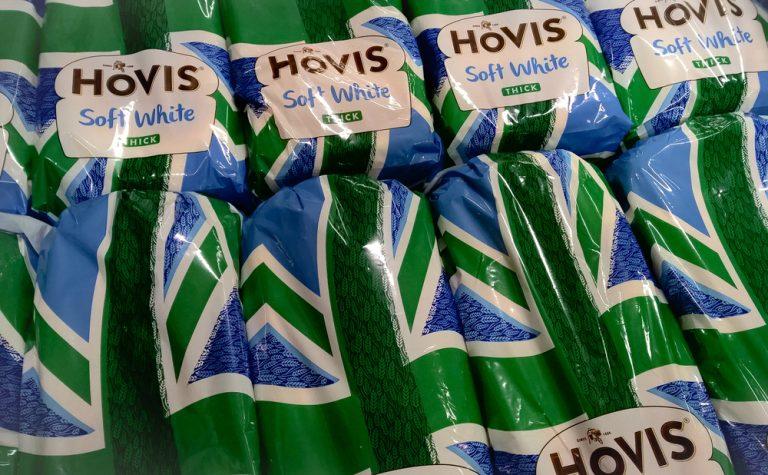
The bread brand Hovis has been sold to Endless for an undisclosed sum.
Following talks, Endless acquired the brand after Newlat Food issued a statement saying that they had withdrawn themselves from the bidding war.
Owned by Premier Foods (LON: PFD) and US investment firm, Gores Group, Hovis is a 134-year old firm that employs 2,800 people across the UK. Sales at the brand surged over lockdown as consumers stockpiled.
The value of the deal has not been disclosed, however, Premier Foods has said they will receive £37m.
Equity firm Endless has said they plan to significantly invest in the Hovis brand to achieve growth plans.
Nish Kankiwala, chief executive of Hovis, said: “Based on our extensive engagement with Endless over the past several months, it became clear that both parties share a commitment to customers and colleagues and for building on Hovis’s heritage by investing in growing both the brand and product range.
“This shared vision makes Endless the best shareholder to support our ambitious plans.”
Mark Lynch, Partner at corporate finance house, Oghma Partners, commented on the deal: “Endless’ modus operandi is to take struggling businesses and drive significant improvement. The incremental performance at assets Karro and Bright Blue have been excellent examples of this – they are therefore logical owners of Hovis for the time being.
“It is possible that they may look to merge the business with the cake business, Bright Blue which should deliver synergies across head office, back office, purchasing and possibly sales and customers. A bigger business could also possibly make the larger entity a candidate for an IPO. Medium term Hovis remains up against two well-funded and well invested competitors in Warburtons and Allied so the challenge will be to improve the competitive position whilst holding on to any cost savings that can be generated.”
Premier Foods shares (LON: PFD) were up 1.75% on Friday morning (0916GMT).
Nasdaq continues surge as investors double down on Big Tech stocks

Despite being wrong about pricing in a decisive Democrat victory, markets were happy to settle with Biden as favourite to win the presidency, as they continued the boom started on Monday. Since Wednesday morning, investors have married optimism over a Biden win with lingering uncertainty, with the result being large buy-ups of monolithic tech equities – which has seen the Nasdaq Composite soar on consecutive days.
Up by around 6% since polling closed, the tech-heavy Nasdaq has so far posted a 2.40% rise on Thursday, up to 11,864 points.
This was led by continued upward trajectories in big tech prices. For instance, Apple bounced over 4% on Wednesday, and between 2.5% and 3% on Thursday. Amazon bounced over 5% yesterday and around the same rate as Apple today. Microsoft rose by over 4% on Wednesday and over 2.5% on Thursday. Alphabet also shot up by a similar rate and added modest gains on Thursday. Finally, Facebook hiked over 7% on Wednesday and increased by around 2.5% on Thursday.
Elsewhere in tech stocks, Tesla posted a 10% bounce between Monday and Wednesday, and added a further 2% on Thursday. Netflix bounced 4% on Wednesday and around 2.5% today. And, while not on the Nasdaq, it’s worth noting Uber’s surge, up around 14% on Wednesday after a successful legal dispute settled in their favour, and then up by almost 2% on Thursday.
This positivity, while not matched by other equities outside of big tech, was somewhat reflected more broadly across US markets. The Dow Jones and S&P 500 both rallied by between 1.5% and 2%, to 28,388 points and 3,504 points respectively.
Speaking on big tech equities’ positivity and the Nasdaq bounce, Spreadex Financial Analyst, Connor Campbell, comments:
“Investors showed no fear of jinxing the election result on Thursday, continuing to full-force barrel into equities on the assumption that Joe Biden will be POTUS come January.”
“Little has changed since this morning. Arizona, Georgia, Pennsylvania and Nevada are all still on a knife-edge,”
“[…] Yet, as they did on Tuesday and Wednesday, the markets have used the likelihood of a Biden presidency, even if it isn’t accompanied by the anticipated ‘blue wave’, as an excuse to drag themselves out of the covid-shaped hole they found themselves in by the end of October.”
IG Chief Economist, Chris Beauchamp, added:“Last week’s selloff looks more and more like pre-election jitters, a bout of nervousness that has been reversed even more swiftly than it appears.”
“It is true that the US election is yet to be officially decided, but Biden seems likely to cross the 270 vote threshold in coming days, potentially rendering Trump’s legal challenges irrelevant, and with this bump in the road removed, stock markets can rally once more.”
Bank of England £150bn QE: is it enough to face off the challenges ahead?
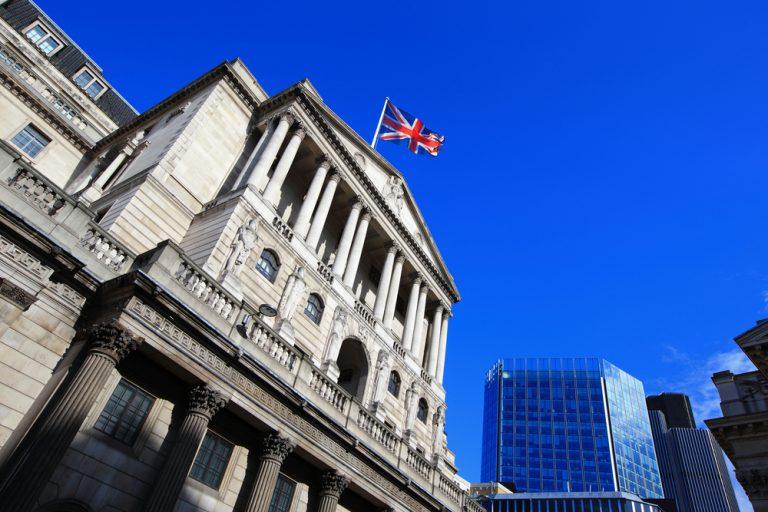
In its statement on Thursday, the Bank of England said “there are signs that consumer spending has softened across a range of high-frequency indicators, while investment intentions have remained weak”. This, and the need to help the government introduce renewed fiscal support during lockdown, saw the central bank announce an additional £150 billion in QE.
Meanwhile, the bank downgrade its GDP forecast for 2020, from a 9% fall, to a drop of 11%. It also downgraded its growth forecast for the new year, down from plus 9.5%, to plus 7.5%, and added that it expects unemployment to peak at between 7.5% and 8% during Q2 2021.
With these considerations in mind, financiers and researchers have weighed in on the latest round of Bank of England QE, and provided contrasting answers to the question: was it was good enough?
On a positive note, housing-market-facing financiers were optimistic about the latest batch of support. Speaking on the bank’s announcement, Managing Partner at Knight Frank Finance, Simon Gammon, commented:
“The Bank of England would clearly like to hold borrowing costs lower for longer in an attempt to spur economic growth, but the cost of mortgages is likely to keep rising while lenders are being swamped with new applications.”
“There were more mortgages approved for house purchase last month than any time since October 2007 and the surge in property market activity is showing few signs of slowing. As a result we’re seeing a huge variety in borrowing costs from lenders, depending on their volume of work and appetite to lend.”
David Ross, Managing Director of Hometrack, adds:
“While there are some negative economic headwinds it’s encouraging to see the Bank of England maintain this historically low interest rate. This, combined with the Stamp Duty holiday, will ensure demand for mortgages remains high however, with fewer products now available, it’s increasingly clear many potential home-movers will miss out.”
In contrast, Fran Boait, executive director of non-profit research group, Positive Money, thinks today’s support should have gone further:
“Our central bank is willing to help finance government spending to help us get through this crisis, and that should be embraced. Sadly the Chancellor seems to be spreading irresponsible myths that there are hard constraints on public spending, even when interest rates on government debt are negative and inflation remains well below target.”
“Monetary policy alone isn’t enough. The fact negative interest rates are even being considered should be a warning sign that the Chancellor needs to pull his weight and spend more. The Treasury must take advantage of the increased headroom afforded by the Bank of England’s bond purchases to boost spending to fund public services, protect incomes and kick-start a green recovery.”
Indeed, with interest rates so low, this period should be seen as the Black Friday of public spending (and debt), as far as the government is concerned. Ms Baoit added that the Bank of England might even consider crediting the government’s ‘Ways and Means’ overdraft with spending money for the Treasury.
These suggestions make some sense. Spend big when you need to, and when it’s cheapest to do so. On the other hand, we shouldn’t turn our noses up at the issue of inflation. As OMFIF Economist, Chris Papadopoullos said back in April, inflation is an issue of national money supply based on how much is borrowed and for how long.
The Bank of England says the UK’s money supply is £2.2 trillion, and tended to grow around 4% a year during the 2010s. And, while a change in money supply ‘rarely causes a proportional change’ in prices, it may give us an idea of the ‘order of magnitude of changes’.
For instance, Mr Papadopoullos stated that: “Borrowing £20bn for a month adds less than 1% to the money supply. Borrowing £200bn for a year or two would raise the money supply by 10%, which may add a few percentage points to inflation.”
On the other hand, and as stated by SEB corporate bank Economist, Marcus Widen, the Bank of England widening its support would not be unreasonable. Indeed, inflationary pressures should be considered, but the central bank’s forecast of 7+% growth in 2021 may yet prove bullish, and thus supplementing the supply of money might not be as painful as some fear. Mr Widen comments:
“The decision to expand the Asset Purchasing Program (APP) more than expected (by some £50bn) must be seen in light of a fast deterioration of the economic situation due to the Covid-19 second wave hitting the UK economy disproportionately more than other nations. The UK government has also expanded fiscal supports, which will most likely continue and allow for the Bank of England (BoE) to continue its APP. Not surprisingly, the BoE reiterated that it is ready to do what is needed if the outlook weakens further.”
“[…] The UK is not only affected by new extensive lockdown measures but also the exit from the EU single market at the end of the year (2020), so the uncertainty about what trajectory the UK economy will take in the short term is immense.”
“All in all, while the UK economy is entering a phase of second wave Covid-19 restrictions and the exit from the EU single market, the BoE’s decision for a larger extension of the APP buys the bank some time, but we cannot rule out it will have to do more.”
Nintendo profits triple amid pandemic

Nintendo has seen profits soar in the six months to the end of September.
The Japanese tech giant saw a surge in demand over lockdown and saw sales triple from 94bn yen to 291.4bn yen (£2.1bn).
Nintendo said previously that it expects 19 million consoles to be sold in the year to March 2021, however, it is increased this figure to 24 million.
The group has also doubled its operating profit forecast by 50%.
According to industry body UK Interactive Entertainment, gaming firms have seen strong trading over the course of the pandemic. According to a report, 45% of games businesses have seen some increase in game revenues since the pandemic started.
“Taken as a whole, the sector has remained resilient and, with a small amount of public support, would be in a prime position to lead the creative industrys’ economic recovery in a post-COVID world,” said UK Interactive Entertainment.
Sunak extends furlough scheme until end of March

The furlough scheme will be extended until the end of March.
Rishi Sunak said in the House of Commons on Thursday that the government will continue to pay 80% of wages as the UK enters a second lockdown.
“We can announce today that the furlough scheme will not be extended for one month, it will be extended until the end of March,” said Sunak today.
“The government will continue to help pay people’s wages up to 80% of the normal amount. All employers will have to pay for hours not worked is the cost of employer NICs and pension contributions.
“We will review the policy in January to decide whether economic circumstances are improving enough to ask employers to contribute more.”
Sunak also confirmed that the support for those self-employed will be more generous. The government will pay 80% of the average profits up to £7,500.
“I also want to reassure the people of Scotland, Wales and Northern Ireland. The furlough scheme was designed and delivered by the government of the United Kingdom on behalf of all the people of the United Kingdom, wherever they live,” he said today.
“That has been the case since March, it is the case now and will remain the case until next March.
“It is a demonstration of the strength of the union and an undeniable truth of this crisis we have only been able to provide this level of economic support because we are a United Kingdom.
“And I can announce today that the upfront guaranteed funding for devolved administrations is increasing from £14bn to £16bn. This Treasury is, has been and will always be the Treasury for the whole of the United Kingdom.”
Frances O’Grady, the TUC general secretary, responded to the chancellors statement and said: “Agreeing to extend the job retention scheme at 80% until the spring, as unions have called for, is a positive step.
“But there are still gaps in the government’s support package. It’s not right to ask millions of low-paid workers on furlough to survive on less than the minimum wage. The Chancellor must fix the scheme so their pay is topped up to 100%.
“And he must offer to help to those self-employed workers who are falling between the cracks. We also need an urgent boost to both sick pay and universal credit. No-one should be plunged into financial hardship if they have to self-isolate or if they lose their job.”
AstraZeneca reports rise in sales & revenue

AstraZeneca (LON: AZN) has revealed a rise in sales and revenue for the year to date.
The pharma giant said in its latest trading update that sales had grown 9% to $18,879m whilst overall revenue had increased 8% compared to the year previously.
Pascal Soriot, the chief executive, commented: “We made encouraging headway in the quarter, despite the ongoing disruption from the COVID-19 pandemic. Highlights of the sales performance included further success in Oncology and an acceleration in the progress of Farxiga.
“Our pipeline also excelled, with Farxiga expanding its potential beyond diabetes and heart failure with ground-breaking new data in chronic kidney disease, while regulatory submission acceptance was achieved for anifrolumab in lupus. In the fight against COVID-19, we advanced our vaccine collaboration with the University of Oxford and are launching Phase III trials for our long-acting antibody combination for the prophylaxis and treatment against COVID-19 for people who need an immediate defence or whose weaker immune systems mean they are less likely to benefit from a vaccine.
“We continue to progress in line with our expectations and maintain our full-year guidance, which is underpinned by the strategy of sustainable growth through innovation,” Soriot added.
AstraZeneca is working with the University of Oxford on a coronavirus vaccine. It said yesterday that it had missed targets of delivering 30 million doses of the vaccine to UK officials by the end of September. Instead, the company will deliver four million doses.
“The predictions that were made in good faith at the time were assuming that absolutely everything would work and that there were no hiccups at all”, said UK vaccine taskforce chair, Kate Bingham.
AstraZeneca shares (LON: AZN) are trading at 8.550,00 (1205GMT).
The Works shares surge on strong H1 trading
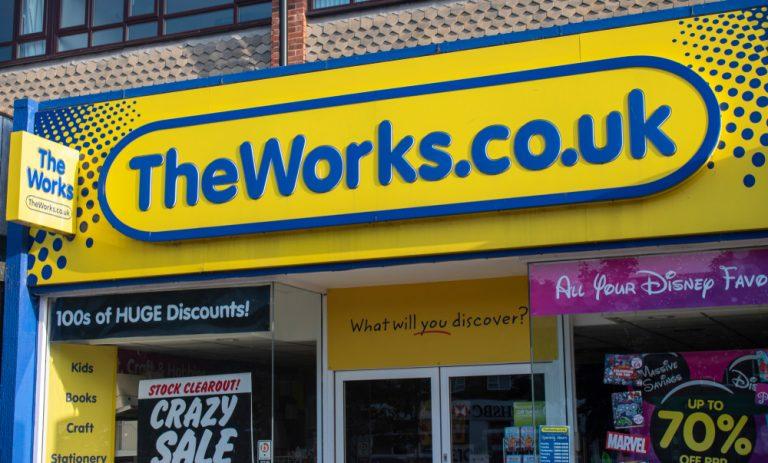
The Works shares (LON: WRKS) have soared on Thursday morning after the group hailed strong post-lockdown trading.
For the 19 weeks ended 25 October 2020, excluding the lockdown, like-for-like sales increased by 10.6%. Including the lockdown when all stores were closed, sales fell by 7%.
“We have been encouraged by the performance during the period, which was better than the ‘base case” scenario we modelled when the Covid-19 pandemic was in its earlier stage,” said The Works in a statement.
“Performance in recent weeks has strengthened further and, we believe that to some extent, sales have been brought forward as customers have acted in anticipation of further restrictions.”
The retailer will not be issuing profit guidance for the full year FY21 currently due to the current uncertainty.
Gavin Peck, Chief Executive Officer of The Works, commented: “I have been pleased with the positive response of our customers to our proposition which resulted in strong trading since the reopening of our stores; the further improvement in performance in recent weeks only serves to underline this. I would like to take this opportunity to acknowledge the hard work and commitment of all colleagues throughout the business, who have helped to deliver this performance and ensured that we have continued to provide excellent service whilst maintaining safe shopping environments.
“Naturally, it is disappointing that we have had to close most of our stores again, so close to Christmas, but the strong performance since the last lockdown and our sound financial position mean we are well placed, and we are focussed on ensuring that we reopen safely, and are geared up to make up as much lost ground as possible in December.”
The Works shares (LON: WRKS) soared +28% on opening and are currently up 27.38% at 21,40 (0946GMT). Shares have fallen from a year high of 77.25.
BoE injects £150bn into economy and predicts sharp unemployment rise
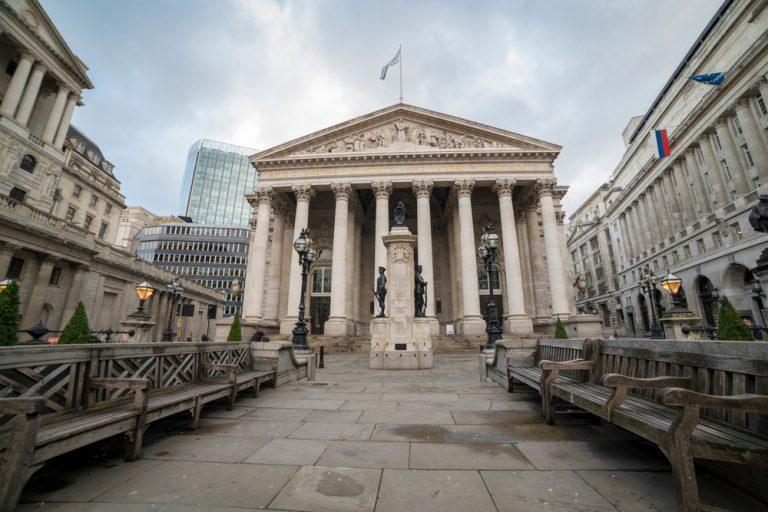
The Bank of England (BoE) has said that it will be injecting £150bn into the economy as an attempt to ease the UK into the second lockdown.
In the last three months of the year, the BoE has said it expects the economy to shrink down to 2%, however, will then bounce back in the new year assuming restrictions loosen.
The BoE said: “There are signs that consumer spending has softened across a range of high-frequency indicators, while investment intentions have remained weak…
“Developments related to Covid will weigh on near-term spending to a greater extent than projected in the August Report, leading to a decline in GDP in 2020 Q4.”
The Bank of England has also commented on employment. It said that it expects unemployment to grow from the current 4.5% to peak at 7.75% in the second quarter of 2021.
The BoE said in today’s report: “In the MPC’s central projection, GDP does not exceed its level in 2019 Q4 until 2022 Q1. As a result, unemployment is elevated.
“The unemployment rate is projected to peak at around 7¾% in 2021 Q2, before declining gradually over the forecast period as GDP picks up.”
The BoE has said it expects the UK economy will shrink by 11% this year, commenting: “Those restrictions include heightened England-wide measures for the period 5 November to 2 December, following an intensification of regional and subregional tiered restrictions; the five-level system of restrictions announced by the Scottish Government that came in on 2 November; the firebreak lockdown in Wales scheduled to end on 9 November, after just over two weeks; and a four-week period of additional restrictions in Northern Ireland ending on 13 November.
“Subsequently, restrictions are assumed to loosen somewhat. For the UK as a whole, the average level of restrictions that was prevailing in mid-October is assumed to take effect, and remain in place until the end of 2021 Q1.”
Sainsbury’s to cut 3,500 jobs as group swings to loss
Sainsbury’s (LON: SBRY) has announced plans to cut 3,500 jobs.
The supermarket will closes meat, fish and deli counters as well as 420 standalone Argos stores.
The news came as Sainsbury’s posted a pretax loss of £137m for the six months ended 19 September. This loss is down from a £9m profit a year earlier.
Simon Roberts, Sainsbury’s chief executive, said: “We are talking to colleagues today about where the changes we are announcing in Argos standalone stores and food counters impact their roles.”
“We will work really hard to find alternative roles for as many of these colleagues as possible and expect to be able to offer alternative roles for the majority of impacted colleagues.”
The changes come as online sales have increased from 19% a year ago to 40%.
Despite the new job cuts, the group has said that it expects to create 6,000 net new jobs by the end of the year.
The supermarket will pay out £232m in dividends.
Commenting on the latest results from Sainsburys’ Julie Palmer, partner at Begbies Traynor:
“Despite rising sales the big news from Sainsbury’s is that as we dive head first into lockdown and the run up to Christmas, it is closing Argos stores and potentially cutting jobs to restructure its model for the coronaconomy. As more businesses evolve to fit the current climate this will not be abnormal and we will see more restructuring and redeploying resource in the final quarter of 2020 and the first of 2021.”
“In the case of Sainsbury’s, its business model was already in transition as planned Argos closures were taking place, but in order to keep its market share in the next few months it has to seek ways to keep the new customers it has won this year.”
In October, Sainsbury’s announced plans to partner with Deliveroo so shoppers will be able to purchase up to order from more than 1,000 products through the Deliveroo app and have them delivered within 20 minutes. Clodagh Moriarty, Sainsbury’s Group Chief Digital Officer said, “With more and more shoppers looking for convenient and affordable meals delivered to their doors, our trial with Deliveroo brings our great value hot food direct to customers’ homes. We’re committed to making it as quick and easy as possible for our customers to shop with us and we’ll be listening to their feedback throughout the trial to understand how we can best serve their hot food delivery needs. We’re excited to see what our customers think before deciding if, how and where we go next with the offer.” Sainsbury’s shares (LON: SBRY) are -2.73% at 203,20 (0843GMT).