
John Lewis to reduce size of flagship store
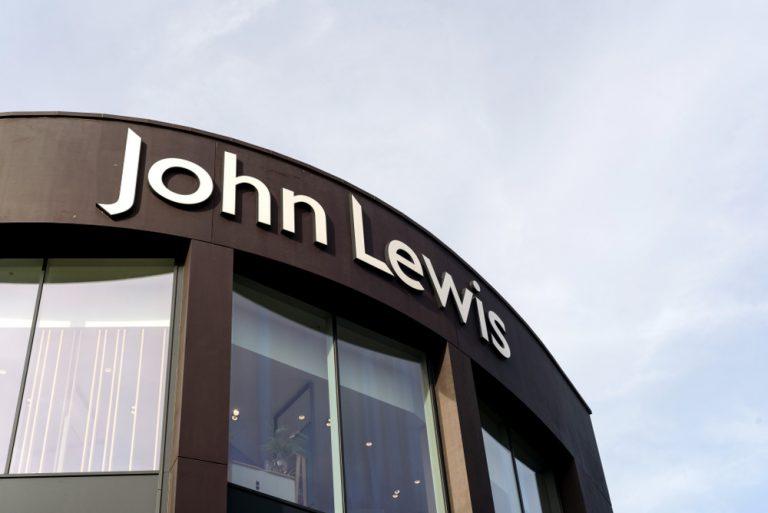
As shoppers move online, John Lewis has revealed plans to reduce the size of its flagship Oxford Street store.
The department store has applied for planning permission to turn three floors into office space, which it will rent out.
“Oxford Street is our largest and oldest shop and has a surplus of non-selling space compared to our newer shops. We have therefore made a planning application for the upper floors of the shop, to give us greater flexibility on how we use this space more efficiently in future, with the potential to have office space at the top of the building,” said a spokesperson.
“While no decisions have been made, any plans would look to further improve our customers’ experience.”
The group has so far closed 50 stores this year and expected to post high losses when it reveals half-year results on Thursday.
Before the pandemic, the department store showed signs of struggling as the group posted a 65% fall in sales in January this year.
in March, John Lewis announced plans to cut its annual staff bonus to the lowest level in almost 70 years.
Tui shares fall after CMA investigation
Tui (LON: TUI) will be refunding all cancelled holiday packages by the end of September.
The Competition and Markets Authority (CMA) announced this morning that after an investigation following thousands of complaints, the holidaymaker will be refunding within the allotted time.
Amid the Coronavirus crisis, many holiday operators have struggled to refund customers on time due to a large number of cancellations.
The chief executive of the CMA said:
”It’s absolutely essential that people have trust and confidence when booking package holidays and know that if a cancellation is necessary as a result of coronavirus, businesses will give them a full, prompt refund. The CMA’s action ensures that Tui UK customers will get their refunds by the end of the month.”
As a result of this morning’s news, shares in the company (LON: TUI) fell 6.6%.
‘’TUI is facing a perfect storm of a dramatic fall in demand for winter holidays and a scramble from thousands of consumers desperate to get a refund on spring and summer cancellations,” said Susannah Streeter, senior investment and markets analyst at Hargreaves Lansdown.
“The travel company has now promised to clear a backlog of refunds by the end of the month following an investigation by the UK’s competition authority.
“That’s clearly left TUI seriously out of pocket, given that the company already suffered a €1.1bn loss in the second quarter of this year,” she added.
Is the European Commission 55% emissions reduction target ambitious enough?
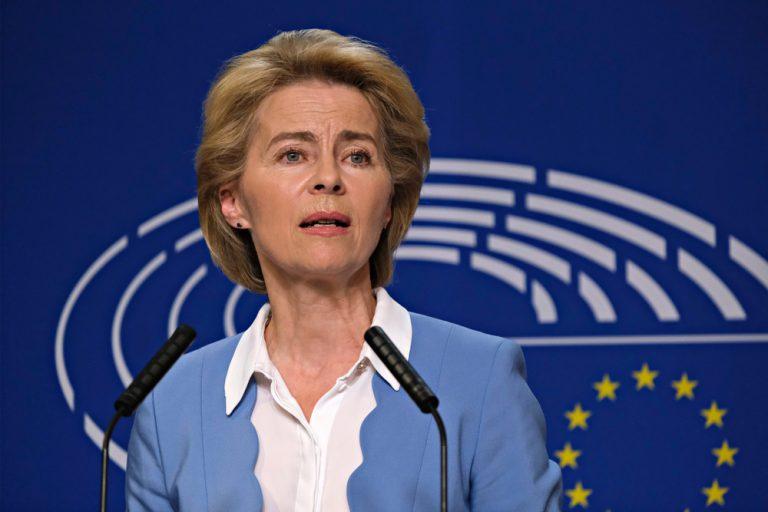
By way of the State of the Union speech delivered by President Ursula von der Leyen, the European Commission has proposed to increase its emissions reduction target to ‘at least’ 55% by 2030.
The renewed emissions reduction target follows the previous commitment to a 40% reduction, and has been made as part of the EU’s plans to rebuild in a post-pandemic world.
In service of this new target being met, Ms von der Leyen stated that a European Green Deal will act as a ‘blueprint’, and said if every sector of industry plays their part, Europe will be the first ‘climate-neutral continent’ by 2050.
The EC President added that with the bloc successfully reducing its emissions by 25% since 1990, alongside 60% economic growth, these new goals are ambitious but manageable. In order to ensure parity of emissions reduction, the Juts Transition Fund will “support the regions that have a bigger and more costly change to make”.
She believes that if other countries around the world follow the EU’s lead, then the world will be able to keep global warming beneath 1.5 degrees Celsius.
To become the 1st climate-neutral continent, we’re proposing to increase the 2030 target for emission reduction to at least 55%. I recognise this is too much for some & not enough for others. But our economy & industry can manage this. And they want it, too.#EUGreenDeal #SOTEU pic.twitter.com/fbm5J1yEZd
— Ursula von der Leyen – Follow #SOTEU (@vonderleyen) September 16, 2020
Is the European Commission being ambitious enough with its emissions reduction?
Today’s proposal falls short of the 60% target endorsed by European Parliament’s Environment Committee last week, and stands considerably below the requisite 65% threshold to prevent warming of over 1.5 degrees Celsius – set out in the Paris Agreement. This latter figure is aligned with the Paris Agreement’s equity principles, which are based on how much warming a country has already contributed towards as a consequence of past fossil fuel usage. The number was also set out by Progressive Alliance of Socialists and Democrats MEP, Jytte Guteland, on the basis that it is “what scientists said is necessary”. Commenting on what he believes to be a conservative emissions reduction target set by the European Commission today, Kingswood Group Investment Manager, Harry Merrison, said: “The post Covid-19 economic recovery offers a once in a generation opportunity to embrace a low carbon future and leave behind out-dated business models. Today’s news is progressive, but is it ambitious enough given the inevitability of decarbonisation? LGIM research indicates that Millennials were more likely than any other generation to want to reduce their exposure to the fossil fuel industry, despite any potential consequences. Even if there was a resulting performance impact, 45% of Millennials would opt to divest their pension from fossil fuels.”Energean shares rally 20% on gas sales and purchase agreements worth $2.5bn

Oil and gas exploration and production company Energean plc (LON:ENOG) saw its shares rally on Wednesday as it announced that its subsidiary, Energean Israel, had signed two new Gas Sales and Purchase Agreements (GSPAs).
The two contracts are expected to represent a combined annual yield of 1.4 billion cubic metres per year of gas, and increase total contracted gas sales at the Karish project to around 7.0 billion cubic metres per year.
At this rate, the agreements represent contracted revenues of more than $2.5 billion over their lifespans. The agreements also require no further capital investment, save for Karish North, which Energean Israel is expected to take its Final Investment Decision on later in the year.
The company stated that the majority of the quantities represented by one of the GSPAs will be used to supply gas to the Ramat Hovav Power Plant Limited Partnership – an alliance between the Edeltech Group and Shikun & Binui (TLV:SKBN). The remainder of the quantities are represented by a second GSPA signed with an RH Partnership affiliate, for the supply of gas for other gas stations.
Energean response to the GSPAs
Commenting on the agreements, company CEO, Mathios Rigas, stated:
“We are delighted to have signed these additional gas sales agreements, which increase firm gas sales to 7 bcm/yr on plateau from our flagship Karish gas project, which is on track to deliver first gas in 2H 2021 and I want to thank Edeltech and Shikun & Binui for their continued trust.”
“We remain committed to continue bringing competition and security of supply to the Israeli gas market even after we fill the Karish FPSO to its maximum 8 bcm/yr capacity.”
“The new contracts we signed today further strengthen our secured revenues stream, which is well-insulated against future commodity price fluctuations, and provide cash flows that will support our strategic goal of paying a sustainable dividend to our shareholders.”
Investor notes
Following the update, Energean shares rallied 20.50% or 107.20p, to 630.00p a share 16/09/20 12:46 BST. Though this is an impressive rally, the company’s shares are still trading more than 33% lower than they were on the same day last year. Berenberg reaffirms its ‘Buy’ rating on the company’s stock, and upped its 12-month target price from 910.00p, to 930.00p. The company’s p/e ratio currently stands at 13.47.IAG shares slide as BA boss admits: “we are fighting for survival”
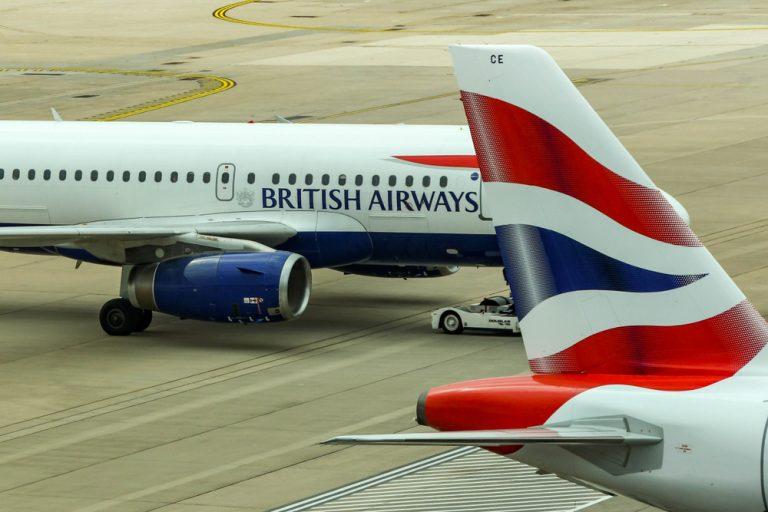
Shares at International Consolidated Airlines Group (LON: IAG) have slid almost 4% after British Airways (BA) chief executive Alex Cruz told MPs: “We’re still fighting for our own survival”.
Concerns over the struggling airline came to ahead as Cruz spoke to the Transport Select Committee on Wednesday, confirming a slump in travel caused by the renewal of some lockdown measures as well as the end of the summer holiday period.
Pilot unions and MPs had previously accused BA of adopting a “fire and rehire” policy – alleging some staff were facing pay cuts of up to 50% – however Mr Cruz was adamant that this is now “off the table”.
He added: “There will be no need to issue new contracts”.
BA reached an agreement with trade union Unite last week, after a warning that 10,000 of the 42,000 company staff registered at the start of the coronavirus pandemic might lose their jobs.
Transport Select Committee Huw Merriman previously described BA’s “fire and rehire” policy as a “national disgrace”, and Labour MP Ruth Cadbury pointed out that sister airline Ryanair (LON: RYA) had “treated its staff somewhat better”.
Speaking to the Committee, Mr Cruz outlined the steep path ahead to BA’s economic recovery:
“Last week we flew 187,000 passengers. The same week in the previous year we flew almost a million.
“We remain worried about the virus in the winter season. People are still afraid of travelling. We are having weekly changes to the quarantine list.
“All the data that we get are still pointing at a slow recovery process”.
Mr Cruz has already taken a 33% pay cut, but the airline is reportedly still burning through £20 million in cash per day. It has temporarily suspended all of its Airbus A380 jets due to a lack of flights, and has submitted plans to scrap its entire Boeing 747 “Jumbo jet” fleet.
He has been critical of the UK government’s decision not to implement coronavirus testing at airports, and called for MPs to “enhance” the current scheme to “make it more consistent and deliver less change”.
“We need more regional considerations in order to fly to places where the rates of infection are lower than in the UK. If we could start [testing] tomorrow, it would help the British economy”.
The IAG share price slid 3.77% to 128.38p as of BST 12:51 16/09/20, following a steep decline from its peak of 279.30p back in June when quarantine measures were first lifted.
Tekcapital shares book palatable 30% rally on MicroSalt distribution agreement

Intellectual property investment group, Tekcapital PLC (AIM:TEK), saw its shares spike on Wednesday morning, following its announcement that its subsidiary, Salarius, had confirmed a distribution agreement with Gehring-Montgomery.
In its statement, Tekcapital states that Gehring-Montgomery is a leading food and raw materials distributor for commercial and industrial manufacturers in food, automotive, coatings, adhesives, pharma, and personal care industries in North America.
The partnership between the two companies is set to involve an ‘aggressive’ B2B outreach initiative to source new customers, attendance at food trade shows such as Expo West and Supply Side West, and securing customer opportunities outside of the US.
The product being distributed as part of the new deal is Salarius’s MicroSalt, which are fast-dissolving salt crystals that are designed to provide the same sensation as regular salt but with 50% less sodium. The company stated that the product is also Kosher, Non-GMO, all-natural and gluten-free.
It added that with the global savory snacks market being expected to reach US$108 billion by 2021 – and the low sodium ingredients market anticipated to hit US$1.76 billion by 2025 – the company feels as though Microsalt ‘is a food ingredient whose time has come’.Responding to the deal between Tekcapital’s Salarius and Gehring Montgomery
Commenting on the news, Salarius CEO, Victor Hugo Manzanilla, stated:“We are extremely energized about our partnership with Gehring-Montgomery and working closely with their team of sales experts to increase brand awareness and accelerate sales of Microsalt ® . Our partnership is a win-win-win as we are offering their customers a unique, on-trend, innovative ingredient that will also help consumers lower their sodium intake.”
Speaking on the deal, Gehring Montgomery President and Managing Director, Mark Bitting, stated:“Our partnership with Salarius complements our overall U.S. strategy offering, providing a highly innovative specialty, such as “Microsalt”, a cutting-edge ingredient, allowing consumers to lower their sodium intake yet maintain the product’s full flavor. This meets the challenges of the general public’s demand for ground-breaking, healthy alternatives that result in sodium reduction formulation,”
Investor notes
Following the update, Tekcapital shares rallied 30.55% or 3.06p to 13.06p a share 16/09/20 12:00 GMT. This price is up 76.81% on the same day year-on-year, though far shy of the company’s year-to-date peak of 20.00p seen in mid-April. The company currently has a p/e ratio of 1.36.Thomas Cook is back despite tourism crisis
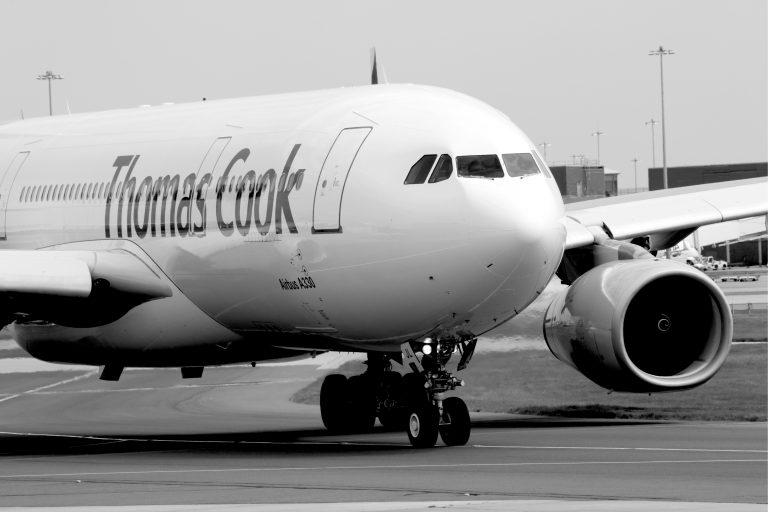
Following its collapse a year ago, Thomas Cook has relaunched as an online-only travel company.
The holiday-maker ceased trading last year after it collapsed and left 150,000 holidaymakers stranded in holiday destinations.
Despite the tourism crisis amid the Coronavirus pandemic, Thomas Cook is back with a “Covid-ready” website, which sells holidays to beach resorts and cities on the UK government’s travel corridor list.
Whilst international holidays have fallen by 65% in the first half of 2020, the group’s chief executive remains positive about the future of the company.
“We are launching now clearly aware of the short-term challenges posed by the pandemic,” said Alan French.
“We know Brits are keen to travel but feel nervous about safety and any changes to government rules on quarantine. We are only selling destinations on the travel corridor list and all the hotels are flexible. We won’t charge customers a fee to change their holidays if government rules change,” he added.
The group is now backed by Fosun Tourism Group, which also owns Club Med.
Thomas Cook previously had 9,000 employees, however, operations have scaled back and the new company has just 50 employees.
Rory Boland, editor of Which? travel, has warned customers about booking holidays at this time – even if companies are offering flexible tickets.
“While some previous Thomas Cook customers may be pleased to see it relaunching as an online travel agent, the events of the past few months should act as a reminder that just because a brand is a household name it does not mean you can necessarily rely on it to treat you fairly,” he said.
“While package holidays booked through Thomas Cook would be Atol protected, many of the big online travel agents have proven time and time again through the pandemic they aren’t able to offer the same level of protection or customer service as better, traditional tour operators, making it difficult to secure refunds that customers are legally owed for cancelled holidays,” he added.
Kim Kardashian announces Facebook freeze, shares fall

Facebook shares (NASDAQ: FB) sunk after Kim Kardashian announced plans to freeze her account in aid of the #StopHateforProfit campaign.
Organised by civil rights activists, the campaign is in order to tackle the spread of “hate, propaganda and misinformation”.
She has called on followers to also freeze her account. Kardashian has 188m followers.
Celebrities including Leonardo DiCaprio, Katy Perry, and Jennifer Lawrence will freeze their accounts for 24 hours on Wednesday.
Following Kardashian’s announcement to join, shares in Facebook dipped about $3. However, they recovered and closed higher that same day.
“I can’t sit by and stay silent while these platforms continue to allow the spreading of hate, propaganda and misinformation – created by groups to sow division and split America apart – only to take steps after people are killed,” said Kardashian in a statement.
“Misinformation shared on social media has a serious impact on our elections and undermines our democracy,” she added.
Founder Mark Zuckerberg has said the tech company plans to do more to tackle harmful or misleading posts ahead of the US election.
“The 2020 elections were already shaping up to be heated. During this moment, Facebook will take extra precautions to help everyone stay safe [and] stay informed,” he said in a statement.
Facebook shares (NASDAQ: FB) are currently trading +2.36% at 272,42 (0708GMT).
Hitachi poised to abandon Welsh nuclear project
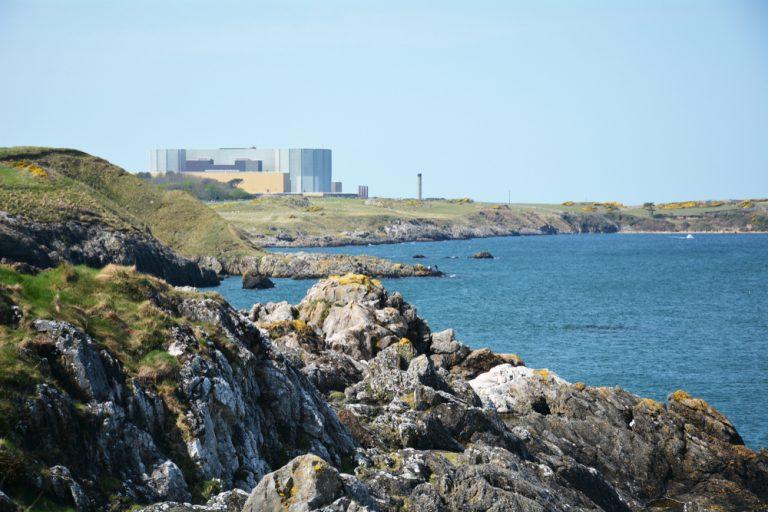
Japanese conglomerate Hitachi (TYO: 6501) is set to pull out of plans to build a nuclear power station at Wylfa Newydd on the island of Anglesey, off the north coast of Wales.
A formal decision is expected at Hitachi’s board meeting in Tokyo on Wednesday. The isle of Anglesey council however confirmed that Hitachi had written to them to confirm that it would be withdrawing from the project.
The BBC reported that construction of the £15-£20 billion power plant had been put on hold in January last year after rising costs jeopardised a funding agreement with the UK government.
Hitachi purchased the site from two German utility companies for £697 million in 2012. It was hoped that the project would contribute to the UK’s commitment to cut emissions and reach its “net zero carbon” target by 2050.
The announcement also comes as a massive blow to efforts to reduce reliance on China, which has historically been keen to fund nuclear projects in the UK.
However, Reuters reported in July that the UK-China feud over Hong Kong and Huawei’s controversial 5G may threaten proposed collaborations on nuclear projects in the UK.
Hitachi’s withdrawal appears to have been relatively unexpected by staff on the Anglesey site, with executives telling the Financial Times that they had been “making progress in recent weeks” and “holding detailed discussions with UK officials”.
The decision appears to have been spearheaded by officials in Tokyo. An anonymous figure “close to the project” said that Hitachi was “totally quitting” and stated: “All hell is breaking loose. So much for their 100-year commitment”.
The withdrawal bruises the UK’s ongoing efforts to establish a significant nuclear presence. There is currently only one new power plant under construction – helmed by EDF at Hinkley Point in Somerset – but even that is over-budget and years behind schedule.
Anglesey council leader Llinos Medi commented on Hitachi’s decision, simply stating: “This is very disappointing, particularly at such a difficult time economically”.
Lego Group chases sustainability goal by 2025

Danish-owned family favourite toymaker Lego Group has announced a pledge to make all of its packaging sustainable by 2025, as well as find a climate conscious alternative to its iconic oil-based plastic brick toys.
In an article on the Lego website, the brand said that it would invest $400 million over the next three years to “accelerate sustainability and social responsibility initiatives” and announced that it believes it is “increasingly urgent and important to prioritise environmental and social activity”.
The company has said that it aims to phase out all clear plastic bags with “easy-to-open recyclable, sustainably sourced paper bags – certified by the Forest Stewardship Council” as part of the brand’s wider efforts to cut back on waste.
It follows Lego’s announcement back in 2015 to make all of its products with sustainable materials by 2030. It has already trialed a range of prototype gift bags with customers, and reduced the size of its packaging by 14%.
Finding a different material for the brand’s classic plastic toy bricks has proved a real challenge, however. A team of 150 engineers and scientists have been enlisted over the past 5 years to develop a plant-based or recyclable alternative, but so far none have proved successful.
The brand has cited issues with enabling the bricks to both stick together and come apart easily. Lego is currently testing bio-polyethylene – a form of plastic made from ethanol and produced using sugarcane – but has stated that studies have shown that the bricks are too difficult to separate to be viable as children’s toys.
Lego vice president Tim Brooks stated, “The difficulty is getting to where the bricks have the same colour, the same shine, the same sound”.
Millions of children around the world have been urging Lego to switch to more sustainable materials, and have been instrumental in the brand’s pledge to cut back on waste.
Chief executive Niels B Christiansen explained to The Guardian:
“We have received many letters from children about the environment asking us to remove single-use plastic packaging. We have been exploring alternatives for some time and the passion and ideas from children inspired us to begin to make the change”.
He added that the brand has a crucial responsibility to educate future generations about climate issues, and to make sure that its products fall in line with the beliefs of its target audience:
“We cannot lose sight of the fundamental challenges facing future generations. It’s critical we take urgent action now to care for the planet and future generations.
“As a company who looks to children as our role models, we are inspired by the millions of kids who have called for more urgent action on climate change. We believe they should have access to opportunities to develop the skills necessary to create a sustainable future.
“We will step up our efforts to use our resources, networks, expertise and platforms to make a positive difference”.