UK household debt to reach £6bn amid pandemic

1
The StepChange debt advice charity has warned that households in the UK are expected to build up £6bn in debt amid the Coronavirus pandemic. Due to the growth of households falling behind on credit card payments and utility bills, a total of 4.6m households could risk dangerous levels of debt. In response, the Treasury has said they plan to fund debt advice services by an additional £38m. “We know that some people are struggling with their finances during this difficult time, which is why we want to make sure people can access the help and support they need to manage their debts and get their finances back on track,” said John Glen, economic secretary to the Treasury. Research by YouGov has shown that each affected adult has accumulated an additional £1,076 of arrears and £997 of debt since the start of lockdown. The chief executive of StepChange, Phil Andrew, said: “We were already dealing with a debt crisis, but COVID has so far added another four million people and counting to the number who are going to need help finding their way back to financial health. With £6bn of additional household debt directly attributable to the effects of the pandemic, this is a problem that isn’t going to solve itself.” “As a charity, we have our own part to play. Like other debt charities, we are gearing up for a significant increase in demand for our usual services. We are also working on a specific solution to help people whose finances have been hit by the pandemic and who need a short term helping hand to get back on track without jeopardising their credit status.” “The false calm in which we find ourselves while furlough and forbearance take the strain will not last indefinitely. We will be ready to help as more people find their debt problems crystallising over the coming months.”  

FTSE 100 hits 3-month high

The FTSE 100 continued it’s march higher on Monday as London’s large cap index briefly traded above 6,500, the highest levels for three months. The rise in equities follows a bumper US jobs report that pointed to 2.5 million jobs being added to the US economy in May, as opposed to a loss of 8 million jobs. The shock jobs data suggests the post-coronavirus lockdown is well ahead of all economist expectations, and has fuelled appetite for risk assets such as equities. However, not all economic data has been as positive with Eurozone GDP falling 3.2% in the first quarter and German export data showed further economic contraction with exports falling 15% in April. Nonetheless, analysts see these softer economic readings as being largely priced into equity markets and instead are focusing on the reopening of economies and associated recovery. “The market continues to view all of these economic reports as rear-view mirror stuff, as optimism over economic re-openings continues to drive sentiment,” said Michael Hewson, chief market analyst at CMC Markets.

Global jobs

The US jobs report has caused short term optimism but multinational companies are still navigating lower demand. Government schemes such a the UK’s furlough scheme have provided support to employers thus far but will soon evaporate. Signalling the longer term impact of the coronavirus lockdown, markets assessed further job cuts to major global brands listed on the UK’s exchanges. FTSE 100 oil major BP announced they were to cut 10,000 of their global workforce whilst luxury fashion brand Mulberry said they were going to slash their staff by 25%. The BBC reported BP CEO said in an email to staff: “The oil price has plunged well below the level we need to turn a profit.” “We are spending much, much more than we make – I am talking millions of dollars, every day.” If this proves to be a theme throughout other industries, the US jobs report and subsequent optimism in stock markets could prove premature.

Travel and leisure shares

The FTSE 100’s travel shares have flown over the past week and were again among the risers on Monday despite a 14-day quarantine coming into effect. “The surge in travel- and airline-related names comes on the day when the UK implements a quarantine for overseas travel, perhaps the very definition of shutting stable doors after the horse has bolted,” said Chris Beauchamp, Chief Market Analyst at IG. “With lockdowns easing across Europe and no sign of a second infection wave, this move has been staunchly opposed by airlines, and it looks like the market expects the restriction to remain in place for only a limited time,” Beauchamp said.

Mulberry to cut 25pc of workforce, shares fall

0
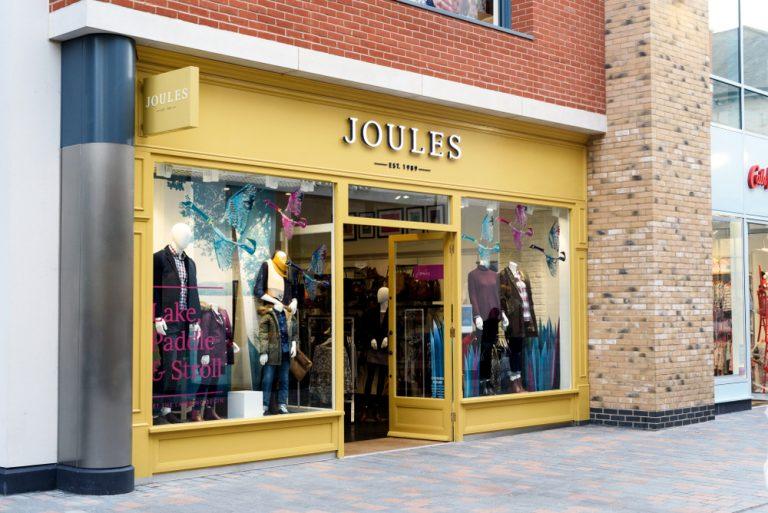
After a fall in demand amid the Coronavirus pandemic, Mulberry (LON: MUL) has announced plans to cut its global workforce by 25%. The luxury handbag maker employs 1,500 people globally. The redundancies will affect people across the head office, stores and manufacturing. Thierry Andretta, the group’s chief executive, said in a statement: “Launching a consultation process has been an incredibly difficult decision for us to make but it is necessary for us to respond to these challenging market conditions, protect the maximum number of jobs possible and safeguard the future of the business.” “In spite of the good performance of our sector-leading digital and omni-channel platform, and our global network of digital concessions, the shutting of all our physical stores has had, and will continue to have, a marked effect on our business.”

“We remain confident in the strength of the Mulberry brand and our strategy over the long-term,” he added.

Stores in the UK are set to re-open from 15 June, however, revenue will continue to be affected by the social distancing measures.

“Even once stores reopen, social distancing measures, reduced tourist and footfall levels will continue to impact our revenue,” said Andretta.

The group has already opened stores in South Korea, China, Europe, and Canada.

Shares in Mulberry have fallen 30% over the course of the year. This morning, shares in the group are trading down 5.61% at 185.00 (1210GMT).

AstraZeneca approaches Gilead over possible merger

It has been reported AstraZeneca (LON:AZN) approached US-based Gilead about a possible merger that would create one of the globe’s largest pharmaceutical companies. If the merger were to go ahead, the new company would be the world’s foremost organisation in the fight against COVID-19 given the development of vaccines and treatments at the respective companies. Despite an initial buzz around the merger, it was later reported by the Times that AstraZeneca dropped their interest in the deal. It is common for companies to decline media comment during merger talks and sources provide information under on the understanding anonymity, making it hard to verify progress of any talks. A spokesman for AstraZeneca said they do not comment on “rumors or speculation’ whilst Gilead declined to comment.

COVID-19 treatment

AstraZeneca has recently announced they are working on the provision of 2 billion vaccine doses should it receive approval from ongoing trials. Whilst AstraZeneca is working on a potential vaccine, Gilead is the only treatment that is approved in the US to treat COVID-19. Gilead’s anti-viral drug, Remdesivir, received emergency approval from the FDA after a number of trials found positive effects in patients with severe COVID-19. Despite the positive results, other studies found little or no positive effects and there is some scepticism around the long term impact of the drug. Notwithstanding the development of COVID-19 treatments and vaccines, the new organisation would have a significant pipeline of potential drugs for cancer and other life-threatening diseases. AstraZeneca has recently released updates on cancer drug Tagrisso which has the potential to be a blockbuster for the UK-based company. These pipelines may also be a stumbling block for a merger because Gilead’s pipeline could provide investors with significant value without the interference of AstraZeneca. In addition, the sheer size of the two companies would make it a difficultly slow process to push through and have approved during lockdown and social distancing. Shares in AstraZeneca (LON:AZN) were 2.5% softer at 972p at lunchtime in London trade.  

Ryanair to continue flights despite new quarantine rules

1
The Ryanair boss has insisted the airline will continue all flights throughout summer, despite new quarantine rules for travelers. From Monday all passengers arriving in the UK must self-isolate for 14 days. However, for airline boss, Michael O’Leary, these rules are “rubbish”. Speaking to the BBC on Monday, he said “British people are ignoring this quarantine. They know it’s rubbish”. His comments come after Ryanair, easyJet (LON: EZJ) and British Airways owner, IAG, (LON: IAG) started legal action against the government to try and overturn the new rules that require travelers to self-isolate for two weeks. Following a letter from the three airlines, a Ryanair spokesperson said: “These measures are disproportionate and unfair on British citizens as well as international visitors arriving in the UK. We urge the government to remove this ineffective visitor quarantine which will have a devastating effect on UK’s tourism industry and will destroy even more thousands of jobs in this unprecedented crisis.” The new rules are designed to prevent a second wave of the Coronavirus and will be reviewed every three weeks. The chief executive of Heathrow Airport has also criticized the government measures, saying that up to 25,000 jobs could be lost if these restrictions weren’t relaxed soon. “We cannot go on like this as a country,” said John Holland-Kaye. “We need to start planning to reopen our borders. If we don’t get aviation moving again quickly, in a very safe way, then we are going to lose hundreds of thousands if not millions of jobs in the UK just at the time when we need to be rebuilding our economy, he added. “76,000 people are employed at Heathrow. That represents one in four households in the local community, so if we start cutting jobs en masse it will have a devastating impact on local communities.” Shares in Ryanair (LON: RYA) are trading at 12.98 (1126GMT).

AstraZeneca pledges to mass produce potential Coronavirus vaccine

1
British pharmaceutical company AstraZeneca (LON:AZN) has stated that it will begin producing doses of its potential Coronavirus vaccine, while awaiting the results from its new treatment’s trials. Astrazeneca Chief Executive Pascal Soriot, told BBC Radio 4’s Today programme, “We are starting to manufacture this vaccine right now. “And we have to have it ready to be used by the time we have the results. “Of course, with this decision comes a risk but it is a financial risk and that financial risk is that if the vaccine doesn’t work.” “We will find this out at the end of August, then all the materials, all the vaccines we have manufactured will be wasted. “We felt that there are times in life that corporations need to step up and contribute to resolving a big problem like this one, so decided to do it at no profit.” he finished. Initial testing was carried out on 160 healthy volunteers between the ages of 18 and 55, with the next phase of testing due to be carried out on an additional 10,260 subjects, including elderly and child participants. Should the trials yield positive results, the company will continue to produce the vaccine to a capacity of two billion planned doses, following the signing of two new contracts on Thursday. Last week, the company announced a manufacturing deal with Oxford BioMedica (LON:OXB), before signing the first of its new contracts with the Serum Institute of India, to provide low and middle income countries with one billion doses of the vaccine by 2021. The second partnership is a £595 million deal with two charities – the Coalition for Epidemic Preparedness Innovations and Gavi vaccines alliance – backed by Bill and Melinda Gates, who will provide 300 million units with delivery starting by the end of 2020. AstraZeneca’s Mr Sorios said he expects to know the effectiveness of the AZD1222 vaccine by August, while CEPI Chief Executive Richard Hatchett noted that there was a real chance the vaccine would prove ineffective. AstraZeneca began the testing process for the vaccine back in January, in partnership with Oxford Vaccine Group. Speaking to The Daily Telegraph, team member Prof. Adrian Hill commented, “We said earlier in the year that there was an 80 per cent chance of developing an effective vaccine by September.” “But at the moment, there’s a 50 per cent chance that we get no result at all.” “We’re in the bizarre position of wanting COVID-19 to stay, at least for a little while. But cases are declining.” Compounding the shaky prognosis, a member of Oxford University’s Jenner Institute – who has begun trialling the vaccine – was said to be sceptical about its potential success rate. Despite news that it would be producing a potential COVID vaccine, AstraZeneca shares dipped 1.21% or 103.00p to 8,427.00p per share 05/06/20 16:35 BST. The company’s p/e ratio stands at 104.41, while its dividend yield sits at a modest 2.59%.    

Start of June defined by triple-point Dow Jones rally & non-farm payroll rise

The Dow Jones ended the week with another giddy rally, following another set of more-positive-than-expected data on employment. The index bounced 700 points after the bell, briefly touching the 27,000 point mark last seen at the end of February – a far-cry from the sub-18,200 point nadir suffered at the end of the March.

“In a baffling turn-up for the books, America actually CREATED jobs last month, sending the already giddy markets into a state of triple-digit ecstasy.” said Spreadex Financial Analyst, Connor Campbell.

He added, “Earlier in the week analysts were forecasting that more than 9 million jobs had been lost in May. Then, after a far stronger than expected ADP reading on Wednesday, that was revised down to 7.75 million.”

“Well, in actuality, the US added 2.5 million jobs last month.”

We should certainly temper our excitement, with the seeming inevitability of mass unemployment and April’s job loss figure being revised from 20.54 million to 20.69 million. However, with unemployment previously forecast to hit 19.4%, a drop from 14.7% to 13.3% between April and May is something the markets are perhaps justified in celebrating (even if they ignore the 1% drop in wages in the process). The Dow Jones is now far closer to its Valentine’s Day record high of 29,500 point high, than its record low some two months ago, and this optimism was reflected elsewhere with the FTSE rising 1.8% to 6,450, while the DAX booked a 350 point increase to 12,800 and the CAC climbed an impressive 3.1% to over 5,160 points during the afternoon. These kind of rallies may tempt us to think of greener pastures, but we should also be wary not only of the possibility of a second wave of the Coronavirus later in the year – and the inevitable disruption this would cause – but also the harsh reality that this employment-related rebound may be an outlier. While it may be possible for the situation to improve as non-essential services re-open, it is equally possible that grey skies will be here for the long-haul – at the very least we should not get ahead of ourselves following this week’s good news. Enjoy it for what it is.

UK house prices fall for third consecutive month

0
New figures from Halifax have shown UK house prices have fallen for the third consecutive month. The mortgage lender found the average UK house price to fall 0.2% in May to £237,808. As the UK went into lockdown, buyers and sellers were told to delay their moves and suspend new viewings. Since the relaxation of lockdown measures in mid-May, however, there has been an increase of interest from buyers. The property website, Zoopla, reported a 88% rise in online demand after following the ease in restrictions. Taylor Wimpey said on Friday there was strong interest from buyers since reopening its sales centers. The managing director of Halifax, Russell Galley, has said that calculating house prices during the pandemic are “challenging”. “Looking ahead, we expect market activity to increase progressively as restrictions are eased further across the whole of the UK and we continue to have confidence in the underlying health of the housing market over the long term.” “However, the extent of downward pressure on market confidence and prices over the coming months will depend on how quickly the economy is able to recover from the effects of the pandemic and the available government policy support for jobs and households,” he added. The Office for National Statistics has suspended its official house price index due to insufficient data. The EY Item Club economic forecasting group has said that house prices will fall by about 5% over the next few months. Howard Archer, the chief economic advisor, said: “Housing market activity is likely to be limited in the near term … Many people have already lost their jobs, despite the supportive government measures, while others will be worried that they may still end up losing theirs once the furlough scheme ends. ”      

FTSE 100 lifted by surging travel and leisure shares

The FTSE 100 rose on Friday rebounding from a weakness in the following session as investors cheered the reopening of global economies and strong jobs data from the US. Travle and leisure shares were the again among the top risers as more countries outlined plans to ease travel restrictions. Turkey said it was working with a number of countries, including the UK, on reciprocal travel arrangements. An agreement with the UK would involve so-called ‘air bridges’ that would allow passengers to travel between countries with low infections rates. Greece is also exploring similar arrangements. With Turkey and Greece being one of the most popular destinations for Europeans, the adoption of air bridges would signal an opportunity for a recovery in passenger numbers for airlines. FTSE 100 airlines International Consolidated Airlines and easyJet surged on the prospect of a ramping up in air travel, rising over 11% and 7% respectively. Shares in cruise operator, Carnival, were up as much as 20% and were the FTSE 100’s top riser on Friday. Companies thats have been dubbed ‘stay at home shares’ were among the biggest fallers . Ocado has been a major benefactor of the coronavirus restrictions with shares rising 61% in 2020, but shares in the online grocery delivery service fell on Friday as investors shifted their attention to cyclical recovery shares. Precious metals miner Polymetal was also weaker as the risk-on tone diminished demand for safe havens. Markets were also buoyed by a fresh round of ECB stimulus and hopes surrounding AstraZeneca’s vaccine development.

US Jobs

Later in the day, equity rallied after investors received the latest instalment of job data from the US in the form of the US Non-Farm Payrolls. The US economy added 2.5 million jobs in May, significantly beating the economist consensus of 8 million jobs lost. In April, the US economy shed 20 million jobs and exceptions were the Non-Farm Payrolls would show further job losses in May. However, the reading showed that hiring picked up in May suggesting the recovery from the coronavirus induced downturn would move quicker than previously thought. The jobs data triggered a wave of optimism through markets and the FTSE 100 built on earlier gains to trade at 6,455, up 1.8% on the day. US equities also rose with the Dow Jones and S&P 500 push towards the highest levels seen since February.

Unemployment levels expected to reach 15pc

1
The UK’s unemployment rate is predicted to reach 15% following the worst of the Coronavirus pandemic. James Reed, head of the UK’s largest recruitment firm, Reed, has suggested that up to five million people could be unemployed. Speaking BBC’s Today programme, Reed said that recent announcements from companies around job cuts were “the tip of the iceberg”. “My concern is that the data that we’re seeing, which is that the number of jobs advertised is down two-thirds and has been consistently for two months now, suggests that there could be a lot more job losses to come,” he said. He has suggested unemployment rates will be the highest in October when the government’s furlough scheme is set to end. “It’s very difficult for those businesses to re-employ all the people they’ve got furloughed. So I’m dreading this day of reckoning where they decide they’re not going to do that and a lot more people will become unemployed” said Reed. 8.7 million employees are currently on the scheme. Earlier this week, Boris Johnson braced the nation for “many job losses” as the economic impacts of the pandemic are set to emerge. This week has seen a number of companies axe UK jobs due to Coronavirus impacts. Car manufacturers Lookers (LON: LOOK) and Aston Martin are planning to cut hundreds of jobs and offer voluntary redundancies to hundreds of UK staff. The Restaurant Group (LON: RTN) has said it plans to close 120 of its Frankie & Benny’s restaurants.