
Does the BP share price offer better value than Shell?
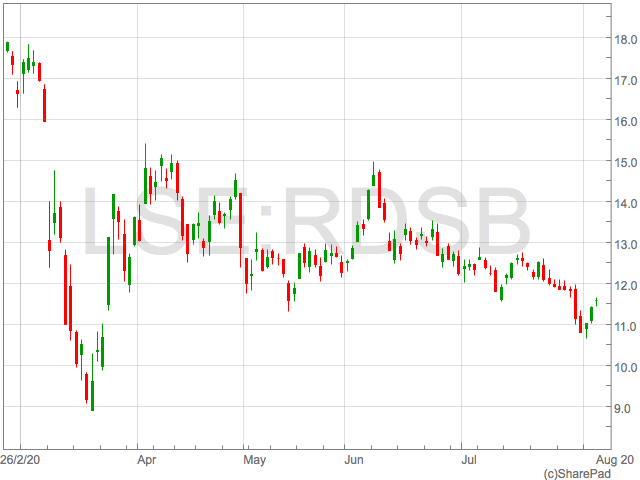
With both of the FTSE 100’s major oil companies recently reporting, the BP share price (LON:BP) and Shell (LON:RDSB) have become very different propositions to the companies investors are traditionally accustomed to.
In the wake of the coronavirus crisis, the global oil market is yet to recover and has forced major changes at London’s largest oil companies.
In this article we explore whether the BP share price now offers better value than the Shell share price given the historic conditions in the global energy market.
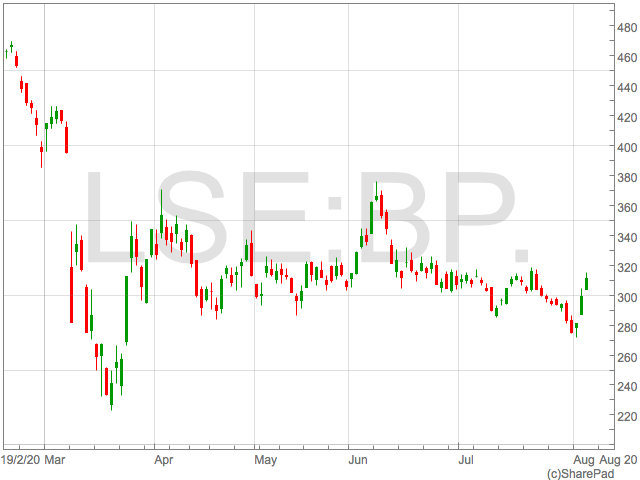
With the destruction of oil demand and associated fall in oil prices, the focus on renewables has increased for both BP and Shell. Both companies have strategies to increase the proportion of clean power they produce, and when assessing the relative value of each over the long term, this must be central to any valuation thesis. However, with revenue from renewables limited in both companies, the judgement of their low carbon activities falls to natural gas. In this respect, Shell has a far larger exposure to natural gas and would be judged to be ahead of BP in becoming a greener energy producer.
Segro boosts its dividend by 10% despite profit plunge

FTSE 100 listed business and logistics property investor Segro (LON:SGRO) saw its shares rally, as it announced it would hike its dividend, despite a less than consistent set of results for the six months ended June 30.
The company’s adjusted profit before tax was up 6.5% year-on-year, from £131.8 million to £140.4 million. However, its IFRS profit before tax illustrated a notable decline, dropping 46.2% on-year, from £419.8 million, to £220.9 million.
The income picture was equally mixed for Segro shareholders, with adjusted EPS rising 2.5% to 12.5p per share, while IFRS EPS fell 47.4% year-on-year, down from 37.1p, to 19.5p. However, shareholders would have been buoyed by the news that despite a mixed bag of results, Segro decided to hike its interim dividend per share by 9.5%, from 6.3p to 6.9p.
Looking ahead, the company remained positive, boasting that occupier demand remained strong. During the period, it secured £33.7 million of new headline rent – up from £33.3 million the year before – with new pre-lets increasing by £3.6 million on-year, to £18.8 million.
It added that it could see potential rent of £22 million from development completions, 64% of which have been leased by 30 June. It continued, saying that rents agreed in reviews and renewals were on average 10.4% higher than previous passing rents, while vacancy rates had increased but ‘remains low’ at 5.2%, and customer retention ‘remains high’ at 88%.
Segro response
After speaking on the company’s resilient performance during lockdown, company Chief Executive, David Sleath, discussed the consumer shift to e-commerce, and how this has fortified demand for efficient logistical spaces and supply chains:“The impacts of the pandemic are accelerating the adoption of technology, particularly e-commerce, across society and have resulted in a renewed focus by many occupiers on the critical importance of efficient, resilient logistics supply chains. These factors play to the quality of our portfolio and should continue to support and enhance occupier and investor demand for our prime warehouses, both in the UK and, increasingly, on the Continent.”
“Our existing portfolio has performed well and our development programme has expanded, with a pipeline of additional near-term pre-let projects which is approximately twice the size of a year ago. This, combined with our well-located land bank, means we are in a strong position to make further progress in the second half of the year and beyond.”
Investor insights
Following the news and a relatively bright outlook, Segro shares rallied 3.22% or 31.00p during trading on Wednesday, up to 994.20p per share 12:50 GMT. This is above the company’s 12-month median target price provided by 19 analysts, which stands at 910.00p a share, and represents a 35.35% jump year-on-year for the same day. The company’s p/e ratio is 12.15, its dividend yield stands at 2.08%.FTSE 100 held steady by BP and travel optimism
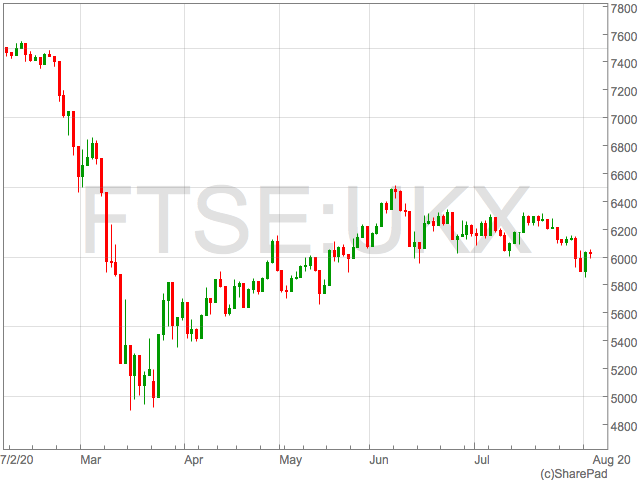
The FTSE 100 traded largely sideways on Tuesday after a strong rebound on Monday that reversed some of the losses last week over coronavirus fears.
The FTSE 100 was down 13 points to 6,019 on Tuesday afternoon having largely ranged between 5,990 and 6050 for most of the morning.
BP was among the top risers after the oil major confirmed the were to half their dividend, but posted a better set of underlying results than expected by the market.
 BP shares were up in excess of 6% in mid afternoon trade on Tuesday.
Diageo was the FTSE 100’s biggest faller as the drinks giant counted the costs of coronavirus and the impact on sales. Diageo’s full year sales were down 8.7% as coronavirus offset strength in the first half.
“Fiscal 20 was a year of two halves: after good, consistent performance in the first half of fiscal 20, the outbreak of Covid-19 presented significant challenges for our business, impacting the full year performance,” said Ivan Menezes, Chief Executive of Diageo.
Diageo shares were 5.5% weaker in the wake of the news.
IAG was higher amid optimism surrounding demand for travel on the back of an upbeat update from easyJet.
“European airlines are on the rise after easyJet saw better-than-expected summer demand,” said Joshua Mahony, Senior Market Analyst at IG.
“Airlines are soaring in early trade today, with easyJet bringing a rare bit of good news after seeing stronger-than-expected demand despite the pandemic.”
Shares in easyJet were up over 9% whilst IAG was 4% higher. easyJet are no longer in the FTSE 100 having slipped to the mid cap index in the last reshuffle.
“With the airline expecting to run flights at 40% of capacity, we are seeing a clear sign that many people are confident enough to travel despite the Covid risks that have held some back,” Mahony continued.
“With the airlines likely to see better-than-expected revenues after improved demand, the subsequent alleviation of pressure on their finances should lessen the need for further funding going forward.”
IAG have recently announced plans for a €2.75 billion rights issue to help them through the COVID-19 crisis.
BP shares were up in excess of 6% in mid afternoon trade on Tuesday.
Diageo was the FTSE 100’s biggest faller as the drinks giant counted the costs of coronavirus and the impact on sales. Diageo’s full year sales were down 8.7% as coronavirus offset strength in the first half.
“Fiscal 20 was a year of two halves: after good, consistent performance in the first half of fiscal 20, the outbreak of Covid-19 presented significant challenges for our business, impacting the full year performance,” said Ivan Menezes, Chief Executive of Diageo.
Diageo shares were 5.5% weaker in the wake of the news.
IAG was higher amid optimism surrounding demand for travel on the back of an upbeat update from easyJet.
“European airlines are on the rise after easyJet saw better-than-expected summer demand,” said Joshua Mahony, Senior Market Analyst at IG.
“Airlines are soaring in early trade today, with easyJet bringing a rare bit of good news after seeing stronger-than-expected demand despite the pandemic.”
Shares in easyJet were up over 9% whilst IAG was 4% higher. easyJet are no longer in the FTSE 100 having slipped to the mid cap index in the last reshuffle.
“With the airline expecting to run flights at 40% of capacity, we are seeing a clear sign that many people are confident enough to travel despite the Covid risks that have held some back,” Mahony continued.
“With the airlines likely to see better-than-expected revenues after improved demand, the subsequent alleviation of pressure on their finances should lessen the need for further funding going forward.”
IAG have recently announced plans for a €2.75 billion rights issue to help them through the COVID-19 crisis.
 BP shares were up in excess of 6% in mid afternoon trade on Tuesday.
Diageo was the FTSE 100’s biggest faller as the drinks giant counted the costs of coronavirus and the impact on sales. Diageo’s full year sales were down 8.7% as coronavirus offset strength in the first half.
“Fiscal 20 was a year of two halves: after good, consistent performance in the first half of fiscal 20, the outbreak of Covid-19 presented significant challenges for our business, impacting the full year performance,” said Ivan Menezes, Chief Executive of Diageo.
Diageo shares were 5.5% weaker in the wake of the news.
IAG was higher amid optimism surrounding demand for travel on the back of an upbeat update from easyJet.
“European airlines are on the rise after easyJet saw better-than-expected summer demand,” said Joshua Mahony, Senior Market Analyst at IG.
“Airlines are soaring in early trade today, with easyJet bringing a rare bit of good news after seeing stronger-than-expected demand despite the pandemic.”
Shares in easyJet were up over 9% whilst IAG was 4% higher. easyJet are no longer in the FTSE 100 having slipped to the mid cap index in the last reshuffle.
“With the airline expecting to run flights at 40% of capacity, we are seeing a clear sign that many people are confident enough to travel despite the Covid risks that have held some back,” Mahony continued.
“With the airlines likely to see better-than-expected revenues after improved demand, the subsequent alleviation of pressure on their finances should lessen the need for further funding going forward.”
IAG have recently announced plans for a €2.75 billion rights issue to help them through the COVID-19 crisis.
BP shares were up in excess of 6% in mid afternoon trade on Tuesday.
Diageo was the FTSE 100’s biggest faller as the drinks giant counted the costs of coronavirus and the impact on sales. Diageo’s full year sales were down 8.7% as coronavirus offset strength in the first half.
“Fiscal 20 was a year of two halves: after good, consistent performance in the first half of fiscal 20, the outbreak of Covid-19 presented significant challenges for our business, impacting the full year performance,” said Ivan Menezes, Chief Executive of Diageo.
Diageo shares were 5.5% weaker in the wake of the news.
IAG was higher amid optimism surrounding demand for travel on the back of an upbeat update from easyJet.
“European airlines are on the rise after easyJet saw better-than-expected summer demand,” said Joshua Mahony, Senior Market Analyst at IG.
“Airlines are soaring in early trade today, with easyJet bringing a rare bit of good news after seeing stronger-than-expected demand despite the pandemic.”
Shares in easyJet were up over 9% whilst IAG was 4% higher. easyJet are no longer in the FTSE 100 having slipped to the mid cap index in the last reshuffle.
“With the airline expecting to run flights at 40% of capacity, we are seeing a clear sign that many people are confident enough to travel despite the Covid risks that have held some back,” Mahony continued.
“With the airlines likely to see better-than-expected revenues after improved demand, the subsequent alleviation of pressure on their finances should lessen the need for further funding going forward.”
IAG have recently announced plans for a €2.75 billion rights issue to help them through the COVID-19 crisis. Pizza Express and Dixons Carphone to axe a combined 1,900 jobs

Restaurant chain Pizza Express (HKG:3396) and electrical goods store Dixons Carphone (LON:DC) are among the latest companies to announce large-scale redundancies during lockdown.
Dixons Carphone
The tech retailer said it would be cutting 800 jobs as it began restructuring its staff for a new way of running stores. The company, which owns Currys PC World, stated that retail managers, assistant managers and team leaders will be the ones cut at the company, while new positions in sales management, customer experience and operational excellence management will be made available. Another feature of the reshuffle will be a shift to a greater virtual focus, with some employees being moved onto its online ShopLive service, where customers are given advice and support via video link with staff. Commenting on the announcement, company CEO, Mark Allsop, said: “We remain committed to our stores as part of an omnichannel future, where we offer the best of online and stores to our customers.” “As part of this, we want to empower our store leadership teams, create a flatter management structure and make it easy for our customers to shop with us, however they choose.” “This proposal will ensure in-store roles are focused on giving a seamless customer experience and exceptional service across all our customer channels, whether online or in-store.” “Sadly, this proposal means we have now entered into consultation with some of our store colleagues. This was not an easy decision and we’ll do everything possible to look after those colleagues we can’t find new roles for, financially and otherwise.” The news comes just months after Dixon Carphone closed all 531 of its Carphone Warehouse stores, leaving more than 2,900 people unemployed.Pizza Express
Also undergoing restructuring during lockdown is Pizza Express, who are set to close 67 of its 449 outlet. The company has so far failed to disclose which sites will shut down, claiming that it had “yet to be decided”. The company’s managing director, Zoe Bowley, stated that Pizza Express would do everything possible to support its staff during the difficult period, but that the move should be seen as a “positive step forward”. The company currently has 166 stores open as the ‘Eat Out to Help Out’ scheme comes into force, and stated that initial customer demand had been ‘encouraging’. Despite this, the company stated it hoped to announce a Company Voluntary Agreement in the near future – an insolvency procedure which would see it discuss repayment of its £1 billion debt with creditors, on more favourable terms. Speaking on the news, Pizza Express CFO, Andy Pellington, said: “While we have had to make some very difficult decisions, none of which has been taken lightly, we are confident in the actions being taken to reduce the level of debt, create a more focused business and improve the operational performance, all of which puts us in a much stronger position.”High street employment as it stands
While the Eat Out to Help Out scheme may be well-meaning, it doesn’t change the stark reality that thousands more jobs will be lost across the high street – and elsewhere – in both the medium term and near future. Partner at law firm BLM, Julian Cox, stated: “Pizza Express is yet another household name that has been pushed to the brink by Covid-19.” “Whilst the government has attempted to encourage people through the doors with ‘Eat Out to Help Out’, the initiative is clearly not going to be enough to protect the sector in the long term.” Questions have continued being asked about the government’s contingency plan for jobs and unemployment support, as thousands of desperate and recently unemployed Brits look for help, in a market scant with new employment opportunities. Despite the seemingly sombre update, both the companies issuing job cuts today saw their shares rally during Tuesday trading, with Dixons Carphone up 3.76% and Pizza Express owner Legend Holdings Corp up 8.73%.NWF shares rally as it delivers 40% profit growth

Food, fuel and feed distributor NFW (AIM:NWF) saw its shares rally on Tuesday, following the publication of its uplifting results, for the full-year ended 31 May 2020.
Booking year-on-year revenue growth of 2.4% – up to £687.5 million – the company’s operating profit and profit before tax jumped 40.6% and 37.9%, to £13.5 million and £12.0 million respectively.
The situation was equally peachy for NWF shareholders, with fully diluted EPS bouncing 30.2%, to 18.1p, while dividends per share rose 4.5%, to 6.9p.
The company boasted strong performance in it fuels sector, with three acquisitions through the year boosting the scale of its business by 20%. It added that ‘unprecedented’ oil price drops and one-off domestic demand during lockdown, led its full-year operating profit to almost double, from £5.6 million, to £11 million, on-year.
NWF stated that its food segment successfully navigated the increased demand from supermarkets, and its new 240,000 sqaure foot warehouse would increase its storage capacity by 35%, to 135,000 pallets. However, the £0.5 million cost of this acquisition in-part led to the decline in year-on-year profits, down from £1.8 million to £1.4 million.
The feeds division was hardest hit during the financial year, with a mixture of higher energy costs and NWF Academy training future staff, seeing full-year profits drop from £2.8 million, to £1.9 million.
NWF Response
Commenting on the results, company Chief Executive, Richard Whiting, stated:
“NWF has delivered a very strong set of results, ahead of previous expectations, demonstrating both resilience and growth. Three acquisitions have been completed in Fuels and we have added significant additional warehouse capacity to support long-term customer contracts in Food. Feeds gained share with volume growth in a contracting market. The fundamental resilience of the Group has been highlighted with the response to the Covid-19 crisis. Huge thanks must go to all our employees for their outstanding efforts in very challenging times. All our employees were designated as key workers, demand increased, deliveries to customers were completed and safe working and home working where possible were implemented in early March and remain effective today.”
Investor Insights
Following the news, NWF shares rallied 5.78% or 11.84p, to 216.84p per share 04/08/20 12:06 BST. This price represents a year-to-date high for the company, with its p/e ratio at 12.97, and its dividend yield standing at 3.10%.BP reports $6.7bn loss amid “volatile” trading environment
BP (LON: BP) has reported a record loss in its latest quarterly results.
The oil giant reported a record $6.7bn (£5.1bn) loss as the Coronavirus pandemic led to a slump in global oil demand.
The $6.7bn loss is compared to a $2.8bn profit for the same period a year earlier. As a result, the group said that it plans to halve its quarterly dividend.
“These headline results have been driven by another very challenging quarter, but also by the deliberate steps we have taken as we continue to reimagine energy and reinvent BP,” said Bernard Looney, the chief executive.
“In particular, our reset of long-term price assumptions and the related impairment and exploration write-off charges had a major impact. Beneath these, however, our performance remained resilient, with good cash flow and – most importantly – safe and reliable operations,” he added.
Oil has been hit hard over the global pandemic. Shell and Total have also slashed the value of their assets. In response to the losses, the oil giant said earlier this year that it will cut 10,000 jobs. Looking forward, the group said that the ongoing impacts of the pandemic are continuing to “create a volatile and challenging trading environment.” Shares in BP (LON: BP) are trading up 6.07% (0915GMT).Direct Line shares up despite fall in profit

Profits at Direct Line (LON:DLG) fell 9.5% for the first six months of the year down to £236.4m.
Blaming a one-off restructuring cost and bad weather, the insurer said that the affects from Coronavirus were “broadly neutral” and that a fall in travel claims was offset by a rise in Motor and Commercial.
The group is making a series of cost-saving initiatives, totalling £60m over two years. Direct Line has spent £15m on cost-saving initiatives in 2020 so far.
Penny James, the group’s chief executive, said:
“I am very proud of what we have achieved so far this year. We have launched initiatives with an estimated investment of £80m to £90m to support our customers, people and local communities through the uncertainty caused by Covid-19.
“When the Covid-19 pandemic hit, we prioritised phone lines for existing customers, created new online journeys and offered additional value through various initiatives including mileage refunds and payment deferrals. We did not access government support and chose to protect all roles and salaries at the Group through to the autumn and our Community Fund is providing £3.5m to help people in communities across the UK.
“Despite the significant disruption caused by Covid-19 we have continued the trading momentum we saw at the end of 2019, growing direct own brands by two per cent and improving the quality of our earnings with an improved current-year loss ratio. We have also demonstrated financial resilience in the face of Covid-19 disruption, which has enabled us to declare our 2020 interim dividend as well as a catch-up of our cancelled 2019 final dividend.”
Following the results, Direct Line (LON: DLG) shares opened at 327.9. Shares in Direct Line are trading up 6.79% at 328.50 (0848GMT).
Hong Kong – what does the future hold?
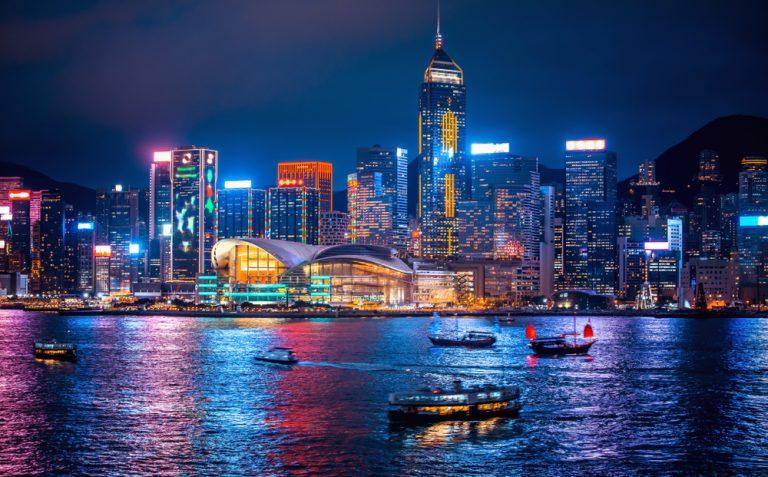
Since 1997, Hong Kong has been the global economy’s bridge between China and the rest of the world. The former British colony is home to the highest income per capita and the largest concentration of ultra high net worth individuals in the world, marked by its characteristically low tax rates and free trade arrangement.
Its resilient financial market, independent legal system and commitment to free speech has long made it an oasis for investors seeking easy access to China – the second largest economy in the world – but the erosion of the emerging superpower’s pledge to honour a “one country, two systems” set-up until 2048 has already begun to unravel Hong Kong’s unique reputation as one of the world’s most free economies.
An investors’ oasis no more?
Over a year of social unrest has rocked the region’s usually stable balance of power, and the kingpins in Beijing have not responded kindly to protests over China’s short-lived extradition bill – which would have seen criminals from Hong Kong potentially extradited to mainland China under certain circumstances, in what pro-democracy activists argued was an infringement on the freedoms of Hong Kong citizens. Opponents speculated that the bill could have been used to persecute anti-Chinese journalists and activists as part of a wider move to strengthen China’s political influence over the region. Hong Kong chief executive Carrie Lam withdrew the extradition bill in September 2019 after months of violent clashes with protestors, but pro-democracy rallies have continued well into 2020, with Hong Kong citizens demanding further freedoms from China and an inquiry into alleged police brutality during the protests. All of this comes amid claims that press freedom is increasingly on the decline, with 5 Hong Kong-based booksellers reported missing only to eventually be found in Chinese custody, and the expulsion of several US journalists now banned from working in Hong Kong. Along with the apparent restriction on press and political freedoms, the relationship between China and the West has become increasingly antagonistic in recent months. The delicate situation has rightfully caused concern among traders and economists, with some predicting that companies previously happily-settled in Hong Kong will look to move their operations elsewhere in the near future if tensions do not subside. According to The Guardian, capital has quietly been shifting from Hong Kong to Singapore – touted to become the next major international trade hub – over the past year anyway, but rising anxiety surrounding China’s conduct in the region has accelerated the process as investors look to avoid any financial fallout from the conflict. Last month, Hong Kong authorities once again announced the introduction of a new law – this time a sweeping new national security bill which seeks to outlaw protests and anti-Chinese sentiment. The US retaliated by warning that it would consider revoking its special trade status with Hong Kong, while China’s central bank responded with the launch of the Wealth Management Connect initiative, designed to facilitate ‘cross-boundary investment’ and cashflow into the region. A senior regulator somewhat eased critics’ concerns, stating that China is ‘confident of Hong Kong’s future as an international financial center’ and will ‘continue to support its growth’ in a June report by Reuters. China’s assurances haven’t managed to iron out all of the anxieties, however. Businesses are still reeling from the impact of the coronavirus pandemic, and with a stark warning from Hong Kong leader Lam that the city is once again on the brink of a ‘large-scale’ outbreak, companies and investors alike are looking to shift their focus elsewhere amid fears that the region may have to shut down to prevent any further spread of the virus. Protests have continued despite calls to stay inside. Meanwhile, elections for Hong Kong’s Legislative Council due to take place in September look set to be postponed until next year.Commenting on the tense situation in Hong Kong, chief Asia economist at Capital Economics, Mark Williams, told Raconteur: “China is settling into a more antagonistic relationship with the rest of the world. Hong Kong’s position won’t be eroded overnight, but without assurances that companies and staff there will enjoy strong legal protection and aren’t subject to the arbitrary treatment found on the mainland, overseas firms will over time shift their operations elsewhere”. Despite being historically pretty stable in the face of market fluctuations – Hong Kong emerged relatively unscathed from the 1997 handover to China by Britain and Asian financial crisis, as well as the global financial crash of 2008 – rocketing geopolitical tensions could well throw a spanner in the works for the first time. Market volatility has already reached record levels in the region thanks to the hazardous concoction of coronavirus-induced pessimism and the ongoing pro-democracy protests jeopardising relations with the mainland. Dan Kemp, chief investment officer for Europe, the Middle East and Africa at Morningstar, said: “Equity prices in the broader China market and Hong Kong specifically are more attractive than the average. However, it’s worth noting that these markets are both volatile and this volatility may increase during the current political situation”. With concerns over the future of trade in Hong Kong, business could start to move elsewhere permanently. Nick Easen commented for Raconteur that if the region were to lose its autonomy from mainland China, then investors “might as well invest in Shanghai”. And, with capital reportedly orbiting around Singapore instead, it’s beginning to look like an increasingly likely outcome.“A more antagonistic relationship with the rest of the world”
Nevertheless, nothing is set in stone just yet, and US President Donald Trump‘s characteristically bullish attitude towards the issue is crucial to the forging the financial future for the former British colony. With the US elections on the horizon, Trump’s administration is no doubt looking to project the image that Washington has comfortable control of the conflict, whether or not that’s actually the truth of the matter. That being said, even though the US can’t afford to implement widespread sanctions on China over its actions in Hong Kong, the US could still find other ‘non-tariff measures’ to penalise China for its actions in the region and indicate its arms-length support for the protests. Dr Damian Tobin, a researcher at Cork University Business School, explained: “The US cannot act unilaterally to revoke Hong Kong’s special status, but it can create significant difficulties for how mainland Chinese companies using the territory’s markets are perceived by investors. The US’s pursuit of Huawei is an example of the type of non-tariff measures America could pursue. “Hong Kong has long offered mainland Chinese companies a route to external capital and this market would be jeopardised by any perception that its markets are no longer independent. For example, were Chinese companies delisted or refused listing in New York, they may think twice about Hong Kong”.“Were Chinese companies delisted or refused listing in New York, they may think twice about Hong Kong”
However, viewing the situation in Hong Kong with tunnel vision risks overlooking the human cost of the conflict. China’s encroaching influence is seen as a threat to the rights and freedoms of Hong Kong citizens, and people are significantly less likely to listen to their authorities when they believe those authorities are against them. The very fact that China has introduced its new national security law indicates either a real or perceived rise in anti-establishment sentiment, as well as a gradual erosion of the power of Hong Kong officials’ governance. Tobin outlines how the China-Hong Kong protests are in fact a manifestation of wider concerns over democracy, authority and self-determination: “The issue at stake is a persistent decline in governance. There is little attention given to this issue. From Beijing’s side the security law reflects a failure by Hong Kong’s politicians to read the public mood and manage the tensions associated with managing and regulating two systems. It’s not just to do with financial markets. There is a failure to find an effective way of ensuring benefits flow to the wider society”. The situation in Hong Kong probably isn’t going to go away any time soon. China is showing no signs of backing down on the matter just yet, and protests have continued even throughout the peak of the coronavirus pandemic. A number of activists have already been arrested under the region’s new national security law. Meanwhile, the UK government announced last month that it would be making the unprecedented move of offering citizenship to up to 3 million Hong Kong residents whose freedoms are being ‘violated’ by the new legislation. Overall, it appears that Hong Kong will continue to wobble on its socio-economic tightrope for some time, and businesses desperate for stability in the post-coronavirus world are understandably looking for steadier ground to stand on.“There is a failure to find an effective way of ensuring benefits flow to the wider society”
Egdon Resources shares rally 8% as Wressle Oil Field works commence

UK-based hydrocarbon extraction company Egdon Resources plc (AIM:EDR) saw its shares rally on Monday as it announced the commencement of site works at the Wressle Oil Field Development.
The works are the first of a number of stages, which the company anticipates will see it on track for ‘first oil’ during the second half of full-year 2020 – as it had previously advised. Speaking on the works, Egdon Resources said in its statement that the site civils contractor had mobilised to commence necessary works.
This phase of the site development includes the installation of; a new High Density Polyethelene impermeable membrane, a French drain system, and an approved surface water interception, as well as the construction of; a purpose-built bund area for storage tanks, a tanker loading plinth, and an internal roadway system.
The company said that the necessary stages of development, and its current progress, are as follows:
First, it has discharged key planning conditions, and progress with its detailed design tendering and procurement, and all HSE documentation and procedures, are on track.Second, it has installed four groundwater monitoring boreholes and two rounds of sampling and analysis have been carried out thus far.
Third, it is currently commencing the reconfiguration of the work site.
Fourth and fifth, it will install and commission surface facilities, and commence sub-surface operations.
Finally – it will commence production. So, it seems, the wheels are certainly in motion for Egdon Resources, with production firmly on the agenda in the latter stages of the year.The Wressle Oil Field is located in North Lincolnshire Licences PEDL180 and PEDL182, where the company has a 30% operated interest.
Egdon Resources response
Commenting on the news, company Managing Director, Mark Abbott, stated:“We continue to make good progress with the Wressle development, in line with the expected timeline, despite the challenges of the current operating environment. The commencement of the site reconfiguration works represents an important step in the progress to first oil which will increase Egdon’s production by 150 barrels of oil per day. Wressle is economically robust with an estimated project break-even oil price of $17.62 per barrel.”
“We maintain our guidance of first oil during H2 2020 and will continue to update stakeholders as works progress .”
Investor insights
Following the announcement, Egdon Resources shares rallied 8.20% or 0.16p, to 2.11p per share 03/08/20 10:00 BST. This current price represents a 59.81% decrease year-on-year on its rate on the same day last year. Analysts offering a one year forecast on its shares estimate a target price of 26.10p a share.HSBC shares slide as reported income freefalls by 96%
Shares at Europe’s largest bank HSBC (LON:HSBA) have slid nearly 4% on the back of the company’s grim 2020 interim results, outlining an alarming 96% drop in net income in the second quarter, down to just $192 million. The company’s pre-tax profits also plummeted over 80% to $1.1 billion over the same period.
Although based in London, HSBC makes the majority of its profits in China, making it especially vulnerable to the ongoing conflict between the UK government and Chinese officials over the implementation of China’s controversial national security law in the formerly British-owned territory of Hong Kong. The company reported a $3.8 billion surge in loan loss charges, significantly worse than the predicted figure of $2.7 billion by The Guardian, and almost seven times the $555 million that HSBC set aside in 2019.
The bank has also raised its forecasts for loan loss charges to between $8-13 billion for the entirety of 2020 in response to ‘the deterioration in consensus economic forecasts’ and the expectation that thousands more people and businesses will not be able to repay loans taken out during the peak of the coronavirus pandemic. According to the BBC, HSBC has reportedly given ‘more than 700,000 payment holidays on loans, credit cards and mortgages, providing more than $27bn in customer relief’.
The company’s disappointing results emerge after last month’s announcement that HSBC is to go ahead with plans to cut 35,000 jobs over the medium term, as part of the bank’s major restructuring plan first reported back in February – which largely preceded the pandemic and was put on hold while staff were indefinitely furloughed. HSBC’s chairman, Noel Quinn, has since stated that the bank intends to ‘accelerate’ this process in light of its poor 2020 performance.
Outlook for the rest of 2020 and beyond is marked by a heavy dose of caution, as HSBC prepares to face ‘a wide range of potential economic outcomes’ dependent on the potential for additional waves of coronavirus, the development of an effective vaccine, and the recovery of market and consumer confidence as lockdowns are increasingly eased worldwide. The bank also warns that ‘heightened geopolitical risk’ – no doubt a euphemistic reference to tensions over Hong Kong, one of its key markets – could have an impact on its performance in the months ahead.
HSBC’s chief financial officer, Ewen Stevenson, told the Financial Times that the bank is heading for a ‘much sharper’ V-shaped recession than initially forecast, with meaningful recovery likely to be delayed until 2021, subject to “the path of Covid, whether we can see the path to an effective vaccine, the outlook for Brexit… big events that we expect to have clarity on in the next six months, which will have a meaningful impact”.
Stevenson also confirmed that HSBC has already cut 3,800 jobs and ‘substantially’ cut back on hiring since the start of the year, as the company aims to save up to $4.5 billion in costs by 2022.
Chief executive Noel Quinn told the BBC on Monday:
“We will face any political challenges that arise with a focus on the long-term needs of our customers and the best interests of our investors. Current tensions between China and the US inevitably create challenging situations for an organisation with HSBC’s footprint. However, the need for a bank capable of bridging the economies of east and west is acute, and we are well placed to fulfil this role”.
Quinn was hesitant to speculate how tensions between the UK and China may impact business for HSBC in the medium to long-term amid rumours of impending sanctions by the US, simply stating that China’s national security is “a law we have to comply with, as we comply with all of the laws and activities in the geographies we operate”.
HSBC’s share price slid by 3.73% to 329.45p at BST 12:52 03/08/20, down an eye-watering 47.89% over the course of 2020. The bank’s P/E ratio sits at 24.55 and its dividend yield at 0.12%.