
Enhance your portfolio with private companies

Sponsored by Rockpool. For sophisticated and high net worth individuals.
As a high net worth or sophisticated investor, you will be aware of the importance of actively managing your investment portfolio and avoiding over exposure to any asset-class. It is essential to achieve diversity, a balance of risk and return, and of course, to control costs.
An alternative for your portfolio
Private company investing adds a different source of wealth creation to your portfolio. Returns on private company investment are not closely correlated to traditional asset-classes, such as listed shares, gilts and corporate bonds.
Management equity and passion
Private companies are typically managed by people with a big stake in their success. Where the average listed company chief executive owns less than 3% of the business he or she runs, private company CEOs are more likely to own around 10-20%.
But the motivation is not just financial. Private company managers are fulfilling their dreams. With their dedication and drive, supported by funding and professional guidance, these companies can transform and bring great value to investors.
The rise of crowdfunding
Recent years have seen the proliferation of crowdfunding and peer to peer lending platforms which offer investors the chance to access a number of seemingly exciting new business ventures. Generally, these companies are pre-profit and are seeking relatively small investment amounts. They are sold as a chance to make a ground up investment, which will take the company to the next stage and hopefully onto profitability.
However, according to data from Harvard Business School, as many as 75% of start-ups fail, and with crowdfunding platforms heavily reliant on such businesses the risks are clear. Granted, the returns on offer can be high, and the key to success in this model of investment is to utilise small amounts across a large number of companies.
Barriers to entry
Anyone looking to access this asset class outside of crowdfunding can find themselves facing difficulties. The time and expertise required to assess the viability of a business creates a barrier to entry for most investors, whilst also increasing potential risk.
Historically, this has seen many investors turn to private equity funds. The problem is that funds give investors little visibility on where and when money is invested and a lack of information on performance.
There is another way
Sophisticated and high net worth investors are increasingly choosing to partner with professional private company investors such as Rockpool to give them direct access to opportunities beyond the start-up phase.
The Rockpool approach
Our team of investment experts spend thousands of hours digging deep into the businesses and the background of the management, as well as commissioning expert due diligence.
The detailed information on the business, market, management team, financial forecasts and investment returns are collated into an investment memorandum which is sent to you to review.
We also harness the power of our network as an important resource. There is an enormous variety and depth of business experience amongst the individuals who make up our network. Access to this can help inform our investment decisions and strengthen management teams.
Transformer companies offer value
Our focus is on small founder-led companies which are profitable, growing and have annual revenues of £5m or more.
With the support of our experts and the investment from our network, these companies can transform into professionally managed stars, positioned to attract private equity funds and trade buyers.
Building a portfolio
Building a blended portfolio of loan and equity investments can help to achieve a balance of risk and reward. Using different investment vehicles such as a company, SIPP and IFISA can also help enhance returns through tax-efficiency.
After investment
We offer access to your investment information via our online platform and report regularly on all the companies in your portfolio. Our investment team monitor the companies during the lifetime of the investment.
Cashing in
There are some drawbacks to investing in private companies. It’s rarely possible for an investor to sell at the time of their choosing. Instead investments are realised by an exit arranged by the company or manager acting for all investors or a repayment of loan capital.
Rockpool network
Our network is made up of more than 3500 investors and is growing. Members share the common goal to add diversity to their investment portfolio for better returns.
To date, Rockpool investors have invested in excess of £400m into 77 companies, providing returns of £146m.
In amongst our network, you will find business leaders and owners, professionals from law and accountancy and individuals from different investment fields. A wide variety of backgrounds but a common ground of being interested in how they can build and protect the wealth that they have accumulated.
Joining our network is free and comes with no obligation to invest. It means that you’ll receive notification on the investment opportunities as they’re launched.
Registration is easy through our website at www.rockpool.uk.com and you can expect a call back from a member of the team to introduce you to the company and to give you the opportunity to ask questions after you’ve registered.
Your capital will be at risk and there is no guarantee of any investment return. The value of investments may go down and you could lose all of your investment. Private company investments are not listed on any market and this means that you may not be able to sell them when you want to do so. This sort of investment does not provide a reliable source of income. The tax benefits of private company investing depend on your personal circumstances and on compliance with the relevant rules. Past performance is not a reliable indicator of future results. We do not provide investment, tax or legal advice.
Dunelm shares rally on upbeat update
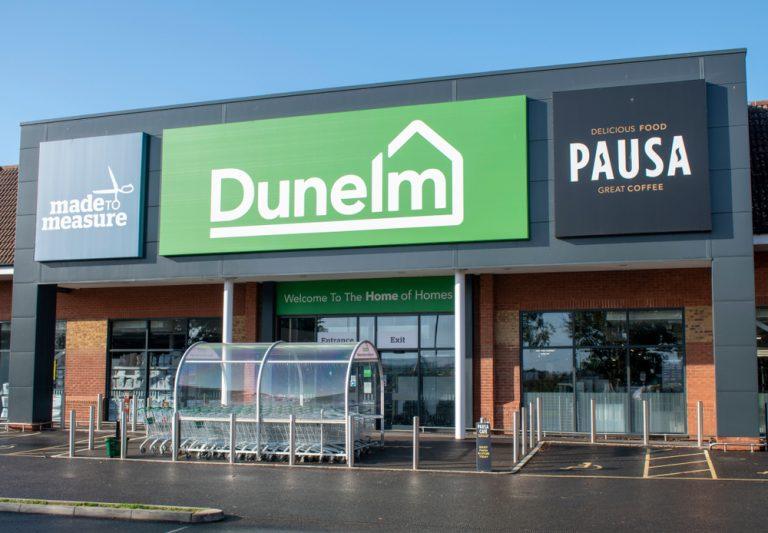
Shareholders of Dunelm Group plc (LON: DNLM) have seen their shares rally after the firm gave an upbeat update on Thursday morning.
Dunelm Limited is a British home furnishings retailer with one hundred and sixty nine superstores, three high street stores and over one hundred in-store Pausa coffee shops, throughout the United Kingdom.
Shares of Dunelm rallied 18.99% on the announcement and trade at 990p. 5/12/19 11:06BST.
The FTSE250 listed firm saw its shares in red at the start of October, as the firm saw revenue gains of 6% but did not meet the estimated 11% rise.
Dunelm n Thursday confirmed the “successful” transition of all of its customers to a new digital platform and said it now expects annual profit to beat its previous forecasts.
The firm added that gross margins were stronger than expected in the first half of its current financial year as a result of sourcing gains and better sell through.
Meanwhile, operational costs remain well controlled and in line with the company’s expectations, it said.
The FTSE 250-listed homewares retailer said it now has a modern, flexible, cloud-native platform that will be used to accelerate the development of its customer proposition.
“In light of the above, the board now anticipates that the full year profit before tax will be higher than our previous expectations, assuming no significant change in consumer demand as a result of the outcome of the general election,” Dunelm said in today’s trading update.
“A lot can happen in two months in the world of retail and in Dunelm’s case the winds have changed in its favour,” AJ Bell investment director Russ Mould said.
He said customers’ warm response to Dunelm’s new website was crucial to today’s update.
“That’s going to be a huge relief to the company as there is always a fear that new IT projects won’t work properly on initial deployment,” Mould said.
Peel Hunt added: “The website is what we can only describe as lightning quick, with better search functionality, an improved customer experience, click and collect capability and provides the basis for significant future development and innovation.”
“Also in its favour is an improvement in margin, which has to be commended given how the general direction of travel for retailers is margin compression in a world of heavy discounting,” Mould also said.
However, uncertainty over the General Election has tempered Dunelm’s predictions, he added.
“No-one knows how the general election result will impact consumer spending patterns and so the company has understandably avoided giving too bullish a comment about its outlook.”
The news will come at a good time for Dunelm, and the firm was set to give shareholders a positive update following the crisis in October.
Competitor DFS Furniture (LON: DFS) updated shareholders recently by not changing their profit outlook desire Brexit uncertainties, and the firm saw a 22% growth in online sales.
Back in October, there was a worry that Dunelm would enter a slump similar to the ones that high street competitors such as Mothercare faced.
The firm seems to have turns fortunes around and now shareholders will be pleased that some relief has been provided in tough market conditions.
Volume of retail trade declines in euro area
The volume of retail trade declined by 0.6% in the euro area, new data revealed on Thursday.
Eurostat’s monthly figures show that in October, and compared with September, the seasonally adjusted volume of retail trade saw a 0.6% drop.
The volume of retail trade in the euro area declined by 1.1% for non-food products.
However, food, drinks and tobacco increased by 0.3%, and automotive fuels by 0.6%.
Earlier this week, new data revealed that the UK retail sector saw total retail sales drop by 4.4% in November, when compared to the same period in 2018. This year’s data did not include the Black Friday promotional period, however, and last year’s did.
Over in the UK, the gloomy trading environment to hit the British high street has been well publicised.
Dr. Kerstin Braun, President of Stenn Group, provided a comment on the Eurostat Retail Trade data: “The volume of retail trade in the euro area decreased last month, which is a worrisome sign going into the holiday season and could indicate that the stormy geopolitical tensions are affecting consumer sentiment.”
“Long term, we are concerned about the health of the retail sector. Physical stores have lost its way. Shops are rapidly losing ground to online options yet most of them are clinging to their old ways. Add a website to a fusty old department store and it’s still a fusty old department store,” Dr. Kerstin Braun continued.
“To survive, retailers need to throw out their old notions of targeting and start over. Consumers are still willing to shop in person, but they’re frustrated by the experience. They’re being micro-targeted on the internet but in the shops, it’s a free for all.”
“Shoppers will pay a premium to feel special. The shops where one would expect shopping to be a treat – like department stores – are stuck in the past and hoping to get by with an abundance of unfocused merchandise.”
Dr. Kerstin Braun concluded: “Discounters like [TKMaxx] are in a better position, because shoppers don’t go there expecting a great experience, but rather convenience and price. Even more successful are the retailers that understand that the modern shopper has plenty of options but has found a way to capture their attention with both merchandise and an experience that says ‘this is perfect for you’.”
DMGT posts rise in profit, shares up

DMGT shares (LON:DMGT) were up on Thursday after the owner of the Daily Mail reported a rise in profits in its full year results.
Shares in the company were over 4% higher during Thursday morning trading.
DMGT said that, for the year ended 30 September 2019, adjusted profit before tax rose 19% on an underlying basis to £145 million.
Meanwhile, revenue amounted to £1.4 billion, with an underlying growth of 2%.
Additionally, the company said that its financial performance in 2020 will reflect “the significant portfolio changes over the past year”.
DMGT, which recently purchased the i newspaper for £49.6 million, expects group revenue for the 2020 financial year to be broadly stable on an underlying basis.
“DMGT has delivered a robust financial performance, achieving 2% underlying revenue growth and 10% underlying cash operating income growth. Consumer Media outperformed the market and there was a mixed performance across our B2B businesses, consistent with our expectations,” Paul Zwillenberg, CEO, commented on the results.
“We have continued to deliver successfully against our three strategic priorities of increasing portfolio focus, improving operational execution and maintaining financial flexibility,” the CEO continued.
“Over the last three years, we have moved from ten sectors to five, from 40 operating companies to eight and from net debt of £679m and a debt:EBITDA ratio of 1.8 to pro forma net cash of nearly £250m. In April 2019, we returned almost £900m of capital to our shareholders in the form of Euromoney shares and a £200m special dividend.”
Paul Zwillenberg said: “We will continue with our active portfolio management approach, focusing on those assets that have the potential to drive good returns through strong cash flow generation and growth in capital value. We are now in the next phase of the Group’s transformation, optimising our business through targeted and disciplined investment whilst maintaining significant financial flexibility to enhance shareholder value. The recent acquisition of the ‘i’ demonstrates the opportunities we have to invest in high quality, content-led businesses with a compelling strategic and financial rationale.”
Shares in Daily Mail and General Trust plc (LON:DMGT) were up on Thursday, trading at +3.67% as of 10:13 GMT.
M&C Saatchi shares crash following annual profit warning
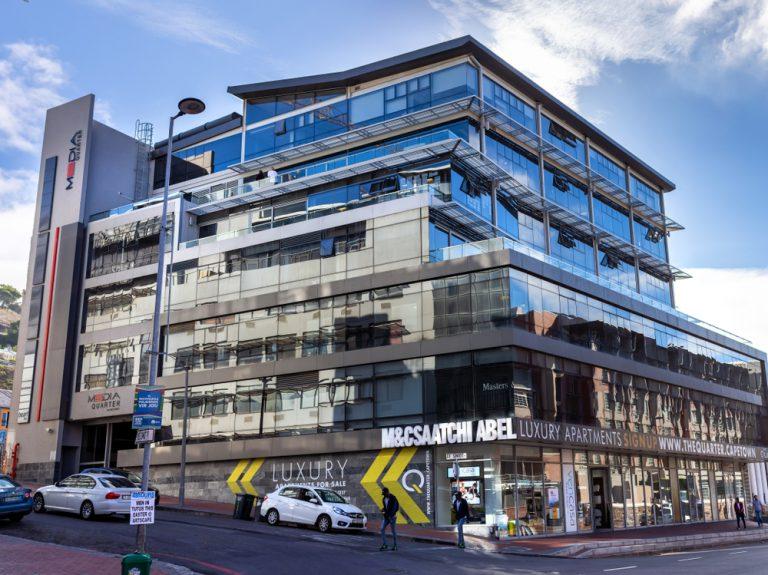
Shareholders of M&C Saatchi (LON: SAA) have seen their shares crash, after the firm issued a major profit warning to shareholders and unveiled an accounting error in the Wednesday update.
M&C Saatchi is an international advertising agency network formed in January 1995 by Jeremy Sinclair, Bill Muirhead, David Kershaw and the brothers Maurice Saatchi and Charles Saatchi.
Shares of M&C Saatchi crashed 46.17% on Wednesday afternoon to 79p. 4/12/19 14:30BST.
The firm said said profit for the full year is expected to be between 22 and 27 per cent below the level it hit in 2018, which alerted shareholders.
The firm also mentioned in the Wednesday update that it had experienced an accounting error after an independent review conducted by PWC.
The adjustment will be shared across Saatchi’s 2018 and 2019 financial years.
Chief executive David Kershaw said: “This restatement of our numbers and the reduction in forecasts make for very difficult reading – both for us as a management team and for all of our stakeholders.
“The trading performance in the second half of this year is disappointing. However our operating businesses remain strong, creative and competitive and we expect that, when combined with the impact of our restructuring coming through, we will have a stronger trading performance in 2020.”
Kershaw concluded: “The only positives that we can offer are that a robust review has been undertaken and we have, under our new group finance director, started implementing processes and procedures to prevent such issues arising again.”In response to the error, the company announced that it would undertake a reorganisation of the group’s financial function, as well as creating new standardised policies for all of the company’s subsidiaries.
Russ Mould, investment director at AJ Bell said: “It may be a fabled name in UK advertising circles but M&C Saatchi would have a really tough time selling its own update this morning. A mess would be a polite description.
“This bad news is compounded by a pretty serious looking profit warning, and the company’s reliance on fourth quarter trading is proving to be an Achilles heel.
“Longstanding chief executive David Kershaw, a founding director of the company, may take more of the flak given the problems arose under his watch.”
CMC chief markets analyst Michael Hewson agreed: “This is about as bad as it gets for Saatchi, with the sector already under pressure due to the changing dynamics of the digital advertising world on its traditional business model, to score an own goal of this magnitude is excruciating, and calls into question how the business was being run over the last few years.”
The advertising giant blamed weaker than expected trading in the final quarter for the fall in profit.
“They are 110% a takeover target,” said Alex DeGroote, an independent media analyst. “M&C Saatchi has had a bull run and been a stock market success story and its value is not reflected in the share price. But it is about the sum of the parts, the value is in arms like sport and mobile, not the traditional advertising agency business.”Seneca Global Income and Growth give modest update in tough market conditions

Seneca Global Income & Growth Trust PLC (LON: SIGT) have given shareholders a modest update on Wednesday, which alluded to the tough trading conditions in the finance and investment sphere.
Seneca Growth Capital VCT Plc is a generalist VCT aiming to generate returns from a diverse portfolio of both private and AIM quoted growth capital investments.
Shares of Seneca Growth received a 0.23% boost despite the modest update, and shares trade at 174p. 4/12/19 14:08BST.
The firm it underperformed against its benchmark for the first half of its financial year, due to the continued “volatility of underlying financial markets”.
For the six months to the end of October 31, Seneca Global Income reported a net asset value negative return of 1.6%, compared to its CPI+6 annualised benchmark, which made a positive return of 3.7%.
The firms net asset value per share on October 31 was 172.89p, up 6.2% from rom 162.87p a year earlier but 3.5% lower from 179.08p as the end of April.
The Seneca fund said that during the period, the UK mid-cap companies in its portfolio performed well as fears of a no-deal Brexit faded. However the trust’s portfolio suffered from a lack of exposure to US equities and sovereign debt.
Business was dampened by performance from firms such as Kier Group PLC (LON: KIE) and Woodford Patient Capital Trust PLC (LON: WPCT).
Seneca paid two interim dividends of 1.68 pence per share for the period, up 2.4% from 1.64p year-on-year.
“There are signs that valuations of some equities now reflect much of the risk and prevailing uncertainty. The UK has of course been dominated by Brexit uncertainty and with an election now looming, it is difficult (and dangerous) to predict the outcome of either. Elsewhere, US-China trade discussions rumble on, and future US monetary policy remains uncertain,” said Chair Richard Ramsay.
“The diverse range of assets comprising the company’s portfolio should provide reasonable returns over time, as well as real risk reduction, which seems particularly relevant in the current environment,” Ramsay added.
Additionally, Monks Investment Trust (LON: MNKS) gave shareholders an update, which entailed a similar story to the one outlined by Seneca. Monk’s revealed they had underperformed in the market, however did allude to tough market conditions coupled with political and economic uncertainty.
The gloom has hit all industries, as Moody’s lowered the banking outlook from stable to negative yesterday.
The countdown to the election continues, and it seems that there will be no sign of recovery until there is some clarity on the Brexit negotiations and the US China trade war which continues to dampen global trading.
Eurasia Mining shares rally on Russian update

Eurasia Mining plc (LON: EUA) have seen their shares rally on Wednesday afternoon after the firm updated shareholders on its Russian operations.
Eurasia Mining PLC is an international mineral exploration company, listed on the Alternative Investment Market (AIM), focussed on Russia, it has an active interest in platinum and gold mining. The firm has interests in Russia but also has headquarters in London.
Shares of Eurasia Mining rallied 15.92% to 2p. 4/12/19 13:53BST.
At the end of October, the firm saw its shares surge following a confident chairman statement which reassured shareholders in an uncertain time for the firm.
The firm reported that it had it received alerts from holders on Friday that warrants over 16 million ordinary shares had been exercised at 53 pence per share, which led to shares reaching a five year high.
Eurasia reported on Wednesday that it is edging closer to securing the final approval for the Tipil permit, a platinum group metals target located in Russia.
Eurasia said: “The application has been approved by the Russian federal bodies and requires only a formal meeting of the local mines commission.”
Eurasia said: “The directors believe the company is already established as the dominant player in Kola platinum group metals with its production license until 2038 and its exclusive right for the flanks under applicable laws.
“Receipt of approval for the flanks application would allow the company to become further established in the region generally, allowing it to pursue its internal long term corporate strategy of establishing a new global centre for platinum group metals on the Kola Peninsula.”
Research in Russia found that the whole of Monchetundra, which includes areas where Eurasia does not currently have a licence for, has a potential 40 million ounces of platinum group metals.
Eurasia said, however: “This data has not been independently verified by Eurasia and other than the area covered by the company’s existing licence, the company does not yet have any other licences in the area. The company would need to verify the data in the Russian Cadastre through additional work and drilling.”
Competitors in the mining industry have been busy giving updates to the market.
On Monday, FTSE100 listed Fresnillo saw their shares in red following a modest prediction for their annual production expectations, which left shares in red.
The developments made by Eurasia will be positive for shareholders, where rivals have seen slumps in production.
Shareholders of Eurasia will have to patient, but there could be long term benefits if Eurasia can convert these discoveries into solid trading figures.
Ryanair announce two more base closures following 737 shortage
Ryanair Holdings plc (LON: RYA) have announced that they will close two more bases following a shortage of Boeing (NYSE: BA) 737 MAX aircrafts being delivered.
Ryanair shares trade at €13, seeing a 2.17% boost across Wednesday trading. 4/12/19 13:34BST.
At the start of November, Ryainair saw its share rise despite cuts in its annual guidance and hostile airline industry conditions. The budget airline narrowed full year profit guidance to €800 million to €900 million, down from its previous range of €750 million to €950 million.
Despite the modest expectations from Ryainair, shareholders did not seem too bothered and this was proved with the update given this week.
Yesterday, both Ryanair and Wizz Air released their November passenger figures, which saw strong figures for both firms. The decision to close bases was therefore not one attributed to demand slumps but rather supply issues.
Ryanair said it now expects to receive just 10 MAX aircraft rather than 20 as previously predicted.
The Irish budget airline said that as a result of the aircraft delivery delays, it has cut its traffic growth forecast for the year to March 31, 2021, by 0.6% to 156 million passengers from 157 million.
Receiving just half the 737 MAX aircraft means Ryanair will also close two more bases in summer 2020, in Nuremberg, Germany, and Stockholm Skavsta, located roughly 100 kilometres from the Swedish capital.
In August, Spanish trade union Sindical Obrera said Ryanair would close its bases in Las Palmas, Tenerife South, Lanzarote and Girona from January 2020.
Boeing had been on the tough end of media criticism, when a 737 MAX aircraft was grounded in March following a couple of crashes which killed 346 people.
On Tuesday, the aircraft manufacturer was bruised further after US carrier United Airlines Inc ordered 50 new long-haul jets from European rival Airbus SE (EPA: AIR).
Additionally, Ryanair said group traffic rose by 5.8% in November to 11.0 million from 10.4 million in the comparative period.
Ryanair said: “We also expect to cut summer capacity in a number of other existing bases, and we are currently in discussions with our people, our unions, and our affected airports to finalise these minor reductions.”
Eddie Wilson, chief executive of Ryanair-branded unit, said: “We regret these two further base closures and minor capacity cuts at other bases which are solely due to further delivery delays to our Boeing MAX aircraft. We are continuing to work with Boeing, our people, our unions and our affected airports to minimise these capacity cuts and job losses.”
Whilst Ryanair continue to flood the airline market with strong updates, not all firms are seeing as much prosperity.
Fastjet PLC last week gave shareholders a polar opposite update, which saw their shares crash as the firm considered selling its Zimbabwe operations.
Fastjet is now in the position where it is fighting to stay alive in the industry after a disastrous 2019, and could descend into collapse over the next few weeks if trading halts and business slumps.
Monks Investment Trust underperform in testing market conditions
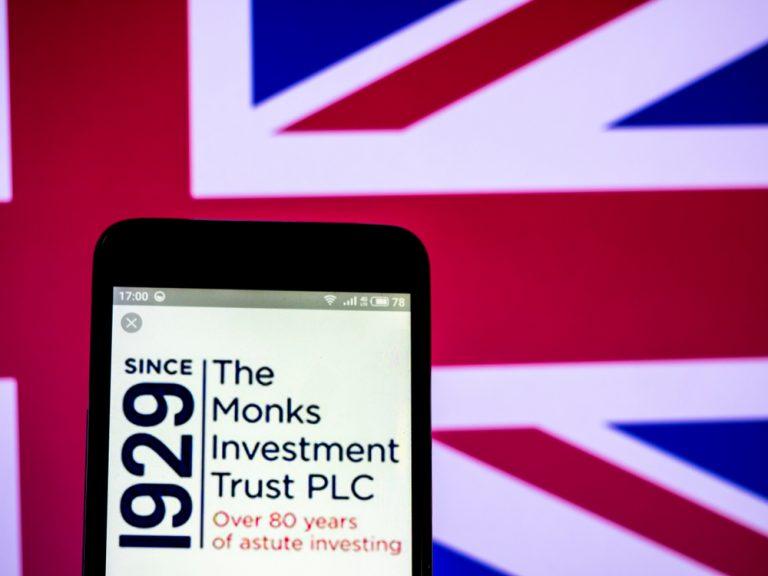
Monks Investment Trust PLC (LON: MNKS) have given shareholders a disappointing update, in which the firm admitted to underperformance.
Monks Investment Trust was incorporated in 1929 and was one of three trusts founded in the late 1920s by a group of investors headed by Sir Auckland Geddes. Baillie Gifford is the parent organization of Monks Investment Trust.
Shares of Monks Investment Trust currently trade at 917p. 4/12/19 13:17BST.
The FTSE250 listed firm said it underperformed against its benchmark in the first half of its financial year, despite a rise in net asset value.
For the six months to the end of October, the investment trust reported a net asset value total return of 1.6%, while its benchmark, the FTSE World Index in sterling, returned a positive 4.6%.
The trust’s NAV per share as at October 31 was 861.0 pence, up 15% from 750.7p the same date the year before and 1.4% higher from 848.9p at the end of April.
Monks declared no interim dividend, which may concern shareholders about the performance in the period. However, it is typical of Monks to declare a final dividend at the end of a financial year.
The trust also increased its portfolio exposure to healthcare to 8% from 4% a year ago, whilst notable investments went into companies such as Sensyne Health PLC (LON: SENS) and heart pump manufacturer Impella Group plc (LON: IPEL).
“The portfolio’s exposure to cyclical companies has been reduced over recent years. Fundamental analysis of semiconductor and domestic US holdings suggested that growth from today’s starting point was unlikely to meet the portfolio’s growth hurdle,” said Chair James Ferguson.
“The managers believe the freedom to invest in an eclectic mix of companies is highly valuable in maintaining a portfolio which can generate good returns across different economic environments. The current portfolio leads the managers to be confident about the prospects for future growth and optimistic about the opportunities that lie ahead,” Ferguson added.
The finance and investment industry has seen slumps, and Monk’s join a long list of firms who have seen declines following tough market conditions. In the domestic market, it seems that consumers and investors are speculative until the General Election which is set to take place on December 12, which may mean that trading will be slow until the results are announced. The uncertain nature of Brexit negotiations has weighed upon the finance and investment scene, as Moody’s lowered the banking outlook from stable to negative yesterday. The uncertainty in the British political realm coupled with the ongoing feud between the United States and China, has led to a period of global economic uncertainty. Additionally, tensions in Hong Kong have meant that operating in the current global market has not been as tough as experienced in 2008.Unicorn VCT give gloomy update following election prediction

Unicorn AIM VCT plc (LON: UAV) have given shareholders a gloomy update on Wednesday, which alluded to both political and economic uncertainty as a dampener on business.
The firm’s objective is to provide Shareholders with an attractive return from a diversified portfolio of investments, predominantly in the shares of AIM quoted companies, by maintaining a steady stream of dividend distributions to Shareholders from the income and capital gains generated by the portfolio.
Shares in Unicorn AIM VCT dipped 0.72% to 137p. 4/12/19 13:02BST.
In the year ended September 30, its net asset value per share fell by 10% to 153.9 pence from 171.9p last year. It did however represent a 6.6% rise from its interim net asset value per share of 144.4p.
The firm held it full year dividend at 6.5p per share, which will please shareholders following the testing market conditions that businesses are facing.
After adding back dividends, the trust delivered a total return of negative 6.6%, compared with a 9.3% uptick last year.
Unicorn said: “The financial year ended September 30 proved to be a challenging period for the Alternative Investment Market and, as a result, the company struggled to make headway, ultimately failing to deliver a positive total return to shareholders for the first time in ten years. Although it is always disappointing to report on a year during which total returns have been negative, it is nonetheless encouraging to note that performance overall was relatively resilient.”
“During the twelve-month period ended 30 September 2019, the FTSE 100 Index delivered a modestly positive total return of 3.2%, while the FTSE AIM All-Share Index fell sharply over the year, generating a negative total return of 19.4%,” the trust continued.
The firm added that the two worst performing investments were life science research software firm Abcam PLC (LON: ABC) which saw its share price fall “quite sharply over the course of the year”.
Additionally, animal feed firm Anpario PLC (LON: ANP), was hurt by an outbreak of African swine fever and the ongoing trade dispute between the US and China. This led to the damaging returns for Unicorn, as mentioned in the update on Wednesday morning.
Waste management firm Augean PLC (LON: AUG) was one of the better performers on Unicorn’s books, with the firm reporting “a continued recovery in its key markets”, the trust explained.
Looking ahead, Unicorn said: “The increasingly volatile political situation in the UK and lack of clear direction has begun to have a negative impact on the UK economy. While high levels of political division and economic uncertainty continue to unsettle UK equity markets, it is likely that the company’s NAV performance may remain volatile.
“This election is scheduled to take place on December 12, 2019 and shareholders should be aware that the outcome may create considerable additional risks to performance. For example, if the vote results in a ‘hung’ parliament, with no obvious prospect of achieving a workable coalition, then it is unlikely the UK equity market will respond favourably.”
Many businesses and consumers are treading cautiously in the lead up to the general election, and at the moment it seems that no party has gained enough ground to make a decisive prediction. What businesses and consumers will want, rather than another election is certainty over Brexit status and regular updates with negotiations. However legislators at Westminster still seem to be in same stale mate position as they were in June 2016, when it was announced that Britain would be leaving the EU.