
Brexit talks could stop in June if no further progress is made
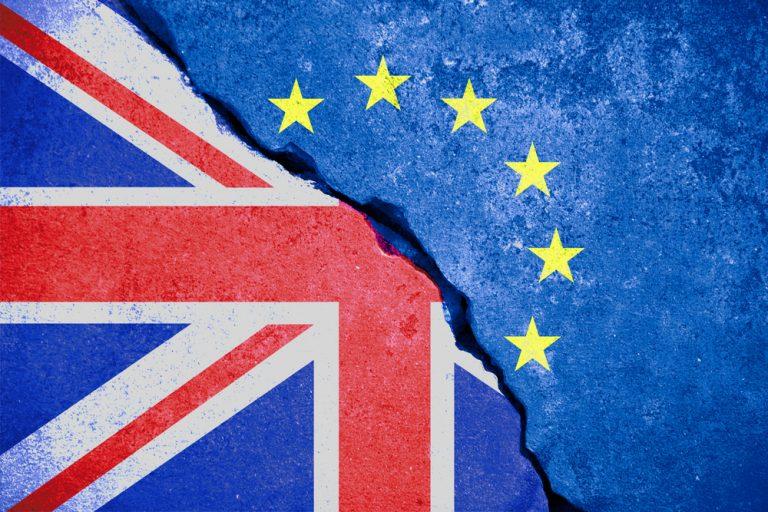
Brexit negotiations have taken another turn on Thursday. It seems that the Brexit saga is never ending, and today Michael Gove has had his say.
The UK Government said to the EU that it will walk away from trade talks in June, unless a broad outline of a deal is produced.
The UK Government have been in lockdown with Brussels over a potential Brexit Withdrawal Deal – and both parties are seemingly unwilling to give any sovereignty to their counterpart.
The UK Government also said tat they would not accept any alignment with EU laws, as the EU is demanding.
The UK document says:
* The UK “will not negotiate any arrangements in which the UK does not have control of its own laws and political life”
* The UK’s aim is for a trading relationship with the EU similar to the ones the 27-nation bloc has with Canada, Japan and South Korea
* There will be no jurisdiction for EU law or the European Court of Justice in the UK
* The UK will rely on World Trade Organisation rules under an arrangement with the EU similar to Australia’s if progress on a comprehensive deal cannot be made
* A separate agreement on fisheries is needed, to reflect the fact that “the UK will be an independent coastal state at the end of 2020”.
The terms from the EU side stated that the UK could be expected to be under EU rules and regulations following the Brexit Withdrawal process. There was a mention of state subsidies for industry, environmental standards and workers rights.
PM Johnson has promised the British people that a Brexit deal will only be agreed where the EU can give some concession, and the final deal favors the British people.
Post Brexit talks are heating up, as the French Foreign Minister warned Boris Johnson that the deal could turn into a ‘battle’ last week.
Michel Barnier have already said that the EU is prepared to give the UK “super-preferential access” to the EU market of 450 million people – but it seems that a hard Brexit is on the mind of the government.
The UK Government will have to realize that not everything can be done on their terms, and that some ground will have to be given if a Brexit Withdrawal deal is to be struck.
Michael Gove, added: “Geography is no reason to undermine democracy. We will not be seeking to dynamically align with EU rules on EU terms governed by EU laws and EU institutions.”
Playtech warns shareholders on coronavirus impact following steady annual results

Playtech PLC (LON:PTEC) shares are in red, as the firm issued a warning over its 2020 results.
The online gambling firm said that the coronavirus could bruise results for 2020, as profits also fell in 2019. Playtech also released their final results for 2019.
Revenues across the yearly period totaled €1.51 billion, seeing a 22% increase year on year against a constant currency basis.
Playtech noted that their profit levels were affected by the impairment of intangible assets of the Markets and Alpha cash generating units, amounting to €90.1 million.
Looking at current trading, the firm said that B2B gambling revenue was up 5% on a year ago from the first few weeks of 2020.
However, its business in Italy initially started strong, but the firm warned that this could be affected by the coronavirus outbreak.
The firm said “However, in the last two weeks it has started to see a material impact from changes in normal customer patterns due to COVID-19 which is significantly affecting two of its largest markets. Accordingly, results for 2020 are likely to be below existing market expectations”.
Alan Jackson, Chairman of Playtech, commented:
“2019 was another important year in the development of Playtech. Management has continued to focus on delivering a transformation of the business which started in 2017, designed to secure long term growth and unlock shareholder value.
Our Core B2B Gambling business reported strong growth in 2019. In addition we made further strategic progress by entering newly regulated markets, signing new customers, expanding existing relationships and continuing to innovate with new product launches. Together these are laying the foundations for our future growth. In our B2C Gambling business, Snaitech had a fantastic 2019 and continues to gain market share and reached the number one market share position for online betting and gaming in Italy in H2 2019.
The strength of our diversified business model, focus on cash flows and strong balance sheet has allowed Playtech to announce today further shareholder returns with a new €40 million share buyback programme alongside our final dividend.
Playtech has taken steps to improve its Corporate Governance with two new non-executive directors appointed in 2019 and I will in due course be announcing my successor as Chairman who will lead the Board during the next phase of Playtech’s exciting future.”
Shares in Playtech trade at 284p (-7.33%). 27/2/20 13:15BST.
Bakkavor shares dive 6% as profits drop 44% in 2019
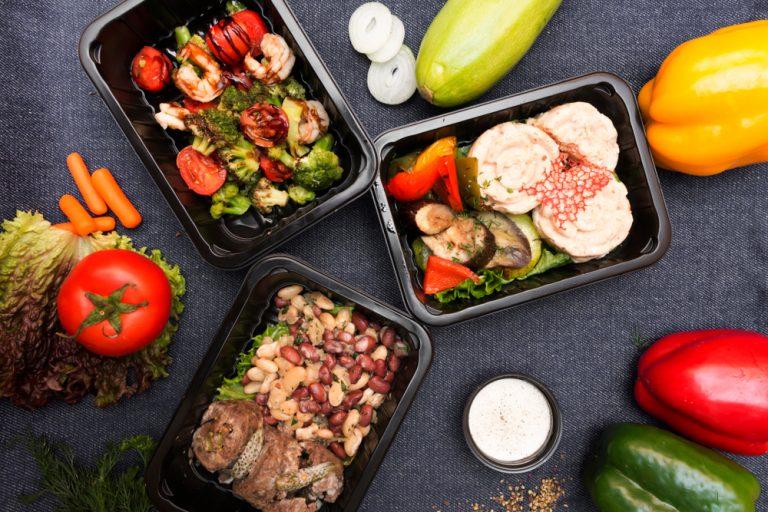
Bakkavor Group Plc (LON:BAKK) have seen their shares dive, as the firm issued a warning over its profit levels.
The FTSE 250 listed company told the market that profits had dropped 44% in 2019, and ongoing issues with the coronavirus are continuing to take a toll on business.
The firm said regarding the coronavirus situation – “In China, whilst 2020 started well, the recent Coronavirus outbreak is now having a significant effect on our business. Volumes are significantly down in February and currently there is no clear visibility as to when more normal trading conditions might resume. It is therefore very difficult to assess the financial impact; however, our current view is that Adjusted EBITDA1 before exceptionals and start-up losses for our international business in 2020 could be £6 million to £10 million lower than 2019. Despite this short-term impact, market fundamentals are strong and we remain excited about our prospects in China.”
The food firm said that pretax profit in 2019 had fallen from £77.9 million to £43.8 million – a worrying statistic for shareholders to note.
Additionally, operating profit also fell 19% to £69.4 million from £85.6 million from one year ago. The firm alluded this fall to higher exceptional costs and start up losses for new sites.
Revenues did rise by 1.5% however, from £1.86 billion to £1.89 billion. This was boosted by growth in international business tied in with solid performances in the UK.
Bakkavor added that the coronavirus is having a significant impact in China, which could affect future results.
Agust Gudmundsson, CEO, said:
“This was another solid year for Bakkavor, in which we delivered further growth, increased market share, and strengthened our operations both in the UK and internationally, whilst reporting performance in line with expectations.
“In the UK, against difficult market conditions, and with further labour inflation and low consumer confidence, we successfully protected EBITDA margins and held our underlying profitability. We have significantly strengthened our market-leading position in the desserts category and launched a major new meals range for one of our strategic customers which give us confidence going into 2020.
“In our International businesses, we continue to develop our operations to take advantage of the long-term potential in both the US and China. Volumes are accelerating across our new sites, the demand for our products is growing and interest in our fresh prepared meal offer is gaining traction particularly with US regional retailers.
“More recently, the Coronavirus outbreak is having a significant impact on our business in China and our key priority is to safeguard the health and wellbeing of our colleagues through this challenging period. We continue to monitor the situation closely as it develops.
“Looking further ahead, we have strong foundations and the skills and expertise in place to deliver on our long-term strategy. We are confident that the strength of our business model, customer strategy and category excellence will enable us to capitalise on further growth opportunities.”
Bakkavor’s mixed few months
In September, the firm gave an update saying that they had made good progress despite regression in its earnings fundamentals. Group revenue growing 1.4% and like-for-like revenue rising 2.0% in a year-on-year comparison of H1, up to £923 million and £977.9 million respectively. Despite this, Adjusted EBITDA pre IFRS 16 contracted 6.5% to £73.5 million and adjusted operating profit narrowed by 11.5%, from £57.3 million, to £50.7 million. Even more notable, Bakkavor operating profits dived 45.8% on-year, from £54.1 million to £29.3 million. Further, the Company’s interim dividend per share remained flat at 2.0p, while their basic EPS contracted by 4.0p and their adjusted EPS narrowed by 1.5p, to 3.0p and 5.9p. Shares in Bakkavor trade at 116p (-6.11%). 27/2/20 13:00BST.Evraz shares crash 7% following 2019 revenue and profit slumps
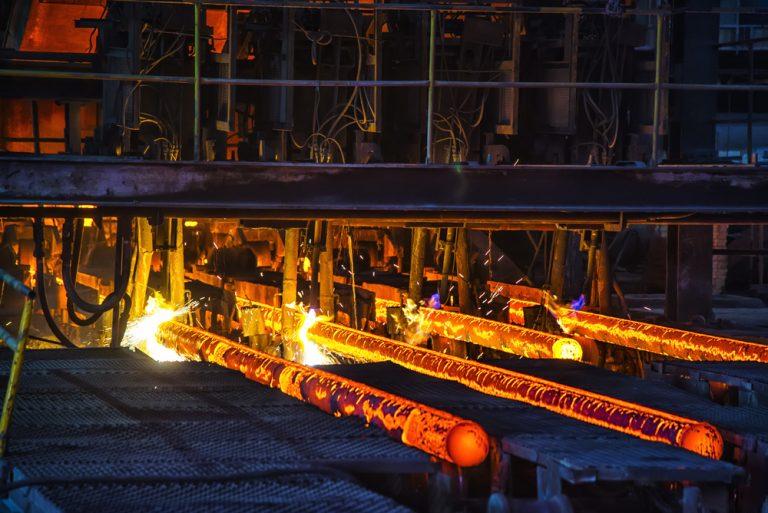
Evraz plc (LON:EVR) have seen their shares crash on Thursday, following the announcement of its final results.
The steel maker said that full year profits had dropped, as trading was hurt by less “favorable” global steel and commodity markets.
2019 revenues slumped 7.3% to $11.91 billion from $12.84 billion, whilst pretax profit also crashed 72% from $3.2 billion to $902 million.
Earnings before interest, taxes, depreciation, and amortisation fell also, to $2.6 million from $3.78 billion.
Evraz blamed this slump on “lower vanadium and coal product prices as well combined higher expenses”. Looking at their steel division, the firm also saw revenues drop 8.3% year on year, to $8.14 billion.
The steel producer added that they will pay a $0.40 interim dividend, which is flat from a year ago. The firm added that this “reflects the Board’s confidence in the Group’s financial position and outlook.”
Evraz Chief Executive Officer, Alexander Frolov, commented:
“In 2019, global steel and commodity markets were not as favourable as they were in 2018. Steel prices have fallen as a result of excess supply in an environment of limited end-use demand. Global coal and vanadium markets returned to supply-demand equilibrium. Despite the market headwinds, EVRAZ was able to deliver resilient results with EBITDA reaching US$2,601 million and EBITDA margin reached 22% in 2019.
Retention of our low-cost and market leadership positions remain very important for EVRAZ. During the reporting period, the efficiency improvement programme delivered an EBITDA effect of US$407 million from customer focus and cost-cutting initiatives.
In 2020, EVRAZ will continue to make significant efforts to improve safety and other vitally important areas of sustainable development. The Group has also set ambitious production targets for the year that should help it to reach solid results despite potential market headwinds.”
Evraz shareholders will hope that the firm can bounce back from a mixed year for the firm, however with more political certainty and a favorable macroeconomic environment, the firm should remain optimistic.
Shares in Evraz trade at 347p (-7.75%). 27/2/20 12:43BST.
National Express announce record 2019 results, and intentions to be carbon neutral
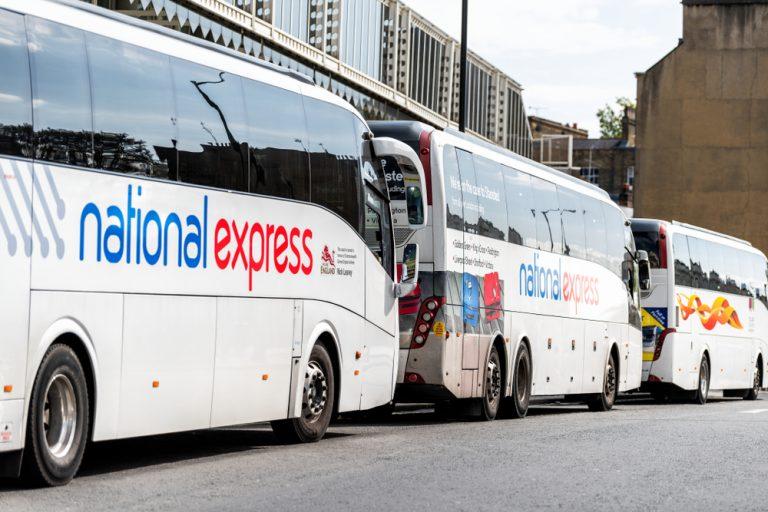
National Express Group PLC (LON:NEX) have seen their shares in red, despite a strong update from the firm.
The transport operator said that it has reached record results in 2019, as all businesses have thrived.
Looking at the figures, National Express told the market that 2019 revenue was £2.74 billion, which sees a 12% climb year on year.
On an even better note, the firm saw pretax profit rise 5.2% higher totaling £187 million.
North American businesses proved fruitful for National Express, and on a constant currency basis revenues grew 11% to $1.57 billion.
Spanish brand ALSA, also saw a strong performance as revenues rose 12% to €940.6 million.
Looking at the UK, revenue also rose modestly by 3.9% to £599.7 million, whilst German revenues also surged 34% to €102.5 million.
The firm set a final dividend payout of 11.19 pence per shares, giving the yearly total a sum of 16.35p.
Dean Finch, National Express Group Chief Executive said:
“National Express has again delivered a record set of results. Revenue and profit are up strongly and free cash performance has beaten our expectations. All businesses have delivered organic growth. I am particularly pleased with North America achieving a 10% margin and significantly increasing the number of customers rating their services five-star. The Group is also carrying significantly more passengers.
Major contracts were retained in North America and Spain. We became Morocco’s largest urban bus operator, with new contracts in Rabat and Casablanca more than tripling the size of our operations when fully mobilised. UK coach won its first overseas contract and West Midlands bus is adding routes and growing its accessible transport business.
We combined organic growth in every division with continued diversification into complementary markets, such as our major WeDriveU acquisition which has grown revenue by over 30%. Each division has a strong pipeline of new acquisition and contract opportunities to target this year.
As industry leaders we are delighted to make major pledges in the shift to zero emission vehicles. National Express will not buy another diesel bus in the UK and lead the transition to zero emission coaches. Our ambition is for our UK bus business to become zero emission by 2030 with UK coach by 2035. We believe these commitments are not only the right thing to do, but will also help strengthen the position of quality public transport in the communities we serve.”
National Express review environmental policy
In a separate update today, National Express also pledged not to buy any more diesel-engine buses in the UK. The firm expressed its intentions to become a carbon neutral firm. National Express want to have a zero emissions UK bus fleet by 2030 and a UK coach fleet by 2035. Notably, the company always wants its first electric coach operations in the UK by 2021, and will be looking to transition to electric coaches in 2021. Dean Finch, National Express Group Chief Executive said: “Bus and Coach travel is already one of the greenest ways to get around, with each bus removing up to 75 cars from the road. National Express has already invested in clean buses and coaches and kept fares low to support a shift from private cars to mass transit. Working through our West Midlands Bus Alliance we have achieved the fastest passenger growth of any major city-region in the country, demonstrating its success. However we understand the imperative to go much further, so we are today setting out an ambition to be the first zero emission transport group in the UK. Our decision to never again buy a diesel bus in the UK coupled with our support in leading the zero emission transition in coach will place our UK operations at the forefront of efforts to tackle climate change and poor air quality. We simply believe this is the right thing to do for our customers, the communities we serve and our stakeholders.”Vistry see record profits across 2019, as revenues also surge

Vistry Group PLC (LON:VTY) have given shareholders an impressive set of annual results on Thursday.
The home builder noted a record profit level across 2019, as revenues also surged on the back of higher completions and selling prices.
Vistry, who are formally known as Bovis Homes noted that pretax profit had totaled £188.2 million – seeing a 12% climb from the £168.1 million figure reported a year ago.
Revenue across the period jumped 6.5% to £1.13 billion from £1.06 billion. Notably, total completions also increased by 2.9% to 3,867 units.
Looking at the wider property market, Vistry said that the average selling price rose in 2019 from £273,200 to £280,200, which boosted the results posted today.
Vistry have said that the first few weeks of 2020 have been fruitful, as underlying sales rate per site per week have jumped 15% year on year.
The firms’ order book currently stands at £890 million, which is a slight fall from £960 million recorded a year ago.
Vistry declared a final dividend of 41p per share, bringing the total payout to 61.5p – this sees a 7.9% from 57p in 2018.
Greg Fitzgerald, Chief Executive commented,
“For the last three years, Bovis Homes has focused on putting the customer back at the centre of everything we do. As a result, and thanks to the hard work of our people, I am delighted we have achieved a 5-star HBF customer satisfaction rating. We have also made further operational progress in the year across all business areas resulting in another year of record profits.
It is from this position of strength that we completed the transformational acquisition of Linden Homes and Vistry Partnerships to create one of the UK’s leading homebuilders. We are making excellent progress with integration, and I am confident we will deliver the clear and significant benefits from this exciting combination.
With heightened uncertainty surrounding Brexit and the general election in December, we saw downward pressure on house prices in the second half of 2019. This was partially mitigated through a combination of the Group’s own build cost saving initiatives and a lack of cost inflation. As a result, we are pleased to have delivered further operating margin progression, reporting an increase of 60 basis points to 17.0%, pre-exceptional items.”
Vistry’s expectations match the results
In January, Vistry remained confident that they could deliver record results despite political uncertainty. The firm told shareholders in January that full year profit before exceptional items is expected to rise above market forecasts of £181.6 million. This is an impressive expectation, and shows growth from 2018 figure of £168.1 million with operating profit before exceptional items at £174.2 million. The company has only recently changed its name following two acquisitions from Galliford Try PLC (LON:GFRD). Looking at 2019 trading figures, the firm said that it had completed 3,867 new homes, 2.9% more than 3,759 in 2018 which would have pleased shareholders. Notably, the average selling price was £279,000, up 2.1% from £273,200 the year before. Shares in Vistry trade at 1,292p (-3.58%). 27/2/20 12:04BST.British American Tobacco’s profits fall due to litigation and restructuring costs
British American Tobacco PLC (LON:BATS) have reported falling profits due to litigation charges and restricting costs within their annual results.
Shares British American Tobacco trade at 3,264p (+1.40%). 27/2/20 11:37BST.
The tobacco multinational said that pretax profit amounted to £7.91 billion, which sees a 5.2% drop from the 2018 figure.
On a better note, revenues rose 5.7% to £25.88 billion, however depreciation, amortisation and impairment costs jumped 45% to £1.51 billion, as operating expenses also rose 18% to £7.85 billion.
British American added that they faced a £436 million charge on a class action lawsuit in Canada, and other litigation costs occurred.
Notable litigation costs included a £236 million charge in the US, a £202 million charge in Russia and a £172 million goodwill impairment in Indonesia.
Across 2020, British American have said that they expect adjusted revenue growth to lie within the 3% to 5% ball park, at constant currency.
Revenue is likely to be second half weighted, the firm added. Following the positive results, the firm raised its dividend to 210.4p.
Jack Bowles, Chief Executive said:
“When I became CEO, my commitment was to maximise value growth from combustibles, deliver a step change in New Categories and develop a simpler, stronger, faster, more agile organisation to create a better tomorrow. I am delighted with the progress we have made in all areas. We have delivered value growth from our combustible business and grown our New Categories business, now providing potentially reduced risk products to close to 11 million consumers. In September, we announced a significant restructuring and simplification programme, which is largely complete. This will create the capabilities and resources to continue investing in New Categories and allow us to deliver on our financial commitments. Looking into 2020, we are confident of another year of high single figure adjusted constant currency earnings growth.
British American Tobacco maintain confidence
In November, the firm gave shareholders a confident update in regard to the results that had been released today. In the US, the FTSE 100 listed firm said it delivered good revenue on a constant currency basis, supported by pricing and reduced discounting. BAT continues to expect US industry volumes for 2019 to be down by 5.5%, while for 2020 it expects a drop in the range of 4% to 6%. For the Tobacco Heating Products division, the glo product in Japan held its volume share at 4.9% reborn with the launches of glo Pro and glo Nano in a highly saturated market. Overall, BAT said it expects to report a rise in adjusted operating profit for 2019 in the upper half of its 5% to 7% guidance range. Constant currency for the year is expected to grow in the upper half of its guidance range, between 3% and 5%. Following these expectations and the results today, British American Tobacco can be confident and content with the results produced.Reckitt Benckiser post annual loss following massive impairment charge
Reckitt Benckiser Group PLC (LON:RB) have told the market that they have seen an annual loss across 2019.
The firm noted that it faced a massive impairment cost over £5 billion which dampened the firms profits and annual results.
The firm noted that they will be investing heavily over the next three years in a three phase program. The emphasis will be on the transformation of digital, and innovation.
The CEO of Reckitt commented:
“We have started a journey of three phases: first stabilise and perform, then perform and build, and finally, outperform. We will create a strong company which can consistently generate mid-single digit organic revenue growth, 7-9 percent EPS growth and strong cash conversion.
We have a clear plan to invest £2 billion in our business over the next 3 years to make this happen. Specifically, in 2020 we will increase investment behind our digital capability, in-market competitiveness and operational resilience, particularly in customer service, as well as innovations, as we align around our new organisation. While we are growing faster than last year – and in some areas, significantly faster – we are targeting a higher level of like-for-like net revenue growth than we achieved in 2019, reflecting some of the uncertainty around the impact of the COVID-19. Our recurring investment of around £200m, combined with a step up in productivity of £1.3 billion over 3 years, builds a more stable and sustainable growth business.”
Going back to results, the impairment was made on good will related to a deal with Mead Johnson Nutrition. MJN, a US baby formula maker – notably this deal was concluded in 2017 for an estimated $18 billion.
As a result of this massive impairment, Reckitt posed a pretax loss of $2.11 billion across 2019.
This will disappoint shareholders, as the firm reported a profit of £2.72 billion in 2018 – which shows the magnitude of the swing.
Net revenue rose 2% on a better note for the FTSE 100 listed firm, and totaled £12.85 billion. This slightly beat company consensus of £12.83 billion net revenue.
Like for like revenue growth at actual rates was 0.3% and at constant rate 0.8%.
Looking at divisional performance, the firm saw Health Revenue rise 0.7% at actual rates, but fell 0.9% at constant rate to £7.82 billion.
The Hygiene Home sector revenue jumped 4.1% on actual rates to £5.03 billion, however fell 3.6% at constant rate.
The firm declared a final dividend of 101.6 pence per share for the year, which gives a total dividend for 2019 of 174.6p. Notably, this sees a 2.3% rise on the 2018 figure of 170.7p.
Commenting on these results, Laxman Narasimhan, Chief Executive Officer, said:
“We ended 2019 broadly in line with our expectations for net revenue growth and adjusted operating profit from October, as our Hygiene business delivered another stable performance. Health remained weak from a net revenue perspective, but consumption and market share trends are encouraging.
We now look forward to a new decade.
I am inspired by our purpose-driven brands that consumers love and have seen in action the benefit they bring to our communities. I have met customers around the world, and terrific talent in various parts of the organisation, who act as owner entrepreneurs. While the recent years have been difficult, I believe strongly in our ability to restore performance credibility, and over time, outperform, while making a positive impact on the world. I know that my leadership team and the broader organisation is inspired and ready to take on the work to make this happen.
RB operates in strong, structural growth categories and has an outstanding collection of trusted, market leading brands. When combined with an organisation structure that leverages both its category focus with its investment in capabilities at scale, RB is positioned well for faster growth and significant value creation as we look towards the new decade.”
Reckitt Benckiser reduce full year outlook
In October, the rissued a warning to shareholders when they reduced their full year outlook. The consumer goods company reduced its full year 2019 like-for-like sales growth target to 0-2% from the previous reduction issued in July. The owner of Nurofen and Dettol added that it expects full year 2019 adjusted operating margins to experience a “modest” decline. Shares in the Reckitt Benckiser trade at 6,245p (+2.39%). 27/2/20 11:29BST.Coronavirus: hysteria and business warnings

The coronavirus outbreak in Europe has accelerated over the past few days as Italy has become a hotbed of the infection.
Latest figures show that cases of the virus in Italy have risen to 400, whilst the UK has only 15 confirmed cases.
The outbreak in Italy is centred in the north of the country, with 11 towns in the regions of Lombardy and Veneto put into lockdown.
Hysteria and anxiety seems to be taking over the country, with images of empty supermarkets in Milan emerging as citizens panic buy supplies.
https://platform.twitter.com/widgets.js#Milan residents empty supermarket shelves amid #coronavirus panic#Italy pic.twitter.com/XwGQRhwIqD
— Ruptly (@Ruptly) February 24, 2020
Business warnings
As the coronavirus continues to spread across the globe, many businesses have warned that the outbreak will hit their results. Indeed, global businesses have cited problems with supply chains, product shortages, staff shortages and the decreasing volumes of international tourism to the Asia Pacific region as being problematic for their companies. SSP Group (LON:SSPG), the owner of Upper Crust, warned that the sharp decline in both domestic and international air passenger numbers in China will hit its results for the month of February. Meanwhile, two leading brands in the sportswear industry, Puma (ETR:PUM) and Adidas (ETR:ADS), are expecting business in China to be heavily impacted by the outbreak of the virus. Apple (NASDAQ:AAPL) warned that iPhone supply shortages and a low demand for its products within China will cause it to miss its quarterly revenue guidance. Likewise, Associated British Foods (LON:ABF) said that Primark may face supply shortages on some lines as the year progresses in the event that delays to factory production are prolonged. Fears mount among the public as the virus continues to spread. Here is an update from the Department of Health and Social Care on the situation in the UK:https://platform.twitter.com/widgets.js We will keep you updated as the situation develops.Update on #coronavirus:
Two further patients in England have tested positive for #COVID19, bringing the total number of UK cases to 15. Patients have been transferred to specialist NHS infection centres. More info: ▶️https://t.co/NIDom2yqyM pic.twitter.com/aoWIuKR7Ps — Department of Health and Social Care (@DHSCgovuk) February 27, 2020
Standard Chartered unveil steady annual results
Standard Chartered PLC (LON:STAN) have seen their profits rise within their annual profits published on Thursday.
The banking firm reported double digit profit growth across 2019, but noted that it does not expect to meet its medium term targets next year.
Standard Chartered added that amid slowing economic growth, medium term targets would be harder to reach.
For the London based bank, pretax profit for 2019 increased by 46% to $3.71 billion from $2.55 billion seen a year ago.
Notably, operating income also rose by 4% to $15.42 billion from $14.79 billion.
The firm managed to also lower its operating costs by 6% to $10.93 billion from $11.65 billion a year ago.
The firm noted that external challenges are expected to bruise income levels in 2020, which are now expected to be lower than the 5% to 7% range initially anticipated.
Standard Chartered declared a final dividend of 20 cents per share, giving a full-year dividend of 27 cents per share, increasing 29% on 2018’s payout.
Bill Winters, the Group’s Chief Executive commented:
“This time last year, I said that Standard Chartered stood at an infl ection point, poised for sustainable and higher-returning growth. Guided by the refreshed strategic priorities we set for ourselves in 2019, we are now delivering on that promise.
By maintaining discipline on the things within our control and keeping a sharp focus on the areas in which we are most differentiated, we grew underlying earnings per share 23 per cent and generated a further signifi cant improvement in our return on tangible equity (RoTE). This is despite volatile geopolitics and lower interest rates.
We also passed several strategic milestones, demonstrating our ability to execute at pace. Highlights include obtaining one of the fi rst virtual bank licences in Hong Kong, successful completion of the Group’s fi rst ever share buy-back – our next will start shortly – and agreeing to sell our stake in our Indonesian joint venture, Permata. We also resolved in April our previously disclosed investigations in the US and UK into historical sanctions and financial crime controls issues.”