Spirent Communications shares spike after positive update

1

Spirent Communications Plc (LON: SPT) have seen their shares spike after a positive trading update released on Friday.

Shares of Spirent spiked 4.33% to 217p after the pleasing report. 15/11/19 14:19BST.

The FTSE250 (INDEXFTSE: MCX) listed firm did not change their annual expectations after a solid third quarter performance.

The telecoms firm also reported positive 5G and high speed internet testing, where all firms in the market look to upgrade their services.

Eric Upydyke took over as Chief Executive in May and is currently restructuring operations and management at the firm.The changes outlined included a focus on recurring revenue, senior board changes and the development of sales and marketing campaigns.

The Networks & Security sector saw robust growth year on year, which was driven by US Government spending on Spirent’s positioning products.

Updyke said: “I see an ever-increasing number of market opportunities for our technologies but we need to move faster to capture the full opportunity. To ensure that we can best take advantage of these, we are focusing on building more recurring revenue streams over time and to do this we have augmented our experience and capabilities with some new senior leaders. We are also evolving the organisation to further improve the effectiveness of our sales and marketing investment whilst investment in future technologies is undiminished to underpin planned growth.

“We are on track to show full year progress on 2018 with, as in previous years, revenue and earnings performance weighted to the second half of the year and in particular to the final quarter. Our expectations for the full year remain unchanged.”

In a time where competitors have seen mixed headlines, shareholders of Spirent will be pleased.

Vodafone (LON: VOD) reported an interim loss earlier this week, and BT (LON: BT.A) hit headlines as Labour proposed to nationalize the firm as part of its election manifesto.

Roche acquire US based pharmaceutical company Promedior

3

Swiss based Roche Holding Ltd Genussscheine (SWX: ROG) have announced that they have acquired US drugmaker Promedior in an update on Friday.

With this acquisition, this will allow Roche to increase their expansion into the US market, and access to a huge pharmaceutical market.

Promedior are a biotechnology company based in Lexington, Massachusetts and have specialisms in medication for lung conditions.

The deal comes at a good time for Roche, where competitors have reported strong trading updates in the previous quarter.

US titan Pfizer (NYSE: PFE) smashed market and analyst expectations in their most recent update, whilst GSK (LON: GSK) lifted their annual profit forecast back in October.

The formalities of the deal are yet to be announced, however it is reported that the deal could cost up to $1.4 billion. Completion can be expected within the early months of financial 20.

The deal includes a payment of $390 million, plus the potential for $1 billion further terms are fulfilled.

Jason Lettmann, Chief Executive Officer of Promedior and General Partner of Lightstone Ventures, said: “With over a decade of research, development and investment, Promedior has demonstrated the unique ability of its pentraxin-2 platform to deliver disease-modifying potential in fibrotic disorders. Due to Roche’s strong expertise in IPF, hematological cancer and other fibrotic disorders, we believe Roche is ideally positioned to bring the potential of our platform to patients and provide new treatment options within these areas of urgent unmet medical need.”

“We are excited to combine Promedior’s portfolio with our drug development capabilities to further advance PRM-151 in fibrotic diseases, including IPF and MF,” said James Sabry, M.D., Ph.D., global head of Roche Pharma Partnering. “With our proven track record in IPF with Esbriet™ as well as in hematological cancers, we are well-positioned to leverage our clinical and commercial expertise to bring PRM-151 to patients as fast as possible.”

In a time where the pharmaceuticals industry is becoming increasingly competitive, firms are merging to combat domination of the big players as seen with Roche. One other notable deal is the merger of UCB (EBR: UCB) and RA Pharma (NASDAQ: RARX) which was agreed a few weeks back.

Non-Standard Finance shares hit rock bottom following profit warning

1

Non-Standard Finance PLC (LON: NSF) have seen their shares hit rock bottom after the firm issued a profit warning on Friday.

Shares crashed 17.61% on Friday to 26p. 15/11/19 13:42BST.

The statement released on Friday outlined shareholders that annual profit would miss market expectations, which alerted shareholders.

Additionally, NSF downgraded its loan book growth targets highlighting the firms struggles.

The firm recently hit headlines as it had a rejected bid for rival Provident Financial (LON: PFG) back in June. NSF shares have plummeted after the failed merger, and again after today’s announcement to an all time low.

The subprime lender said that trading had been below expectations in the quarter ending in September, alluding to lower volumes of guarantor loans.

NSF were one of many global finance firms who have fallen victim to profit slumps within the three month period.

Big names such as Lloyd’s (LON: LLOY) and HSBC (LON: HSBA) have seen quarterly profit slumps in cut throat trading conditions.

NSF now expects its normalised operating profit for 2019 to be 10%-13% lower than market expectations, though still higher than last year.

It also lowered its medium-term loan book growth outlook for branch-based lending to 10%-15% from 20%.

NSF also mentioned the complications with Brexit negotiations and the planned general election as a hinderance to successful trading.

Chief Executive John van Kuffeler said “We have eight years of economic growth. The average economic cycle rarely exceeds 10 years of economic growth”.

Kuffeler added “It is important to think when the next downturn (or)recession is going to come along, and the law of averages would dictate that it is possibly (in) a couple of years or sooner”.

NSF also cut the forecast loan book growth in its home credit business to between -5% and +5% in the medium term from a 2%-5% rise previously.

In a period of tough trading for NSF, shareholders will be concerned about future outlook. The fact that shares have hit an all time low represents a need for change at the firm otherwise profits may be hit even harder in the next quarter.

Fuller, Smith & Turner shares crash after profit warning

0

Shares of Fuller, Smith and Turner (LON: FSTA) have crashed across Friday trading after the firm issued a profit caution to shareholders.

Shares of the Chiswick based pub company crashed 2.86% to 1,020p. 15/11/19 12:56BST.

The statement provided updated shareholders saying that annual profit was set to be unchanged.The firm alluded to costs with the separation of its brewing business came in significantly higher than expected.

In January, pub operator Fuller’s agreed to sell its historic brewing operations to Japanese brewer Asahi Group Holdings Ltd (TYO: 2502) for £250 million.

The results will come as a disappointment to shareholders, as competitors seem to be gaining ground in the market.

J D Wetherspoon plc (LON: JDW) reported a bullish update earlier this week, whilst Greene King (LON: GNK) have been taken over by a Hong Kong billionaire, diversifying their markets.

Fuller’s expects the higher overhead levels to remain in place until the services agreement ends in May. Following this, the now pure-play pubs and hotels operator will be able to transition its costs structure to this new focused business.

“This is a transitional year for the company following the sale of the brewing business and subsequent separation of a highly integrated business,” Chief Executive Officer Simon Emeny said. “There have been many moving parts to navigate and we have incurred some greater than anticipated costs as a result which have had a short term impact on our financial performance. Whilst we are taking the action to address these, the impact of this will not be felt in the current financial year.

“Trading is good in light of exceptionally strong comparatives last year and the continued challenge of cost inflation facing our sector,” Emeny added. “Our strategy remains on track and we will continue to execute our growth ambitions and maximise the opportunities open to us as a focused pubs and hotel business.”

Concepta shares slide despite new CEO appointment

0

Concepta PLC (LON: CPT) have announced a new Chief Executive in an update to shareholders, amid a period of tough trading.

Concepta shares plummeted 8.5% to 1,83p after the announcement. 15/11/19 12:39BST.

The pharmaceuticals industry has seen mixed results, where the big headline names continue to dominate.

A few weeks back it was reported that Pfizer (NYSE: PFE) had smashed market expectations in their most recent update, and British listed GSK (LON: GSK) raised their annual forecast following a bullish quarterly update.

Additionally, smaller names such as Beximco Pharmaceuticals (LON: BXP) and Amryt Pharma (LON: AMYT) showed strong signs of progress in their respective updates.

Concepta announced that Penelope McCormick would take over as Chief Executive Officer.

The move follows Matthew Walls stepping down as executive chair on Wednesday by mutual agreement, leading to the appointment of Non-Executive Director Adam Reynolds as non-executive chair.

McCormick will be joining from medical device maker BBI Group , where she worked for 12 years, leaving as managing director and co-founder of BBI Healthcare Ltd.

Concepta also noted that they appointed Lyn Rees as a non-executive director. Rees currently is CEO at Yourgene Health PLC (LON: YGEN), and has held her role since 2018.

In late October, Concepta appointed Madeline Kennedy as chief financial officer, to replace Barbara Spurrier who left to focus on other business interests.

Adam Reynolds, non-executive chair, said: “The company is poised to announce a number of further births in the coming months and the new management team which will be announced shortly will take us through the next phase of growth.” McCormick joins the firm at a time where changes may be required, indeed Concepta are a newly birthed firm but the competitive nature of the big guns in the pharmaceuticals industry do form as a major barrier to entry. Shareholders can be optimistic about the new appointment, and McCormick joins Concepta with a wealth of experience and should bring both operational and management changes.

Amerisur agreed takeover deal with GeoPark

0

Amerisur Resources PLC (LON: AMER) have agreed a takeover deal with Latin America based GeoPark Ltd (NYSE: GPRK).

The deal reached shareholders after an update was provided on Friday, and is valued at £242 million.The deal worked out at 19.21p per share, which shows an appreciation from current market value.

Shares of Amerisur trade at 18.86p climbing 4.78% across Friday trading. 15/11/19 12:16BST.

Amerisur Chief Executive John Wardle said: “The transaction presents a significant opportunity for our stakeholders in Colombia and, given GeoPark’s existing presence, will ensure the continuity of our partnerships in country. The strategic portfolio of assets is an excellent fit for GeoPark, which, as a leading independent Latin American E&P, is well positioned to maximise the potential.”

The takeover was confirmed after a strategic review, inclusive of a formal sales process was announced back in July.

The oil exploration industry has been volatile, and firms have experienced mixed results.

Big names such as Shell (LON: RDSB) saw their profits sink amid periods of low oil prices, whist Total SA (LON: TTA) reported that profits fell 15% in their third quarter update.

Amerisur Chair Giles Clarke said: “The cash offer from GeoPark Colombia of 19.21p per share represents a premium of almost 60% to Amerisur’s share price prior to the formal sale process and is an attractive proposition for Amerisur and its shareholders, particularly when compared to recent public markets acquisitions in the sector.

“The market for Amerisur has been fully tested and the board is unanimously recommending this condition light offer to shareholders.”

GeoPark has received irrevocable undertakings to vote in favour of the offer in respect of 289 million Amerisur shares, representing around 24% of the existing share capital of Amerisur.

Geopark chief executive James Park said: “A consistent pillar of GeoPark’s long term value proposition has been and will continue to be inorganic growth, including M&A and block acquisitions. “Amerisur’s asset base in Putumayo will provide GeoPark with access to an underexplored high potential basin, as part of our larger Marañon-Oriente-Putumayo strategy in the region and with an operating export pipeline. “Additionally, with the incorporation of the CPO-5 block, operated by our strategic partner ONGC, and adjacent to our prized Llanos 34 block and nearby recently awarded exploratory blocks, GeoPark would now have a contiguous land position of more than one million gross acres in one of the most productive areas of the Llanos basin in Colombia, containing multiple development and exploratory opportunities.”

Carpetright formalize takeover deal with Meditor

0

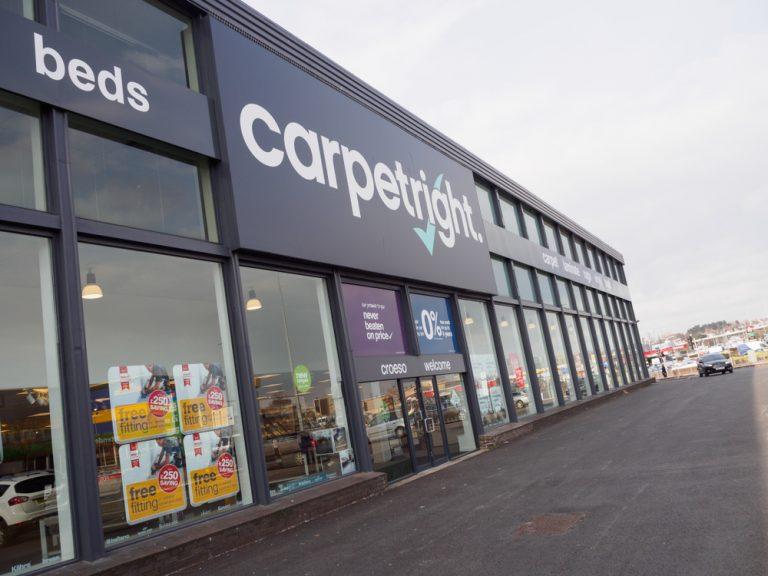
Carpetright plc (LON: CPR) have agreed a takeover deal with Meditor, who are their largest shareholder.

The bid value was reported to be around £15.2 million and was significantly less than what shareholders valued the UK textiles firm at.

Carpetright saw their shares collapse a fortnight ago, and reports suggested that seniority were pondering the potential of a takeover deal.

Shares in Carpetright rallied 14.96% after the Friday announcement to 4.8p. 15/11/19 12:02BST.

The pair were in talks last month as Carpetright sought ways to raise £80 milion to pay off £56 million in debts and give it enough cash to grow the business.

Carpetright chairman Bob Ivell said: “We believe the MHL offer is in the best interests of all stakeholders.

“While we have made significant progress with our recovery plan for the Carpetright group, our ability to invest in the future of the business has been constrained against the backdrop of limiting banking covenants and a very challenging consumer market.

“With a recapitalised business and the backing of a committed new owner with the resources to invest in Carpetright for the long term, we will be able to complete our recovery in the private arena and emerge as a stronger business.”

Investment manager and poker player Talal Shakerchi, who owns Meditor, added: “With Meditor’s support and financial backing and without the constraints of a public market listing, Carpetright will be well positioned to compete more effectively.

“This will facilitate substantially increased investment in Carpetright’s committed employees and its store estate as well as driving new initiatives and improvements. I am excited about the long term prospects and opportunities for the Carpetright business.”

Many firms have struggled to stay afloat in testing waters on the British high street.

In a tough business environment, the struggles of Marks and Spencer (LON: MKS) and Sainsbury’s (LON: SBRY) have been reported, and the takeover bid for Carpetright will give relief to shareholders that the company did not descend into administration similarly to Mothercare (LON: MTC).

TalkTalk swing to an interim profit

0

TalkTalk Telecom Group PLC (LON: TALK) have announced that they had swung to an interim profit following an announcement on Friday morning.

TalkTalk seemed optimistic about the published results and maintained their guidance for financial 2019.

Despite the positive results, shares of TalkTalk dipped 3.6% to 105p. 15/11/19 11:47BST.

In a time where the telecoms industry is volatile and surprising, rivals have had mixed experiences.

Vodafone (LON: VOD) have reported a second half loss in their most recent update which has seen their shares crash in a similar manner to Deutsche Telekom (ETR: DTE) who cut their dividends earlier this week.

Additionally, BT (LON: BT.A) hit Friday headlines as Labour vowed to nationalize the firm as one of their election policies.

In the six months to September 30, revenue fell 3.6% to £792 million from £822 million last year, whilst a pretax profit of £1 million was reported from a £4 million loss last year.

Headline earnings before interest, taxation, depreciation and amortisation climbed 39% to £140 million from £115 million.

TalkTalk said: “Headline Ebitda outlook for the year remains unchanged, with increased Fibre penetration and headquarter move efficiencies driving a materially lower cost base.”

TalkTalk moved its headquarters to Salford, Greater Manchester, from London, a moved which delivered £7 million in first half cost savings.

Looking to the second period, the FTSE 250 (INDEXFTSE: MCX) firm expects a further £10 million in savings.

Chief Executive Tristia Harrison said: “We’re pleased that our clear strategy to accelerate customer growth in Fibre broadband while also reducing costs has led to a significant increase in profitability in the first half.

“We now have over two million customers taking a Fibre product, adding nearly 300,000 customers in the half.”

TalkTalk also reported that they were close to formalizing a deal to sell its Fibrenation sister company to Cityfibre. Shareholders should remain optimistic about TalkTalk, considering the tough market conditions and the similar experiences of rivals. In the longer term, there is an expectation that TalkTalk can produce positive results once economic and political uncertainties are removed.

Vodafone see Indian slowdown, but shareholders should remain optimistic

8

Vodafone (LON:VOD) have reported a slowdown in their Indian business, as the technological giant reported a loss to shareholders following a disastrous trading period.

Earlier this week, Vodafone reported a half year loss which causes their shares to sink and the news from overseas operations in India will only add salt to the wound.

Shares in Vodafone sunk 1.92% after the poor trading update to 156p. 15/11/19 11:29BST.

India has been one of Vodafone’s booming markets in recent times, with more than a billion mobile subscribers but across financial 2019 business has slumped.

It was reported that the prices of telephone calls fell in India, but the data prices continued to remain high which would have added to Vodafone’s losses.

The stiff competition of firms such as Reliance Jio (NSE: RCOM) and Tata Communications (NSE: TATACOMM) have slashed data costs leading to India boasting the cheapest mobile data in the world.

Overseas competitors such as Deutsche Telekom (ETR: DTE) have experienced a crisis as well as they slashed their dividend, whilst BT (LON: BT.A) hit UK headlines after Labour pledged to nationalize the firm on Friday morning.

Earlier this week, Vodafone’s CEO Nick Read warned that the company’s India operation could be in doubt unless the government stopped hitting operators with higher taxes and charges.

“Financially there’s been a heavy burden through unsupportive regulation, excessive taxes and, on top of that, we got the negative Supreme Court decision,” he was reported as saying on Tuesday.

There have been reports that the substantial loss could result in the exiting of Vodafone from the Indian market, which could cost India more than Vodafone. Amidst the crisis, Vodafone have also threatened to quit operations and business in India after reports that they were unwilling to pay the heavy tax demands. The results come at a tough period of trading for Vodafone, however it seems that there is a reluctance for the telecom giant to exit the Indian market. However, if tax disputes and revenues are not stimulated then shareholders may be concerned about future updates and share prices.

BT share price falls following Labour announcement

4

BT shares (LON: BT.A) have fallen after Labour made a pledge to nationalize the firm and offer free broadband for all in an attempt to win voters ahead of the general election.

Shares of the telecoms giant fell 2.64% after the abrupt announcement to 190p. 15/11/19 10:58BST.

Labour have promised to provide free fibre broadband by 2030 for homes and businesses, providing it wins the December election.

The party pledged that it would nationalize BT to deliver the policy and introduce a tax on rivals such as Vodafone (LON: VOD) and Virgin Media.

Shadow chancellor John McDonnell told the BBC the “visionary” £20 billion plan would “ensure that broadband reaches the whole of the country”.

Prime Minister Boris Johnson said it was “a crackpot scheme”.

PM Johsnon added that would cost the taxpayer “many tens of billions” and that the Conservatives would deliver “gigabit broadband for all”.

And the Lib Dems called it “another unaffordable item on the wish list”.

Virgin have responded with the following statement, “Virgin Media has the fastest scaled network in the UK and has pledged to bring next-generation Gigabit broadband to half of the UK, by the end of 2021. As this commitment shows, private investment is essential to delivering improved broadband infrastructure”.

“With billions of pounds worth of private money invested in the UK, Virgin Media continues to expand its network, providing competition and choice to consumers”.

“Government policy has a role to play and can help to accelerate broadband deployment in a way that minimises the level of public subsidy needed and provides the UK and consumers with incredible connectivity within a competitive market”.

BT Chief Executive Philip Jansen told the BBC that Labour had under-estimated the price of its pledge.However, Jansen was keen to remain impartial and said he would be content to work with any governing party to help build a digital Britain.

Jansen concluded that it would not be ‘easy’ to implement the Labour policy, and changes would have to be enforced concerning shareholders, BT pensioners and employees.

This comes as a response to PM Johnson’s recent pledge to spend £5 billion to bring full fibre broadband to every British household by 2025.

But Mr McDonnell said the Conservatives’ funding plan for improving broadband was “nowhere near enough” and would leave the UK falling further behind other countries who already have fibre more widely available.

The plan includes nationalising parts of BT – namely its digital network arm Openreach – to create a UK-wide network owned by the government.

“We’re putting the money in and therefore we should own the benefit as well,” said the shadow chancellor.

Earlier this year, Ofcom reported that only 7% of UK households have access to full fibre broadband, which both parties have pledged to improve.

However, this is a real shot in the dark from the struggling Labour party. The pledge to nationalize BT would cost the taxpayers million, could further worsen the budget deficit and maybe worse off all completely misguide voters come December 12th.

The policy comes at a time where there does not seem to be any prospect of Labour winning the magical 326 seats in Westminster, and policies like this may not benefit Labour’s cause.

Labour have only given voters a brief explanation of how this policy would be implemented, but further details would be required to understand the size and magnitude of this legislation.

However, Labour did add that they would tax UK tech firms on a percentage system on global profits and UK sales, which could raise up to £6 billion. Once again, this does seem far fetched in a market where technological developments are chaining by the day.

But Conservative Culture Secretary Nicky Morgan said: “Jeremy Corbyn’s fantasy plan to effectively nationalise broadband would cost hardworking taxpayers tens of billions.

“Corbyn is clearly so desperate to distract from his party’s divisions on Brexit and immigration that he will promise anything, regardless of the cost to taxpayers and whether it can actually be delivered. What reckless idea will be next?”

Industry experts have had their say on the unrealistic nature of Labour policy,

Julian David, chief executive of TechUK, which represents many UK tech firms, said: “These proposals would be a disaster for the telecoms sector and the customers that it serves.

“Renationalisation would immediately halt the investment being driven not just by BT but the growing number of new and innovative companies that compete with BT.”

The shift in shares is not as significant as analysts may have expected, showing a skepticism from traders about the chances of Corbyn winning the majority in the December election. “The loses in BT have been limited due to the market perception that Corbyn hasn’t got a chance of becoming Prime Minister,” said John Truong, Equity Trader at Frederick & Oliver. He also highlighted the negative impact on shares in sectors earmarked for possible nationalisation such as the Utilities sector.