Nike end selling partnership with Amazon

0

Nike Inc (NYSE: NKE) have announced that they will not sell directly to Amazon (NASDAQ: AMZN) in an attempt to sell directly to consumers as the company confirmed to CNBC.

The decision by Nike to make this change ends an experimental pilot which was launched in 2017.

The initial terms of the deal allowed Nike to sell a limited range of products to Amazon in exchange for tighter regulations on selling counterfeits on Amazon. This deal also included Nike’s athletic footwear, apparel and other merchandise.

Analysts have said “I think Nike is putting more emphasis on its own online business, as evidenced by the news that its new CEO of a former CEO at eBay,” said Morningstar analyst David Swartz. “Also, Nike was probably unhappy that Amazon hasn’t gotten rid of the third-party sellers and fakes.

Nike products will be available to purchase items on the company website, or through independent stores which Nike sell directly too.

Company officials said that the pilot partnership between Amazon and Nike was no longer part of Nike’s wider sales strategy.

“We will continue to invest in strong, distinctive partnerships for Nike with other retailers and platforms to seamlessly serve our consumers globally,” Nike confirmed.

Ending this partnership will allow Nike to take stronger control of their brand, and bring sovereignty back.

Nike said: “As part of Nike’s focus on elevating consumer experiences through more direct, personal relationships, we have made the decision to complete our current pilot with Amazon Retail.

“We will continue to invest in strong, distinctive partnerships for Nike with other retailers and platforms to seamlessly serve our consumers globally.

“We will continue to partner with Amazon Web Services to power a suite of services on Nike.com and within Nike’s ecosystem of apps.”

Amazon have declined to comment on the story, but it is clear that Nike are looking to take the reign back to promote organic growth.

Amazon have looked to expand into many different sectors and are currently involved in an investigation over the potential takeover of Deliveroo. However, Nike have seen more benefit in closing this partnership and this may allow Nike to have control over their own operations and seek expansion with other companies.


Viacom exceed market and analyst expectations

0

Viacom, Inc. Class B (NASDAQ: VIAB) have exceeded market expectations returning strong trading figures in their most recent update.

MTV Owner Viacom, is currently inn the process of formalizing a deal to merge with former partner CBS Corp (NYSE: CBS). The planned merger between CBS Corp and Viacom, is set to be formalized and completed by early December.

Shares of Viacom slipped 2.24% during Thursday trading to $22.05. 14/11/19 13:33BST.

The company also reported a 6% rise in domestic advertising revenue on a constant currency basis. However, revenue from its filmed entertainment division, which includes Paramount Pictures, fell 14%.

Viacom had experienced external success as well, which has contributed to increasing revenues.

Viacom have told shareholders that they have produced content for Apple (NASDAQ: AAPL), Hulu who are owned by Walt Disney (NYSE: DIS) and HBO Max who AT&T (NYSE: T) own.

Shareholders will be further pleased, as it was reported earlier this week that Viacom reported a multi-year deal with Netflix (NASDAQ: NFLX) to produce animated TV shows.

Net earnings from continuing operations for Viacom fell to $303 million (£236.8 million), or 75 cents per share. In the fourth quarter ended Sept. 30 from $386 million, or 96 cents per share, a year earlier.

Total revenue fell to $3.43 billion from $3.49 billion, but was above the average estimate of $3.41 billion, according to IBES data from Refinitiv.

Excluding items, the company earned 79 cents per share, above the average analyst estimate of 75 cents per share.

The new partnerships that Viacom have agreed with rivals such as Disney and Netflix will thoroughly excite shareholders, which could be part of a response to stimulate Netflix subscribers after a period of slow trading. With a well established base, Viacom seem to have scored a good deal to expand into other sectors of broadcasting television and entertainment, which could boost long term returns. “Our strong performance in the fourth quarter capped off a pivotal year for Viacom and reflects the successful execution of our strategic priorities to evolve the company for the future,” CEO Bob Bakish said. “As we look to the future of a combined ViacomCBS, we’re thrilled with the momentum we have to create one of the world’s preeminent content companies.”

Asda blame political uncertainties for quarterly slump

6

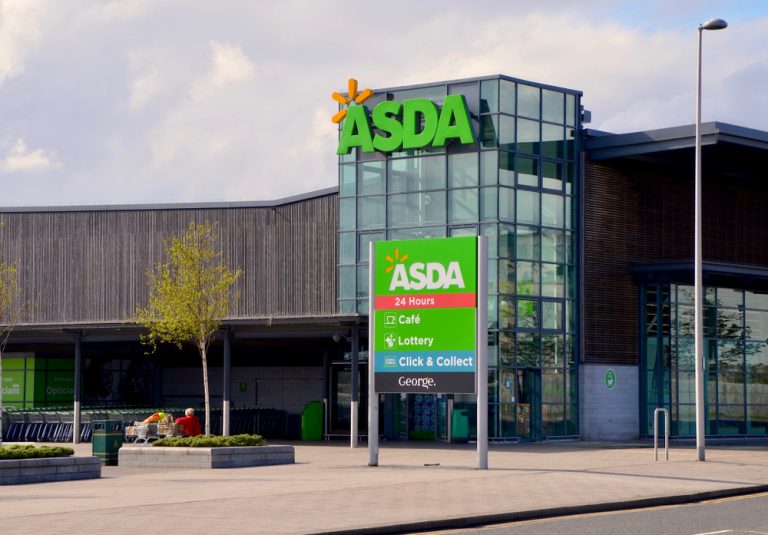
Asda have seen a slump in sales, highlighted in their quarterly trading update, which has been caused by political uncertainties and tough market conditions.

Walmart (NYSE: WMT) own Asda currently, and Asda join a list of British supermarkets who have seen a decline in recent trading performance.

Shares of Walmart are trading at $120, spiking 1.56%. 14/11/19 13:14BST.

The British Supermarket industry has been hit by a few shocks over the years, and recovery for the Big Four looks tough in a cut throat market.

Firms such as Marks and Spencer (LON: MKS) and Sainsbury’s (LON: SBRY) have seen falling sales and profits in their respective quarterly update.

Tesco (LON: TSCO) have also been hit hard, but have responded with non price competition in releasing their new ClubCard Plus only a few weeks back.

The Big Four have been hit by increasing competition from overseas rivals such as Lidl and Aldi, who offer similar quality products at substantially cheaper prices.

Asda reiterated political uncertainties as a hinderance to strong business performance, saying that Britain’s speculative relationship with the European Union has negatively affected spending patterns.

Sainsbury’s attempted to takeover Asda earlier this year in April, in a £7.3 billion deal. However, this deal was blocked as it did not win the approval of regulators and competition authorities.

Asda said its gross profit rate fell, reflecting price markdowns in clothing following a slow summer season versus last year.

The fall in gross profit rate, plus increased operating expenses, meant operating income was also lower.

“This quarter has afforded consumers little respite from political or economic uncertainty and this has shown in their spending,” said Chief Executive Roger Burnley.

As the general election approaches us quickly, many firms including the British Supermarkets will be hoping that Brexit negotiations speed up to allow fluid business trading. Three years on after the June 2016 Referendum, many businesses are in the same position now as they were three years ago where so many uncertainties cloud Britain’s status with the EU.

Beximco Pharmaceuticals posts financial progress

Generic pharmaceuticals and ingredients company Beximco Pharmaceuticals (LON: BXP) booked improvements across its fundamentals during their first quarter. While the Company’s current assets dropped by around half a billion taka to 12.75 billion during the first quarter, their financial results reflected impressive progress in year-on-year comparisons. Company revenues bounced by over 900 million on-year to 6.3 billion taka. This led Beximco’s surge in profits, which were up from 2.53 billion to 2.94 billion taka pn-year, despite the Company’s operating expenses expanding by 200 million during the same period comparison. Beximco shareholders enjoyed similar progress, with the Group’s earnings per share rising from 1.86Tk to 2.13Tk. Elsewhere in pharmaceutical and chemical news, IMCD N.V. (AMS: IMCD), Amryt Pharma Holdings Ltd (LON: AMYT), Curetis NC (AMS: CURE) and Integumen PLC (LON: SKIN) also boasted financial progress.

Beximco comments

Mr. Nazmul Hassan MP, Company Managing Director, responded to today’s update,

“Building on the impressive financial and operational performance we delivered last year, we enter the first quarter of the current financial year with strong year-on-year growth, supported by our continued focus on expanding our product portfolio and strengthening our international presence. In line with this growth strategy, we launched our fifth product in the US during the quarter. We look forward to continuing to build on this momentum and deliver value for our shareholders in the year ahead.”

Investor notes

The Company’s shares rallied 1.21% or 0.50p to 41.00p per share 14/11/19. The Group’s p/e ratio is 8.20, their dividend yield stands at 4.31% and their market cap is £166.28 million.

HSBC and Emirates set to cut jobs in UAE

2

HSBC Holdings (LON: HSBA) and Emirates NBD have cut their workforce in UAE operations in an attempt to streamline costs.

Both these firms have hit recently news headlines after reporting slumps in profits and poor trading periods highlighted in company updates.

HSBC have said that they will lay off 40 bankers in the UAE, whilst Emirates will cut 100 jobs as the two firms attempt to reduce costs.

The job cuts come at no surprise considering the state of the UAE economy, which is suffering from slow growth. Dubai has been hit particularly hard, and slow growth has been fueled by a property slump.

HSBC announced a decline in quarterly profits and an operational change in their operations globally, and it seems that overseas operations have been the first target.

HSBC currently employ 3,000 staff in the UAE and host 10,000 employees in the Middle East.

HSBC, like other competitors such as Lloyd’s (LON: LLOY) and Deutsche Bank (ETR: DBK) have seen a recent business crisis amid cut throat market conditions.

The FTSE100 (INDEXFTSE: UKX) listed bank may look to increase redundancies in overseas operations as further management changes are put in place.

The cuts at Dubai’s largest lender Emirates NBD (came in areas such as consumer sales and liabilities, one of the sources said, while a second source played down the significance, citing the bank’s 12,000 workforce.

“The cuts are part of cost cutting and rationalising to drive efficiencies in a challenging market,” the second source familiar with the matter said about Emirates NBD.

Rating agency Fitch warned in September a weakening property market in the UAE is likely to put more pressure on the asset quality of the banking sector, according to Reuters. The changes will come as no surprise to shareholders at HSBC, as the market conditions become increasingly tough. It will only be seen in the future as to whether UK jobs will face the same cut as UAE jobs have experienced.

Hapag-Lloyd delivers $727m earnings boost

International shipping and container transportation business Hapag-Lloyd (ETR:HLAG) booked positive fundamentals during the third quarter, which capped off three quarters of good financial progress. During Q3 the Group’s revenues rose from $3.57 to $3.60 billion year-on-year, which pushed the Company’s EBITDA up from $453 million to $617 million and their net result up from $137 million to $$168 million. This meant Hapag-Lloyd were able to hit the three-quarter mark on a positive note, with efficiencies and on-year revenue growth of $513 million pushing revenues up to $10.65 billion for the year-to-date. This led surges in the Group’s EBITDA and net result, which jumped by $727 million and $318 million to $1.70 billion and $333 million respectively. Elsewhere in shipping and delivery, Amazon (NASDAQ:AMZN) reported operational developments, while Hanjin Transportation Co. Ltd. (KRX: 002320) and Clarkson (LON:CKN) both issued less positive updates.

Hapag-Lloyd comments

Speaking on Thursday’s news, CEO Habben Jansen said, “We have achieved a very respectable result after nine months: Despite geopolitical tensions and trade restrictions, we benefitted from higher transport volumes and better freight rates and also kept a close eye on our costs. And the same holds true for our strategic goal of becoming number one for quality.” Speaking on its full-year outlook, the Company’s statement read, “For the full financial year 2019, Hapag-Lloyd expects an EBITDA in the range of EUR 1.6 to 2.0 billion and an EBIT in the range of EUR 0.5 to 0.9 billion. Based on the business development in the first nine months of 2019, it can currently be assumed that EBITDA and EBIT will be in the upper part of the guided ranges.”

Investor notes

The Company’s shares rallied 3.81% or 2.81p to 70.80p per share 14/11/19 12:53 CET. The Group’s market cap is €11.99 billion, their dividend yield stands at 0.22%.

Card Factory report increasing revenues and solid performance

0

Card Factory (LON: CARD) have reported revenue gains in financial 2019, driven by increasing sales at new stores and increasing online sales.

The high street firm have had a mixed year, as they reported strong gains in quarterly sales back in June, but high street turbulence has hit.

There has been a national crisis on the British high street, where ever presents such as Marks and Spencer (LON: MKS) and Mothercare (LON: MTC) have fallen victim to slowing business and trading slumps.

In the nine months to 31 October revenue increased 5% as Card Factory grew its store numbers, with 38 new branches being opened in the same period.

However like-for-like in-store sales fell 0.4% in the three months to the end of October due to weaker footfall, which would have concerned shareholders.

The greetings card retailer should remain optimistic about the final few months of the year, as they prepare for the ever busy festive period.

The FTSE250 (INDEXFTSE: MCX) listed retailer reported increased online sales by 16.2 per cent and sales are up 21.9 per cent in the year to date.

“The tradition of sending Christmas cards by post seems to be in decline so Card Factory will have to push ancillary items more, such as wrapping paper, sticky tape and gift boxes, in order to keep driving up sales,” Russ Mould, investment director at AJ Bell said.

He added: “Fundamentally its prices are low and therefore attractive to a wide market but it has to work even harder each year to encourage people to buy its products, particularly as the market is already highly competitive.

“News that rival Clinton Cards is considering shop closures as part of a survival plan may provide a small benefit to Card Factory yet this is also an indication of how tough life is for many retailers.”

Card Factory is planning on launching a new platform and website later in 2019. Third-quarter online sales grew by 16%.

The company said it continues to face external cost pressures such as the UK’s national living wage, while year-to-date performance has also been hit by storage costs.

However, Card Factory have reassured stakeholders by saying that it expects these pressures to ease in financial 2020.

“I am pleased with our year-to-date performance. Our ongoing focus on customer experience, and the quality and range of our card and complementary non-card products, has led to an increased average spend both in stores and online. This has helped us to substantially offset the effect of the lower high street footfall experienced in the quarter and the corresponding impact on our like-for-like sales,” commented Chief Executive Karen Hubbard.

“We remain on track with our new store roll out and are focused on pursuing other new growth opportunities and retail partnerships to extend our market penetration in the UK and overseas.”

“Our quality/value proposition and new product ranges give us confidence that we are well positioned to deliver a good performance in our key fourth-quarter trading period. The board anticipates profit for the full year to be broadly in line with its previous expectations,” she continued.

Shares of Card Factory slumped 4.19% to 148p despite the positive update. 14/11/19 12:08BST.

TBC shares crash despite quarterly profit gains

1

TBC Bank Group PLC (LON: TBCG) have seen strong profit gains in their most recent quarterly update, however shares have crashed.

Shares of TBC Bank have crashed 4.6% on Thursday to 1,328p. 14/11/19 11:43BST.

The Georgian focused lender said that increases in fee and commission income had compensated for a decline in net interest income.

The FTSE250 (INDEXFTSE: MCX) listed bank said its net profit for the three months to September 30 increased 18% to GEL126.8 million from GEL107.4 million in the same period a year ago. Additionally, pretax profit rose 13% to GEL142.3 million.

The figures posted by TBC are impressive considering the global state of the banking industry.

Big time competitors such as HSBC (LON: HSBA) and Lloyd’s (LON: LLOY) have seen quarterly slumps in profit which have alerted shareholders.

Additionally, the current crisis at Deutsche Bank (ETR: DBK) will keep TBC shareholders optimistic in cut throat market conditions.

Third quarter net interest income fell 6.7% to GEL186.2 million, while fee & commission income rallied 20% to GEL47.1 million.

Other operating non-interest income increased 19% to GEL46.4 million.

Net interest margin for the third quarter fell to 5.0% from 6.9%. Year-to-date margin fell 1.5 percentage point to 5.5%.

TBC has backed their medium-term target of return on equity of above 20%, cost to income ratio below 35%, dividend payout ratio of 25% to 35% and loan book growth of 10% to 15%.

In the third quarter, the company’s return on equity fell to 20.4% from 21.2% and cost to income ratio increased to 39.9% from 37.4%.

Shareholders will be further pleased as an app offshoot of TBC Bank, Space have agreed a partnernship with Visa (NYSE: V)

Nikoloz Kurdiani, deputy CEO of TBC Bank says: “When we launched Space, we wanted to move beyond the traditional banking approach and outdated technology to create a new type of bank in Georgia that would be better at responding to modern customers’ needs. Now, we are ready to go global.”

Visa says it will share knowledge, best practices and its network of technological partners with Space to help it achieve its aims.

Yevgen Lisnyak, senior director and head of strategic partnerships, fintech & ventures (Visa, CISSEE), says: “We are witnessing a rapid transformation of the financial banking sector, where new players are playing a significant role. Neobanks are agile, consumer-centric, flexible and innovative, offering modern consumers completely new financial solutions and digital banking experience. We are excited to be able to support fintechs to navigate the payments landscape in the Caucasus region to achieve their business growth and international expansion ambitions”

Premier Oil shares climb after positive production forecast

4

Premier Oil PLC (LON: PMO) have seen their shares climb on Thursday after they updates shareholders on production expectations for the year.

Premier Oil reported a rise in year-to-date production and forecasted production to be at the upper end of prior guidance.

Shares in the FTSE250 (INDEXFTSE: MCX) listed firm climbed 2.68% to 89p on Thursday. 14/11/19 11:27BST.

Average production was 79,400 barrels of oil equivalent per day for the 10 months to October end, up from 77,700 barrels in the comparative year ago period, underpinned by continued high operating efficiency of 94%.

Premier also added that October production averaged 78,400, an impressive statistic which would have caught shareholder’s eyes.

Premier expects 2019 production to be at the upper end of its 75,000 barrel to 80,000 barrel of oil equivalent guidance range.

Firms in the industry have struggled recently, with global titans such as Shell (LON: RDSB) and Total SA (LON: TTA) reporting lower profits due to slumping oil prices.

However, Premier do not seem to be phased by the market volatility and have reported strong revenue gains to back up a relatively successful period of trading.

Whilst competitors such as Tullow Oil (LON: TLW) cut their annual guidance yesterday, the update provided by Premier was a direct contrast.

Chief executive Tony Durrant commented on the results, “We continue to deliver on our strategic priorities. We are generating significant free cash flow, which is materially deleveraging our balance sheet.

“At the same time, we are actively managing our portfolio and selectively progressing growth projects at the right exposure. We also continue to create value through the drill bit and to build material new positions in emerging exploration plays at low cost.”

David Barclay, senior investment manager at Brewin Dolphin, said: “Premier Oil’s production levels have dipped slightly compared to the half-year average reported in the summer, dropping from 84,100 barrels of oil per day to 79,400. “Despite this, the full year production estimate of 75,000-80,000 barrels of oil per day remains unchanged. Premier’s Catcher Area holds its place as the cream of the crop with strong output levels reported from this field once again. “A fast-track development project is well underway to support the recent discovery of gas at Tolmount East and this is expected to have a further impact on production, once drilling starts in mid-2020. “Overall debt levels remain high, but the company has reported a $300m reduction, which is deemed to be in line with guidance. “What’s yet to be seen is the impact of the sale of its Zama oil field, which now has an extended bid deadline to December.”

QinetiQ shares jump after bullish interim update

3

QinetiQ Group plc (LON: QQ) have seen their shares jump on Thursday morning after they reported impressive interim results to shareholders.

QinetiQ maintained their annual forecasts unchanged after they update shareholders with double digit earnings growth in the first six months of its financial year.

Shares of QinetiQ jumped 4.6% on Thursday to 336p. 14/11/19 11:11BST.

The FTSE250 (INDEXFTSE: MCX) listed firm reported a pretax profit of £71.3 million for the interim period ending in September.

This saw an impressive increase of 35% compared to the £52.7 million figure one year ago. Additionally, revenue grew by 16% from £486.5 million from £420.3 million.

“We delivered a strong first half result, with organic growth in orders, revenue and profit driven by a good performance across our businesses, both in the UK and internationally,” said Chief Executive Steve Wadey.Q

QinetiQ declared an interim dividend of 2.2p a share, slightly higher than 2.1p it paid a year before.

With the update, QinetiQ maintained their expectations for full year operating profit, and forecasted high single digit revenue growth.

“Our focus for the remainder of the year is to win further campaigns globally, successfully deliver key programmes, and complete the acquisition of MTEQ to transform the scale of our US operations as we build an integrated, global defence and security company,” added Wadey.

QinetiQ announced the acquisition of sensing solutions firm Manufacturing Techniques Inc – or MTEQ – in the beginning of October for up to $125 million.

QinetiQ still remains a relatively young company in the market, but these results will certainly please shareholders about the potential of the defense technology company. The Farnborough based firm still has a long way till it competes with the big gun such as Ultra Electronics (LON: ULE) who met market expectations in their most recent updates. Certainly, for the foreseeable future the domination of Lockheed Martin (NYSE: LMT) and Boeing (NYSE: BA) will continue in the defense technology industry unless major breakthrough’s are made.