U+I Group secures planning permission at Swanley Shopping Centre

Property developer and urban space regeneration investor U+I Group PLC (LON: UAI) today announced that it had secured planning permission to enhance its third largest asset. The Company notified shareholders that it had secured permission for a ‘mixed-use scheme’, which included the construction of new home and a multi-storey car park at Swanley Shopping Centre in Kent.

Part of the existing shopping centre and car parking facilities will be transformed into three hundred new homes, 46,479 sq. ft. of additional commercial space, a new community facility and a multi-storey car park.

In addition to the raw revenue these new property and amenity assets will generate, the Company told investors that the value of the asset as a whole will be increased by the increased footfall these changes will create.

U+I comments

Speaking on the update, U+I CEO Matthew Weiner stated, “The Inspector’s decision found strongly in favour of this imaginative, mixed-use development in Swanley, which is located less than thirty minutes from Central London in an area of huge potential. It is a strong demonstration of our integrated regeneration business plan and one of many such opportunities within our portfolio, as we look to maximise the value of our assets.”

Investor notes

Following the update, the Company’s shares have rallied 0.99% or 1.40p to 143.00p a share 05/09/19 13:53 BST. Peel Hunt analysts reiterated their ‘Buy’ stance on U+I Group stock. The Group’s p/e ratio is 36.59, their dividend yield is 4.13%. Elsewhere in property development and estate agency news, there have been updates from; Hunters Property PLC (LON: HUNT), GCP Student Living plc (LON: DIGS), Barratt Development Plc (LON: BDEV), Belvoir Group PLC (LON: BLV), Tritax Big Box REIT PLC (LON: BBOX), Intu Properties plc (LON: INTU) and LSL Property Services plc (LON: LSL).

Sterling gains on Hilary Benn’s Brexit delay bill

With the week proving as challenging as string-puller Dominic Cummings could have feared, the puppeteer can only look on as his advisee, Boris Johnson, faces the slightly less toothless offerings of the opposition benches. No doubt far from defeated, this week’s motions in the House against a No-Deal Brexit have if nothing else soothed market fears of what appeared to be an encroaching and unstoppable crash-out scenario at the end of October. After making some progress yesterday, Hilary Benn’s delay Bill allowed Sterling to start the day cautiously, before cementing its progress. Speaking on the market opening after the Brexit delay bill, Spreadex Financial Analyst Connor Campbell said,

“Having squeezed the week’s political developments for all they were worth on Wednesday, the pound started Thursday in a far more cautious mood.”

“With the Benn bill – requiring the government to ask Brussels for a 3-month extension if it fails to either reach a deal with the EU by October 19th or gain parliamentary approval for no-deal by that same date – set to be pushed through all stages of parliament before it is suspended next week, potentially gaining royal assent as soon as Monday, the pound was free to cement yesterday’s gains.”

“That means it is just under $1.222 against the dollar and €1.08 against the euro, dipping slightly from Wednesday’s highs. This Thursday reticence likely stems from the uncertainties regarding an election; though Boris Johnson last night failed in his attempts to force a trip to the polling booth on October 15th, a snap vote is still in play.”

“Following a market-wide rally in Asia, the Eurozone indices leapt higher after the bell, as the US and China agreed to further trade talks in mid-October. Given we have been here umpteen times before, the gains were on the shyer side – at least compared to previous trade development surges – with the DAX and CAC rising 0.6% apiece. The Dow Jones is set to climb the same amount later this after, a move that will push it above 26500 for the first time in over a month.”

“The FTSE, however, failed to join in with these gains. Instead the UK index tumbled 0.2%, assumedly annoyed by the strength of sterling’s rally on Wednesday.”

So, market indices didn’t fall for empty promises in regard to a Sino-US resolution. We can hope Sterling continues its progress in afternoon trading, currently at 1.12 against the Euro. Other news and macro financial updates have come from; Parliament being prorogued, No-Deal Brexit preparations, UK GDP during the second quarter, the London Stock Exchange Group (LON: LSE), the US-China currency manipulation debacle, and analysts’ outlook for markets and currencies.

Hunters Property confident full-year outlook as it builds on past profits

UK property sales and lettings agency Hunters Property PLC (LON: HUNT) profits and shareholder returns both improve in a year-on-year comparison for the first half. The Group’s revenues contracted marginally, down from £6.7 million for H1 2018, to £6.6 million for H1 2019. For the same period, network income grew 7% to £19.2 million, and adjusted operating profits surged 30% to £1.1 million.

Hunters Property shareholders saw similarly positive progress during the period, with adjusted EPS growing 13% to 2.30p, and their interim dividend for the period hiking 9% to 0.87p per share.

The Company said lettings income grew 12% during the period and customer satisfaction remained strong at 96%. They also opened 3 more branches during the period and said they had invested ‘significantly’ in their software capabilities.

Hunters Property comments

Glynis Frew, Chief Executive, said,

“We have delivered a good set of results in the first six months. The market has been held back by the wider economic uncertainty and the tenant fee ban. However, we continue to roll out our mitigation strategy as regards the ban which is well underway and is on plan.”

“We continue to offer a very attractive solution to suitable, independent businesses who see the advantages of joining the Hunters network. In fact, we are experiencing increasingly strong businesses seeing that benefit.”

“Going forward we believe our exceptional customer service at local level combined with enhanced technical expertise, automated compliance and increased productivity will boost our offering even further. We are investing in our software to advance our strategy to grow and develop the franchise system having recruited a COO with fifteen years’ experience in the industry as well as being bolstered by the support of our network in embracing that change.”

“The continuing work and support displayed by our staff and the franchise network itself is a credit to the Group. I offer, on behalf of the Board, our gratitude to everyone that is involved.”

Investor notes

The Company’s share price rallied 4.19% or 1.80p to 44.80p per share 04/09/19 08:00 BST. The Group’s p/e ratio is 7.28, their dividend yield is enticing at 5.45%. Elsewhere in property development and estate agency news, there have been updates from; GCP Student Living plc (LON: DIGS), Barratt Development Plc (LON: BDEV), Belvoir Group PLC (LON: BLV), Tritax Big Box REIT PLC (LON: BBOX), Intu Properties plc (LON: INTU) and LSL Property Services plc (LON: LSL).

Unpacking Bologna: the heart of Italy’s Emilia-Romagna region

1
Italy is so full of bucket-list worthy locations that for some, Bologna doesn’t even make the cut. Rome, Florence, Naples, Milan, Verona, Venice, Amalfi Coast, Sicily, Sardinia – the boot-shaped peninsula is packed full of beautiful locations, from man-made cities to natural coastlines. With Florence dominating the centre north of the country among the minds of tourists, its neighbour Bologna often goes unvisited. But, just a half hour journey between the two on a high speed train, Bologna is undoubtedly unmissable. Bologna is home to a university older than the University of Oxford. Founded in 1088 and having never been out of operation, the institution is the oldest university in the world. Its alumni range from popes to Giorgio Armani, and its university buildings are as beautiful as they are old. History aside, Bologna is any foodie’s dream. I know what you’re thinking, “everywhere in Italy is great for food”. But, as any Italian local will tell you, this is not the case. The belief that pizza and pasta are the staple of Italy as a whole, is largely a westernised, tourist-fuelled, myth. Every region, every city, every town, has its own typical dishes, and I hate to say it, but if you want real pizza, you should head to Naples. Anywhere out of Naples is simply not real pizza. Bologna, on the other hand, is best known for a selection of unique pasta dishes and cured meats. Handmade and delicate tortellini pasta served in a broth is possibly the most famous of the city’s typical dishes, as well as Tagliatelle al Ragù. The latter of the two is most commonly misconceived as “Spaghetti Bolognese”, but this does not exist in the city. Spaghetti Bolognese is yet another myth, and is nothing but a misunderstood recipe used to please tourists. Instead, the Tagliatelle recipe is so important to the culture of the Emilia-Romagna region that the recipe is copyrighted and deposited at the Bologna Chamber of Commerce. Moving away from pasta, a type of salami is particularly characteristic of Bologna is Mortadella. As you roam the narrow side streets of the city, you will most probably find locals sitting outside and enjoying a golden hour aperitivo, sipping on a glowing orange Spritz and enjoying a salumi platter, in which Mortadella will undoubtedly be included. If the food and its history hasn’t convinced you yet, then maybe its atmosphere will. Bologna is largely untouched by tourism outside of late spring and early summer, receiving a lot of domestic tourism instead. It is also a highly popular destination among Erasmus students, making it an emblem of Europe rather than just Italy. Its picturesque skyline is dominated by two antique towers, “Le Due Torri”, and framed by gentle sloping hills in the background known in Italian as “Colli”, where visitors can enjoy a leisurely hike.

Dixons Carphone mobile sales down, full year guidance unchanged

1
Dixons Carphone reported a drop in mobile phone sales on Thursday, but said that its guidance for the year remains unchanged. Shares in Dixons Carphone (LON:DC) were trading over 3.5% higher on Thursday morning. Mobile like-for-like revenue in the UK and Ireland was down 10%, Dixons Carphone revealed in a trading update for the 13 weeks ended 27 July. Earlier in June, the company posted a statutory loss before tax of £259 million, warning that UK mobile will continue to make a significant loss. Despite the fall in mobile phone sales, the leading multinational consumer electrical and mobile retailer said that its guidance for the year remains unchanged. “We’re on track with both our trading this year and our longer-term transformation,” Alex Baldock, Group Chief Executive, said in the trading update. “The Mobile market is as challenging as expected, underlining the need for the decisive actions that we set out in June. We remain committed to growing Electricals sales and headline profits in UK & Ireland and International this year, and to this being the trough year for Mobile losses,” the Group Chief Executive of Dixons Carphone continued. “Our longer-term transformation is also on track. We made further gains in our big priorities of Online, Credit and Services to help our customers choose, afford and enjoy amazing technology. Over time these will drive increasing benefits for our customers and help make us a much more sustainably valuable business.” Alex Baldock added that “the current political and economic climate is volatile,” alluding to the prevailing Brexit chaos. As the Halloween deadline extension approaches fast, the only thing certain for the nation at this point is additional uncertainty. “Assuming no material disruption from that,” the Group Chief Executive said, “we stand by our full year guidance, as we do our longer-term commitments on EBIT margin and cashflow”. Shares in Dixons Carphone plc (LON:DC) were trading at +3.79% as of 10:28 BST Thursday.

William Hill appoints new CEO to focus on digital

2
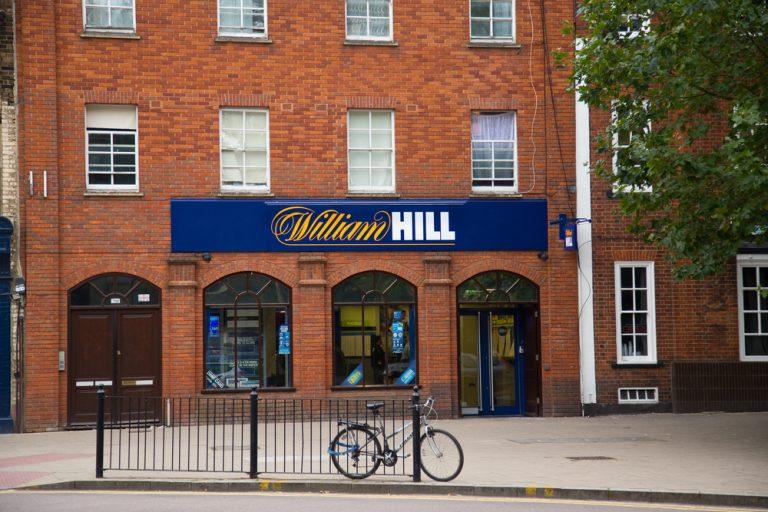
William Hill (LON:WMH) said on Thursday that its Chief Executive Officer will step down as it looks to focus on online expansion. Shares in the company were trading almost 2% lower on Thursday morning. Philip Bowcock is expected to step down as Chief Executive Officer and as a Director of William Hill at the end of September. Ulrik Bengtsson, who was previously William Hill’s Chief Digital Officer, will assume full CEO responsibilities from the end of September. “This change is part of William Hill’s succession planning and consistent with the Group’s strategy of becoming a digitally led and internationally diverse gambling company,” the London-based bookmaker said in a company statement. “Having overseen the Group’s digital operations for 18 months, he knows the business well and is ideally suited to lead our next phase of growth. Ulrik has deep understanding in digital and has the international and sector experience we need to deliver on our strategy. His appointment will provide continuity, stability and operational digital leadership as we deliver on the strategy we have set,” Roger Devlin, Chairman of the company, commented. The majority of William Hill’s annual revenues are still derived from Britain. William Hill US was established in 2012, becoming the largest sports betting business across the pond. William Hill US has expanded since sports betting was legalised across the US last May, following a supreme court ruling. The bookmaker posted a £64 million loss for the first half of the year as it struggled to cope with the cut down on fixed-odds betting terminals (FOBTs). Shares in William Hill plc (LON:WMH) were trading at -1.81% on Thursday as of 09:43 BST.

Hopes of No-Deal Brexit dodge allows pound to lead index rebound

Last night’s vote saw Commons vote 328 in favour of seizing control of the Parliamentary agenda, in order to block a No-Deal Brexit. On the same day, Boris Johnson decisively lost his majority in the House, and the pound and Remainers alike celebrated the outcome of last night’s proceedings. The pound led the the rebound today, followed by market indices such as the Dow Jones. Sterling’s boisterousness was perhaps premature, or will at least be short-lived, with Boris now calling for an election. Far from preventing a No-Deal Brexit, last night’s verdict likely pushed forward a snap election which has Boris winning a majority pinned as the most likely outcome. In short – and as stated by Tony Blair on Monday – the Labour-led Remain coalition will come to rue, not relish, an election. Speaking on today’s movements, Spreadex Financial Analysts Connor Campbell said,

“In quite the reversal from Tuesday’s 34-year lows – and brushing off a poor services PMI – Parliament’s attempts to avert a no-deal Brexit have put a spring in the step of the pound.”

“Admittedly it couldn’t quite maintain its lunchtime giddiness, where it found itself trading above $1.22. However, it was still up 0.8% against the dollar, and 0.3% against the euro, its weaker performance against the latter due to a decent morning for Eurozone PMIs.”

“That this comes despite the still present threat of a general election shows just how desperate the currency is to avoid Britain crashing out of the EU without an agreement in place – some uncertainties, after all, are more palatable than others.”

“Though the FTSE remained in the green, it did eventually succumb somewhat to the strength of the pound. In other words, it clung onto a half a percent increase, but slipped from its 7330-crossing one-month highs.”

“Elsewhere the rest of the markets continued to ride high off a combination of a temporarily reassuring Chinese services PMI, and the calming of the political situation in Italy. The DAX and CAC rose 0.8% and 1.2% respectively to hit 12000 and 5520, while the Dow Jones climbed 175 as it eyed 26300.”

Other news and macro financial updates have come from; Parliament being prorogued, No-Deal Brexit preparations, UK GDP during the second quarter, the London Stock Exchange Group (LON: LSE), the US-China currency manipulation debacle, and analysts’ outlook for markets and currencies.  

Somero Enterprises second warning of the summer and profits slide 23%

Florida focused building technology and concrete levelling specialist Somero Enterprises Inc (LON: SOM) will have to have its darling status on the stock market called into question, with its earnings dropping for the first time since 2010. The Company’s performance has been hampered by unexpected rainfall in the US, with shares diving 40% since June. H1 revenues dropped 13% on a year-on-year comparison, down to $39.0 million. This drove down adjusted EBITDA and profits before tax by 22.8%, down to $11.2 million and $10.5 million respectively. Somero Enterprises added that their cash flow from operations dipped 64.2% to $4.4 million. The Group’s shareholders had a mixed first half, with their diluted adjusted net income per share down 22.2% from $0.18 to $0.14. However, their interim dividend per share rose 4.5% to $0.0575.

Somero Enterprises comments

Jack Cooney, CEO, said,

“As announced in June, our first six months of 2019 fell short of our full year expectations at the beginning of the year, primarily due to extraordinarily heavy rainfall during H1 2019 in the US that depressed sales in our largest market. The US non-residential construction market remains very healthy, and we are pleased to note that as the weather improves, we expect to see improvement in H2.”

“Whilst towards the end of the period, trading in Europe and the Middle East fell below the prior year in part due to the timing of certain contracts, we remain confident to deliver improved H2 2019 results, broadly in line with guidance for the full year, notwithstanding the wider macro pressures in Europe, particularly Germany, the Middle East and Australia. Pleasingly, a number of our other markets delivered growth, alongside growth from new products.”

“Despite our disappointment with H1 2019 trading, we do not see a fundamental change in our end-markets and maintain a positive outlook for the remainder of 2019 particularly as our customers in the US return to more typical levels of productivity. Our confidence is based on our close customer contacts through which we can assess customer workloads, backlogs and business outlook.”

“We continued to make long-term investments and to add key talent to the organization, striking the right balance of leveraging our flexible operating model to control costs and protect profits with making strategically important investments to grow the business over the long-term. With this operating flexibility and confident outlook in hand, we remain committed to continued sales execution in our core markets, progressing on our new product initiatives, and making sound strategic investments for medium to long-term growth, to deliver strong profits and healthy cash flows to our shareholders.”

Investor notes

After a slight recovery, the Company’s shares have dipped 21.61% or 60.50p a share, to 219.50p a share 04/09/19 15:26 BST. Analysts from finnCap reiterated their ‘Corporate’ stance on Somero Enterprises stock. The Group’s p/e ratio is 8.91; their dividend yield is extremely inviting at 6.65%. Elsewhere in building and development news, there have been updates from; Barratt Developments Plc (LON: BDEV), Wincanton plc (LON: WIN) and Travis Perkins Plc (LON: TPK).

Highlands Natural Resources to drive CBD strategy with management change

Highlands Natural Resources (LON:HNR) today announced that Nick Tulloch has been appointed CEO of the company having served as CFO since early 2019. Nick Tulloch will be replacing Robert Price who will be leaving the company to make way for Mr Tulloch to pursue Highlands’ CBD business. Nick Tulloch, new Chief Executive Officer of Highlands, said: “I have known Robert for over four years and, during that time, he has become a good friend and a supportive colleague. As the founder and leader of the Company since IPO, he has been instrumental in bringing the Company to where it is today and he leaves the Company with the opportunity to become a leading player in the rapidly developing CBD industry. “ UK Investor Magazine met with Nick Tulloch before the announcement of his appointment as CEO, to discuss the groups push into the CBD industry. The group has transitioned from a pure oil and gas company to one who now seeks growth predominantly in the CBD and cannabis sector. Highlands have targeted the CBD business with a premium brand, Zoetic, which having launched just three months ago is now selling in the both the UK and US. Having identified differing consumer tastes in the United States and UK, branding for Zoetic has been adapted for each market. Not only has Highlands created different Zoetic branding for the two markets, it is also employing varied distribution models. In the United States Zoetics is sold primarily in Colorado through a distribution partner that operates convenience stores typically attached petrol stations. This approach is very different to the current approach in the UK which has initially been channelled through social media and digital means. Mr Tulloch says this may develop to wholesale operations in the future but he is conscious of preserving the premium appeal of the brand and said he would be very reluctant to employ one of the major UK supplement stores as a distribution channel due to their overuse of sales and discounting. While the wholesaling Zoetic branded is not yet currently underway, Highlands have secured a two-year agreement to provide CBD to Cellulac plc for conversion to medical grade CBD. Cellulac is 9.35% owned by Integumen plc. When commenting on the CBD and cannabis product regulatory environment in the UK, Tulloch says in looks forwards to greater regulation and standardisation through the industry as this will help boost the Zoetic brand and remove some of the more questionable suppliers currently operating. Tulloch highlighted Highlands have intentionally forged an over-compliant approach to the market in preparation for greater regulations and touched on the organic nature of the Zoetic products. Highlands have recently raised £354,000 from high net worth investors by way of a placing which Tulloch says will be allocated to the marketing of the brand. Despite the focus on CBD and Zoetic, CEO Tulloch does say the legacy oil and gas business could become potentially very valuable should oil prices spike significantly, however today’s announcement said they would seek to close the oil business failing the opportunity for an orderly sale of the business.

PMI: service sector growth slows as Brexit chaos continues

0
Service sector growth slowed in August amid the prevailing Brexit chaos, new data revealed on Wednesday. Confidence regarding activity during the next 12 months hit its lowest level since July 2016. The report said that this primarily reflects concerns surrounding domestic political uncertainty and its impacts on client decision making. As the Brexit deadline looms closer, the only certainty for the nation at this point is additional uncertainty. The IHS Markit/CIPS UK Services PMI Business Activity Index dropped to 50.6 in August, down from July’s 51.4 reading. The report said that this signals “marginal expansion” of service sector output. The survey also shows slower increases in new work and staffing levels, which was linked to “sluggish underlying economic conditions”. The Brexit Halloween extended deadline is fast approaching. Just last week, Boris Johnson asked the Queen to suspend parliament, preventing MPs from blocking a no-deal departure from the European Union. Boris Johnson has said that if Labour and rebel Conservative party members succeed in blocking a no-deal Brexit, he will call for a general election on 15 October. The GBP/USD rallies towards 1.22 as the chances of a hard Brexit begin to fade. “Business activity in the service sector almost stalled in August as Brexit-related worries escalated, curbing spending by both businesses and consumers,” Chris Williamson, Chief Business Economist at IHS Markit, which compiles the survey, commented on the data. “So far this year the services economy has reported its worst performance since 2008, with worrying weakness seen across sectors such as transport, financial services, hotels and restaurants, and business-to-business services,” Chris Williamson continued. “While the current downturn remains only mild overall, the summer’s malaise could intensify as we move into autumn. Companies have grown increasingly gloomy about the outlook due to the political situation and uncertainty surrounding Brexit, adding to downside risks in coming months.” “With the exception of the slump in sentiment after the 2016 referendum, August saw service sector firms at their gloomiest since the height of the global financial crisis in early 2009.”