
WPP sales fall amid client losses in North America
WPP (LON:WPP) published a trading update for the first quarter of the year on Friday, sending shares upwards.
The advertising giant said that revenue totalled £3.588 billion for the period, up 0.9% compared with a year ago, and -0.6% on a constant currency basis.
Meanwhile, like-for-like revenue fell -1.3% compared with the year before.
Net like-for-like in the group’s largest market, North America, fell 8.5% during the period.
WPP attributed this to client losses in the automotive, pharmaceutical and FMCG industries.
In the U.K, like-for-like sales fell 0.9%, whilst in continental Europe they were down 0.3%.
WPP said that performance Belgium, Denmark, Finland, Netherlands and Turkey were ‘up strongly’, however Austria, Italy and Spain proved ‘more challenging’.
Its largest Western European market, Germany, was up slightly during the quarter.
Some of its associated companies include Ogilvy, J. Walter Thompson, IMRB and Cohn & Wolfe.
WPP is considered to be one of the “big five” advertising and public relations firms in the world.
Mark Read, Chief Executive Officer, WPP:
“We continue to make good progress in implementing our three-year strategy to return WPP to sustainable growth.
“As anticipated, our first quarter trading update reflects the impact of certain significant client losses in 2018, in particular in the United States. Although we face a challenging year, especially in the first half, I am encouraged by how well our people, agencies and clients are responding to our new strategic direction. Our expectations for the full year are unchanged.
Mark Read took over from the group’s founder and long-standing boss Martin Sorrell, who left the firm after allegations surfaced of misconduct and misuse of company money.
Shares in WPP are currently +3.71% as of 12:05PM (GMT).
Debenhams announces 22 stores set to close

Debenhams (LON:DEB) has announced the closure of 22 stores across the UK, which will place 1,200 jobs at risk.
The department store named the locations of the stores on Friday, as it looks to restructure its business.
The stores set to close are as follows:
Altrincham
Ashford
Birmingham Fort
Canterbury
Chatham
Eastbourne
Folkestone
Great Yarmouth
Guildford
Kirkcaldy
Orpington
Slough
Southport
Southsea
Staines
Stockton
Walton
Wandsworth
Welwyn Garden City
Wimbledon
Witney
Wolverhampton
Debenhams was taken over by its lenders, Barclays and and Bank of Ireland, last month. Shares were suspended as a result.
Lenders have agreed to provide £200 million in funding to keep the struggling retailer afloat.
As part of the rescue deal, the department store is looking to close a total of 50 of underperforming sites. The remainder of the stores affected have yet to be disclosed.
Once the closures have been completed, Debenhams will have around 116 stores in the UK.
Terry Duddy, the executive chairman of Debenhams, said: “The issues facing the UK high street are very well known. Debenhams has a clear strategy and a bright future but in order for the business to prosper, we need to restructure the group’s store portfolio and its balance sheet, which are not appropriate for today’s much-changed retail environment. Our priority is to save as many stores and as many jobs as we can, while making the business fit for the future.”
Debenhams has been in the headlines in recent months amid an ongoing battle between shareholder Mike Ashley and the board over control of the company.
Mike Ashley, the owner of Sports Direct, wanted to become chief executive of Debenhams, however his approaches were rebuffed.


An Introduction To Art Investment

During times of economic uncertainty savvy investors are always on the look out for alternatives to the traditional stocks and shares options. Recent research by Fidante Partners indicates that the alternative global investment market is projected to grow by $2.5 billion over the next three years alone.
Aesthetic And Financial Benefits
One of the greatest strengths of the art market as an alternative investment is that art gives its owner far more than just financial benefit. While you are waiting for your investment to grow in value you can enjoy having your artwork displayed in your home or office. This is why almost all art investment experts will advise you to purchase artworks you find aesthetically pleasing and which have significant potential to appreciate in value.
Past Performance & Future Projections
In addition to this aesthetic pleasure, these days art is a serious business with strong growth potential. According to economist Clare McAndrew’s report in UBS and Art Basel’s “The Art Market | 2018”, in 2017 total global art sales rose to $63.7 billion which marked a 12% rise on the previous year.
Despite a backdrop of wider economic uncertainty and stock market wobbles, the art market has delivered solid performance since bouncing back from the recession in 2010. Thanks to strong demand for work by contemporary art superstars and a favourable economic context global auction turnover for contemporary art reached $1.9 billion across June 2017 to June 2018, representing an increase of 19% on the previous 12 months according to Artprice.
Emerging & Established Artists
While key pieces by blue-chip artists like Andy Warhol or Pablo Picasso might grab the media headlines, most investors will seek the advice of seasoned art market experts to identify emerging and established artists whose work has strong potential to increase in value.
Rather than spending millions on a artwork by a household name, this investment strategy favours more moderately-priced pieces which are likely to appreciate over the course of several years or even decades. This is another reason why art can make such a good long-term investment strategy as artworks tend to hold their value very well even during recessions.
How To Invest
To the outsider the art world can seem like a daunting place which is why it is highly recommended to engage an expert to help you navigate and make all the right contacts. A reputable gallery which offers fully-managed investment services is a great option as they can usually source high potential artwork on your behalf and guide you through the confusing process of selling at auction or buying direct from artists themselves in the case of emerging artists. Your account manager should also be able to help you discover your taste in art and guide you to developing your growing portfolio for both your aesthetic and financial benefit.
Deutsche Bank and Commerzbank merger talks collapse
Deutsche Bank and Commerzbank have abandoned merger talks, amid shareholder concerns over the complexities of the proposed move.
The two German banks decided not to pursue the merger after it was concluded that it would not provide “sufficient benefits”, creating instead additional costs and risks.
Talks between the lenders only begin last month, however, doubts already surfaced over the viability the tie-up early on.
If the merger had gone ahead, it would have seen the creation of Europe’s fourth largest banking institution.
The deal was also backed by the German government, who still own a 15% stake in Commerzbank after bailing the lender following the global financial crisis back in 2008.
Deutsche Bank chief executive, Christian Sewing, said in a statement: “It made sense to evaluate this option for domestic consolidation in Germany. However, we were always clear: we needed to be convinced that any potential combination would generate higher and more sustainable returns for shareholders and allow us to enhance our value proposition to clients,”
“After thorough analysis, we have concluded that this transaction would not have created sufficient benefits to offset the additional execution risks, restructuring costs and capital requirements associated with such a large-scale integration. I would like to thank Martin Zielke and everyone involved for the constructive discussions over the past few weeks.”
Alongside announcing the end of talks, Deutsche Bank also pre-released an update on its preliminary q1 results.
Deutsche Bank said it expects to report pre-tax incomes of approximately €290 million and net income of approximately €200 million, on the back of €600 million fines during the quarter.
In addition, the bank said it expects total revenue of €6.4 billion euros, including €3.3 billion in its Corporate & Investment Bank division.
Meanwhile, total non interest expenses and adjusted costs are expected to total €5.9 billion euros, including previously mentioned fines.
Shares in Deutsche Bank (ETR:DBK) are currently down marginally -1.37% as of 12:58PM (GMT). Similarly, Shares in Commerzbank (ETR:CBKD) are currently down -2.65%.
Taylor Wimpey shares fall amid rising costs

Taylor Wimpey shares fell on Thursday on the back of the company’s latest trading update.
The house builder said that the market for new builds ‘remained stable’ during the first quarter of the year.
Taylor Wimpey said demand was driven in large part by continued accessibility to mortgages, low interest rates and high employment levels in the UK.
Overall, the company said that sales have continued to be strong during spring trading, with average private sales at 1.03 per outlet per week, compared to 0.85 back in 2018.
Meanwhile, the firm said that pricing ‘remained flat’ when compared to the final quarter of 2018. Cancellation rates also remained at 13% during the period.
As of the week ending 21 April 2019, Taylor Wimpey said that its total order book value stood at approximately £2,399 million, compared to £ 2,155 million in 2018, with 10,291 homes set to be completed.
Nevertheless, it warned on higher than expected costs, largely part to cost inflation relating to materials, which impacted profits.
Pete Redfern, Chief Executive of Taylor Wimpey, commented on the latest figures:
“We’ve made a good start to 2019 and in spite of wider macroeconomic uncertainty, the housing market has remained stable. We are achieving a record sales rate and building a solid forward order book for the year, although we see increased build cost pressures.
We continue to make encouraging progress in embedding our customer-centric strategy and driving significant improvements in our quality and delivery, and it was pleasing to be recognised by the Home Builders Federation (HBF) as a five-star homebuilder in March this year. Our priority is to enhance every step of our customers’ buying and aftercare service so that we deliver the highest quality homes and become the first choice homebuilder.
Looking ahead, we are focused on delivering our ambitious strategic goals to drive sustainable growth and create long term value for our customers and shareholders.”
Shares in the FTSE-100 company (LON:TW) are currently down -3.25% as of 11:59AM (GMT).
Barclays q1 profits falls 10%
Barclays (LON:BARC) reported its results for the first quarter of 2019 on Thursday, sending shares downwards.
The British bank said that underlying earnings fell 10% in the first three months of the year to £1.5 billion, from £1.7 billion previously.
Whilst profit at its UK arm increased to £0.6 billion up from £0.2 billion a year ago, profits at Barclays International fell to £1.1 billion across the period.
Barclays said that whilst group cost guidance remains unchanged at £13.6-13.9 billion, costs will be reduced should the ‘challenging income environment’ continue.
The bank attributed the weaker results to its underperforming investment banking unit, which fell 20% during the quarter.
As a result, it is opting to cut bonuses in the division, as it looks to streamline costs.
Barclays chief executive Jes Staley said:
“Three years ago, we took a charge of just under £400 million to allow us to better align variable compensation accruals with the firm’s revenues.
What you see in the first quarter is Barclays using this discretion around variable compensation to manage our costs and deliver expected profitability.”
The latest results come amid increased pressure from Barclays’ activist investor Ed Bramson to join the company’s board.
Bramson, through his company Sherborne Investors, has a 5.5% stake in the British lender, making him its third largest shareholder.
The bank’s annual meeting is set to take place on May 2nd.
Shares in the bank are currently -2.14% as of 11:12AM (GMT).
Shares in Carpetright rise 37% on recovery signs
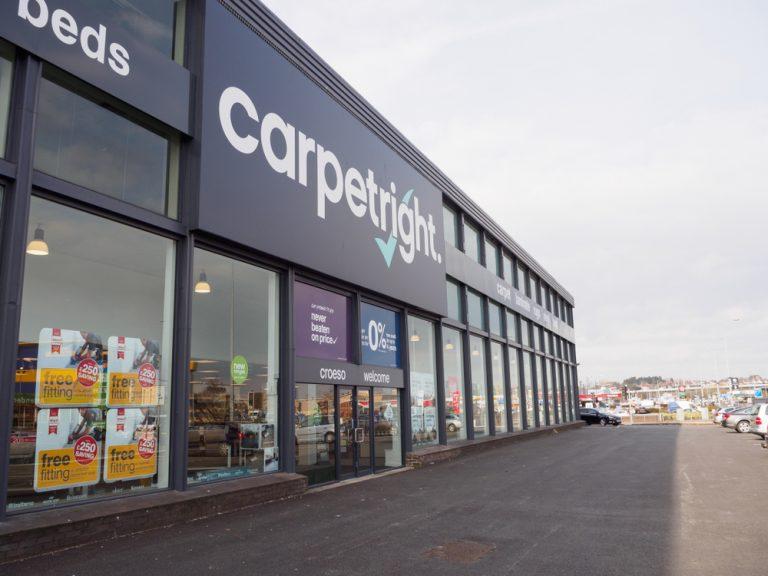
Carpetright announced on Thursday that its overall trading performance for the 12 weeks to 20 April remain in line with expectations, causing its shares to soar.
Shares in the company were trading over 37% higher on Thursday following the announcement.
The company’s UK like-for-like sales improved significantly in the fourth quarter, when compared to the year to date. This was driven by consumer confidence in the group – which returned following its restructuring last year, Europe’s leading specialist carpet and floor coverings retailer said.
Last year, the struggling company revealed new plans to raise £60 million in order to assist in restructuring the group. By the end of April last year, it had issued its fourth profit warning in five months, causing shares to crash. The business warned that its full year losses were to be double than that previously anticipated.
As for the rest of Europe, the company’s trading was supported by a strong performance in the Netherlands, and continues to remain ahead of its performance during the same period a year prior.
“This has been a transitional year for Carpetright and we remain on track both with our recovery plan and our strategic initiatives. The actions taken are driving improvement, particularly in the invested store estate, and the brand remains strong,” said Wilf Walsh, Chief Executive of Carpetright.
“Whilst consumer confidence remains challenged in the UK, the work we have done to reposition the business is starting to deliver the benefits necessary to put Carpetright back on the path to sustainable profitability,” the Chief Executive continued.
The company announced at the start of the year that its overall performance aligned with expectations amid uncertain trading conditions, in addition to revealing a directorate change.
Established in 1988, Carpetright is listed on the London Stock Exchange.
At 08:45 BST Thursday, share in Carpetright plc (LON:CPR) were trading at +37.91%.
Sainsbury’s-Asda merger blocked on “poorer overall shopping experience”
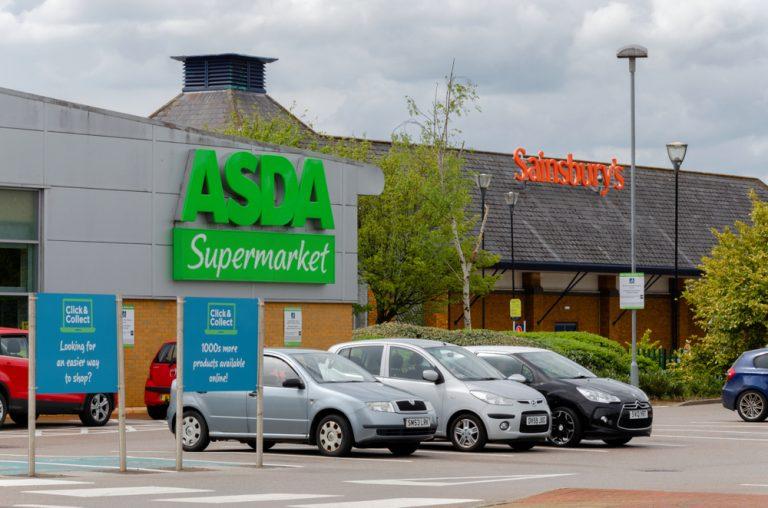
Sainsbury’s (LON:SBRY) £7.3 billion takeover of Asda (NYSE:WMT) has been blocked by the Competition and Markets Authority (CMA) because it will create a “poorer overall shopping experience”.
Shares in Sainsbury’s were trading over 6% lower following the announcement.
According to the Competitions and Markets Authority, consumers would not benefit from the merger. This is due to an expected increase in prices, reductions in the quality and range of products on offer and a poorer shopping experience for consumers across Britain.
The CMA found that the merger would lead to motorists paying higher prices at over 125 locations in which Sainsbury’s and Asda petrol stations are closely located.
The plan to merge the two supermarkets was revealed last year and it had the potential to be the nation’s largest private sector employer with 330,000 employees.
“It’s our responsibility to protect the millions of people who shop at Sainsbury’s and Asda every week. Following our in-depth investigation, we have found this deal would lead to increased prices, reduced quality and choice of products, or a poorer shopping experience for all of their UK shoppers,” said Stuart McIntosh, chair of the inquiry group.
“We have concluded that there is no effective way of addressing our concerns, other than to block the merger,” he continued.
Sainsbury’s and Walmart owned Asda are two of the nation’s largest supermarkets, ranked second and third respectively.
Earlier this year, the watchdog released a preliminary verdict which highlighted “extensive competition concerns” in its findings.
As of April, latest industry data shows that Asda had actually overtaken Sainsbury’s in main store sales. Kantar revealed that Asda’s share in the market grew to 15.4%, with Sainsbury’s at 15.3%.
Elsewhere in the sector, Aldi and Lidl remain strong, outperforming major UK supermarkets at the end of last year over the festive period.
At 08:25 BST Thursday, shares in Sainsbury plc (LON:SBRY) were trading at -6.27%.
Boohoo pre-tax profit up 38%
Boohoo (LON:BOO) reported its final results on Wednesday, posting a 38% rise in pre-tax profits.
The online fashion group said that revenue totalled £856.9 million, up 48%.
In addition, Boohoo said that it enjoyed strong revenue growth across all markets, with UK up 37% and international up 64%.
Gross margin increased to 54.7%, compared to 52.8% in 2018, whilst group adjusted profit before tax totalled £76.3 million, up from £51.0 million the year before.
Alongside publishing the company’s final results, the group also announced the appointment of an independent non-executive director on Wednesday.
Brian Small is set to join the board as chair of the Group’s Audit Committee.
In the statement announcing his appointment, the company highlighted Mr Small’s prior experience as CFO at JD Sports and previously, Operations Finance Director at Intercare Group.
Some of the company’s brands alongside Boohoo include PrettyLittleThing and Nasty Gal.
The group revealed that revenue at PrettyLittleThing rose by 107% during the period to £374.4 million. Meanwhile, revenue at Nasty Gal totalled £47.9 million, rising by 96%.
Revenues at Boohoo were also strong, up 16% to £434.6 million.
John Lyttle, CEO, commented:
“I am very excited to have joined the boohoo Group at this key stage of its growth, with the group’s disruptive and proven business model having delivered yet another excellent set of financial and operational results. In my short time within the business, I am delighted to have been able to meet a number of hugely talented people and have already been able to see many parts of the business.
He added: “This has confirmed my belief and optimism that the group’s investments into its brands and infrastructure have allowed it to develop a scalable multi-brand platform that is well-positioned to disrupt, gain market share and capitalise on what is a truly global opportunity.”
Boohoo was founded back in 2006 by Mahmud Kamani and Carol Kane. Its target market for all of its three brands is the 16-24 age range.
Shares in the fast-fashion retailer are currently +9.04% as of 14:24PM (GMT).