
Associated British Foods – Primark performance offset
British multinational food processing and retailing firm Associated British Foods plc (LON:ABF) reported a slump in overall profits in spite of bumper performance of its subsidiary, Primark.
Snap Inc q1 results beat expectations, shares up

Snap Inc, the parent company of Snapchat, reported its results for the first quarter of the year, surpassing analyst expectations.
According to the update, the company saw operating cash flow rise by $166 million to $66 million during the quarter to March-end.
Meanwhile, revenue came in at $1,544 million at March 31, 2019, compared with 1,457 million one year ago.
Revenue increased by 39% to $320 million during the quarter, compared to the same period a year previously.
Snap Inc also lessened its operating loss to $76 million compared to $316 million the year prior.
In addition, adjusted EBITDA loss improved $94 million to $123 million for the quarter.
The app added 4 million daily active users during the period, bringing its total user base to 190 million.
“In the first quarter we delivered strong results across our business with growth in daily active users and revenue,” said Evan Spiegel, CEO.
“Our new Android application is available to everyone, with promising early results. This month we announced several new products that we believe will drive further engagement and monetization. As we look towards the future, we see many opportunities to increase our investments, and will continue to manage our business for long-term growth.”
Snap Inc’s first results of the year will no doubt prove encouraging to investors.
Snap has been struggling to maintain its popularity since its public flotation back in 2017.
It has proved unable to differentiate itself amid competition from other popular social media platforms such as Facebook (NASDAQ:FB) and Instagram.
However, its performance has been steadily improving. The firm’s final quarter result of 2018 proved resilient, also outperforming analyst expectations.
Shares in the company (NYSE:SNAP) were flat during pre-market trading.
Westminster Group shares rise amid new contract win

Westminster Group shares rose on Wednesday after the company announced it had secured a contract in Asia.
The services and technology supplier said the deal involves the provision of ‘advanced container screening solutions’ to two ports in Asia.
The contract, which has been under negotiation for several months, entails the provision of advanced screening of containers at two ports in Asia.
The statement said that the project will begin once export licencing has been secured. As part of the agreement, $3.05 million will relate to the supply and installation of the system.
Westminster Group said it expects this portion of the contract to be delivered during the final quarter of the year.
In addition, $430,000 will involve providing maintenance services over the next two years.
Commenting on the contract award Peter Fowler, Chief Executive of Westminster Group, said:
“I am delighted to be able to announce this latest new contract award for large scale screening solutions, which has been secured after a prolonged period of negotiations.
“Having recently delivered the remainder of the $4.5m USD vehicle screening contract in the Middle East, which the Company secured in 2018, this latest award for container screening at two ports in Asia is a testament to Westminster’s expertise and global reach.
“We have commenced 2019 on a strong note ahead of budget and this latest award underpins our expectations for the year.
“Security of ports, like airports, is a high priority for governments around the world and Westminster have been developing wide ranging solutions covering various aspects of port and airport security. This contract is one of several large-scale projects we are currently negotiating in different parts of the world.”
Shares in Westminster Group (LON:WSG) are currently up +10.81% as of 13:01PM (GMT) as investors reaction to the announcement.
Ascent Resources shares plunge amid share issue raise

Ascent Resources shares (LON:AST) plummeted on Wednesday after the company announced it had completed a share issue raise.
The oil and gas exploration company said it completed an oversubscribed placing of 214,285,714 Ordinary shares of 0.2 pence with various institutional investors.
The placing was carried out at a price of 0.35 pence per share, with the raise amounting to £750,000.
Colin Hutchinson, Chief Executive Officer of Ascent Resources, commented:
“We are pleased that we have been able to complete this placing with new institutional investors, the funds raised will allow us to progress our business strategy on expanding production from our key producing asset in Slovenia and to review other regional opportunities.”
Last week Ascent Resources shares ticked up 15% after confirming its Slovenia permit.
The permit was affirmed by the Slovenian Environment Agency, who confirmed that no further appeals against it would prove valid.
At the time of the announcement, the oil and gas company said that the permit would allow the firm to continue to develop the Petišovci project to its significant potential.
Ascent Resources is headquartered in London. Its operations are focused in Slovenia.
Shares in the AIM-listed firm are currently down -23.74% as of 11:13AM (GMT).
Primark owner posts “robust” first-half results
Owner of Primark, Associated British Foods (LON:ABF), posted sales of £7.5 billion in first-half results.
The £7.5 billion figure is 1% higher to that of the prior year. It also revealed an adjusted operating profit of £639 million, a 1% decrease compared to last year.
Primark itself delivered a profit growth of 25%. “Primark delivered excellent profit growth, driven by further development of our customer experience and selling space expansion,” said George Weston, Chief Executive of Associated British Foods.
“This is a robust set of results. Profit at AB Sugar was substantially reduced but, from this period, we expect our sugar profitability to improve. The strong underlying growth in Grocery profits demonstrates good momentum,” he continued.
Earlier in April, the world’s largest Primark store opened in Birmingham, covering 161,000 sq ft over five floors. In addition to offering its affordable fashion products, the new store boasts a Disney-themed café, a barber’s shop and a beauty studio.
With department stores such as Debenhams struggling for survival, Primark’s move is bold for a time where uncertain high street trading conditions prevail.
Primark has, however, been criticised in the past over its staff’s pay, and the impacts that “fast-fashion” has on the environment and societies alike.
Boohoo also revealed its financial results today, posting a 49% rise in its annual profit. Unlike Primark which trades exclusively on the high street, Boohoo is an online fashion retailer.
At the end of last year, Primark warned on the gloomy retail environment ahead of its sales in the run-up to Christmas.
But, despite its challenging run-up to the festive period, Primark exceeded expectations for its Christmas trading. For the 16 weeks to the 05 January, Primark sales increased 4%, and sales for Associated British Foods increased 2% as a whole.
At 08:12 BST Wednesday, shares in Associated British Foods plc (LON:ABF) were trading 0.2% higher.
Shares in Boohoo Group plc (LON:BOO) were up 0.046% as of 08:13 Wednesday.
Galantas Gold overheads deepen 2018 losses

Toronto-based gold mining company Galantas Gold Corp (CVE:GAL) have seen their losses widen on-year with costs offsetting profits.
Going for gold and staying in the red
2018 was a year to forget for the company. With mining operations centred near Omagh, Northern Ireland, the firm reported a loss of C$2.89 million for 2018, deepening from C$2.08 million on-year. In its concluding audit statement for Q4 2018, Galantas noted, “We draw your attention to Note 1 in the consolidated financial statements, which indicates that the Company had a deficit of $41,752,739 and incurred a comprehensive loss of $2,591,630 during the year ended December 31, 2018. As stated in Note 1, these events or conditions, along with other matter as set forth in Note 1, indicate that a significant uncertainty exists that may cast significant doubt on the Company’s ability to continue as a going concern. Our opinion is not modified in respect of this matter.”Costs suppress revenue hike
While the company’s revenue was more than twice the 2017 figure of C$0.035 million, at C0.071 million, its deeper losses in 2018 were attributed to asset appreciation ahead of expectations, with this coming to a total of £0.359 million for the 2018 financial year, up 0.156 million on-year.Galantas as portfolio candidate
The company has temporarily disabled its shares, with the most recent trading rate of 4.75p per share. The company’s cash balances as of the end of Q4 2018 stood at C$6.19 million, in contrast with C$0.780 million the year before.Totally awarded £13.5m NHS contract

Aspiring leading ‘out-of-hospital’ healthcare service provider, Totally plc (LON:TLY) announced that their subsidiary, Vocare had won a contract worth £13.5 million, awarded by the NHS Newcastle & Gateshead Clinical Commissioning Group.
Outsourcing trend
The firm stated that the contract detailed provision of Urgent Treatment Centre and GP Visiting Services for the next five years, with an optional extension of a further two years. The announcement represents another move by NHS management to outsource healthcare to private entities, with this trend occurring not only with agency personnel but also private operation of healthcare facilities.Totally Statement
The company’s recent investor statement relayed, “Newcastle & Gateshead CCG has awarded the Contract to the Alliance, of which Vocare is a member, to supply a number of urgent care services. Under the Contract, c.£1.94m per annum will be attributed to Vocare to supply its Services. The Contract will run for five years, with an option to extend for a further two years at the Contract’s conclusion.” Totally CEO, Wendy Lawrence, added, “We are delighted to announce this new contract win and are pleased that the CCG has chosen the Alliance to deliver the new Urgent Treatment Centre for its population to ensure patients get the care they need, and to relieve pressure on A&E departments. Vocare is recognised as a high quality national urgent care delivery partner and is proud to be partnering with NHS providers to deliver improved, integrated services that support the delivery of the NHS 10 Year Long Term Plan.”Totally as portfolio candidate
The company’s share price currently stands at 12p per share, a rally of 3.00% and up by 0.35p since markets opened this morning 23/04/19 14:05 GMT.Donald Trump’s UK state visit confirmed for June

Donald Trump‘s postponed UK state visit has been confirmed for the beginning of June.
The visit is set to take place over three days beginning on the 3rd of June, Buckingham Palace has confirmed.
US President Donald Trump will also meet with Prime Minister May during his visit, as well as visiting Portsmouth to mark D-day.
Theresa May commented on the visit: “The UK and United States have a deep and enduring partnership that is rooted in our common history and shared interests.
“We do more together than any two nations in the world and we are both safer and more prosperous because of our cooperation. The state visit is an opportunity to strengthen our already close relationship in areas such as trade, investment, security and defence, and to discuss how we can build on these ties in the years ahead.”
Meanwhile, a White House spokesman added: “This state visit will reaffirm the steadfast and special relationship between the United States and the United Kingdom. In addition to meeting the Queen, the president will participate in a bilateral meeting with prime minister Theresa May.
“While in the United Kingdom, the president and first lady will attend a ceremony in Portsmouth to commemorate the 75th anniversary of D-Day, at one of the primary embarkation sites for the Allied operation that led to the liberation of Europe during World War II.”
Theresa May initially invited Trump after his inauguration, however, the invite was met by considerable opposition from anti-Trump campaigners in the UK.
Instead, Trump last visited the UK in July for a non-state visit, where he avoided the capital, amid a raft of protests around London.
Conversely, a state visit is when foreign heads of state are formally invited by Her Majesty The Queen on the advice of the Foreign Office.
Change UK launches its EU election campaign
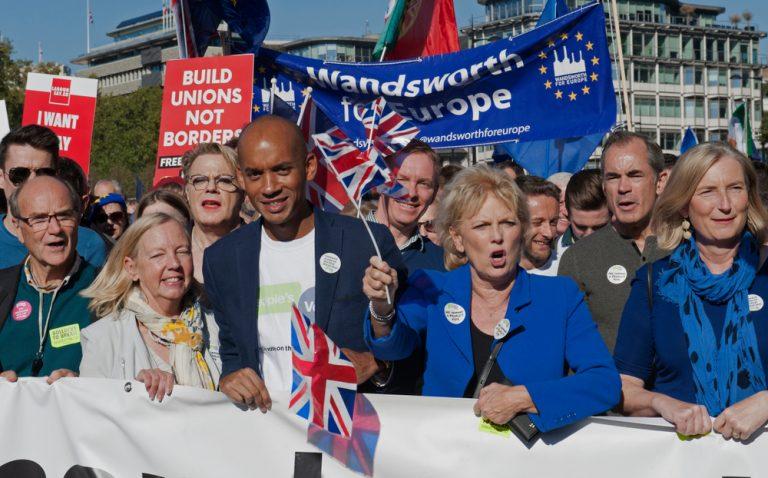
Change UK launched its European election campaign in Bristol on Tuesday, announcing its candidates.
Change UK, formerly known as The Independent Group, are running on a pro-remain platform.
They also advocate for a second referendum on the issue, a proposal that has been rejected by both the Prime Minister and Labour leader Jeremy Corbyn.
The party was formed from an alliance of former Labour and Conservative MPs, who had become disillusioned with how their party’s were handling Brexit.
The party said that it received more than 3,700 MEP applications.
https://platform.twitter.com/widgets.js It announced it was putting forward 70 candidates for the upcoming European parliament elections, including Rachel Johnson, the sister of former foreign secretary Boris Johnson. Former Conservative and the group’s interim leader, Heidi Allen, said at the launch event in Bristol: “These elections are a chance to send the clearest possible message – we demand a People’s Vote and the right to campaign to remain in the European Union. We are not afraid to say it as clearly as that. “This is no rebel alliance. This is the home of the Remain alliance.” Change UK are launching their campaign in anticipation of the EU elections, which are set to take place on the 23rd of May. Nevertheless, should the government and parliament prove able to agree on a deal beforehand, the UK could launch the Article 50 process and leave as planned.We have had thousands of applications to be European elections from former Labour, Conservative, Lib Dem, Green and SNP members. Change UK are the Remain Alliance in the European elections. @Anna_Soubry #ChangePolitics Support us: https://t.co/INZuNa8Mop pic.twitter.com/EDWu6EdVPM
— The Independent Group (@TheIndGroup) April 23, 2019
Fastjet shares rise amid ‘marginal’ 2019 profit forecast
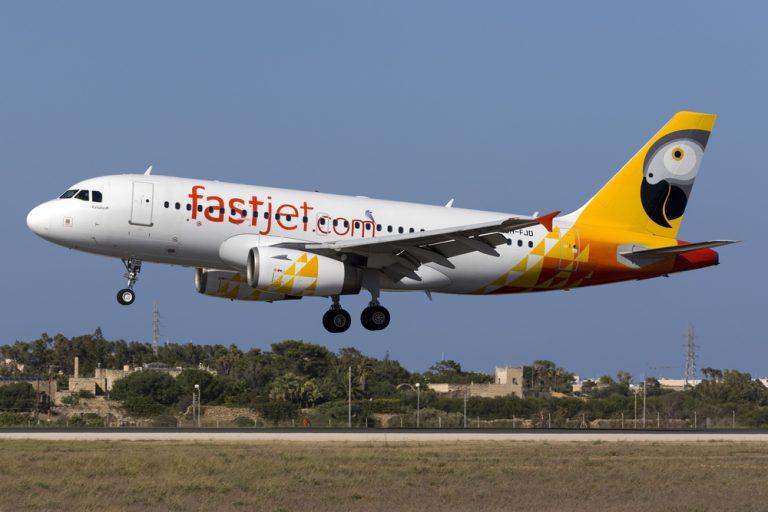
Fastjet shares ticked up on Tuesday after the company forecast a ‘marginal’ profit for 2019 in a trading update.
The low-cost African airline said that despite incurring a loss of $41.2 million in 2018, it expects to deliver a modest profit for the upcoming year, amid various restructuring efforts.
During the first quarter of the year, Fastjet saw the group record an underlying net operating loss of around $200,000 on revenue of $9.5 million.
This proved an improvement from the $7.8 million loss reported on revenue of $13.8 million during the final quarter of 2018.
The company added that the first quarter of the year ‘represents a seasonally weaker demand period’.
It was also detrimentally impacted by cyclones in Mozambique, fuel protests and currency volatility in Zimbabwe.
Nico Bezuidenhout, fastjet Chief Executive Officer, commented:
“In 2018, we took significant and decisive action to right-size the Group and ensure the business has a solid platform on which to build future growth. Whilst these cost-cutting measures were at times painful, our newly-sized operations provide fastjet with a materially enhanced strategic position to pursue the growth opportunities on offer on the continent.
Despite the impact of cyclones in Mozambique at the start of the current year and continued fuel protests and currency volatility in Zimbabwe, fastjet is making progress and expects to generate a marginal underlying operating profit for 2019, with further route expansion planned for Zimbabwe in the second half of the coming year, as well as a brand entry into South Africa in 2020.”
Last year, the airline narrowly avoided falling into administration, amid a series of profit warnings.
Shares in Fastjet (LON:FJET) are currently + 5.09% as of 11:21AM (GMT), on the back of the trading update.