Dunelm expects full-year profits to be ‘slightly ahead’ of forecasts
Dunelm Group reported its third quarter results for the 13-week period ended 13 March 2019 on Thursday, causing shares to bounce.
The homeware retailer said that revenue increased 12.5% year-on-year to £264.6 million, on the back of higher online sales.
Dunelm Group also enjoyed a stronger performance thanks to the closure of its Worldstores and Kiddicare websites.
Despite acknowledging continued political and economic uncertainty, the company said that withstanding no shifts in demand, they do not expect this to significantly affect the remainder of the year.
As such, the company said it excepts to report full-year profit before tax ‘slightly ahead of the top of the range of current analysts’ forecasts’.
Nick Wilkinson, Dunelm’s Chief Executive also commented on the latest results:
“We are delighted that customers continue to respond well to our improving homewares offer as we help them create a home they love. The strong growth in the third quarter reflects our ongoing focus on attracting more customers to the brand and giving them more reasons to shop with us through great product and service. Our performance was also buoyed by a positive homewares market.
“Our multichannel proposition is improving all the time and we are excited about the opportunities ahead of us as we continue to invest in and develop our digital capabilities.”
Dunelm has 170 stores across the U.K.
It is publicly listed on the London Stock Exchange and is a constituent of the FTSE 250 Index.
Shares in Dunelm (LON:DNLM) are currently up +2.25% as of 13:11PM (GMT).
Tesco full-year profit grows by 34%
Tesco (LON:TSCO) posted a 34% increase in its full-year operating profit to £2.21 billion on Wednesday, beating expectations.
“After four years we have met or are about to meet the vast majority of our turnaround goals. I’m very confident that we will complete the journey in 2019/20,” Dave Lewis, Chief Executive of Tesco, commented on the results.
Group sales were up 11.5% to £56.9 billion, whilst revenue increased 11.2% to £63.9 billion.
The UK’s largest supermarket noted the launch of Jack’s in its results in addition to eight new ‘Exclusively at Tesco’ brands.
Jack’s is Tesco’s new brand and store format created as a celebration of 100 years of great value at Tesco. The discount store chain aims to compete with Aldi and Lidl on low-cost goods.
“I’m delighted with the broad-based improvement across the business. We have restored our competitiveness for customers – including through the introduction of ‘Exclusively at Tesco’ – and rebuilt a sustainable base of profitability. The full year margin of 3.45% represents clear progress and the second half level of 3.79%, even before the benefit of Booker, puts us comfortably in the aspirational range we set four years ago,” Chief Executive Dave Lewis continued.
The supermarket, which has a market share of 27.4% according to recent Kantar data, now has 149,000 more customers enjoying its goods.
Tesco remains confident in its ability to meet the remaining goals in its turnaround plan in 2019/20, in addition to delivering a level of profitability within the 3.5%-4.0% margin range.
It cited market uncertainty in its results, but confirmed that its performance to date remains strong in spite of the unpredictability.
Tesco expects to keep focusing on customer satisfaction, cash profitability, free cash flow and earnings growth.
Elsewhere in the market, Asda recently overtook Sainsbury’s (LON:SBRY) in main store sales. Aldi saw its market share boosted to 8% and Lidl was the second fastest growing supermarket with its market share growing to 5.6%.
At 08:42 BST, shares in Tesco plc (LON:TSCO) were trading at +1.50%.
ASOS first-half profit before tax tumbles 87%
ASOS (LON:ASC) posted an 87% year-on-year first-half profit before tax decline on Tuesday following its weak performance over the festive period.
During the week before Christmas, the online fashion brand issued an unexpected profit warning to warn of its weak performance, sending shares crashing over 40%.
“Our performance across H1 has been disappointing and we are capable of achieving more. Whilst delivered against a challenging market backdrop, our performance was undoubtedly impacted by the large scale transformational projects we have been undertaking and some of the choices we made on short term pricing, marketing and inventory to manage the business through this period,” ASOS said in a a statement.
Profit before tax for the six months to 28 February was at £4 million. This compares to the £29.9 million figure for the same period a year earlier.
The online retailer, who grew its total sales by 14%, posted a trading update in March to warn that its UK and European sales had slowed down.
“We grew sales by 14% despite a more competitive market. ASOS is capable of a lot more. We have identified a number of things we can do better and are taking action accordingly. We are confident of an improved performance in the second half and are not changing our guidance for the year,” Nick Beighton, CEO of ASOS, commented on the results.
ASOS is one of the many retailers suffering from weak trading, despite it trading exclusively online.
Both online and high street retailers have struggled over the past few months. Recently Footasylum (LON:FOOT) was purchased in a £90 million deal by the active wear retailer JD Sports (LON:JD) as it struggled for survival amid tough trading conditions.
Bonmarche (LON:BON) issued its third profit warning in six months following significantly weak trading over the past few weeks, causing shares in the business to slide.
At 08:20 BST Wednesday, shares in ASOS plc (LON:ASC) were trading at +3.02%.
Brexit: Theresa May to meet with Merkel and Macron to secure delay
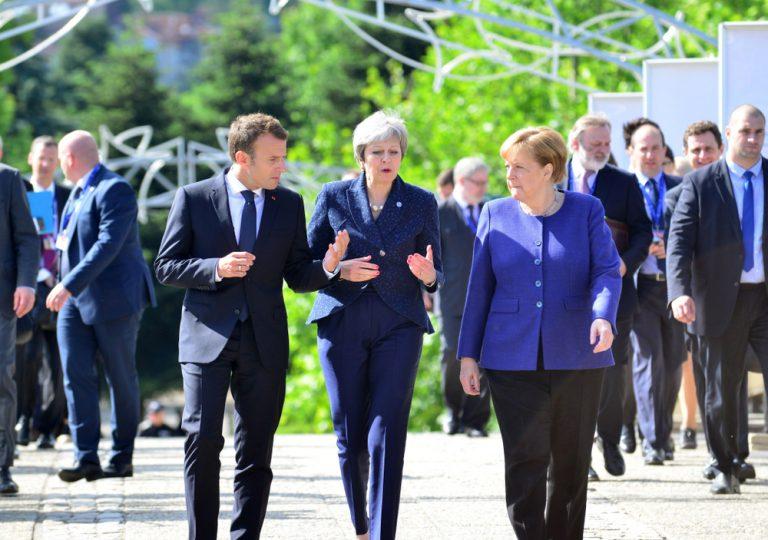
Brexit: Theresa May is holding last-minute talks with EU leaders in Berlin and Paris today as she seeks to drum up support for a further extension to Article 50.
The Prime Minister is in Berlin today to meet with The German Chancellor Angela Merkel to discuss securing a further Brexit delay until June 30.
She is also set to head to Paris later today to engage in last-minute talks with French President Emmanuel Macron over the same issue.
It is widely expected that the EU will grant the UK a lengthy extension proving longer than May has requested.
Nevertheless, according to reports, there are some reservations from member nations, suggesting May still has some schmoozing to do.
France alongside Greece, Slovenia, Austria and Spain are among those dubious of a longer extension.
There are shared concerns that the UK may have to participate in another round of EU elections as a result of a longer extension, which presents a bit of a democratic conundrum for the bloc.
Another key obstacle is it is felt that Theresa May has yet to provide evidence of a credible plan moving forward.
This only compounds doubts that she will prove unable to resolve the U.K’s domestic Brexit impasse in spite of an additional extension.
During her most recent trip to Brussels last month, the Prime Minister originally sought to push back the Article 50 deadline to June 30.
Instead, EU leaders opted to grant her a shorter extension until April 12 in light of those aforementioned concerns.
However, after May failed to pass her deal through Parliament on three separate occasions, she instead has now turned to Labour’s Jeremy Corbyn for cross-party talks, as she looks to finally deliver Brexit.
Two years on since the initial vote to leave, Brexit is still no closer to materialising, with continued uncertainty still, rather paradoxically, proving the only certainty.
Alphabet’s drone delivery firm approved in Australia

Drone-delivery business Wing, owned by Google’s parent company Alphabet (NASDAQ:GOOGL), has been granted approval to operate in the skies over Australia.
Named Wing, the company envisions a future where drone delivery is the safest, fastest and most environmentally friendly mode of transport. It hopes that everyone can benefit from the delivery of small items to them in “just minutes, at home, or wherever they may be.” It also aims to reduces traffic congestion and hopes to increase the access to products in rural areas whilst simultaneously relaxing CO2 emissions.
The firm has been testing the delivery of food, beverages and medication for the past year and a half. It has now been granted approval by Australia’s Civil Aviation Safety Authority (CASA).
Spokesman of the watchdog Peter Gibson said that it had examined drone safety issues, traffic management system, maintenance, pilot training and operational plans, according to the Guardian.
“All those safety issues have been assessed and so there are no risks to people on the ground, property or aircraft in the sky,” he told Guardian Australia.
The drone delivery service has, however, been approved under the conditions that they operate during daylight hours. Moreover, a minimum distance between the drones and the ground has been set in addition to the drones being prohibited from crossing major busy roads.
At the end of last year, drone usage created a considerable amount of controversy in the UK following the events that occurred at Gatwick during the run-up to Christmas.
The Gatwick drone sightings cost EasyJet (LON:EZJ) alone £15 million as it forced the airline to cancel 400 flights over the festive period, having an impact on 82,000 passengers. As the whole of Gatwick stood still, chaos hit the airport and the Christmas plans of many were ruined.
At 17:09 GMT-4 yesterday, shares in Alphabet Inc Class A (NASDAQ:GOOGL) were trading at -0.26%.
City Pub Group shares rise after promising 2018 results

City Pub Group shares rose on Tuesday after the company reported its full-year results for 2018.
The company said revenue was up 22% to £45.7 million for the 52-week period until 30 December.
Meanwhile, like-for-like sales increased 1.6%. Adjusted EBITDA was also up 28% to £7.9 million across the period.
The City Pub Group group said it opened 11 pubs in 2018, and it expects to have amassed an estate of 65-70 pubs by mid-2021.
The company also announced a hike in its dividend on the back of the strong year.
City Pub Group revealed a total dividend of 2.75p, an increase of 22%.
Clive Watson, Executive Chairman of The City Pub Group, said:
“Our strategic expansion has continued at pace with the opening of eleven new pubs in 2018 bringing the total to 44. Our performance has been driven by both organic growth and the new pubs coming on stream. Considering the continued strong performance we are delighted to increase our dividend, by 22% for shareholders.
We continue to seek new sites to add to our portfolio and we have already earmarked six new pub openings for this year and are on course to meet our target of doubling the size of the estate to around 65-70 pubs by mid-2021. We believe the combination of further acquisitions, fine tuning the management of our existing estate and the benefits of our new divisional structure will enhance our performance further.
We are positioned to meet the number of well-trailed headwinds, not least the challenges brought through Brexit, and to take advantage of the softening market for acquisitions with our robust balance sheet and strong cash generation.”
Shares in City Pub Group (LON:CPC) are currently up 4.09% as of 12:09PM (GMT).
Societe Generale to cut 1,600 jobs from investment banking unit
Societe Generale announced the loss of 1,600 jobs from its investment banking unit on Tuesday, as it looks to streamline costs.
The French bank said it is launching two adjustment projects, following a review of its business and after the reporting of the group’s annual results in February.
Societe Generale added that the first was strategic, relating to its Global Banking and Investor Solutions businesses.
The second is operational and will involve the structure of the head office structure for its International Retail Banking & Financial Services activities.
The bank said that a total of 1,600 jobs globally. Specifically, 750 jobs in France are set to be lost.
Posts in both New York and London are also set to be reviewed.
The reorganisation of its business is set to be completed by the third quarter of 2019.
Looking ahead, Societe Generale set out how it plans to refocus its business. The statement added:
“The Group will concentrate its wholesale business model on its areas of strength where it has sustainable and differentiating competitive advantages.
The Bank’s leading position in Europe, the depth of its Corporate client portfolio, as well as its global franchises in equity derivatives and structured finance mean it can position itself as a provider of high value-added solutions, drawing on its financial engineering expertise that forms the core of its DNA.”
Societe Generale is headquartered in Paris, France. It is France’s third largest bank in term of total assets. It also the sixth largest in Europe.
It was founded back in 1864, 154 years ago.
Debenhams leans towards administration, shares suspended
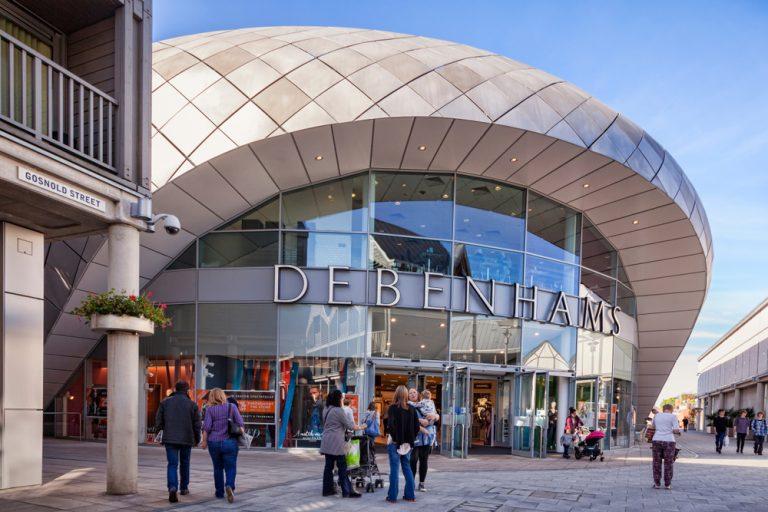
Debenhams (LON:DEB) edges closer to falling into the hands of its lenders on Tuesday having rejected a new attempted rescue plan by Mike Ashley. Its shares were suspended before trading began on the stock market Tuesday morning.
Sports Direct (LON:SPD) boss Mike Ashley made an improved offer in the early hours of this morning of £200 million to underwrite a rights issue. In exchange, Mike Ashley would become CEO of Debenhams.
Sports Direct is desperately trying to save its 30% stake in the business. All of Debenhams’ shareholders risk being wiped out if its potential restructuring plans are pursued.
Mike Ashley’s offer was rejected on Tuesday morning, in addition to the £150 million rescue plan from Sports Direct on Monday.
“The company is in discussions with its lenders regarding the availability of the remaining facilities that have not yet been drawn down,” Debenhams said in a statement.
However, this is only likely to happen in the event of lenders taking full control of the operating assets.
Debenhams currently has debt facilities of £720 million. The business also announced on Tuesday that its shares were suspended.
“Further to its announcement at 7.00 am this morning, Debenhams plc has requested that its shares be suspended with immediate effect, pending a further update,” another statement read.
The back-and-forth battle for control with Mike Ashley has been going on since the start of March, and they each request that Mike Ashley be made chief executive of the ailing department store chain. Among these offers was a £61.4 million bid for full control of Debenhams.
Should Debenhams fall into administration, it would be the latest high street name to suffer from difficult trading conditions. It will join names such as Toys R Us, Poundsworld, Maplin and HMV.
At 08:37 BST Tuesday, shares in Sports Direct International plc (LON:SPD) were trading at -0.43%. Shares in Debenhams have been suspended.