
European property: what can £650,000 get you?

The average London property price stands at £654,925 for July 2019, according to current Zoopla estimates. But what if you could spend the equivalent of this elsewhere in the world? We take a look at what roughly £650,000 can get you in three cities dotted around Europe.
Keras Resources positive results in Nayega Manganese test
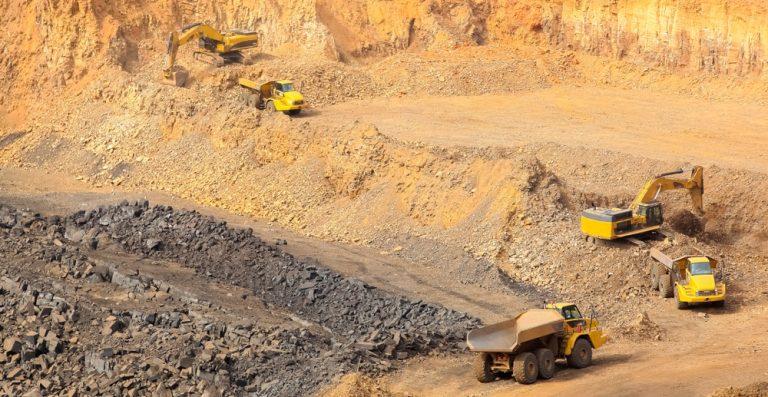
Technologically innovative metal producing company Keras Resources PLC (LON: KRS) saw its share price rally modestly after the test of a 10,000 tonne sample of its Nayega Manganese Project yielded promising results.
In concluding highlights, the Company discussed the resource’s properties. It stated that Nayega ore is suited to production of silico-manganese alloy and that Nayega manganese leaches more favourably than South African carbonate ores. The Company added that solutions produced contained minimal impurities, which would be optimal for downstream processing.
The big news, however, came with the following confirmation,
“Significant growth potential for manganese as a replacement for cobalt in lithium-ion batteries as producers look to secure cost competitive, responsibly mined long term raw material supply”
The Company are now seeking off-takers to expand production, with the aim of increasing the resource’s saleable tonnes per month from 6,500 to 13,000.Keras Resources comments
The Company’s CEO, Russell Lamming, attached the following comments to the update,
“We are exceptionally pleased that the bulk sample from Nayega was successfully delivered on time, within budget and has been underpinned by encouraging chemical analysis which further consolidates the commercial viability of the Nayega mine. The bulk sample produced higher than expected manganese content and, due to the expected relatively high silica content, it has been determined that the ore is better suited to the production of silico-manganese rather than the production of ferro-manganese. The bulk sample results comprehensively proved up the Project from mine to market and we look forward to moving forward following receipt of the Exploitation Permit which is currently outstanding.”
“In addition, with the inherently volatile nature of the downstream manganese alloy market and the growing demand for a cost effective, responsibly mined replacement for cobalt in the production of lithium-ion batteries, we have started additional leach testwork on the Transitional and Saprolitic zones of the Nayega orebody that were not tested in the bulk sample. It is widely understood that reductive leaching is not always amenable to all manganese minerals, let alone able to selectively dissolve the manganese content of the ore, so the initial testwork results are a very encouraging first step. It is our intention to follow up this work with a further detailed testwork programme aimed at optimising the leaching conditions and studying the purification processes required to ensure the production of a battery grade of manganese. I look forward to updating our shareholders when practicable.”
On volumes and production expansion, the Company said, “Current proposed planning, subject to the award of an exploitation license, is to double current production capacity from 6,500tpm to 13,000tpm of saleable ore through a plant upgrade which will include a downstream screening circuit to produce these size fractions. The plant as currently configured is capable of producing some 75,000 tons per annum, which would result in a substantial profit for Keras. However, on receipt of the exploitation licence Keras expects to expand and improve the plant to add more value as well as increasing production. The Company intends this to be financed in conjunction with an offtake agreement rather than equity funding.”Investor notes
After bouncing over 20%, the Company’s shares have plateaued (relatively), up 4.21% or 0.017p to 0.42p a share 11/07/19 14:33 GMT. Elsewhere in the mining and minerals sector, recent updates have come from; Jubilee Metals Group PLC (LON: JLP), Ariana Resources plc (LON: AUU), Caledonia Mining Corporation Plc (TSE: CAL), Regency Mines Plc (LON: RGM), Acacia Mining PLC (LON: ACA), Arc Minerals Ltd (LON: ARCM), Thor Mining PLC (LON: THR) and Premier African Minerals (LON: PREM).PetroTal provides update on output and unrest at Bretaña field
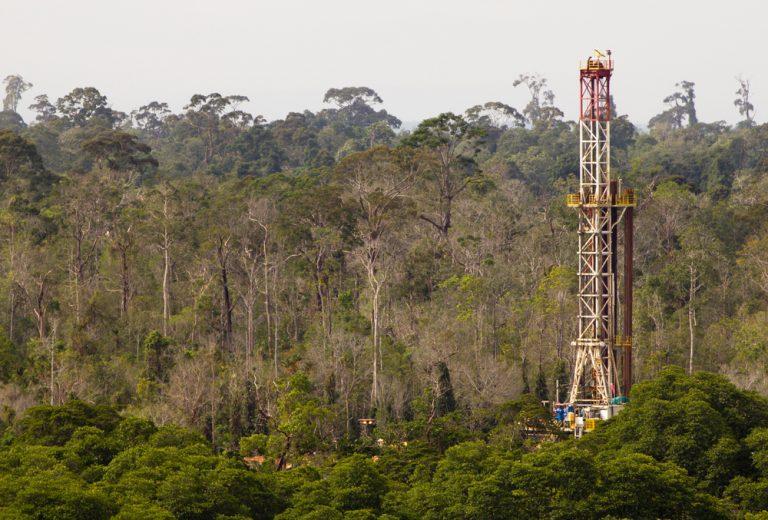
Peru-focused oil and gas developer and producer PetroTal Corp (CVE: TAL) provided an update at the Bretaña field in Block 95 in Peru.
BN 95-3D (3D) came online mid June with production at 3,500 bopd, it averaged 2,875 bopd over its first 24 days of production. Full field Bretaña production averaged 3,000 bopd in Q2 and averaged 5,350 bopd since 3D came online.
The Company also announced that they had spud the BN 95-2WD (2WD), which will act as the primary well for water disposal. Upon 2WD’s completion, PetroTal plans to turn the existing water drainage well into an oil producer.
PetroTal statement
Manolo Zuniga, President and Chief Executive Officer of the Company, provided the following insights,“We are very pleased to have achieved quarter on quarter production growth of 300 percent, a direct result of the team’s success and experience. We averaged 3,000 BOPD in the second quarter and exceeded the production milestone of 500,000 total barrels of crude oil in June 2019. We are making good progress on the water disposal well and are excited to start the workover of the existing water disposal well making it the fourth oil producer in the Company’s brief history.”
“Our latest equity raise has allowed PetroTal to have a great deal of financial flexibility, with no debt. We will continue to optimize the capital structure, providing stakeholders exposure to a truly independent oil company with double digit growth through development drilling alone, complemented by substantial exploration potential at Osheki in Block 107. We continue to host companies in the data room to review the Osheki opportunity, with the potential of engaging a joint venture partner to drill the prospect in 2020.”
“It is a testament to PetroTal’s philosophy that the Bretaña field is the only one still producing normally during the protests. This is a reflection that the local communities believe we are working on behalf of all stakeholders, promoting the fair distribution and proper use of the government take from the Bretaña Project. Though we cannot guarantee Bretaña will not eventually be shut as a consequence of their demands, we would expect this would be for a relatively short period of time.“
On the social unrest in the Northern jungle of Peru, “Since July 5, the northern jungle region of Peru has been enduring social unrest as the local communities are demanding solution to a series of demands, including a larger share of the Government take towards the local populations where the crude oil is produced. This is something the Company supports, combined with the training of local officials responsible for deploying the money.”Investor notes
The Company’s share price stood at 0.34 CAD as of the previous close 10/07/19 15:38 GMT. Numis analysts retain their ‘Buy’ stance on PetroTal stock. Elsewhere in the oil and gas sector, there have been updates from; Hurricane Energy plc (LON: HUR), TLOU Energy Ltd (ASX: TOU), Eland Oil and Gas PLC(LON: ELA), IGas Energy PLC (LON: IGAS), Anglo African Oil and Gas (LON: AAOG), Nostra Terra Oil and Gas plc (LON: NTOG), Prospex Oil and Gas Plc (LON: PXOG) and TomCo Energy Plc (LON: TOM).Properties sell 82% more on average in areas with less smokers

New data has emerged revealing that areas with fewer smokers see properties sell for 82% more on average, according to the property finance specialists One77 Mortgages.
One77 Mortgages worked with recent data from the ONS on the proportion of current smokers by local authority above the age of 18. According to the data, in areas where just 4-10% of the population smoke, the average property price is £335,716.
This figure is 82% above the average house price of £184,878 found in areas where 19-26% of the population smoke.
According to the data, as the percentage of smokers increases, property prices steadily decline; simply living in an area with more smokers seems to have an impact on property value.
Chorley, Lancashire, is the best location for a smoke-free property purchase with smokers accounting for 8.02% of the population and average house prices of £175,092, One77 Mortgages said.
“It’s common knowledge that smoking can impact the sale and price of an individual property, acting as a huge deterrent for those buyers that don’t smoke, but it would seem that it also plays a part on a much broader scale,” Alastair McKee, Managing Director of One77 Mortgages, said in a statement.
“Properties in areas home to a lower proportion of smokers are selling for a much higher price on average and while this may not have been a selling point for those listing their homes on the market traditionally, it certainly should be now,” the Managing Director continued.
“Particularly in slower market conditions, savvy sellers should look to utilise every positive aspect they can think of to stand out from the crowd and although a lower proportion of smokers might not be important to everyone, for some it certainly will be.”
Recently leaked documents allegedly show that the UK government plans to end smoking by 2030.
Plans were leaked to the Daily Mail, outlining the initiative to plant quit leaflets inside cigarette packets themselves.
Jubilee Metals acquires Sable Zinc Kabwe refinery

South Africa and Zimbabwe focused metal processing company Jubilee Metals Group PLC (LON: JLP) posted an update on its existing ventures, as well as news on the update of another prospect in Zimbabwe.
On its existing undertakings, the Company noted that commissioning of Eland Platinum’s recovery plant had reached flow stability on the floatation circuit and that the grinding circuit was set to be introduced by mid-July this year. The production of saleable platinum grade metals was to be expected during August 2019 at the Eland Plant.
The Company added that the DCM fine chrome project reached 5,000 tonnes of on spec chrome concentrate in June 2019.
On the Zimbabwe prospect acquisition, Jubilee Metals said that it had met the conditions and that final competition commissioning approval had been received for the Sable Zinc Kabwe refinery, from the Zambian Competition and Consumer Protection Commission (“ZCCPC”).
“Circuit upgrades ready to commence integration with the Sable Zinc Kabwe refinery to process lead, zinc and vanadium,” the Company added.
Jubilee Metals comments
The Company’s CEO, Leon Coetzer, responded to the update,
“Jubilee continues to demonstrate progress with the implementation of its strategy to diversify earnings through both widening our existing metals exposure with the implementation of additional projects as well as expanding our geographic footprint with our Kabwe project in Zambia.”
“I am delighted that we have successfully achieved all conditions precedent for the implementation of the Sable Zinc Kabwe acquisition with the final approval from the ZCCPC being ratified and completion formalised. With the design process near finalised, this allows Jubilee to commence with the circuit upgrade and expansion of the Sable Zinc Kabwe refinery for the processing of the Kabwe tailings to produce zinc, vanadium and lead. The first phase of the project targets the production of Vanadium Pentoxide (V2O5) and a zinc concentrate with phase two bringing the zinc metal refining step and lead concentrate online.”
“The PlatCro PGM project, which has the potential to add 30,000 ounces per annum of PGM production to our existing 30,000 ounces, has reached its first phase commissioning targets achieving stable flow rates through the Eland PGM Plant. The next commissioning target is to bring online the grinding circuit set for mid-July 2019. We expect to achieve saleable PGM concentrates during August 2019.”
“Our ground-breaking DCM Fine Chrome project continues to deliver on expectation producing in excess of 5,000 tonnes of chrome concentrate during the month of June 2019. With this success, we now target to integrate the fine chrome solution into our other operations.”
On its acquisition, the Company said in its statement,
“Jubilee is pleased to announce that the ZCCPC has granted final authorisation for the Acquisition with both Jubilee and Glencore acknowledging that all CPs to the Acquisition have been satisfied. The final administrative process for the Sable Zinc Kabwe refinery handover and share transfer has commenced with the parties agreeing to target completion by the end of July 2019.”
Investor notes
The Company’s share price rallied 5.65% or 0.18p to 3.28p a share 11/07/19 11:55 GMT.
Elsewhere in the mining and minerals sector, recent updates have come from; Ariana Resources plc (LON: AUU), Caledonia Mining Corporation Plc (TSE: CAL), Regency Mines Plc (LON: RGM), Acacia Mining PLC (LON: ACA) Arc Minerals Ltd (LON: ARCM) Thor Mining PLC (LON: THR) Premier African Minerals (LON: PREM) and Pathfinder Minerals (LON: PFP).
Bank of England: UK financial system can withstand chaotic Brexit

The UK financial system is strong enough to cope with a “worst-case disorderly” Brexit, the Bank of England said on Thursday.
The Bank of England said in its Financial Stability Report that the nation’s core financial system, including banks, dealers and insurance companies, is resilient to, and prepared for, a variety of risks such as a disorderly departure from the European Union.
It also noted that the perceived likelihood of a no-deal Brexit has increased since the beginning of 2019, and increased uncertainties surrounding the UK’s departure from the European Union has lead to a decline in the sterling exchange rate.
Despite this, the Bank of England said that the UK banking system remains strong enough with continue to withstand the UK economic and financial pressure that accompany Brexit.
The Bank of England emphasised that financial stability is not the same as market stability — significant volatility and asset price changes are to be expected in a disorderly Brexit.
As the race to lead the Conservative Party reaches its final lap, the winner and new Prime Minister is expected to be announced on 23 July. With Boris Johnson and Jeremy Hunt facing the final battle, political uncertainty surrounding the UK’s departure from the European Union prevails.
Data recently emerged revealing that 72% of small businesses in the UK are putting their business decisions on hold and not planning to increase investment, with Brexit uncertainty cited as having a negative impact on firms seeking investment.
UK house prices have also been hit, with growth in June remaining weak as uncertainty surrounding the nation’s departure from the European union remains chaotic.
Ariana Resources publishes results from Salinbas Gold Project

Turkey-based gold mining company Ariana Resources plc (LON: AUU) today announced the results from its Salinbas Gold Project.
The Company holds a 100% interest in Salinbas via its shareholding in Greater Pontides Exploration B.V. In the recent testing, ‘Salinbas-type’ mineralisation was identified in several holes within c.120m from the surface, in the area connecting Salinbas and Ardala.
At 39 metres, the Company encountered 1.01 g/t of gold in a 12 metre inertsection; at 89 metres it discovered 2.29 g/t of gold in a 6 metre inetrsection; and at 111 metres, an 11 metre intersection yielded 5.33 g/t of gold.
The Company noted the results as displaying ‘significant’ mineralisation, with further results from the laboratory pending.
Ariana Resources comments
The Company’s Managing Director, Dr. Kerim Sener, added to the update,
“We are very pleased to report our preliminary drilling results from the Salinbas Gold Project, since it became 100% held by Ariana. These results, while only partial at this stage, demonstrate the development of a major magmatic-hydrothermal system in the vicinity of the Ardala Cu-Au-Mo porphyry. The latest data confirms that the mineralised part of the Ardala porphyry, which is enriched in precious and base-metals, does connect intimately with the Salinbas gold-silver zone and that the two systems should in fact be treated as one. This was a prediction from our earlier geological modelling and is a finding that bodes exceptionally well for the discovery of further mineralisation in the vicinity, particularly in the immediate surrounds of the Ardala porphyry. This is an area, which to date, has been poorly explored. Consequently we continue to remain excited by the exploration upside of the project and look forward to commencing our follow-up work programmes.”
Investor notes
The Company’s shares dipped during Thursday morning trading, down 1.01% or 0.024p to 2.35p a share 11/07/19 11:35 GMT. Panmure Gordon retains their ‘Buy’ stance on Ariana Resources stock. Elsewhere in the mining and minerals sector, recent updates have come from; Caledonia Mining Corporation Plc (TSE: CAL), Regency Mines Plc (LON: RGM), Acacia Mining PLC (LON: ACA) Arc Minerals Ltd (LON: ARCM) Thor Mining PLC (LON: THR) Premier African Minerals (LON: PREM), Pathfinder Minerals (LON: PFP) and AfriTin Mining Ltd (LON: ATM).Hurricane Energy rallies on Capital Market Day and performance update

UK-focused oil producer Hurricane Energy plc (LON: HUR) announced that it will be hosting a Capital Markets Day presentation today in London today for sell-side analysts and institutional shareholders.
The event will be hosted by Company CEO Dr Robert Trice and CFO Alistair Stobie. It will include presentations of data on the start-up process of the Lancaster Early Production System and the ‘Warwick Deep’ well.
Thus far, highlights from the wells included news that the Lancaster EPS start-up phase yielded ‘World class’ productivity indices of 205 stb/d/psi and 190 stb/d/psi on the -6 and -7Z wells. Further, the Company noted that the EPS also reached its target aggregate EPS stabilised production rate of 20,000 bopd on natural flow.
The Warwick Deep well yielded less positive results, “Hurricane’s initial analysis indicates that the well intersected a poorly connected section of the fracture network within the oil column. The well did not flow at commercial rates producing a mixture of drilling brine, water, oil and gas. The decision was therefore made to plug and abandon the well.”Hurricane Energy comments
On the update, Company CEO Dr Robert Trice attached the following insights,
“I am delighted to be providing an update to the market today. As expected, 2019 is proving to be a transformational year for Hurricane, as we significantly progress the technical and operational platform on which to grow the business further.”
“The Lancaster EPS start-up phase went smoothly and achieved its data objectives. The world class productivity of these wells means that we were able to achieve the desired rates with small chokes and without ESP-support. This bodes very well for future production efficiency and costs.”
“We’ve always said that it would take 6-12 months of stable production before we can establish whether the Lancaster EPS is performing as we predict in our base case model. This continues to be the case.”
“We are encouraged by the Warwick Deep well, despite the penetrated fracture system not supporting a commercial oil flow rate. Hurricane’s assessment of data acquired during drilling and testing indicates that the well encountered a significant oil column on the Warwick structure. Our initial analysis indicates an OWC consistent with pre-drill predictions. Confirmation of our provisional analysis will require data from the remaining 2019 drilling campaign, as well as fluid sample analysis from Warwick Deep. Importantly, we have evidence that suggests to Hurricane that the result at Warwick Deep does not have negative read-across to Lancaster or Lincoln.”
“We are about to spud Lincoln Crestal which, in the case of demonstrating successful flow rates, will be a tie-back candidate to the Aoka Mizu.”
“Looking ahead, we’ve updated our Lancaster EPS production guidance by adding an upside scenario from 2020 onwards, based on the many positive indications we’ve seen to date. We are tracking in line with production guidance for 2019 and are generating significant cash for reinvestment in future activity. Our phased Rona Ridge development continues with strong momentum.”
Investor notes
The Company’s shares rallied sharply following the update, up 16.63% or 7.38p to 51.76p a share on Thursday morning 11:12 11/07/19. Berenberg initiates a ‘Buy’ rating while Barclays Capital initiates an ‘Equal Weight’ stance on Hurricane Energy stock. Elsewhere in the oil and gas sector, there have been updates from; TLOU Energy Ltd (ASX: TOU), Eland Oil and Gas PLC(LON: ELA), IGas Energy PLC (LON: IGAS), Anglo African Oil and Gas (LON: AAOG), Nostra Terra Oil and Gas plc (LON: NTOG), Prospex Oil and Gas Plc (LON: PXOG), TomCo Energy Plc (LON: TOM) and Rose Petroleum PLC (LON: ROSE).Jet2 owner posts 36% rise in profit as Brits go abroad

The owner of Jet2, Dart Group, posted a 36% increase in profit before tax on Thursday in its yearly results.
The leisure travel and distributions and logistics group outlined in its preliminary results for the year ended 31 March 2019 that profit before tax amounted to £177.5 million, up 36% on the £130.2 million figure recorded in 2018.
Basic earnings per share increased by 36% to 97.98p.
The company said that its performance is a reflection of the growing success of its leisure travel products. It offers holiday flights with its airline Jet2.com and package holidays with its licensed tour operator Jet2holidays.
“We know that taking a holiday is one of the most important family experiences of the year. We therefore do our very best to ensure that each of our customers ‘has a lovely holiday’ that can be both eagerly anticipated and fondly remembered, supported by our core principles of being family friendly, offering value for money and giving great customer service,” the Chairman of Dart Group said in a company statement.
Its distribution and logistics business, Fowler Welch, also proved successful, continuing to draw in new business from existing and new customers alike.
Concerning its outlook, the Chairman added that “though overall demand for our leisure travel products has continued to strengthen since the start of the new financial year, it is clear from our forward booking trends that generally, less confident consumers are booking later than last year and therefore pricing for both our flight-only and package holiday products has to be continually enticing.”
“Nevertheless, with still some way to go in the booking cycle, the Board remains optimistic that current market expectations for Group profit before foreign exchange revaluations and taxation for the year ending 31 March 2020 will be met.”
Sector wide issues were highlighted in the results, in particular the cost pressures faced by the travel industry in relation to fuel, carbon and other operating charges.
Lufthansa (ETR:LHA) posted a deeper loss in April for its first-quarter of 2019, blaming higher fuel costs.
Low-cost airline Ryanair (LON:RYA) joins the list of airlines struggling amid rising costs and overcapacity, with the Hungarian airline Wizz Air (LON:WIZZ) also revealing its difficulties amid the increasing cost of fuel.
Shares in Dart Group plc (LON:DTG) were up 2.91% as of 11:10 BST Thursday.
Caledonia Mining retains full year guidance with Q2 Blanket Mine update

Zimbabwe-focused gold mining company Caledonia Mining Corporation Plc (TSE: CAL) today published a production update for the second quarter 2019 on its Blanket Mine project in Zimbabwe.
The Company stated that 12,712 ounces of gold were produced during Q2, which represented a 6.4% rise on the 11,948 ounces for Q1.
Caledonia Mining retained its full year guidance of 53,000 – 56,000 ounces despite H1 output standing at just 24,660 ounces; this was 3.4% lower than last year’s volume of 25,582 ounces.
The Company currently holds a 49% in Blanket Mine, but has penned a conditional agreement to expand this to 64%. It said it remained on target to reach its 80,000 ounces per annum target for 2022.
Caledonia Mining comments
In more detail, the Company’s statement enclosed the following information,“Caledonia’s primary asset is a 49 per cent interest in the Blanket gold mine in Zimbabwe. In November 2018, Caledonia announced that it had signed a legally binding agreement to increase its shareholding in Blanket to 64% subject to the receipt of, amongst other things, regulatory approvals. Caledonia’s shares are listed on the NYSE American (symbol: CMCL) and on the Toronto Stock Exchange (symbol: CAL) and depositary interests representing the shares are traded on London’s AIM (symbol: CMCL).”
“As at March 31, 2019, Caledonia had cash of approximately US$9.7 million. The Company plans for Blanket to increase gold production from 54,511 ounces in 2018 to approximately 75,000 ounces in 2021 and approximately 80,000 ounces by 2022,” the Company said.
Responding to the update, Company CEO Steve Curtis, commented,
“Production in the second quarter of 2019 was slightly below our target but ahead of the comparable quarter in 2018 (Q2 2018: 12,657), and still at a level at which we remain comfortable with our 2019 production guidance of 53,000 to 56,000 ounces for the full year. I am pleased to report that our efforts to improve grade control have delivered results in the quarter although this remains a significant area of focus.”
“We expect to complete the shaft sinking phase of the central shaft project later this month, which will be a significant milestone for our business. We look forward to commencing production from the central shaft during H2 2020 which is expected to deliver the Company’s growth plan to achieve 75,000 ounces in 2021 and 80,000 ounces by 2022.”