
Shefa Yamim: Preparing for diamond and precious stone production
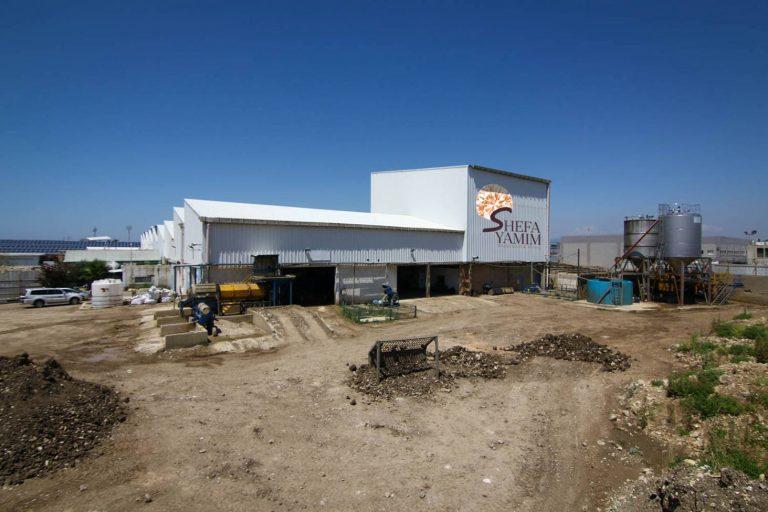
Shefa Yamim (LON:SEFA) is targeting gem stone prospects in the Kishon region of Northern Israel, in particular diamonds, sapphires and ruby.
The company has recently hit significant milestones such as the recognition of a new mineral in their Carmel Sapphire and a technical economic evaluation that puts their mining process towards the lower end of costs when compared to their peers.
Michael Rosenberg of Shefa Yamim presented at the UK Investor Magazine Investor Evening 31st January and detailed this year’s plans and their pursuit of a mine-to-market strategy.
Nissan cuts profit forecast amid Ghosn scandal

Nissan cut its profit forecast for the year ahead as the Japanese car company continues to suffer the fall-out from the Ghosn scandal.
The car-maker revised its 2018 operating profit forecast to be 450 billion yen (£3.2 billion), down from 540bn yen, citing weaker car sales.
It now expects revenues of 11.6 trillion yen, as opposed to 12 trillion yen.
Nissan reportedly sold 4.02 million vehicles over the course of the first nine months of the year, marking a fall of 2.1%.
Whilst the firm enjoyed growth in Japan, China and other markets, Nissan suffered a decline in sales across America and Europe.
Nissan is also facing a one-off compensation charge of 9.2 billion yen (£64.7 million) to former chief executive and chairman Carlos Ghosn between 2009 and 2017.
Ghosn was initially arrested on suspicion of underreporting his pay between 2011 and 2015.
In December, Mr Ghosn was re-arrested by Japanese authorities on suspicion of aggravated breach of trust.
Since 1999, Nissan has been a member of the Renault-Nissan-Mitsibushi Alliance, of which Mr Ghosn had been a key proponent.
At the time of his initial arrest, Nissan released the following statement, stating that Ghosn had been “reporting compensation amounts in the Tokyo Stock Exchange securities report that was less than the actual amount, in order to reduce the disclosed amount of Carlos Ghosn’s compensation”.
“Numerous other significant acts of misconduct have been uncovered, such as personal use of company assets, and Kelly’s deep involvement has also been confirmed.”
“Nissan deeply apologises for causing great concern to our shareholders and stakeholders. We will continue our work to identify our governance and compliance issues, and to take appropriate measures.”
Shares in the company (TYO: 7201) are currently trading +1.87% as of 14:32PM (GMT).
Cabot Energy shares crash amid $3.7 million capital raise

Cabot Energy announced plans to raise $3.7 million in capital through a discounted share rights issue on Tuesday, sending shares downwards.
The oil and gas company said it had already conditionally raised £2,082,899 (approx. $2.7 million) at an issue price of 10 pence per share.
It said it is also proposing to raise the additional £770,000 (approx. $1 million) through the issue of up to 7,700,000 shares at the same price per share.
Scott Aitken, Chief Executive Officer, said: “This Fundraising will facilitate the partial settlement of amounts owed to the Group’s creditors, predominantly trade creditors of Cabot Canada, following cost overruns of the Canadian work programme early in 2018, before the new executive team took over. We continue to engage in constructive discussions with our creditors and would like to thank them for their continued support as we secured discounts and rescheduling of payments due.”
James Dewar, Independent Interim Non-Executive Chairman of Cabot Energy, added: “The proposals outlined today deliver the short-term capital required to safeguard Cabot Energy’s future. It follows a forensic assessment of the Company’s financial position and consideration of all available options, including asset sales, and what is being recommended by the Board we believe is in the best interest of all Shareholders. The funds will enable the Company to deliver on its creditor settlement agreements and provide a platform for the growth financing plan by the end of Q1 2019.”
Cabot Energy is an AIM-listed company. It has operations in Australia, Canada as well as Italy.
Shares in the firm (LON:CAB) are currently trading -41.50% as of 12:16PM (GMT).
Elsewhere across the markets, Kodal Minerals shares (LON:KOD) rose after the company said it had completed drilling at its Bougouni Lithium Project.
In the Retail sector, Debenhams shares (LON:DEB) were up after the department store said it had secured an additional £40 million in funding.
Kodal Minerals completes drilling at Bougouni
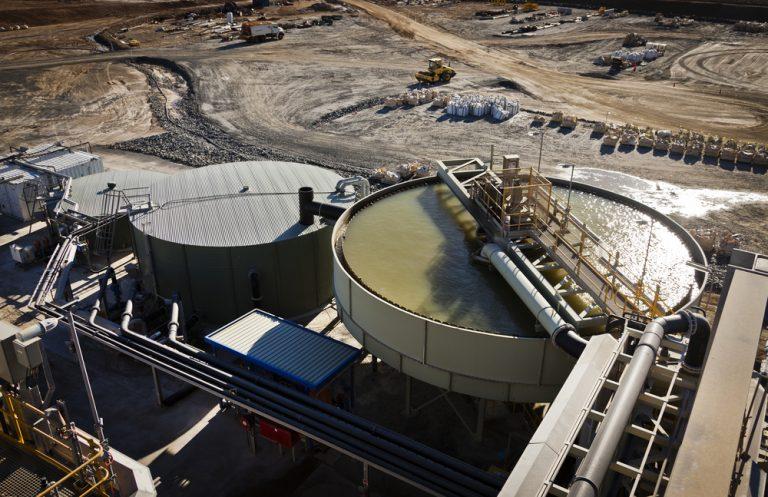
Mineral exploration and development company, Kodal Minerals (LON:KOD), has announced its final assay results for the drilling completed at its Bougouni Lithium Project.
The Bougouni Lithium Project is based in Southern Mali. Kodal Minerals’ primary focus is on the development of this project, advancing it towards production. The recently completed Maiden JORC Resource Estimate placed the Bougouni Lithium Project in the top 15 hard rock lithium projects globally.
CEO of Kodal Minerals, Bernard Aylward, commented on the announcement:
“The final assay results for the Bougouni drilling programme, completed in November and December 2018, reported today highlight the excellent continuity and width of the pegmatite mineralization at the Sogola-Baoule and Boumou prospects. These results will be incorporated into the geological and mineralization model that will update our JORC Mineral Resource.”
“Kodal is continuing the fast track development of the Bougouni lithium project and has recently met with both the Mali Minister of Mines and delegation to provide an update on the Project. The first step is to complete the update of the JORC Mineral Resource as this will be utilized for the future mine design and scheduling. The Company is also finalizing the metallurgical testwork and the engineering design of the proposed processing plant.”
Highlights from the Sogola-Baoule prospect on Bougouni includes an intersection of up to 31 meters at 1.33% lithium oxide, 27 meters at 1.06% and 30 meters at 1.06%.
Highlights from the Boumou prospect includes 11 meters at 1.32% lithium oxide and 11 meters at 1.03%.
Mineral resource estimate remains on schedule for announcement by the end of February 2019, the company said.
In January, the lithium mining firm confirmed a new deal that gives exclusive rights to expand its operation at a lithium mining opportunity in Mali. Kodal said that the new project would be close to the existing Bougouni Project.
At 10:19 GMT on Tuesday, shares in Kodal Minerals plc (LON:KOD) were trading at +2.84%.
Debenhams shares soar amid credit facilities extension and sourcing partnership
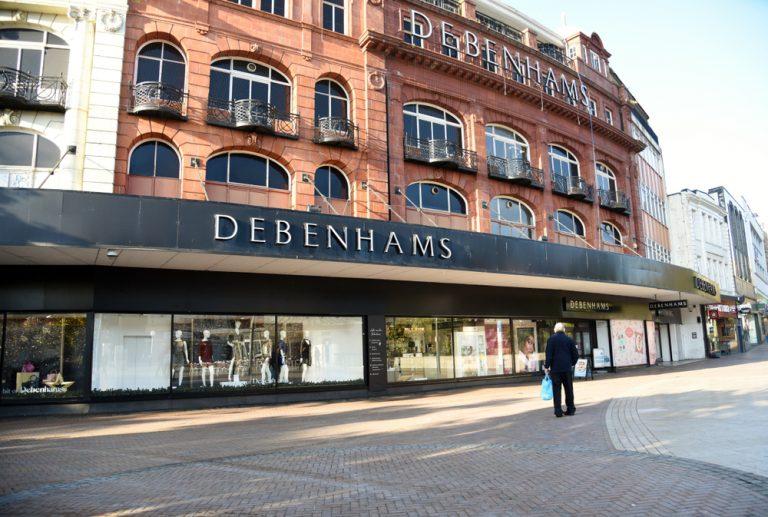
Department store chain Debenhams announced on Tuesday that it has agreed to extend its credit facilities and a sourcing partnership with Li & Fung. Shares in the company soared 39% during trading on Tuesday morning.
It has agreed to an additional 12-month senior secured credit facility. The additional facility provides £40 million on increased liquidity headroom, which will be available to draw as required.
Additionally, the new facility agreement will be a bridge to facilitate a broader refinancing and recapitalisation. Against this backdrop, the company has said it will continue to engage constructively with with its stakeholders. It intends to conclude a “comprehensive refinancing” by the end of the period.
Earlier this January, Moody’s Investors Service downgraded Debenhams’ outlook from stable to negative.
Debenhams has also entered into an agreement with Li & Fung. Li & Fung is a Hong Kong based leading supply chain solutions partner for consumer brands and retailers. The agreement aims to develop a strategic sourcing partnership and is expected to eventually cover a material part of its own-brand sourcing, delivering benefits for both of its customers and stakeholders. CEO of Debenhams, Sergio Bucher, commented on the announcement: “Today’s announcement represents the first step in our refinancing process. The support of our lenders for our turnaround plan is important to underpin a comprehensive solution that will take account of the interests of all stakeholders, and deliver a sustainable and profitable future for Debenhams.” “In addition, the partnership agreement we are announcing today with Li & Fung will be a key part of our turnaround plan. It gives us access to state-of-the-art technology in the LF Digital platform, providing end-to-end visibility across our supply chain. This will help us anticipate and respond more quickly to trends and our customers’ preferences, as well as delivering better quality product.” Debenhams recently announced that it is planning to close 90 stores. Likewise, it may axe 10,000 jobs as it battles against plummeting profit and sales. Shares in Debenhams plc (LON:DEB) were trading at +39.35% as of 10:13 GMT on Tuesday.Stagecoach announces short-term rail franchise with Department for Transport
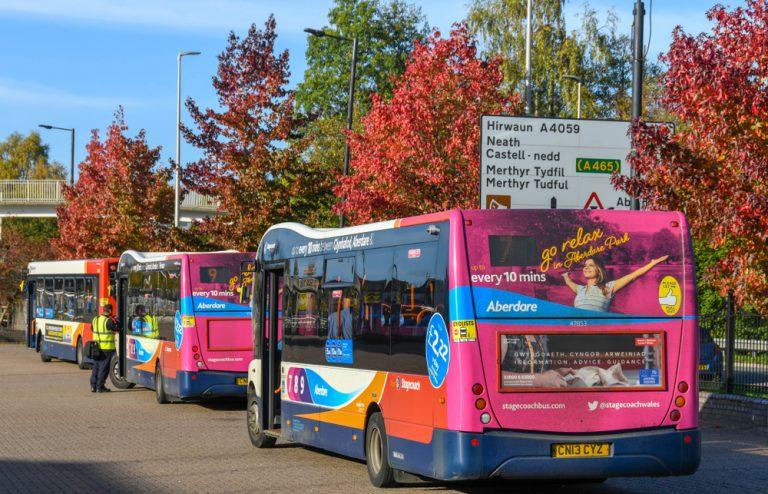
Stagecoach Group plc (LON:SGC) announced on Tuesday that its subsidiary, East Midlands Trains Limited, has agreed a new short-term rail franchise with the Department for Transport. Shares in the company were trading slightly higher during early trading on Tuesday.
The new franchise will begin on 3 March 2019 and is expected to run until at least 18 August of the same year. The Department for Transport has the discretion to extend the franchise by up to 24 weeks on terms that have been agreed, Stagecoach said.
Stagecoach has outlined the benefits and improvements that customers and communities will experience as a result of the franchise. Under the agreement, the £1.5 billion Midland Main Link upgrade is set to improve capacity and reduce journey times. Additionally, the continuation of the investment programme will improve stations and trains, including accessibility improvements. Moreover, it will see the roll out of smart ticketing in March, as part of a wider National Rail scheme.
East Midlands trains will focus on ensuring readiness for the new franchise. This includes plans to add extra seats from 2020.
Under the agreement, revenue risk will sit primarily with the Department for Transport.
East Midlands Trains is set to earn a modest sum under the contract. A profit sharing arrangement with the Department for Transport will be applicable. In December, Stagecoach reported its results for the first-half of the financial year. The bus and rail operator revealed a pre-tax loss of £23 million for the first six months of the year, comparing to the £97 million profit earned the year prior. It slashed its dividend for the full year to April 2018, causing shared to drop over 7% in June. After severe weather across the country during early 2018, UK bus regional revenue dropped by 0.1% on a like-for-like basis. In London, revenue drop was significantly larger at 4.3%. At 09:36 GMT Tuesday, shares in Stagecoach Group plc (LON:SGC) were trading at +1.63%.AA’s motor insurance division sees strong growth, roadside breakdown stumbles

AA’s (LON:AA) motor insurance division has experienced a “solid” operational performance throughout the financial year ending 31 January 2019. However, its roadside breakdown business continues to stumble. This was announced in a pre-closing trading update on Tuesday ahead of its full financial year results announcement on 3 April.
Trading EBITDA is expected to not be below then £340 million mark, which remains within the company’s guided range of £335 million – £345 million.
In September, AA announced that its profits had dropped by 65% for the first six months of 2018.
In February, it warned that its full-profit would fall short of expectations. The AA’s insurance division continues to perform in line with the company’s expectations. Over the year, motor policy grew 16% to 731,000 which is ahead of expectations. Additionally, its house insurance policy book rose by 1.5% to roughly 830,000. As for roadside, the AA retained for extended all of its primary contracts. These include contracts with Lloyds Banking Group, Volkswagen Group, Suzuki, and Jaguar Land Rover. Average income per business customer increased by 5% to £21, according to the AA this reflects the new contract wins and additional revenue recognised under its pay-for-use contracts. Average income per paid member increased to £162, growing 3% from last year. This increase remains broadly in line with inflation. Paid personal memberships dropped by 2% to 3.21 million during the year. Retention was just over 80%. The company said it had anticipated the decline in paid personal memberships, primarily due to its previously announced decision to re-phase its summer marketing campaign. This is in addition to the impact of regulatory pressures and continued competitor activity. AA has said that it continued to experience “strong and predictable” levels of cash conversion. It expected total capex spend for the 2019 financial year to remain broadly in line with its guidance of £105 million. At 09:13 GMT on Tuesday, shares in AA plc (LON:AA) were trading at +0.37%.TUI losses widen following hot British summer and weaker pound
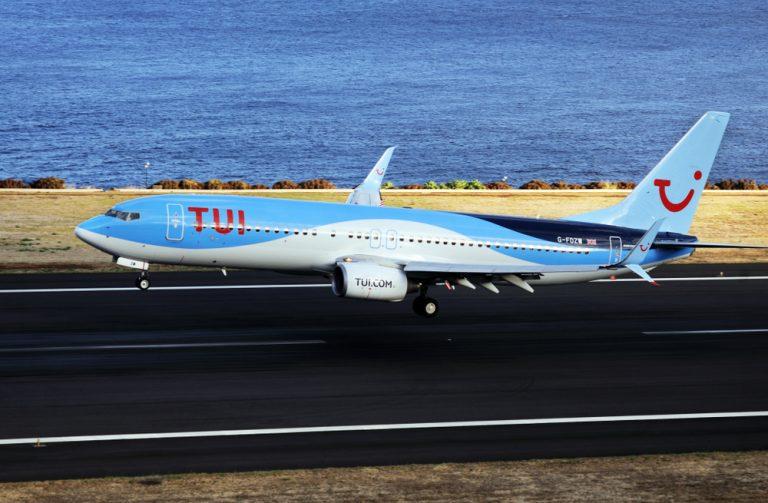
Travel company TUI (ETR:TUI1) revealed its first-quarter results of the financial year on Tuesday through a stock market announcement. The results show a deeper earnings as a result of weather conditions, a change in consumer demand from the western to the eastern Mediterranean and a weaker pound. Shares in the company dropped over 4% during early trading on Tuesday.
Underlying EBITA loss deepened to -€83.6 million for the three months through December. This compares to a -€36.7 million on-year.
Group turnover grew 4.4% to €3.7 billion. Additionally, customer volumes across all markets jumped by 1.2% to 3.7 million.
TUI has said that its current trading for summer 2019 remains broadly in line with prior year and average selling price is flat year-on-year.
It has stressed that the market environment, for all travel companies, remains very challenging and impacted by a variety of factors. These factors include the impact of the unusually hot and extended summer in 2018, which has caused an increase in the amount of late bookings. Next, there has been a shift in demand from the western to the eastern Mediterranean, which has created an overcapacity in other destinations such as the Canary Islands. Finally, sales of higher-margin products to British customers have been affected by the weakness of the British pound. TUI said that it had initially expected these challenges to primarily impact the first half of the financial year. However, it is now predicting that it will extend into the second half. As a result, full-year earnings are expected to be broadly stable with the 2018 financial year’s €1.18 billion figure. Last week, TUI downgraded its earnings guidance, re-emphasizing it in today’s results. Thomas Cook then followed by announcing that it had been hit by a reduced demand for winter sun and British consumer uncertainty. CEO Fritz Joussen commented on the announcement: “Global trends for tourism remain intact. TUI is financially strong with a second strategic and operational positioning. We are continuing to deliver our transformation as a digital platform company.” At 09:29 GMT Tuesday, shares in TUI AG (ETR:TUI1) were trading at -4.30%.Sterling drops after lowest UK GDP growth reading since 2012
Sterling weakened on Monday after the release of UK growth figures that showed the pace of growth had declined to the lowest levels since 2012.
Growth in Q4 2018 stumbled to 0.2% as the service sector was only are to post growth and Business Investment declined.
Growth for 2018 fell to 1.4% down from 1.8% on 2017 sending GBP lower against most major currencies.
GBP/USD was trading at 1.2902 at lunchtime in London.
The fall in GBP/USD compounds a poor February for sterling thats seen the currency pair drop over 200 points.
1.4% fall in Business investment in Q4, the 4th consecutive quarterly fall in a row https://t.co/HjIDTfZktM pic.twitter.com/kNjKFmpYRB
— ONS (@ONS) 11 February 2019
Europe wide weakness
The decline in the UK’s growth rate was attributed to lower factory orders and activity in the automotive sectors. Fear over Brexit were blamed for the poor figures as businesses held back on making decisions until the UK government gave more certainty on the withdrawal process. Despite Brexit being blamed for the weakness, the UK’s disappointing GDP’s figures comes hot on the heels of a raft of data from mainland Europe suggesting the economic picture is weak throughout the continent. Italy have recently confirmed they are in a technical recession and Germany could well do the same following a 1.6% decline in factory orders suggesting Europe’s biggest economy is taking a turn for the worse. While Italy’s politicians blamed their recession on ongoing Eurozone austerity, Germany’s woes are firmly driven by a declining demand for goods, especially automotives – something that was also evident in the UK economy.UK services strength
The UK’s service sector was the only area of the economy that grew with strong growth in IT. Business investment was weak, posting the fourth quarter of decline. Head of GDP Rob Kent-Smith commented on the data: “GDP slowed in the last three months of the year with the manufacturing of cars and steel products seeing steep falls and construction also declining. However, services continued to grow with the health sector, management consultants and IT all doing well. “Declines were seen across the economy in December, but single month data can be volatile meaning quarterly figures often give a better indication of the health of the economy. “The UK’s trade deficit widened slightly in the last three months of the year, while business investment again declined, now for the fourth quarter in a row.”Lonmin production hit after miner fatalities
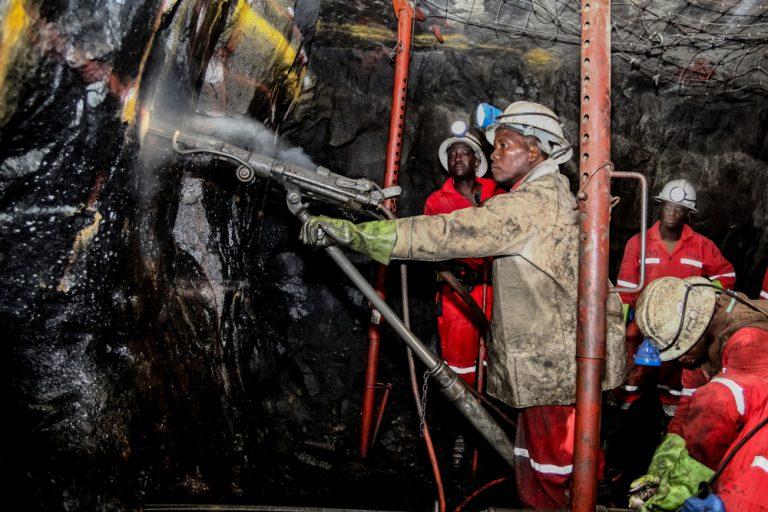
Lonmin (LON:LMI) updated the market on its production numbers for the first quarter of 2019.
The platinum miner said production was down 166,000 tonnes to 2.2 million tonnes, down 7.0% on the same period last year.
This was as a result of two fatalities, which led to stoppages as the company worked towards reviewing safety conditions.
The statement added that the incidents had occurred after a 15-month fatality free period.
Ben Magara, Chief Executive Officer, said: “The loss of our colleague is deeply regretted and we extend our deepest condolences to his family and friends. Our first quarter’s production is always our most disturbed and challenging period.
Looking ahead to the next quarter, Magara said:
“I am encouraged by the increase in the PGM basket price driven by Palladium and Rhodium. Going forward into the second quarter, the Lonmin team continues to focus on safe mining production. We are therefore maintaining our sales, costs and capex guidance for 2019. The challenges of this quarter and the volatility of the exchange rate underscore the vulnerability of our business and the importance of a sustainable solution for the company.”
Lonmin is a platinum mining company that is primarily focused in South Africa.
Shares in Lonmin are currently +8.55% as of 13:53AM (GMT).
Elsewhere in the markets, Tower Resources shares (LON:TWR) rallied after the company announced it had made a gas discovery nearby one of its wells.
Meanwhile, SSE shares (LON:SSE) remained flat after the company updated the market on its performance during the last three months of 2018.