
SSP Group expects UK 86% sales decline, European sales remain strong

SSP Group (LON: SSPG) has said it expects second-half sales to be 86% lower than the same period last year.
Owner of Upper Crust and Caffè Ritazza has said sales have been hit due to fall in trading at airports and railways as people are travelling less and working from home.
SSP Group has also warned that it is planning to cut up to 5,000 job losses amid the collapse in sales. After suffering from heavy losses over lockdown, the group said it would cut half of its UK workforce.
“We are now taking further action to protect the business and create the right base from which to rebuild our operations. We have therefore come to the very difficult conclusion that we will need to simplify and reshape our UK business, and we are now starting a collective consultation on a proposed reorganisation,” said chief executive Simon Smith.
Revenue is expected to reach £1.3bn.
“Covid-19 continues to have an unprecedented impact on the travel industry and on SSP’s businesses in all geographies,” said Smith.
“In the medium term we expect to see the gradual return of passenger travel to more normalised levels. The actions we are taking to rebuild the business will enable us to emerge fitter and stronger, positioning us to capitalise on future opportunities and delivering long-term sustainable growth for the benefit of all our stakeholders,” he added.
Whilst sales in the UK have dramatically fallen, sales in Europe in Germany and France remain strong.
SSP Group shares (LON: SSPG) are trading +12.34% at 203,00 (1600GMT).
AstraZeneca and GlaxoSmithKline – the Covid-19 vaccine frontrunners to watch

Around the world, pharmaceutical companies and governments are working at record speed to develop a vaccine for the novel coronavirus. There are currently more than 150 potential vaccines in development, with high hopes that an effective product can be introduced to the market within the next year.
The demand for a vaccine has increased since lockdown measures were brought to an end over the summer. With millions of people back at work, children back at school, and services reopening to the public, the threat of the virus sweeping through the population is at its greatest since the peak of the pandemic in the spring.
With pressure mounting, two UK-based biopharmaceutical firms have emerged among the frontrunners in the race to develop a vaccine: AstraZeneca (LON:AZN) and GlaxoSmithKline (LON:GSK).
Both companies have made significant progress in recent months. Despite a brief setback due to an adverse neurological reaction from a volunteer, AstraZeneca and Oxford University’s joint venture is already well into clinical trials, and although GlaxoSmithKline has only just begun its first human study, the unique formulation of its proposed vaccine makes it potentially more effective than others in development.
So, which of the two should investors consider tucking their cash into?
AstraZeneca and Oxford University
The collaboration between Cambridge-based AstraZeneca and the University of Oxford is already a frontrunner in the race to develop a vaccine. Its proposal, named ChAdOx1 nCoV-19, is currently undergoing Phase Three clinical trials on human volunteers, which will determine whether the vaccine has the same effect on humans as it did on laboratory animals during earlier studies. A number of governments have already made their faith in AstraZeneca’s vaccine clear, with the UK, USA and India pre-ordering a total of more than 2 billion doses. Despite a week-long setback after a volunteer fell ill with a neurological condition called ‘transverse myelitis’, independent regulators determined that the trial was safe to resume. The volunteer is expected to make a full recovery. AstraZeneca’s share price wavered when the project was put on hold, with investors (understandably) fearing that their hopes that a vaccine is on the horizon would be dashed. Shares were down a hefty 8% on the morning of the company’s announcement, but quickly recovered once the trials were given the go-ahead to resume. Since then, AstraZeneca’s shares have gained on renewed optimism. On Wednesday afternoon, they were up 2.49% to 8,794.00p, and if all goes to plan then they are likely to keep going up. The company has enjoyed a surge in investor interest over the course of the year, with a 24.67% increase in its share price in the last 6 months alone, and a decent dividend yield standing at 2.48%. Assuming that AstraZeneca’s vaccine avoids any further obstacles, it may well offer a prime investment opportunity for those looking to capitalise on the win-win of a successful vaccine and inviting returns.GlaxoSmithKline and Sanofi
Brentford-based GlaxoSmithKline teamed up with French pharmaceutical firm Sanofi (EPA:SAN) back in April, both boasting a unique take on vaccine composition that has since given the collaboration a competitive edge. Sanofi has offered its experience with protein-based vaccine development to the project, already boasting an impressive track record as the “leading influenza vaccine producer, delivering nearly 200 million vaccines, 40% of all doses worldwide”. GlaxoSmithKline brings its immune system-boosting adjuvants to the table, which have also proved effective in trials for the standard influenza virus. The hope is that the addition of adjuvants to the vaccine could provide more effective and longer-lasting protection against Covid-19 than its competitors. Together, although Sanofi and GlaxoSmithKline might be able to produce a more potent vaccine, their trials are notably behind that of AstraZeneca’s. Human trials only began this month, and results are not expected until December. While this means that a vaccine may be able to be rolled out in the first half of 2021, this estimate is admittedly a little on the lenient side, and AstraZeneca’s vaccine still has the edge in terms of a release date. That being said, investors looking to put their money behind a project which might yield better results further down the line should not be discouraged. Although GlaxoSmithKline has seen its share price fall almost 10% over the past 3 months, this is at least partly due to the – undeserved – but nonetheless dwindling interest as competitors’ vaccine programmes overtake them. The US government has not been dissuaded just yet, with a promise of a minimum of $2.1 billion to “fund development and clinical testing, as well as manufacturing” for GlaxoSmithKline’s project. Assuming clinical trials prove to be a success, the US has already put in an order of over 100 million doses. So while it may be easy to be dissuaded by GlaxoSmithKline’s recent performance on the stock market, investors certainly should not rule it out completely. One of its major competitors, AstraZeneca, has already faced a concerning setback which – although having been reviewed by an independent safety body – may cause problems further down the line once mass vaccination is on the cards. The real attraction of GlaxoSmithKline’s vaccine, however, is its unique formula. The combination of protein-based technology and adjuvants could produce a vaccine that is far more effective than the current offerings, providing potentially much stronger inoculation against coronavirus, and therefore a more successful vaccine overall. GlaxoSmithKline has seen its share price climb 1.47% on Wednesday afternoon, bucking the trend of a week-long depression of 2.96%, but still sits tight on a sunny dividend yield of 5.30%.Why you should invest in a vaccine
Chris Beauchamp, chief market analyst at trading company IG, has some advice about why investors should consider tapping into the race to develop a vaccine: “Pharmaceutical stocks remain popular with investors, and rightly so, thanks to their long-term revenues and excellent dividend yields. In a world where yield is even harder to come by, such stocks will maintain their place at the top of watch lists”. However, Sheena Berry – healthcare analyst at Quilter Cheviot Investment Management – has a word of caution for eager investors: “The first companies to develop available coronavirus vaccines may not necessarily be the long-term winners”. Beyond the obvious benefit of a successful vaccine, Raconteur points out that investors looking for “stocks with a conscience” need not look any further than the top pharmaceutical firms. The coronavirus pandemic has “accelerated” the drive towards ESG stocks, of which pharmaceuticals make up a significant portion, and investors are increasingly contributing their cash to projects which are not only profitable, but are designed with improving people’s lives in mind. For a look at other ESG funds, check out this list of 3 of the most promising offers on the market.Cineworld – three monsters standing in the way of the cinema’s recovery

Speaking to Third Bridge’s Senior Sector Analyst, Harry Barnick, we were able to pinpoint the three main challenges cinema giant Cineworld (LON:CINE) will face going forwards, ahead of the publication of its results on Thursday.
Not able to get people to the box office
First, Mr Barnick points to cinema attendance, limited by both health and safety, and a shortage of big releases by film studios. On the former concern, Barnick stated that with cinemas being constrained by a two-metre social distancing rule, they would only be able to achieve 30% of their maximum capacity. With a one-metre rule in place, they can fill up to half their pre-Covid max capacity levels. However, he also thinks that constraints won’t actually be a huge issue, as average capacity utilisation pre-pandemic was below 20%, and up to 65-70% at peak times. As far as sentiment for cinema reopenings is concerned, a US poll indicated that 33% of people were willing to return to cinemas instantly, while up to 45% said they were slightly hesitant, and 25% said they were too anxious to even consider the idea. With this in mind, having 30-50% of capacity available will likely mean cinemas are able to cater to whatever demand there is. The bigger issue facing attendance, however, is the slim pickings for the 2020 release slate. With Wonderwoman having been postponed for the sixth time the week before last, Top Gun pushed back until 2021 and the Avatar sequel being moved from 2021 to 2022, Barnick thinks the slate could be down 40-45%, which will inevitably damage attendance. The exhibitor reopening schedule intentionally coincided with the launch of Tenet, and while Cineworld and its peers might also benefit from the launch of family film, Soul, in November, the pipeline for the rest of 2020 is fairly blank – meaning there will be few chances to generate momentum going into 2021. As far as geographical disparity in box office recovery is concerned, Barnick says the main disparity is when cinemas reopened, with mainland European cinemas starting up before their UK and US counterparts. While showing primarily old releases, German cinemas began their recovery earlier than their UK equivalents, which does little for Cineworld, seeing as most of their sites are in the UK and US.Cash, or lack thereof
Cineworld’s second dilemma, much like any cinema at the moment, is its shortage of cash and ample debt. The issue here is that rather than declining, costs are actually likely to rise going forwards. First, and less inevitably, because cinemas might invest in new ways to add value to the cinema experience versus online viewing. Then secondly, and more inevitably, cinemas will have to invest in expanding their cleaning and hygiene practices, with more regular cleaning procedures likely to impact a company’s cost line. The main issue as far as cash is concerned, though, is the lack of potential to sell parts of the Cineworld portfolio in order to increase liquidity. The reason for this is that most of the US Cineworld (Regal) estate has already undergone a ‘fairly aggressive’ sale and lease-back agreement drive in order to increase liquidity. In the UK, the majority of the company’s sites are leasehold, and therefore cash generating potential is limited. Despite the lack of opportunity to generate new cash from its sites, though, the company might still opt to save cash by reducing the size of its estate, with Barnick anticipating that Cineworld might reduce its UK estate by 10-15%. The key issue as far as cinema sites is concerned, he says, is the risk of previously-growing independent operators folding. From an M&A perspective, Barnick thinks that, driven by the recent abolition of the Paramount Consent Decrees, streaming services like Netflix (NASDAQ:NFLX) and Amazon (NASDAQ:AMZN) might be interested in picking up the estates of ailing independent exhibitors via bolt-on acquisitions. The reason they’d do this is to diversify their distribution streams and attract high profile filmmakers, who previously might have resisted releasing new films directly onto an online streaming service. Should such developments come to fruition, online services would not only compete with the cinema industry, but would compete with pureplay cinemas, for the cinema industry.(Online) content is king
The third major concern for cinemas like Cineworld is the seemingly unstoppable rise of premium video on demand (PVOD), with not only streaming sites such as Amazon and Netflix, but studios starting their own PVOD platforms, such as Disney Plus. The rise of these PVOD platforms are accompanied by two key concerns. First, that studios such as Disney (NYSE:DIS) forgo theatre releases, and attract people towards their services by reserving high profile releases exclusively for their users. This has been seen with the revival of Mulan skipping cinema screens and being released directly onto Disney Plus, as well as previously adored franchises – such as Star Wars and Lord of the Rings – being taken away from the big screen and turned into rolling series formats on Disney Plus and Amazon Prime respectively. The second structural concern is the shortening of the theatrical window. While Disney has somewhat ironically said they’ll respect the theatrical window, the AMC-Universal deal will see the window shortened from 75-90 days, to just 17 days. This massive gouge out of films being reserved for cinema viewership presents the real possibility of seismically changing the way we consume film content. By shortening the theatrical window to such an extent, cinemas will have to find a way of stopping people from thinking, ‘well, we’ll get it online in two-ish weeks’.The Cineworld outlook
How much these considerations will effect the upcoming Cineworld results is pretty self-intuitive. With Barnick stating that UK cinemas are expecting a market-wide reduction of 45-50% in attendance year-on-year – from 170 million in 2019, to between 80-100 million in 2020 – and lockdown only pumping up the POVD boom, he says the outlook for the remainder of 2020 is ‘pretty bleak’. As far as investors are concerned, the Cineworld debt load and efforts to save cash means they are unlikely to reinstate their dividend, having initially cancelled it back in April. One positive note to finish on, is that 2020 was already expected to be a fairly muted year as far as big releases were concerned. Also, with all things being well, the release of the new James Bond title could provide a revenue boost and string momentum going into 2021, and a year of better things to come (we hope). To see the full interview with Harry Barnick, take a look at our Cineworld podcast.

FTSE on top as global equities lick their wounds after pandemic panic

Slumped in a corner and either trying to forget the previous day, or too battered to recall it, global equities were left adrift on Tuesday, with the FTSE ending up on top of the directionless crowd.
Up over a percent at one point, the FTSE finished the day at plus 0.43%, up to 5,829 points. This followed gains in the afternoon, likely led to a surprisingly amicable PMQs and Boris Johnson restating his commitment to keep the economy open, and avoid entering a second lockdown.
Following close behind the FTSE was the DAX, up 0.41% at the end of the day, up to 12,954. Unfortunately, with the French so far being hit hardest by the Covid resurgence, the CAC lost its initial progress, and finished down 0.40% to 4,772 points.
Also not in the mood to climb during a fairly uneventful Tuesday was the Dow Jones, with the index sitting tight with a 0.088% decline, down to a new seven-week nadir of 27,123 points.
Though there is still time for a Dow recovery later in US trading, the impending election and unresolved big tech reticence imbue US investors with an uneasy feeling.
Signing off something of a quiet Tuesday, Spreadex Financial Analyst, Connor Campbell, speaks on his predictions for a more eventful day of trading tomorrow:
“Tuesday’s been pretty quiet, all told. Wednesday will see the markets face more of a test, in the form of September’s flash manufacturing and services PMIs. The latest readings will give investors a chance to assess whether the global economic recovery is slowing, or if it has stalled out completely.”
Beazley shares lead FTSE 250 fallers as it doubles Covid insurance claims estimate

FTSE 250 listed specialist insurance firm Beazley (LON:BEZ) booked an almost 11% fall in its share price on Tuesday, as it announced it would have to revise its original Covid insurance claims cost estimate, to double its previous prediction.
In April, the company estimated that that the cost of Covid claims for its first party business (contingency, accident and health, marine, property and reinsurance) would be around US$170 million of reinsurance.
Within this, the company said, they had assumed that events would resume in September, which would lead to a normalisation in contingency claims. Instead, the situation with Covid and the potential for a second lockdown, means this is no longer the case.
With the bulk of Beazley’s business coming by way of US and UK-based conferences, and with most events being called off due to restrictions, the company has increased its loss estimates, with further further claims anticipated based on its exposure for events in 2021.
Due to these factors, the company said that its total estimate for first party Covid claims has been moved from US$170m to US$340m net of reinsurance, with Beazley attributing all of this increase to further event cancellations.
The company added that this revised estimate assumes that some semblance of normality will resume in the second half of 2021, though if this is not the case, it estimates it could add a further US$50 million of further claims net of reinsurance.Beazley keeps a brave face
Speaking on the company’s forward-looking opportunities, its Statement read:“We continue to see improving growth prospects across our portfolios of business. This is primarily driven by continuing rate improvements, with an overall rate change of 13% at the end of August. We estimate that the overall growth for 2020 will be in the mid-teens.”
“Looking towards next year we expect these rate improvements to continue, and are again planning for double digit growth in 2021. We have contemplated this growth within our capital planning and, following the equity raise and LOC extension earlier this year, are able to take full advantage of the opportunity that lies ahead of us.”
“Investments returned US$136m (or 2.2%) up to the end of August. Whilst we have benefited from recent improvements in investment markets, we remain relatively cautious on taking investment risk given the continued uncertainty surrounding the global economy.”
Investor notes
Following the announcement, Beazley shares dipped by 10.87% or 42.40p, to 347.60p a share 22/09/20 11:30 GMT. This is ahead of the company’s year-to-date nadir of 323.00p, but well short of analysts’ median 12-month price target of 501.68p. The current price is also more than 42% below the company’s share price on the same day last year. Beazley currently has a p/e ratio of 11.21 and a dividend yield of 3.49%.Billington shares slip as profits fall 77% and it cancels its dividend

Structural steel and construction safety specialists Billington Holdings (AIM:BILN) saw its shares slide by over 6% on Tuesday, with half year results severely impacted by ‘exceptional’ pandemic trading conditions.
With severe restrictions on construction sector activity, company revenues fell 30.5% year-on-year, to £32.78 million. This led a 55.2% on-year decline in EBITDA, down to £1.59 million, and a 77.2% free-fall in profit before tax, from £2.68 million to £0.61 million.
The situation was equally bleak for Billington shareholders, with earnings per share slipping by 77.0%, from 17.8p, to 4.1p. Further, the company declared a final dividend of 13.0p at the end of H1 2019, and at the end of H1 2020 declared they would be cancelling the dividend in order to conserve cash.
One piece of positive news was that its cash and cash equivalents were up 74.6%, to £17.48 million, likely due to reduced opportunities for investment and reduced operational activity. This, along with yesterday’s news that the company had secured £21m in contracts, gives it a pipeline of future potential, save for further lockdown disruption.
Billington response
Commenting on a difficult period of trading, company CEO, Mark Smith, said:“Following an exceptional 2019, the first half of the year has been dominated by the impact of the Covid-19 pandemic on the construction sector and the consequential restrictions on site access, project delays and cancellations.”
“We have seen a significant impact on our first half revenue, however with all Group operations having now returned to near full capacity and with the majority of projects having restarted, we look forward to the remainder of the year with cautious optimism. We anticipate improved Group financial performance in the second half of the year, before hopefully moving to more normal trading conditions in 2021 assuming the economy stabilises and commences its recovery from the pandemic.”
Investor notes
Following the announcement, Billington shares took a chunk out of their 10% Monday rally, falling 6.35% or 20.00p, to 295.00p 22/09/20 10:20 BST. It currently has a 59.28% ‘outperform’ rating set by a poll of Marketbeat‘s community, with 115 votes for ‘outperform’ and 79 for ‘underperform’. It has a p/e ratio of 7.91, which means it is trading at a less expensive rate than most of its industrial sector products peers, who have an average p/e ratio of 21.06.Global equities post mild rebound on Tuesday morning

Somewhat predictably, global equities sprung back from Monday’s painful losses, with European indices booking some modest gains in the early stages of trading.
Up 0.74% to 12,635 points, the DAX led the tired charge, having posted the biggest loss on Monday, down 4.37%. Following them was the CAC, up 0.13% to 4,798 points, having dropped 3.74% the day before.
Nestling its way in-between its European cousins was the FTSE, up 0.22% to 5,817. Having fallen by 3.38% on Monday, it appears unlikely the FTSE 100 will regain its 6,000 point footing in the coming days, save for some change in fortune as far as a looming Covid second wave is concerned.
Perhaps more accurately representing the economic situation and the sentiment in global equities as a whole, the FTSE 250 opened to a 0.50% drop, before recovering to minus 0.34%. This tells the story of a hospitality sector under unprecedented pressure, with the new 10pm pubs and restaurants curfew, and the possibility of a second lockdown likely to be more than many businesses can shoulder.
Today, the mood of the FTSE indexes reflected the mixed set of results being published – for instance those posted by Kingfisher (LON:KGF) and Whitbread (LON:WTB). Speaking on the two companies, Spreadex Financial Analyst, Connor Campbell, said:
“Two Tuesday updates captured the varying fortunes of UK firms on a sector-by-sector basis. Whitbread – which covers not one, but two badly hit areas with its hotel and restaurant chains – revealed it was cutting 6000 jobs after an 80% first half drop in sales. Investors sent the stock 3% lower in response.”
“In contrast, B&Q-owner Kingfisher blasted past first half forecasts, posting a 23% surge in adjusted pre-tax profit to £415 million – £36 million more than analysts had estimated – as like-for-like sales aggressively rebounded in Q2, climbing 19.5% after a 24.8% contraction in Q1. Crucially that momentum also has carried into Q3 (to date), with LFLs up 16.6%. This as UK customers were drawn to DIY for a variety of reasons, from turning the home into an office and/or classroom, to simply finding something to do. With investors understandably impressed by Kingfisher’s handiwork, the stock jumped close to 7%.”
Elsewhere in global equities, the Dow Jones clawed back some its 800 point decline but nonetheless closed at minus 500 points on Monday night. Prospects of these losses being recouped are also slim, with futures suggesting a flat open for the US index. Also, having been more subdued in their losses on Monday, Asian markets remained in the red on Tuesday, with the SSE Composite falling 1.29%, to 3,274 points, and the Hang Seng dropping 0.98%, to 23,716. Meanwhile, Japan’s TOPIX posted another morning of gains, up 0.49% to 1,646 points.Live Company shares fall on “challenging” trading environment

Live Company Group shares (LON: LVCG) fell on Tuesday’s opening £5.37m loss in the six months ending 30 June 2020.
Despite the loss in profits, the group has told investors that it expects strong demand in 2021 and revenues are expected to increase over the next two quarters.
A new long-term contract has been signed for BRICKOSAURS in Israel.
Live Company Group took advantage of the government’s furlough scheme, which saved the company £0.9m.
“It has been an extremely challenging first half of the year for the Group with COVID-19 halting the majority of our business for four months,” said David Ciclitira, Chairman of the group.
“We have successfully raised a combination of debt and equity over GBP2.5 million, enabling us to survive and re-launch our touring business. We have also been able to replace our relationship with RiverFort. We have taken our time to restructure the cost base of the business, permanently reducing our costs by GBP0.9m per annum.
“We have successfully maintained the relationships with our key partners and begun to build new properties for the significant demand in 2021 and beyond. We have introduced new senior management, which I expect to assist the Group in its profitable growth in forthcoming years,” Ciclitira added.
Live Company Group shares (LON: LVCG) are trading -6.70% at 8,63 (1011GMT).
Kingfisher profit jumps on strong online sales, shares surge
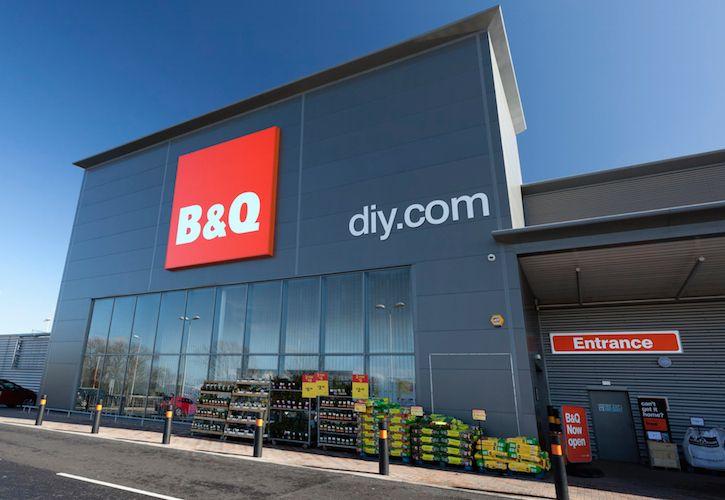
Kingfisher shares (LON: KGF) soared on Tuesday morning after the group revealed a strong second-quarter.
Thanks to a boost in online sales at the B&Q owner, pre-tax profit for the first half of the year grew by 62.4%.
Online sales at the group grew 164% and earnings per share grew 15.1p.
Chief executive, Thierry Garnier, said: “The crisis has prompted more people to rediscover their homes and find pleasure in making them better. It is creating new home improvement needs, as people seek new ways to use space or adjust to working from home.”
“It’s also clear that customers are becoming more comfortable with ordering online. And delivering value to consumers is imperative against a challenging economic backdrop.”
“There remains considerable uncertainty around COVID-19 and our near term priorities have not changed — to provide support to the communities in which we operate, to look after our colleagues as a responsible employer, to serve our customers as a retailer of essential goods, and to protect our business for the long term. We remain proud of, and humbled by, the response of our teams to the current challenges,” said Garnier.
“Looking forward, while the near term outlook is uncertain, the longer term opportunity for Kingfisher is significant. There is a lot more to do, but the new team and new plan is now established in the business and we are committed to returning Kingfisher to growth,” he added.
Kingfisher shares (LON: KGF) surged 6.61% to 278,50 (0821GMT).