
High street could miss Black Friday rush with 85% of consumers set to shop online

With lockdown restrictions seemingly implemented and changed every few weeks, high street businesses have been at the receiving end of the COVID pandemic, and this situation is unlikely to change any time soon, as shoppers look to embrace online shopping during Black Friday sales.
According to new research published by money.co.uk, 77% of UK adults are planning to bag deals during this year’s Black Friday fire sale. And of this number, some 85% said they be shopping either exclusively or partially online.
Compare that to just 0.3% who said they’d be shopping exclusively in-store, and you might get some idea why many high street shops are currently fearing for their survival. Having missed much of first half trading, it now looks as though the accelerated shift to online shopping will hamper the high street’s performance during the run-up to Christmas.
Also, with the furlough scheme soon coming to an end, and the ensuing rise in unemployment to follow, opportunities such as Black Friday will be be prime windows of activity for cash-strapped Brits to bag cut-price gifts for their loved ones over the festive period.
While many concerns are a consideration for many, around 40% of those surveyed say they expect to spend between £200 and £300 more this year than in previous years during the Black Friday weekend, while 1 in 10 say they expect to spend £500 more.
Further, 15% say they plan to spend a whopping £600 to £2,000 pounds more than previous years during this year’s Black Friday event. With these kind of emphatic shifts in consumer behaviour, missing out won’t just harm the balance sheets of high street shops, but could see online outlets rake in record sums, to reinvest and build up an unassailable advantage.
According to money.co.uk’s research, here are the top product sectors on shoppers’ wishlists:
1. Clothes (49%)
2. Beauty & grooming products (34%)
3. Household items (29%)
3. Videogames console and games (29%)
4. Smart TV (25%)
5. Home Furnishings (24%)
6. Smartphone (23%)
7. Jewellery (20%)
8. Amazon Echo Device (19%)
9. Music System (18%)
9. Furniture (18%)
10. White goods (17%)
With just one in ten shoppers set to opt for a cash-fuelled Black Friday spree, and the number of buy now, pay later users rising to 5% of shoppers, money.co.uk’s personal finance expert, Salman Haqqi, told shoppers how to make the most of purchases during the sales period:
“For added protection on Black Friday and Cyber Monday purchases, online or in-store, consider using your credit card.”
“Under Section 75 of the Consumer Credit Act 1974, if you pay for an item using your credit card, then you have rights to claim a refund from your credit card provider as well as the seller if something goes wrong.”
“This extra protection applies when you buy an item that costs between £100 and £30,000 and means if the seller goes bust or fails to deliver your item you can approach your credit card company to get your money back.”
European equities continue the second wave slide on Tuesday

Having posted some painful losses on Monday, continued second wave fears saw European equities lead the downward-facing indexes on Tuesday. Speaking on the day’s performance, IG Chief Market Analyst, Chris Beauchamp, commented:
“A small overnight recovery for stock futures has been rapidly given back as the session got underway, and so far there is no sign of any broader reversal developing across equity markets.”
As trading closed on Tuesday, the CAC was down by the biggest margin, falling by 1.77%, to 4,730 points. Having led Monday’s collapse with more than a 3% drop, the DAX followed with a 0.93% fall, to 12,063 points.
In the earlier stages of the day, the FTSE escaped the fates of its Eurozone counterparts, courtesy of impressive gains by HSBC (LON:HSBA) shares, which bounced by more than 7% during the morning.“Once again London’s losses have been contained, this time helped by a bounce for HSBC shares, although even here the positive impact is limited due to HSBC’s focus on Asia that provides less of a read across for UK banks like Lloyds and NatWest.” added Mr Beauchamp.
Indeed, this early rally was not enough to see avail the FTSE, which eventually finished down by 1.09%, having fallen from 5,803 at lunchtime, to 5,729 points as the final bell rang. Other than second wave and lockdown concerns, European equities were struck by a deflated, if not dramatic Dow Jones open, with companies such as Caterpillar posting losses of over 3%, the index fell by 0.8%, to 27,463 points – its lowest level for a month. Speaking on potential second wave scenarios and their impacts on equities, Libra Investment Services Co-Founder, Chris Tinker, stated: “Even though the daily headlines are likely to see an increased level of volatility in the coming days, the market is not expensive: it is entering into this period broadly aligned with what appears to be a modestly rising market valuation. The downside risk to the market on a worst case scenario for events – arguably prolonged uncertainty and dispute over the election outcome, some form of political unrest and/or a surge in Covid related hospitalisations and deaths – is quantified by the Apollo measure of the Margin of Safety – the point at which the market is sufficiently discounted relative to value that you have a “free call” option on the market.” “That level is 31% below the current price but that level – 2365 – is actually still at a premium to the market index at its March lows and is rising in line with the valuation trend in the market. If even the worst case scenario is unlikely to create new lows for the year, then the fact that the upside “best case” scenario is between 20% and 45% higher than here, will certainly spark interest should a better than expected outcome emerge.”Woolworths rumour mill grips Twitter
If you’ve spent any time on the world’s angriest social media platform today, you’ll have seen people’s hearts filled with joy at the news that their old, favourite goods store – Woolworths – will be returning to the high street – and then crushed into teeny tiny pieces when they discovered it was a hoax.
Responding to a Tweet by a fake account with 900 followers, media outlets flocked to bring this piece of British nostalgia back to life, in hopes that it would somehow redeem what has been an otherwise shocking year.
Unfortunately, it appears more than likely the Tweet was nothing more than a ruse by a cruel attention-seeker, who has nonetheless left Twitter users frantically scratching their heads over this odd, and typo-laden post:Every major online outlet has reported Woolworth’s is returning to the high street.
One call from me to owner Very’s PR – he doesn’t know a thing about it. Surely a story based on a Twitter account with 900 followers (and spelling mistakes) should be verified? pic.twitter.com/bdfGf2R6Nm — Tom Witherow (@TomWitherow) October 27, 2020
With the news breaking, or rather, un-breaking, many have taken to Twitter to voice their frustrations, over the comeback story that was simply too good to be true.The fact that they’ve managed to spell Woolworths wrong *twice* fills me with confidence. pic.twitter.com/oKbCtZ9Q6j
— Alistair Coleman (@alistaircoleman) October 27, 2020
If you were wondering ‘what’s the most mundanely Evil thing we could do this morning’, it’s tricking the British public into thinking that Woolworths is coming back.
— Evil Genius (@evilgenius) October 27, 2020
We live in an era of disinformation and fake news, but our discerning media will protect… oh wait, they’ve been tricked by a fake Twitter account pretending to be Woolworths. pic.twitter.com/FDqZ3ewxl5
— James (@jemtickner) October 27, 2020
Woolworths, I’d like to formally apologize. Around 20 years ago, my mum accidentally stole some vests from your store as they got hooked onto my pushchair. We’ve blamed her ever since for the death of Woolworths. Glad to see your recovery from such a burglary.
— charlie 🕸️ (@mormerill) October 27, 2020
With the owners of the Woolworths trademark, Very Group, declaring the account that posted the relaunch news does not belong to them, many were left deflated. That was, until the company said that they would not categorically rule out a comeback. So, a hoax it may be, but perhaps a useful set of feelers for Very, to see whether the Woolworth brand still has traction, and in turn, whether it IS in fact worth bringing back in future.The kid pranking the UK that Woolworths is returning pic.twitter.com/Qp3S624sFo
— Mike Hughes (@MikeHughes_) October 27, 2020
Retail sales slump amid new restrictions

New data from the CBI distributive trades survey has shown retail sales in October to fall to -23%.
After an 11% growth last month, new social distancing measures are taking a toll and retail sales are indicating the biggest drop in sales since June.
Grocery sales have remained flat whilst retailer stores are reporting a fall in sales. Furniture, DIY, and recreational goods are still strong as people spend more time at home.
Ben Jones, CBI principal economist, said: “The fall in retail sales in October is a warning sign of a further loss of momentum in the economy as coronavirus cases pick up and restrictions are tightened across many parts of the country.
“It’s no surprise that sales have dipped despite no new direct restrictions on retail in England, as the evidence from earlier in the year suggests consumers become more cautious as case numbers rise.
“With footfall still down by one third, many retailers face a difficult run-up to the all-important Christmas period. It is vital that local authorities use their discretion over the new Tier 2 grant funding to target support in a way that helps keep town and city centres open for business.”
Car sales this month have also fallen, the CBI reported: “After three months of rising sales, motor traders reported falling volumes in the year to October (-32%, from +24%). Sales volumes are expected to fall again next month (-16%).”
Advanced Oncotherapy presents at the UK Investor Magazine Virtual Conference 20th October

Advanced Oncotherapy is a specialist developer and provider of a breakthrough proton therapy system, the LIGHT system, which is the result of 25 years of work at CERN and ADAM.
Our focus is on developing and supplying technologies to maximise the destructive effect of radiation on tumours whilst minimising damage to the patient’s healthy tissues.
Bloomsbury Publishing posts record H1 performance, shares rise
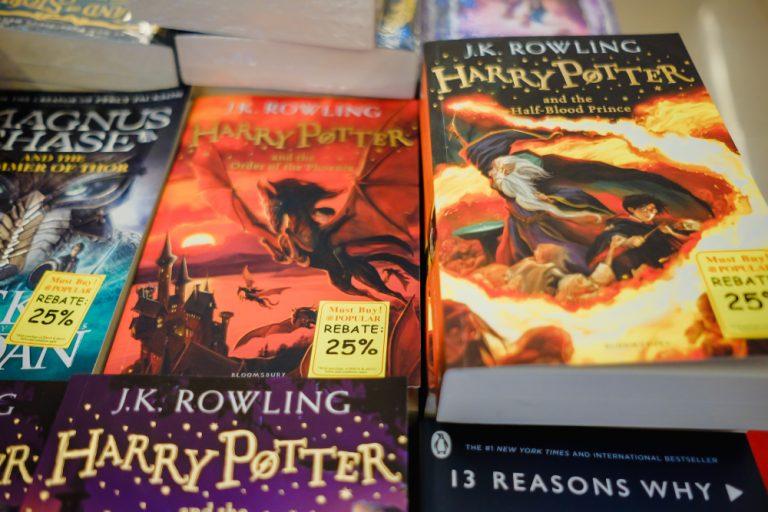
Bloomsbury Publishing shares (LON: BMY) surged over 15% on Tuesday after the group posted a record first-half earnings performance.
Pre-tax profit grew by £2.1m to £2.7m, whilst revenue increased by 17% to £78.3m from £71.3m the year before thanks to a surge in demand for online book sales and e-book revenues.
Stand-out bestsellers during the period included Why I’m No Longer Talking to White People about Race, Crescent City: House of Earth and Blood, White Rage, Humankind and Such A Fun Age.
In light of the strong financial position, Bloomsbury Publishing has said it is resuming an interim dividend of 1.28 pence per share.
“We have continued to trade well during the first six weeks of the second half. In previous years, our revenue and earnings have been weighted towards the second half, with sales of trade titles rising for Christmas and sales of academic titles being strongest at the beginning of the academic year in the Autumn,” said the publisher in a statement.
Nigel Newton, the chief executive, said: “Bloomsbury experienced excellent trading in the first half with year-on-year profit growth of 60% to £4.0 million. This has delivered our highest first-half earnings since 2008 and exceeded the board’s expectations.”
“I would like to thank our staff, authors, illustrators, distributors and suppliers for their resilience, initiative and determination. They continue to be motivated, adaptable and effective, which is demonstrated by the strength of our first-half performance. This, together with the strength of our publishing strategy supported by our solid financial position, gives me confidence in Bloomsbury’s future performance,” he added.
Bloomsbury Publishing shares (LON: BMY) are trading +14.29% at 240,00 (1040GMT).
Genius Sports to go public in $1.5bn deal

Genius Sports Group has revealed plans to merge with Dmy Technology and go public on the New York Stock Exchange.
The deal, which was unanimously approved by both companies, will value the combined group at approximately $1.5bn.
Mark Locke, who is the chief executive of Genius Sports, will continue as the boss of the combined company.
“This transaction will help us continue to expand and strengthen our position as a nexus of the global sports, betting and media ecosystem,” said Locke.
Chief executive of Dmy Technology, Niccolo de Masi, commented: “Elemental data provider Genius Sports Group benefits from the growth of all participants in the global sports betting market.
“Marke Locke has pioneered the provision of official rights and live data which have been instrumental in building the modern sports betting market,” he added.
The group will trade shares on the New York Stock Exchange under the symbol “GENI”.
BP beats analysts’ expectations and swings to profit
BP (LON: BP) has reported an underlying profit of $86m (£66m) for the third quarter of 2020.
Stronger oil prices led to a profit, beating analysts’ expectations of a $120m (£92m) loss for the three months ending 30 September.
BP reported a record $6.7bn (£5.1bn) loss in the second quarter of the year.
“BP’s future financial performance, including cash flows, net debt and gearing, will be impacted by the extent and duration of the current market conditions,” said the group.
“It is difficult to predict when current supply and demand imbalances will be resolved and what the ultimate impact of COVID-19 will be.”
Chief executive, Bernard Looney, said: “Having set out our new strategy in detail, our priority is execution and, despite a challenging environment, we are doing just that – performing while transforming. Major projects are coming online, our consumer-facing businesses are really delivering and we remain firmly focused on cost and capital discipline. Importantly, net debt continues to fall. We are firmly committed to our updated financial frame, including the dividend – the first call on our funds.”
So far this year shares in the oil giant are down over 50% and are still at near 25-year lows.
Credit Suisse analyst Thomas Adolff commented: “Despite the difficult macro backdrop, this was a strong underlying performance from BP.”
The group is planning to axe around 10,000 of its workforce over the next few quarters as part of cost-cutting measures.
Shares of BP (LON: BP) rose more than 2% during early-morning deals and are currently up 1.88% at 203,75 (0927GMT).
HSBC reveals 36% slide in profits
HSBC (LON: HSBA) has reported a 36% year-on-year drop in profits to $3.1bn (£2.4bn).
As profits fell for the three months to September, the lender warned that it could start charging customers for “basic banking services”.
“This latest guidance, which continues to be subject to a high degree of uncertainty due to Covid-19 and geopolitical tensions, assumes that the likelihood of further significant deterioration in the current economic outlook is low,” said HSBC.
Earlier this year, the lender scrapped its dividend for the first time in 74 years. The bank will release full-year figure in February.
HSBC has resumed plans to cut 35,000 global jobs. Chief executive, Noel Quinn, said in a memo to staff in June: “Since February we have pressed forward with some aspects of our transformation programme, but we now need to look to the long-term and move ahead with others, including reducing our costs. Against this backdrop, I am writing to let you know we now need to lift the pause on job losses.”
HSBC said that expected losses from bad loans are expected to be at the lower end of the $8bn to $13bn range it set out earlier this year.
“This latest guidance, which continues to be subject to a high degree of uncertainty due to Covid-19 and geopolitical tensions, assumes that the likelihood of further significant deterioration in the current economic outlook is low,” said the bank.
HSBC shares (LON: HSBA) are trading +5.65% at 337,40 (0912GMT).
Santander swings to profit, lender raises forecast
Santander has upgraded its full-year forecasts as the lender returned to profit for the third quarter.
Net profit at Santander rose to €1.75bn, which is three times the profit a year previously. Underlying profit increased by 18% on the second quarter.
The Spanish lender raised the profit forecast for the year to €5bn.
“These results speak to the strength and breadth of our customer relationships and the resilience of our diversified business and markets in which we operate,” said chief executive Ana Botin.
“This diversification has been a key driver of our recovery, with South America performing well and the UK recovering strongly in the third quarter,” she added.
“Given the Group’s current performance, the strength of our balance sheet, our liquidity profile and mix of businesses, I am confident that we will be able to resume cash dividends once regulatory conditions allow. As such, we are seeking shareholder approval today for a €0.10 per share cash payment to shareholders in 2021, once permitted.
“Although the outlook for 2021 depends on how the pandemic evolves, we have proven that our strategy and business model position us well to continue supporting our customers and delivering results for our shareholders.”
Santander has set aside €2.5bn to deal with expected loan losses over the third quarter.
By the end of 2020, the bank will have achieved the €1bn cost savings target in Europe it announced in 2019 and expects to reduce costs by an additional €1bn over the next two years in Europe.
Shares in the group (LON: BNC) are trading +4.97% at 162,70 (0844GMT).