
UK debt hits record highs

The UK’s national debt has hit the highest rate since the 1960s.
Recent figures from the Office for National Statistics show that Britain borrowed £22.3bn in October, which is £10.8bn more than a year ago.
The ONS said: “The extra funding required to support government coronavirus support schemes combined with reduced cash receipts and a fall in gross domestic product (GDP) have all helped push public sector net debt as a ratio of GDP to levels last seen in the early 1960s.”
The cost of the pandemic continues to rise and borrowing between April and October is the highest level in that period since records began in 1993.
“We’ve provided over £200bn of support to protect the economy, lives and livelihoods from the significant and far reaching impacts of coronavirus,” said Rishi Sunak, commenting on today’s figures.
“This is the responsible thing to do. But it’s also clear that over time it’s right we ensure the public finances are put on a sustainable path,” he added.
The level of borrowing fell from the month prior, where the UK government borrowed £28.6bn.
Overall, Britains debt has grown to £2.06 trillion in October. This year it has grown by a record level.
The public sector net debt is around £2,076.8bn, which around 100.8% of gross domestic product (GDP).
Sage posts 20% subscription growth

Sage has reported an 8.5% rise in revenue to £1.6bn.
The software company also saw subscription growth rise by 20.5% to £1.1bn.
Operating profit was down 3.7% from £406m to £391m in the year ended 30 September 2020.
The growth in revenue was mainly thanks to the growing demand and number of new customers in Northern Europe and North America.
Steve Hare, the chief executive, said: “We’ve delivered a strong performance in FY20, achieving recurring revenue growth in line with the guidance we gave at the beginning of the year, despite the COVID-19 pandemic.
“I would like to thank all of our colleagues and partners for their continuing commitment to our customers, communities and each other during this period. We’ve also made good strategic progress, delivering against our customer, colleague and innovation commitments.
“While the near term remains uncertain, these foundations position us well to support customers as they adopt digital business models, and I am confident that our additional investment in Sage Business Cloud, and in particular cloud native solutions, will deliver stronger growth and drive the future success of the Group,” he added.
Looking forward, Sage is expecting recurring revenue growth for the next financial year to be in the region of 3% to 5%, weighted towards the second half of the year.
The group plans to invest more in its cloud business.
Sonos shares crank up 30% on ‘record’ results and $50m stock buyback
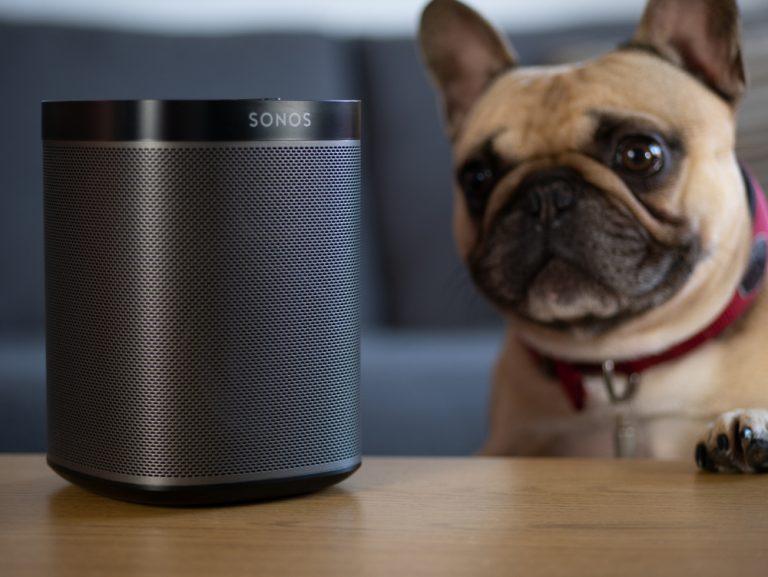
Sitting atop the Nasdaq as trading closed on Thursday, home audio innovators Sonos (NASDAQ:SONO) saw their share price rocket on a double-barrelled packet of good news for its investors.
The company swung from a $29.6 million loss to $18.4 million income year-on-year during the fourth quarter. Similarly, revenue jumped by 16%, to $339.8 million, while adjusted EBITDA spun around, from a $2.8 million loss to $46.4 million in earnings.
The situation was equally peachy for SONOS shareholders, with diluted EPS flipping from a $0.28 loss to a $0.15 profit year-on-year.
The big news for stakeholders, though, was that the company have completed a $50 million share buyback programme – in which it repurchased 3.8 million shares – and now the Board have authorised an additional buyback programme for the same amount of shares to be purchased again.
Funded by cash and cash equivalents, the buyback will see outstanding Sonos shares absorbed from the open market, which, inevitably, has given the company’s share price another reason to surge higher.
Speaking on the company’s updates, and what he sees as a paradigm shift in the business, CEO, Patrick Spence, said: “We reached an inflection point in the fourth quarter that demonstrates the power and profitability of our model. As our customers recognize, Sonos products operate seamlessly together, with more products improving the experience. That’s why year in and year out, our existing customers add more products to their systems – every new household that we gain starts that cycle anew.”
“Fiscal 2020 was the 15th year in a row we grew total households by at least 20%, while our existing customers once again showed strong repurchase habits, accounting for a record 41% of total product registrations. We deliver a consistent cadence of new, innovative products and services, and we have only started the process of realizing the lifetime value of our customers, both old and new.”
“In fiscal 2020, we delivered a record 8.2% adjusted EBITDA margin, or 10.6% excluding the effect of tariffs, and we project delivering 12% to 14% adjusted EBITDA margins next year, which is ahead of our prior targets,” continued Mr. Spence.
He added that, going forwards, the company will remain committed to delivering ‘innovative new products’ and supporting its partnerships. Over the long-term, he believes the company can deliver strong profit margins, cash flow, revenue growth and increased shareholder value.
Following the news, Sonos shares soared by 29.84%, up to $22.19 19/11/20. This is not only well above its year-to-date nadir of $7.92, but ahead of its previous all-time-high, of $20.95 back in August 2018.
Nasdaq dodges the over-extended equities correction

Tech and growth stock-heavy index, the Nasdaq Composite, escaped the market correction on Thursday, as virus fears crunched over-extended value equities.
European equities fell sharply during the morning, with the DAX and CAC falling 0.88% and 0.67% apiece. Following was the FTSE, who, having suffered 5% losses by Kingfisher and Johnson Matthey, extended yesterday’s losses, and fell 0.80%.
Speaking on the sour mood across equities, IG Chief Market Analyst, Chris Beauchamp, said: “After the soar-away gains of the past two weeks, equities now look much more richly-valued, and thus vulnerable to an outbreak of bad news.”
“This is precisely what we got in the form of spreading infections in the US but also in Japan, a worrying sign indeed for a country that had been successful earlier in the year in controlling the spread.”
“Even reports of success for AstraZeneca’s new vaccine were not enough, the impact of these vaccine announcements having been on a declining trend since the first, excitedly-received news from Pfizer almost three weeks ago.”
“There appears to be little desire to chase equities at these levels, and perhaps rightly so, with markets looking priced for perfection and still vulnerable to some short-term turbulence.
Over the pond, the Dow Jones shed 0.13%. Interestingly, though, the Nasdaq bucked the trend, and bounced by around 0.60%. This was partially led by some modest gains from big tech stocks, with Amazon, Apple and Facebook all rising by around 0.40%, while Microsoft bounced by 0.85% and Alphabet rallied 1%.
Other interesting developments came from Sonos, soaring 28%, while hot stocks NIO bounced 7%. In the meantime, Black Friday and the Christmas holiday have seen Wayfair and Etsy soar, up around 6% apiece.
Halma shares rise on “resilient performance”

Halma shares (LON: HLMA) opened almost 2% higher on Thursday after the group revealed a “resilient performance” for the six months ended 30 September 2020.
Revenue and adjusted profit before tax for the period was down 5% to £618mln and £122mln respectively.
The group has raised its dividend by 5% to 6.87p per share.
Despite a revenue decline in mainland Europe and the Asia Pacific, Halma reported growth in the US and China.
Andrew Williams, chief executive, commented:
“Halma’s proven strategic, financial and organisational model has contributed to a resilient performance in testing circumstances, with our financial performance improving as the first half progressed. Throughout the pandemic, we have maintained our focus on employee safety and wellbeing, while working hard to ensure the continued delivery of critical safety, health and environmental solutions for our customers. This was achieved thanks to the tremendous commitment and capability of our colleagues across the Group. Our rapid response to the many new challenges of recent months enabled Halma to not only weather the storm, but to be well positioned to meet the challenges and opportunities ahead.
“We have had a good start to the second half, with order intake ahead of revenue and up on the same period last year. Our improving trading performance, together with our strong cash position, will enable us to accelerate strategic investments in the second half of the year. As a result of our progress so far this year, we now expect Adjusted profit before tax for FY 2020/21 to be around 5% below FY 2019/20, compared to prior guidance of 5% to 10% below FY 2019/20.”
Halma shares (LON: HLMA) are trading +1.85% at 2.393,41 (1530GMT).
Octopus Renewables credit facility could add £250m to its acquisitions firepower

Octopus Renewables Infrastructure Trust plc (LON:ORIT) announced on Thursday that it had secured a £150 million rolling credit facility from a group of five lenders.
The credit facility, provided by provided by Banco de Sabadell, Intesa Sanpaolo S.p.A. London Branch, National Australia Bank, NatWest and Santander, has a term of three years, an interest rate of 2.3% above LIBOR, and can be drawn down in GBP, EUR, AUD and USD. The company added that the facility also features an uncommitted accordion allowing it to be increased by an additional £100 million.
Octopus Renewables said it plans to use a portion of the funds to pay for ongoing construction and acquisition commitments, which will allow further amounts drawn from under the credit facility to be used to acquire further renewables assets.
Speaking on the new facility, ORIT Investment Director, Chris Gaydon, said: “We are delighted to have secured this £150m RCF for ORIT with the support of a group of high-quality lenders. This RCF marks the next step in ORIT’s development and provides additional resources to enable us to continue to grow and diversify ORIT’s portfolio.”
This latest financing development follows the complete deployment of all the funds Octopus Renewables raised as part of its December 2019 IPO. Among the capital allocations were five key acquisitions, including the buy-up of 14 windfarms, the Ljungbyholm Wind Farm, and a 24MW construction-ready windfarm in France.
Despite the seemingly positive update, the company’s shares dipped by 0.47%, to 107.00p apiece – back to just below where it started the year, at 108.80p.
Cineworld shares dive as CVA rumours swirl

Shares at British cinema chain Cineworld (LON:CINE) have been something of a horror show on Thursday, falling almost 7% as the firm reportedly considers launching a CVA amid ongoing financial difficulties.
A CVA – an insolvency procedure common among businesses seeking to cut costs – would help to take the pressure off of Cineworld’s mounting debt crisis, with over £6 billion in debt and the chain’s half-year results revealing a bruising £1.3 billion loss.
Rumour has it that if a CVA is agreed then as many as 127 of its UK cinemas may have to permanently close their doors as part of the arrangement, although a source close to Cineworld has cautioned that no deal has been made at this stage.
Other options are reportedly still being considered. Advisors from consulting firm AlixPartners were drafted in last month to help organise emergency talks with Cineworld’s creditors, as loan terms are likely to be breached by December.
Adding to the sour news, earlier today the owner of London’s entertainment complex Trocadero Centre filed a High Court claim against Cineworld, suing it for £1.4 million over unpaid bills.
Shares at the chain nosedived 6.81% to 45.10p at GMT 13:23 on Thursday, following on from a disappointing year with an annual low of a mere 21.38p in March when the UK launched its first lockdown.
Although Cineworld’s share price reached a rosier 52.98p earlier this week on Monday on the back of promising vaccine development news, the CVA rumours have understandably quashed hopes of an imminent recovery.
The chain’s dividend yield stands at 13.03%, and its P/E ratio at 3.00, while 63.82% of MarketBeat’s community voters list the chain as an “outperformer” compared to the S&P 500 average.
However, Cineworld was listed by City A.M. as one of the top 10 most shorted stocks as of 12 November according to analysis by exchange-traded fund provider Granite Shares, with 9.5% of the cinema’s stock held short by pessimistic investors last week.
Investec revenue down 24%, shares fall
Investec shares (LON: INVP) were down over 7% on Thursday as the group revealed a 24% in revenues.
The group described “reduced economic activity and increased market volatility” amid the Covid-19 backdrop.
Adjusted operating profit was down 48.4% to £142.5m – from £276.3m a year previously.
Investec has declared an interim dividend of 5.5p.
Fani Titi, Chief Executive commented: “The first half of the financial year has been characterised by difficult and volatile market and economic conditions attributed primarily to COVID-19. As a result, group adjusted operating profit of GBP142.5 million was 48.4% behind the prior period and adjusted basic earnings per share of 11.2p was 50.0% behind the prior period, albeit ahead of pre-close guidance. We are encouraged by the resilience of our loan book, the performance of our core franchises against a tough backdrop and progress made on our strategic objectives. Tangible net asset value per share increased by an annualised 10.4% and a dividend of 5.5p has been declared.
“We entered this crisis from a position of strength and continue to have a strong capital, funding and liquidity position, leaving us well placed, both operationally and financially, to navigate this evolving environment for the benefit of our clients and other stakeholders.”
Looking forward, the group expects the overall performance this year to be ahead of the first half.
Investec shares (LON: INVP) are -7.73% at 188,50 (1319GMT).
Nichols shares leave bitter taste as revenues fall flat
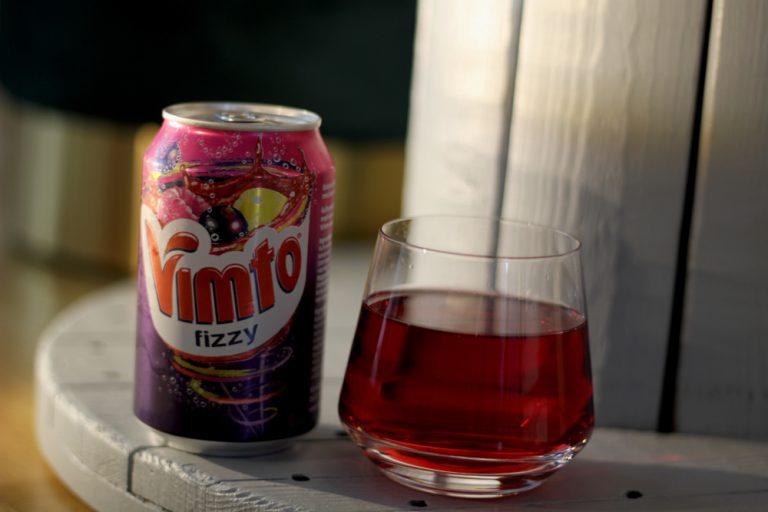
British soft drinks producer, Nichols plc (AIM:NICL) watched its shares leak value as its revenues slid down during the nine months to September 30 2020.
The company’s statement said that, “As anticipated in the Group’s Interim Results in July, the ongoing Covid-19 pandemic has continued to impact the soft drinks industry.” While it enjoyed ‘strong’ 5.8% value growth in its core Vimto brand, and a 10.5% rise in year-to-date revenues in its African business, the company saw a 45.2% reduction in its Out-of-Home (OoH) sector during the third quarter.
Amid ‘very challenging’ trading, and outlets either being closed or having reduced capacity, its packaged, frozen, post-mix and technical solutions all suffered a slump in demand. With this, the company’s total revenues fell by 16.5% year-on-year, to £91.7 million.
Nichols said it has been focusing heavily on cost control activities, with a mind to ‘build back better’ from the pandemic. Having reviewed its operational structures, and attempted to reduce its marketing investment, the company said that it will make staff redundancies by Q1 2021.
Keeping in mind the lingering uncertainty of COVID risk factors, the company has offered an £11 million to £14 million adjusted profit before tax guidance for Q4. Nichols added that company cash generation has continued to be ‘very positive’ through 2020 – with cash and cash equivalents totalling £45.4 million at period-end.
Speaking on the results, Non-Executive Director, John Nichols, said: “As part of our ongoing focus on ensuring the Group has the right structures in place to deliver its long-term strategy, the Group has taken the difficult decision to propose, subject to consultation, that a number of roles are removed from our structure. These difficult decisions have not been taken lightly and I thank all Nichols colleagues for their continued hard work and commitment.”
“Whilst recognising the current and near-term impact of the pandemic on the soft drinks market, the Board continues to believe that Nichols, underpinned by the strength of the Vimto brand and the Group’s diversified business model, remains well placed to deliver its long-term strategic ambitions.”
Following the update, Nichols shares lost their pop, falling 5.83%, to 1,130.00p a share 19/11/20. This price is behind its post-pandemic high of 1,387.50p, and around 6.2% short of analysts’ target price of 1,200p a share.
Analysts currently have a consensus ‘Hold’ stance on the stock; it has a p/e ratio of 23.69, versus the consumer goods average of 52.90; and the Marketbeat community give it a 54.11% “underperform” rating.
Jet2 shares lose altitude on half-year loss
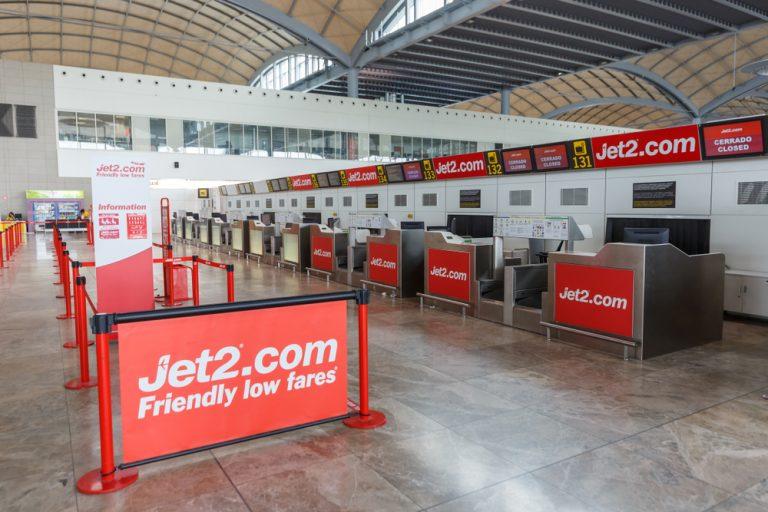
Shares at Jet2 plc (LON:JET2) slumped more than 6% on Thursday lunchtime after the airline posted its half-year results, with the coronavirus pandemic driving a £111 million loss in the sixth months leading up to September.
The firm reported a group operating loss of £111.2 million for the half-year period, in stark comparison to the £361.5 million profit it made during 2019 before the travel and tourism industries were decimated by global lockdown measures.
Jet2 was forced to ground its entire fleet in March when the UK government implemented the first wave of travel restrictions. The airline was able to resume operations in July, but lingering concerns about the safety of flying during a pandemic meant only 0.99 million passengers flew during the half-year period – plummeting from last year’s 10.07 million.
A reduced summer flights programme allowed Jet2 to concentrate on the most lucrative routes, and the firm insisted that its ‘quick to market, flexible operating model’ helped it to withstand the rife uncertainty amongst the industry.
Nevertheless, the damage has been clear to see. The average load factor (how many seats a plane fills) was just 69%, compared to 93.1% in 2019, a fall which Jet2 blamed on “uncertainty created by the several changes in UK government quarantine guidance”.
For the approaching winter season, Jet2 said it expects to fly about 50% of last year’s seat capacity, while investors battle with the implications of the firm’s basic earnings-per-share free falling from 185.5p to just 56.9p since last September.
However, the airliner was keen to emphasize that its total post-tax profit was still solidly in the green at £278.6 million.
Jet2’s executive chairman Philip Meeson said that the pandemic had caused “unprecedented operational and financial challenges”, but added that the group had benefited from a “strong and carefully-managed balance sheet” and its “considered but swift response to the pandemic”.
“As is typical for the business, further losses are to be expected in the second half of the financial year, as we ready ourselves operationally for the proposed summer 21 flying programme.
“In addition, the ability to fly in the short term remains uncertain, as UK government guidance currently restricts international travel except in limited circumstances, until at least 3 December 2020”.
Jet2’s shares were down 6.72% to 1290.00p at BST 12:38 on Thursday, following a turbulent year which saw prices hit an annual nadir of just 305.80p in March.
The airline’s performance has picked up in recent months – up 108.91% over the past 3 months alone – but questions remain on the impact of the UK’s current second lockdown as an extension is considered and Christmas holiday plans look to be under threat.