Tesco to sell Polish stores in bid to focus on Central Europe

0
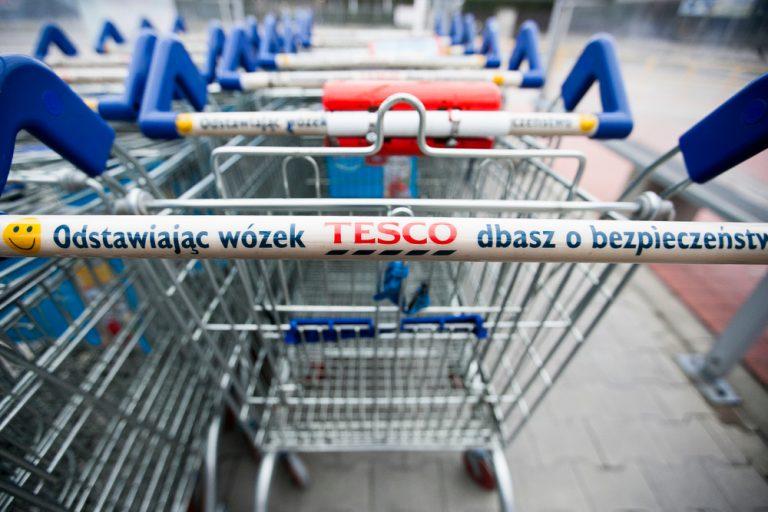
Tesco PLC (LON: TSCO) announced on Thursday the sale of its business in Poland to Salling Group A/S, Denmark’s largest retailer, in a move intended to capitalise on Tesco’s stronger market position and good growth prospects in Central Europe. Back in early March, Tesco also announced the sale of its Thai and Malaysian business unit, for a consideration of £8.2 billion. It has been a lucrative year for Tesco so far, with preliminary quarterly results indicating a 30% increase in sales during the coronavirus pandemic as customers swarmed supermarkets to panic-buy essentials when the UK’s lockdown measures first came into force. Although the initial boost to supermarkets appears to be trailing off as life returns to relative normality, Tesco is maintaining the plan to pay its full year dividend of 9.15p.

Details of the sale

The Polish transaction involves a total of 301 stores – to be rebranded over an 18 month period – as well as associated distribution centres and the head office. In the 2019/20 financial year, the 301 stores being sold generated sales (exc. VAT and PFS) of £947 million. Their combined gross assets totalled £681 million over the same span. Privately-owned Salling Group A/S is 100% owned by the Salling Foundations from Denmark, and serves a whopping 11 million customers every week across Germany, Poland and Denmark. The company boasts 50,000 colleagues and an annual turnover of approximately £7 billion.

CEO statement

Tesco Chief Executive, Dave Lewis, released a statement on the company’s sale:

“We have seen significant progress in our business in Central Europe, but continue to see market challenges in Poland. Today’s announcement allows us to focus in the region on our business in Czech Republic, Hungary and Slovakia, where we have stronger market positions with good growth prospects and achieve margins, cashflows and returns which are accretive to [Salling] Group.

“I would like to thank all of our Tesco Poland colleagues for their dedication to serving customers in Poland over many years. The energy and commitment they have shown over the past two years transforming Tesco Poland to a two-format business has been incredibly impressive. We see this transaction as the best way to secure the future of the business for our colleagues and customers in Poland”.

Investor insight

On Thursday afternoon BST 15:20, Tesco’s share price slipped a minimal 0.044% or GBX -0.10 to GBX 226.90. The company’s dividend yield stands at 0.040%, its P/E ratio at 23.79.

Hornby ‘came out fighting’ – losses narrow despite pandemic

Hornby (LON:HRN) invoked the spirit of its founder and the company’s history – having lived through economic crises and wars – in its full-year results published on Thursday. This was line the company chose to tow, anyway, having booked improved year-on-year financial performance. The company said it had shown resilience while recording a jump in full-year revenues, up from £32.8 million for FY19 to £37.8 million for FY20. This progress was emulated in its operating loss, which narrowed from £5.2 million to £2.8 million, and its underlying loss before taxation, which dipped from £5.3 million to £3.4 million. Similarly, the situation showed similar progress for the company’s shareholders, with underlying basic loss per share narrowing from 3.65p to 2.56p for the full year. Even more encouraging, perhaps, is that the Hornby were able to flip from a net debt position of £1.8 million, to a positive cash position of £5.9 million, by the end of the period. On the Coronavirus pandemic, the company said that it was confronted early with the challenges the virus would pose, with its Far East suppliers and Hong Kong offices being hit. It said that it was able to create an actionable plan, and shortly after the UK lockdown date, its staff vacated its Margate offices. Fortunately, it added, its UK warehouse remained operational with strict distancing in place. Speaking on the improvements in financial performance and the handling of the pandemic, Hornby Chief Executive Lyndon Davies commented:

“It was 100 years ago that Frank Hornby launched his first clockwork locomotive, a name that became synonymous with model railways. We are custodians of this incredible brand which has survived World Wars and economic crises.”

“Our performance continues to improve, supported by our incredible staff who came out fighting when faced with the challenges of this terrible global pandemic. T he spirit of Frank Hornby lives within them all.”

“We are proud of our British heritage, proud to celebrate this 100th anniversary and proud that we are now well placed to achieve a secure and profitable future.”

“Trading since year end continues to improve and is in line with expectations despite the coronavirus issues being endured throughout the world “.

Following Thursday’s news, the company’s shares bounced by a modest 0.56% or 0.20p to 36.20p per share 18/06/20 14:19 BST. This is down from its 40.00p high at the end of January, but up considerably from its 19.50p nadir in mid-March.

Access Intelligence sees contract value double during the first half

1
PR-focused software-as-a-service provider Access Intelligence posted an all-round positive first half, with good progress across its fundamentals and swift action to adapt to Coronavirus trading.

The company’s main source of bragging rights was its £1.04 million Annual Contract Value, which was led by strong renewal rates, and was more than double the £0.45 million for the equivalent period in 2019. Access Intelligence said this equates to organic annualised ACV growth of 12% and all of its sub brands delivered double digit growth.

It continued, saying that its revenue was up 50% year-on-year to £9.4 million – and excluding its acquisition of Pulsar, revenue was up 10% during the first half. Further, with cost reductions of around £1.1 million and ‘comprehensive and rapid’ action against Coronavirus, the company saw its net cash position rise from £2.0 million to £2.6 million during the six month period.

Access Intelligence were also successful in securing a number of high profile clients during the first half, including; Aegon, Allen & Overy, AstraZeneca (LON:AZN), Chanel, the Co-operative, Lotus, Ministry of Justice, Nintendo (TYO:7974), Ofgem and the WWF. In the US, its Pulsar business won over Dow Jones, the IMF, Levi Strauss (NYSE:LEVI) and Twitter (NYSE:TWTR).

Despite these notable successes, the company noted that COVID-19 has slowed done its pipeline development, as prospective clients put certain projects on hold and delay investing in new tech products. With this in mind, the company conceded that to provide forward-looking guidance on company’s ability to meet its 2020 expectations for new business would be inappropriate.

Speaking on the update, Access Intelligence Non-Executive Chairman Christopher Satterthwaite, commented,

“Despite the challenge COVID-19 has presented all businesses, the last six months trading has demonstrated the strength of the Company with encouraging growth seen across the product portfolio. The strengthening of the portfolio with Pulsar will accelerate growth and by diversifying the product, sector and territorial opportunities, contribute to the Company’s overall resilience.”

Following the news, the company’s shares rallied 2.24% or 1.25p, to 57.00p per share. This is the highest it has gone so far in 2020, and up from the 48.50p nadir in mid-March.

BoE unveils £100bn stimulus package to boost economy

3
The Bank of England has announced that it will pump an additional £100 billion into the UK economy to help offset the impact of the coronavirus pandemic. The bank’s Monetary Policy Committee (MPC) voted by an 8-1 majority to increase the target stock of UK government bonds – a continuation of the previous £200 billion of bonds purchased back in March – in light of the news that UK inflation dipped to a new four-year low in a report published by the Office for National Statistics (ONS) on Wednesday. The current bank interest rate still stands at 0.1%. Last Friday, Bank of England governor Andrew Bailey stated he was “ready to take action” to help the UK economy withstand the coronavirus crisis after ONS figures revealed that the economy had nosedived by a record 20.4% in April. Widespread lockdown measures and a free-fall in consumer demand was cited as the cause for the biggest monthly contraction on record. A total of 612,000 employees were dropped from UK payrolls between March and May, although analysts have pointed out that the numbers likely would have worse without the government’s coronavirus Job Retention Scheme allowing businesses to furlough staff. The bank’s £100 billion stimulus package follows warnings from last month that the UK economy may shrink by as much as 30% in the first half of 2020 – the worst performance since the early 1700s. However, in a statement published on the Bank of England’s official website, the bank reported on growing evidence that previous forecasts may have been on the pessimistic side: “There are signs of consumer spending and services output picking up, following the easing of Covid-related restrictions on economic activity. Recent additional announcements of easier monetary and fiscal policy will help to support the recovery. Downside risks to the global outlook remain, however, including from the spread of Covid-19 within emerging market economies and from a return to a higher rate of infection in advanced economies”. The outlook for 2020 remains nonetheless uncertain, with policymakers emphasising the weakness of the job market and “higher and more persistent unemployment” for the foreseeable future. The government’s furlough scheme is scheduled to come to an end in October, with a number of Labour MPs calling for Chancellor Rishi Sunak to deliver an emergency budget to help counter the expected surge in job losses and unemployment claims. Commenting on the projections for the rest of the year, Mr Bailey stated: “Even with the relaxation of some Covid-related restrictions on economic activity, a degree of precautionary behaviour by households and businesses is likely to persist. The economy, and especially the labour market, will therefore take some time to recover towards its previous path”. The move has failed to impress, however, with the FTSE 100 sinking despite the Bank of England’s efforts – down 0.91% at 6,196 shortly after lunch time on Thursday.

FTSE 100 sinks as Bank of England stimulus fails to impress

The FTSE 100 fell on Thursday despite the latest efforts from the Bank of England to stimulate the UK economy. The FTSE 100 was down 0.91% at 6,196 shortly after lunch time on Thursday. The Bank of England kept rates on hold but announced an additional £100bn in asset purchases to help support the UK economy. “The Bank of England, as widely expected, increased the size of its quantitative easing program by £100bn to £745bn and a further top up is quite likely later in the summer,” said Rupert Thompson, Chief Investment Officer at Kingswood. “While the Bank has been looking into the possibility of pushing rates into negative territory, this would be a move of last resort and only be implemented if the economic recovery now starting to get underway runs into problems later in the year.” The move from the Bank of England comes days after the Federal Reserve also unveiled their latest stimulus measures in the form of corporate bond purchases. Despite the wave of fresh liquidity being injected into the global financial markets, equities failed to drive higher as concerns lingered around the longer term recovery of the global economy. “For all the optimism that central bank and government stimulus will help alleviate more permanent economic scarring, there is rising concern that any recovery is likely to be less V-shaped and more a long U-shaped type of rebound,” said Michael Hewson, chief market analyst at CMC Markets. Taylor Wimpey was one of the biggest fallers on Thursday after the house builder raised £515m through a placing. Pete Redfern, Chief Executive of Taylor Wimpey said the capital raising was to “enable [Taylor Wimpey] to take advantage of these near term opportunities. These investments will support sustainable future growth and deliver enhanced, long term value to shareholders.” Carnival led the FTSE 100’s declines, falling 8%, after it said losses were larger than previously thought.  

DPD and Kingfisher to hire 7,500 to cope with online demand

2
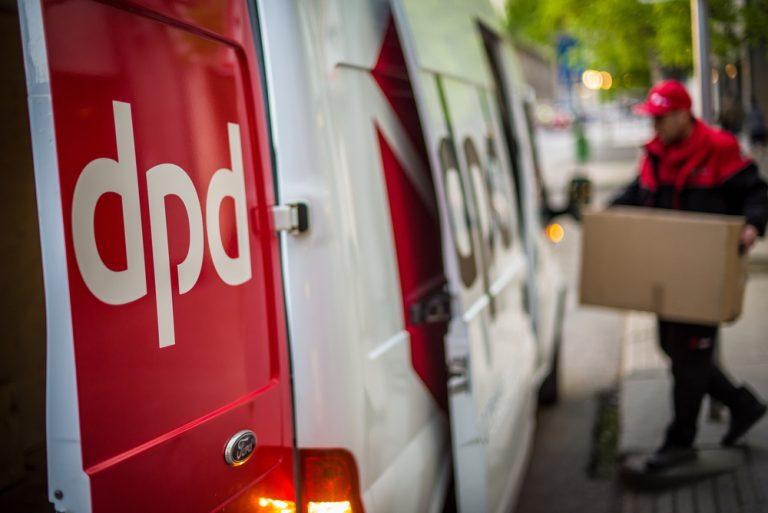
Delivery firm DPD and B&Q owner Kingfisher are hiring thousands of new employees to cope with the surge in online shopping over the lockdown period. Both companies will hire a total of 7,500 new staff members including drivers, warehouse and management roles. DPD, which works with companies including John Lewis, Marks & Spencer, Morrisons and Asos, is investing £200m this year in order to expand its next-day delivery service. “We are experiencing the biggest boom in online retailing in the UK’s history,” said Dwain McDonald, DPD boss. “Since this began, we have been handling parcel volumes more akin to the festive seasonal peak than this time of year.” “I do think the High Street will bounce back from where things are now, but we have to base our modelling on our conversations with retailers and their projections.” “But what we have seen in recent months is potentially a much more significant shift in behaviour, and we believe elements of it will be permanent,” he added. Kingfisher has announced plans to hire an extra 3,000 to 4,000 employees as the group saw online sales surge during April and May. These roles are to be temporary over the summer period, said chief executive Thierry Garnier. However, he will “watch what happens” over the next few months. The news from DPD and Kingfisher comes following weeks of companies announcing wide-scale job cuts. British Gas owner Centrica, BP, and British Airways have announced redundancy plans that will affect thousands across the UK and globally. Shares in Kingfisher (LON: KGF) are trading -1.25% at 213.20 (1018GMT).      

Tensions, stimulus and Coronavirus leave global equities caught in two minds

On the one hand stimulus hopes and Coronavirus treatments, on the other hand geopolitical tensions and a looming second wave. Global equities certainly weren’t short of things to consider on Wednesday, but rather had trouble dealing with contradictory news and mixed sentiments. On one side, markets were running off of the steam of Tuesday’s Fed-based recovery. They were also buoyed by the news that an inexpensive steroid can be used to treat the Coronavirus, and potentially lower death rates by up to a third. Further – and following the Fed‘s action on Tuesday – analysts expect that the Bank of England will extend its bond-buying programme by an additional £100 billion, and this should provide (the UK at least) some momentum during Thursday trading. On the other side, equities still have to contend with the awkward reality of a Coronavirus second wave. As shops reopen, people scramble for a return to normal life and Beijing reports a resurgence in COVID cases, investors will begin to come to terms with the fact that a second round of lockdown – and poor industrial and consumer activity – may be just around the corner. In addition, following the news that Chinese and Indian troops clashed on the border, concerns mount over a potential dispute for the Himalayan territories. Beijing officials have so far seemed keen to de-escalate the incident, though their live-fire artillery tests in the area would speak to the contrary. Similarly, riding a wave of inflammatory nationalist rhetoric, Narendra Modi’s political clout is contingent upon his ability to save face, which will mean some harsh and perhaps unhelpful words are still to come. While this clash in and of itself may not escalate any further, it should remind us of two inconvenient truths. First, as seen with today’s news, the trade wars with the US and threats to the UK over intervention in Hong Kong – China are willing to assert their position as a domineering force, even at the expense of short-term prosperity. Second – and equally – India has similar ambitions to China, though not yet the same resources at its disposal. These growing and hungry neighbours will struggle to contain themselves – both in terms of their ambitions and geographies – as they continue to pronounce themselves outside of their own borders. These large and appetitive players brushing shoulders seems like an inevitable source of friction, and you’d be surprised if the recent skirmish was the last of its kind. With this mixture of happy news today and the worries of tomorrow, equities really seemed to question where they belonged as trading progressed on Wednesday. The CAC led the way with a 1.3% increase towards the end of the day, before revising this down to a 0.88% or 43 point increase, up to 4,995. Following behind were the DAX with a 0.54% or 66 point rise, to 12,382, and the FTSE gingerly increasing by 0.17% or 10.46 points, up to 6,235. After a rough start to June, equities (and central banks) seem keen to find any reason they can to climb slowly back to their Valentine’s Day highs. Today, Eurozone equities were able to claw back some ground, however the Dow Jones lagged behind slightly with a 0.12% dip, down to 26,259 points. Despite a glum day, the general feeling is that things could’ve been worse for the Dow: “It arguably would’ve been even lower without the buffer of the recent stimulus reports, given the apparent severity of the new outbreak in China, and the seemingly uncontained covid-19 situation in the US itself.” stated Spreadex Financial Analyst Connor Campbell.

Immunodiagnostic Systems boasts 26% earnings growth

Immunodiagnostic Systems (AIM:IDH) posted healthy full-year results on Wednesday, despite reduced lab testing capacity. The group booked revenue of £39.3 million, up 2% year-on-year. More impressively, though, the company’s adjusted shares jumped from £4.8 million to £6.1 million, up 26% on-year. The situation was equally positive for Immunodiagnostic Systems shareholders, with adjusted EPS hiking 208%, from 2.4p to 7.4p. Similarly, the dividend per share jumped from 0.7p to 1.9p year-on-year. Looking ahead, the company noted that FY2020 was the second consecutive year of LFL revenue growth, and their ability to improve ‘several operational key performance indicators’ suggests positive momentum going forwards. That being said, The Coronavirus pandemic will somewhat dampen the company’s trajectory, as they noted a ‘significant’ decline in demand for in-vitro testing during April. However, the company plan to commercialise their Coronavirus antibody testing kits this month, and once the impact of the virus diminishes, they will look to ‘harvest the benefits of the actions taken in FY2020’ to help spur forward-looking growth.

Responding to the update, Immunodiagnostics CEO Jaap Stuut, commented:

During FY2020 we delivered a second consecutive year of like for like revenue growth, with revenue increasing by 2% to £39.3m. We also increased the number of analysers sold or placed to 150, compared to 127 in FY2020. Adjusted EBITDA improved to £6.1m from £4.8m in the prior year. Our results in Q1 of FY2021 will be significantly impacted by reduced laboratory testing volumes, however once the pandemic subsides, we believe we are in a strong position to continue our revenue growth. Additionally, we have an opportunity to commercialise our range of automated and manual SARS-CoV-2 antibody testing kits, which we plan to launch during June 2020“.

Following the positive results, the company’s shares bounced 4.29% or 11.80p to 286.60p per share 17/06/20 16:01 BST. The group’s p/e ratio is 114.58, their dividend yield is modest at 0.25%.

“Debt nightmare” brewing for families on Universal Credit

0
A “debt nightmare” is brewing for UK families, according to a survey by the Joseph Rowntree Foundation (JRF) and Save the Children. The report revealed that 60% of families on universal credit have been forced to borrow money due to the impact of the coronavirus pandemic, resorting to payday loans or credit cards to cover costs. The findings also outlined how 70% of British families have cut back expenditure on food and other essential items, while half have struggled to pay rent and household bills as record numbers of employees have been furloughed or dropped from payrolls altogether. Earlier this month, it was reported that UK household debt had risen to £6 billion amid mounting credit card payments and utility bills. The JRF survey found 86% of those with children on universal credit or child tax credits have faced additional household costs due to the pandemic. In a joint statement, the JRF and Save the Children commented: “Parents with children who were caught in poverty pre-crisis are around 50% more likely to have lost their jobs than parents who were better off, and the long-term effects on childhood and family life could be significant”. Both organisations are calling for the UK government to extend an “urgent lifeline” by way of a £20 increase to universal credit and child tax credit. The demands come in light of the widely-publicised U-turn on free school meals following footballer Marcus Rashford’s open letter to MPs, urging an extension of the coronavirus meal voucher scheme for vulnerable children. Since the beginning of the coronavirus pandemic, the Department for Work and Pensions has received more than 2.3 million new applications from families for universal credit – on top of 2.6 million from before, out of which almost 1.2 million were families with children. Acting director of the JRF, Helen Barnard, commented on the concerning figures: “Providing an urgent uplift of £20 per week to families with children claiming Universal Credit or Child Tax Credits can keep many from being pulled into poverty, especially where parents have lost work as a result of the pandemic. By taking action now, we can ensure that the human suffering of this tragic pandemic is not compounded by rising child poverty, damaging life chances and holding a generation back in the years to come”.

SSE receives go-ahead for 103-turbine Shetland wind farm

2
Scottish energy giant SSE (LON:SSE) announced on Wednesday that it had approved a final investment decision to build a 103-turbine 443MW Viking onshore wind farm, which the company said would help ‘drive forward a green economic recovery after Coronavirus‘. The Viking project is located in Shetland and is wholly owned by SSE Renewables, having been developed in partnership with Viking Energy Shetland. The project, upon completion, will be the UK’s largest onshore windfarm. The company said Viking will harness Shetland’s excellent wind conditions, and expects to generate around 1.9TWh of electricity each year towards the UK and Scotland’s net-zero targets.

Terms and conditions

SSE now has to wait for the outcome of the consultation of Ofgem’s minded-to position to approve a 600MW transmission connection from Shetland to the UK mainland, with completion anticipated for July 2020. Approval was subject to the Viking wind farm reaching a positive final investment decision – which it now has done. However, SSE’s decision today is conditional on the outcome of ongoing industry code modifications, which include those which facilitate, “the contribution from the Distribution Network Operator, SHEPD, to the cost of the transmission link”. Ofgem is expected to announce their decision on these before the decision on the Needs Case.

What it means for Shetland

The company stated that their capital expenditure on the project is expected to be around £580 million. It said that construction on the enabling works for the transmission link had started and that works on the wind farm would commence in the latter stages of summer.

It added that the Viking project was the anchor that commercially underpins the transmission link with the UK mainland, and that it will play a ‘critical’ role in Shetland’s security of supply needs. SSE stated that both the wind farm and the link will be socio-economically beneficial for the islands, and will provide ‘much needed and sustainable diversification of the Shetland economy.’

SSE response

Managing Director of SSE Renewables, Jim Smith, commented on the announcement:

“Viking wind farm will help kickstart the green economic recovery, bringing much needed low-carbon investment to Shetland. In doing so, it will trigger the building of the associated transmission connection to the islands, which will itself help resolve longstanding security of supply issues on the island”.

Scottish Government Energy Minister, Paul Wheelhouse, added:

“This is excellent news for Shetland, and for Scotland’s renewable energy and climate change ambitions. The Viking wind farm project is also a great symbol for the green recovery that the Scottish Government is determined to foster and encourage, as we move through and beyond the current Coronavirus pandemic.” “This decision is of sufficient scale to act as the trigger to unlock the much anticipated major investment in a high voltage connection from Shetland to mainland Scotland, subject to a final decision by Ofgem which we expect shortly. It is essential that the community of Shetland benefits from this project and we look forward to further news of contracts being awarded to local businesses, as well as Scotland as a whole, during the construction phase.” “I am determined that this excellent outcome should be a starting point for similar investments and connections to unlock equivalent potential and benefits on the Western Isles and in Orkney.”

Following the update, SSE shares boasted a strong 8.79% or 111.53p rally, up to 1,380.53p per share 17/06/20 12:56 BST. The SSE p/e ratio is currently 18.91, their dividend yield is generous at 7.08%.