
Angling Direct shares dive 10% on profit warning from slow post-Christmas trading

Angling Direct PLC (LON:ANG) have seen their shares dip on Tuesday following a profit warning from the firm.
The fishing tackle and equipment retailer said that post Christmas trading had been weaker than expected which led to the warning today.
Shares in Angling Direct trade at 61p (-10.44%). 18/2/20 10:55BST.
The firm said that winter flooding after Christmas had led to lower levels of fishing activity, which reduced the demand for products.
Following this slower period of trading, the company has speculated that its oss before interest, tax, depreciation, and amortisation will be no more than £500,000 for its financial year, which ended in January.
Notably, last year Angling Direct posted a pretax loss of £266,000.
The firm did hold a positive sentiment, as it achieved good growth across its financial year. Revenues rose by 27% to £53.1 million, as in store sales surged 41% and 12% on a like for like basis.
The online sector is one which has been blooming for many British businesses, and here, online sales rose 13%.
The firm said:
“Not with standing the strong growth the Company has delivered this year, a disappointing trading period, post-Christmas, influenced by exceptional winter flooding, has impacted profits. The lower levels of fishing activity meant that the higher margin, consumable products, were hit disproportionally. In addition, a more prudent approach has been taken to some legacy costs, which, taken together, lead the Company to believe that it will deliver a pre-IFRS 16, EBITDA loss of no more than £0.5 million. The Company continues to have a strong balance sheet and held cash of £5.9 million at the 31 January 2020.
The Company opened its first store of the January 2021 financial year in Warrington on 13 February and the Company is pleased to note that this resulted in a record sales and attendance for a store opening day.”
Glencore see lower annual profits due to weaker commodity prices
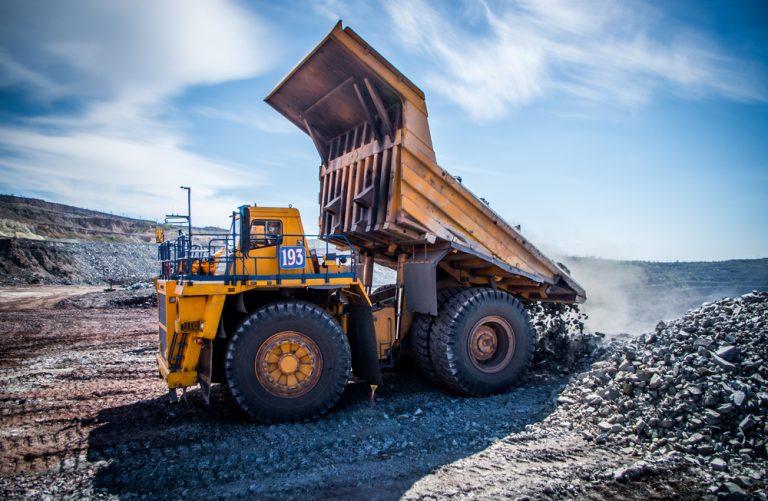
Glencore PLC (LON:GLEN) have told the market that annual profit has been bruised, however has still beaten market and analyst predictions.
The mining firm said that profits were damaged by weaker commodity prices and trade uncertainty, but the fact that market expectations were beaten remains a positive factor for Glencore.
Glencore reported adjusted earnings before interest, tax, depreciation and amortisation of $11.60 billion for 2019, a 26% fall from a year ago.
Despite the 26% fall, this still beat company-compiled analyst consensus which was predicted to be $11.25 billion.
With regards to their dividend, the CEO commented:
“We are again recommending to shareholders a 2020 base distribution of $0.20 per share, payable in two equal instalments, which is comfortably covered (c.1.5x) by current annualised business free cashflow generation, even applying the presently weakened coronavirus discounted commodity prices.”
Adjusted earnings before interest and tax dived 55% to $4.15 billion, while Glencore reported a net loss attributable to equity holders of $404 million after a profit of $3.41 billion the year before.
Notably, the company’s net debt remains above their target range which was $10 billion to $16 billion, and currently stands at $17.56 billion.
The current net debt is 19% higher than the figure one year ago, and was higher than market forecasts of $17.12 billion.
Within its industrial mining unit, there was a 32% fall in adjusted Ebitda to $9.0 billion due to weaker prices, mainly from coal and cobalt.
Glencore’s Chief Executive Officer, Ivan Glasenberg, commented:
“Our performance in 2019 reflected the prolonged and uncertain trade deal negotiations, generally weaker prices for our key commodities and some operational challenges experienced at our ramp-up/development assets. Adjusted EBITDA declined 26% to $11.6 billion.”
“Our Marketing business finished 2019 on a strong note, generating Adjusted EBIT of $2.4 billion, in line with 2018, with an excellent performance from oil and a stronger second half metals’ contribution, helping to offset the cobalt headwinds experienced in the first half.”
Glencore are also planning to step up their efforts to promote environmentally friendly policies. The firm outlined thier intentions to commit to the transition of a low carbon economy.
This follows many other oil majors and miners who are slowly seeing the importance of conducting business in a sustainable and ethical manner.
Glasenberg concluded:
“We are also pleased to report progress against our commitments to the transition to a low-carbon economy. We are on track to achieve a near doubling of our first GHG target with a reduction in Scope 1 and 2 emissions intensity of c.10% since 2016. Also, in line with our commitment to a Paris consistent strategy, we project a c.30% reduction in absolute Scope 3 emissions by 2035, including natural depletion of our coal and oil resource base over time.”
“Looking ahead, in the short-term, we are closely watching coronavirus developments and potential scenario impacts on global growth and markets. As shown over many cycles, our business has various defensive cashflow characteristics, stemming primarily from marketing activities, but also material exposure to precious metals and infrastructure and expected countercyclical working capital inflows. Our priorities for 2020 remain being focused on delivering sustainable long-term returns for all stakeholders, including via delivering a step-change in safety performance, realising the potential of our ramp-up assets, seizing further operational efficiencies, strengthening our balance sheet and managing the transition to Glencore’s next generation of leadership.”
Glencore’s steady start to 2020
A fortnight ago, the firm gave an update to the market reporting their production volumes. Copper production fell 6% giving a total of 1.37 million tones, the firm said that this was caused by the scaling down and and placement into temporary care and maintenance of Mutanda in the Democratic Republic of the Congo, as well as Mopani’s extensive smelter refurbishment shutdown in Zambia. However, the performance of the Katanga mine in Congo was something to note for shareholders as this allowed cobalt output to surge 10% to 46,300 tonnes. In zinc mining operations, production was slightly up by 1% to 1.08 million tonnes, as gains in Australia and Peru accounted for slowdowns in Kazakhstan for safety reasons and at Antamina in Peru due to mine rescheduling. Nickel production was down 3% at 120,600 tonnes, as the firm alluded to maintenance stoppages at Koniambo in New Caledonia as the main result for slumping production. Coal production rose following new acquisitions in 2018 which were Hunter Valley Operations and Hail Creek in Australia. Within this, thermal coal output was up 5% to 123.9 million tonnes, and coking coal up 23% to 9.2 million tonnes. Shares in Glencore trade at 228p (-3.57%). 18/2/20 10:48BST.BHP see rising interim profits and revenues
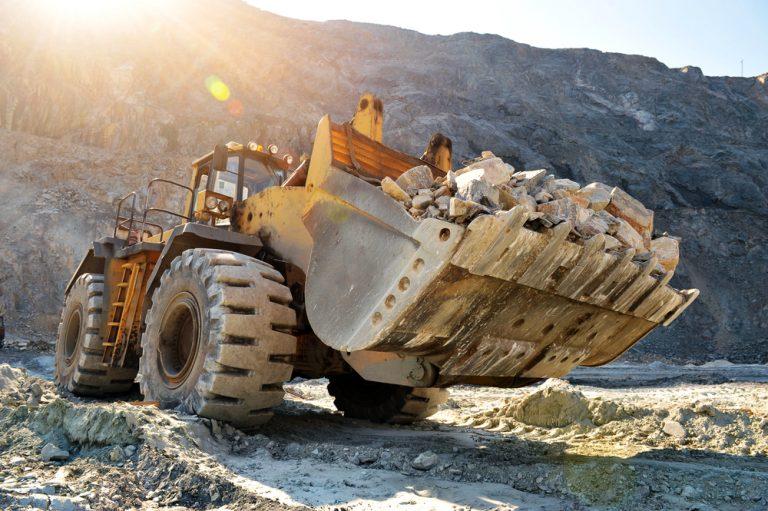
BHP Group PLC (LON:BHP) have seen their profits and revenues increase as reported within their interim update on Tuesday.
BHP Chief Executive Officer, Mike Henry said :
“We delivered a strong set of half-year results, grounded in solid operational performance. Underlying EBITDA was up 15 per cent, to US$12 billion, and return on capital employed increased, to 19 per cent. With solid cash flow, the Board announced an interim dividend of 65 US cents per share, our second highest on record.
BHP is in good shape. We have passionate and committed people hungry to perform. We have brought together high quality assets in a simple portfolio that allows us to create value at scale. Our balance sheet is strong and we have embedded a Capital Allocation Framework which drives discipline and better decisions.”
BHP said that the rises in both profit and revenues were caused by higher commodity prices and favorable currency movements.
Within the six month period, which ended December 31, the miner saw its pretax profit rise by 15% to $7.79 billion from $6.80 billion one year ago.
Notably, revenue also spiked 7.5% from $20.74 billion to $22.3 billion, which was probably the headline statistic from today’s update.
Profit was aided by favorable currency movements and higher prices, despite the mining titan reporting lower volumes of production and increased costs. Profit from operations also rose 13% year-on-year to $8.31 billion from $7.33 billion.
As a result of the strong results, BHP lifted its interim dividend by 18% to 65 US cents per share compared to 55 cents the prior year.
The dividend was still raised despite net debt rising by 21% to $12.84 billion from $10.64 billion.
Looking at individual metal production guidance, BHP have told the market that iron ore production for 2020 should remain between 242 million and 253 million tonnes from 238 million tonnes the year before.
Copper guidance was unchanged for its financial year which ends in June, which should lie within the 1.71 million and 1.82 million range.
Coal production is expected to be between 41 million and 44 million tonnes for metallurgical coal and 24 million and 26 million tonnes for energy coal. Across financial 2019, BHP saw 42.4 million tonnes of metallurgical coal and 27.5 million tonnes of energy coal produced.
Henry concluded “From these strong foundations, we will build on our momentum to deliver exceptional performance. I intend for BHP to be unquestionably the industry’s best operator – safer, lower cost, more reliable and more productive – with our portfolio and capabilities fit for the future. We will be open to new ideas, more connected to those around us and more commercial in our thought and actions.
Despite near term uncertainty – due to the coronavirus outbreak, trade policy and geopolitics – we remain convinced about the positive underlying fundamentals of our commodities. We see enormous potential to reliably deliver exceptional financial and operational performance, and to grow value and returns.”
BHP’s confidence pays dividends
In January, the firm maintained their annual production guidance which reflected a confident sentiment within the firm. The firm said that it had reported a solid performance in copper and iron production, however it saw a decline in petroleum and coal. For the six months to the end of December, BHP’s copper production was 885,400 tonnes, up 7% from 825,300 tonnes the year before, which will impress shareholders in this division. BHP said that they have kept their annual production guidance unchanged within the range of 1.71 million tonnes to 1.82 million. Notably, iron ore production for the six month period increased by 2% to 121.4 million tonnes, seeing a 2% climb from the 119.3 million figure one year ago. BHP also reported record production at Jimblebar in Australia, which has driven the firm to stay within its guidance figures. Annual iron ore output has remained stable and is estimated to be between 242 million and 253 million tonnes, but metallurgical coal production dipped 2% year on year to 20.3 million tonnes from 20.6 million. Looking at BHP’s petroleum business, the firm told shareholders that production declined by 9% to 57.4 million barrels of oil equivalent from 63 million barrels due to natural field declines and other weather conditions. Shares in BHP trade at 1,662p (-1.75%). 18/2/20 10:34BST.HSBC to axe 35,000 jobs as it watches its profits fall by a third

Multinational investment bank and financial services group HSBC Holdings (LON:HSBA) announced on Tuesday that it would be implementing a large-scale job-cutting programme, as its full-year profit before tax contracted 33% year-on-year, down to $13.3 billion.
The company continued to lay on the woeful news, telling investors that it was pessimistic about the outlook for 2020. It joined Apple (NASDAQ:AAPL) in noting that Coronavirus had and would continue to have an adverse impact on the company’s trading – with the bulk of its profits coming out of Asia – and they should therefore brace themselves for a rough few months.
“Depending on how the situation develops, there is the potential for any associated economic slowdown to impact our expected credit losses in Hong Kong and mainland China,” said Noel Quinn, HSBC interim Chief Executive.
“Longer term, it is also possible that we may see revenue reductions from lower lending and transaction volumes, and further credit losses stemming from disruption to customer supply chains. We continue to monitor the situation closely.”
Quinn went on to say that the bank would downsize its global workforce by 15%, and by a more considerable number than the 10,000 forecast by analysts.
It added that the upcoming job cuts were part of its plan to cut costs by $4.5 billion by 2022. It did not say which of the 64 countries it operates in would be hardest hit by the cut-backs, but it is thought its London-focused investment banking business could be among the casualties.
“The totality of this programme is that our headcount is likely to go from 235,000 to closer to 200,000 over the next three years,” Quinn said to Reuters.
Following the update, the company’s shares are down 5.71% or 33.70p, to 557.00p 18/02/20 09:44 GMT. Analysts from Shore Capital reiterated their ‘Hold’ stance on HSBC stock. The Group’s p/e ratio stands at 12.19, while its dividend yield is ambitious at 6.99%.
Apple crunched by Coronavirus as sales fall short

Sharp losses at the start of the Tuesday session were prompted by Apple (NASDAQ:AAPL) issuing a profit warning, amid disruption caused by the outbreak of the Coronavirus.
The company’s Chinese stores and international delivery of stock have been hampered by the outbreak of the illness, and as such it said it expected to miss its $63-67 billion revenue target. This led to further dread in Asian equities, while European indexes began the day on a low note.
The company said it was suffering because of a ‘slower return to normal conditions’ than anticipated – ‘worldwide iPhone supply will be temporarily constrained’ because of outbreak-related manufacturing issues in China.
Apple soured
Providing some colour to the update, the company’s statement read: “Work is starting to resume around the country, but we are experiencing a slower return to normal conditions than we had anticipated,” the company’s statement read. “As a result, we do not expect to meet the revenue guidance we provided for the March quarter.” “All of our stores in China and many of our partner stores have been closed. Additionally, stores that are open have been operating at reduced hours and with very low customer traffic. We are gradually reopening our retail stores and will continue to do so as steadily and safely as we can.” “As the public health response to Covid-19 continues, our thoughts remain with the communities and individuals most deeply affected by the disease, and with those working around the clock to contain its spread and to treat the ill. Apple is more than doubling our previously announced donation to support this historic public health effort.” “The health and wellbeing of every person who helps make these products possible is our paramount priority, and we are working in close consultation with our suppliers and public health experts as this ramp continues.” Following the update, the company’s shares are down 3.65% or $11.85 to $324.95 during pre-market trading 18/02/20. Its market cap stands at $1.42 trillion, while its dividend yield is modest at 0.95%.Elsewhere on Tuesday
Commenting on early session movements, Spreadex Financial Analyst Connor Campbell commented,“Tim Cook and co. weren’t the only ones sounding alarm bells on Tuesday. South Korea claimed it was facing an economic ‘emergency’ due to the illness, while in its half year update BHP Group (LON:BHP) maintained its guidance but stated it will revise its estimates if the virus isn’t ‘demonstrably well contained within the March quarter’. Glencore (LON:GLEN) also said it was monitoring the situation closely, after posting better than forecast full year earnings.”
“Though not disastrous, especially when compared to some of the losses seen early on in the outbreak, Europe nevertheless got off to a bad start. The FTSE barely held above 7400 as it fell 0.4%; the DAX shed 100 points, slipping from its all-time highs, while the CAC was back at 6050 following a 0.6% fall. Looking ahead a bit and the Dow Jones is facing an Apple-led 200 point drop when the bell rings on Wall Street.”
“Investors could get a further taste of what the economic atmosphere is like regarding the coronavirus with the latest ZEW economic sentiment readings. The German figure is forecast to drop from 26.7 to 20.0, with the Eurozone-wide number down from 25.6 to 21.3.”
“Sterling was also down this Tuesday, slipping 0.2% against dollar and euro alike ahead of the morning’s UK jobs data. Wage growth, including bonuses, is expected to fall from 3.2% to 3.1% month-on-month, with the claimant count change up from 14.9k to 20.2k. As for the unemployment rate, that’s expected to remain unchanged at 3.8%.”
Dow absence brings welcome calm before a busy week for the FTSE

As is often the way of things, removing the Dow Jones from play tends to slow down market movements. Today, the FTSE was happy to lead Eurozone equities as it rose 0.3% on Monday, with the DAX and CAC following closely behind.
The biggest news of the day, though, perhaps came from Japan, which reported a 6.3% economic contraction between October and December 2019. However, markets as a whole were happy to progress unfazed by the news.
The FTSE was happy to make an appearance within the winners’ circle, despite dramatic losses suffered by the likes of Laura Ashley (LON:ALY) outside of the FTSE constituent list. It will likely be a busy week for both the British index and currency, with readings of PMI data, wage growth and retail sale results all on the calendar, alongside the customary trickle of Brexit chatter.
Speaking on the day’s lack of movements in global equities and the Dow Jones’s absence, Spreadex Financial Analyst Connor Campbell commented,
“As tends to be the case when the US is out of action, Europe puttered through a session largely free of incident.”
“Ignoring the fact the Japanese economy contracted by 1.6% in the fourth quarter – that’s BEFORE feeling the effects of any coronavirus impact – the markets pushed gently forward.”
“The FTSE added 0.3%, keeping it the right side of 7400, while the DAX spent the day lurking near, if not quite at, a fresh all-time high as it rose 0.2%. The CAC added the same amount, unable to breach 6100.”
“As for the pound, ahead of a busy week for UK data – more on that in a moment – it fell 0.2% against the dollar and 0.1% against the euro.”
“The currency is in for a bit of a work out across the next few sessions. Tuesday is expected to see a slight drop in UK wage growth, from 3.2% to 3.1% including bonuses, but with a sharp increase in inflation from 1.3% to 1.7% on Wednesday. Thursday is then forecast to see a big retail sales swing from -0.6% to 0.7%, though those estimates tend to be off base. And all of this before the FTSE-interesting flash PMIs on Friday,”
Novacyt shares rally over 66% following launch of coronavirus detection test

Novacyt SA (LON:NCYT) shares have rallied as the firm announced that it has made progress in battling COVID-19, the most recent strain of coronavirus which has spreading vastly.
COVID-19, now its formal name as declared by the World Health Organization has been running riot across the globe.
The outbreak was first reported in December, and since that time the number of affected people, deaths and cases has continued to climb across the globe.
The new strand of coronavirus has been detected in China, Hong Kong, Japan and most recently the United Kingdom. It seems that a few weeks on from the initial scares off the coronavirus, that the situation is slowly being controlled.
Today, Novacyt SA have said that it has launched a CE-Mark approved molecular test for the detection of the coronavirus (COVID-19).
CE-Mark allows a company to register their product in compliant with the European Unions safety, health and environmental requirements.
The update today will not just please shareholders, but the global business environment and world citizens.
The firm said that the COVID-19 test is the first CE-Mark test for the 2019 strain of novel coronavirus and follows the company’s rapid launch of its research use only coronavirus test on January 31.
Novacyt added – “As a result of the CE-Mark, the Company’s COVID-19 test can be used directly by laboratories and hospitals for the testing of patients without the need for validation by clinicians. The Company anticipates increased demand for its test for COVID-19 due to this extended use for clinical diagnosis.”
The company has already received requests for quotations for 288,000 tests since preordering was made available on Friday. Novacyt noted that they had seen “high conversation rate” from quotations to orders.
Assessing the situation, the firm also said “However, it is difficult to predict how demand for the test will grow as the epidemic is still in its early stages.”
The coronavirus, or COVID-19 is still at large, and many businesses and people have fallen victim to the lethal illness.
Progress from the private sector will help the containment and stop the spread of the disease, however Matt Hancock did say a few weeks back that the coronavirus could still be around for a few months.
Graham Mullis, Chief Executive Officer of Novacyt commented:
“I am very pleased to announce the launch of our COVID-19 CE-Mark test, which we believe is the first CE-Mark approved test for clinical diagnosis of the 2019 strain of the novel coronavirus. As with our research use only test, it can produce a result in less than two hours, with the added efficiency of being able to transport the test at ambient temperatures eliminating the need for cold chain shipping. It is designed to run on multiple instrument platforms commonly used by clinical laboratories around the world, which ensures our COVID-19 test can be used by the largest possible number of clinicians. We look forward to continuing to support clinicians in the fight to contain the spread of the novel coronavirus during this public health emergency.”
Analysts pointed out that this a competitive space and while Novacyt have provide a winner for investors so far, caution should be taken given the recent rally.
“The share price has already started to move on expectations and so the next leg higher could really come into play if they receive the approval they are looking for. This area is not without competition and let’s be clear the competition is fierce in the sector. The race to get approved is strong and AIM’s stocks can be fickle. That all being said Novacyt is not a one trick pony and have plenty of other assets in the market. As with any AIM-listed company, caution needs to be exercised and whilst Novacyt are winning the race at the moment this could easily change,” said John Woolfitt, Director of Trading at Atlantic Capital Markets.
Shares in Novacyt trade at 165p (+66.69%). 17/2/20 16:33BST.
Kavango Resources sign joint venture agreement with LVR Geo Explorers
Kavango Resources PLC (LON:KAV) have told the market that they have signed a joint venture agreement for two licenses in Botswana.
The form said that the two prospective licenses are situated within the Botswana section of the Kalahari Copper Belt.
The copper miner said that the first licence is north of MOD Resources Ltd T3 mine development and is completely surrounded by MOD, Metal Tiger PLC (LON:MTR) and Sandfire Resources NL licences.
The second licence is closer to the Namibian border, which is south of the Trans-Kalahari highway.
The joint venture is with LVR Geo Explorers, and the deal will provide staged in for Kavango Resources. Additionally, this will give Kavango the chance to earn up to a 90% interest in both of one of the prospective licenses.
When the deal is formalized and completed, Kavango will be obliged to spend £92,000 on each of the licenses to acquire 25% stake in the projects.
Notably, this money will have to be paid within the first twelve months of signing the agreement.
There is also an option for Kavango to extend their interest by further expenditure across three stages, which will allow a total interest of 90%.
Michael Foster, Chief Executive Officer of Kavango Resources, commented:
“The signing of the JVA with LVR represents an excellent opportunity for Kavango to acquire an interest in some highly prospective ground in the KCB area, which is now regarded as one of the world’s most promising under-explored copper provinces. Our exploration program will start shortly. We believe that the JVA with LVR represents excellent value for shareholders, who now have the prospect of acquiring an interest of up to 90% in these PLs. We will continue to consider other opportunities in this exciting copper province in the coming months.”
Kavango also noted that exploration of these licenses will commence shortly, and the firm will be the mangers of the exploration and development but will have the option to withdraw at any time following a two month notice period.
Shares in Kavango Resources trade at 1p (-10.91%). 17/2/20 16:19BST.
Petra Diamonds shares crash 16% following weaker diamond market

Petra Diamonds Limited (LON:PDL) have seen their shares plummet as the firm issued a warning this morning.
Shares in Petra Diamonds trade at 6p (-16.67%). 17/2/20 13:17BST.
The diamond firm said that it has cut its cash flow targets as the diamond market has weakened.
The CEO commented: “Our financial results for H1 were impacted by the weaker diamond market, with rough diamond pricing on a like-for-like basis down ca. 10% from the comparable period, and down ca. 3% versus pricing achieved in Q4 FY 2019.”
Petra alluded to the ongoing global health problems, particularly with the coronavirus which have dampened consumer confidence and hindered trading.
It was notable that Petra said that they may need further support from lenders, in the form of waivers on banking covenants.
“In light of the impact of the weakness in the diamond market on the group’s operating results and cash flow position, the group will continue closely monitoring and managing its liquidity risk and will have further discussions with its lender group regarding further covenant resets and/or waivers.”
“Based on current forecasts and sensitivities, additional waivers are likely to be required for the June and December 2020 measurement periods.”
Petra has targeted a delivering cumulative cash flow of $150 million to $200 million by June 2020, but following issues with the coronavirus this has now been reduced to the $100 million to $150 million range.
Petra remained optimistic and said that it is on track with its plans to increase cash flow generation, and that the firm has already reached $50 to $80 million currently, however delays can be expected.
The firm said: “In light of this continued market weakness, coupled with the impact of adverse product mix, the delivery of Project 2022’s cumulative cash flow target is expected to be delayed.”
Notably, Petra recorded net debt of $596.4 million, which showed a 6.6% rise from the figure one year ago.
The warnings from Petra alluded to a 6% fall in revenue totaling $193.9 million, which the firm said was caused by a fall in the price of rough diamonds.
On a better note, production rose 3% to to 2.1 million carats which will please shareholders.
Richard Duffy, CEO of Petra, commented:
“Petra has delivered a strong operational performance in H1 and we remain on track to achieve production guidance for the full year of ca. 3.8 million carats. Our priority now is to continue to drive operational improvements to optimise production and free cash flow, with the aim of reducing leverage levels against the backdrop of a challenging diamond market.”
Pretax loss narrowed to $13.2 million following a loss of $20.7 million one year ago, which does show progress for the firm. This was due to lower costs and the non-repeat of $14 million of foreign exchange losses.
Petra concluded by saying that the first half operational performance has been strong and that this puts the firm on track to beat full year production guidance of around 3.8 million carats.
KEFI Minerals reach agreement to commence Tulu Kapi
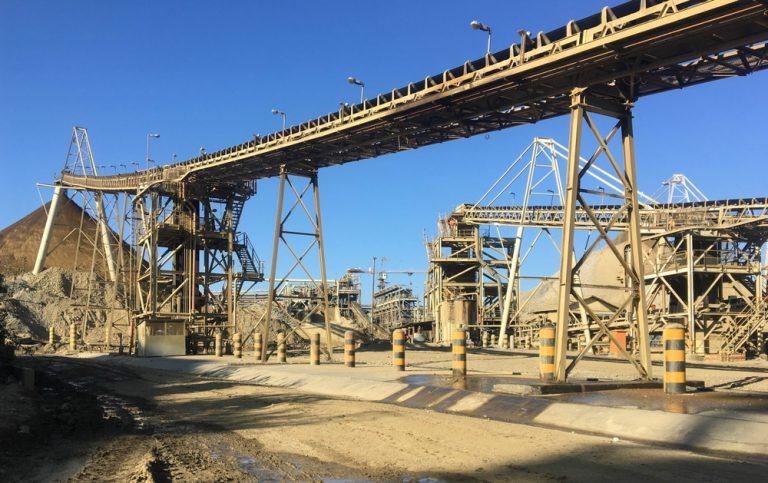
KEFI Minerals plc (LON:KEFI) have said that the Tulu Kapi project in Ethiopia has been given the green light.
The miner told the market that a meeting had taken place of the joint venture company, and now that formalities and agreements had been made the project can commence.
KEFI are looking to develop the Tulu Kapi project as part of Tulu Kapi Gold Mines Share Co, and at the general meeting all discrepancies and negotiations had been completed.
This means that the partners can go ahead with the closing of subscription funds with ANS Mining which will provide $38 million funding. The Ethiopian Government have also pledged $20 million on the project.
Harry Anagnostaras-Adams, the executive chair at KEFI and of TKGM, said: “The formal TKGM shareholder meeting was an important step for this closely co-ordinated public-private-partnership for Ethiopia’s first modern mine in decades and has now cleared the way for the closing of the ANS equity subscription.
“The Tulu Kapi gold project is planned to be the largest single export generator in the country and all project planning is designed within the multi-party consortium to make our project a model first-mover in all social, environmental, human resource and technical aspects.”