
Petards Group shares sink over 20% as annual loss expectations worry shareholders

Shares of Petards Group PLC (LON:PEG) have crashed over 20% on Tuesday as the firm told the market it expects to report an annual loss.
The firm said that project delays had contributed to the 2019, as the firm saw their shares in red.
Shares in Petards Group trade at 9p (-20.08%). 4/2/20 12:10BST.
The security and surveillance technology company said that it is expecting a pretax loss for 2019 – following a change to a big customer order. Petards said that a customer re-scheduled eyeTrain system deliveries into 2020, which hindered performance late into 2019.
Notably, profitability levels on two rail projects was a lot lower than what was expected which also contributed to the disappointing update on Tuesday.
The firm said that it expects to report revenue for 2019 of £15.8 million, down 21% from £20.0 million a year earlier, and down 8.7% compared to market expectations of £17.3 million. In 2018, Petards generated a pretax profit of £1.1 million.
Raschid Abdullah, Chairman of Petards Group plc said:
“While it is disappointing to report on the lower than expected 2019 revenues due to customer re-scheduling and on the impact this and the higher project costs have had on profitability, the Group remains in good shape.
“Following the Group’s significant investment in recent years, and with little further investment in product development anticipated to be required in 2020, the Group expects to be net cash generative in the coming year and the Board remains confident of the Group’s future prospects.”
British Pound slips to a six week low following PM Johnson’s Brexit stance

The British Pound fell to a six week low against a stronger dollar on Tuesday morning, as PM Johnson looked to reinforce his deal on terms of Brexit withdrawal.
Since the historic decision was made on Friday, the Pound has been up and down over hopes that Boris Johnson could finally deliver his December election promise.
Brexit had been dominating British news headlines since June 2016, when on a Friday morning the final results of the referendum had concluded that Britain would be terminating their relationship and ties with the European Union.
After years of toil, strife and elections the deal has finally been passed in both Westminster and Brussels, however the British Pound has not taken to this too well.
Yesterday, it was reported that the EU and Britain had not seen eye to eye over a post Brexit deal, as the two parties laid out very different strategies for UK-EU relations going forward.
On Monday, the Sterling lost 1% against the Dollar and the Euro and this had continued to decline across Tuesday morning.
Notably, the Pound slipped 0.4% against the dollar, to $1.2942, whilst being matched up against the Euro the slip was slightly less. The Pound dropped 0.3% versus the Euro to 85.35 pence, which saw its weakest since January 21st.
Britain and the EU still have a long road ahead, indeed nine months of negotiations are set to take place where every policy, detail and fragment will be thoroughly scrutinized before a final withdrawal agreement is reached.
PM Johnson has reinstated his intentions to not bow down to the needs of the European Union, and has told the British public that the withdrawal bill will be done on the terms of British politics and British needs – a rather risky approach when you consider that the EU hold the high hand.
The EU has warned Britain that access to the Single European Market will depend on how much Britain can work with the EU to reach a ground which benefits both parties.
“Despite Brexit being officially delivered, for markets, this is not the case,” analysts at RBC Capital Markets said in a note.
“While the two documents released (by the UK and EU) should clearly be seen as an opening gambit only, it drives home the point that reaching an agreement in a quite short span of time appears ambitious and might harbour some downside risks to the UK economy (and assets as well as sterling) as the year progresses.”
British Politics enters a very interesting time, and we could be entering a year full of stops and starts. The British Pound will also see sprites of confidence and periods of bruising, however traders will remain cautious.
Ryanair report passenger growth in January as 2020 starts strong

Ryanair Holdings PLC (LON:RYA) have seen a rise in passenger traffic in the first month of 2020.
The firm also praised the growth of its spin off Australian firm Lauda, which has seen strong growth over the last few months.
The budget airline told the market that total traffic for January totaled at 10.8 million passengers, which sees a 5% climb from the 10.3 million figure just one year ago.
The rise was driven by the performance of Lauda, which saw a 67% rise in passenger figures from 300,000 to 500,000. Additionally, Load Factor was 91% – another impressive stat to take for shareholders.
Looking at the core Ryanair brand – the firm saw traffic rise by 3% from 10 million to 10.3 million, with a 92% load factor figure.
The airline’s group load factor for January came in at 92%, up from 91% in the same month in 2019 but below its rolling annual figure of 96%, which was one sour note from today’s update.
Look at a rolling annual scale, total traffic rose 8% to 152.9 million compared to 141. million year on year, and the firm told the market that it operated more than 62,000 flights in January.
The update comes today following an impressive trading update which hit the market yesterday.
Ryanair’s strong festive trading
Yesterday, Ryanair reported strong festive trading following a swing back into profit. In the three month period to December 31 – the airline firm recorded operating profit of €91.3 million, compared to a loss of €68.0 million for the same period a year before. Notably, total operating revenue in the third quarter was up 21% year on year to €1.91 billion from €1.58 billion. Traffic rose 6.2% to 35.9 million, while revenue per passenger grew 13%. Additionally, the budget airline saw its load factor increase by 1% from 95% to 96%. Looking at total operating expenses, Ryanair noted that these increased by 9.7% to €1.81 billion from €1.65 billion. Ryanair are going through a period of transition, however one thing is certain. Passenger figures for the firm across monthly reports are rising – and shareholders will be optimistic as the uncertainty in the industry clears up. Shares in Ryanair trade at €15 (-0.38%). 4/2/20 11:38BST.Ferguson consider two options for US listing, as shares jump over 6%

Ferguson PLC (LON:FERG) have told the market about their intentions to list in the United States following a planned demerger of its UK and US business.
Ferguson stated that they see New York as the US businesses’ “natural long-term listing location”. As a result, shares have jumped on Tuesday morning.
Shares in Ferguson trade at 7,334p (+6.29%). 4/2/20 11:09BST.
The FTSE 100 listed company announced that it will be commencing a $500 million share buyback plan over the next twelve months, to allow it to meet its long term growth targets.
Ferguson added that strong cash generation coupled with added opportunities to invest in organic growth and acquisitions means that the firm has resources and cash available for investment.
Interestingly, when considering its future strategy, the plumbing and heating company said that its capital allocation priorities remain unchanged.
Investment priorities continue to be through organic growth which will exceed underlying market growth, which in turn will fund their ordinary dividend.
Plans of a demerger of the UK and US businesses surfaced last year, and today the firm has said that following the separation of the two segments they will be listed on different exchanges – this will allow complete independence and stop shareholder conflict.
Ferguson told the market that it is considering two options for a listing program for the future.
The first involves seeking shareholder approval for an additional listing of ordinary shares in the US, this would mean that Ferguson would seek an additional listing of its shares on a major US stock exchange whilst maintaining its existing premium listing on the London Stock Exchange.
If this plan is to go forward, the firm would require shareholder consent of 75% and even if this passed Ferguson would require a separate shareholder vote to cancel its London premium listing.
The second option is to seek shareholder approval for a primary listing in the US. Ferguson would seek a change of primary listing of ordinary shares to a major US stock exchange.
The FTSE 100 lister said it expects to make a further announcement following the conclusion of the consultation, likely to be in the spring of 2020.
Commenting on the proposals Geoff Drabble, Ferguson’s Chairman said:
“In assessing Ferguson’s future listing structure, the Board’s approach has been to consider carefully what is in the best interests of the Company and its stakeholders over the long-term. The Board believes that Ferguson’s natural long-term listing location is the USA but it is mindful that this is a complex issue for many of our existing shareholders. We will now commence a period of further consultation with our major institutional shareholders and will listen carefully to their feedback before setting out any firm proposals in the Spring.”
Ferguson slips in December
In December, the firm saw their shares in red despite a steady update. The plumbing and heating products distributor recorded $5.21 billion of revenue in the three months to October 31, up 5.3% on the $4.95 billion seen the year before. The firm saw its group trading profit rise 9.2% to $451 million in the first quarter, with underlying trading profit which excludes a $18 million accounting boost – rising 4.8% to $433 million from $413 million. In the United States, revenue rose year on year by 6.1% to $4.89 billion, while revenue in Canada fell 5.8% to $315 million. Ferguson’s UK revenue dropped 2.2% to $541 million, with trading profit down 17% to $15 million. The company said its UK demerger is progressing as planned, and is expected to be completed in 2020. Ferguson are in a period of transition, however there does seem to be a clear planned laid out on the table which should allow stakeholders to voice their opinions.Glencore see steady 2019 with higher production in zinc, cobalt and coal
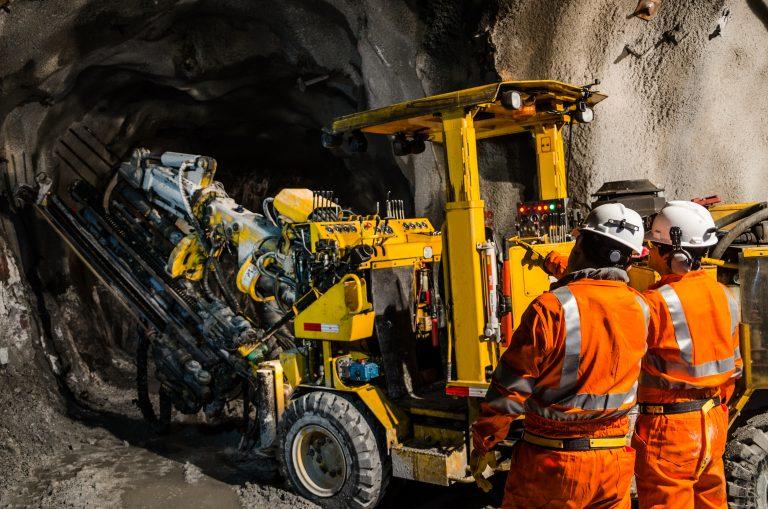
Glencore PLC (LON:GLEN) have seen a steady performance across 2019 as the firm reported their findings on Tuesday morning.
Glencore have seen a mixed year, and have been making news headlines following an investigation from the Serious Fraud Office a few weeks back.
Today, the firm gave an update on production saying that they saw higher production from zinc, cobalt and coal operations.
However, copper, gold, silver and nickel performance was stunted in what seems to be a mixed annual update.
Copper production fell 6% giving a total of 1.37 million tones, the firm said that this was caused by the scaling down and and placement into temporary care and maintenance of Mutanda in the Democratic Republic of the Congo, as well as Mopani’s extensive smelter refurbishment shutdown in Zambia.
However, the performance of the Katanga mine in Congo was something to note for shareholders as this allowed cobalt output to surge 10% to 46,300 tonnes.
In zinc mining operations, production was slightly up by 1% to 1.08 million tonnes, as gains in Australia and Peru accounted for slowdowns in Kazakhstan for safety reasons and at Antamina in Peru due to mine rescheduling.
Nickel production was down 3% at 120,600 tonnes, as the firm alluded to maintenance stoppages at Koniambo in New Caledonia as the main result for slumping production.
One of the best performers was in the coal department, as this rose 8% giving a total of 139.5 million tonnes.
Coal production rose following new acquisitions in 2018 which were Hunter Valley Operations and Hail Creek in Australia. Within this, thermal coal output was up 5% to 123.9 million tonnes, and coking coal up 23% to 9.2 million tonnes.
Finally, entitlement interest oil production of 5.5 million barrels was 0.9 million barrels (19%) higher than in 2018, reflecting the benefits of the drilling campaign in Chad and first oil from the Bolongo field in Cameroon.
Glencore announce new Non Executive Director
In an update today, Glencore also updated shareholders about the appointment of a new Independent Non-Executive Director. The firm said that Kalidas Madhavpeddi will be assuming the new position with immediate effect. Madhavpeddi has over 30 years of experience in the international mining industry, including being CEO of China Molybdenum International (China Moly) from 2008 to 2018. Tony Hayward, Chairman, stated: “The Directors are extremely pleased to welcome Kalidas Madhavpeddi to our Board. Kalidas has extensive knowledge of the resources industry coupled with business experience across all continents, including over 10 years as the CEO of China Moly. His experience includes substantial involvement in operations and business dealings with both Phelps Dodge and China Moly in the Democratic Republic of the Congo. We look forward to benefitting from his experience and insights.”Glencore’s bribery investigation
In December, it was reported that the Serious Fraud Office had commenced an investigation into Glencore following bribery allegations. As a result, the firm saw their shares dive 8.5% on December 5th. In a statement to the stock market, the company said: “Glencore has been notified today that the Serious Fraud Office has opened an investigation into suspicions of bribery in the conduct of business of the Glencore group.” The SFO said: “The SFO confirms it is investigating suspicions of bribery in the conduct of business by the Glencore group of companies, its officials, employees, agents and associated persons. Certainly, Glencore have had a turbulent year as the firm has been placed in bad media spotlight following a couple of encounters with the SFO. Glencore will hope that 2020 will be a year of positive media image, growth and rebuilding. Shares in Glencore trade at 231p (+4.45%). 4/2/20 10:58BST.BP report fall in fourth quarter and annual earnings
BP plc (LON:BP) shares have jumped on Tuesday morning as the firm gave an update on their fourth quarter operations.
The oil and gas major reported a fall in fourth quarter and annual earnings, as both oil and gas prices remained volatile in the quarterly period.
Notably, this would be the last time Chief Executive Bob Dudley would be delivering the firms results after a long term with the firm.
Dudley commented:
“BP is performing well, with safe and reliable operations, continued strategic progress and strong cash delivery. This all supports our commitment to growing distributions to shareholders over the long term and the dividend rise we announced today. After almost ten years, this is now my last quarter as CEO. In that time, we have achieved a huge amount together and I am proud to be handing over a safer and stronger BP to Bernard and his team. I am confident that under their leadership, BP will continue to successfully navigate the rapidly-changing energy landscape.”
Looking at profit figures however, BP have managed to beat analyst and market expectations as the firm raised its annual dividend.
It seemed that shareholders remained optimistic, as shares spiked almost 5% on Tuesday morning.
Shares in BP trade at 473p (+4.48%). 4/2/20 10:29BST.
In the three month period to December 31, underlying replacement cost profit fell 26% year-on-year to $2.57 billion from $3.48 billion. For the full-year, it declined 21% to $9.99 billion from $12.72 billion.
Notably, the oil multinational saw revenues fall 6% to $71.11 billion from $75.68 billion in the fourth quarter, with 2019 revenue declining 6.8% to $278.40 billion from $298.76 billion.
BP made the market aware that they do not measure success on traditional profit lines, and rather tend to use RC which is replacement cost.
This is defined as the replacement cost of inventories sold in the period, this measure allows the firm to show shareholders that crude oil and derivatives can fluctuate in price, so the RC measurement gives consistency in results.
The company upped its fourth quarter dividend by 2.4% year-on-year to 10.5 cents.
Speaking on the dividend rise, Brian Gilvary Chief Financial Officer said
“We continue to make strong progress on our divestment programme, with announced transactions totalling $9.4 billion since the start of 2019. We are ahead of our target of $10 billion of proceeds by end-2020, and now plan a further $5 billion of agreed disposals by mid-2021. Net debt fell $1 billion in the fourth quarter, and with further disposal proceeds expected, and assuming recent average oil prices, we continue to expect gearing to move towards the middle of the 20 to 30% range through this year. Together with the continued strong operational momentum, growing free cash flow, and our confidence in delivery of 2021 free cash flow targets, this underpins our announcement today of an increase in the dividend to 10.5 cents per ordinary share.”
Pretax profit was down in the fourth quarter to $239 million from $249 million. Across the full-year period, it more than halved to $8.15 billion from $16.72 billion.
Looking at operating fees, BP saw impairment costs of $2.68 billion across the fourth quarter and on an annualized basis total impairment totaled $6.89 billion for 2019.
“The impairment charges, which are substantially all reported in the Upstream segment, principally relate to BP’s ongoing divestment program. They include $1.99 billion in the fourth quarter and $4,70 billion in the year relating to heritage BPX Energy assets. $258 million in the fourth quarter and the $1.26 billion in the year relating to the group’s interests in its Alaska business and $244 million in the year relating to the group’s interests in Gulf of Suez oil concessions in Egypt.”
Looking at output, BP noted that fourth quarter output did rise by 2.7% to 2.7 million barrels of oil equivalent per day, and for the full-year, climbed 3.8% to 2.6 million barrels of oil equivalent per day.
Speculating for 2020, BP commented:
“We expect full-year 2020 underlying production to be lower than 2019 due to declines in lower margin gas basins. We expect reported production to be lower due to the above factor and the impact of the ongoing divestment programme.
We expect first-quarter 2020 reported production to be lower than fourth-quarter 2019 due to the impact of our ongoing divestment programme and planned seasonal maintenance and turnaround activities.”
BP’s Third Quarter Results
The third quarter proved tough for BP, as the firm saw their results take a hit. The company said that underlying replacement cost profit for the third quarter of the year amounted to $2.3 billion, considerably lower than the $3.8 billion figure recorded a year prior. BP added that a divestment-related, non-cash, non-operating after-tax charge of $2.6 billion caused a reported loss of $700 million for the quarter. “BP delivered strong operating cash flow and underlying earnings in a quarter that saw lower oil and gas prices and significant hurricane impacts,” Bob Dudley, Group Chief Executive, commented on the results. BP are making ground, however the macroeconomic world has meant that oil and gas prices have been fluctuating, and this could be an important factor across 2020 for shareholders to consider.

Verona Pharma appoint new CEO and CFO

Verona Pharma Plc (LON:VRP) have seen their shares crash 10% as the firm announced a couple of new senior management changes on Monday afternoon.
Shares in Verona Pharma trade at 47p (-10.00%). 3/2/20 15:36BST.
The firm said that former Dova Pharmaceuticals Inc boss David Zaccardelli had been appointed as president & chief executive officer.
Notably, Dova Pharmaceuticals former chief financial officer, Mark Hahn, will join as CFO. This will be a non-board position and is effective from March 1. Hahn has also been CFO at Cempra Inc.
Zaccardelli was president and CEO of Dova until it was bought by Swedish Orphan Biovitrum AB in November 2019. His other significant previous roles include chief operating officer at United Therapeutics Corp.
Zaccardelli’s appointment is effective from Friday and comes at a time where Verona have seen recent successes.
“We are very pleased to have both Dr. Zaccardelli and Mr. Hahn join Verona Pharma. They are highly experienced leaders with a proven track record of working together to create significant value for shareholders. We believe we have a strong team in place to lead Verona Pharma into its next phase of growth. The team will focus on the US and worldwide opportunities to help COPD patients in need of additional treatment,” said Dr. David Ebsworth, Chairman of Verona Pharma.
“I thank Dr. Karlsson for his leadership in building Verona Pharma into a strong company with a Phase 3 program for ensifentrine expected to begin in 3Q 2020, and also Mr. Morgan for his support through the US IPO process. Together, Dr. Karlsson and Mr. Morgan successfully raised significant capital, listed Verona Pharma on Nasdaq and used these funds to generate data supporting the strong efficacy and safety profile of ensifentrine in COPD. I am pleased they will continue to support the transition to ensure the further success of Verona Pharma.”
The appointment of Zaccardelli seems an interesting one, however the new appointment has vast experience in the industry and should take Verona in the right direction.
Speaking on his new role Zaccardelli said:
“I strongly believe it is a transformational time to join Verona Pharma to ensure the full potential of ensifentrine, a first-in-class, inhaled, dual inhibitor of the phosphodiesterase 3 (PDE3) and phosphodiesterase 4 (PDE4) enzymes for the treatment of respiratory diseases including COPD, asthma and CF. In addition, the recently reported Phase 2 clinical trial results of ensifentrine added to inhaled tiotropium, a long acting anti-muscarinic (“LAMA”) commonly used to treat patients with COPD, underscores its potential for a significant impact on the treatment for patients with COPD. Verona Pharma will continue to focus on developing new treatments for patients with unmet medical need.
“I am also excited Mark Hahn is joining Verona as CFO as part of the executive leadership team. He has extensive experience in both finance and public pharmaceutical companies having raised more than $600 million to support novel product development at previous companies. In addition, we have effectively collaborated together in the leadership of previous companies including Dova resulting in the acquisition by Sobi.”