
British Bars and Pubs round up – a cocktail of results and performances

The British bars and pubs scene has been busy over the last few weeks and months. Different firms have seen different results across the festive trading period, where firms look to make ground and reach peak business trading levels.
Here is a roundup of the most recent updates from the main names in the industry giving a full overlook of their recent performances.
FireAngel feel exceptional costs burden as shares drop over 8%

FireAngel Safety Technology Group PLC (LON:FA) have said that it expects exceptional charges to weigh down on its 2019 results which has left shares in red.
The firms’ mission is to protect, save and improve our customers’ lives by making innovative, leading-edge technology simple and accessible.
FireAngel said that exceptional charges will arise from stock provisions and impaired development costs, which will skew the direction of their annual results.
The firm was formerly known as Sprue Aegis, and has made good progress over the last few months however today’s update will give shareholders a slightly alarming feeling.
FireAngel have said that it will record an approximately £3.2 million exceptional charge on top of previously announced exceptional charges totaling £2.1 million.
The firm did say that it had also incurred a £1.4 million fine for “increasing the legacy battery warranty provision for increased product replacement costs” and £700,000 “for restructuring and fundraising costs”.
Notably, a further £3.2 million non-cash charge will also be imposed on the firm, as this results from a review of FireAngel’s product lines and its development plans for the future as part of a plan “to become a more technology-led connected home solutions provider”.
FireAngel expects annual sales to rise by 20% to around £45.5 million from £37.6 million and to post an underlying operating loss of about £2.9 million versus £2.0 million in 2018.
The underlying 2019 figure does not include exceptional charges, which amount to £5.3 million roughly combined with a £37,000 charge for share based payments.
On a worse note, the firm said that a further 300,000 products could be faulty due to “third-party supplied battery impedance issue, first identified in April 2016”.
However, the firm has tried to reassure customers and shareholders by saying that the problems were not critical and that it only affects a minority of products.
FireAngel said “Whilst this increase represents a small percentage of the overall production volume, is not a safety critical issue and impacts only certain products and territories, the Group will set aside a further provision for this increased volume which is expected to be approximately £2.7 million, the cash cost of which is expected to be incurred over the next three financial years. This is still being evaluated by the Company and remains subject to audit.”
“The Board is conducting a thorough investigation into the failures in certain of the Company’s historical manufacturing quality review processes. It does not anticipate that there will be any further increase in the number of units impacted as it relates only to units produced at one of the Company’s previous manufacturers in China up to the end of March 2018. The units produced at the Company’s manufacturing partner in Poland since April 2018 are not affected.”
Worryingly, this is 30% more than what FireAngel had anticipated however, the firm told shareholders that it has set £2.7 million aside for which the cash cost will be accounted for over the next three years.
John Conoley, Executive Chairman of FireAngel, commented:
“FireAngel’s results continue to be negatively impacted by legacy issues as a result of certain historically poor internal processes. However, the strategic decision to invest heavily in future technology is proving to be correct. The fruits of the investment made in connected technology are now beginning to come through in successful real-world trials, the financial benefits of which are expected to be realised in the short, medium and long term. We look forward to providing further updates at the time of our full year results.”
FireAngel – Mears Limited partnership
A little while back, the firm agreed a partnership with Mears Limited (LON:MER). Mears is responsible for the maintenance, repair and upgrade of over 700,000 UK properties. The agreement will see the two companies join in an exclusive partnership. The agreement will see FireAngel supply Mears with an integrated home management system. As a result, Mears will introduce FireAngel’s UK Trade team to a number of clients effective immediately. Moreover, Mears will use FireAngel as its preferred safety product provider. Certainly, this is a worrying update for both the firm and shareholders. FireAngel will have to look to address their public media image along with faulty products in order to gain market reputation once again. Shares of FireAngel trade at 14p having dropped 8.13% on Monday. 3/2/20 14:19BST.Porvair expect profits to be higher following growth in aerospace and industrial unit

Porvair PLC (LON:PRV) have told the market that they expect profit to be higher in their recent financial year, however shares are in red.
Shares in Porvair trade at 760p (-3.31%). 3/2/20 13:41BST.
The firm said that it saw a substantial rise in its aerospace and industrial unit revenue, which contributed to the strong trading across its recently ended financial year.
Describing their aerospace and industrial unit division the firm said:
“The Aerospace & Industrial division designs and manufactures a wide range of specialist filtration products, demand for which grows as aerospace and industrial customers seek cleaner, safer or more efficient operations.”
In its financial year ended November 30, the filtration and environmental technology firm’s pretax profit rose 17% to £14.0 million from £12.0 million.
Revenue surged by 12% to £144.9 million from £128.8 million. This revenue rise was particularly led by Porvair’s Aerospace & Industrial division, where revenue jumped 28% at £64.7 million from £50.5 million.
Shareholders will be pleased as the firm recommended a final dividend of 3.2 pence per share, which sees a 6.7% climb from 3 pence year on year.
Ben Stocks, Chief Executive, said:
“These results demonstrate the benefits of Porvair’s strategy. Some segments have grown in 2019, others have maintained momentum through operational improvements. 2020 is likely to be similar. The Group’s fundamentals are robust.
Over the last ten years, Porvair has delivered revenue growth of 162% (10% CAGR). The Group is positioned to benefit from global trends: tighter environmental regulations; growth in analytical science; the expansion of air travel; the replacement of plastic by aluminium; and the drive for manufacturing process efficiency. These trends offer opportunities for which the Group develops differentiated products. Trading in 2020 has started well, order books are healthy and investment plans are on track. Recent acquisitions are trading as expected. The Group is looking forward with confidence.”
Porvair have remained confident to deliver results to shareholders in the future, and their growth strategy looks to be settling in well with the overall direction of the firm.
Porvair forecasted saying that “These results demonstrate the benefits of Porvair’s strategy. Some segments have grown in 2019, others have maintained momentum through operational improvements. 2020 is likely to be similar. The Group’s fundamentals are robust. Over the last ten years, Porvair has delivered revenue growth of 162% (10% CAGR).
The Group is positioned to benefit from global trends: tighter environmental regulations; growth in analytical science; the expansion of air travel; the replacement of plastic by aluminium; and the drive for manufacturing process efficiency. These trends offer opportunities for which the Group develops differentiated products. Trading in 2020 has started well, order books are healthy and investment plans are on track. Recent acquisitions are trading as expected. The Group is looking forward with confidence.”
Coronavirus wipes billions from China’s equities, as oil prices also fall

Oil prices have slipped on Monday as global and political affairs have taken their toll on commodity prices as updates came from the UK, OPEC and more on the coronavirus.
As Boris Johnson now looks to get his Brexit deal implemented in time for the next deadline, the British Pound has seen a slump however oil prices seem to have taken a dive.
In other notable updates, the coronavirus has also been taking its toll on global markets as Chinese investors and businesses continue to worry over the spread of the deadly disease, as affected individuals rises to around 17,000.
Oil prices have moved slightly higher which is worth a mention as OPEC+ said that they would be considering an additional 500,000 barrel per day cut to production.
US West Texas Intermediate has slipped 0.35% to trade at $51.45, and earlier slipped to its lowest value of $50.42.
Brent Crude prices have dropped more significantly to $56.12, seeing a 3.56% fall on Monday. The day’s high for Brent Crude was recorded at $56.77 whilst lows of $55.43 have been seen.
The coronavirus has taken its toll on Chinese stocks, as trading commenced for the first time since the turn of the Chinese new year investors erased $393 billion from China’s benchmark equities index.
Many investors took the decision to sell the yuan and commodities following developments on the potential of virus threats spreading across the globe.
This morning it was reported that the UK Government had pledged £20 million to CEPI to progress the development of a global vaccine that would help fight the coronavirus.
Iranian Oil Minister Bijan Zanganeh said the spread of the coronavirus had hit oil demand and called for an effort to stabilize oil prices, according to Reuters.
“The oil market is under pressure and prices have dropped to under $60 a barrel and efforts must be made to balance it,” he said.
Notably, the Shanghai Composite Index nosedived 8% over coronavirus fears following a period of closure for the New Year period in China.
Jasper Lawler at spreadbetting firm London Capital Group said:
“From a stock market perspective, our best hope in the short term might be China’s ‘National Team’. If state-linked institutions can do enough buying off the lows in the next day or so, a bear market can be overturned.”
The state of global and world affairs is looking bleak right now, and global governments do not seem to be responding to the issues that actually need attention. The coronavirus outbreak is spreading quicker than the news can keep up with – Boris Johnson is set to argue with the EU over Brexit withdrawal terms and Donald Trump is caught up in a balance between being impeached whilst planning a strategy for his next election cycle. Both commodities and foreign exchange markets have been bruised over the last few months, and particularly in the UK where there have been elections, votes and Brexit updates. However, the coronavirus is continuing to make news headlines as the number of affected people rises and there has to be a clear concise plan going forward if this is going to be addressed.Starcom shares jump over 3% on rising profit expectations

Starcom PLC (LON:STAR) have seen their shares jump over 3% as profit expectations have circulated around the firm following a period of strong trading.
The firm said on Monday that it expects to swing to an annual profit following strong revenue gains tied in with stable gross margins.
“The Board considers the progress made in 2019 provides a solid start to 2020 and that it indicates a promising growth trajectory for Starcom for this year and next.”
Starcom noted that their revenue rose 14% to $6.8 million from $6.0 million in 2018.
Adjusted earnings before interest, tax, depreciation and amortization are expected to be around $300,000, swinging from a loss of $8,000 the year prior. Gross margin remained stable at 41% compared to 40% for 2018.
The wireless solutions for remote tracking and monitoring of assets and people firm said that it strengthened it product offering and created its own opportunity for accelerated growth.
Starcom added that demand for its intelligent padlock product Lokies grew, adding that it has recently signed an agreement with a Russian distributor who has ordered an additional 500 units
Looking forward, the firm said that in 2020 it will be looking to delivery up to $2 million worth of Lokies, which will give a great chance for the firm to expand its horizons.
Looking ahead, Starcom said it will build on its collaborations with companies such as Zero Motorcycles Inc, Israel Chemicals Ltd and WIMC Solutions Inc.
Avi Hartmann, CEO of Starcom, commented, “We are pleased that the 2019 year-end financials are on target and reflect an upward trend, with revenue growth and positive Adjusted EBITDA. We are delighted to see that the changes in our product offering, which we have worked so hard on over the last three years, are now coming to fruition and we believe this will result in accelerated growth in 2020 and beyond.”
Shares in Starcom trade at 1p (+3.83%). 3/2/20 12:54BST.
JPD Capital launches medicinal cannabis investment vehicle

JPD Capital has launched a cannabis focused fund to harness the growth of the global medicinal cannabis market.
The fund has said they will invest in companies anywhere in the ‘seed-to-sale’ supply chain, from cultivators all the way through to CBD brands.
JPD Capital is domiciled Guernsey with operations based in London.
The cannabis investment vehicle has a minimum investment of £25,000 and is restricted to sophisticated, high net worth and professional investors.
Jon-Paul Doran, founder of JPD Capital, said: “I am delighted to be launching our medicinal cannabis fund in the UK. The success of our pharmaceutical arm Eco Equity over the past 18 months shows there is appetite for investment in the industry.
“The cannabis market is the fastest-growing market of 2019, proving its unstoppable growth and obvious attraction for investors.”
JDP Capital Fund
JDP Capital was first unveiled at the Cannabis Investor Forum 2019 held in London. When speaking at the Cannabis Investor Forum Jon-Paul Doran said “We have identified other regions where I believe we can execute our model.” Having made that statement in October, JPD Capital followed through with investments in Antigua to add to their initial operations in Zimbabwe facilitated by their pharmaceutical Eco Equity. As well as cultivation, there are plans for the launch for dispencaries throughout the Caribbean. Eco Equity have recently announced an update to their project in Zimbabwe which is expect to yield its first crop in mid 2020.Cannabis ETF
The launch of JPD Capital comes shortly after the first medicinal cannabis UCITS ETF was launched by HANetf. HANetf takes an ultra-low cost approach to the medicinal cannabis sector with their Medical Cannabis and Wellness UCITS ETF. The top holdings of the ETF include Corbus Pharmaceuticals Holdings, GW Pharmaceuticals, Scotts Miracle-Gro and Charlotte’s Web. The ETF is listed in both the UK and Germany and has a total expense ratio of 0.8%.Look to iShares JP Morgan Emerging Markets Bond ETF for exposure to Ukraine’s growing economy

Most of Western Europe is struggling with economic stagnation induced by a contracting manufacturing sector.
By looking further east to the Ukraine you will find a economy not so heavily reliant of capital intensive manufacturing but one being propelled forward by talent in the technology sector.
Ukraine’s economy grew at 4.1% year-on-year to the third quarter 2019 while its unemployment rate dropped to 7.3%, a five year low.
The entrepreneurial spirit pushing the economy was evident from meetings we had at Web Summit with a number of entrepreneurs and organisations promoting the nation’s tech sector.
We met with representatives of Unit City, a tech village based in Kiev that provides training to young developers and encourages them to remain in Ukraine, as opposed to join tech giants in Silicon Valley.
As well of providing facilities for developers, Unit City is home of over 100+ Ukrainian start ups and is representative of the innovation and technology sector helping economic growth in Ukraine.
It is not just private enterprise promoting the technology sector, in late 2019 the Ukrainian Prime Minister launched the IT Creative Fund to help train aspiring IT students.
With this emphasis on education, and to keep home grown talent at home, Ukraine is setting themselves up for significant economic expansion.
iShares JP Morgan Emerging Markets Bond ETF
To gain diversified exposure to growth in Ukraine we look to iShares JP Morgan Emerging Markets Bond ETF. This is a very unexciting method of taking exposure in Ukraine but the equity markets are not yet developed enough for fund managers to include in a meaningful manner with most Eastern Europe mandated funds dominated by Russian equities. For example, the equity focussed iShares MSCI Eastern Europe doesn’t have any direct holdings in Ukraine. Given the sparse inclusion in funds, one also look to companies expanding operation into Ukraine such as Mondelez.Tritax Big Box REIT build from August update as portfolio continues to expand

Tritax Big Box REIT PLC (LON:BBOX) have told the market that they expect strong trading across 2020, which has seen them build on an impressive update in August.
Tritax Big Box said that it expects a year of growth, as the value of its warehouse portfolio rose in 2019 due to growth in the market for large logistics assets.
Colin Godfrey, CEO, Fund Management, said:
“The market for very large Big Box logistics assets continues to display strong fundamentals for 2020 and the longer term. Structural tailwinds are supportive as occupiers upscale the size of their logistics assets1 to further increase efficiency, reduce costs and rationalise their supply chains, in the face of the rapid transition to omni-channel purchasing by consumers.
This year, we see the potential for further sectoral yield compression after a largely static 2019, which was impacted by the uncertainty of Brexit and the general election. Investment volumes have the potential to increase, driven by activity from overseas investors and institutions continuing to re-weight their portfolios. The all-property yield gap versus 10-year Gilts is wide at nearly 400bps.”
The real estate investment firm said that its portfolio was valued at £3.94 billion up till December 31, which saw a notable rise from the 2018 figure of £3.42 billion.
Six months into 2019, in June the portfolio value stood at £3.85 million, and on a like for like basis the firm saw a 1.8% lift in value across 2019.
Tritax Big Box added that it is targeting an aggregate dividend of 6.7 pence for 2019, which shareholders will be pleased about as this sees progress across the year.
For the first nine months of 2019, the firm paid out a total of 5.025p and on a sweeter note for shareholders Tritax Big Box said it intends to pursue its progressive dividend policy across 2020.
Tritax said it has £1.7 billion of committed debt financing in place, of which £1.2 billion was drawn as at the end of December, adding that 87% of its committed debt is financed on an unsecured basis.
Godfrey concluded by saying:
“Occupier take-up looks promising for 2020 with over 10 million sq ft of lettings reported to be under offer and carried over from 2019. Speculative supply has slightly decreased from 2018, but importantly reduced by c.50% for buildings over 500,000 sq ft, where demand continues to outstrip supply. Attractive levels of rental growth are therefore expected to continue, which when combined with 53% of our contracted rental income receiving fixed or minimum increases will support the Group’s progressive dividend policy.
Following the acquisition of db symmetry (since rebranded Tritax Symmetry), Development Assets represent c.11% of our GAV and we now control one of the UK’s largest logistics landbanks, providing the opportunity for internal growth at attractive yields. In 2020, our primary focus will be on delivering value to our shareholders through our in-house pre-let developments which we expect to fund primarily by recycling capital from the sale of specific Investment Assets, and disposal plans for the current year are already underway. We continue to identify opportunities to add further value through acquiring new Investment Assets and forward funded developments.”
Tritax Big Box build from August
In August the Company told investors that operating profit before changes in fair value had extended 5.7% on a year-on-year basis, to £60.7 million for H1 2019. Its portfolio value also grew 12.6% in an on-year comparison, up to £3.85 billion, with rent roll also rising 3.5% to £166.8 million. Notably, the company declaring a dividend for the period of 3.425p per share, up 2.2% on-year. Similarly, adjusted EPS lifted modestly, up 0.9% to 3.41p a share. Tritax Big Box total return for the six month period was down by 4.68 points to 0.42%, and EPRA net asset value per share dipped 1.8% to 150.08p. “The long-term fundamentals of our market are positive. The sector continues to benefit from the structural change in shopping habits, as consumers switch from the high street to buying online, creating ongoing demand for logistics space to fulfil these orders.” Shares in Tritax Big Box REIT trade at 139p (-0.29%). 3/2/20 12:02BST.Imperial Brands appoint current Inchcape Chief Executive

Imperial Brands (LON:IMB) have said that they have appointed a new Chief Executive on Monday morning.
Shares in Imperial Brands trade at 1,950p (-0.010%). 3/2/20 11:37BST.
The tobacco company said that car dealer Inchcape PLC’s current Chief Executive Stefan Bomhard will join in a future date.
Notably, the firm said that Aliso Cooper who is their Chief Executive has stepped down with immediate effect now that an adequate replacement was appointed.
Thérèse Esperdy, Chair of the Board said:
“After a thorough search process, which attracted strong, high calibre interest, the Board is delighted to appoint Stefan as Chief Executive of Imperial Brands. Stefan has significant experience across multiple consumer sectors and within large multinational organisations, particularly in brand building and consumer-led sales and marketing. He has demonstrated strong strategic and operational leadership and has developed a track record of delivering successful transformational change during his tenure at Inchcape. Stefan takes on the Chief Executive role at a significant point in Imperial’s development and the Board is confident that his experience and expertise will drive the business forward. Stefan’s initial priorities will be to strengthen performance and enhance shareholder value.”
Stefan said: “I’m delighted to be joining Imperial as the next Chief Executive. I believe the business has a great future and I’m looking forward to working with the Group’s employees to maximise the opportunities that lie ahead and build a stronger, more sustainable business.”
Period of change for Imperial?
In November, Imperial updated shareholders by saying that the yearly trading figures were poor as sales of Next Generation products slumped, leading to the appointment of a new chair. For its year ended September 30, the tobacco company’s pretax profit dropped 7.1% to £1.69 billion from £1.82 billion, which concerned senior stakeholders. The profit decline was worsened by a rise in distribution, advertising & selling costs to £2.3 billion from £2.0 billion and an increase in administrative & other expenses to £1.75 billion from £1.60 billion. This lead to a slump in operating profit by 8.3% to £2.2 billion from £2.4 billion. In this update, it was announced that Cooper would be stepping down and today it seems a replacement has been found for Imperial. Bomhard will take up the role at an interesting time for Imperial, where the firm seems to be going through a period of operational and structural change. The new appointment will certainly be presented with a different challenge to his previous, and shareholders will be keen to see what direction the firm goes in.Ryanair boast strong festive trading as budget airline swings to a profit
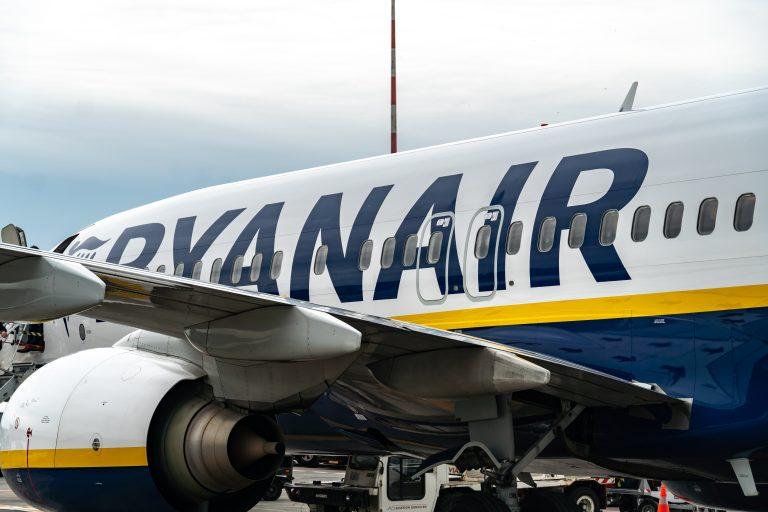
Ryanair Holdings plc (LON:RYA) have reported strong festive trading on Monday morning, as shares have sustained in green.
Across its third quarter, which included the festive period the budget airline reported a profit which teased shareholder’s excitement.
Notably, Ryanair saw a loss last year and the update today certainly shows progress in what seems to be a volatile airline industry.
In the three month period to December 31 – the airline firm recorded operating profit of €91.3 million, compared to a loss of €68.0 million for the same period a year before.
Additionally, the firm saw traffic rise 6% giving a total of 36 million customers.
Notably, total operating revenue in the third quarter was up 21% year on year to €1.91 billion from €1.58 billion. Traffic rose 6.2% to 35.9 million, while revenue per passenger grew 13%. Additionally, the budget airline saw its load factor increase by 1% from 95% to 96%.
Looking at total operating expenses, Ryanair noted that these increased by 9.7% to €1.81 billion from €1.65 billion.
Ryanair said “Our fuel bill rose 14% (+€83m) to €0.7bn due to higher prices and 6% traffic growth. Ex-fuel unit costs rose by 1% due to higher staff (increased pilot pay, higher crew ratios as pilot resignations have slowed to almost zero) and maintenance costs (older aircraft longer in the fleet due to the Boeing MAX delivery delays), offset by falling EU261 costs due to improved punctuality.”
Adding “Our fuel is 90% hedged for FY20 at $71bbl and 90% of our FY21 fuel is now hedged at $61bbl, delivering over €100m fuel savings into FY21. We continue to negotiate attractive growth deals as airports compete to win Ryanair’s very limited traffic growth.”
Looking forward, the firm remained confident despite operational and productional delays from Boeing (NYSE:BA).
Ryanair said that the first deliver of new MAX aircrafts will not arrive till September or October 2020, however these have been dubbed as “game changer” aircraft giving 4% more seats with 16% less fuel burn.
Speaking on Boeing delivery timeframes, the budget airline said “Due to these delivery delays, we won’t see any of these cost savings until late FY21. As a direct result of these delivery delays, we plan to extend our 200m p.a. passenger target by at least one or two years to FY25 or FY26.”
Guiding forward, the firm remained confident about their ability to deliver results in a tough market saying:
“As announced on 10 Jan., Ryanair’s FY20 PAT guidance has risen to a range of €0.95 billion to €1.05 billion thanks to stronger Christmas and New Year travel bookings, at better than expected fares. Q4 forward bookings are 1% ahead of this time last year at slightly better than expected average fares and we now expect full year traffic to grow by 8% to 154 million guests. Ancillary revenues continue to grow, but at a slower rate having annualised the cabin bag changes in Nov.
This will support full-year revenue per guest growth of between +3% to +4%. The full year fuel bill will rise by €440 million and ex-fuel unit costs will increase by approx. 2%. On the basis of current trading, Ryanair expects to finish close to the mid-point of the new PAT guidance range. This guidance is heavily dependent on close-in Q4 fares and the absence of any security events.”
November passenger figures
Ryanair saw their passenger numbers climb across November, which was one of many reasons why the firm swung to a profit in the four month period.
November traffic rose by 4.0% year-on-year to 10.5 million from 10.1 million and in Lauda, by 67% to 500,000 from 300,000 last year.
Notably, this came after a cut in production and profit estimates and a series of slow updates where the airline industry had been hit by external shocks.
Boeing delays weigh on Ryanair
In December, Ryanair announced that they had intentions to close two more bases following a shortage of Boeing 737 MAX aircrafts being delivered.
Ryanair said it now expects to receive just 10 MAX aircraft rather than 20 as previously predicted.
The Irish budget airline said that as a result of the aircraft delivery delays, it has cut its traffic growth forecast for the year to March 31, 2021, by 0.6% to 156 million passengers from 157 million.
Receiving just half the 737 MAX aircraft means Ryanair will also close two more bases in summer 2020, in Nuremberg, Germany, and Stockholm Skavsta, located roughly 100 kilometres from the Swedish capital.
Certainly, the production delays are not just weighing up on Ryanair but many competitors as well.
Despite these delays, it seems that Ryanair have managed to pull a rabbit out of the hat, and have given shareholders a very impressive update on Monday.
Shares in Ryanair trade at €15 (+4.51%). 3/2/20 11:06BST.