Sage shares crash following slumping profit reports

0

Shares in The Sage Group plc (LON: SGE) have crashed on Wednesday morning, after the firm reported mixed annual results.

The Sage Group is a British multinational enterprise software company, which have applications with accounting and finance practice.

Shares of Sage Group crashed 3.58% to 715p on Wednesday following the disappointing results. 20/11/19 12:30BST.

The FTSE100 (INDEXFTSE: UKX) listed firm said to shareholders that it had experienced strong recurring revenue growth but a decline in annual profit.

The accounting software business said that for the financial year that ended September 30, revenue was up 4.9% to £1.94 billion from £1.82 billion in financial 2018.

Organic revenue growth was 5.6% to £1.8 billion from £1.7 billion, underpinned by software subscription revenue growth.

Profit before tax was £425.0 million, down 11% from £475.0 million in 2018. Underlying profit before tax was down 9% to £361.0 million, compared to £398.0 million in 2018.

Sage increased its full-year dividend by 2.5% to 16.91 pence from 16.50p “in line with the policy of maintaining the dividend in real terms”, which may act as a consolidation to shareholders.

The company alluded to expectations of recurring revenue growth of 8-9% in the new financial year.

The revenue growth will be driven by its push into software-as-a-service offerings on the Sage Business Cloud. Meanwhile other revenue, including software and software-related services, is expected to decline “by high single digits”.

Chief Executive Officer Steve Hare said: “We will continue to prioritize high-quality recurring revenue growth over SSRS, and whilst we do not expect a linear progression in financial performance during this multi-year transition, our recent strong performance and continued progress towards becoming a great SaaS company means that we look forward with confidence.”

The software and technology industry has seen mixed experiences by firm, with many businesses seeing volatile share prices.

Firms such as Kape Technologies (LON: KAPE) saw their shares rally yesterday after a deal was agreed to purchase PIA. Following the same trend, Sophos Group (LON: SOPH) saw their shares rally after a strong update.

The industry has been volatile, however shareholders of Sage may be concerned about the profit figures in the update.

A mix of uncertain market conditions and poor company performance can be said as the main cause for this slump, but the confidence of Sage should reassure shareholders for future outlook.


Finsbury Food shares slip despite rising sales

1

Finsbury Food Group PLC (LON: FIF) have seen their shares slip despite reporting higher sales in a recent update.

Shares of Finsbury Food slipped 1.29% to 84p on Wednesday. 20/11/19 12:10BST.

The firm outlined strong trading figures by saying that sales were up in the first half of its current financial year and expects to meet market expectations.

Interestingly, main rival Greggs (LON: GRG) reported strong trading figures a week ago, which causes shares to rally.

Additionally, firms in the food and drink industry such as Treasury Wine Estates (ASX: TWE) and Coca Cola (LON: CCH) have given shareholders renewed optimism following strong trading updates.

Speaking at the baker’s annual general meeting, Non-Executive Chair Peter Baker said the company has maintained momentum from its previous financial year, which ended June 29, with “strong” core business growth.

In the first four months of the new financial year, which ends in June 2020 the firm saw a 6.4% climb in sales to £101.5 million which will please shareholders in an uncertain market.

The firm dedicated the sales rise to its UK retail and food service performance, plus new business victories and further innovation across the group and company.

“Whilst the wider macroeconomic and political environment remains challenging in the UK, the group is in its strongest position in recent years, and the board is confident in achieving market expectations in financial 2020,” said Baker.

Finsbury Food are not the first firm to allude to tough market conditions as a dampener on business. Certainly, the ongoing Brexit saga is becoming a huge obstruction to the progression of British business, and is an issue which legislators need to tackle. Amid all the uncertainty, it seems that Finsbury have managed to overcome the struggles and produce a pleasing set of interim results. However, the worry lies with the consumer base of the UK which has led to slumps and collapse on the British high street.

Liontrust publish respectable interim update

0

Liontrust Asset Management PLC (LON: LIO) have reported a sharp rise in net assets over the interim period, in an update to shareholders published on Wednesday.

The firm reported a strong trading period for its fund management sector combined with growing profit and higher interim dividend payout, which will please shareholders.

Shares of Liontrust slipped 0.13% to 894p. 20/11/19 11:56BST.

In July, the firm reported an AUM in its quarterly update and the results that were published today follow similar trend.

At September 30, the fund manager’s assets under management totalled £14.65 billion, up 16% from £12.67 billion at March 31. Liontrust’s UK Retail funds grew 16% over the first half to £12.02 billion.

On Monday, Liontrust’s AuM stood at £17.89 billion. The fund manager completed the acquisition of Neptune Investment Management Ltd in October, which added £2.73 billion to total funds.

In the six months to the end of September, Liontrust recorded £1.37 billion in net inflows, with the company’s UK Retail funds contributing £1.17 billion of those positive flows. Market & investment performance added £627 million to the total AuM.

Chief Executive John Ions said: “I am delighted to report another strong period of performance for Liontrust. The success of the business reaffirms our continued strategy of investing in our fund management capability, distribution, brand and administration.

“The positive net inflows for our teams shows the enduring appeal of active fund management when investors can see the added value being provided and their expectations being met. To achieve this, asset managers need investment talent, robust processes, strong administration and oversight.”

Ions continued: “At a challenging time for the asset management industry, our clear focus on the fundamentals for success has enabled us to produce strong results.

“The investment we have made over the past few years into our fund management capability, distribution, brand and administration means we are well positioned to drive the business forward during the next stage of our growth.”

In a market where rivals such as Babcock (LON: BAB) saw interim profit growth, shareholders can be pleased with the update provided.

Additionally, Intermediate Capital Group (LON: ICP) and AJ Bell PLC (LON: AJB) saw their shares rise after respectable trading updates.

Babcock shares slip despite interim profit growth

0

Babcock International Group PLC (LON: BAB) have seen their shares slip on Wednesday despite reporting strong profits gains in its interim results.

Babcock is a provider of engineering and technical services with supports national defense, safes lives and protects communities and have experienced a volatile financial 2019.

Shares of Babcock slipped 2.5% on Wednesday to 531p. 20/11/19 11:34BST.

The firm did report a sharp rise in profit for the first half of its financial year, but it seems that shareholders were not so convinced as share price fell.

The FTSE250 (INDEXFTSE: MCX) listed engineering firm saw falling revenue on step-downs from big projects reaching the end of their tenure.

For the six months to September, the firm reported pretax profit of £152.5 million, which was a huge rise from the £65.1 million figure a year ago.

However on an underlying basis the figure dropped by 18% to £202.5 million from £245.5 million.

Revenue meanwhile dropped by 2.7% to £2.19 billion from £2.25 billion the prior year, with underlying revenue also slipping by 4.7% to £2.46 billion from £2.58 billion.

Babcock said that the revenue dropped because of the step downs in its Queen Elizabeth Class aircraft carriers contract, which contributed heavily to the falling revenue figures.

Revenue declined on the ending of Babcock’s Magnox contract with the UK’s Nuclear Decommissioning Authority, as well as a one-off benefit of £90 million a year before in asset sales related to the group’s Fomdec contract in Aviation.

Statutory pretax profit benefited from the lack of exceptional charge of £120.4 million, which alluded to the restructuring of the oil and gas division.

“Today’s results show we are doing what we said we would do. Our delivery in the first half is in line with our expectations, with good performance across most of the group. In particular, strong performance from our Marine business has offset some weakness in the Aviation sector,” said Chief Executive Archie Bethel.

“If we exclude the step downs resulting from big projects like the aircraft carriers coming to an end, and from the impact of procuring planes last year for the French Fomedec contract, our underlying revenue grew by 3.6%. This momentum, combined with the second half phasing of margin and cash flow that we expect, means I am pleased to confirm that the full year guidance we gave in May remains unchanged,” Bethel added.

Although Babcock did report impressive gains, shareholders have been cautious as reflected by stock price movements this morning. Where competitors such as Ultra Electronics (LON: ULE) and QinetiQ Group plc (LON: QQ) have reported strong trading updates, it seems that shareholders are demanding more from Babcock following the update. The firm still has a long way to catch up to global titans such as Lockheed Martin (NYSE: LMT) or Boeing (NYSE: BA) who have experienced a strong trading year with continued demand.

Aviva shares crash following Hong Kong update

2

Shares of Aviva plc (LON: AV) have crashed on Wednesday morning, after the firm announced plans to sell off its Hong Kong division.

Shares of Aviva crashed 3.92% to 401p. 20/11/19 11:19BST.

On Monday, the FTSE100 (INDEXFTSE: UKX) listed firm announced that it was determined to turn its slump in Chinese and Singapore operations around.

After Bloomberg reported that rival companies MS&AD Insurance Group (TYO: 8725) and Manulife Financial Corp (TSE: MFC) had submitted bids, it seemed that Aviva were determined to make Singapore operations work.

CEO Maurice Tulloch announced plans to overhaul overseas and Asian operations, however the optimism that was sparked on Monday seems to have fallen through.

Hong Kong is currently in political and economic turmoil, with violence and protests flooding global news headlines. The economy has collapsed into recession and the ability to trade for multinational firms has been hindered by heightened political tensions with China.

The insurance firm said it will simply its business structure into five operating divisions and sell its stake in the Hong Kong business to co-investor Hillhouse Capital.

“I am committed to running Aviva better,” said Tulloch ahead of a presentation to investors on Wednesday.

“We will be more commercially focussed, manage costs rigorously and be more disciplined in how we invest,” he added.

Additionally, Aviva set targets for the next three years. The highlights being a 12% return on equity, a £300 million net cost saving and an aim to generate a cash flow between £8.5 billion and £9.5 billion.

However, shareholders can be appeased a the firm alluded to operating profit staying in line with management expectations.

Aviva have a lot to consider about their Asian operations, as they still hold investment in Vietnam and Indonesia.

In tough market conditions, competitors such as Lloyd’s (LON: LLOY) have seen a slump in their third quarter profits which shows that the slumps may not be entirely the fault of Aviva.

Bluejay Mining announce share placing plan

2

Bluejay Mining PLC (LON: JAY) have announced a planned placing and share subscription on Wednesday, in order to raise funds for development projects.

The mining firm announced that the shares will be issued in order to raise funds for developing operations in Greenland.

Shares of Bluejay Mining dipped 0.69% after the announcement and are trading at 10p. 20/11/19 11:06BST.

BlueJay mining will raise £11.5 million through the issue of 115 million shares priced at 10p each.

Interestingly, the funds must be urgently required as the price offered reflected a 3.1% discount to the closing price on Tuesday evening of 10.32p.

Bluejay announced two waves of fundraising as highlighted in the update:

Phase one will entail a firm placing raising £7.5 million through the issue of 75 million shares.

Phase 2 will raise £4 million shares through a share subscription of 40 million shares by Greenlandic and Danish government investment funds, Greenland Venture AS and Vaekstfonden.

Bluejay followed a similar trend as competitors Thor Mining (LON: THR) Amur Minerals (LON: AMC) who made similar announcements a fortnight ago, in order to raise funds for new discovery operations.

Proceeds from the fundraise will go towards advancing the Dundas ilmenite project towards a mining licence grant, and the launch of maiden drilling campaigns at the Disko-Nuussuaq project and Langerluarsk project in 2020, both of which require government approval.

“We are delighted to have received strong support from two important Greenlandic and Danish Government backed institutions. This support demonstrates the mutual desire to grow the country’s mineral resource industry and we hope that Bluejay will be that vanguard,” said Chief Executive Officer Roderick Mcillree.

Shareholders may not be so optimistic, as this may devalue their holdings. However, if discoveries are made by Bluejay in their Greenland operations then this may act as a consolidation and see long term benefits. BlueJay will have to act fast considering the pace of the mining sector where big timers such as Hochschild Mining (LON: HOC) and Serabi Gold (LON: SRB) have made significant gains in their respective updates.

Bodycote shares rally on strong second half trading

0

Bodycote PLC (LON: BOY) have seen their shares rally on Tuesday, after the firm reassured shareholders on strong second half trading figures.

Bodycote saw their shares rally 2.94% on Wednesday morning to 859p. 20/11/19 10:51BST.

Bodycote is a supplier of heat treatments, metal joining and hot isostatic pressing and coating services.

Bodycote said that its performance for the four moth period ending October 31, matched the first half.

Additionally, the FTSE250 (INDEXFTSE: MCX) listed firm gave full confidence for its annual results to be in line with both market and analyst expectations.

In the period from July 1 to October 31, Bodycote said it recorded £244.7 million in revenue, 1% higher than in the same period year before.

Revenue for the 10 months to the end of October was flat year on year, with Bodycote saying its performance showed a “marginally” improving trend on the first-half growth rate.

ADE revenue also increased 6% to £103.4 million, and was up 3% for the ten month period. ADI revenue fell 3% to £141.4 million in the four month period, and slumped 5% for the ten month period.

“Bodycote’s performance in the period reflected a continuation of the trends of the first half, with civil aerospace revenues growing strongly; and the automotive and general industrial market sectors remaining soft,” the company said.

The company added: “Cost control initiatives remain a priority, with a particular focus on the areas of our operations where we are seeing revenue weakness. Consequently, margins and underlying cash generation remain strong. Overall, Bodycote’s board is confident that the group’s full year result will be in line with current market expectations.”

Bodycote said its Specialist Technologies’ revenue grew by 6% in the period versus the year before, with Emerging Markets revenue growing 14%.

Civil aerospace revenue grew ahead of the background market, the company said. Total civil aerospace revenue grew 14%, with North American growth boosting the business.

The market has been volatile for Bodycote, and competitors such as Oerlikon (SWX: OERL) and Kennametal Inc (NYSE: KMT) have seen their shares fluctuate. However, the confidence of Bodycote backed with the results should be enough to tease shareholder optimism.

Mitchells and Butlers shares spike on strong profit growth

1

Shareholders of Mitchells & Butlers plc (LON: MAB) have seen shares spike on Wednesday morning after the firm reported strong profit growth in financial 2019.

Shares of the FTSE250 (INDEXFTSE: MCX) listed firm spiked 5.94% on Wednesday to 472p. 20/11/19 10:39BST.

The firm reported strong growth in financial 2019, with an increase in profit deduced to rising sales in a tough environment.

The results will be pleasing for the firm, as rivals have had mixed experiences in the uncertain market conditions.

Competitors such as Greene King (LON: GNK) and Whitbread (LON: WTB) have been hit headlines of slowing business and takeover bids, and this performance shows that Mitchells and Butlers seem to be handling matters well.

However, headliner JD Wetherspoon (LON: JDW) reported strong profits in their third quarter, which may create stiff competition for Mitchells and Butlers.

In the 52 weeks to September 28, Mitchells & Butlers recorded £177 million in pretax profit, 36% higher than the £130 million reported the year before.

Revenue grew 4.2% year on year to £2.24 billion from £2.15 billion, with total sales up 3.9%.

Total like-for-like sales grew by 3.5%, with strong performances across all of Mitchells & Butlers brands contributing to “continued, consistent outperformance” of the market, the company said.

“The work we have undertaken, principally through our Ignite programme of initiatives, is driving a strong trading performance and generating profit growth whilst we continue to invest in our estate and pay down debt,” the company said.

Chief Executive Phil Urban commented: “These strong results reflect the work we have done over the last few years, first to build sustained sales growth and then to convert that into profit growth.

“It has been extremely encouraging to see an improvement in like-for-like sales growth across the portfolio during the year, fuelled by our Ignite programme of work. This puts us in a stronger position as we move forward into the next financial year, in what we expect to remain challenging market conditions.”

“Ordinarily we expect a drag on profit in the year of investment due to lost trade during closure and the cost associated with opening the invested business. This year we have been focusing on enhancing the ‘in year’ return of our investment projects and have eliminated profit drag by reducing closure time, more efficient use of resources and setting businesses up for success from the first day of trading,” the company added.

In the first seven weeks of the new financial year, Mitchells & Butlers said like-for-like sales have grown by 1.4%, having “continued to outperform the market in a period of adverse weather”.

The company added: “The market remains challenging with a high level of macro uncertainties, but we will remain focused on maintaining a strong balance sheet and reducing our net debt whilst positioning the business to generate value for our stakeholders.”

Mitchells and Butlers boast a portfolio of brands including Harvester, Toby Carvery, All Bar One, Miller & Carter, Premium Country Pubs, Sizzling Pubs, Stonehouse, Vintage Inns, Browns, Castle, Nicholson’s, O’Neill’s and Ember Inns.

Kingfisher shares sink following disappointing update

2

Kingfisher plc (LON: KGF) have seen their shares sink on Wednesday as the firm updated shareholders with a set of disappointing results.

Kingfisher are a DIY retailer that have operations across the world, but have boasted strong trading figures in Europe in recent years.

Shares in Kingfisher sunk 5.7% to 196p. 20/11/19 10:26BST.

The poor set of results follow a disappointing interim update in September, where the firm saw its half year profits fall significantly.

The FTSE100 (INDEXFTSE: UKX) listed firm said trading in the three months to October was “disappointing”, with sales falling 3.7% to £2.96 billion.

Like-for-like revenue slipped 3.7%. Kingfisher said this “reflects continuing disruption from new range implementations, lower promotional activity and ongoing operational challenges in France, and softer market conditions in our main markets”.

“My early assessment is that we have not found the right balance between getting the benefits of group scale and staying close to local markets. We are suffering from organisational complexity, and we are trying to do too much at once with multiple large-scale initiatives running in parallel,” said chief executive Thierry Garnier, who was brought in to turn the company’s fortunes around.

“I am proud to be leading a group with strong assets, excellent market positions, differentiated business models and strong brands,” he said.

B&Q sales sank 3.5% year on year to £820 million, slightly offset by an eight per cent rise in Screwfix sales to £477 million.

Richard Hunter, head of markets at Interactive Investor, said Garnier “could be forgiven for thinking that he has been handed a poisoned chalice”.

He added that Kingfisher’s transformation plan has not been effective and the firm’s vast complexity leaves it vulnerable to nimbler competitors, leading to plunging sales.

“Unfortunately the near-term outlook from the company is equally bleak and the new CEO will have the combined challenges of both assimilating Kingfisher’s culture for himself as well as making the necessary improvements to the company’s fortunes.

“This further decline brings Kingfisher’s status as a FTSE 100 constituent into question and without some improvement in the lead up to the December reshuffle, the company is a strong contender for relegation,” he said.

Kingfisher are one of many firms who have seen slips in the DIY and homebuilding industry, established names such as Barratt Developments (LON: BDEV) have seen slow sales in their most recent update. Additionally, Galliford Try (LON: GFRD) and Bovis Homes (LON: BVS) agreed a merger deal in order to combat the slump in demand and slow trading period.

Fever-Tree loses its sparkle in UK

4
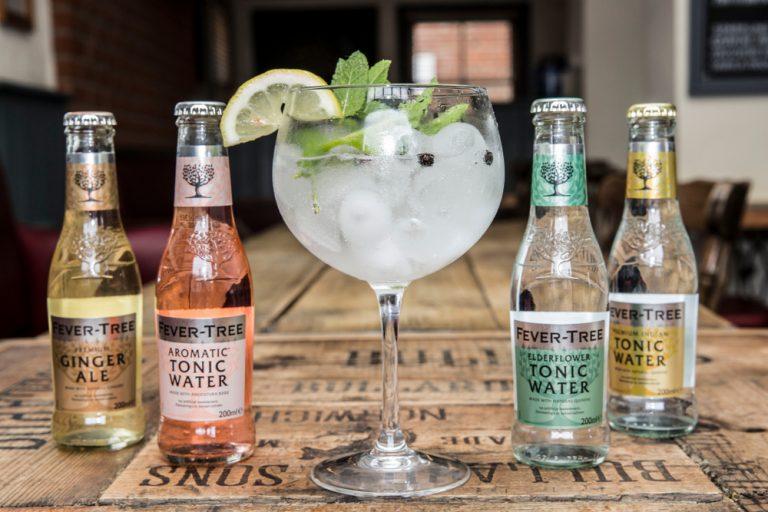
Fever-Tree (LON:FEVR) warned on Wednesday that “short-term headwinds” in its UK market will hit its revenue for the full year. Shares in the producer of drink mixers were up during Wednesday morning trading. Fever-Tree blamed tough comparators with last summer and a slowdown in consumer spending. “Our performance has been behind our expectations in the second half as we continued to lap very tough comparators in July and August and more recently seen a slowdown in consumer spending, as reflected in the wider retail data,” the company said in a statement. Fever-Tree said that it now expects revenue for the full year to lie within the £266 million to £268 million range, which represents a year-on-year growth of 12-13%. Earlier this year in March, Fever-Tree saw its annual adjusted core earnings surge, boosted by the UK gin craze. Indeed, Fever-Tree’s premium tonic water is often paired with the alcohol, benefitting from the nation’s growing thirst for gin. However, Fever-Tree’s announcement on Wednesday does not come as too much of a surprise. The company previously warned in July that the UK had seen a moderation in growth rates for the first half of 2019. “We continue to see growth across all four regions. Indeed, sales accelerated in our key growth markets of the US and Europe,” Tim Warrillow, CEO, commented on the announcement. “Fever-Tree’s progress in the US is particularly encouraging and the signing of a US bottling partner is a further step in building our operations in this exciting market,” the CEO continued. The CEO said: “Despite challenging comparators, our performance in the UK On-Trade underlines the strength of the brand and while the mixer category in the Off-Trade is moderating alongside the recent slowdown seen across the wider grocery channel, we continue to maintain our clear UK market leadership position.” Shares in Fever-Tree Drinks plc (LON:FEVR) were up on Wednesday, trading at +6.26% as of 09:17 GMT.