
Sound Energy set to sell Morocco portfolio stake

Sound Energy PLC (LON: SOU) have announced that they have reached a deal with an unnamed UK company to sell the majority of their eastern Morocco portfolio stake.
The deal will be valued at $112.8 million as highlighted in the investor update on Wednesday morning.
Back in May, the Moroccan-focused gas company has decided to explore monetisation options for its interests in the Tendrara production concession, the Greater Tendrara petroleum agreement and the Anoual permits, with a view to assessing a sale of this eastern Morocco portfolio prior to a final investment decision.
The last 12 months have been very mixed for Sound Energy, and shares have been volatile.
Less than a year go, shares sunk in December to a 52 week low, but since then recovery has been made which will appease shareholders.
In the mining and gas industry there have been disruptions as the more established names have been hit by lower profits, showing global supply and operational issues.
Last week, it was reported that Shell’s (LON: RDSB) profits had sunk due to low oil prices.
Competitors such as SABIC (TADAWUL: 2010) reported an impairment loss of $400 million, and Total SA (LON: TTA) to report slower profits as profits fell 15% in the third quarter update.
Sound Energy have reported that the announcement was made to sell its Moroccan portfolio, the company has since entered into non-disclosure agreements with 23 companies and which resulted in the company receiving a number of non-binding offers.
In the Wednesday update, Sound Energy said it has granted an unnamed purchaser an exclusivity period, expiring on February 14 next year.
This was to finalise a binding sale & purchase agreement for 51% of Sound Energy’s stake in the eastern Morocco portfolio for $112.8 million.
“The proposed transaction being progressed on an exclusive basis funds development of the Tendrara project, provides early monetisation of a substantial part of our established gas resources and retains upside for our shareholders through both future gas production and further exploration drilling,” said Chair Simon Davies.
The company said it will also provide the undisclosed purchaser with a one-year option to acquire a further 9% of Sound Energy’s remaining interest in eastern Morocco portfolio.
Apax Global Alpha receive third quarter boost
Apax Global Alpha Ltd (LON: APAX) reported a strong third quarter performance in their recent trading update, after growth came from a blooming performance from its private equity portfolio.
The company, which invests in private equity and derived investments, reported a total net asset value return of 4.9% for the three months ended September 30.
This compared to a 1.8% total return in the same period of 2018, which would have been pleasing for shareholders.
Of the 4.9% total NAV return, 3.1% came from private equity, 0.6% from derived debt, and 2.3% from foreign exchange.
Derived equity deducted 0.6% from total NAV return, while costs & other movements deducted 0.3% and performance fee adjustment subtracted a further 0.2%
Apax Partners Chief Operating Officer Ralf Gruss said: “The results for the September quarter reflect the continued momentum of [Apax Global Alpha] seen throughout the year. Excellent performance in private equity reflects mainly value creation from the Apax VIII and Apax IX fund portfolio companies. Returns from derived debt were strong, and weighting of derived equity in the portfolio was further reduced.”
In the last 12 months trading to September 30, total return was 18% which Apax Global Alpha attributed to the strong performance of its private equity portfolio and gains on foreign exchange.
In 2018, the 12 month figure for total NAV return to September 30 was 12%.
The investor’s adjusted net asset value was €1.06 billion, up from €1.03 billion on June 30 and €937.3 million year-on-year.
Adjusted NAV excludes Apax Global Alpha’s €4.6 million performance fee reserve on September 30.
Adjusted NAV per share was €2.15, rising from €1.91 a year before and from €2.10 at the end of June, showing strong performance from the second quarter update.
As a result, the share price of Apax Global Alpha reached a new yearly high.
The stock has a market capitalization of $809.33 million and a PE ratio of 8.49.
The firm’s fifty day moving average price is GBX 158.41 and its two-hundred day moving average price is GBX 141.19.
Shares of Global Apax Alpha are currently trading at 165p per share. 6/11/19 11:51BST.
South32 sell South African coal operations

South32 Ltd (LON: S32) have agreed to sell a major South African coal unit, as highlighted in a shareholder update on Wednesday morning.
South32’s South African subsidiary coal unit will be sold for ZAR100 million in an upfront payment deal, as the report outlined.
The miner’s 92% holding in SA Coal Holdings Proprietary Ltd will be bought by a subsidiary of South African coal miners Seriti Resources Holdings Proprietary Ltd, a local community trust, and an employee trust.
Each trust will take a five percent stake each, with Seriti holding 82%.
The remaining eight per cent not included in the deal, is held by industrial investors Phembani Group Proprietary Ltd.
South32 Chief Executive Graham Kerr said “I am pleased to announce we have entered into an agreement with Seriti, a black-owned and operated South African mining company. We ran an exhaustive and competitive process and we believe Seriti as an established operator is ideally positioned to unlock the potential of South Africa Energy Coal’s existing domestic and export operations, including its significant untapped resource base.
“The sale of our interest in South Africa Energy Coal will enable the business to continue to operate safely and sustainably into the future for the benefit of its employees, customers and local communities, consistent with South Africa’s transformation agenda. For South32, this marks an important milestone as we continue to reshape our portfolio. Completion of this transaction will substantially reduce our capital intensity, strengthen our balance sheet and will improve the group’s operating margin.”
Seriti will make an up-front cash payment of about 100 million rand ($6.8 million), based on an enterprise value of 1.25 billion rand, to acquire South32 SA Coal Holdings Proprietary Ltd, South32 said in a statement.
This is an interesting move for the London based metal extractor where rivals have seen mixed updates.
Industry competitors such as Serabi Gold (LON:SRB) boasted strong growth in their third quarter, whilst Antofagasta (LON: ANTO) have faced tough political conditions which has hindered production.
Shares of South32 were 1.92% to the good, to trade at 142p per share. 6/11/19 11:38BST.
Intu shares crash after income expectations fall
Intu Properties plc (LON: INTU) have seen their share price crash after expectations for revenue income have fallen for financial 2019.
The retail property giant said that forecasts for 2019l like-for-like net rental income was likely to be down by roughly 9% compared to last year, alerting shareholders.
Additionally, half the reduction would come from the impact of controversial cost-cutting insolvencies known as company voluntary arrangements (CVA).
Retail giants including Sir Philip Green’s Arcadia and Monsoon have both embarked on CVAs to close stores and cut jobs amid an industry downturn.
New rent in the nine months to 30 September 2019 hit £19 million, falling from £32 million during the same period last year.
On a positive note for the property firm, footfall rose 0.9% “significantly outperforming Springboard footfall monitor for shopping centres which was down on average by 2.4 per cent”, the group said.
In their third quarter update, Intu reported that 7 long-term leases amounting to £5m in annual rent, compared with 84 leases equalling £15m in annual rent in the same period a year ago.
In the sector, competitors have been quick to move amidst slowing business revenues and tough market conditions.
Growthpoint (JSE: GRT) are close to formalizing a deal for UK based Capital and Regional (LON: CAL) in a reported £150 million deal.
“In the last quarter, we have continued to face challenging market conditions along with the rest of the sector. In particular, CVAs were slightly worse than expected,” said chief executive Matthew Roberts.
He added: “In the face of these challenges, there is much that gives me confidence about intu. Many of our top customers are global, well capitalised businesses and having visited 17 Intu centres in recent weeks, there is a very different feeling on the ground to the one we read about regularly.
“Our centres are busy with footfall and occupancy significantly above the industry benchmarks. We know we have the best centre in each city and region that we operate.”
“We have also seen a pick-up in letting activity in recent weeks which has seen Harrods take 23,000 sq ft at Intu Lakeside to launch its first standalone beauty store, H Beauty, and Zara sign for a new flagship store at St David’s, Cardiff,” Roberts said.
Shares of Intu have plummeted 19.21% after the forecast and are trading at 32p per share. 6/11/19 11:24BST.
Xerox consider move to takeover HP

Xerox (NYSE: XRX) have announced their intention to propose a takeover offer to pc manufacturer HP (NYSE: HPQ).
This comes at no surprise after it was reported that Xerox had sold its 25% stake in Fuji Xerox, its partner firm with Fujifilm Holdings Corp (TYO: 4901).
The move to sell shares was so that further mergers could be financed, and the move to HP shows a statement of intent by Xerox.
The cash and stock offer comes at a premium to its market value of about $27 billion, as a it was reported on Tuesday morning.
Xerox have been quick to express their interest in HP, however there is no certainty that the deal will end in a merger.
Xerox had scrapped its $6.1 billion deal to merge with Fujifilm last year after lobbying by two of its main investors, Carl Icahn and Darwin Deason.
HP have been struggling to stimulate business following a slow quarterly update, and this move could be one that benefits both firms.
HP was once a pinnacle of American technology, but the rise of smart technology and the power of firms such as Apple (NASDAQ: AAPL) and Samsung (KRX: 005930) have taken business from HP.
HP’s printing business, a major source of profit, has seen falling sales and recently was dubbed a “melting ice cube” by analysts at Sanford C. Bernstein.
This is a bold move from Xerox, and clearly one which is driven by motivation to dominate the market.
In HP, Xerox will acquire a household established name with strong trading figures as back up over recent years.
As this deal only enters its initial phase, there is still much room for collapse.
Regulators will look at this deal and assess whether this will have a significant impact on competition, but subject to approval this could be a great snipe from Xerox.
Shares of HP have spiked 2.22% this morning, trading at $18 per share. 6/11/19 11:12BST.
Mothercare descend into administration
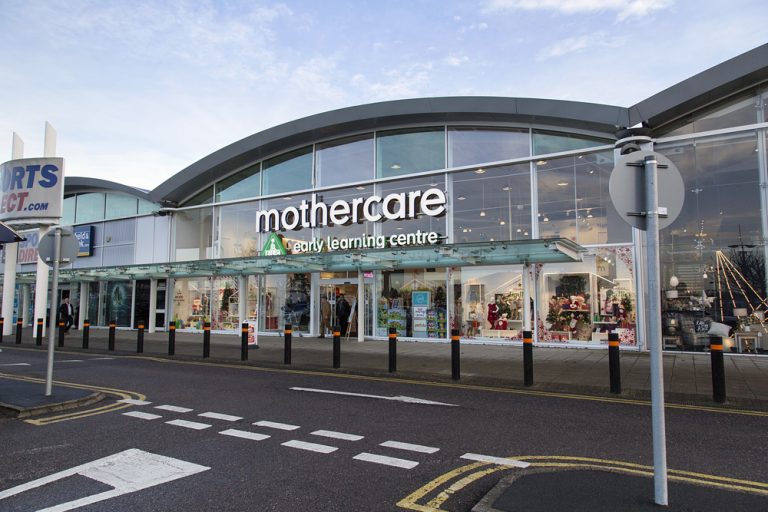
Mothercare plc (LON: MTC) have announced that the company has entered administration, which will cease all business operations.
On Monday, it was announced that the British high street retailer was close to collapse after being listed on the London Stock Exchange (LON: LSE) since 1971.
Earlier this year in May, the British retailer posted a £66.6 million pre-tax annual loss for 2018, but insisted that the completion of its UK store closure programme left the business on a “sounder financial footing”.
No further ground has been recovered by Mothercare which has led to its collapse and its expected departure from the British high street.
After the announcement was made, it was revealed that up to 2,500 jobs will be at risk which has given employees concerns.
Mothercare joins Thomas Cook (LON:TCG), in another British firm to collapse due to massive losses and tough market conditions.
Other high street favorites have been finding trading tough and the sink in profits for firms such as Dunelm (LON: DNLM) and McColl’s (LON: MCLS).
All 79 of Mothercare’s UK stores are set to shut as administrators get the ball rolling to close this case.
The UK firm “has been loss-making for a number of years”, but international franchises are profitable, PwC said.
On Monday, it was announced that the baby goods firm was not making sufficient profits and that management had failed to find a buyer.
Joint administrator Zelf Hussain said: “This is a sad moment for a well-known High Street name,” adding that Mothercare “has been hit hard by increasing cost pressures and changes in consumer spending.”
“It’s with real regret that we have to implement a phased closure of all UK stores. Our focus will be to help employees and keep the stores trading for as long as possible,” Mr Hussain said.
Mothercare have made a pledge after the collapse to protect their pension schemes to ensure that losses are limited.
Mothercare chairman Clive Whiley said there was “deep regret and sadness that we have been unable to avoid the administration of Mothercare” and that the board “fully understand the significant impact on those UK colleagues and business partners who are affected”.
He added: “However, the board concluded that the administration processes serve the wider interests of ensuring a sustainable future for the company, including the wider group’s global colleagues, its pension fund, lenders and other stakeholders.”
Whilst Mothercare have announced the closure of all their stores, established names such as Marks and Spencer (LON: MKS) have been put into red, after profits have plunged and planned store closures.
The collapse of Thomas Cook and Mothercare do allude to a larger problem on the British High Street.
In 2018, according to PWC research almost 2,500 high street shops closed, which will come as a massive concern to entrepreneurs and legislators.
Marks and Spencer’s profits plunge alerting crisis
Marks and Spencer Group Plc (LON: MKS) have worried shareholders in their recent trading update, profits plunged and a sales in clothing collapsed.
Chief Executive Steve Rowe alluded to several factors which had caused the slump including blamed the 5.5% decline in like-for-like clothing sales in the first six months of its financial year on supply chain problems and buying errors that meant popular sizes quickly sold out in store and online.
Additionally, the slump in clothing sales contributed to the poor performance in the online shopping sector where sales barely grew – an outcome it admitted was “less than planned”.
Rowe said: “We are making up for lost time. We are still in the early stages but we are clear on the issues we need to fix and, after a challenging first half, we are seeing a positive response to this season’s contemporary styling and better-value product.”
However, there was a stronger performance in Marks and Spencer food halls, which allowed some breathing space for the supermarket giant.
Food sales returned to growth over the period, with like-for-like sales up 0.9%.
The retailer has cut the price of hundreds of everyday products and introduced new ranges in a bid to be seen as a supermarket rather than a convenience chain.
Marks and Spencer are just one of many supermarkets such as Tesco (LON: TSCO), Sainsbury (LON: SBRY) and Walmart owned Asda (NYSE: WMT) who are struggling to compete with foreign competitors such as Lidl or Aldi.
The Big 4 supermarkets have introduced fresh initiatives to try and stimulate demand outside of price competition.
Marks and Spencer are facing an internal crisis currently, with profits sinking drastically amid stiff competition and tough market conditions.
The retailer has pledged to close 120 stores and has struck a deal with Ocado (LON: OCDO)
M&S reported a 17% decline in pre-tax profits of £176.5 million on sales of £4.9 billion.
M&S said the store closures would reduce clothing sales by 2% rather than the 3% previously thought but warned that its profit margins would come under pressure in the second half.
After recovery was made by striking this deal with Ocado, the senior board at Marks and Spencer have other issues to attend to outside of poor business performance.
Marks and Spencer Finance Director, Humphrey Singer announced that he would be leaving at the end of the year, leaving a massive hole in the firm’s senior board.
The poor performance of Marks and Spencer has led to a historic collapse as this morning it fell out of the FTSE100 (INDEXFTSE: UKX) index for the first time.
Shares of Marks and Spencer spiked 2.06% at the announcement of the results.
Shares currently trade at 186p per share. 6/11/19 10:36BST.
London Stock Exchange opens North-American headquarters in Cleveland, Ohio
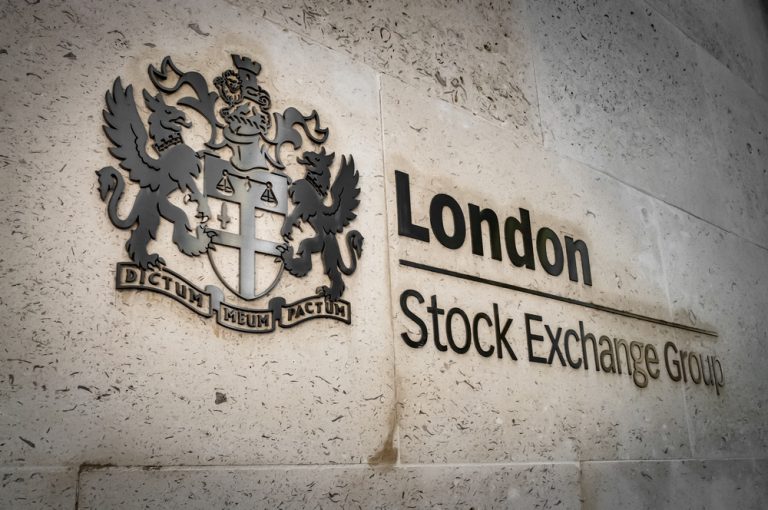
London Stock Exchange Group decides to open the North American headquarters of its Elite initiative in Cleveland, Ohio.
Elite Initiative
London Stock Exchange operates an international business-development initiative called Elite. Elite initiative helps small to medium-sized companies grow. Elite initiative has a successful history of helping small and medium-companies generate growth around the world. For example, Elite helps businesses expand their reach by providing training and networking opportunities. It connects businesses with investors as well as business consultants. Elite’s network has more than 1,200 businesses and investors across 43 countries around the world. London Stock Exchange Group announced that it will open its North American headquarters for the Elite initiative in Cleveland, Ohio. London Stock Exchange Group will start operating its Cleveland headquarters by the start of next year.Cleveland, Ohio
Cleveland is one of the investment hubs of the United States. It is home to important cultural, educational and financial institutions. Furthermore, Cleveland has a growing housing market as more and more professionals move to the city for work. Elite initiative will hire an additional 40 employees with an annual payroll of $5 million. Moreover, Cleveland expects positive annual growth amid London Stock Exchange’s decision to open its headquarters in the city. The benefits of opening headquarters in Cleveland extend beyond the direct employment effect.Global Connection
Elite initiative will build a global connection between Cleveland and the rest of the world by facilitating Cleveland’s access to capital. Moreover, Elite Initiative’s international conference on business development will take place in Cleveland next year. Elite Initiative has never hosted the conference outside of Europe in the past. London Stock Exchange collaborated with JobsOhio, an economic development nonprofit to facilitate the expansion of its business in Northern America.Growth Potential
Cleveland is home to many small and medium-sized enterprises, making the city an ideal location for London Stock Exchange. Furthermore, Cleveland has a long history of institutional investment. Additionally, Cleveland has multiple prestigious universities that are famous for their business programs. Hence, London Stock Exchange recognizes Cleveland’s growth potential in finance, business development and banking.A dull Tuesday for currencies and indices

In the aftermath of a roaring Monday for the Dow Jones, Tuesday was entirely underwhelming. While the DAX and CAC hovered near or above 17 and 12 year highs respectively, the Dow Jones decided to relax, while gold prices hit new daily lows.
Speaking on the day’s movements, or lack thereof, Spreadex Financial Analyst Connor Campbell stated,
“The markets didn’t have that much in them this Tuesday, trading predicated on the vestiges of Monday’s surge of trade optimism.”
“No index really stood out as the day went. The FTSE’s 0.4% increase placed it at the front of the pack, its mining stocks doing a lot of the heavy lifting”
Today in the mining sector, ARC Minerals Ltd (LON: ARCM) uncovered further copper assays, Lucara Diamond Corp (TSE: LUC) was pessimistic in its revenue guidance and MC Mining (LON: MCM) was granted a coal mining right in South Africa.“[However], that still leaves the UK index short of 7400, and lacking the multi-year/all-time highs struck by its peers.”
“The DAX held above 13130 and not much else, struggling to find a reason to build on yesterday’s near-17 month peak. The CAC, meanwhile, shuffled to a fresh 12-year high of 5840 after adding 20 points.”
“Closing Monday at an all-time best, the Dow Jones decided to put up its feet on Tuesday. The US index could only muster a 0.1% increase, keeping it from hitting 27500. It may need to wait for another trade deal update if it is to make any further serious strides.”
“In one of the more notable elements of Tuesday’s trading, investors started offloading their euros, sending the single currency down half a percent against the dollar and 0.4% against the pound (sending sterling back above €1.1622).”
Amryt Pharma boasts 20% year-to-date revenue bounce

Biopharmaceutical research, development and production company Amryt Pharma Holdings Ltd (LON: AMYT) posted impressive impressive fundamentals for the first three quarters.
Elsewhere in health and pharmaceuticals, Curetis NC (AMS: CURE) and Integumen PLC (LON: SKIN) also boasted revenue growth, while Sanofi SA (EPA: SAN) and Deltex Medical Group plc (LON: DEMG) were both less positive.
This followed the Company’s acquisition of Aegerion Pharmaceuticals on the 24th of September 2019.
Following the acquisition, Amryt said that it has two commercial-stage assets – Juxtapid® / Lojuxta® and Myalept® / Myalepta® (lomitapide and metreleptin respectively) – and the infrastructure needed to commercialise these assets in North and Latin American, European, Middle Eastern and African markets.
During the period, the two offerings performed well for the Group. Lomitapide yielded pro forma revenues of $51.1 million, up 6.5% year-on-year for the same period. It was outshone by metreleptin, though, which generated revenues of $61.7 million, up 34.7% on-year.
This led to a total take of $113.1 million in Company revenues for the year-to-date, up 19.7%.
The Company added that it is deploying its proven Lojuxta strategy in Europe to reinvigorate it Juxtapid business in the US market. It also said that the integration of Aegerion was underway, and that relocation of non-customer facing roles from Boston to Dublin were on track.Amryt comments
Dr Joe Wiley, CEO, stated,
“The first nine months of 2019 have been momentous and transformational for Amryt. Through the acquisition of Aegerion, we have evolved from a company with a single asset on the market in EMEA to become a global biopharmaceutical company with two orphan disease products and a commercial infrastructure across North America, EMEA and LATAM.”
“For the nine-month period to 30 September 2019, pro-forma revenues of the combined company have grown by 19.7% compared with the same period in 2018. Myalept has continued to grow in the US where the product is approved for Generalized Lipodystrophy, and we are now in the active launch-phase of Myalepta in EMEA, where this product is approved for both Generalized and Partial Lipodystrophy. It has been pleasing to see Lojuxta continue to deliver revenue growth and we are now implementing in the US a similar strategy to that used to significantly grow Lojuxta in Europe.”
“Looking to our pipeline, our late stage development asset, AP101, for the treatment of wound-related complications in EB, continues to enrol patients in the Phase 3 study following the encouraging outcome of interim safety and efficacy analyses conducted by the Independent Data Monitoring Committee. The study is on track to be fully enrolled in the coming months.”
“Amryt is now very well positioned to execute on our strategy of becoming a global leader in the rare and orphan disease space and most importantly, delivering therapies to patients with unmet needs.”