
China’s GDP falls to a near thirty year low

The GDP of China has fallen, reaching a near low for the first time in thirty years. China have been engaged in a trade war and this has affected Chinese manufacturing, Chinese exports and business.
GDP (Gross Domestic Product) has risen 6% year on year, marking a loss from the 6.2% second quarter growth.
During the ongoing trade war with the United States, it seems that Chinese businesses and investors are monitoring tariffs and sanctions carefully.
This has put pressure on Chinese manufacturing due to lower export revenues and also the trade war continues to spark speculation about a future recession.
Asian stocks have crashed since the data was published, reversing gains made on optimism that the EU and UK would reach a Brexit agreement.
The data also highlighted weaker demand for Chinese goods, both domestically and internationally.
Nie Wen, a Shanghai-based economist at Hwabao Trust said “Given exports are unlikely to stage a comeback and a possible slowdown in the property sector, the downward pressure on China’s economy is likely to continue, with fourth-quarter economic growth expected to slip to 5.9%. Authorities will loosen policies, but in a more restrained way”
The third quarter GDP was the slowest rate of growth since Q1 of 1992, and also took place on the governments full year target growth rate of 6-6.5%.
Even if the US and China manage to strike a trade deal, the long term sanctions placed by Donald Trump do not give a healthy outlook for Chinese business.
The IMF continues to warn the global economy about the implications of the US-China war. They warn international economies that 2019 will be the slowest year of growth since the 08/09 financial crash.
Beijing have utilized other tools in order to stimulate growth, such as fiscal inputs and monetary easing. However, the main obstacle is yet to be resolved.
Zhang Yi, chief economist at Beijing-based Zhonghai Shengrong Capital Management commented “As infrastructure investment is unlikely to rebound strongly, preventing a big slide in property investment will be key for authorities when they try to stabilize next year’s economic growth,”
Washington and Beijing have to make a trade agreement soon to end this feud, amid tensions with Brexit the global economy does not need another strain.
If nothing does come out of either party, then the implications for global GDP could see a potential recession.
Brexit deal: UK property market reactions

News emerged yesterday that a Brexit deal has been struck, and the GBP/USD is trading around 1.29 as we wait for the verdict.
MPs will sit in the House of Commons on Saturday to vote on the deal that has been agreed between the UK and the European Union.
The exchange rate was sent into a frenzy on Thursday following the events connected to the nation’s departure from the European Union.
Reactions have emerged on how the Brexit deal will impact the UK property market.
“The news of a Brexit deal will bring relief to the many European renters currently residing across the UK,” said the Co-founder of the roomshare platform Ideal Flatmate, Tom Gatzen.
“For many, the political purgatory caused by a protracted Brexit process has thrown doubt over their status to live and work in the UK and this has had a direct impact on their ability to rent, how long they can rent for and their commitment to enter into a lengthy tenancy agreement,” the Co-founder of Ideal Flatmate continued.
“Although the devil will very much be in the detail of [the] deal, a light at the end of a very long, dark tunnel should go some way in stabilising this segment of the UK rental sector and we can now get back to living in happy, harmonious households.”
Founder and CEO of Springbok Properties, Shepherd Ncube was relieved that a deal had been reached.
Shepherd Ncube said: “Hallelujah. Against the odds and in the face of doubters, a Brexit deal has now been done and the UK property market can emerge from its dormant state brought about by months of political uncertainty.”
“We don’t yet know the detail, of course, however regardless, the property sector will surely begin to breathe again on the basis of some level certainty being restored and this uplift in market activity should see the cogs of positive price growth and transactions start to climb once again.”
The Director of London lettings and estate agent, Benham and Reeves, Marc von Grundherr, also commented: “The political paralysis that the economy and in particular the housing market has endured these last few months has been torturous for would-be home sellers, buyers, estate agents, conveyancers and mortgage lenders alike.”
“London has certainly taken the brunt of this and while there are no doubt many details left to iron out, we can start to look forward and finally, beyond Brexit. This will bring about a notable change in the fortunes of weary London home sellers and the capital will now regain its title as the cornerstone of the UK property market,” Marc von Grundherr said.
“Foreign investment has remained strong despite the current landscape, but this revival in domestic appetite will fill the tank and see the market shift through the gears, if not immediately, certainly as we see in a new year.”
Will Boris Johnson’s deal make it through Parliament?
Increase in sales leads to increase in share price for Avast

Avast PLC (LON: AVST) posted its third quarter results this morning, showing an increase in total sales despite workplace and business divisions.
The cyber security firm said revenue rose 9% year on year for the quarter ending in September. Revenues were totaled at £170 million.
For the nine months, adjusted Ebitda grew 6.6% to USD 358.5 million.
Chief Executive Ondrej Vlcek said “I’m pleased to report that Avast has delivered good growth in the third quarter, consistent with our expectations at the time of the half year results in August,”
Vlcek added “”We continue to successfully execute our growth strategy, underpinned by our platform distribution model and our global installed base of more than 435 million users.”
The results achieved were consistent with expectations laid out in its half year results results back in August.
The global cyber security firm stated its guidance for adjusted revenue to be at the higher end of single digit growth.
Avast have enjoyed strong demand for VPN’s and privacy software amidst the battles of Brexit, and are one firm who do not seem to be phased by Britain’s status within the European Union.
Currently shares in Avast are trading at 391.6p per share, seeing a 6.01% rise. 18/11/2019 11:04 BST
This follows the good news that Avast set to meet their annual revenue targets whilst looking to expand and grow.
Shareholders of Avast can be thoroughly pleased with the results published.
The report also published impressive figures of EBITDA growing by 6% to $385.5 million.
The cybersecurity market is one that is on the rise, and Avast look to have captured a good segment looking at revenue level looking at recent stories involving Facebook (NASDAQ: FB) and Amazon.com Inc (NASDAQ: AMZN).
Shareholders can be optimistic about annual profit levels, as the Q3 results continue to impress and also meet expectations outlined earlier this year.
If this is the case then shareholders will look to hold onto shares, as stock prices rise as Avast’s revenues continue grow as they develop new Anti-Track software in the early months of 2020.
Marriott set to buy Elegant Hotels causing shares to soar
Marriott International Inc (NASDAQ: MAR) are set to agree the purchase of Elegant Hotels Group PLC (LON: EHG) which has caused the share price of Elegant to soar through the roof.
Marriott International are set to payout 110p per share in cash for Elegant, giving the Marriott Group huge pathways into the Caribbean market.
The agreed deal of 110p per share saw a 57% premium to its price at the close of Thursday trading.
THIS values the AIM listed company at £100.8 million, based on Elegant’s enterprise value of US$199 million and net debt of $68.9 million.
Arne Sorenson U.S. hotelier’s chief executive officer said ““There is a strong and growing consumer demand for premium and luxury properties in the all-inclusive category”
Elegant Hotels , a firm based in St Lucia went public in 2015 and shareholders have seen a surge in their holdings since the move was proposed.
This drives Marriott’s intentions to tap into international markets, particularly in the Caribbean market after the acquisition of Starwood Hotels & Resorts.
The Caribbean retailer said it had faced tough tests due to fluctuations in the sterling, which had hit its share price, reducing the opportunities to pursue growth strategies leading to a change in direction from seniors. This comes as a response from competitors such as Whitbread (LON: WTB) combatting low profits.
Elegant’s non-executive chairman Simon Sherwood. “The board of Elegant Hotels is confident in the group’s long term prospects but believes that this offer represents compelling value for our shareholders and a great opportunity for our employees to be part of one of the world’s leading hotel companies,”
Currently shares in Elegant Hotels are trading at 109.4p per share, seeing a 56.29% surge during the early hours of Friday trading. 18/11/2019 10:34BST.
The decision by Elegant will allow massive expansion opportunities, and will allow Marriott to stampede their dominance in the Caribbean market.
Renault cuts guidance, shares plunge

Renault (EPA:RNO) has revised its guidance for the 2019 financial year as a result of a “less favourable” economic environment.
Shares in the French multinational automobile manufacturer plunged on Friday morning, trading over 12% lower.
Renault said it now expects its group revenue to decline between 3% to 4%, “due to an economic environment less favourable than expected and in a regulatory context requiring ever-increasing costs”.
Meanwhile, group operating margin is expected to be around 5%, the automobile maker said.
Renault added that its revenue for the third quarter amounted to €11.3 billion, down by 1.6% from the €11.5 billion figure recorded in the third quarter of 2018.
The car manufacturer continued to add that “the Automotive operating free cash flow should be positive in H2 while not guaranteed for the full year”.
Moreover, Renault said that is management will review the “Drive the Future” mid-term plan targets introduced in 2017.
According to the Wall Street Journal, Arndt Ellinghorst, an auto analyst with brokerage Evercore ISI, commented on Renault’s announcement, saying that the guidance cut “paints a rough outlook on what might come in 2020 when markets will more likely be tougher and CO2 rules will add significant incremental costs to the system.”
Renault, which has manufactured cars since 1898, sold close to 3.9 million vehicles in 134 countries in 2018.
Elsewhere, it was reported earlier this year in August that British car manufacturing output dropped 10.6% in July, according to new data from the Society of Motor Manufacturers and Traders (SMMT).
Additionally, earlier in October, data revealed that the UK new car market declined in the first nine months of the year as Brexit uncertainty weighs on consumer confidence.
Boris Johnson now faces the task of persuading MPs to support his Brexit deal on Friday.
Shares in the French multinational automobile manufacturer Renault SA (EPA:RNO) were down on Friday morning, trading at -12.44% as of 11:13 BST.
Pound on a rollercoaster as markets recognise Parliament-shaped obstacle

If you can’t wait to hear the end of Brexit, then we’re in the same boat. Today’s deal proposal was as close as I think we’ve gotten to a largely amicable solution, and one where most parties have been able to agree to a compromise. That being said, it is widely expected that Parliament will have its way with the new deal offering on Saturday, with many pundits expecting an outright rejection by the Lib Dems, SNP, DUP and Corbyn loyalists.
The concerns of the Labour faction, in particular, are commendable. Aside from potential stubbornness to let Brexit take place, there are legitimate concerns around working and living standards and opportunistic buy-ups of vital public services; which would affect the lives of most people, irrespective of whether they support Leave or Remain. That being said, there is a sense that Boris will lead the march one way or another, and from the perspective of many a Labour MP, this could and should be seen (at the very least) as the lesser of two evils. Despite this logic, it is expected that MPs will vote in force against the deal, and the rehashed uncertainty this inspires saw the pound double back on its bullish behaviour during the day.
In his regularly anecdotal and enjoyable tone, Spreadex Financial Analyst Connor Campbell talked on the day’s market movements,
“Poor old pound. The currency has spent Thursday in a complete tizzy, its emotional state severely tested by the minute-by-minute Brexit updates.”
“After hours and hours (and hours (and hours)) of negotiations, compromises and concessions, Britain and the EU have a Brexit deal. Yet, as ever, things aren’t that simple. In doing so, Boris Johnson seems to have abandoned the DUP, apparently deciding he can do without their support on ‘super Saturday’ by offering up an agreement the party has refused to back. That makes the deal’s path through Parliament even more difficult, given that the Prime Minister currently has a majority of minus 45.”
“On top of all this, Jean-Claude Juncker has claimed ‘there will be no prolongation’, ruling out an extension if the deal can’t get passed by October 31st. And while there is a healthy dose of scepticism over the strength of this stance – it is more likely a persuasion tactic aimed at getting MPs on board – it nevertheless ratchets up the pressure heading into a historic Commons session this weekend.”
“It’s a lot to take in – and sterling has been there every step of the way. Staring the day in the red following the DUP’s initial rebuttal, the pound found itself tickling $1.30 for the first time since mid-May in the aftermath of the deal-announcement, only to drop back to $1.2836 as Arlene Foster and co. reaffirmed their unhappiness with what has been put forward. Now the pound is flat against the dollar and down half a percent against the euro.”
“With the rest of the markets broadly positive – the Dow crossed 27100 with a 90 point increase – and its banking sector cheering the Brexit developments, the FTSE managed to rise 0.6%. That once against puts the UK index above 7200, a level it has struggled to escape with any longevity since its October-opening nosedive.”
Elsewhere in political and macro economic news, there have been updates from; new Brexit deal agreed, UK economy looks likely to avoid recession, Hong Kong protester shooting and China’s strategy, the Supreme Court rules against Boris, the collapse of Thomas Cook (LON: TCP), the bid for the London Stock Exchange (LON: LSE), Lloyds Banking Group PLC (LON: LLOY), Barclays (LON: BARC) and Deutsche Bank (ETR: DBK).Malta Individual Investor Programme allows investors to buy their way into the EU

Malta established an Individual Investor Programme in 2014 which grants citizenship by investment to successful applicants.
Investors have the opportunity to buy their way into the European Union for a price of approximately $1.3 million by purchasing a Maltese citizenship.
The government of Malta expects investors to make a financial contribution of $730,000. Furthermore, Malta requires that citizens by investment invest at least $167,000 in financial assets.
Additionally, Malta requires citizens by investment to purchase property in Malta for a minimum price of $390,000.
Malta Individual Investor Programme
The Malta Individual Investor Programme is the only citizenship by investment programme that is approved by the European Commission. Furthermore, it is the fourth cheapest citizenship by investment programme in the world. The benefits of the programme can far exceed its costs. Malta allows citizens by investment to apply for a Malta passport which allows visa-free travel to more than 160 countries. Moreover, citizens by investment are granted the right of establishment as well as the right of residence in all European Union countries. Purchasing Maltese citizenship creates further investment opportunities as it allows citizens by investment to start businesses in Malta. Overall, obtaining Maltese citizenship by investment can be extremely valuable in the long term. The citizenship by investment programme enables investors to pass their citizenship on to future generations. Candidates who meet the requirements of the Malta Individual Investor Programme can secure Maltese citizenship in as little as six months into the application process. The U.S dollar strengthened compared to the Euro in the past five years. As a result, the Malta Individual Investor Programme is more affordable for investors who hold wealth that is denominated in the U.S dollar. As a result, the Malta Individual Investor Programme is particularly valuable for those invested in assets that are denominated in U.S dollars. Citizenship or visa by investment programmes have been on the rise in the past five years.Citizenship/ Visa by Investment Programmes
Investors are increasingly interested in purchasing their way into countries that have growth and welfare potential. The United Kingdom introduced its Investor Visa (Tier 1) Programme in 2008 to accommodate the increasing demand for visa by investment. The Investor Visa (Tier 1) Programme grants investors from outside the European Economic Area and Switzerland the right to reside and work in the United Kingdom for a maximum of 3 years and 4 months. Additionally, holders of the Investor Visa (Tier 1) have the right to apply for settlement after 5 years of residing in the United Kingdom if they invest £2 million in financial assets approved by the United Kingdom. The Malta Individual Investment Programme is particularly appealing to citizens of the United Kingdom who are unhappy about Brexit.Why the new Brexit deal might give Jeremy Corbyn a difficult weekend
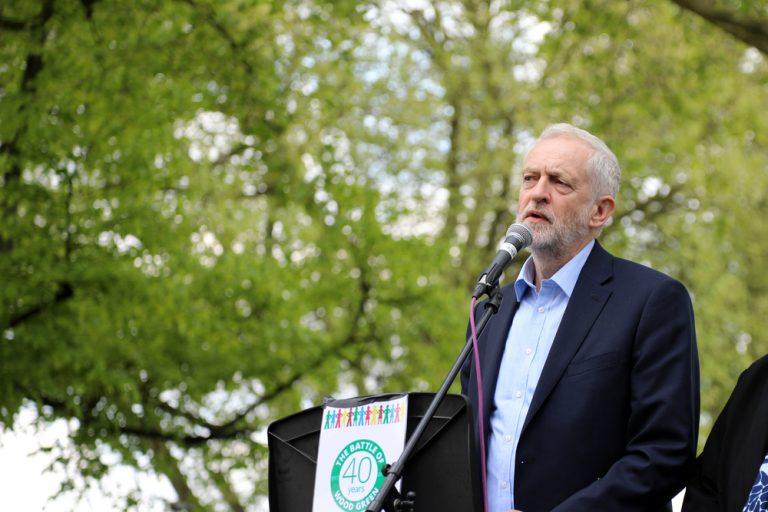
This Saturday, Jeremy Corbyn’s first concern won’t be about losing his weekend downtime. Rather, outside of the Ireland issue, his most convincing point of riposte to Boris Johnson’s Brexit plans has been somewhat undermined by the terms of the Brexit deal agreed this morning.
Just for clarity, we aren’t overlooking the complex discussion of Northern Ireland because it isn’t important, just because it seems to be the only point most outlets have found worthy of discussion. Also worth mentioning, however, is the breakthrough on the EU’s ‘level playing field’ initiative.
For those who don’t know, the level playing field is a directive which seeks to standardise and guarantee workers’ rights and market rules. Some may think that the enshrinement of these goals is hardly impressive, given that they were already included in Theresa May’s proposal and that basic rights and working conditions should be the bare minimum in a just and decent society.
Well, you’d be on a different page to a cohort of Conservative MPs, looking forward to these principles being abandoned either in a minimal deal or No-Deal scenario. For the likes of Jacob Rees-Mogg, leaving the EU has already been a massive payday, having avoided legislation such as ATAD, which took a step towards forcing large companies and individuals with offshore accounts to pay taxes in their countries of operation. However, this didn’t go far enough – what these individuals continue to seek from Brexit is wanton deregulation.
Quite rightly lamented as a possible ‘race-to-the-bottom’ in labour and living standards, some members of the Conservative party sought to undercut the Eurozone by cutting UK labour costs, which would have ultimately relied on making regular people bear the brunt of what would be called the national interest (surely they wouldn’t roll out the same hollow rhetoric twice in the same decade?).
Alas, the guarantees laid out in this deal at least offer a short-term safeguard against what was becoming a widely-supported disaster, and I think this is a major loss for Jeremy Corbyn.
While I’m not convinced the faux-populist plutocrats (wolves in sheep’s clothing) will be staved off for long, what this clause offers is a legitimate route for Brexiteers to hoist the anti-elite flag. Fears about rights and the NHS are justified, as the possibility of a trade deal with US remains on the table. However, what this new deal offers is a better option than No Deal, and with Boris Johnson gaining momentum, this might be the best source of protections and guarantees the UK public can hope for. This weekend, Jeremy Corbyn will risk alienating traditional Labour strongholds as he opposes the prime minister, who has managed to masquerade as the forgotten peoples’ champion and weaponise the word ‘democracy’ with extreme effectiveness. Elsewhere in political and macro economic news, there have been updates from; Michel Barnier saying a deal is still possible, UK economy looks likely to avoid recession, Hong Kong protester shooting and China’s strategy, the Supreme Court rules against Boris, the collapse of Thomas Cook (LON: TCP), the bid for the London Stock Exchange (LON: LSE), Lloyds Banking Group PLC (LON: LLOY), Barclays (LON: BARC) and Deutsche Bank (ETR: DBK).From what we know, Johnson’s negotiated a worse deal than Theresa May. This sell-out deal risks our rights, protections and NHS. It won’t bring the country together and should be rejected. pic.twitter.com/ZMKSNt2Nc9
— Jeremy Corbyn (@jeremycorbyn) October 17, 2019
Growthpoint look to formalize deal for Capital and Regional

South African based Growthpoint Properties (JSE: GRT) are looking to acquire Capital and Regional (LON: CAL) in a reported £150 million deal.
Capital and Regional own eight shopping centers, in locations such as Walthamstow, Woodford Green. Talks first commenced last month about the potential move.
The first part of the investment is for Growthpoint to acquire 219.8 million existing shares in Capital & Regional
Today, Growthpoint have offered Capital and Regional Investors 33p per share, at a stake of 30.3%.
If accepted, this would be a 100% premium to the company’s share price before the deal was announced.
Growthpoint have also pledged for new shares to raise £77.9 million, giving it a 51.2% stakehold in Capital and Regional.
Capital and Regional look to formalize this deal in an attempt to cut their mass debt, currently at £400 million.
Plans were announced to invest into their shopping centers to give less exposure to fashion stores, and introduce more ‘need’ stores such as chemists, grocers and opticians.
Growthpoint Chair Francois Marais said “Growthpoint views its investment in Capital & Regional as an exciting next step in the execution of its internationalisation strategy. Growthpoint’s strategic intent is to support the growth of Capital & Regional in the same way it has done following its investments in GOZ and GW. The result of Growthpoint’s investment in GOZ and GW was a significant improvement in profitability, growth in their property portfolios, both in size and quality, and a value uplift for shareholders,”
Currently shares of Capital and Regional plc are trading at 26.18p per share, a notable 23.22% increase. 17/11/2019 15:22BST.
As the pound continues to fluctuate and falling real estate values overseas investors are finding UK firms attractive hence the move.
If this proposed takeover were to happen, this would give the South African firm a foothold in the UK market.
However, uncertainty with Brexit negotiations may play a factor in Growthpoints ultimate decision.
Warnings of lower revenues drive Tissue Regenix stocks down

On Thursday, Tissue Regenix (LON: TRX) warned shareholders that full year revenues would be 15-20% lower than projected after delays in developing manufacturing capabilities.
Tissue Regenix are a major medical device company, specializing in regenerative medicine. They have patented technology which removes DNA and other cellular material, allowing repair to diseased or worn out body parts.
In June, the Leeds based health firm said that annual revenue would be heavily weighted on the second half of the year.
Shareholders were warned that revenues would be reliant on the ability to bring increased manufacturing capacity during the last six months.
Despite the delays, seniority at Tissue Regenix claimed that there was still strong demand and does not expect long term issues past the time period specified.
Executive Chairman John Samuel said “We have strong global demand for our products, which allowed us to deliver continued revenue growth, demonstrated by DermaPure, which increased sales by 33% in the first half. We remain focused on short and medium term initiatives to increase capacity and alleviate supply constraints.”
Due to these manufacturing capability issues, shares in Tissue Regenix have fallen across Thursday trading. They currently value at 2.78p after experiencing a decline of 13.13%. 17/11/2019 14:40BST.
On a positive, Tissue Regenix announced receipt of a $300,000 grant to begin building a new 21,000 square foot facility in San Antonio, Texas.
The funds allocated would help upgrade utilities and infrastructure at the site, whilst technical staff needed to operate a second shift.
Even with the limitations, TRX have said that they plan to release additional products towards the end of 2019, giving shareholders optimism to hold onto shares.
Additionally, the company added that it was working with outsourcers to increase the yield of DermaPure, its soft tissue repair product. Firms have been flexible in Pharmaceuticals and health, seen with to Ra Pharmaceuticals Inc (NASDAQ: RARX), Yourgene Health PLC (LON: YGEN), Salarius Pharmaceuticals Inc (NASDAQ: SLRX).
The falls in the share price might only be short term, as TRX look to release more products and work to increase manufacturing then investors can take positives from the slower revenues in the third quarter.