UK unemployment rate at lowest level since 1975

New data revealed on Tuesday that unemployment has reached its lowest rate since the three month period to January 1975.
The Office for National Statistics said that the unemployment rate has reached a historic low of 3.8%.
Meanwhile, the number of people in employment grew by 24,000 to 32.80 million in the three months to October 2019, compared with the previous quarter.
Indeed, the employment rate reached a record high of 76.2%, the Office for National Statistics revealed.
Over recent months, the growing economic uncertainty has been linked to the UK’s chaotic attempts at departing from the European Union, which has now been postponed yet again until the end of January.
Last week’s general election saw the Conservatives win a majority of 80 seats.
“The fall in the number of unemployed people was driven by women, whose unemployment reduced by 18,000 to 566,000. On a year-on-year basis, the number of unemployed women reduced by 64,000. The number of unemployed men increased by 4,000 to 715,000 on the quarter but reduced by 29,000 in the year to October,” the Office for National Statistics said in its report.
Indeed, the Office for National Statistics said that the three months to October saw the lowest unemployment rate for women, coming in at 3.5%. The unemployment rate among men was largely unchanged at 4%, the Office for National Statistics said.
The GBP/USD is below 1.3200 following the release of the mixed UK jobs data.
“GBPUSD opened around 1.3330/40, but moved quickly below 1.3300, with pain kicking in. It eventually buckled to low as 1.3236 before reverting to 1.3300. Still, selling pressure has remained as focus shifts back to the increasing prospects of a hard or a cliff-edge Brexit to which the odds have gone up considerably after this morning’s headlines,” Stephen Innes, APAC market strategist at AxiTrader, provided an analysis.
With the election out of the way, UK politics can turn its attention back to Brexit, and the famous question occurs yet again – deal or no deal?
Fulham Shore shares dip despite stable update

Fulham Shore PLC (LON: FUL) have seen their shares dip despite giving shareholders a sound update on Monday.
Fulham Shore are a group of distinct growth restaurant businesses operating in the UK, each driven by skilled and incentivised restaurant entrepreneurs. The firm boast names such as Franco Manca Pizza and The Real Greek.
Today, the firm has seen its first half revenues rise due to the launch of new restaurants and rising customer numbers.
For the half-year ended September 29, the restaurant operator posted revenue of £36 million, up 9.3% from £33.3 million in the comparative year ago period.
Pretax profit, however, slumped year-on-year to £743,000 form £1.5 million, mainly due to recognition of interest on lease liabilities under new IFRS16 accounting rules.
First half headline earnings before interest, taxes, depreciation and amortisation increased 68% year-on-year to £8.4 million.
The performance was boosted by the opening of six new six new Franco Manca pizzerias and one new The Real Greek restaurant. The launch of the Franco Manca loyalty scheme and mobile app was credited for the rise in customer numbers as over 55,000 registered users were recorded at last count.
Chair David Page said: “Looking ahead, the board remains confident that Fulham Shore is well positioned for continued growth and a great future. We look forward to continuing this positive momentum in the period ahead.”
Shares of Fulham Shore dipped 5.55% to 10p on Monday afternoon. 16/12/19 15:56BST.
Certainly, Fulham Shore can be pleased with the update that they have given shareholders today, even though share price movements may have not reflected this.
Rival, FTSE250 listed Restaurant Group (LON: RTN) saw their shares crash despite its lead brand Wagamama reporting a strong performance.
Wagamama reported strong second quarter gains, as revenues rose 11% year-on-year to £93.5 million, with like-for-like revenue growth coming in at 6.3%.
Another name in Loungers PLC (LON: LGRS) saw their shares spike just under two weeks ago, as the firm gave a bullish update to the market.
For the 24 weeks to October 6, Loungers revenue climbed 22% on the year before to £79.8 million, with the pretax loss narrowing to £2.5 million from £4.3 million. On a like-for-like basis, revenue growth was 5.4%, a figure Loungers said was “sector leading”.
Shareholders of Fulham Shore should remain confident on the update provided, however, as big guns such as J D Wetherspoon plc (LON: JDW) continue to report strong trading figures, which will make the market more competitive and saturated.


Nostrum Oil & Gas shares crash following CEO departure

Nostrum Oil & Gas PLC (LON: NOG) have seen their shares crash on Monday following the immediate resignation of their CEO.
Nostrum Oil & Gas plc is an oil and gas exploration and production company operating in Kazakhstan.
Shares of Nostrum Oil & Gas crashed 8.31% to 15p on the announcement. 16/12/19 15:26BST.
Nostrum have seen a turbulent time of trading across 2019, with shares coming up and down.In July, the firm posted steady results for the first half of 2019 and notified investors of proposed acquisitions of sites in Kazakhstan.
The Company stated that production was in line with expectations and that the first half was financially positive. Despite this, revenues are expected to finish at US $174 million for H1 2019, down from $191 million for H1 2018, which caused shares to dip.
Later in the year, the firm saw their shares crash once again as nine month revenues shrunk, which caught shareholders attention.
Nine month volume sales decreased to 27,515 barrels of oil equivalent per day from 30,523 barrels the year before, showing a significant slow down in production.
Additionally, the firm also faced production cuts in liquid petroleum. In this market gas volumes also dropped a less dramatic 5.4% to 3,680 barrels of oil equivalent per day from 3,891 boepd. While dry gas sales volumes fell 1.1% to 14,255 boepd from 14,415 boepd.
Following the poor performance by the firm, CEO Kai-Uwe Kessel announced his resignation on Monday whilst a strategic review of the company is ongoing.
Independent Non-Executive Director Kaat Van Hecke will takeover as CEO from Monday.
Van Hecke has been a Nostrum board member since the end of 2016. She has been a managing director at (OMV VIE: OMV) and had held executive positions at ExxonMobil Corp (executive positions at ExxonMobil Corp and Royal Dutch Shell PLC.) and Royal Dutch Shell PLC (LON: RDSB).
“On behalf of the board and management of Nostrum, I would like to thank Kai for his contributions over the last 15 years. I am delighted that Kaat, during this period of strategic review, is stepping up to take the executive role at Nostrum,” Chair Atul Gupta said.
The firm began a strategic review of operations which a sale of the firm was questioned, which worried shareholders.
“The first nine months of 2019 have been very challenging. We have seen quicker than expected decline in our core producing reservoirs resulting in a reduction in our sales guidance for 2019 by 1,000 barrels per day,” said Kessel said at the time.
The firm firm reported sales volumes of 27,515 barrels of oil equivalent per day for the quarter, down 9.9% from 30,523 barrels a year before.
The fall in production was due to quicker-than-expected field declines, which led to a reduction in 2019 output guidance from Nostrum at the end of October.
This morning, rival PetroTal Corp (LON: PTAL) saw their shares rally as it boasted a new production record.
Certainly a huge change is needed and the senior board will have to make more changes to turnaround fortunes in a period of tough trading for Nostrum Oil & Gas.
PetroTal shares bounce on new production record

Shareholders of Petrotal Corp (LON: PTAL) have seen their shares bounce on Monday afternoon, as the firm gave an impressive update to the market.
PetroTal is an oil and gas development and production company. The firm focuses on development of oil assets and oil fields, and has main operations in Canada.
Shares of PetroTal bounced 3.35% to 25p on the announcement. 16/12/19 15:12BST.
In July, the firm provided an update on output and unrest at its Bretaña field in Block 95 in Peru.
BN 95-3D (3D) came online mid June with production at 3,500 bopd, it averaged 2,875 bopd over its first 24 days of production. Full field Bretaña production averaged 3,000 bopd in Q2 and averaged 5,350 bopd since 3D came online.
A few months on, the firm saw their shares rally in November as it gave shareholders an optimistic production guidance.
Based on recent field production experience of production 8,000 barrels of oil per day with a facility having 5,000 bopd nominal capacity, PetroTal expected its central production facilities to be able to handle the order of 15,000 barrels per day, which sent shares soaring over 20%.
Today, the firm said it had completed completed the 5H well, its second horizontal well, at its 100%-owned Bretana oil field in Block 95 in Peru.
he well was completed on time and costs came in 20% under the original budget of $14.5 million, which was a noteworthy accomplishment for shareholders to take.
The initial three-day production rate was 8,250 barrels of oil per day, exceeding management’s expectations. Bretana was able to record production of over 9,000 barrels per day, a record PetroTal said, with only two of the six wells online.
“PetroTal is pleased with the success of the 5H well and proud to play a historical role by drilling Peru’s longest horizontal well to date,” President & Chief Executive Manolo Zuniga said.
He added: “I wish to thank the technical and drilling team for their efforts to ensure safe operations and their dedication directed to the 5H well. The strong well performance emphasises the significant upside of the Bretana oil field and the considerable growth potential the asset possesses. Our interpretation of the reservoir has been confirmed with this well and the increased production will enhance field economics. The ongoing facility enhancements will enable us to effectively manage the increasing oil field production.”
The oil and gas industry has been mixed, and firms have seen their shares volatile amid market turbulence.
Notable updates came from United Oil and Gas who said that they were planning to raise funds to purchase Rockhopper Egypt Ltd from Rockhopper Exploration PLC.
United is a former Tullow Oil team, however FTSE250 listed Tullow saw their shares crash, after the firm saw their chief executive and exploration director quit.
Additionally, Tullow had warned production was likely to be between 89,000 barrels and 93,000 barrels, lower than the 90,000 barrels to 98,000 barrels initially guided, which caused shares to sink in November.
Scotgold Resources update shareholders on operational delays

Scotgold Resources Limited (LON: SGZ) have given shareholders a cautious update on Monday, following production delay announcements.
The gold mining sector has been busy over the last few weeks as the countdown to Christmas continues, and firm have given mixed updates.
Cora Gold Ltd have seen their shares jump last week as the firm reported progress on its Mali operations.
Cora is currently carrying out a 5,000 metre drilling programme at Sanankoro, looking for new sulphide and deep oxide targets as well as to expanding existing targets.
Eurasia Mining saw their shares rally following progress in their Russian operations. Eurasia reported that it is edging closer to securing the final approval for the Tipil permit, a platinum group metals target located in Russia.
Notably, last week FTSE100 listed Fresnillo saw their shares crash after the firm gave a pessimistic annual production estimate.
Scotgold was founded as an Australian company in 2007 and the Company’s shares were admitted to trading on the AIM market in 2010.
The Company is primarily focused on the development of its high grade Cononish Gold and Silver Project in the Scottish highlands, together with the exploration of highly prospective tenements in the Grampian region of Scotland (the Grampian Gold Project).
Shares of Scotgold currently trade at 66p. 16/12/19 15:01BST.
Today, the firm said that hat development of Cononish Gold and Silver Mine in Scotland’s Grampian Highlands has been extended by 12 weeks and first gold production is now expected in May 2020.
The delay will certainly worry shareholders, as the firm will have to push back its operational and supply time lines as it accounts for these delays.
In August, Scotgold had said that gold production from Cononish project was expected in February 2020, following design delays.
The firm said that it had encountered delays relating to the management of excavated materials necessary to construct process plant building and to establish the site wide drainage required for the establishment of the “dry stack” tailings storage facility.
“The area of these sites is overlain by peat to varying depths, for which the company is utilizing all good practice to manage and preserve this environmentally sensitive material by minimizing storage,” Scotgold said.
The company said it has also identified a “small number of design detail changes which have had a minor impact on the planned schedule”.
“Whilst actions have been taken to minimise schedule impact, it has now become clear that an extension to the schedule will be required,” the company said.
Richard Gray, chief executive officer, said: “We are obviously disappointed that our eagerly awaited first gold production has been delayed, however proper management of our local environment is our first priority and our team has found solutions to the challenges encountered.”
“This has only been possible with the constructive approach taken by our contractors and the regulatory authorities,” Gray said.
Resolute Mining appoint new CFO

Resolute Mining Limited (ASX: RSG) have seen their shares dip modestly, despite the announcement of a new Chief Financial Officer.
Shares in Resolute Mining dipped 0.87% to AUD1.14. 16/12/19 14:42BST.
Resolute is a gold miner with more than 30 years of experience as an explorer, developer, and operator of gold mines in Australia and Africa which have produced more than 8Moz of gold.
Resolute’s production and cost guidance for the 12 months to 31 December 2019 is 400,000 ounces of gold at an All-In Sustaining Cost of US$1,020 per ounce.
In August, Resolute saw their shares rally after the firm gave shareholders an impressive update.
The Company posted headline-grabbing EBITDA of AUS $78 million, booming 171% on H1 2018 EBITDA of AUS $29 million.
This was led by gold and silver sales revenue of AUS $324 million, spiking 33% from AUS $243 million. Resolute gross profit from operations bounced AUS $30 million on a year-on-year basis, up to AUS $69 million for H1 2019.
Today, the firm said it has ppointed Stuart Gale as chief financial officer with effect from January 20, 2020.
He will be replacing Lee-Anne de Bruin, who will be stepping down after three years in the role since 2017.
Gale will be joining from Australian iron ore company Fortescue Metals Group where he was group manager for Corporate Finance for nine years since 2010.
“Stuart Gale is an experienced CFO who joins Resolute with exceptional experience in successful financial leadership and positive transformation in the mining industry. Stuart has managed teams within one of the world’s leading mining companies and brings proven financial and commercial experience to complement our senior executive team,” said Chief Executive Officer John Welborn.
Shareholders should remain optimistic about the move from Resolute, at a time where gold miners have seen their shares become volatile.
This morning, FTSE250 listed Centamin PLC had started to consider a merger deal with rival Endeavour Mining, after a deal was firmly rejected just under a fortnight ago.
Additionally, fellow Australian gold miner Panther Metals announced that it had secured its first exploration licence in the Northern Territory, Australia.
Its Exploration Licence Application regarded it Marrakai Project, which is located in Pine Creek Orogen. This announcement sent shares in green.
Bigblu agrees credit facility with Santander
Bigblu Broadband PLC (LON: BBB) have seen their shares in green after the firm agreed a credit facility deal with Santander (LON: BNC).
At the start of December, Bigblu saw their shares dip as its debt widened on further investment.
The Company said that during the period, it had also secured new funding to accelerate Quickline’s growth plans, and had launched a new partnership with Eurobroadband Infrastructure.
Today, the firm said that it had agreed a new £30 million revolving credit facility with Santander Bank UK PLC, a firm which recently invested into startup Ebury.
This new facility will be used to replaces the two tranches of loan notes, totaling £12.0 million issued in 2016 by Business Growth Fund and the company’s £10.0 million revolving credit facility with FTSE100 listed HSBC PLC.
It will also be used to provide additional working capital to support the company, Bigblu said.
Bigblu said that HSBC will continue to provide a £4 million revolving credit facility and operational banking support to the company’s UK fixed wireless subsidiary QCL Holdings Ltd.
The new deal with Santander is a three year loan agreement, with the option to extend for up to a further two years.
“As a result, there will be a significant reduction in the group’s annual cost of debt and net interest payments,” Bigblu said.
Business Growth Fund continues to own 4.5 million shares in Bigblu, the company said.
As part of its initial subscription for the loan notes in 2016, Business Growth Fund had options over 4.9 million ordinary shares at an exercise price of 112.5 pence, expiring August 2021, and a £2.4 million convertible loan note convertible at an exercise price of 135 pence per share.
Bigblu has said it agreed to extend the 4.9 million options to May 2024, and granted Business Growth Fund an additional 1.8 million options at an exercise price of 135p pence expiring May 2024.
Shares of Bigblu trade at 99p (+0.91%). 16/12/19 14:37BST.Wizz Air expand routes into Armenia
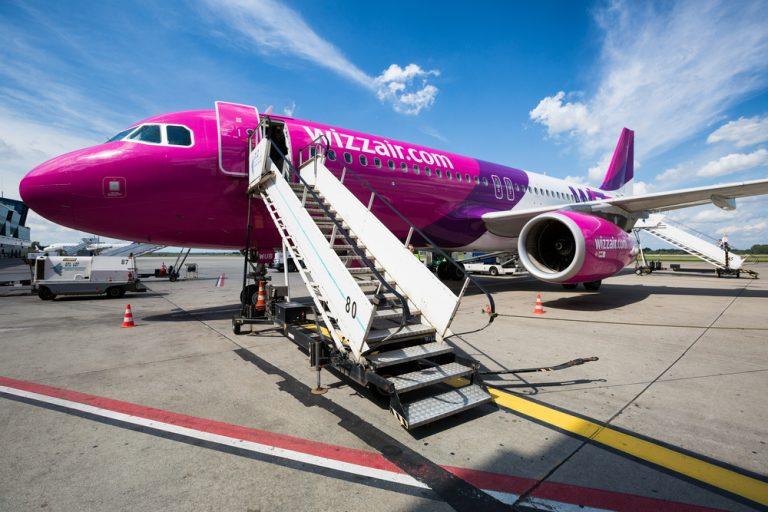
Wizz Air Holdings PLC (LON: WIZZ) have announced that they will be expanding into Armenia in an announcement on Monday.
Wizz Air have seen a relatively successful year, in a time where the airline industry has perceived to be quite hostile.
Wizz Air have seen a stable year, in a time where the airline industry has appeared to be in decline. After the collapse of Thomas Cook (LON:TCG) in September, firms have been cautious.
At the start of June, Wizz air reported that they saw their passenger numbers climb in May, which sent shares up.
The Hungarian airline flew 3,470,889 passengers in May, a 22.4% rise compared to the 2,836,380 figure from the same month a year prior.
The low-cost people carrier also added 9 new routes from/to Poland and Ukraine, in addition to opening a new Polish base in Krakow.
Additionally, in November the firm raised their profit capacity forecast which pleased shareholders. Chief Executive Officer József Váradi said the airline was increasing its capacity growth rate to 22%, from 20% promised in July, which was another piece of good news for shareholders.
Today, the firm has updated the market by saying that it plans to expand its routes into Armenia.
The firm said it will be operating flights from Vilnius and Vienna to Zvartnots International Airport in Yerevan.
The FTSE250 (INDEXFTSE: MCX) listed firm said that it expects to start flying the two twice weekly routes by April 2020.
“We have put a great effort in decreasing costs for airlines operating in Armenia,” Tatevik Revazian, chair of the Civil Aviation Committee of Armenia, told Reuters.
Wizz Air follows rival RyanAir (LON: RYA) who announced four new twice weekly routes in October, with flights expected to start next month.
Certainly, shareholders of Wizz Air can remain optimistic, and certainly this does give one over rivals in the industry.
While the airline industry gets ever more competitive, it seems that Fastjet (LON: FJET) are struggling to stay afloat. The firm saw its shares crash at the end of November as it considered to sell its Zimbabwe operations.
Despite the apparent increase in passenger figures reported by both firms, it seems that many players in the airline industry are still treading cautiously, and firms may wait for more long term visibility before producing strong results.
Shares of Wizz Air trade at 3,997p (-0.4%). 16/12/19 14:27BST.