


Ocado faces second fire this year
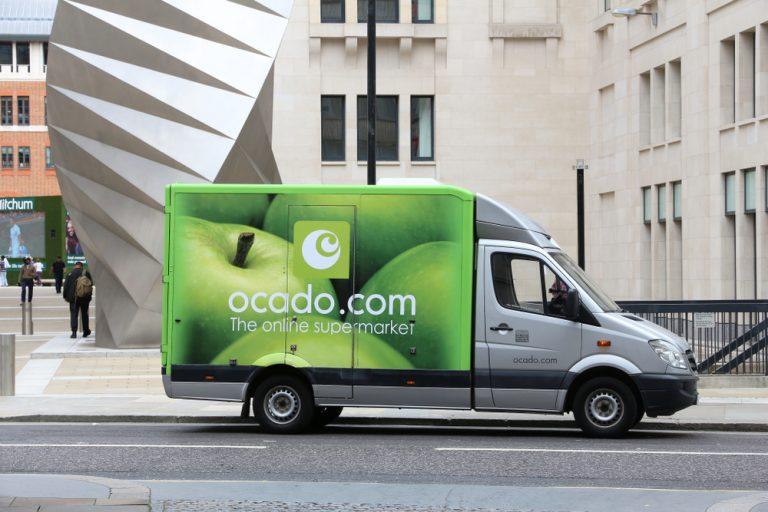
A small fire broke out at Ocado’s customer fulfilment centre in Erith on Wednesday evening, causing disruption to customer orders.
Shares in Ocado were down by over 1% on Thursday.
According to Sky News, four fire engines and roughly 25 firefighters were sent to the scene, spending three hours trying to control the flame.
This is Ocado’s second fire this year after the fire at its Hampshire warehouse back in February.
Ocado said in a statement that the fire occurred outside of the building in a hopper containing waste packaging.
The fire has now been extinguished with the help of the London Fire Brigade, Ocado added.
“Given that the facility was evacuated, as required whenever a fire is reported, there was some disruption to picking and some customer orders have had to be cancelled,” Ocado said in a statement.
“We sincerely apologise to those customers affected for the inconvenience this causes. All customers will be offered a re-booking for tomorrow.” the UK based company added.
“The fire suppression measures in place performed as intended and the fire did not spread. We would like to thank the London Fire Brigade for their assistance.”
Earlier in February, Ocado experienced a fire at its Andover facility in Hampshire.
Roughly 200 firefighters and 20 fire engines were sent to the scene, taking over a day to control the blaze.
Just last month Ocado revealed the impacts of the Andover fire on its business, reporting a loss before tax of £142.8 million. Retail revenue growth was also hit by the blaze and it is estimated that the fire had a 2% impact on sales in the half.
Shares in Ocado Group plc (LON:OCDO) were trading at -1.09% as of 11:49 GMT +1 Thursday.
Half of adults turn to parents for financial support, study shows

Almost half of adults have said that they still rely on their parents for financial support, according to a new study.
Over the last year, adults have borrowed a total of £708 from their parents to assist in the costs of university fees, bills and home improvements, with some admitting to using the cash to fund coffee pods, contact lenses, mobile phone bills and dog food.
Out of the 2000 adults polled, three in five said that they would struggle to cope without financial support from their parents.
The research was commissioned by Virgin Media to mark the launch of its new Family Plan offering.
It also found that four fifths of adults feel more secure knowing that they can turn to their parents if they are financially struggling.
“Our research shows that ‘The Bank of Mum and Dad’ is still very much in business, with Brits depending on their parents even when they’re grown-up,” Annie Brooks, executive director of broadband and mobile at Virgin Media, commented on the research.
“Balancing finances, family life and everything else in between can be a challenge so Virgin Media’s new Family Plan was created to take some of the pressure off parents, making their family’s mobile services simple, affordable and safe, and giving them one less thing to worry about,” Annie Brooks continued.
Paying for holidays, clothes shopping and university fees are the top three financial areas that parents assist their children with, according to the research.
One in five of those polled said that they use their parents’ support to cover the costs of holidays, and 13% turn to their parents to make car payments.
Laura Ashley swings to loss, shares down
Laura Ashley (LON:ALY) posted a statutory loss before tax on Thursday as it battles against the difficult trading conditions that have hit the UK high street.
Shares in the company were down almost 5% during Thursday morning trading.
The homeware and clothing retailer said that, for the 52 weeks to 30 June, statutory loss before tax amounted to £14.3 million.
The primary causes for the year-on-year drop in profit are the underperformance of Home Furnishing and its website after a re-platforming exercise last November.
Earlier this year, the retailer warned on annual profits, citing a “turbulent market” in its interim results.
Total like-for-like retail sales were down 3.5%, whilst total group sales reached £232.5 million, down from the £257.2 million figure recorded for 2018.
“The last twelve months have proved to be a difficult trading period for the Group and indeed for the retail sector as a whole,” Andrew Khoo, Chairman, commented on the results in a company statement.
“We have focussed on the reasons why Home Furnishings have underperformed and have taken necessary steps to mitigate this, including adding new contemporary product to our ranges,” the Chairman continued.
“We have taken active steps to listen to our customers and now believe that we are on an appropriate recovery path. We continue to invest in our website and are working with our online service providers to ensure that it is optimised to deliver an enhanced customer experience and to achieve the desired growth.”
“We are pleased with the continued resurgence of our fashion business, achieving like-for-like growth of 9.2%. This is the result of the improved design of our ranges.”
Over the past year, the UK’s retail sector has been battling amid difficult trading conditions, with staff cuts and store closures widely reported.
Last December, Laura Ashley announced plans to close 40 stores in the UK, focusing instead on growth in Asia.
Shares in Laura Ashley Holdings plc (LON:ALY) were trading at -4.91% as of 10:54 GMT +1 Thursday.
Sterling and Euro rise against the dollar following minutes from the Federal Reserve

The dollar weaken against most major currencies including the Euro and Sterling on Thursday morning following the release of the Federal Reserve minutes and a series of tweets from Donald Trump.
The dollar has fallen after the Fed alluded to the nature of their recent rate cut saying the cut was “part of a recalibration” as opposed to a planned series of cuts. The release also showed that officials were split on whether to cut rates.
The Federal Reserve cut interest rates by 25 basis points in July to 2.25%.
The release of the Federal Reserve came hot on the heels of a tweet from Donald Trump who proclaimed the dollar was the ‘highest’ in had been in history in an attack against the Federal Reserve.
The Tweet was quickly dismissed by many commentators highlighting the dollar index, currently trading at 98.14, was some 40% below 1985 highs of 164.72. However some analysts pointed out there was some weight to his agreement when looking at the dollar in nominal terms. “This week he reported its value as the highest in US history. We hear many claims of superlatives from the White House, but in this case, it is not far off the mark, though only in nominal terms,” said Sean Callow, analyst at Westpac. Trumps tweet increases the pressure on Federal Reserve chair Jerome Powell who will be giving a speech at Jackson Hole on Friday.…..We are competing with many countries that have a far lower interest rate, and we should be lower than them. Yesterday, “highest Dollar in U.S.History.” No inflation. Wake up Federal Reserve. Such growth potential, almost like never before!
— Donald J. Trump (@realDonaldTrump) August 21, 2019
NMC Health shares spike on stake sale talks and strong half year results

Shares in healthcare group NMC Health (LON:NMC) jumped over 30% in early trade on Thursday as the group released its half year results following reports of two parties’ offers to purchase a 40% stake in the group.
NMC Health has received offers from two competing groups for a stake in their international healthcare business which is said to be offered at a premium to the market price.
Shares traded as high as 2748p on Thursday as the company reported results for the six months to 30th June.
Post IFRS 16 EBITDA rose 22.5% to $323.5m as the group said it remained on track to meet full-year guidance.
Prasanth Manghat, CEO, commented on the results:
“NMC Health again achieved strong performance in the first six months of the year, as we continue to deliver on our growth strategy in our attractive target markets. Our ability to perform strongly in a challenging environment testament to NMC’sstrategy of developing niche, differentiated verticals in our core markets that provide the best possible care for our patients.
All key financial and operational metrics of our healthcare and distribution businesses performed in line with our guidance. We also made good progress on increasing free cashflow during the period and we see room for further improvement in H2 2019, as has been the trend in previous years.
We are also particularly pleased to have closed our strategically important partnership with GOSI/Hassana Investment Company which ranks as one of the defining events in the history of NMC. This partnership will provide us with the ideal platform to establish a dominant position in the attractive Saudi Arabia healthcare market.
2019 remains focused on integration and realization of synergies from previous acquisitions. The Board remains committed to continuously improving transparency and enhancing the Group’s governance and ESG framework. The establishment of a new committee to oversee all related party activities in addition to the current robust program is a good example in this regard.
We continue to view the future with confidence and reiterate our guidance for the full year 2019.”
Italy PM resigns, government crisis grows

Italy’s Prime Minister Giuseppe Conte has handed in his resignation.
The EUR/USD is trading around 1.1100 as the Italian President Mattarella explores the next steps for the government.
Giuseppe Conte was the head of Italy’s coalition government between the anti-establishment Five Star Movement and Matteo Salvini’s far-right League.
His resignation comes after a government crisis was triggered at the start of the month – on 8 August, Matteo Salvini retracted his support from the government alliance.
Salvini proposed a no-confidence motion, insisting he could no longer work with the Five Star Movement.
Sergio Mattarella, Italian President, accepted Giuseppe Conte’s resignation.
Earlier in May, Matteo Salvini’s League outright won the 2019 EU elections in Italy. The League was particularly popular in the north, with support strengthened in that area due to its original ideologies, whilst the Five Star Movement was strong in the south.
The League won 34.3% of the vote, whilst the Five Star Movement came third after the Democratic Party at 17.1%.
Matteo Salvini’s League, with a particularly hard stance against immigration, was originally called the North League and was against the south of the country.
Almost a year ago, Italy’s coalition launched a calculated chess game against Brussels over the nation’s budget.
The coalition government set a budget deficit equalling 2.4% of Italian GDP, a figure well above the country’s Finance Minister’s recommendation of 1.6%.
Though the figure was below the EU’s deficit limit of 3%, it remained far too high for a country whose debt is as big as Italy’s.
As political uncertainty looms over Italy, the nation braces itself for the next step following Giuseppe Conte’s resignation.
Frederick & Oliver stock tip selection outperforms FTSE 100

Frederick & Oliver have given an update on their recent stock tip selection following a period of uncertainty in markets.
The trading house that specialises in a long/short strategy focusing on FTSE 350 provided UK Investor Magazine readers with a selection of tips at the beginning of June which have so far proved to outperform the market.
The selection was released prior to period of market unease caused by the heating up of US/China trade tensions, poor economic data suggesting a global recession and changes in US interest rates.
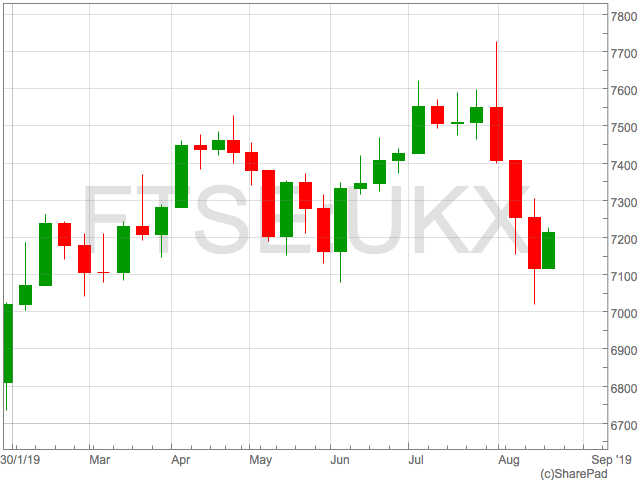
By having a flexible approach to trading large and mid-cap stocks Fredrick & Oliver have been able to harness the volatility in markets to their benefit and produced returns from their selection that would have exceed those holding a representative basket of FTSE 100 shares.
 The trading style purses a sector agnostic approach that aims to exploit companies for their individual merit as opposed to following a restrained mandate of stock selection.
Marc Kimsey, equity trader at Frederick & Oliver commented on a number of stocks in the selection:
“We’re pleased with the call on Lloyds, especially as many brokers rate the stock as ‘buy’. With October fast approaching and a pro-Brexit government installed, a short at 58p made sense. Currently trading at 48p, clients have 17% profit on the table. From a charting perspective there could be some support incoming, we’re intrigued to see if it holds up, a move south of 45p potentially sets up a revisit of 37p”
“Compass Group was a standout buy. Shares had just notched a record-high on the back of a strong trading statement and yet another dividend increase. The company puts food on tables all over the globe and generates most of its profits in US dollars meaning any Brexit-related weakness in the pound would further boost company profits”
The report in which these selections were included is still available to download.
You can download the report from Frederick & Oliver by clicking here.
The trading style purses a sector agnostic approach that aims to exploit companies for their individual merit as opposed to following a restrained mandate of stock selection.
Marc Kimsey, equity trader at Frederick & Oliver commented on a number of stocks in the selection:
“We’re pleased with the call on Lloyds, especially as many brokers rate the stock as ‘buy’. With October fast approaching and a pro-Brexit government installed, a short at 58p made sense. Currently trading at 48p, clients have 17% profit on the table. From a charting perspective there could be some support incoming, we’re intrigued to see if it holds up, a move south of 45p potentially sets up a revisit of 37p”
“Compass Group was a standout buy. Shares had just notched a record-high on the back of a strong trading statement and yet another dividend increase. The company puts food on tables all over the globe and generates most of its profits in US dollars meaning any Brexit-related weakness in the pound would further boost company profits”
The report in which these selections were included is still available to download.
You can download the report from Frederick & Oliver by clicking here.
 The trading style purses a sector agnostic approach that aims to exploit companies for their individual merit as opposed to following a restrained mandate of stock selection.
Marc Kimsey, equity trader at Frederick & Oliver commented on a number of stocks in the selection:
“We’re pleased with the call on Lloyds, especially as many brokers rate the stock as ‘buy’. With October fast approaching and a pro-Brexit government installed, a short at 58p made sense. Currently trading at 48p, clients have 17% profit on the table. From a charting perspective there could be some support incoming, we’re intrigued to see if it holds up, a move south of 45p potentially sets up a revisit of 37p”
“Compass Group was a standout buy. Shares had just notched a record-high on the back of a strong trading statement and yet another dividend increase. The company puts food on tables all over the globe and generates most of its profits in US dollars meaning any Brexit-related weakness in the pound would further boost company profits”
The report in which these selections were included is still available to download.
You can download the report from Frederick & Oliver by clicking here.
The trading style purses a sector agnostic approach that aims to exploit companies for their individual merit as opposed to following a restrained mandate of stock selection.
Marc Kimsey, equity trader at Frederick & Oliver commented on a number of stocks in the selection:
“We’re pleased with the call on Lloyds, especially as many brokers rate the stock as ‘buy’. With October fast approaching and a pro-Brexit government installed, a short at 58p made sense. Currently trading at 48p, clients have 17% profit on the table. From a charting perspective there could be some support incoming, we’re intrigued to see if it holds up, a move south of 45p potentially sets up a revisit of 37p”
“Compass Group was a standout buy. Shares had just notched a record-high on the back of a strong trading statement and yet another dividend increase. The company puts food on tables all over the globe and generates most of its profits in US dollars meaning any Brexit-related weakness in the pound would further boost company profits”
The report in which these selections were included is still available to download.
You can download the report from Frederick & Oliver by clicking here. UK rental sector stronger than various world nations and FTSE 100 companies

The UK rental sector generates more income than 130 world nations and FTSE 100 companies, new data from the lettings platform Bunk reveals.
Bunk looked at the income generated by the UK’s private rental sector, and how this matches the GDP of world nations and the FTSE 100.
In England, Scotland, Wales and Northern Ireland, there are roughly 5,204,000 tenants currently renting in the private sector.
If we multiply the number of tenants in each British country by the average annual rental cost, then the estimated annual value of rental payments in the private sector amounts to £51.9 billion – a figure greater that the GDP of over 100 countries.
Bunk’s research reveals that if tenants were to join together and form an independent rental nation, their financial contribution would surpass the entire nation of Myanmar, Burma, with a GDP of £51.8 billion, as well as the economic efforts of Luxembourg (£48.1bn).
Bulgaria, Croatia and Belarus also fail to match the force of the UK rental sector, the Bunk data shows.
London alone has a total annual rental sum of £17.7 billion, according to Bunk’s data, which outperforms the GDP output of 80 countries across the world.
Moreover, UK rentals are also outperforming the commercial strength of various FTSE 100 companies.
“Comparing the market value of the UK rental space to the worth of whole countries not only shows the enormity of what tenants are paying, but also the attractive proposition the buy-to-let sector still presents for landlords despite a number of changes that have dented the profitability of these investments,” Tom Woollard, Co-founder of Bunk, said.
“To think, without realising it, the nation’s renters contribute more than the value of countries such as Luxembourg and Costa Rica, even with their apparent wealth in tax-avoidance and coffee, while also dwarfing the commerce giants of Vodafone and Lloyds Bank is actually quite amazing,” Bunk’s Co-founder added.
On Monday Rightmove released new data showing that house buyers embarked on a pre-Brexit buying spree in August.
UK house sales strong amid pre-Brexit buying spree

Buyers embarked on a pre-Brexit house buying spree in August, new data from Rightmove revealed on Monday.
Agreed sales during the August period, which spans the four weeks to 10 August, were up 6.1% year on year according to Rightmove.
Rightmove said that this is the highest number of sales agreed at this time of year since the same period in 2015.
Buyers were driven by improved affordability and opportunity of securing a deal prior to the Brexit deadline.
“Surprisingly there seems to be a bit of a summer buying spree, despite it normally being a quieter time of year,” Miles Shipside, Rightmove director and housing market analyst, commented on the data.
“For some reason more buyers have cottoned on to the fact that it can be a good time of year to buy, with less competition from other buyers, and sellers typically more willing to accept a lower price.”
“Whilst another approaching Brexit deadline is now nothing new for prospective buyers, this one may seem more definite, and therefore one to beat, with the Government regarding this one as ‘do or die’.”
“While the end of October Brexit outcome remains uncertain, more buyers are now going for the certainty of doing a deal, with some having perhaps hesitated earlier in the year.”
“I think the impending Brexit deadline that is looming over us could well be having an impact on activity in the market,” Ian Marriott, director at FHP Living in the East Midlands, added.
“People were more cautious at this stage last year than this year, so we’re seeing that people are getting on with their lives and pushing through with moves ahead of the October deadline.”
Earlier in April, the European Union agreed to postpone Brexit for an additional six months until Halloween – a rather poetic ending to the nation’s time in union.