
JD Sports beats retail gloom remaining confident amid Brexit
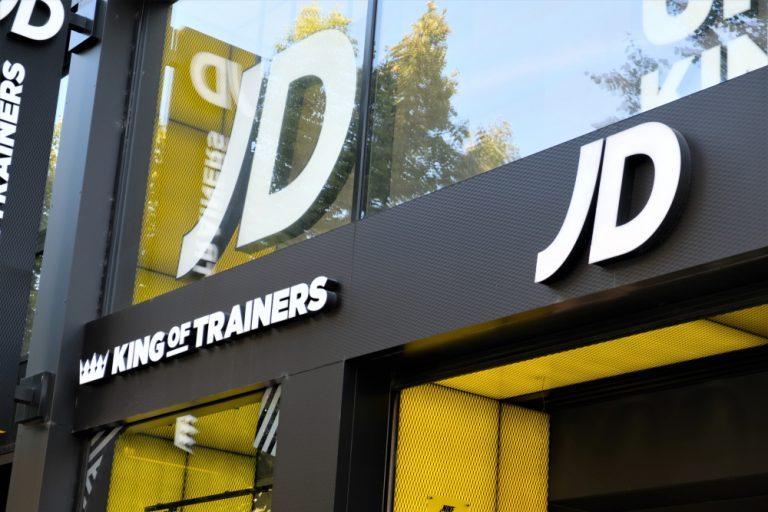
JD Sports (LON:JD) posted an increase in its annual pre-tax profit on Tuesday, beating the UK retail gloom and remaining confident as Brexit uncertainty prevails.
Profit before tax jumped 15.4% to £339.9 million. This compares to the £294.5 million figure from a year prior.
“This new record result for our Group has been achieved with a relentless focus on ensuring that, at all times, we provide a compelling differentiated proposition to the consumer with an attention-grabbing theatre both in stores and online,” said Peter Cowgill, Executive Chairman of JD Sports.
“JD is not immune to the widely reported challenges to physical retail in the UK with lower footfall on many high streets, malls and retail parks combined with cost challenges from increasing minimum wage rates and rises in business rates. Therefore, it is very pleasing that the core UK and Ireland Sports Fashion fascias, the most mature part of our Group, have delivered a further increase in sales and profitability,” the Executive Chairman continued.
JD Sports, who purchased its smaller UK rival Footasylum (LON:FOOT) in a £90 million deal earlier this year, said that its acquisition of Finish Line in the US significantly extends its global reach. Its trial of the JD fascia has delivered “encouraging” early results.
“We firmly believe that the elevated and dynamic multibrand multichannel proposition of the core JD fascia, which enjoys the ongoing support of the key international brands, has the necessary agility to continue to exceed consumer expectations and prosper in an increasing number of international markets,” the Executive Chairman continued.
Looking forward, JD Sports has underscored the uncertainty “surrounding the nature and timing” of Brexit. The company said it is aware of the potential disruptions a chaotic departure may have on supply chains, tariffs, exchange rates and consumer demand.
“Notwithstanding this uncertainty, the Board remains confident in the international potential of the JD proposition,” JD Sports said.
JD Sports stocks sports fashion retailers such as Nike, Adidas and Puma and is Britain’s biggest sportswear retailer.
Across the UK, retailers have been suffering from high street gloom amid months of profit warnings and cautious trading updates.
The sports fashion retailer appears to be pushing through the touch retail environment that UK businesses find themselves struggling within.
At 08:09 BST, shares in JD Sports Fashion plc (LON:JD) were trading at +1.92%.


UK asking prices increase, will Brexit delay offer relief?

In the four weeks to April 6, asking prices for properties across the UK increased the most in over a year, according to latest data from a survey.
According to Rightmove, the 1.1% asking price monthly increase is larger than expected for this time of the year. This is an increase of £3,447, but it does remain 0.1% below the levels of last year.
The six-month Brexit delay is expected to drive confidence in Britain’s housing market and provide encouragement to movers who were cautious.
The UK’s Halloween Brexit extension has come as a relief to many, with the Head of the International Monetary Fund saying that it avoids a “terrible” no-deal outcome for the nation. The six-month postponed departure allows discussions to continue and provides the time to adequately prepare for all eventualities.
Despite voters still remaining in the dark on the future of the UK, one area that is expected to see relief from this decision is the housing market.
“No doubt there are still a lot of twists and turns to come but this extension could give hesitating home movers encouragement that there is now a window of relative certainty in uncertain times,” director of Rightmove Miles Shipside commented.
“We are not anticipating an activity surge but maybe a wave of relief that releases some pent-up demand to take advantage of static property prices and cheap fixed-rate mortgages,” Miles Shipside continued.
At the end of 2018, data from Rightmove looked gloomy as UK house prices fell by over £5,000 in November. November’s price drop was the fastest prices have fallen since 2012.
In January, data from Halifax indicated that UK house prices were down 2.9% for the month. It was said that buyers were deterred by the prevailing uncertainty surrounding Brexit. Will the six-month delay offer some relief for the market?Volkswagen board member says core brand global sales align with 2018’s
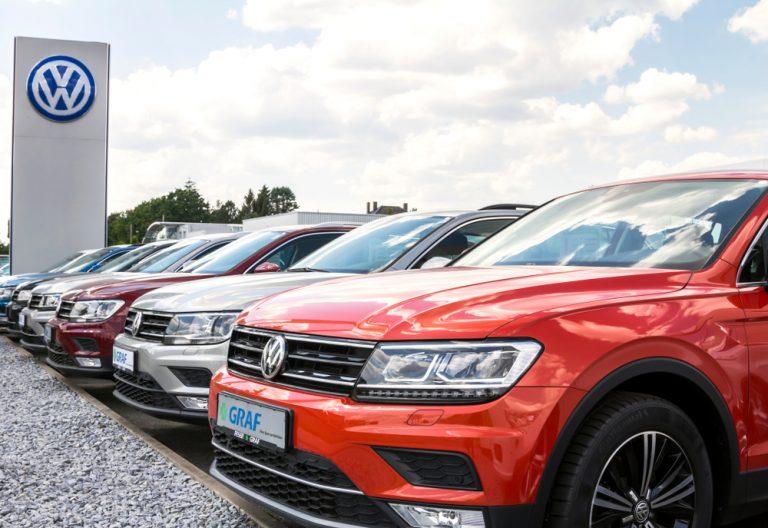
Volkswagen (ETR:VOW3) said on Monday that it expects its core brand global sales for 2019 to be in line with last year’s level.
This is in spite of the slight drop in China sales during the first quarter. It is said that government incentives are expected to drive demand in the company’s second half of the year.
Worldwide, sales of its core brand are expected to align with the 6.24 million amount that it posted in 2018.
According to Reuters, at the Shanghai Autoshow, the brand’s board member Juergen Stackmann told journalists that Volkswagen expected “sales in the Chinese market to be on the same level as last year.”
“Worldwide we expect sales to be in line and are optimistic that we can even post some growth,” Juergen Stackmann continued.
Volkswagen, who recently announced plans to stop production of its iconic Beetle car, is headquartered in Wolfsburg, Germany. Its main market, however, is China.
Elsewhere in the automobile sector, BMW (ETR:BMW) warned on its profits and announced that it was pursuing a cost savings and efficiency plan. It warned that its profits could drop by over 10%, expecting profit for the year to fall “well below” the level from the previous year.
Aston Martin’s (LON:AML) performance was recently weakened as a result of the costs of its IPO.
As the UK’s Brexit chaos has been extended for another six-months, the worries of several pillars in the automobile industry prevail. Vauxhall’s owner warned of the dire consequences for its UK factories in the event of a no-deal, whilst Toyota (TYO:7203) said the nation should avoid a no-deal at all costs.
The six-month Brexit extension should allow Britain to formulate a deal and depart from the EU with less chaos than had it left on schedule.


Cluff Natural Resources shares down amid board changes

Cluff Natural Resources shares fell during Friday morning trading after the company announced changes to its board.
The oil and gas company announced the departure of its current chairman and former CEO, Algy Cluff. Mark Lappin is set to succeed Mr Cluff as chairman.
Prior to his role at the company, Mr Lappin was a Director in Centrica’s Exploration and Production Company, as well as holding various executive roles with ExxonMobil, Cuadrilla and Dart Energy.
Departing Chairman Algy Cluff commented on the decision:
“Since stepping down as CEO last year, the Company’s executive management team, with significant input from Mark, have produced a tremendous platform for the next stage of activity and growth via the successful award of six additional licences in the UK’s 30th Licencing Round and delivering a transformational farm-out with Shell on one, and possibly two of the Company’s licences.”
Mr Cluff also added that a change in direction would prove ideal in light of the company’s recent farm-out agreement with Shell.
Meanwhile, his successor Mark Lappin, added:
“I am delighted to be taking on the role of Chairman of Cluff Natural Resources as the Company enters the next stage of its development. I look forward to working with the rest of our ambitious management team to build on the partnership we have developed with Shell and further progress the business.”
Back in February the company announced it had entered a farm-in agreement with Shell, causing shares to rally.
Cluff Natural Resources is listed on the junior AIM market of the London Stock Exchange.
Shares in the company (LON:CLNR) are currently trading down -3.16% as of 12:50PM (GMT).
Highland Gold shares fall on 2018 results
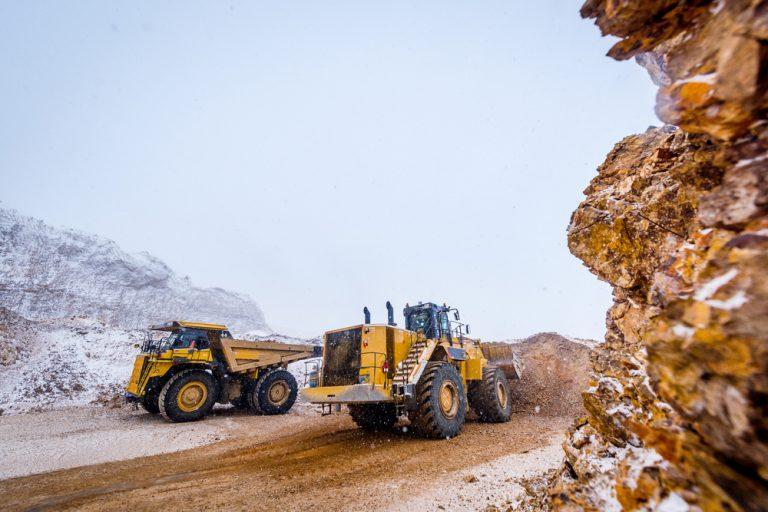
Highland Gold shares fell on Friday after the miner reported its full-year results.
Revenue for the year to December end was £311,153, down slightly from the £316,682 reported a year ago.
Meanwhile, operating profit rose to £109,186 compared to £102,202 a year before.
Earnings before interest, tax, depreciation and amortisation came in at £153,060, falling from £155,275 the previous year.
Net profit totalled £56,084, compared to 65,855 the year before.
Highland Gold also said that earnings per share were $0.154.
With regards to output, the company said gold production fell marginally to 269,500 ounces during the 12-month period.
Nevertheless, the AIM-listed company said that total cash costs were ‘steady’ at $506 per ounce.
Executive Chairman Eugene Shvidler commented on 2018’s results:
“Highland Gold is committed to growth, both organic and acquisitive, and I am pleased to report that 2018 and the early months of the current financial year have witnessed significant developments on that front. The Company’s recent corporate highlights, namely the purchase of the Valunisty gold mine and the seven-year ‘Life of Mine’ extension of MNV, as well as the ramp-up of construction at Kekura, reflect key aspects of our overall strategy to capitalise on Highland’s valuable and substantial asset base.
Looking to the future, we are confident that the ongoing implementation of our strategy, together with the maintenance of rigorous cost disciplines and the roll-out of a new programme for operational efficiency and continuous improvement, will continue to serve shareholders well in the ensuing years.”
Shares in Highland Gold (LON:HGM) are currently down -2.36% as of 11:55AM (GMT).
Tasty secures £3.25m after share placing
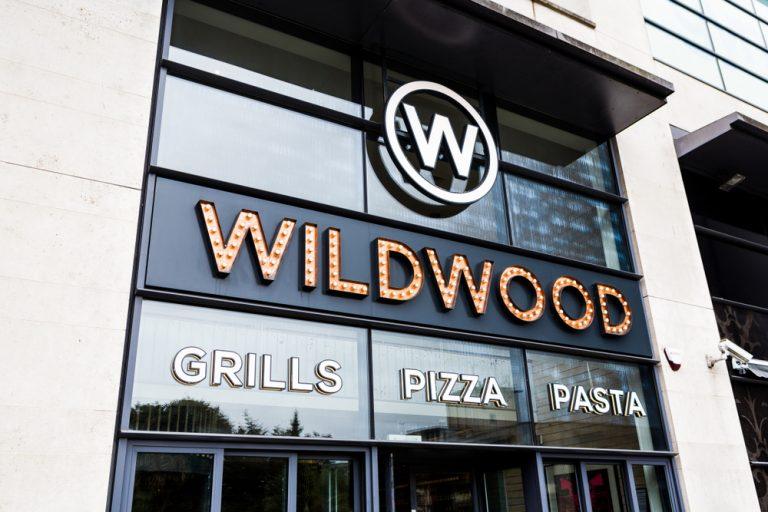
Tasty announced it had secured £3.25 million as a result of a share placing on Friday, sending shares downwards during morning trading.
The casual dining restaurant operator said it is raising the funds through the issuing of 75 million new shares to both new and existing investors.
The company also announced an additional proposed open offer to raise £0.25 million through the issue of up to 6,294,262 shares to qualifying shareholders at 4p each.
Shareholders are set to vote on the conditional share issuing on 1st of May.
Tasty said the proceeds from the raise would be used to pay down debt and for ‘working capital’ purposes.
Keith Lassman, Chairman of Tasty, said “This is an important fundraise for Tasty as it will enable us to continue our strategic plans with vigour. We are delighted with the level of investor support for the Placing and we would like to thank our shareholders for their continued support.”
With regards to future outlook, the statement said addressed current trading. It said:
“…market conditions have become increasingly challenging throughout the year and the Board’s expectation is that there will be no significant improvement in 2019”.
Many UK restaurant chains have opted to close underperforming sites in the last few years amid an increasingly challenging trading climate.
Jamie’s Italian, Prezzo and Byron burger have all opted to streamline their business in light of these challenges.
Tasty operates a range of casual dining restaurants including the Dim T, Wildwood and Wildwood kitchen brands.
Shares in the company (LON:TAST) are currently down -19.33% as of 11:10AM (GMT).
Brexit Halloween extension avoids “terrible” no-deal outcome, says IMF chief
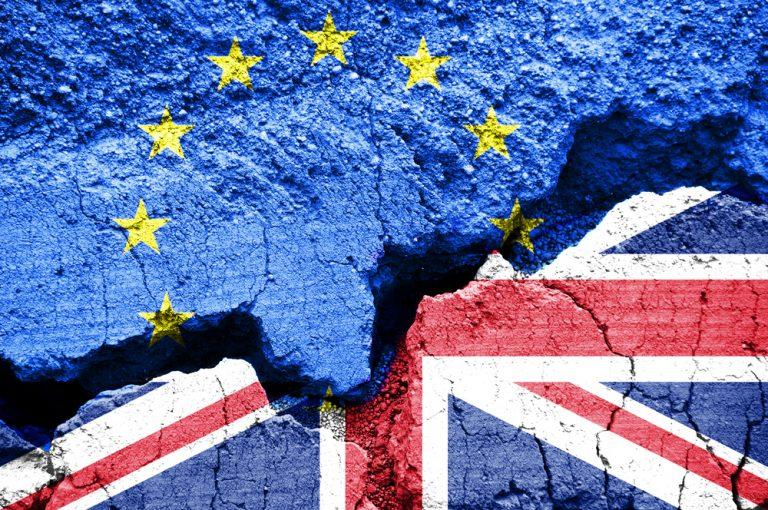
Head of the International Monetary Fund said that Brexit’s six-month extension avoids a “terrible” no-deal outcome, according to Reuters.
The GPB/USD is trading steadily in the mid 1.30000s as the markets process the six-month Brexit extension.
“At least the UK is not leaving on April 12 without a deal. It gives time for continued discussions between the various parties involved in the UK. It probably gives time for economic agents to between prepare for all options, particularly industrialists and workers, in order to try to secure their future,” said the International Monetary Fund’s Managing Director Christine Lagarde.
Just yesterday Theresa May was given a six-month extension to October 31 for Britain to leave the bloc. But is this a trick, or a treat? Though an extension has been offered, voters remain more uncertain than ever on the future of the nation.
Speaking in Washington at the International Monetary Fund and World Bank, Bank of England Governor Mark Carney said “we will see how that time is used”. The six-month extension reduces the risk of a rash no-deal departure from the European Union.
“Right up until yesterday it could be argued that the UK has run out of time to forge that consensus. There are cross-party talks to try to find that, and that may take some time,” Mark Carney commented.
One of the most controversial aspects of the UK’s Brexit delay, however, is that the nation will have to hold European Parliament elections. Theresa May originally wanted an extension until the end of June and said that the government would aim to agree on a deal before May 23 in order to avoid participation in European Parliament elections.
As businesses across the UK warn of the Brexit related risks, the extension provides the British government with time to avoid a frantic no-deal departure.
It was previously reported that a no-deal could cost the UK luxury sector £6.8 billion in exports a year, and S&P Global Ratings predicted that had voters not chosen to leave in the first place, the UK economy might have been about 3% larger by the end of last year.
For now, UK citizens and business owners must wait and see if the six-month extension is an adequate period to leave the bloc with a deal.