
Ted Baker CEO resigns amid misconduct allegations
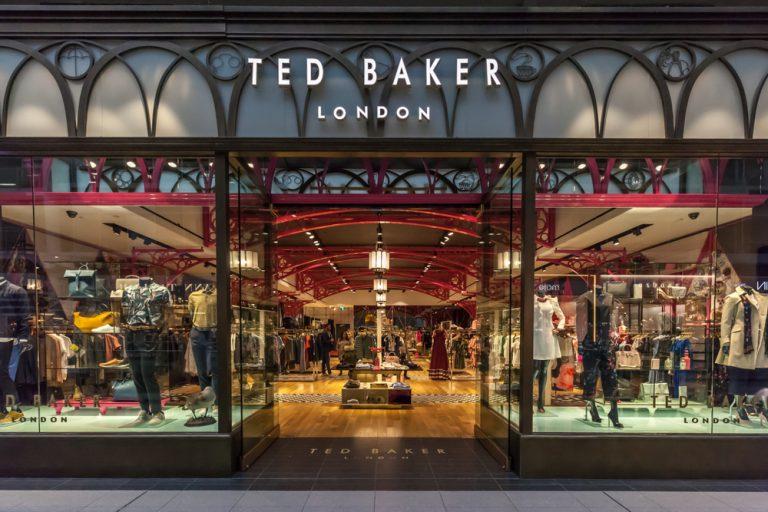
Ted Baker (LON:TED) announced on Monday that its chief executive and founder, Ray Kelvin, has resigned with immediate effect. His resignation comes amid a continued investigation into allegations of personal misconduct.
Ray Kelvin, who founded the apparel chain in 1988, has denied all allegations made against him. The CEO initially took a leave of absence in December after the allegations were made against him. Ted Baker hired the law firm Herbert Smith Freehills LLP to investigate into the allegations.
Allegations include giving unwanted hugs and inviting female employees to sit on his knee. Complaints originally emerged following an online petition on the site Organise.
The investigation into the allegations is expected to conclude at the end of the company’s first quarter, or early into its second quarter.
Though he has denied all allegations, Ray Kelvin agreed to resign from his position with immediate effect. Acting Chief Executive Officer Lindsay Page has agreed to continue this role.
“We are committed to ensuring that all employees feel respected and valued. We are determined to learn lessons from what has happened and from what our employees have told us,” Executive Chairman David Bernstein commented in a company statement on the matter.
Ray Kelvin is the latest male corporate leader to depart following disrespectful behaviour allegations.
Last week, Baroness Karren Brady resigned as chair of the holding company for Sir Philip Green’s Arcadia Group, Taveta Investments, as a result of the allegations that emerged against Sir Phillip Green.
He reportedly kissed, slapped and groped a female employee, as well as racially abusing another worker.
The resignation came just days after she said that she had a “duty” to employees to remain as chairman.
Following the Telegraph’s reportage of staff complaints, Karren Brady said she would not resign from Taveta.
At 08:43 GMT Monday, Ted Baker plc (LON:TED) shares were trading +0.93%.
Wizz Air passenger volumes up 13%

Wizz Air (LON:WIZZ) announced on Monday a 13% rise in passenger volumes for the month of February. Shares in the flyer were up during early trading Monday morning.
The company offers over 650 routes from 26 bases, connecting 146 destinations across 44 countries.
The largest low-cost airline in Central and Eastern Europe flew roughly 2.4 million passengers over the month, expanding its full capacity by 9.3%.
Over the period, the FTSE 250 company also expanded its network, offering five new routes to and from Poland, Ukraine and Budapest. Two new destination airports to Spain and Norway were also revealed.
Two new Airbus A321 aircraft have been added, expanding the flyer’s fleet to 108 aircraft.
Wizz Air, however, suffered last year as rising fuel and staff costs impacted earnings. During its third quarter the Hungarian airline reported a pre-tax profit of €1.8 million, which compares to €14.6 million the year prior. Despite this, its passenger numbers over the period were up 15%.
Several airlines have been struggling recently, with EasyJet (LON:EZJ) announcing earlier this year that the Gatwick drone sightings cost the budget airline £15 million.
Ryanair (LON:RYA) posted a loss for its third quarter. Like WIzz Air, its passenger numbers were up, rising from 30.4 million to 30.2 million. However, as average fares decreased and costs rose, the airline reported a €19.6 million loss for the period.
The aviation industry could, however, see trade increase over the next few months as the Brexit date looms closer. The CEO of Heathrow said that it could benefit from additional trade if the UK leaves the European Union without a deal and if other modes of transport become blocked by additional congestion.
At 08:15 GMT Monday, shares in Wizz Air Holdings plc (LON:WIZZ) were trading at +0.033%.
Ryanair Holdings plc (LON:RYA) shares were trading at -0.079% (08:15 GMT).
EasyJet plc (LON:EZJ) shares were trading at -0.028 (08:16 GMT).


British American Tobacco reveals “strong” full-year performance

British American Tobacco (LON:BATS) reported on Thursday a “strong business performance across all categories” for the 2018 financial year.
Headquartered in London, the multination cigarette and tobacco manufacturing company posted a 45.2% rise in operating profit to £9.31 billion. Likewise, revenue also rose 25.2% to £24.5 billion.
British American Tobacco withdrew from Formula One in 2006 after the sport banned tobacco advertising. But, last month, it announced its return through a “global partnership” with McLaren. This makes it the second tobacco company to return to the sport for promotional purposes not covered by the tobacco advertising ban.
Volume grew 3.3% to 708 billion, though this was offset by lower volume in Saudi Arabia, the US, Brazil and Russia.
Pre-tax profit fell, however, over the financial year to £8.35 million from the £29.53 million figure a year earlier. Additionally, dividend per share was increased by 4% to 203.0p per share.
In 2007, new legislation made it illegal to smoke in all public enclosed – or substantially enclosed – areas in England.
Over a fifth of the world’s adult population smokes. Recant estimates for the worth of the global tobacco market come in at roughly $760 billion (excluding China). Over $680 billion of this figure is generated from the sale of conventional cigarettes, with roughly 5,500 billion cigarettes being consumed each year. Additionally, the number of children vaping has doubled in five years, according to official figures.
The health risks that smoke imposes are very much real, but the tobacco industry nevertheless is a substantial contributor to the economies of several countries across the globe. That said, restrictions on the manufacture, sale, marketing and packaging of tobacco products are enforced in almost every country and market.
In 2017, the UK government outlined its aim to create a “smoke-free” generation in its tobacco control plan for England. Under these guidelines, it aims to reduce the number of adults smoking in England from 15.5% to 12% or below.
At 14:51 GMT Thursday, shares in British American Tobacco plc (LON:BATS) were trading -1.41%.
Aston Martin shares crash on IPO costs, Brexit fund outlined

Aston Martin (LON:AML) shares slid over 17% on Thursday following the announcement of last year’s financial results. The costs of its IPO weakened its performance, though revenues jumped 25%, driven by a particularly strong performance in China and the Americas. It has also announced a £30 million Brexit fund to prepare for any disruption.
Founded in 1913, Aston Martin is one of the UK’s most iconic brands and has become synonymous with James Bond.
Aston Martin unveiled its plans to float on the London Stock Exchange last year. The luxury carmaker planned to value itself between £4.02 billion and £5.07 billion. The maximum share price was lowered, however, valuing the group at £4.5 billion.
Over the 2018 financial year, the company posted a £68.2 million loss, which compares with a £84.5 million profit the year prior.
Revenues increased by 25% to £1.1 billion, exceeding the company’s guidance. Excluding the £138 million of IPO costs, adjusted profit before tax was £68 million.
“2018 was an outstanding year for Aston Martin Lagonda, delivering strong growth, with improving revenues, unit sales and adjusted profits,” Dr Andy Palmer, Aston Martin Lagonda President and Group CEO, said.
Total volumes were up 26%, ahead of guidance, with core car volumes up by 30%.
Aston Martin also said that it would reserve up to £30 million as part of its no-deal Brexit contingency plan.
With the UK’s departure from the European Union looming closer, several pioneers of the automobile industry have warned of the impacts it could have on British car production.
Jaguar Land Rover announced that tens of thousands of jobs were at risk as Brexit develops, whilst Ford (NYSE:F) said last month that a hard Brexit could cost it up to £615 million in 2019 alone. Elsewhere, BMW (ETR:BMW) said that it would shut its Oxford Mini factory immediately after the official Brexit date, in order to allow the company to enter into the next stages of its Brexit contingency plans.
At 14:03 GMT Thursday, shares in Aston Martin Lagonda Global Holdings plc (LON:AML) were trading at -17.46%.
Rolls-Royce withdraws from Boeing engine competition

Rolls-Royce has announced that it has withdrawn from the competition to power Boeing’s new mid-sized airplane. It has pulled out of the competition because it is unable to commit to the proposed timetable.
Shares in the company are trading over 3% lower today.
Its Trent 1000 engine powers the Boeing Dreamliner 787 jet. Rolls-Royce makes engines for large civil aircrafts, military planes, ships, trains and other industries.
It has, however, faces durability issues with its Trent 1000 engines. Last year, a fault with the company’s Trent 1000 engines grounded British Airways and other airlines to a halt. Rolls-Royce said it had made good progress with the technical fixes of its engines.
The company said that it had increased the charge it had taken on resolving the issues with its Trent 1000 engines to £790 million.
“This is the right decision for Rolls-Royce and the best approach for Boeing. Delivering on our promises to customers is vital to us and we do not want to promise to support Boeing’s new platform if we do not have every confidence that we can deliver to their schedule,” President of the Rolls-Royce Civil Aerospace division, Chris Cholerton, said.
The British luxury car and aero manufacturing business posted a pre-tax loss of £2.9 billion for the 2018 financial year. This is down from a £3.89 billion profit the previous year.
Underlying operating profit increased 71% to £633 million, up from £317 million the year prior.
The rest of the business is performing well following its latest restructuring which caused the loss of 4,000 jobs last year.
It has forecasted an operating profit of £700 million (+/- £100 million) for 2019, with its Civil Aerospace division expected to grow around 10%.
“Despite the challenges we faced on Trent 1000 in-service issues, solid progress has been made realizing our ambition to make 2018 a breakthrough year,” Chief Executive Warren East commented.
At 13:27 GMT Today, shares in Rolls-Royce Holding PLC (LON:RR) were trading at -3.38%.

Italy’s public debt is a risk to the euro region, EU warns

The European Commission has warned that Italy’s huge public debt poses a threat to the entire Eurozone, and it is only being exacerbated by the policies of its populist government.
The Eurozone’s third largest economy slipped into its third recession in a decade last month. It entered a technical recession after contracting for two consecutive quarters.
“Italy is experiencing excessive imbalances. High government debt and protracted weak productivity dynamics imply risks with cross-border relevance, in a context of still high level non-performing loans and high unemployment,” the European Commission said.
Italy faces high unemployment rates, particularly among its youth.
“The government debt ratio is not expected to decline in the coming years, as the weak macroeconomic outlook and the government’s current fiscal plans, though less expansionary than its initial plans for 2019, will entail a deterioration of the primary surplus,” it said.
Italy’s debt ratio is more than twice the EU limit, and looks like it wont be declining any time soon.
“Italy is in a special situation because it is a country with a very high debt level and it is critical that debt does not start growing again,” Pierre Moscovici, the European Commissioner for Economic and Financial Affairs, announced at a news conference.
In an unprecedented turn of events, the European Commission rejected Italy’s original 2019 draft budget last October. Its controversial budget plans sparked months of quarrelling with Brussels over the ambitious proposal that breached rules on government borrowing. It wasn’t until December that the populist government reached an agreement with the European Commission on the 2019 budget, with its deficit target reduced.
The recession that it faces means that the country’s growth targets, approved under its budget, are highly unrealistic.
In an interview with Bloomberg News, the French Finance Minister Bruno Le Maire said last week that the situation in Italy “will have a significant impact on growth in Europe and can impact France”.
EUR/USD was last trading at 1.1388.
The problematic Northern Powerhouse

The main problem with the ‘Northern Powerhouse’ is the dichotomy between the picture it is trying to paint and the present-day reality – it is a piece of rhetoric wheeled out by politicians trying to divert attention from the London-centric political and economic bubble. It plays upon Thatcherite tropes of London-centred financial service development over industry and the ‘North-South’ divide, without appreciating that it is a ‘London and home counties versus everywhere else’ divide. It betrays the complex sociology, anthropology and economics that go into centuries (if not millennia) of city-building, and the simple fact that London owes some of its success to its external networks, but largely that it has the internal industries, culture and administrative bodies to make it a draw for the entire world.
Understanding a city
After studying Plato’s Republic and Marcel Henaff’s The City in the Making, I have adopted a more nuanced stance on the complicated and co-dependent networks and developments upon which a city is built, and London does not have to be a standalone case. From its birth, London has been burned down and rebuilt, swollen and expanded. It is in the city’s very nature to grow, change and be in a constant state of flux – and this has brought about three characteristics which at present, make London unique within the UK. First, it is uniquely diverse. Not in the hold hands Kum Ba Yah sense of the word, but rather a violent and constant state of layering – especially since the industrial revolution – where new cultures and ideas come to the city in search of a new way of life. What this does, according to the likes of Henaff, is boost the odds of innovation. New and constantly competing ideas and perspectives are not only faced off against one-another, but they are taught that only the best survive, and so the reciprocal relationship between economic and political entrepreneurship is allowed to blossom. While diversity is visible in any metropolitan trading hub, London has arguably developed a reciprocal relationship between diversity and innovation. Not only does diversity spark innovation, but London’s readiness to change and revolutionise in order to prosper has cemented its status as the first port of call for those coming from overseas seeking to work hard to secure a better quality of life. Second, its ability to fall and adapt and grow. If anyone has ever had the ill fortune to come across a proud Londoner, we might tell you that London has an ethos that sets it apart from other places – or a worse cliché like, ‘it’s the people that make it what it is’, without much sense of community or fellowship existing. What some may mean is that – failing to adequately articulate the sentiment – there is a realisation that they are part of something bigger than themselves. London is not a series of buildings, nor an orthodox city, but an urban sprawl, capable of harbouring its most profitable industries and cultural beacons at its core but with a seemingly bottomless capacity to expand, not just regarding social and architectural hardware, but also software. It is its ability to not just grow organically, but revolt and change seismically in an instant, that makes London a global city, and currently the only one of its kind in the UK. Third and arguably most obvious – and important – it almost embodies the simple formula that makes a city successful; a strong relationship between administrative and productive forces. In less cryptic terms, The City and Westminster are just down the road from one-another. Financial services are our primary export and Westminster is the home of the UK’s primary political institutions – the explicit link between the two arguably being stronger than ever with professionals more-often-than-not occupying most positions of political office, and many politicians going on to work in The City. While the link I’m drawing is frustratingly opaque, what I’m pointing to is not a quid quo pro between the City and Westminster, just that London has the balance between an entrenched administrative body and economic output, which makes it a uniquely productive node in the UK. Going beyond this and owing to its capacity for innovation, London is the home of financial services built upon knowledge economics, not just in the UK but the world-over. Rather than adequately remodel other cities in the image of the London, a sort of half-hearted set of initiatives has been under way to encourage other cities to emulate London’s success. Without major restructuring, London’s financial services will remain the stalwart of the UK economy (the inflated living costs and house price bubble of course owing to this success and the fact that it has yet to be challenged by other UK cities).What has been done wrong?
For those committed enough to reach this point, or to those who have come to this point immediately, I will keep the faults of incumbent policymakers brief. The bottom line is that ‘The Northern Powerhouse’ refers to six cities (Liverpool, Manchester, Newcastle, Hull, Sheffield and Leeds). This leaves us with two options, realise that ‘The North’ is a culturally and industrially disparate area and approach cities individually, or tackle a third of the English landmass as a single entity and improve infrastructure between cities, before they contain the internal expertise or infrastructure necessary to incite substantive change. I hate to sound like an old record, but the fact that MPs have so far found the second option more favourable appears to show a lack of understanding for how to encourage the growth of a prospering city. The fact that I bitterly allude to HS2 isn’t because it’s a bad idea, but because it appears to be the only meaningful show of intent to bolster development of Northern cities. What is sorely needed, primarily, are structural changes to cities outside of the capital. Meaningful structural change; devolution of administrative capacities along with economic plans to develop the comparative advantage of a city. Ultimately, a strong, specialised administrative body and productive potential, not an assorted flinging of graduate schemes and weak incentives in the hope that one of them sticks. The moving of BBC operations to Manchester is a start, but wholesale adjustment is needed. While a diverse and mixed economy is healthy, the UK economy has for the last three to four decades focused primarily on the comparative advantage of financial services. While Manchester has increased its stake in this industry, it is meagre in comparison to the monopoly held by London. Quite rightly we should lament the shrinking of industry and the outsourcing of not only labour but also the supply of goods that we consume, but we should accept that as a country now largely profiting off of international flows of capital, our cities need to modernise to fulfil their maximum productive potential. This is not to say that a monoculture should be created, but that there is something to be said about maximising the profit-making capabilities of our urban spaces which are home to the largest concentrations of qualified individuals and technological capabilities – London should not be our only global city.What could be done for Northern cities?
A forewarning, the remainder of this article will be both dogmatic and didactic, but its core message is simple; Brexit should be an excuse for the UK to build for the future, not grit its teeth and hope small businesses hold fast while London relies on the mercy of markets. Well, if we are truly worried about what Brexit will do to our industry, make our cities an opportunity that other countries won’t want to miss. UK policymakers should now work to justify the billions of pounds spent on infrastructure in the North and encourage this trend to continue. Beyond the traditional schemes for graduates and small government endorsements, entice employers to these cities. Make Northern cities an alternative to the temptation of moving their operations and headquarters to Ireland; create corporate tax bubbles and agree tax breaks for large corporations willing to set up shop and employ a quota of local graduates, as well as offering graduates incentives not to move down South or abroad. Employ ambitious city planners such as ARUP (who have had a hand in HS2 and The Shard) and British construction and engineering firms to build new infrastructure and housing and prioritise the awarding of contracts to companies willing to provide opportunities and apprenticeships to young and unemployed tradesmen. Ultimately, spend some money in the short term to make our cities appear ready for business on the international stage and make them ready to realistically compete with London and other cities around the world. Make our cities an enticing prospect so that they attract investment and provide opportunities to the next generation of the young and learned who are likely already training their sights on London.Webis dips with losses and lower volumes

UK-based gambling firm Webis Holdings Plc saw their share price dip during Wednesday trading with a deepening in first-half losses on-year.