
Offshore wind investment surges during lockdown

The latest figures released by energy researchers Bloomberg NEF (BNEF) have revealed that global investments in offshore wind farms surged to a new high of $35 billion in the first six months of 2020 – up by 319% year-on-year, and comfortably above 2019’s full-year figure of $31.9 billion.
It appears that despite the enormous disruption caused by the coronavirus pandemic – which caused notable declines in solar, onshore wind and biomass investment – offshore wind enjoyed its ‘busiest half year ever’.
A total of 28 sea-based wind farms were given the go-ahead in the first half of 2020, including the industry’s largest on record: the 1.5GW Vattenfall Hollandse Zuid array located off the coast of the Netherlands, which cost an estimated $3.9 billion.
Other major projects included the 1.1GW SSE Seagreen farm off the UK coast at an estimated $3.8 billion; the 600MW CIP Changfang Xidao off Taiwan at an estimated $3.6 billion; and the Fecamp and Saint-Brieuc projects in French waters, together reaching a combined total of 993MW and $5.4 billion.
The report also outlines that at least 17 additional Chinese projects received investment deals, noticeably the Guangdong Yudean Yangjiang Yangxi Shapaat 600MW at $1.8 billion.
Despite the major investments during the first half of 2020, head of wind analysis at BNEF Tom Harries was quick to dampen hopes of a sustained upward trajectory for the offshore wind sector:
“Offshore wind is benefitting from the 67% reduction in levelized costs achieved since 2012, and to the performance of the latest, giant turbines. But the first half of this year also owed a lot to a rush in China to finance and build, in order to take advantage of a feed-in tariff before it expires at the end of 2021. I expect a slowdown in offshore wind investment globally in the second half, with potentially a new spike early next year”.
Overall investment in new renewable energy projects (excluding large hydro-electric dams of more than 50MW) totalled $132.4 billion in the first half of 2020, up 5% from $125.8 billion in the same period of 2019.
However, biomass investments plummeted 34% to $3.7 billion, onshore wind slipped 21% to $37.5 billion, and solar fell 12% to $54.7 billion. Small hydro projects were down 14%, and biofuel production plants slid a whopping 83% to $250 million.
Geothermal projects bucked the trend, however, and followed in the footsteps of offshore wind with a colossal 594% jump to $676 million.
The BNEF’S figures clearly demonstrate that China was the biggest investor in offshore wind in the first half of 2020, pumping a total of $41.6 billion into the growing industry – up 42% on the same period in 2019. While the UK’s investments soared 265% to $5.7 billion, the USA was down a concerning 30% to $17.8 billion, and India’s investments dropped 49% to just $2.7 billion.
Angus McCrone, chief editor at BNEF, commented on the impact of the pandemic on the renewables sector so far in 2020:
“Renewables have been helped by vastly improved competitiveness and by investor appetite for assets offering secure cash flows. However, project developers face the challenge that key people, whether at the permitting, financing or construction stages, can’t meet face-to-face. And buyers of small-scale solar systems are sensitive to changes in consumer confidence”.
Nevertheless, overall clean energy investment – across renewables capacity financing and corporate-level equity deals – reached $137 billion in the first half of 2020, up 4% on the first six months of 2019 at $131.9 billion.
Albert Cheung, head of analysis at BNEF, explained that the new figures are ultimately a streak of good news amidst a difficult year so far for the renewables industry:
“We expected to see Covid-19 affecting renewable energy investment in the first half, via delays in the financing process and to some auction programs. There are signs of that in both solar and onshore wind, but the overall global figure has proved amazingly resilient – thanks to offshore wind”.
UK house prices soar 300% in 20 years

New research by estate agents Coulters has revealed that average UK house prices have soared by 300% in the last 20 years, while average income has only seen a 70% increase over the same period. The report outlines just how hard it has become for first-time buyers to get on the property ladder.
In 1999, the average price for a house in the UK was just £77,961. Today, that figure has essentially trebled to £230,735. To make matters worse, even though average income has grown, the difference is only from £17,803 to £30,353 per year. In London, sky-high house prices have risen by an average of £365,958.33 since 1999, marking an eye-watering 316.34% increase in just 20 years.
The widening gap between house prices and income has subsequently raised the cost of a deposit as well – in 1999, a 10% deposit on a house would have been equivalent to about 43.8% of an average salary. But by 2019, the average deposit now works out at around 76% of annual income, showing how the UK housing market has become increasingly out of reach for first-time buyers.
Analysis by the Office for National Statistics (ONS) released last year revealed that the average full-time UK salary in 2019 was £36,611 – slightly higher than Coulters’ estimate – but nonetheless well below the £230,735 average price tag on a house. With a standard deposit now sitting at about 76% of average income, it would cost the average buyer around £27,824.36 to lay down a deposit, a hefty figure and one which may well be out of reach for many young people.
Coulters’ report concludes with a sobering reflection on the housing market in the capital, where the average amount needed for a 10% deposit on a house has rocketed from 51.4% of a Londoner’s average salary to 120.9% in the last 20 years.
Last week, Chancellor Rishi Sunak unveiled a ‘stamp duty holiday’ on UK properties as part of a long-awaited mini budget. Even though analysis by Zoopla (LON:ZPG) has outlined how the scheme will take the total number of homes in England eligible for stamp duty exemption from 16% of all sales to 89% – up by 73% – the move is set to benefit first-time buyers the least.
UK Investor journalist Jamie Gordon commented on the Chancellor’s proposal, stating:
“It serves the understandable purpose of encouraging economic activity, but by making it disproportionately easier for speculators to add to their portfolio, could actually make it more difficult for first time buyers to get on the ladder”.
With Brexit on the horizon this autumn and after a painstaking few months during the coronavirus lockdown, the UK housing market looks set for a tumultuous year for 2020. House prices rose in January by 1.3%, but during the peak of the pandemic prices fell for three consecutive months, and it is likely to take some time for the market to make a full recovery – even with the Chancellor’s new stamp duty scheme.
Howard Archer, chief advisor to economic forecasters EY Item Club, predicted in June that house prices will fall by about 5% over the next few months, driven primarily by employment uncertainty as the government prepares to wrap up its furlough scheme in October.
“Housing market activity is likely to be limited in the near term… Many people have already lost their jobs, despite the supportive government measures, while others will be worried that they may still end up losing theirs once the furlough scheme ends”.
UK fiscal sustainability questioned as May GDP growth 3.7% below expectations

While some have praised the 1.8% growth in UK GDP in May, it lagged far behind the forecast 5.5% growth for the month, as consumer anxiety began to diminish and businesses readied themselves for the ‘new normal’.
In what has been dubbed the biggest economic decline in 300 years, the Office for Budget Responsibility predicted that the UK economy would shrink by 12.4% in 2020.
In contrast, then, the 1.8% rise may appear to some an unexpected success – this is not so. After suffering the biggest monthly contraction on record in April, a 5.5% growth forecast was seen as a realistic but ultimately small bounce-back from the freakish performance of the previous month.
Instead, what was noted was a worryingly muted bounce of under 2%, which raises questions about the possibility of a so-called ‘V-shaped’ recovery. While there is reasonable hope that June’s figures will be better, the short-term bounce-back is needed to offset long-term challenges.
The OBR doesn’t expect the economy to recover to pre-crisis levels until the latter stages of 2022, while unemployment is expected to hit a record 12% by the year’s end, in a worst-case scenario as high as 4 million, compared to 1.9 million in 2019.
Speaking on the GDP announcement, Rupert Thompson, Chief Investment Officer at Kingswood, said:
“Today’s GDP numbers showed the UK economy bouncing back less than expected in May from the collapse in March and April. GDP rose only 1.8% m/m in May, rather than the 5.5% expected, and remains a massive 24.5% lower than back in February. While the manufacturing and construction sectors both saw gains of over 8% in May, the service sector rose only 0.9% m/m as lockdown had only just started to be relaxed back then.”
“These numbers paint a rather gloomier picture than painted both by Andy Haldane, the BOE’s Chief Economist, a couple of weeks ago and the larger than expected increases in retail sales and business confidence reported over the last couple of months. The data only emphasises the economy’s need for the range of stimulus measures announced by the Chancellor last week.”
The GDP – fiscal resource gap
In its report, the OBR said that the pandemic had ‘materially altered’ the outlook for public finances, with the government set to borrow £322 billion this year, which would push the UK’s debt share to 104% of its GDP. In its Fiscal Sustainability Report, the OBR stated: “In almost any conceivable world there would be a need at some point to raise tax revenues and/or reduce spending (as a share of national income) to put the public finances on a sustainable path.” The organisation’s view is that the government need either increase taxes or reimpose austerity measures, to balance its recent spending sprees. It said that without budget balancing, the UK’s debt share would grow to more than 400% of GDP in the next 50 years. In the meantime, however, budget balancing is a difficult act for Boris Johnson to pull off politically. While his more ardent supporters might support the traditional conservative route of spending cuts, his more middle-of-the-road supporters might feel cheated. Having been promised a five-year term of big spending, infrastructure and national grandeur, being saddled with more Cameronite fiscal retrenchment and Blitz spirit slogans may leave some former red wall voters feeling short-changed. Alternatively, Johnson may opt to take another spending note from the Corbynite playbook. While imposing higher taxes on regular people may prove even more unpopular with his supporters, than austerity measures, the option is always there to be more stringent in tax collection from wealthy individuals and corporations. With an estimated three in ten of the companies receiving state aid during the pandemic, having their taxes based off-shore, perhaps the latter group are the first place Johnson ought to look to for his missing fiscal resources.US hedge fund invests in £4bn British fintech star TransferWise

US-based global investment firm D1 Capital Partners L.P. (D1) has announced it has purchased a stake in one of the UK’s leading fintech companies – online money transfer service TransferWise.
Sky News reported on Monday that D1 has bought a $200 million stake in TransferWise as part of a secondary share sale last week, which saw the start-up’s value soar to $5 billion, a $1.5 billion increase on this time last year – and roughly equivalent to £4 billion.
Both companies involved in the transaction are young blood in the industry.
TransferWise was set up 9 years ago by Kristo Käärmann and Taavet Hinrikus – an Estonian financial consultant and a former Skype employee respectively – to provide a solution to the ‘pain of international money transfer’. The company has since grown to offer more than 750 currency routes, with Forbes reporting that it had reached a generous net profit of $8 billion in 2018.
D1 is barely getting started, having been launched in 2018 by Wall Street investor Daniel Sundheim, who previously stood at the helm of Connecticut-based hedge fund Viking Global Investors until 2017. Last year, Business Insider deemed the budding firm ‘one of the hottest new hedge funds’ in the industry, and the company already has an established portfolio of stakes in Amazon, Netflix and Facebook.
The $200 million purchase will give D1 a 4% share in TransferWise’s operations, which boast over 2,200 employees nationwide and more than 8 million customers. Its impressive £4 billion valuation sets TransferWise above the vast majority of UK fintechs, joining only the likes of money transfer giant Revolut in surpassing the lofty benchmark.
At the start of this month, City A.M. reported that the Financial Conduct Authority (FCA) had granted TransferWise with a license to offer investment products, opening up its customer accounts to earn interest on their funds, although the company still does not own a full bank license.
Commenting on TransferWise’s growth, CEO Käärmann stated:
“TransferWise is evolving from being a pure payments provider, to the number one alternative for the banking needs of those living and working between countries. With £2bn in deposits we know that people want to hold their money with TransferWise, so we’re very happy to soon provide a way to make a return on that money”.
The company reportedly racks up £1 billion in savings compared to cross-border transactions made through standard high street banks.
Google to invest $10bn in India’s ‘digital future’

Tech conglomerate Google (NASDAQ:GOOGL) announced at its annual online Google for India 2020 event on Monday that it plans to invest $10 billion in India over the next five to seven years to scale up the country’s digital infrastructure.
The initiative comes as part of the company’s ongoing commitment to being ‘a part of India’s digitisation journey since 2004’, when Google opened its first offices in Hyderabad and Bangalore.
Google Chief Executive Sundar Pichai launched the new programme – named the Google for India Digitisation Fund – via video link at the company’s annual conference, focused on making information ‘universally accessible and useful’ so that Indians can ‘make a positive impact on their communities’.
The investment drive will include a mixture of private equity, partnerships, and infrastructure investments, with emphasis on four key areas:
- ‘enabling affordable access and information for every Indian in their own language, whether it’s Hindi, Tamil, Punjabi or any other’
- ‘building new products and services that are deeply relevant to India’s unique needs’
- ’empowering businesses as they continue or embark on their digital transformation’
- ‘leveraging technology and AI for social good, in areas like health, education, and agriculture’
Today at #GoogleForIndia we announced a new $10B digitization fund to help accelerate India’s digital economy. We’re proud to support PM @narendramodi’s vision for Digital India – many thanks to Minister @rsprasad & Minister @DrRPNishank for joining us. https://t.co/H0EUFYSD1q
— Sundar Pichai (@sundarpichai) July 13, 2020
Google, a subsidiary of Pichai-owned Alphabet Inc., appears to be doing well on the back of the news, adding to a year of pretty consistently good results – no doubt aided by the surge in internet use during the worldwide coronavirus lockdown. The company’s share price is up 1.98% or 30.46 to 1,569.47 USD at GMT-4 11:07 13/07/20, up considerably from its July 2019 shares which traded at just 1,145.34 USD.This morning, had an extremely fruitful interaction with @sundarpichai. We spoke on a wide range of subjects, particularly leveraging the power of technology to transform the lives of India’s farmers, youngsters and entrepreneurs. pic.twitter.com/IS9W24zZxs
— Narendra Modi (@narendramodi) July 13, 2020
G4S cuts 1,150 jobs as it adjusts strategy for cashless future
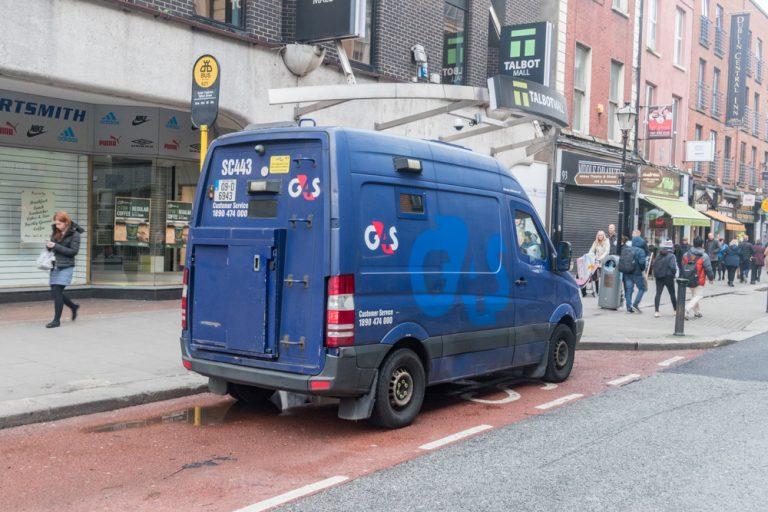
Security services company G4S (LON:GFS) saw its shares rally by around 10% on Monday morning, as the company announced that first half trading had far exceeded expectations. Despite this, the company announced it would cut 1,150 jobs from its cash-handling operations.
The move comes as the company adjusts its strategy to new consumer behaviours amid the the Coronavirus pandemic, where physical cash transactions lost significant ground to virtual payments.
As a result, the company noted that customer needs had changed during the period, and decided to undergo a full review of its Cash Solutions arm, which included the vans it uses to deliver cash to businesses across the UK.
Speaking on the strategic shift and job losses, G4S Managing Director of UK Cash Solutions, Paul van der Kneep, commented:
“Following a review of our Cash Solutions operational footprint in the UK, we are proposing to reshape the business to better align it with the changing needs of our customers.”
“Regrettably this will result in a reduction in headcount, and today we have entered into a period of consultation with affected staff.”
“We are working closely with unions and individuals to offer opportunities for redeployment within the group.”
As was previously suggested, the shift from physical cash to virtual payments appears to be an unstoppable tide. With Fintech offerings growing in number and range over the last few years, today’s news is a sign that the rest of society are being forced to catch up.
With either some second iteration of a lockdown, or just socially-distanced normality, being the reality going forwards, British investors and consumers will need to prepare for Fintech offerings to gain an increasing share of the payments industry.
Lamenting the G4S redundancies and the wider job losses a move away from physical cash would herald, GMB national officer Roger Jenkins noted:
“These cuts are devastating for our members and their families. GMB will fight to the end for every single job.”
“They are also another worrying step towards a cashless society – the cash industry really is on a knife edge.”
“The collapse of cash industry could have a terrible impact on the elderly and most vulnerable and wreak havoc on small and medium enterprises which rely on cash transactions.”
“GMB is calling on the government to take action to protect the cash industry and all those who will be hit hard is it disappears.”
Following the announcement of its stellar first half performance, and unaffected by the news of job cuts, G4S shares remained up 9.08% or 10.85p, to 130.30p by 13:53 BST 13/07/20.
This is down form the company’s year-to-date high of 208.00p on January 21, but a great improvement on its 81.04p nadir on April 6. G4S shares are currently sat about their consensus prediction of 127.00p.
Quiz shares dip on allegations of using underpaying subcontractor

Shares in online fashion outlet Quiz (LON:QUIZ) began trading on Monday by dropping 21%. This followed allegations by a reporter from the Times on Saturday, who claimed that one of the company’s subcontractors in Leicester had been paying its staff at levels far below the National Minimum Wage.
The company said that it had already launched an investigation, but already understood that a supplier had used a sub-contractor “in direct contravention of a previous instruction from Quiz”.
Speaking on the allegations, company Chief Executive Tarak Ramzan responded:
“We are extremely concerned and disappointed to be informed of the alleged breach of national living wage requirements in a factory making Quiz products. The alleged breaches to both the law and Quiz’s ethical code of practice are totally unacceptable.”
“We are thoroughly investigating this incident and will also conduct a fuller review of our supplier auditing processes to ensure that they are robust. We will update our stakeholders in due course.”
The news follows similar allegations being brought against fellow online shopping outlet Boohoo (LON:BOO), who were also alleged by the Times to have used subcontractors that paid staff little more than £3 an hour in factories in Leicester.
The allegations against both companies will need to undergo full formal reviews by authorities, in addition to their own internal investigations. Substantiated or not, one upshot of the news is that a spotlight has been shone on potential malpractice in the Leicester region, and we have once again been reminded to remain vigilant of potential instances of employee mistreatment in the UK.
Following the news, Quiz shares dipped by more than a fifth. Thanks to the company’s quick response in launching their internal investigation, shares recovered, now down 5.01% or 0.34p to 6.41p per share 13/07/20 12:50 GMT. The company’s p/e ratio is 20.45 and their dividend yield is 6.25%.
Going forwards, investors will be keen to have these matters put to rest. While Boohoo and Quiz have faced the brunt of criticism so far, shareholders of other online and fast fashion retailers will no doubt be wary about similar allegations being brought against other companies in the sector.
Avacta teams up with Integumen to develop waste water COVID-19 testing

Avacta (LON:AVCT) has announced a corroboration with AIM-listed Integumen (LON:SKIN) to develop an early warning testing system for the presence of COVID-19 proteins in waste water.
The detection sensors are to implemented through Modern Water’s Microtax water contamination systems which can detect bacteria in waste water through their 3,000 installations.
“Multiple international commercial opportunities exist beyond individual equipment unit sales, with all three parties standing to enjoy long-term recurring revenues generated through the supply of Affimer® reagents in each of the proprietary consumable test cartridges, AI-as-a-Service predictive alerts and maintenance contracts,” said Barry Gibb, Research Analyst at Turner Pope Investments.
Mr Gibb continued to highlight the potential size of the target market and how such a system could facilitate some parts of the economy returning to normality.
“The true scale of this opportunity is perfectly demonstrated by, for example, the global cruise line industry which handles 32 million passengers in a market annually worth US$31.5 billion, yet is likely to remain entirely disabled with passengers effectively uninsurable until perpetual coronavirus monitoring, detection and testing systems are installed.”
“In this respect, Avacta, Integumen and Modern Water appear to have not only rapidly recognised one of the world’s most pressing needs, but are also combining their core competencies and well-established worldwide marketing reach to develop and distribute a unique, seemingly unmatched technological package of potential global significance,” Mr Gibb concluded.
Avacta’s Affimer technology will be evaluated over the coming weeks with test being held at the University of Aberdeen. If proved successful, Integumen will commercialise the detection sensors.
“Affimer reagents are ideal for applications such as this, not only because of their sensitivity and specificity, but also because of their robustness, which is essential when being deployed in real-world situations, such as real-time waste water analysis,” said Dr. Alastair Smith, Chief Executive of Avacta Group.
“With the spread of COVID-19 continuing to accelerate globally, we are proud to work with partners like Integumen to provide our Affimer reagents for development on a range of platforms to combat the pandemic. This collaboration has the potential to deliver a product that will play a crucial role in the early detection of COVID-19 hotspots around the world.”
Virgin Atlantic set to receive £1bn rescue deal
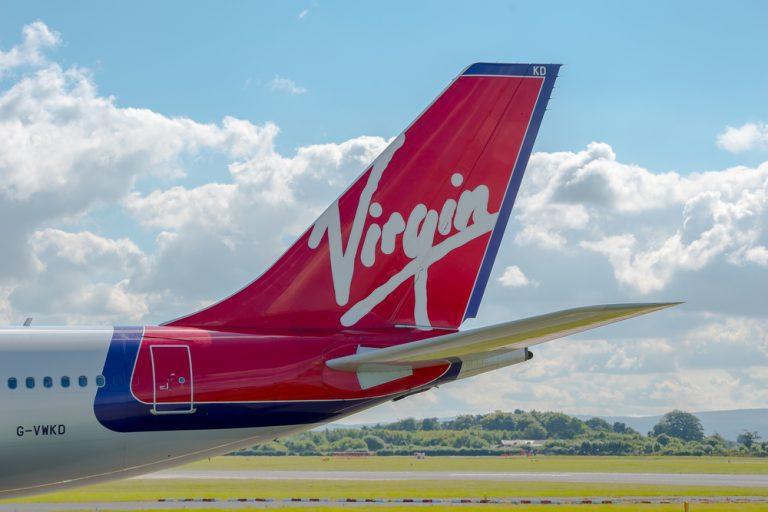
Virgin Atlantic is set to announce a £1 billion rescue deal from Atlanta-based financial services firm First Data, in a last-ditch attempt to avoid collapse without relying on taxpayers’ money.
The airline, launched in 1984 by British business tycoon Richard Branson, has struggled to stay afloat during the coronavirus pandemic due to almost universal travel restrictions which grounded its planes and drove the wider travel industry into paralysis.
First Data is a subsidiary of NASDAQ resident Fiserv (NASDAQ:FISV). The financial services provider has allegedly made “stringent” demands in return for its support for the struggling airliner.
Sources told Sky News on Sunday that the firm has requested to hold onto all future bookings revenue in a bid to “protect itself” if Virgin should indeed collapse. Virgin Atlantic Chief Executive Shai Weiss is reportedly trying to “moderate” First Data’s demands.
Lloyd Bank’s Cardnet has already “broadly agreed” to the terms put forward in the proposal.
The deal would pave the way for a £200 million cash injection from Atlantic’s parent company Virgin Group, as well as an additional £400 million in fee deferrals and waivers from Virgin Group and Delta Air Lines (NYSE:DAL) – which owns 49% of the company.
If the deal goes through, thousands of British jobs could be saved. Virgin announced back in May that as much as a third of its 10,000 UK employees could expect to lose their jobs over the next few months.
A number of other airline giants have been forced to make mass redundancies, including United Airlines (NASDAQ:UAL), who is set to lay off almost half of its global workforce.
Global airlines are projected to suffer an $84 billion loss due to the pandemic over the course of 2020.
Primark rejects £30m coronavirus job retention bonus

Fashion retailer Primark, an Associated British Foods (LON:ABF) subsidiary, has turned down a £30 million offer from the UK government for bringing back its 30,000-strong furloughed workforce.
The high street clothing chain stated that it “should not be necessary” to take the government up on its offer, which includes a £1,000 bonus for each employee that companies bring back from furlough.
The initiative was designed to offset the “tragic projections” for unemployment expected this autumn when the government’s furlough scheme comes to an end in October.
Since swathes of Primark stores reopened in mid-June, all staff have returned to work, with the company expecting to generate a modest profit by the end of the year – although significantly less than usual.
An Associated British Foods spokesperson stated:
“The company removed its employees from government employment support schemes in the UK and Europe in line with the reopening of the majority of its stores. The company believes it should not be necessary therefore to apply for payment under the bonus scheme on current circumstances”.
Although losing around £800 million in sales since the lockdown began in March, Primark has remarked that reopening profits across its 375 UK stores have been largely encouraging. Photographs of lengthy queues outside Primark stores when they first reopened were featured across the front of national newspapers.
Without the support from the government’s furlough scheme, Primark has admitted that as many as 68,000 of its employees in the UK and Europe may have had to be laid off. The company was one of dozens of high street chains that struggled to stay afloat during the peak of the pandemic, with stores shut nationwide and trade essentially paralysed.
A source close to Primark commented on the company’s decision to turn down the £30 million bonus, saying:
“The stores are open, they’re trading, cash is coming in, if you don’t need the money why take it? But those circumstances don’t apply to other retailers or other industries”.
Other high street brands have been weighing up their options, with M&S (LON:MKS) “welcoming” the government’s ongoing support for businesses, although the company has not yet confirmed if they will be taking up the furlough scheme bonus.
Fast food giant McDonald’s (NYSE:MCD) has not yet commented as it is “still working through the details of the chancellor’s announcement”.