
Primark owner AB Foods shares rally despite quarterly profits dipping 75%
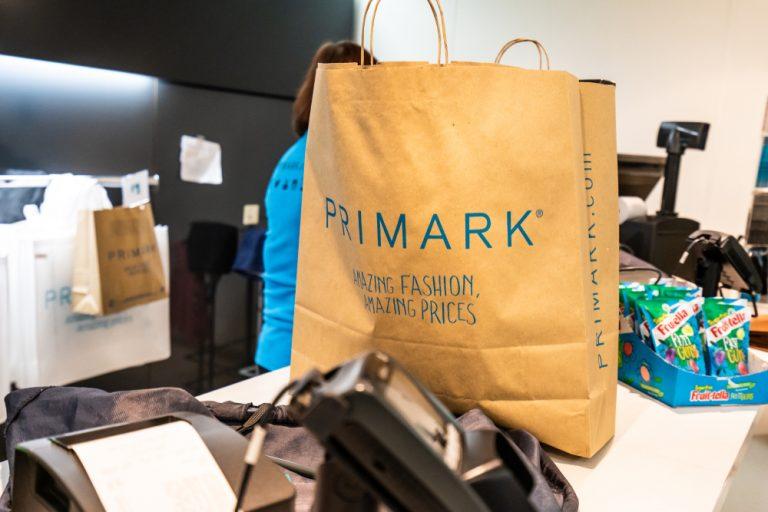
Clothing retailer Primark saw a large knock to its first half profits due to Coronavirus and its lack of online presence. Despite this and upon publishing its results on Thursday, parent company Associated British Foods (LON:ABF) enjoyed a healthy share price rally.
The company noted that its revenues had contracted 75% year-on-year for the three month period ended 20 June, and that Coronavirus lockdowns have cost the company an estimated £800 million. The revenues for the quarter were down to £582 million, and the retailer said it expected its full-year profits to fall by two thirds.
Having reopened all but 8 of its 375 stores, Primark said that sales had been “reassuring and encouraging”, with strong demand for children’s, leisure, summer clothing and nightwear.
However, the company did also say that were still suffering due to reduced footfall and changes in public behaviour, with demand for formal menswear and travel-related accessories “unsurprisingly weak”, with like-for-like sales across its ranges down 12% since it began reopening its outlets.
With the Coronavirus disruption in mind, Primark stated that “absent a significant number of further store closures”, and excluding exceptional charges, it expects to book full-year profits in the range of £300 million to £350 million, down from £913 million for the full-year ended September 2019.
The company did state, though, that for the week ended 20 June in England and Wales, sales were up year-on-year as non-essential retailers were allowed to open their doors. This, and a 9% revenue spike in ABF’s grocery operations, softened the blow of an otherwise glum trading update.
On the basis that things were bad but not as bad as they might have been – and with potentially strong activity going forwards – (ABF) Primark shares were up 5.47% or 107.50p, to 2,072.00p per share 11:31 BST 02/07/20. Today’s price represents around a 15% year-on-year dip, but is below the consensus target of 2,140.00p.
While analysts are in mixed minds about the stock, the majority have stated either ‘Buy’ or ‘Strong Buy’ stances. The group’s p/e ratio is 14.29, their dividend yield stands at 2.24%.
Coronavirus: Over 12,000 jobs lost in two days

The Coronavirus pandemic has seen a surge of UK employers announce cuts over the past 48 hours, leading to 12,000 jobs lost.
Over the past two days retailers and aviation companies including John Lewis and Airbus have announced plans to restructure and let go of thousands of staff members amid the crisis.
Wednesday this week saw 6,000 jobs cut from the retail sector alone as Harrods, Arcadia group and SSP Group revealed plans to close stores and lose staff.
“Due to the impact of Covid-19 on our business including the closure for over three months of all our stores and head offices, we have today informed staff of the need to restructure our head offices,” said Philip Green’s Arcadia group.
“This restructuring is essential to ensure that we operate as efficiently as possible during these very challenging times.”
Meanwhile, SSP Group, Harrods, and TM Lewin announced 5,000, 700, and 600 job losses respectively.
Across at the aviation sector job losses also continue to hit hard this week. Airbus said on Wednesday it plans to cut 1,700 UK jobs.
“Airbus is facing the gravest crisis this industry has ever experienced,” said chief executive, Guillaume Faury, earlier this week.
“The measures we have taken so far have enabled us to absorb the initial shock of this global pandemic. Now, we must ensure that we can sustain our enterprise and emerge from the crisis as a healthy, global aerospace leader, adjusting to the overwhelming challenges of our customers.”
“To confront that reality, we must now adopt more far-reaching measures,” he added.
EasyJet also said it plans to cut 727 pilot jobs and 1,200 cabin crew jobs as the travel sector is hit hard amid the crisis.
As the surge in job losses increases, the Labour party is calling for the furlough scheme to continue in order to protect those who are at risk of losing their jobs.
Labour’s shadow transport secretary, Jim McMahon, said: “Labour has consistently called for an extension to the furlough in the most impacted industries, and a sectoral deal that supports the whole aviation industry including securing jobs and protecting the supply chain, while continuing to press for higher environmental standards.”
John Lewis to close stores and cut jobs
John Lewis is the latest retailer to announce plans to close several stores and cut UK jobs.
In a memo sent to staff, the department store shared plans to cut costs in response to the Coronavirus pandemic and how consumers are changing the way they shop.
The news from John Lewis comes as Harrods and Topshop owner Arcadia are planning to cut a combined total of 1,800 jobs between them as a result of the “ongoing impacts of this pandemic”.
“The necessary social-distancing requirements to protect employees and customers is having a huge impact on our ability to trade, while the devastation in international travel has meant we have lost key customers coming to our store and frontline operations,” said Harrods chief executive, Michael Ward.
For John Lewis, there has been no decision as of yet on which stores will not reopen and updates will be shared in mid-July.
“The difficult reality is that we have too much store space for the way people want to shop now. As difficult as it is, we now know that it is highly unlikely that we will reopen all our John Lewis stores. Regrettably, it is likely that there will implications for some [staff members’] jobs,” said John Lewis chairman, Sharon White.
“There is clearly a lot of uncertainty but as things stand, it is hard to see the circumstances where we will be able to pay a bonus next year. I know this will be a blow for partners who have made sacrifices these past months,” White added.
The department store has struggled amid the pandemic and in March, announced plans to cut its annual staff bonus to the lowest level in almost 70 years.
In March the retailer’s profits fell 23% to £123m.
Sainsbury’s sales surge but higher costs subdues profit outlook
Sainsbury’s (LON:SBRY) have enjoyed surging sales during the coronavirus lockdown as total sales excluding fuel rose 8.5% in the 16 weeks to 27th June.
However, the supermarket also said higher operational costs and the cost of keeping staff and customers safe offset the jump in sales to the extent they saw underlying profit flat in the full as they kept expectations unchanged.
The jump in sales was driven coronavirus related consumer behaviour which saw home delivery sales up 78% and collection sales up 53%.
Sainsbury’s shares ground out a 1% gain on Wednesday morning after the trading statement was released.
“The last four months have been extraordinary in so many ways and our colleagues have done an amazing job adapting our business. They have worked tirelessly to keep everyone safe, to help feed the nation and to support our communities and the most vulnerable in society,” said Simon Roberts, Chief Executive Officer.
“Our business has changed fundamentally from four months ago. We have more than doubled our weekly sales of online groceries in recent weeks, SmartShop now accounts for more than half of sales in some supermarkets and Argos sales were strong while operating as an online-only business for almost twelve weeks. Warm weather boosted food sales and sales in seasonal categories in Argos, but sales of clothing and fuel and trading in city centre Convenience stores were all significantly down year on year as a result of lockdown.
Mr Roberts also highlighted the continued work Sainsbury’s was doing on price, one of the key competition points in the grocery market before coronavirus.
“We have worked really hard to listen and to respond to customers throughout the crisis. We have lowered prices on many key products as we continue to focus on lower regular prices. Our price position versus our competitors has improved in the quarter, Sainsbury’s key customer feedback scores are at record levels and we have gained market share,” Robert said.
“The coming weeks and months will continue to be challenging for our customers and our colleagues and we do not expect the current strong sales growth to continue. A number of the decisions we have made have materially increased costs but meant that we have done the right thing for our customers and set us up well for the future.”
The Sainsbury’s share price is one of the FTSE 100’s better performers of 2020, falling a little over 8%, whilst the broader index is down 18%.
Airbus to cut 1,700 UK jobs

Airbus has announced plans to cut 1,700 UK jobs amid a major restructuring of the company.
The aerospace giant said on Tuesday that it will cut a total of 15,000 jobs across the whole company in response to what the group has called an “unprecedented crisis”.
Following a slump in production and 40% plunge in commercial aircraft business activity, the group has said it will cut 1,700 jobs in the UK, 5,000 jobs in France, 6,000 jobs in Germany and 900 in Spain.
“Airbus is facing the gravest crisis this industry has ever experienced,” said chief executive, Guillaume Faury.
“The measures we have taken so far have enabled us to absorb the initial shock of this global pandemic.”
“Now, we must ensure that we can sustain our enterprise and emerge from the crisis as a healthy, global aerospace leader, adjusting to the overwhelming challenges of our customers.”
“To confront that reality, we must now adopt more far-reaching measures,” he added.
More details of the roles and from which factories they are based will come at the end of the week.
The news comes amid many job losses announced, particularly across the travel sector. This week EasyJet said it plans to cut 727 pilot jobs and 1,200 cabin crew jobs. Wednesday saw SSP Group announce plans to cut half of its UK workforce.
In response to the job cuts across the travel sector, Labour’s shadow transport secretary, Jim McMahon, has called on the UK government for more support to those affected.
“Labour has consistently called for an extension to the furlough in the most impacted industries, and a sectoral deal that supports the whole aviation industry including securing jobs and protecting the supply chain, while continuing to press for higher environmental standards,” he said.
Many of the jobs cut will be from Broughton, in Wales.
First Minister Mark Drakeford tweeted: “Devastating news for all of the staff at Airbus, their families and the local community. The Welsh Government will use all of the levers at our disposal to support the workers through this difficult time.”
UK Investor Magazine Virtual Investor Presentation 30th June

Key stock tips; a range of tips on UK equities from our expert panelists
Investing during and post COVID-19; what will be the key trends for investors as the global economy begins to recover from the recession
Driving the UK economic recovery; how businesses will adapt to the ‘new normal’ and what is required from the government to help support a return to growth
Smart Metering with CyanConnode; John Cronin, executive Chairman of AIM-listed CyanConnode, will present their business model and recent updates on their Smart Metering projects
Building private company portfolios; Martin Sherwood of KIN Capital will join us to discuss investment in private companies during COVID-19 and the tax benefits from the Enterprise Investment Scheme
Tips for the longer distance investor; Roger Hardman, former analyst at James Capel in the 1980’s and founder of Hardman Research. He is currently on the board of a number of Charities and Investment Funds and is enjoying a gentle retirement
Speakers and Presentation Downloads
Roger Hardman – Investor and Founder of Hardman & Co Andrew Hore – Editor, AIM Journal To view PDF presentation, please click here John Cronin – Executive Chairman, CyanConnode To view PDF presentation, please click here Martin Sherwood – Development Director, Kin Capital To view PDF presentation, please click here Jon Levinson – Corporate Broker, SI CapitalBoris encourages home building by deregulating brownfield development
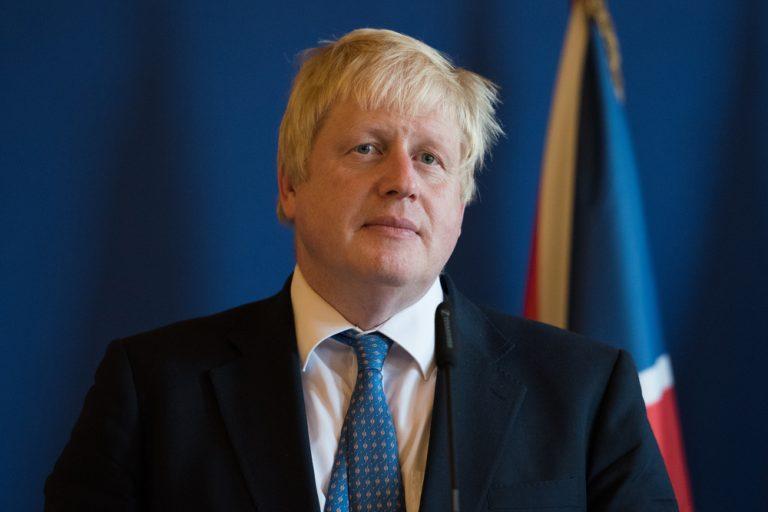
On Tuesday prime minister Boris Johnson gave a speech in Dudley, in which he promised to “build better and build greener”, but also “build faster”, and adjust planning regulations to “build a more beautiful Britain”.
If you guessed Mr Johnson has a passion for ‘building’, you’d be correct. The overall gist of today’s announcements was that the PM is going to make it easier for developers to build more residential properties, by slashing regulations on existing or once-occupied spaces.
In terms of building new homes in formerly non-residential premises, the PM said it will now be easier than ever to develop Brownfield sites into “fantastic new homes”. Further, and likely the seminal feature of the announcement, the prime minister said that commercial properties will be able to be repurposed into residential spaces without planning permission and local authority approval.
Builders will not need planning permission in order to demolish commercial or residential properties, so long as they are going to be rebuilt into residential premises, and it will be easier to convert existing vacant premises into residential spaces. Boris also announced that, subject to neighbour consultation, it will be possible for home-owners and developers to build additional space above existing properties through a fast-track planning scheme.
On the regulatory changes, PM Boris Johnson said in his speech:
“Time is money, and the newt-counting delays in our system are a massive drag on the productivity and the prosperity of this country”.
A characteristically glib remark though it may be, the point that home building needs to remain consistent and in keeping with demand is true. This inability to fulfil this task has been a “chronic failure of the British state”, with not enough homes being built “decade after decade”, he said.
Hooray for less red tape, or nay for lower-quality living?
One issue that has been raised with this approach is that fewer regulations naturally encourage lower standards. Tom Fyans, policy and campaigns director at CPRE, the countryside charity, said that encouraging brownfield development decreases the pressure on greenfield sites. However, he also said that: “Deregulating planning and cutting up red tape simply won’t deliver better quality places. It’s already far too easy to build poor quality homes. Our research has shown that three quarters of large housing developments are mediocre or poor in terms of their design and should not have been granted planning permission. “The best way to deliver the places that we need, at the pace we need them, is to make it easier for local councils to get local plans in place, and then to hold developers to those plans.” Further, Deputy Editor of Inside Housing, Peter Apps, added:One safeguard Boris Johnson was willing to put in place was that pubs, libraries and village shops will be exempted from the brownfield and conversion schemes announced on Tuesday, as the government view these as “essential to the lifeblood of communities”.Cut this and you get worse housing developed for less and sold for more, not necessarily faster build out. If you want faster build out, you need a blend of tenures (rental, sale, social). Ironically, his focus on ‘getting people on the housing ladder’ pushes that back.
— Peter Apps (@PeteApps) June 30, 2020
More homes or just more properties?
Another issue we might take with today’s announcement is that house building and home ownership are not always consistent. While building something like 250,000 new homes a year is an admirable goal, the reality is that many of these will inevitably end up as additions to a portfolio and on the private rental market. We can argue whether this is a bad thing or not, but to claim that new ‘homes’ are being built at a rapid rate may be misleading. As Economist Paul Collier stated, home ownership increased exponentially to around 70% in 1980, and since then it has exponentially decreased. To increase home ownership, we need not only to build property but to make it easier for first time buyers to get on the ladder. In Boris Johnson’s defence, this concern was represented by a new feature called “First Homes” scheme, which is a new pilot programme of 1,500 new homes which will be sold exclusively to first-time buyers for a 30% discount. Further, the government pledged to commit £12 billion to an 180,000 affordable homes programme over the next eight years, though this is a notable backtrack on the previous five-year plan for £12.2 billion-worth of expenditure. As stated by Shadow Business Secretary Ed Miliband: “So now we discover this ‘FDR’ speech cuts money for affordable housing -£12bn over 5 years in Budget 2020, now £12bn over 8 years. What an absolute fraud.”What do we think?
It’s rather a mixed bag to be honest. The new rules will come into effect by September, once changes to planning laws have been ratified. The building of new homes should always be encouraged, though a greater commitment to encouraging first-time buyers would have been more in keeping with Boris Johnson’s trademark national potential and opportunity rhetoric. As far as the online response is concerned, so far comments on more ‘left-wing’ outlets have lamented the announcements, while comments on more ‘right-wing’ outlets have expressed concerns about over-building and the damage this could cause to communities and ecosystems, with others asking the prime minister to limit immigration rather than housing supply, to deal with the demand for new homes.FTSE slips while US markets rally – a mixed bag for global equities

The FTSE 100 index (INDEXFTSE:UKX) has dipped this afternoon by 1.16%, despite being on course to record its best quarter since 2010, at the tail-end of the financial crisis.
Ongoing concerns surrounding coronavirus have weighed heavily on markets for the past few weeks, and PM Boris Johnson’s announcement of a New Deal-style spending spree has failed to stir up much of a response from the London Stock Exchange.
New figures from the Office for National Statistics (ONS) released on Tuesday revealed that the UK economy shrank even more than expected in the first quarter of 2020, contracting 2.2% between January and March, in what was the joint largest drop since 1979.
Markets fail to find solace in PM’s good news
Analysts had expected the FTSE index to open higher today on the back of news that the PM is set to inject billions of pounds into infrastructure projects across the UK in the aftermath of the pandemic. However, the World Health Organisation (WHO) cast a gloomy outlook for the next few months with a statement last night warning that the pandemic “is not even close to being over”. In fact, WHO chief Dr Tedros Adhanom Ghebreyesus has alerted officials that the rate of transmission appears to be “speeding up”, as a number of US states are forced to reinstate lockdown measures amid a surge in reported cases. The FTSE also appears to have been dealt a major blow by Shell (LON:RDSA) – one its major components – announcing that it is set to slash $22 billion off the value of its assets, which sent the oil giant’s shares down by more than 2%.The view from across the pond
On the other side of the Atlantic, US stocks opened on a better stead than their British counterparts. The Dow Jones (INDEXDJX:DJI), NASDAQ (INDEXNASDAQ:.IXIC) and S&P 500 (INDEXSP:.INX) all opened in the positive, up by 0.01%, 0.28% and 0.21% respectively. NASDAQ has since surged by 0.70%, but the early morning momentum appears to have worn off for the Dow Jones, which has now slipped back into the negative by 0.18%. Today marks the final day of the US’s best quarter since 1998, and no doubt this good news has buoyed today’s results. Trouble is mounting for a number of states who have had to reintroduce lockdown measures, and restrictions still stand for those travelling into the New York district. Meanwhile, election fever has begun to take hold as “battleground states” such as Texas, Florida and Arizona shift blame to President Trump for his poor handling of the coronavirus crisis.Round-up
Global markets have had a tumultuous few weeks, with indecision over an economic recovery and urgent warnings from the WHO about the direction of the pandemic paralysing investors. Today’s numbers show that the PM’s Keynesian-esque attempt to inject some optimism into the economy has been met with relatively cold feet, and while the US markets might be looking on the bright side this afternoon, a brewing storm of virus cases looms ominously overhead.AstraZeneca shares slip despite new Japan orphan drug designation

British-Swedish pharamaceuticals company AstraZeneca (LON:AZN) saw its share price dip on Tuesday despite having announced that its selumetinib treatment had been granted orphan drug designation (ODD) in Japan, for the treatment of neurofibromatosis 1 (NF1).
The announcement comes as trials showed the treatment was effective in reducing tumour volume in paediatric patients with NF1, Today’s ODD follows approval in the US, with additional regulatory submissions underway.
AstraZeneca said that selumetinib is developed and commercialised in partnership with Merck and Co. (NYSE:MRK), and that the treatment would help those experiencing plexiform neurofibromas as a result of NF1.
Speaking on the condition, José Baselga, Executive Vice President, Oncology R&D, said:
“Neurofibromatosis type 1 can have a devastating impact on children and new medicines are urgently needed to help treat the resulting plexiform neurofibromas and associated clinical issues. Current options in most countries are limited and this designation is a significant step forward in bringing the first medicine for NF1 to paediatric patients in Japan.”
Roy Baynes, Senior Vice President and Head of Global Clinical Development, Chief Medical Officer, MSD (Merck) Research Laboratories, said on the new treatment:
“Plexiform neurofibromas are one of the key manifestations of NF1 and can lead to pain and disfigurement. In the SPRINT trial, selumetinib was shown to reduce the size of these tumours in children. We are hopeful that we will be able to bring this treatment to this underserved paediatric patient community in Japan.“
The plexiform neurofibromas tumour grows along a patient’s nerve sheaths, and can cause issues such as disfigurement, motor dysfunction, airway dysfunction, visual impairment and bowel and bladder dysfunction. The selumetinib treatment, when trialled, reduced tumour volumes by at least 20% in 66% of the NF1 patients it was tested on (33 out of 50). Today’s ODD by The Japanese Ministry of Health, Labour and Welfare means selumetinib will be added to the list of medicines used for the treatment of rare conditions. ODD is a classification designated for treatments for diseases that affect fewer than 50,000 patients in Japan, for which, AstraZeneca says, “there is a high unmet need”.Despite the seemingly positive update, AstraZeneca shares dipped by over 1.20%, before recovering slightly to a 0.99% dip, to 8,463.00p per share 30/06/20 12:34 BST. This is up frm the company’s year-long nadir of 6,221.00p in mid-March, but down from its 9,004.00p high in mid-May. The company’s p/e ratio is 102.15p, its dividend yield is modest but reliable at 2.58%.
Cineworld shares stable as reopening date postponed until July 31st

Cineworld Group plc (LON:CINE) has announced that it will postpone the reopening of its UK and US cinemas until 31st of July, citing a lack in new film releases. The company had previously stated that all of its transatlantic sites would be able to open from the 10th of July. In a company statement, Cineworld insisted that the move was “in line with recent adjustments to the schedule of upcoming movie releases”.
A number of big summer blockbusters – including Disney’s live-action remake of Mulan and upcoming Christopher Nolan flick Tenet – have been forced to push back their premiers until August in order to maximise profit. Cineworld is accordingly concerned that the delay in releases could lead to low engagement from the public, as the cinema sector prepares to relaunch with social distancing measures in place following the coronavirus pandemic.
In a previous announcement, Cineworld laid out its plans to reopen cinemas with the health and wellbeing of its customers and employees as its priority. The company emphasised its commitment to social distancing, with new film schedules to “manage queues and traffic in and around its premises” and “enhanced sanitation and cleanliness procedures” to ensure sites have minimal opportunity to spread the highly-infectious Covid-19 virus.
Earlier this year, the chain was forced to close 787 cinemas across 10 countries worldwide and company bosses relinquished salaries and bonuses to help cut costs as the business struggled through the pandemic. Cineworld had already suffered a fall in profits in 2019, leaving the company in a precarious position when lockdown measures came into force in the UK back in March. The company had been in the process of slowly chipping away at its $3.7 billion debt when it closed all of its sites in April.
A number of movies have been lined up for release later this summer when Cineworld does eventually open its doors, with titles such as A Quiet Place Part II and Antebellum. Nolan’s fan-favourite Inception is also scheduled to be re-released on IMAX.