
Laura Ashley collapses as COVID-19 hits
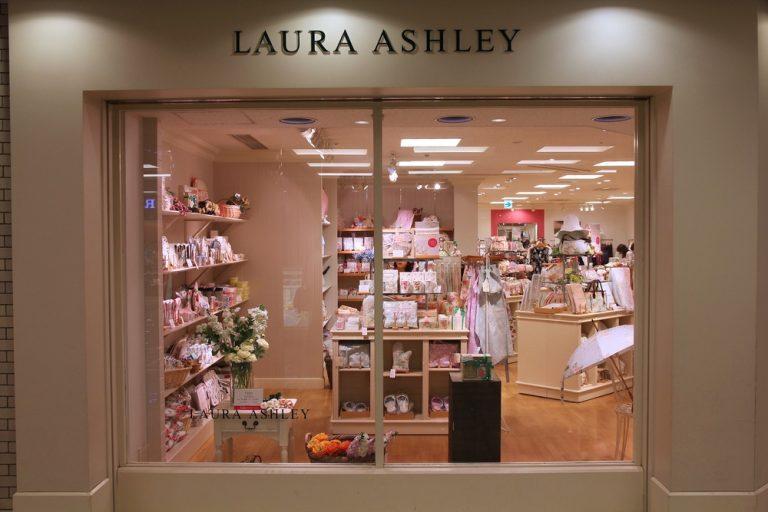
Laura Ashley Holdings plc (LON:ALY) shares crashed on Tuesday after the company announced that it has filed for administration.
Shares crashed over 60% following the news.
The British retailer said that the COVID-19 outbreak has had an “immediate and significant impact” on trading.
As the virus continues to spread across the world, many businesses have been hit hard and have issued warnings concerning the situation.
But for Laura Ashley, which was already struggling prior to the outbreak of the virus, the situation has been critical.
During a time where people are being encouraged to stay indoors and self-isolate, footfall is bound to be lower on the high street.
“For the seven weeks up to 13th March, trading for the Laura Ashley business improved by 24% year-on-year and the directors were encouraged by this strong performance. However, the COVID-19 outbreak has had an immediate and significant impact on trading, and ongoing developments indicate that this will be a sustained national situation,” Laura Ashley said.
“Accordingly, the Company regrets to announce that the directors of the Company, and of the named subsidiaries, have today filed notices of intention to appoint Robert Lewis and Zelf Hussain as administrators. If administrators are appointed in respect of the Company, given the Group’s creditor position, the Company is not certain whether there would be any surplus assets available to shareholders of the Company,” the company continued.
Elsewhere, the travel industry has been hit particularly hard by the COVID-19 outbreak as demand for travel has decreased and as countries, such as Italy, have been put on lockdown.
Over in the UK, the British government has been accelerating measures to contain the spread of the virus.
Shares in Laura Ashley Holdings plc (LON:ALY) were down on Tuesday, trading at -60.18% as of 11:15 GMT.
Three pharmaceutical shares trialing and developing coronavirus treatments
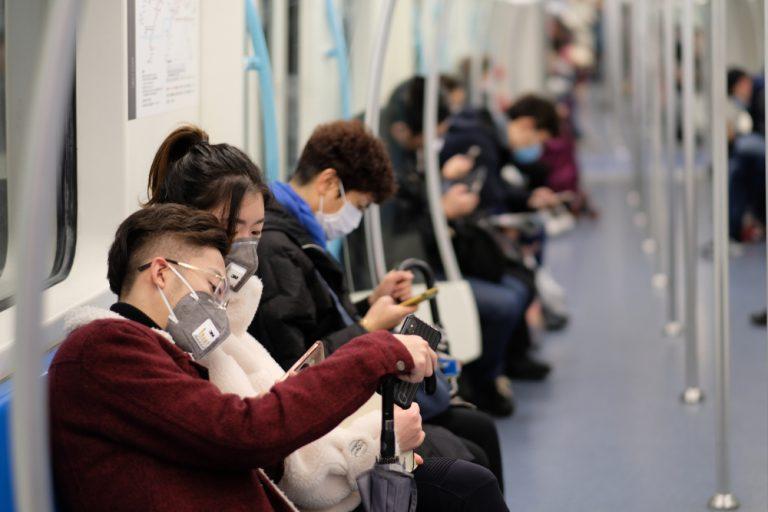
Markets have been heavily hit by the coronavirus pandemic with equity indices trading like penny stocks and the some of largest companies in the world losing more than 50% of their value.
Integral to the panic gripping stock markets is the lack of any vaccine of approved medicines to treat COVID-19.
When a vaccine or effective coronavirus medicines are found, there will likely be a historic wave of relief through markets and shares in the company, or companies, responsible for the treatments will become much sought after.
There are numerous companies researching and developing coronavirus treatments, both listed and unlisted, however, three are receiving a significant level of investor and press interest.
Roche
The first step to tackling COVID-19 is testing individuals and countries around the world were awfully unprepared. Roche (SWX:RO) began developing coronavirus testing in January inline with the FDA and tests are now available in labs across the US. Reflecting the urgency of the need for testing and efficiency of Roche, the coronavirus tests were produced and approved in record time.Gilead Pharmaceuticals
As COVID-19 spread through China the only option was to trial existing medicines traditionally used for other illnesses. China tesed a wide range of medicines for infections and diseases such as malaria, SARS, HIV and inflammation. One of these drugs was Gilead’s (NASDAQ:GILD) antiviral Remdesivir. Remdesivir is emerging as a frontrunner in the treatment of coronavirus having originally been designed to target Ebola. There have been a number of claims Remdesivir produced positive results in patients in China and there are a number of trials ongoing in China, and recently the US.Novacyt
Again focusing on the testing of coronavirus as the first step in treating the virus and controlling it’s spread, Novacyt (LON:NCYT) is supplying the UK healthcare system with testing kits. Initial orders from Public Health England amounted to £1 million to test in eight hospitals across the UK over a four week period. If successful, it is easy to picture Novacyt receive significantly more orders. The company is listed on London’s AIM with a market cap of just £97 million.

Halfords announce plans to close Cycle Republic stores
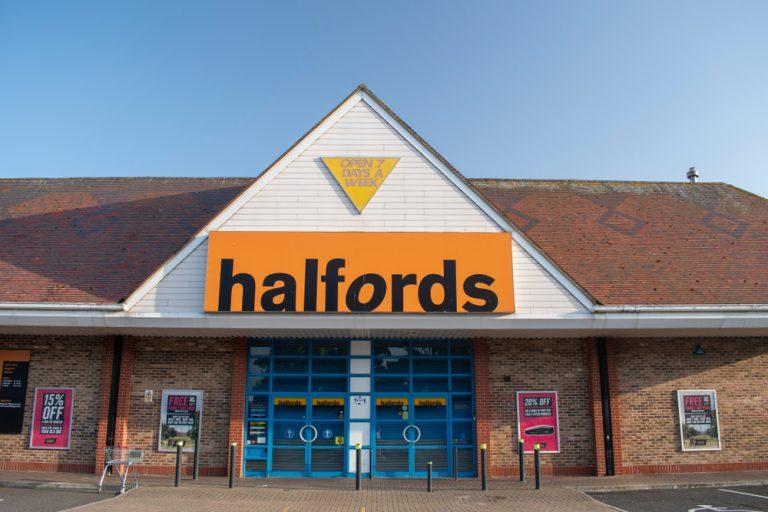
Halfords Group plc (LON:HFD) have seen their shares plummet, as the firm told the market that they are planning to close their Cycle Republic chain of stores.
The decision made by Halfords could put up to 226 jobs at risk, and reflects the tough trading environment combined with wider macroeconomic challenges that British High Street firms are facing.
The firm also noted that it intends to shut 22 stores and performance centre site in Evesham in an attempt to streamline focus on its online cycling business, Tredz.
The firm commented: ‘Performance Cycling is an important category for Halfords. We currently serve the enthusiast cycling market through Tredz, a predominantly online business, and through Cycle Republic, a commuter led, store and online offer. Going forward, we believe we will better serve this market by singularly focusing our investment and resources into the Tredz brand, which has both a differentiated and specialist customer proposition and a superior business model in this part of the cycling market.
With investment in the Tredz business, alongside our core Halfords Retail cycling business, we believe we will be uniquely placed to serve both the enthusiast and the mainstream customer in a more economic way than we do today’.
Halfords described their Cycle Republic business as one which was low returning and stock intensive – and the planned exit will allow investment and resources to drive into their motoring business.
Notably, the Cycle Republic division reported a £4.3 million loss last year, and the loss expected this year is expected to be lower.
Graham Stapleton, CEO said: “The Board has come to the difficult, but necessary, decision to propose the closure of Cycle Republic, our retail store-focussed performance cycling brand.
This proposal is not a reflection of the hard work of our Cycle Republic colleagues, who I would like to thank for their commitment and passion in serving our customers. We are now moving into a period of consultation with impacted colleagues with a view to mitigating as many redundancies as possible.
Going forward we propose to focus our investment and resources in Halfords and Tredz, through which we will deliver market-leading specialist propositions for both mainstream and enthusiast cyclists via a business model that improves our overall economics.”
Halfords see steady Christmas trading
In January, the firm told the market that its’ Christmas trading had seen positive growth. Halfords who work in the automobile and motoring sector reported an earnings rise in its third quoter which accounted for the festive trading period. Notably, the revenue earned from its Autocentres servicing unit grew over 30%. Retail saw a like-for-like improvement in the Cycling segment, by 5.9%, though in Motoring, like-for-like revenue was 2.7% lower than last year. Total revenue has shrunk 0.2% year on year, and has seen a slump of 1.2% on a like for like basis. For the full-year, Halfords maintained its guidance of underlying pretax profit, in the range of £50 million and £55 million. The measure is also on a pre-IFRS 16 basis, an accounting standard governing the financial treatment of leases. Shares in Halfords Group plc trade at 81p (-21.08%). 16/3/20 13:48BST.Coca Cola European Partners anticipate coronavirus could hurt 2020 earnings

Coca Cola European partners PLC (LON:CCEP) have told the market that they are anticipating that the coronavirus could hurt their earnings forecast for 2020.
The bottling subsidiary of Coca Cola said that they have already installed measures to limit the current outbreak of COVID-19, however the uncertainty with regards to the scale and time frame could change its’ guidance expectations and forecasts.
The firm commented: “Since the balance sheet date, we have seen significant macro-economic uncertainty as a result of the coronavirus (COVID-19) outbreak. The scale and duration of this development remains uncertain. CCEP is well positioned given its current financial position, stable cash generation and good access to liquidity and has mitigation plans in place, which it continues to adapt as the situation evolves. The situation could however impact our full year 2020 earnings and cash flow, and therefore by implication our full year 2020 guidance, on which we will update you in due course.”
Coca Cola also announced that the risks have been identified to all stakeholders in the firm, and the impact of the coronavirus will be fully assessed in due course.
Coca Cola European Partners see strong February update
In February, the multinational firm gave a confident update to shareholders. The drinks retailer and producer said that it expects single digit revenue growth in 2020, however performance in 2019 had been strong. Coca Cola reported that revenue had rose 4.5% to €12.02 billion in 2019, compared to the 2018 figure of €11.52 billion. The multinational said that this reflected solid execution and innovation led growth which will please shareholders. Notably, pretax profit also rose €1.45 billion from €1.21 billion, whilst operating profit also rose from €1.30 billion in 2018 to €1.55 billion. On a sweet note for shareholders, Coca Cola also declared a full year dividend of €1.24 per share, which shows a 17% appreciation from last year. Coca Cola across all business have looked to maintain its annualized dividend payout ratio of 50%. Coca-Cola also announced that they will be commencing a 2020 share buyback program of up to €1 billion, as the firm concluded its update. The drinks firm praised the strong performance in the British markets, as revenue grew by 2% in Coca-Cola Zero Sugar, Fanta & Monster drinks. French revenue also jumped 4.5%, and European performance was steady with strong consistent performance in the Netherlands. Shares in Coca Cola European Partners PLC trade at €37 (+1.01%). 16/3/20 13:12BST.Oil prices continue to sink on coronavirus worries

The price of Crude Oil has slumped across the Monday session, as developments in the macroeconomic world unfolded across the weekend.
US Crude fell below $30, as the US Federal Reserve decided to cut interests by 100 bps to 0.00% – 0.25% – and notably announced the planned purchasing of $700 billion’s worth of assets.
The coronavirus has been infecting global markets for almost three months now, and the situation has vastly escalated. In January, it seemed that the Chinese Government had done a good job in containing the virus within Wuhan – where it originated. However, the situation was far from under control.
At the start of this month, global health authorities had reported that the virus had reached Italy – and since them Western Europe has been plagued by the COVID-19 virus, with oil and commodity prices being equally affected.
The price of oil has remained volatile, as has many global stocks and indices . The ongoing feud between Russia and OPEC+ has not added any solidarity for oil prices, as the two parties have locked heads on the best way to control the price of oil due to global slumps in demand.
It was also reported that China’s factory output had sunk at the sharpest pace in 30 years amid coronavirus fears.
Many global governments have now resorted to cutting interest rates and introducing fiscal stimulus’ to try and combat the ongoing bleakness caused by the coronavirus. Despite these injections, the situation is still looking as dark as ever.
Oil price are expected to face some volatility over the next few weeks, as OPEC+ plan supply cuts whilst President Donald Trump has ordered Strategic Petroleum Reserves to be filled up.
Exporters in Saudi Arabia have also not helped the problem for oil prices, as top suppliers have risen their output and slashed prices in order to try and increase trading – particularly within Asia and Europe.
WTI Crude has seen a crash of nearly 6% to $29.94, whilst Brent Crude dipped 8.5% at $30.96 per barrel.
TUI suspend ‘majority’ of operations
TUI AG (LON:TUI) have announced that they have decided to suspend the majority of their operations, following the escalation of the current coronavirus crisis.
The firm noted in a press release this morning, that it this move would be affecting its’ “package travel, cruises and hotel operations”.
The firm commented: “In this rapidly changing environment the safety and welfare of our guests and employees worldwide remains of paramount importance and thus TUI Group has decided, in line with government guidelines, to suspend the vast majority of all travel operations until further notice, including package travel, cruises and hotel operations.
This temporary suspension is aimed at contributing to global governmental efforts to mitigate the effects of the spread of the COVID-19.
Due to the unprecedented escalation of COVID-19, the Board of TUI are continuously evaluating the situation and are considering a variety of actions to support our customers, colleagues and stakeholders.”
TUI added that it would be withdrawing its’ profit forecast for the current financial year following the outbreak of the coronavirus.
For 2018-19, TUI reported net profit attributable to shareholders of €416 million, down 43% on the year prior.
Arguably, the airline and travel operators have been hit the hardest since the coronavirus outbreak. Last week, it was noted that TUI had dropped out of the elite FTSE 100 – which reflects a tough period of trading for the firm.
TUI see first quarter adjusted loss widen
The firm also said that continued delays with Boeing (NYSE:BA) with the delivery of 737 aircrafts had affected trade, and subsequently led to a slower than expected period of trading. For the three months ending December 31, the company’s underlying loss before interest & tax increased 77% to €146.9 million from €83.1 million the year prior. The firm also said that continued delays with Boeing (NYSE:BA) with the delivery of 737 aircrafts had affected trade, and subsequently led to a slower than expected period of trading. For the three months ending December 31, the company’s underlying loss before interest & tax increased 77% to €146.9 million from €83.1 million the year prior. First quarter underlying earnings before interest, tax, depreciation and amortisation totaled €111.5 millions from €27.2 million a year ago, as net loss narrowed by just under 6% to €105.5 million. Annual EBITA is now expected to be between €850 million to €1.05 billion versus previous €R950 million to €1.05 billion guidance range. Shares in TUI AG trade at 242p (-32.64%). 16/3/20 11:50BST.Kingfisher shares dive 22% as European stores face closures
Kingfisher PLC (LON:KGF) have told the market that the coronavirus has not affected its’ trading in January – however the firm could see a bruising from ongoing restrictions in France and Spain.
Shares in Kingfisher trade at 106p (-22.20%). 16/3/20 11:19BST.
The firm commented: “We are committed to supporting local authorities and governments to limit the spread of the virus, and the health and safety of our colleagues and customers remains our top priority.
We have implemented a series of actions to protect the health and safety of our employees, including restricting travel and meetings, the adoption of flexible working arrangements for colleagues, and the recommendation to colleagues and customers to follow specific health protection protocols. Contingency plans have been drawn up to ensure continuity of customer service in stores and in head offices, including encouraging work from home where appropriate.”
Across February trading, the owner of B&Q said that like-for-like sales were 7.6% higher, which will please shareholders at a time where the macroeconomic environment has presented challenges.
In the first two weeks of March, the firm also noted that trading had been positive – with sales still maintaining their pace.
However, the firm said that all 221 of the company’s Castorama and Brico Depot stores were closed on France, starting Sunday, with this restriction expecting to last until April 14.
The former FTSE 100 listed firm also said that all stores in Spain had closed until March 29, following the government’s declaration of a two-week state of emergency.
Kingfisher said that their stores across the UK, Ireland, Poland, Romania, Portugal and Russia will remain open – unless these governments make a decision to put the state into a lockdown position.
The firm said that it is not able to fully assess the impact of the coronavirus, however its’ final results will be released on March 24.
Kingfisher concluded by adding: “There is significant uncertainty on sales and demand as the outbreak spreads, and as central governments and businesses take action to contain and delay its impact.
We are working to mitigate the implications of these closures, including via alternative routes to continue serving customers (e.g. via click & collect or home delivery).
Given recent government actions and the heightened impact and uncertainty of changes in the magnitude, duration and geographic reach of COVID-19, we are not yet able to predict the impact of COVID-19 on our 2020/21 full year results.
Further updates will be given as soon as we have greater visibility on external developments and the impact on our trading.”
Kingfisher give disappointing November update
In November, the firm saw its’ shares in red following a disappointing trading update from the firm. The former FTSE 100 listed firm said trading in the three months to October was “disappointing”, with sales falling 3.7% to £2.96 billion. Like-for-like revenue slipped 3.7%. Kingfisher said this “reflects continuing disruption from new range implementations, lower promotional activity and ongoing operational challenges in France, and softer market conditions in our main markets”. B&Q sales sank 3.5% year on year to £820 million, slightly offset by an eight per cent rise in Screwfix sales to £477 million. Last week, it was also noted that Kingfisher had slipped out of the FTSE 100 elite rankings. This reflects a tough time of trading for the firm, however Kingfisher will have to fully assess the impact of coronavirus on trading before making a statement to shareholders.Rio Tinto’s progress in Mongolia slows down due to COVID-19 restrictions
Shares in Rio Tinto (LON:RIO) have dipped modestly across the Monday session, as the firm gave an operational update on its’ Mongolia mine.
The mining titan said that it is continuing to work with the Mongolian Government to ensure that Oyu Tolgoi is operating within the capacity restrictions following the outbreak of the COVID-19 virus.
Rio Tinto noted that work is still commencing at this site, however progress has been stunted amid restrictions on access for teams from Rio Tinto, Oyu Tolgoi and its construction partners to oversee development and provide specialist technical services.
The firm noted: ‘The full impact of the slowdown on the Underground Project is unknown at this time and the company will update the market once more information is available. The mine design for the Underground Project currently remains on track to be completed in the first half of this year, with a definitive estimate to be provided for the development of this world-class orebody in the second half of 2020.
Despite the impact of COVID-19, the open pit of the Oyu Tolgoi mine continues to operate and deliver shipments of copper concentrate to its customers.’
The firm added that the operations remain largely on track with time schedules and that this mining is expected to be completed within the first half of 2020.
Rio Tinto Copper & Diamonds chief executive Arnaud Soirat said – “Our focus is on ensuring the safety and health of all of our people at Oyu Tolgoi and we support the decisive action taken by the government to limit the spread of COVID-19. It has inevitably resulted in a restriction on the movement of goods and people in the country and this is slowing down construction activity at the Underground Project. It is too early to determine the impact of this and the team is doing all they can to minimise the disruption in a challenging environment. We will continue to work with our suppliers, customers and the government.”
Rio Tinto’s annual results
At the end of February, Rio Tinto updated the market with their final set of results – which proved positive reading for shareholders. The firm said that revenues had risen across 2019, which was largely down to rising iron prices – however profits dipped slightly across the year. In Rio Tinto’s 2019 financial year, the firm noted that sales revenue climbed 6.5% to $43.17 billion from $40.52 billion, but pretax profit slumped 35% to $11.77 billion from $18.20 billion. Looking at net losses, the mining titan reported that they faced a $291 million net loss on consolidation and disposals, compared to a $4.6 billion surplus just one year ago. Notably, impairment charges faced were $3.49 billion, which was a significant increase from the $132 million gain in 2018. Rio Tinto added that its full year ordinary dividend per share was 24% higher at 382 cents from 307 cents – however total dividend fell 19% to 443.0 cents from 550.0 cents in 2018. Full year production guidance remained consistent, however full year guidance at the Pilbara iron ore operations were slashed following damaged caused by cyclone Damien. Going forward, mined copper production is expected lie within the 530,000 to 570,000 tonne ball park, which is below total 2019 output of 577,000 tonnes. Finally, aluminium production is expected to be between 3.1 and 3.3 million, which remains consistent with last year’s total figure. Shares in Rio Tinto trade at 3,152p (-3.73%). 16/3/20 11:12BST.PLUS500 remain confident as trading volumes rise
Plus500 Ltd (LON:PLUS) have given shareholders a confident update this morning, despite the ongoing market crash caused by the outbreak of COVID-19.
The trading platform service provider said that it is expecting 2020 results to beat market expectations, and has seen higher volumes of trading across financial markets.
Notably, PLUS500 continued to add saying that they had seen increased levels of customer activity since the end of February, and that revenue from customer income had been strong.
Customer trading performance has also risen, which has meant that PLUS500 have seen further gains – however these benefits are expected to be weighed out due to the effects of the coronavirus on global stocks.
The firm said: ‘We are at an early stage of the financial year and given the uncertainty regarding the duration of current levels of volatility or the unquantified potential impact from regulatory changes in Australia, it remains difficult to predict the outcome for the full year at this stage.
Notwithstanding this, we expect revenue and profitability for the full year to be substantially ahead of current consensus expectations.
The Company will issue further announcements as appropriate, with its first quarter trading update scheduled to be issued on 7 April.’