
Kerry Group shares jump 5% as firm reports strong 2019
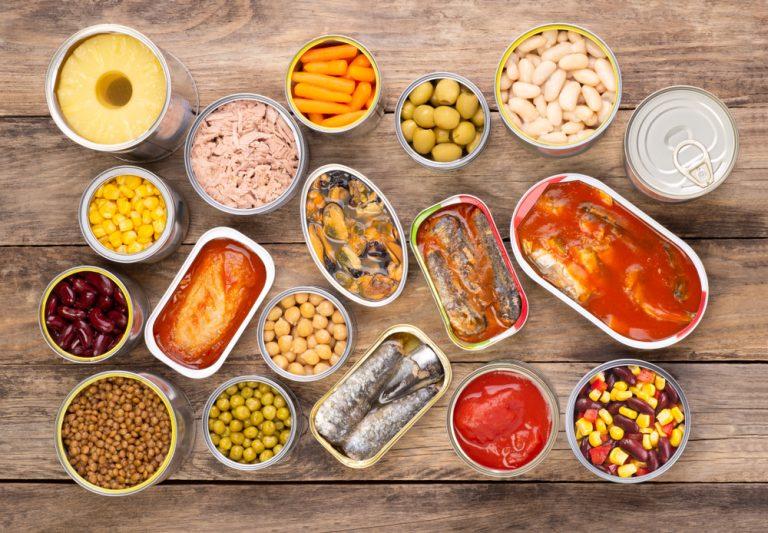
Kerry Group PLC (LON:KYGA) have seen their shares jump on a pleasing update from the Irish foods business.
The firm noted that both profits and revenues rose in 2019 which sparked shareholders optimism on Tuesday afternoon.
Shares in Kerry Group PLC trade at €123 (+5.39%). 18/2/20 13:39BST.
Kerry noted “Strong growth was achieved in the year, driven by good volume growth in Taste & Nutrition and the contribution from strategic acquisitions. Group reported revenue increased by 9.6% to €7.2 billion, reflecting volume growth of 2.8%, flat overall pricing, favourable translation currency impact of 2.1% and contribution from business acquisitions of 4.7%. Taste & Nutrition achieved good volume growth in the Americas, a solid performance in Europe and continued strong growth in APMEA. Consumer Foods delivered a solid underlying performance versus the market, offset by the impact of the ready meals contract exit previously announced.”
Across 2019, the foods firm told the market that revenue was €7.24 billion, which saw a 9.6% rise from a year ago.
Kerry alluded the strong growth to performance in Taste and Nutrition which was 4%, however consumer foods fell 2.2% due to a contract exit in ready meals.
Shareholders would not have been surprised with this slip in consumer foods as the firm had already given a prewiring a little while back.
Kerry’s pretax profit for the year was 4.5% higher at €645.9 million, with the figure before non-trading items 11% higher at €756.8 million.
The firm told shareholders that they would be paying a final dividend of 55.1 euro cents per share, taking the year’s total to 78.6 cents, up 12% on the year before.
Edmond Scanlon, Chief Executive Officer commented:
“We are pleased with the business performance and the strategic development of the Group in 2019. Taste & Nutrition delivered good volume growth, particularly against the backdrop of softer market volumes in some developed markets. We also enhanced our trading profit margin and achieved growth in adjusted earnings per share of 8.3% in constant currency.
Significant progress was made right across our strategic growth priorities of taste, nutrition, foodservice and developing markets. We successfully integrated a number of strategic acquisitions, expanded our strategic footprint in high growth developing markets, while further enhancing our industry-leading global integrated solutions portfolio.”
Looking forward, Kerry said that they expect a 5% to 9% rise in adjusted earnings per share at constant currency, as the firm also factored in the current coronavirus epidemic which is still at large.
Resolute Mining report higher gold reserves at end of 2019

Resolute Mining (LON:RSG) have seen a rise in their gold reserves at the end of 2019, which has left shares in green.
The gold miner reported a year-end rise in gold reserves, as the planned sale of its Ravenswood mine goes ahead.
Resolute told the market that total ore and mineral reserves climbed 15% year on year, rising from 16.6 million ounces of gold to 19.1 million ounces at the end of 2019.
The CEO commented:
“Resolute’s updated Ore Reserves and Mineral Resources Statement reflects our ability to significantly grow and improve the inventories we maintain at our long life, large scale gold mines, and at the same time demonstrates our commitment to growth by strategic value accretive acquisitions. We will continue to seek to create value by increasing the range and quality of our Mineral Resources by both successful exploration and prudent investment.”
Resolute Mining sell Ravenswood gold mine
In January, Resolute confirmed that they had sold their Ravenswood gold mine in Queensland. The sale was made to EMR Capital Management and Golden Energy and Resources (SGX:AUE). Resolute said EMR is a “leading” resources-focused private equity company with “outstanding” credentials. Resolute have said that they will receive AUD100 million in cash and notes for the initial sale of the mine. Subject to further terms of the deal, a further AUD200 million could be sent Resolute’s way dependent on gold production figures and gold prices. The sale of Ravenswood comes at no real surprise as the firm was conducting a strategic review of these operations, however Resolute did say that it hopes the mine will produce 200,000 ounces of gold for 15 years from 2022. The update today is not as significant as one may expect, however shareholder will be please nonetheless. There should be an optimistic tone for shareholders and the firm to carry fortunes across 2020 to produce a good run of results. Shares in Resolute Mining trade at 58p (+0.82%). 18/2/20 13:25BST.Ocean Outdoor boasts ‘transformational year’ with 10.5% earnings growth

Outdoor advertising company Ocean Outdoor (LON:OOUT) booked a strong full-year set of results during 2019, alongside a long list of acquisitions, in what proved to be a formative year for the business.
Regarding its impressive performance, the company’s revenue jumped 13.5% year-on-year, up to £141.3 million. This led a 10.5% hike in its EBITDA, up from £30.4 million to £33.6 million. Ocean Outdoor also boasted that between its Ocean UK and Ocean NL operations, revenues were up 14.3% to £98.3 million, with EBITDA up 12.2% to £28.0 million.
In terms of acquisitions, the company announced the acquisition of Dutch OOH companies Ngage Media and Interbest, for a combined cash consideration of £43.0 million. It continued, saying that it had added the international media and tech group Visual Art and Nasdaq First North listed company AdCityMedia, to its roster, for interests of £56 million and £25 million respectively.
It went on to say that it had successfully secured extensions to its Piccadilly Lights and BFI IMAX contracts, and capped off its seemingly idyllic update by saying it had secured long-term contracts with Southampton and Glasgow City Councils, to provide “enhanced digital roadside city centre large format screens”.
Ocean Outdoor speaks on its successful year
Offering feedback on his company’s cheery update, CEO Tim Bleakley commented:“In the last 12 months we completed five acquisitions and expanded our presence to seven countries, entering key strategic markets and creating a market leading DOOH offering in both the Netherlands and Sweden, where we are focussed on successfully implementing our Digital Cities for Digital Citizens philosophy. Our expanded geographical presence allows us to build a combination of premium digital assets and quality audience delivery networks across northern Europe that will meet the needs of both customers and advertisers.”
“Whilst we remain focused on expanding our network, creativity and innovation are also core to our growth and we continue to invest in new and engaging ways of using full motion DOOH to bring exclusives to audiences and a powerful broadcast platform for brands to exploit. Our recent Neuroscience based study and YouGov research has provided a greater, quantifiable understanding of the significant impact of the use of innovative content on full motion DOOH screens, underlining the value of our platform.”
“As we progress into 2020 we are excited to work alongside the team at AdCityMedia to fully integrate the latest addition into the Ocean Group and continue to develop our business in the UK and the rest of Europe.”
Investor notes
Following the update, the company’s shares have rallied 0.64% or 0.050p, to 7.90p per share 18/02/20 12:06 GMT. Ocean Outdoor currently has a p/e ratio of 0.46, and a market cap of $424.22 million.What’s next for Sirius Minerals?
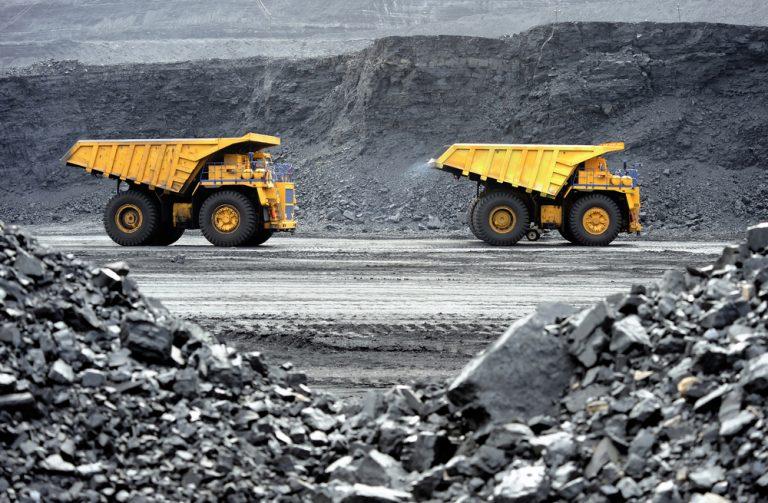
Sirius Minerals (LON:SXX) have been in talks with Anglo American over a potential takeover deal, and the firm has seen a busy few months of trading with shares crashing and surging.
Shares in Sirius Minerals trade at 4p (-1.73%). 18/2/20 12:42BST.
The last year has been busy for Sirius Minerals, and investors have tipped them to be one of the hottest prospects on the market.
The firm however, have seen their shares become very volatile. Certainly the world volatile may not cut the changes that Sirius have seen over the last year.
The firm has seen a 52 week change in share price of -74.72%, a dramatic fall which has included ebbs and flows from takeover talks with Anglo American (LON:AAL), a new financing plan and changes to their operations in Yorkshire.
52 week highs have been recorded at 8,389p whilst the 52 week low was seen at 2.1p. Such a change between the two figures reflects the shifting nature of the share price and the current changes that the firm is going through.
Notably, the 50 day moving average is 5.098p which is slightly short of the 200 day moving average of 5.431p.
Many are wondering, what is next for Sirius Minerals?
Anglo American – Sirius deal
At the start of 2020, it was reported that Anglo American were in advanced talks to acquire Sirius Minerals. This deal was supposedly given the green light, as Anglo said that they will offer 5.5p per shares for Sirius, which shows a 34% rise to the closing price of Sirius on Friday 17th January of 4.1p. Sirius Minerals itself said its directors consider the acquisition to be “fair and reasonable”, and have recommended that shareholders vote in approval of the offer. The offer is conditional on whether 75% of Sirius shareholders decide to vote in favor for the merger deal, which will be done at an upcoming court meeting. Anglo American have remained confident about the acquisition and have said that they expect this to be formally completed by the end of March. The share price offer values Sirius at £404.9 million, and is a deal which Anglo American will be thoroughly excited with. The chairman of Sirius did acknowledge that shareholders may not have been happy with the proposed merger deal, and at the time he commented saying: “We acknowledge that to many Shareholders our decision as a board to recommend this offer will have come as a shock. Your board deeply regrets that we could not deliver the complete stage two financing in 2019 despite a very broad and thorough process. Going into the strategic review the Sirius Board’s strong preference was a solution that allowed current Shareholders to participate as fully as possible in the future development of the Project. Following the strategic review process it is clear that no such options are currently available to us and in that context Anglo American’s offer is the only feasible option.”The future for Sirius Minerals
It is important to remember that the deal is yet to get clearance, and the court procedures are still set to be debated between the parties involved. Shareholders do not seem pleased with the deal that has been struck between Sirius and Anglo American. However, some optimism has to remain within the firm. Anglo American are a mining titan, and certainly will be able to heavily invest into the operations and procedures of Sirius Minerals. Sirius Minerals had to find a finance option from somewhere – the firm did run into problems when financing their Yorkshire potash project and it seems that the deal was a case of ‘need’ rather than ‘want’. The firm did announce a new strategy last November, which involved less upfront capital with the hope that the Sirius could move onto the second phase in the near future. Sirius looked to have the right procedures and plans in order to commercialize their Potash project. Most small mining companies do not make as much progress before they are taken out a large discount to the supposed value of the project. The deal with Anglo American is subject to clearance, and shareholders will be keen to voice their opinion. However, it is important to remember that at a time where Sirius Minerals needed a bigger partner to help finance their ongoing operations, Anglo American did answer that call. If the deal goes through, there will be an initial feeling of pessimism. However – with the backing of Anglo American, there is much hope for Sirius Minerals and shareholders should fully evaluate both the costs and benefits before making their opinions heard when the deal is being considered by all stakeholders involved. On January 14, Berenberg reiterated a stance of ‘Hold’ for Sirius Minerals. This followed two ‘Buy” stances on the 11th and 12th November issued by Liberum Capital.Pan African Resources’ profit rises despite ‘challenges’ in financial year

Pan African Resources plc (LON:PAF) have seen progress in the first half of their financial year in an update on Tuesday.
The firm did admit that it had faced ‘challenges’ so far in its financial year – however performance had improved as growth was sustained.
CEO Cobus Loots commented:
“Our business strategy of delivering safe, sustainable and high-margin gold production has yielded improved operational, financial and safety results for the six months ended 31 December 2019.
In the current reporting period, our team delivered a robust operational performance, with gold sales volumes increasing by 13.6% to 90,602oz.
Despite the increase in the Group’s overall AISC for the current reporting period, all-in sustaining costs (“AISC”), at our tailings businesses operated at exceptional margins, with Elikhulu producing at an AISC of USD708/oz and our Barberton Tailings Retreatment Plant reporting an AISC of USD643/oz. We are pleased to maintain our previous guidance of gold production of 185,000oz, at an AISC below USD1,000/oz, for the full 2020 financial year.”
The gold miner said that pretax profit had surged to $27.2 million in the six month period which ended on December 31. This showed a great appreciation from one year ago, where Pan African reported a figure of $12 million.
Notably, revenues also climbed from $97.5 million to $132.7 million which shareholders will be pleased with.
Pan African noted that the South African operating environment remained challenging, as the firm alluded to issues such as electricity availability, illegal mining, community protests and disruptions, escalating costs and regulatory uncertainty.
Looking at volumes of gold production, this was rather pleasing for the firm and its respective shareholders.
Gold production increased by 15% from 81,014 ounces a year ago to 92,941 ounces, which drove gold sales for the period by 14% to 90,602 ounces.
The mining firm alluded to the rising price of gold, saying that across the period gold prices rose 20% to $1,464 per ounce from $1,222 per ounce a year earlier.
Loots concluded by saying:
“Despite some of challenges, including electricity supply constraints and illegal mining, Pan African Resources has demonstrated the ability to operate successfully in South Africa. We will continue to use our experience and resources to improve the lives of all our stakeholders and grow shareholder value.
Management’s key focus for the remainder of the 2020 financial year includes further improving the safety performance, delivering on production guidance, reducing operational costs, managing cash flow generation and strengthening the Group’s financial position by reducing senior debt.”
Pan African build from July update
The update from the gold miner today shows positive growth from the update which the firm gave in July. The Company told investors that gold production from its continuing mining operations spiked 54.1% to 172,442oz and said production from its continued and discontinued operations was up by 7.5%. Its largest operation, Baberton Mines, saw production rise 9.6% to 99,636oz of gold, while Evander mines’ volumes grew from 21,250oz to 26,878oz year on year. Its Elikhulu tailings retreatment plant operation produced 46,201oz of gold, which exclude pre-production gold volumes of 736oz. Pan African Resources added that the plant processed 10.85 million tonnes from the period between September 2018 and June 2019. Shares in Pan African Resources trade at 12p (+1.73%). 18/2/20 12:33BST.GMB reports 622 staff injured in Amazon UK warehouses
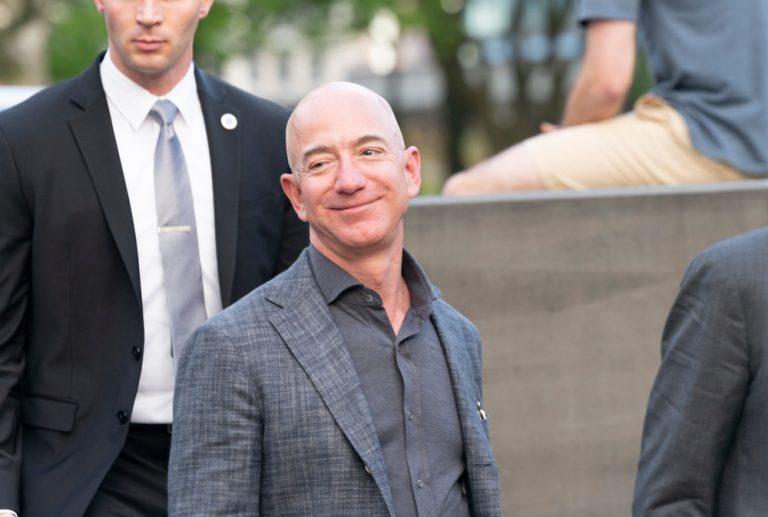
The GMB union reported that 622 staff have suffered ‘serious injuries’ or ‘near misses’ while working at Amazon warehouses in the UK, over the last three years.
For injuries to be counted in the findings, they needed to be severe enough to prevent a member of staff from performing their regular duties for a minimum of a week, or by suffering fractures, amputations, crushing, scalping or burning.
GMB union attempts to tackle the behemoth
A few of the cases described in the report included an incident in London, where a warehouse worker appeared to lose consciousness and stop breathing after a head injury. The GMB added that in Manchester, another employee had fractured their hand after being caught in a gate. Mick Rix, GMB national officer, commented: “Amazon are spending millions on PR campaigns trying to persuade people its warehouses are great places to work. But the facts are there for all to see – things are getting worse.” “Hundreds of stricken Amazon workers are needing urgent medical attention. Conditions are hellish. We’ve tried over and over again to get Amazon to talk to us to try and improve safety for workers. But enough is enough – it’s now time for a full parliamentary inquiry.” The GMB said it obtained the figures through a Freedom of Information request, and found that the situation for Amazon employees had worsened over time. While serious injuries stood at 152 for the 2017 financial year, these were up to 240 for 2019. The situation will likely deteriorate further over time, as Amazon expands on its current holding of 22 warehouses across the UK. However, proportionally the company’s safety record has improved, with injuries not increasing in line with its warehouse acquisitions, which have more than doubled from 10 to 22 between 2015 and the present day.Amazon fires back a limp shot
A spokesman for Amazon responded: “Amazon is a safe place to work. Yet again, our critics seem determined to paint a false picture of what it’s like to work for Amazon. They repeat the same sensationalised allegations time and time again.” “Our doors are open to the public, to politicians, and indeed to anyone who truly wants to see the modern, innovate and, most importantly, safe environment we provide to our people.” The company’s PR machine is certainly alive and well – it has already run TV ads using its warehouse staff to highlight a happy working environment (we can only hope this didn’t clash with one of their sanctioned toilet breaks), and it seemed happy to brush ignore the protests run by the Shadow Cabinet and TUC last December.Bezos the bogeyman or the benevolent?
Outside of the company, tycoon Jeff Bezos announced he’d be dedicating $10 billion of his own money to launch the Bezos Earth Fund. The Fund will aim to finance work by scientists, activists and other groups, starting from the summer of 2020. The move follows wide-scale criticism and satirisation of the individual many have dubbed the ‘frosty lizard man’, owing to Bezos’s unwillingness to make proportionately generous contributions to philanthropic enterprises, or indeed the taxman. Having paid out $2 billion to another charitable venture towards the end of 2018, and having his company pay $162 million (1.3% of its earnings) of income tax in the US in 2019, the last year or so proved a relatively charitable period for the glassy-eyed businessman. This most recent venture is Bezos’s most sizeable gesture to date. After refusing to sign the Giving Pledge – by which billionaires give away half of their wealth during their lifetime – us mere mortals can today thank our favourite financial despot, as he pledges to part ways with 8% of his $130 billion personal fortune. Many will laud the trickle-down effect – even if it drips less frequently than a leaky tap. Following these updates, Amazon’s shares have dipped 0.50% or $10.64 to $2,134.87 during pre-trading. The company currently has a market cap of $1.06 trillion.Euro weakens on Tuesday reflecting weaker investor confidence

The Euro has weakened on Tuesday morning, reflecting weaker sentiment in European markets following a combination of global factors and political battles.
The coronavirus is still continuing to take its toll on the global economy, however the Euro has managed to tread in steady footing since the outbreak.
PM Johnson will once again lock horns with the European Union to discuss further terms of the Brexit withdrawal bill and this could cause forex markets to shake across this week.
Yesterday, the French Foreign Minister warned Boris Johnson that Brexit negotiations could turn into a ‘battle’ with neither side wanting to make concessions.
The European currency did weaken toady, which was close to the three year low that it reached yesterday. A survey conducted in Germany reflected weak investor confidence – leaving a pessimistic tone for European markets.
The Euro has notably lost 3.4% of its value against the US Dollar so far this year in 2020, according to Reuters. Weak confidence in European markets has dampened the price of the Euro as the big titans such as Germany have seen reductions in their gross domestic product and manufacturing output.
The Euro Zone may be more vulnerable than once thought by analysts – and spooks to the Euro from Brexit negotiations are still expected across 2020.
The British Pound has still remained volatile – as forex traders remain cautious over investments with the coronavirus still at large and many disputes ongoing with EU negotiations.
The Euro against the Pound has slipped 0.3781%, and has seen a high today of 0.8348 and lows of 0.8298 – reinstating the fragility of the Euro.
Germany is one of the biggest drivers of the European economy – however output has declined over the last few months which has lead to a bruised Euro and there has not been much recovery in the Mediterranean economies of Portugal, Greece and Spain, who are all going through their respective troubles.
Some time must be given to the Euro to allow a bounce back following such a volatile period – however Brexit negotiations will continue to dominate British and European news headlines until all terms are completed.
Tekmar shares crash 27% as coronavirus continues to dampen business

Tekmar Group PLC (LON:TGP) have seen their shares plummet as the firm told the market that they are set to miss expectations.
The firm said that financial 2020 earnings will miss market and analyst expectations, but should remain in line with results posted one year ago.
Tekmar alluded to the current coronavirus crisis as the main factor which led to the poor performance outlined today.
We have had news of the coronavirus spreading around the globe for a few weeks now – and Tekmar are not the only business that have been affected by the outbreak.
The coronavirus has had disastrous effects on not just businesses, but also stock indices and general welfare of people.
A few weeks on from the initial outbreak, it seems that the situation is now being controlled. However UK Health Secretary Matt Hancock did warn that the coronavirus or COVID-19 could be around for months.
Tekmar reported a pretax profit of £2 million, with revenue of £28.1 million.
The firm alluded to mandatory business operational closures and suspensions which hampered business. Additionally, travel restrictions played a part in bruising the firms’ performance.
Tekmar added that the company had decided to officially shut down its Shanghai Office, notably this office serves the Asia Pacific region.
Alasdair MacDonald, Chairman of Tekmar Group, said: “The disruption caused by the outbreak of the coronavirus on the Group’s activities and performance has been unpredictable and rapid, impacting the Group materially in our crucial, heavily weighted Q4 period. With the situation in China and the surrounding APAC countries evolving, we are not yet able to evaluate the full impact of the virus on FY21 and will provide further updates as necessary.”
Tekmar’s fortune falls short
In December, the firm reported that it had seen a positive start to its financial year. The Group’s posted a ‘Record Order Book’ of £15.9 million, which was up 23.26% year-on-year for the same period. Its headline status was earned, however, with its fundamentals. Its revenues widened from £7.1 million to £17.1 million on-year for the six month period, while its EBITDA swung from a £0.8 million loss, to a £2.0 million profit. Tekmar Group continued and said that the long term global outlook for its key markets was improving, with forecasts fro future wind generation up 43.5% year-on-year. The Group also stated that it remains debt-free, with a positive cash balance of £3.9 million.Namaka also hit by the coronavirus
Tekmar joined Namaka (LON:NAK in alluding to the coronavirus as the main factor which led to poor results. The recruitment firm said that trading to the end of March has met expectations, however the final quarter presented challenges. Namaka said that revenue was bruised by the outbreak of coronavirus in both Hong Kong and Singapore, as local businesses look to delay new hiring until the virus assessment has been fully completed. The firm said: “The impact of Coronavirus on revenues for both Hong Kong and Singapore have been immediately felt. As a result of the curbs on movement of people imposed by regional governments, firms are currently choosing to delay, in some cases indefinitely, the start dates of new hires until the full impact of the virus has been determined, directly impacting revenue recognition for the Group.” The coronavirus is now seemingly under control – and there will be a hope that business operating particularly in China can bounce back from the troubles seen in the last few weeks. Shares in Tekmar Group trade at 112p (-27.18%). 18/2/20 11:48BST.Feedback’s loss widens in first half due to rising operating expenses

Feedback PLC (LON:FDBK) have seen their loss widened in the first half following rises in costs and expenses.
Feedback is a specialist medical imaging technology company providing innovative software and systems, through its fully-owned trading subsidiary, Feedback Medical Limited.
The firm told the market that there had been a shift in focus – more towards strategy which led to rising costs and ultimately a wider loss.
Dr Tom Oakley, CEO of Feedback, commented:
“We have deliberately changed the Company’s strategy to focus on the Cadran portfolio and transition into the emerging mobile medical market; this strategy is already bearing fruit.”
Within the half year period, which ended on November 30 the firm reported a pretax loss of £691,000 which was further widened from £407,000 in the same period just one year ago.
Revenue did climb 14% year on year for the firm, from £269,000 from £236,000 which was a positive take for shareholders.
However – operating expenses rose 49% which was the main attribute to the widened loss. Feedback reported operating expenses of £956,000 from £642,000 one year ago.
Feedback remained confident for future speculation, saying that its new strategy should generate higher recurring revenue – as it moves away from a traditional software sales model towards a software as a service model.
Oakley concluded:
“During the past six months, we completed the development of our new flagship product, Bleepa™. Following its launch in September at the NHS Expo, we have received significant interest and entered our first Pilot study within an NHS setting, from which early indications show great promise. We believe that Bleepa™ has the potential to revolutionise the way clinicians are able to communicate with each other and advance treatment of their patients, quickly.
“Further evidence of the new strategy gaining traction is our first commercial contract of the Cadran platform outside of the NHS. With growing momentum and the strengthening of our Board with the appointment of Adam Denning, 2020 is looking to be a promising year for Feedback.”
Feedback agree deal with Imagine Engineering
Feedback said that it had agreed a commercial partnership agreement with Imagine Engineering LLC to support the installation and refitting of a modernized fluoroscopic medical equipment across the US. Imaging Engineering is the manufacturer of an X-ray fluoroscopy product, “Insight Essentials” which enables the capture of fluoroscopy and X-ray images using low-cost hardware. Fluoroscopy is a form of dynamic X-ray capture which enables real time, moving patient imaging and is commonly used for a number of imaging investigations within gastroenterology, orthopaedics and interventional radiology. Under the terms of agreement, Feedback Medical, Feedback’s wholly owned subsidiary, will receive a license fee for each installation performed by Imaging Engineering and will have no commitment beyond maintaining and providing the software. Shares in Feedback trade at 0.81p (-4.71%). 18/2/20 11:32BST.UK Budget set to go ahead on 11th March

It has been a busy week for British Politics, and the media has been struggling to keep up with changes to governmental positions.
Only a few days back, the cabinet reshuffle was taking place, with MP’s ebbing and flowing from Boris Johnson’s internal government committee.
One of the significant departures was Sajid Javid who reigned as Chancellor following issues over the employment of advisors and ministers.
Following this resignation, it was announced that the young Rishi Sunak would be replacing Javid as the Chancellor.
Sunak today has told the British media that the government will not be changing the date of the budget.
The new Chancellor was strong to reiterate his stance that the 11th March will still be the day that the new budget is revealed.
Following speculation that there could be a delay in the announcement of the budget, Sunak has taken a hands on approach in his first few days of office.
Sunak tweeted saying that he was cracking on with preparations and that he would deliver the promises made by PM Johnson in the Conservative Party election manifesto in December.
Certainly, this is an interesting time for British Politics. The Cabinet now has a fresh look, with a much younger feel or so it seems. Many questioned whether it was too early for Rishi Sunak to step into the role of Chancellor of the Exchequer, however he was Chief Secretary to the Treasury before taking up his position – showing a blend of youth and expertise. Sunak has a wide range of experience and expertise, and certainly the appointment of a younger Cabinet member may allow PM Johnson to advocate policies which connect to a younger audience of British People. British Politics is now in its transition phase – and there is a lot more to come for Boris Johnson. The current epidemic of coronavirus continues to dominate news headlines, whilst yesterday the French Foreign Minister warned the UK Government that Brexit negotiations could turn into a ‘battle’. There are questions which still need answering – however the budget date has remained the same. This will give both MP’s and the British people something to look forward to and finally some consistency in politics.Cracking on with preparations for my first Budget on March 11. It will deliver on the promises we made to the British people – levelling up and unleashing the country’s potential. pic.twitter.com/5msCVfJWN8
— Rishi Sunak (@RishiSunak) February 18, 2020