Just Eat Takeaway.com saga continues

1

The ongoing saga between Just Eat (LON: JE) and Takeaway.com (AMS: TKWY) continues to take its course, as both firms look to complete a merger deal following internal and market pressures.

Shares of Just Eat were 0.19% to the good on Monday morning, trading at 754p. 25/11/19 11:02BST.

There has been a never ending story between the two firms about completing a merger deal, as the deal first hit news headlines in July.

However, the persistence of Prosus (JSE: PRX) has stopped the two firms agreeing a deal, as Prosus have expressed strong interest in the London based Just Eat.

Just Eat is a FTSE100 (INDEXFTSE: UKX) listed firm, and it is understandable given its size and stature why both Takeaway.com and Prosus are keen on making the acquisition.

In the initial deal proposed at the end of July, Just Eat shareholders would get 0.09744 Takeaway.com shares for each Just Eat share held, which valued Just Eat at 731 pence per share based on Takeaway.com’s closing share price on July 26 of €83.55.

The bid submitted by Prosus showed a 20% appreciation to Takeaway.com’s offer.

On Monday, Just Eat told shareholders to back the deal submitted by Takeaway.com and neglect the substantial £4.9 million bid that was proposed by Prosus.

Takeaway.com Chief Executive Jitse Groen added: “This merger combines the two most profitable European food delivery websites: Just Eat in the UK and Takeaway.com in the Netherlands. We believe it is realistic to expect Germany, which is already more than double the size of our Netherlands’ business, will over time trend towards the Dutch earnings before interest, tax, depreciation, and amortisation margin.

“The strong cash generating capability of these profit pools will continue to fuel the growth of the combination. Our team has a proven ability to win in competitive markets and has defeated numerous competitors in many countries, whether large scale tech giants or well-funded, own-delivery challengers. We remain strongly committed to the merger.”

“Your board believes that the Takeaway.com combination provides Just Eat shareholders with greater value creation than the Prosus offer,” it said in a letter to investors today, reiterating its belief that the Prosus deal “significantly undervalues” the company.

PetroTal shares rally following optimistic production guidance update

2

PetroTal Corp (LON: PTAL) have seen their shares rally on Monday after the firm gave shareholders a positive outlook.

PetroTal reported the completion of drilling at its second horizontal well on the Bretana field in Peru, which gave shareholders optimism on Monday.

PetroTal is an oil and gas development and production company. The firm focuses on development of oil assets and oil fields, and has main operations in Canada.

Shares of PetroTal rallied 20.33% on Monday morning to 25p. 25/11/19 10:46BST.

Following the completion of the Bretana field operation, the firm increased its year-end production guidance which would have appeased shareholders.

The 5H well reached the target Vivian formation at the prognosed vertical depth of 2,696 metres, PetroTal said, and 700 metres of the planned 870 metres horizontal section have been drilled, which is inside the main productive oil reservoir.

The well tie-in and initial production tests are expected to take place within three weeks, and PetroTal have said that they confirm to commission the central production facility following the conclusion of the test.

This will allow the expansion of nominal production facility to 10,000 barrels of oil per day, and 40,000 barrels of water per day.

Based on recent field production experience of production 8,000 barrels of oil per day with a facility having 5,000 bopd nominal capacity, PetroTal expects its central production facilities to be able to handle the order of 15,000 barrels per day.

Following these strong predictions and solid performance, the production guidance has been lifted for the end of 2019 to 11,000 to 13,000 barrels per day.

This shows good progress from the initial 10,000 figure once quoted.

In a time where the oil and gas industry has seen slumps, this will come as good reading for shareholders.

Big name titans such as Shell (LON: RDSA) and SABIC (TADAWUL: 2010) have reported poor trading figures in their respective updates.

Additionally, both Nostrum Oil (LON: NOG) and Chariot Oil (LON: CHAR) have seen their shares dip following revenue shrinks.

“We set ourselves an ambitious target of achieving 10,000 bopd by year-end 2019, so to exceed this is of great testament to the team we have assembled. I would like to congratulate our operations and drilling team for executing at an extremely high level since we started operations two years ago, and showcasing that we can handle more oil than the equipment’s nominal capacity which is now allowing us to forecast higher 2019 exit oil rates and, importantly, a strong production base as we enter 2020,” said Chief Executive Manolo Zuniga.

The top end of the London property market

Data revealed on Monday the prime streets in London where buyer activity remains “robust”. The findings are set against the backdrop of a wider property market freeze amid an uncertain political climate as the nation prepares to depart from the European Union. The London lettings and estate agent Benham and Reeves took a look at property sales between the £3 million and £10 million range, as well as those amounting to £10 million and over, over the last year. The findings reveal the capital’s popular high-end streets and how much home buyers are paying to live there. According to the data, the prime market saw a total of 917 sales across the city with an average price paid amounting to £4.5 million, and with sales totally £4.1 billion. Southwark’s Blackfriars Road was the most highly sought after area in the prime market, receiving 51 sales over the last year totalling £227.5 million. Bishops Avenue and Chiltern Street both came second, with 13 sales. As for London’s super prime market, there have been 79 sales in total over the past year, at an average of £17.2 million per sale. Sales in this market total £1.4 billion worth of property. “The continued political and economic uncertainty caused by our prolonged departure from the European Union has had an impact on buyer sentiment across London’s high-end market, and we’ve seen this caution lead to a fall in transactions and a decline in the price achieved during a sale to a certain extent,” Managing Director of Benham and Reeves, Anita Mehra, commented on the data. “However, to have seen as many as six sales transact over the ten million pound mark on one street alone is proof that London remains one of if not the most desirable market in the world, despite this tougher landscape,” Anita Mehra continued. “In addition to this, it seems as though we have very much seen the bottom of the market over the last few months and there has already been a notable uplift in buyer and seller activity which is already stimulating the prime and super-prime markets.”

BHP increase stake in SolGold causing shares to rally

0

BHP Group PLC (LON: BHP) have announced on Monday morning that they will increase their stake in SolGold Plc (LON: SOLG).

SolGold PLC is an Australian gold and copper mining company. The firm has specialities in exploration, mine development, investment, finance and law.

Only a few days ago, BHP announced two new senior appointments which looked to turn around the companies mixed performance in financial 2019.

BHP is a FTSE100 (INDEXFTSE: UKX) listed firm, and the interest shown into SolGold has caused shares to rally.

Shares of SolGold rallied 7.25% to 21p on Monday. 25/11/19 10:32BST.

SolGold’s headline project is the Alpala deposit on the Cascabel project in Ecuador, with a pre-feasibility study due to be completed by the end of the first quarter of 2020.

BHP has signed up for a further 77 million SolGold shares at 22.15 pence each, giving a total approximate investment of £17.1 million.

BHP will hold 282.7 million SolGold shares after the deal, making it marginally the biggest shareholder with a 14.7% stake.

BHP have also been issued with 19.3 million share options exercisable at 37p within five years.

“SolGold is pleased to welcome BHP into a further position in the company. SolGold’s view is that the agreement endorses its view of SolGold’s commanding Ecuadorean copper and gold exploration footprint, and in particular the robust Alpala deposit,” said SolGold Chief Executive Nick Mather on Monday.

Additionally, as well as BHP SolGold has a majority shareholder in Newcrest Mining Ltd (ASX: NCM).

The recent share purchases follow an unsuccessful attempt in late 2016 by BHP to buy a 10% stake in SolGold for $30 million. BHP also had looked to take a 70% direct interest in the Cascabel project for a further $275 million, but this was rejected by SolGold. This move comes at a good time for SolGold, and the investment will allow further expansion and development into new explorations. Other firms in the mining industry have been busy, and shares have been volatile. Hochschild Mining (LON: HOC) have seen their shares plummet on Friday, after they cut their production guidance figures.  

Louis Vuitton owner to acquire Tiffany in $16 billion deal

0
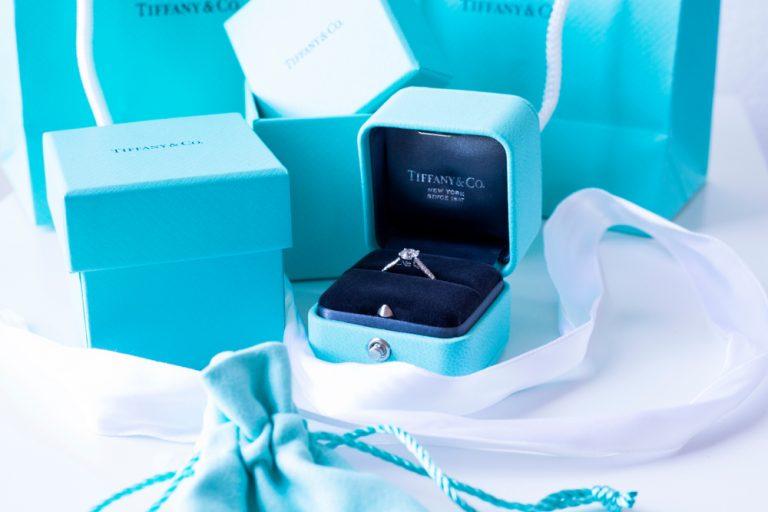
The owner of Louis Vuitton (EPA:MC) confirmed on Monday that it will acquire Tiffany (NYSE:TIF) in a $16.2 billion deal. The jewellery maker, whose little blue boxes have become iconic, was founded in 1837 after Charles Lewis Tiffany opened the first store in downtown Manhattan. Luxury group LVMH said that its acquisition of Tiffany will strengthen its position in the world of jewellery, whilst also increasing its presence across the pond. LVMH owns brands such as Christian Dior, Fendi and Moët & Chandon. Bernard Arnault, Chairman and Chief Executive Officer of LVMH, said that the business has “immense respect and admiration” for Tiffany. “We will be proud to have Tiffany sit alongside our iconic brands and look forward to ensuring that Tiffany continues to thrive for centuries to come,” Bernard Arnault continued. Meanwhile, Alessandro Bogliolo, Chief Executive Officer of Tiffany, also commented: “Tiffany has been focused on executing on our key strategic priorities to drive sustainable long-term growth. This transaction, which occurs at a time of internal transformation for our legendary brand, will provide further support, resources and momentum for those priorities as we evolve towards becoming The Next Generation Luxury Jeweller. As part of the LVMH group, Tiffany will reach new heights, capitalising on its remarkable internal expertise, unparalleled craftsmanship and strong cultural values.” Roger N. Farah, Chairman of the Board of Directors of Tiffany, added that “following a strategic review that included a thoughtful internal process and expert external advice, the Board has concluded that this transaction with LVMH provides an exciting path forward with a group that appreciates and will invest in Tiffany’s unique assets and strong human capital, while delivering a compelling price with value certainty to our shareholders.” Earlier this year in June, the New York jewellery company said that first quarter sales had declined as lower tourist spending hit its profits. Shares in LVMH Moët Hennessy Louis Vuitton SE (EPA:MC) were up on Monday, trading at +1.84% as of 09:44 CET.

Hochschild shares plummet after production guidance cuts

5

Hochschild Mining Plc (LON: HOC) have seen their shares plummet on Friday after the firm announced it would be cutting its 2020 guidance for its Pallancata project in Peru.

Shares in the established mining company plummeted 8% on Friday to 171p. 22/11/19 16:08BST.

Shares in the FTSE250 (INDEXFTSE: MCX) crashed after the disappointing announcement from the specialist British based silver and gold mining firm.

Hochschild have operations in North, Central and South America.

The announcement made on Friday morning will disappoint shareholders, as the firm gave shareholders an optimistic update after an uncertain quarterly update.

Precious metals firm Hochschild said it is still “firmly on track” for its 2019 output guidance of 457,000 gold equivalent ounces or 37 million silver equivalent ounces.

Hochschild added that its overall production target for 2020 is 432,000 gold equivalent 35.0 million silver equivalent ounces ounces, which includes a drop in Pallancata’s expected production to 7 million silver equivalent ounces.

Chief Executive Ignacio Bustamante, said: “Our ongoing strategy is expected to deliver consistent production at competitive costs in 2020, with, once again, an increase in output at Inmaculada. Following permitting delays at Pallancata, we have decided to give our brownfield exploration team more time to deliver additional resources and have therefore reduced the operation’s expected production to 7 million silver equivalent ounces. However, we remain excited by the geological potential surrounding all our operations.

Bustamante added that: “Costs are expected to rise moderately due to a one-off $22 million project to increase tailings capacity at Inmaculada and the reduced production at Pallancata.”

Shareholders of Hochschild will be thoroughly disappointed following the reassurance that was given following the disappointing quarterly update, and upon reflections on the stock price, shareholders are not best pleased. In an industry where competitors have made ground, this will be a concern for seniority and stakeholders. Serabi Gold (LON: SRB) and Eurasia Mining (LON: EUA) have seen their shares surge following strong quarterly updates, whilst Bluejay Mining (LON: JAY) have announced a share placing plan to raise funds for operations in Greenland.

Flash UK Services PMI at lowest level since July 2016

1
New data revealed on Friday that the Flash UK Services PMI fell to the lowest reading since July 2016. The GBP/USD fell below 1.29 following the gloomy PMI data. The IHS Markit/CIPS Flash UK Services PMI Business Activity Index fell to 48.6 in November, indicating a modest reduction in service sector output. The report said that service providers continued to link weaker demand to the delayed outcome of the nation’s departure from the European Union, and the consequential prevailing uncertainty. Founder and CEO of REL Capital, Andy Scott, provided a comment: “Purchasing managers within the services sector are telling us that they are more pessimistic now than at any time since July 2016 and the recent decline in sentiment has been notable albeit not dramatic given that nine of the last twelve months have shown positivity in these numbers. It’s a similar tale with manufacturing.” “As ever of late, it’s the political environment that is hurting us,” Andy Scott continued. “Probably not a leave vs remain balance as such, but the fact that uncertainty prevails and now accentuated by the third general election in five years. Let us hope that one way or other the election result is decisive on December 12th. If not, we can expect more negativity as a consequence of continuing unwelcome uncertainty.” Chris Williamson, Chief Business Economist at IHS Markit, also commented on the data: “With an upcoming general election adding to Brexit-related uncertainty about the outlook, it’s no surprise to see UK businesses reporting falling output and orders in November. The decline signalled by the flash PMI follows stagnation in October and adds to what has been the survey’s worst spell since the recession of 2008-9.” “The weak survey data puts the economy on course for a 0.2% drop in GDP in the fourth quarter, and also pushes the PMI further into territory that would normally be associated with the Bank of England adding more stimulus to the economy,” the Chief Business Economist continued.

Nationwide Building Society half year profits decline

0
Nationwide Building Society reported a decline in profits on Friday in a half year report. The company said that underlying profit before tax amounted to £307 million, down when compared to the £460 million figure recorded during the first half of the year prior. Nationwide Building Society explained that profits during the period were affected by an additional PPI charge. The deadline for customers to claim mis-sold payment protection insurance (PPI) passed at the end of August. Elsewhere, RBS (LON:RBS) warned at the start of September that it expected a hit of up to £900 million after a rise in PPI claims towards the end of the deadline. Meanwhile, Lloyds Banking Group (LON:LLOY) also said that it will be setting aside a sum to settle any claims of mis-sold PPI. Nationwide Building Society said that profits also took a hit as it increased investment. “In line with our expectations, our profits were lower as we invested in meeting the needs of our members, in our service and in our future,” Joe Garner, Chief Executive at Nationwide Building Society, commented on the results. “As we announced in September, profits were also affected by an additional PPI charge,” Joe Garner continued. “Our trading performance was in line with our plans. We continued to grow our mortgages, deposits and current accounts, but at a more moderate pace, as we focus on broadening relationships with our members and helping to meet more of their financial needs.” Chris Rhodes, Chief Financial Officer, also provided a comment: “We continued to take decisions in our members’ interests which impacted profits, including offering long-term good value products, our ongoing investment in simplifying our IT infrastructure, and developing innovative products and propositions to meet our members’ future needs. Profits were also impacted by an additional provision for PPI, as previously announced, as PPI enquiries rose significantly ahead of the end of August claims deadline.” The company added that as Brexit continues to develop, “considerable uncertainty” prevails and it will continue to take actions to prepare for the potential outcomes.

Royal Mail shares plunge over 17%

0
Shares in Royal Mail (LON:RMG) plunged on Thursday as the postal service and courier company said that its transformation plan is behind schedule. Shares in the company were down over 17% during Thursday morning trading. Royal Mail also warned that weak GDP and ongoing business uncertainty is expected to negatively impact the business in the second half of the year. As a result, Royal Mail said that addressed letter volume decline (excluding elections) is now expected to be in the 7-9% range for the full year. The company said that, for the half year ended 29 September, group revenue was up 5.1%. Reported operating profit amounted to £61 million, up on the £4 million operating loss posted the same period a year prior. The company, which faces strike threat, urged trade unions at the end of October to cancel potential strikes planned over the festive period. “Our profitability performance is in line with our expectations for the half year, despite considerable UK economic and political uncertainty,” Rico Back, Group Chief Executive Officer, commented on the results. “The UK letter revenue performance in the first half is our best for 5 years. It will also benefit from the General Election in the second half. But, the outlook, excluding elections, for the letters business in the UK is challenging. Lower than anticipated GDP and lower GDP forecasts for 2020-21, together with business uncertainty, are expected to have an impact on addressed letter volumes,” the Group Chief Executive Officer warned. The Group Chief Executive Officer continued: “Our transformation is behind schedule. We are investing more because of the industrial relations environment, the General Election and Christmas, to underpin our Quality of Service at this key time. This is likely to impact our productivity for the remainder of the year. When combined, revenue and cost headwinds could possibly result in a break-even or loss-making position for the UK business in 2020-21. We maintain the ambitions associated with our Journey 2024 plan as set out in our full year results in May.” Shares in Royal Mail plc (LON:RMG) were down on Thursday, trading at -17.51% as of 09:32 GMT.

Shell UK report widened 2019 gender gap

0

Royal Dutch Shell Plc (LON: RDSB) have issued an update on Wednesday on their gender equality statistics for financial 2019, which paints a worrying picture.

Shares of Shell have dipped 1.48% on Wednesday to 2,234p. 20/11/19 12:47BST.

The FTSE100 (INDEXFTSE: UKX) listed firm have hit headlines over the last few weeks, as they reported a slump in profits at the End of October.

Shell alluded to sinking oil prices, and heightened political tensions as a reason for this slump. Rivals such as SABIC (TADAWUL: 2010) and Total SA (LON: TTA) also experienced similar slumps.

The report on gender equality highlighted that the gender pay gap widened following the acquisition of a utility company.

Additionally, the firm reported that women earned on average 18.7% less than their male counterpart, which will worry seniority at the firm.

Shell said its UK gender pay gap stems from having fewer women in senior leadership positions as well as in specialist roles attracting higher levels of pay such as trading, as reported by Reuters.

At at time where every policy and department of multinational corporations are scrutinized, these figures do not come as pleasant viewing for shareholders and public media.

This year’s figure, which compares to 18.6% in 2018, comes after Shell UK incorporated around 1,000 employees from First Utility which it had acquired in March, Shell said in a report.

Excluding the acquisition, the pay gap would have been narrowed to 15.1%. This may act as a consolidation, however does not dismiss the gloomy bigger picture on the issues of gender inequality.

In October, it was reported that female entrepreneurs experience highest levels of gender bias, after research was published by HSBC’s Private Banking division (LON: HSBA).

“It is concerning that half of female entrepreneurs in this country have experienced bias when trying to raise capital for their businesses,” Kirsty Moore, Managing Director at HSBC UK Private Banking in the UK, commented on the research.

Gender gap pay is defined as the difference in the average pay and bonuses of all men and women across an organisation.

“We have made good progress in building an inclusive and diverse workplace, and we have increased the proportion of women in senior leadership positions,” Sinead Lynch, Shell UK Country Chair, said in a statement

“However, we still have further to go and will continue to work to close the gender pay gap across all parts of the business.”

“Our gender pay gap also reflects wider societal issues such as relatively fewer women studying science, technology, engineering and mathematics subjects at university,” Shell said in a statement.

The oil and gas sector is one that has traditionally larger volumes of male workers, and makes up almost two thirds of Shell’s 6,000 workforce in Britain.

Shell concluded by saying that it had ambitions to reach 30% in senior leadership positions by 2020, which the figure rising to 35% by 2025.

Last year, the UK government announced that it will launch a review into the barriers female entrepreneurs face, assessing the obstacles impeding women from success in the professional workspace.

Certainly, big firms such as Shell need to lead the way in allowing gender pay gaps to be closed.

The figures will worry stakeholders at Shell, and puts the reputation of Shell into a bad media spotlight. In a time where gender equality has never been more important as a national and company priority, extra efforts need to be made by Shell to ensure that the gap is narrowed.