
Ryanair shares rise despite low profit guidance
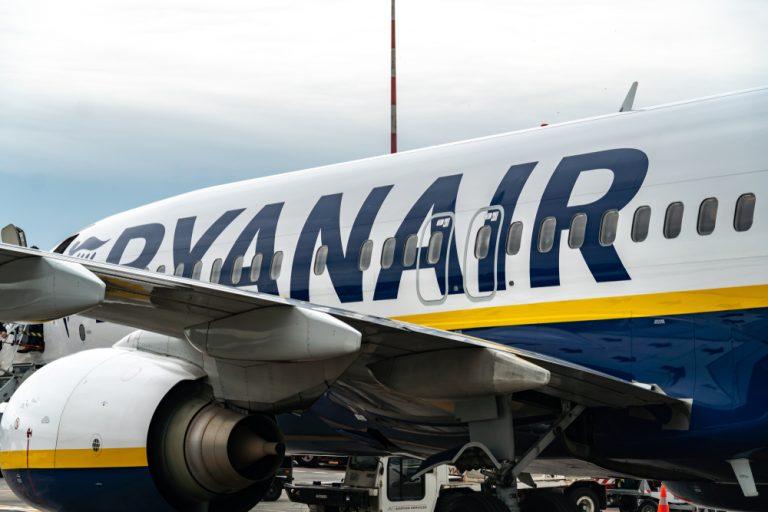
Ryanair (LON: RYA) shares have risen during Monday trading, despite cuts in their annual profit guidance and tense airline industry conditions.
The airline industry has had mixed experienced in the last few months, with the recent collapse of Thomas Cook (LON:TCG) and warnings of easyJet (LON: EZJ) slicing their Summer profit forecasts due to slow industry performance and tough Brexit conditions.
Ryanair have joined the crew in this tough upward battle, and has a result have cut their annual profit guidance for 2019.
The budget airline narrowed full year profit guidance to €800 million to €900 million, down from its previous range of €750 million to €950 million.
It also warned that its revised guidance is “heavily dependent” on air fares and Brexit, as it announced its half-year results.
The timing of this is no surprise, and as mentioned rivals are struggling to generate revenues.
Firms such as TUI (LON: TUI) have responded to this slowdown by expanding their travel routes and offerings.
Ryanair reported a year-on-year profit of €1.15 billion to the end of September as capacity rose 11% to 86 million passengers.
Revenue per passenger rose 1%, as a 16% rise in ancillary sales compensated for air fares that fell slightly lower.
Additionally, earnings per share crept up 3% to €1.0247.
Boss Michael O’Leary warned that the delayed arrival of Boeing’s aircraft have made job cuts inevitable.
“Sadly, due to the Max delivery delays, we will be forced to cut or close a number of loss making bases this winter leading to pilot and cabin crew job losses. “We continue to work with our people and their unions to finalise this process.”
The airline now expects to receive just 20 Max 200s in time for Summer 2020.
That has more than halved its expected growth rate for next summer from 7% to just 3%.
“Our outlook for the remainder of the year remains cautious,” Ryanair said.
The company added ““We try to avoid the unreliable optimism of some competitors. We expect a slightly better fare environment than last winter, although we have limited H2 visibility. This however remains sensitive to any market uncertainty such as a no-deal Brexit. We expect ancillary revenues will grow ahead of traffic growth, supporting full-year revenue per guest growth of two per cent to three per cent”
“The full year fuel bill will rise by €450m and ex-fuel unit costs will increase by two per cent”
Ryanair concluded by saying “This guidance is heavily dependent on close in H2 fares, Brexit and the absence of any security events.”
Interestingly, shares in Ryanair have risen during Monday trading, showing investor optimism.
Shares trade at €13.28 per share, seeing a 6.41% rise. 4/11/19 10:50BST.
Takeaway.com look to formalize Just Eat Deal
Takeaway.com (AMS: TKWY) are changing the approach they take to formalize their stance on a potential merger deal with London based (LON: JE).
Only a few weeks back, it was reported that the deal was hampered by an approach from which threatened its proposed merger with allies Takeaway.com.
This morning, it seems that Takeaway.com are changing their approach, to buy the food delivery rival in an attempt to steer away any further Prosus (JSE: PRX) approach.
Takeaway.com and Just Eat had previously agreed the terms of a recommended all-share combination through a court sanctioned scheme of arrangement.
Additionally, Takeaway.com had told shareholder firm Delivery Hero (ETR: DHER) to abstain on the Just Eat vote, saying that “Delivery Hero’s own market position as well as Prosus’ position as the largest shareholder in Delivery Hero in itself gives rise to a conflict of interest,”
Delivery Hero also added “Prosus’ recent announcement of an unsolicited offer for Just Eat with the intention to make both Just Eat and Delivery Hero part of its global Food Delivery business adds to this.Delivery Hero must abstain from voting on any matters relating to the combination in the upcoming EGM,”
Just Eat has recommended that shareholders accept the Takeaway.com offer, despite an unsolicited bid from Prosus last week.
The Dutch firm is looking at a deal to buy Just Eat through an offer with an shareholder acceptance offer of 75%, meaning that this change will add both solidarity and certainty in completing the deal.
Jitse Groen, chief executive of Takeaway.com, said: “We believe that the Just Eat Takeaway.com combination offers its shareholders a future value far superior to both Just Eat and Takeaway.com separately, and to the recent cash offer made by Prosus in particular. With this switch, we provide additional deal certainty to the Just Eat shareholders.”
Just Eat rejected the £4.9 billion cash offer in favor of the deal reached in August with Takeaway.com.
Interestingly, shareholders of Just Eat have been quick to express concerns that the value of the deal be reduced as after Takeaway.com’s share price suffered as rival firm Delivery Hero sold off shares.
Shares of Just Eat are trading at 793p per share (+0.29%). 4/11/19 10:33BST.
Mothercare set to call in administrators
Shares in Mothercare (LON:MTC) were sent crashing on Monday morning following the announcement that its UK business is on the edge of collapse.
Shares in the child care retailer crashed over 25% during Monday morning trading, and were dropping rapidly.
Founded in 1961, it has been publicly listed on the London Stock Exchange since 1971.
Earlier this year in May, the British retailer posted a £66.6 million pre-tax annual loss for 2018, but insisted that the completion of its UK store closure programme left the business on a “sounder financial footing”.
Mothercare said on Monday, however, that it intends to appoint administrators to Mothercare UK and Mothercare Business Services.
“Since May 2018, we have undertaken a root and branch review of the Group and Mothercare UK within it, including a number of discussions over the summer with potential partners regarding our UK Retail business,” the company said in a statement on Monday.
“Through this process, it has become clear that the UK Retail operations of the Group, which today includes 79 stores, are not capable of returning to a level of structural profitability and returns that are sustainable for the Group as it currently stands and/or attractive enough for a third party partner to operate on an arm’s length basis,” the British retailer continued in the statement.
Mothercare added that “furthermore, the Company is unable to continue to satisfy the ongoing cash needs of Mothercare UK.”
In a trading update released earlier this year in April, the company revealed that the rate in which its like-for-like sales were declining had improved when compared to the prior two quarters.
Mothercare is yet another British retailer to battle against the difficult trading conditions to hit the UK high street.
Shares in Mothercare plc (LON:MTC) were sent crashing on Monday morning following the announcement. They were trading at -25.31% as of 08:50 GMT Monday.
Cineworld shares provide value despite debt concerns

In 2017 Cineworld made the bold decision to enter the US cinema market by way of a $3.6 billion acquisition of Regal Cinema Group that created the world’s second largest cinema chain by number of screens.
Cineworld now operates 786 sites and 9,494 screens across 10 countries that, in addition to the core markets of the UK & US, include a number of eastern European countries and Israel.
The acquisition was made by way of a reverse takeover that was funded by debt and a £1.7 billion rights issue significantly altering the group’s financial situation.
Now highly leveraged, the group has suffered from a lack of major film releases of late and the market has punished Cineworld for a decline in sales during H1 2019 which has seen shares give up nearly a third of their value in 2019.
We however see this blip in sales as transitory with a strong Christmas and 2020 film slate promising to increase attendance numbers in the upcoming period and major releases such as the Lion King, Frozen 2 and the latest Star Wars film falling into H2 2019.
When comparing Cineworld with competitors, it’s largest rival in AMC Theatres – which also owns Odeon – similarly experienced a decline in admission numbers during the period.
Cineworld is now heavily reliant on the US with 75% of revenue being earnt from the United States in the first half of 2019 and a strong attendance through H2 2019 could see the group post record figures on the back of a number of blockbuster releases.
At 221p, Cineworld is trading at 10.1x historical earnings representing good value for a company providing a 5.2% dividend that is covered 1.8x.
Three Impact Investing funds supporting positive environmental and social development goals

BlackRock BGF Circular Economy
Working with fund manager Evy Hambro and his team at BlackRock, the Ellen MacArthur Foundation highlighted specific areas of the circular economy, such as addressing the 30% waste of nutrients throughout the value chain, as targets for investment. On Ellen MacArthur Foundation suggestions, the BlackRock team are to undergo a qualification process for a wider strategy that is centred on the tiering of risk that allocates 40% of the fund to the top ten holdings. This ground-breaking approach to structuring a fund based on risktiering is the first time BlackRock have employed such a model. The fund has outlined three categories of companies they have set out to invest in. These are ‘Adopters’, ‘Enablers’ and ‘Beneficiaries’ of the circular economy. Adopters Adopters are those companies that have made a contribution to the circular economy an integral part of their company. An example is Adidas who plan to make 11 million pairs of trainers from recycled plastic from the ocean. Enablers Those companies that facilitate the circular economy through their service. This may be a resale or sharing platform that enables individuals and businesses to keep materials in circulation and avoid waste. Beneficiaries Beneficiary companies stand to benefit from increased activity in the circular economy, for example companies whose existing products benefit from the move away from hard plastics. The fund was launched with $20 million seed assets provided by BlackRock and will now seek further backing from the wider market.FP WHEB Sustainability Fund
The FP WHEB Sustainability Fund employs an unconstrained investment strategy exclusively into global equities with a focus on sustainability challenges. In an unusually transparent approach, the fund disclose their entire list of holdings on their site which reveals they are also investors in Xylem and A.O. Smith Corp but provide exposure to Chinese sustainability through China Everbright. Not only do WHEB focus on the activities of the company, they particular attention to the governance of the company. For example, they encourage the board to be made up of 50% independent non-executive directors. The WHEB fund sets out to directly support the UN’s Sustainability Development Goals (SDGs) by focusing on 7 of the 17 goals including Good Health & Well-Being, Clean Water & Sanitisation and Responsible Consumption & Production. WHEB note that as SDGs are designed for governments they are only able to support seven directly and support the other ten through business practices. To illustrate the impact of investing in WHEB, they have created a calculator that displays the positive based on the money invested. An investment of £10,000 in December 2018 would have generated enough renewable energy to power a European house for a year, treat 100k litres of water and recycled two tons of waste materials. WHEB’s selection methodology starts by breaking companies down into four categories based on negative or positive impact of their business. These are Degenerative, Transitioning, Mitigating and Breakthrough. Degenerative and Transitioning companies are excluded from the selection process as they are not creating a positive impact or are actually creating a negative impact on the environment or society. Mitigating and Breakthrough categorised companies are eligible for the WHEB fund as they provide a positive impact whilst creating economic value for shareholders. These companies are ranked via a WHEB quality score that focuses primarily on the competitiveness of the company.Jupiter Ecology Fund
The Jupiter Ecology Funds invests 70% of its assets directly in companies that are focused sustainability projects and 30% in other companies. The top ten holding include Xylem, Tomra, Azbil Corp, A.O. Smith Corp and Waste Connections. In their most recent update to investors, the best performing companies in the fund included Tomra and Casella Waste Services. Norway-based Tomra is focused on resource management and provides solution to the food, mining and recycling industries and is a likely a constituent of many ethical and impact investment funds. However, despite being an ecology focussed fund, there is exposure to industrial companies such Johnson Matthey that may not immediately fall into one’s thoughts when looking for sustainable companies. This is because while the company is involved in manufacture of catalytic converters, they engage in a significant level of recycling in their supply chain. The fund has been managed by Charlie Thomas since 2003 and in the 5 years to 31st March 2019 the fund had returned 41.6%.Trump Twittering, trade war trickery and banking sector spooking FTSE

We promise the Halloween puns are coming to an end. A topsy-turvy day for Chinese and US relations – and PMIs – was enough to give European indices the jitters. Meanwhile, the FTSE was held down by a strong Sterling and uninspiring developments in the banking sector.
Commenting on the day’s movements up to the final bell, Spreadex Financial Analyst Connor Campbell stated,
“Suffering a mid-morning scare, the markets ended up sinking into the red as Thursday progressed, unaided by Donald Trump’s latest attack on the Fed’s Jerome Powell.”
“After a calm start, China jumped out of a bush screaming boo at the markets on Thursday morning, with Bloomberg reporting that Beijing had cast doubt on a long-term trade deal with the US despite the imminent completion of ‘phase one’ of the agreement.”
“The markets did bounce back from those losses somewhat, lifted by Trump claiming he and Xi Jinping will be signing ‘phase one’ soon”
China and the USA are working on selecting a new site for signing of Phase One of Trade Agreement, about 60% of total deal, after APEC in Chile was canceled do to unrelated circumstances. The new location will be announced soon. President Xi and President Trump will do signing!
— Donald J. Trump (@realDonaldTrump) 31 October 2019
These strides were then almost undone as quickly as they were made, “as the President started shouting on Twitter about the Fed getting everything wrong.”
People are VERY disappointed in Jay Powell and the Federal Reserve. The Fed has called it wrong from the beginning, too fast, too slow. They even tightened in the beginning. Others are running circles around them and laughing all the way to the bank. Dollar & Rates are hurting…
— Donald J. Trump (@realDonaldTrump) 31 October 2019
….our manufacturers. We should have lower interest rates than Germany, Japan and all others. We are now, by far, the biggest and strongest Country, but the Fed puts us at a competitive disadvantage. China is not our problem, the Federal Reserve is! We will win anyway.
— Donald J. Trump (@realDonaldTrump) 31 October 2019
“The Eurozone indices, which were seriously hurt by the initial reports from China, saw the best of it, the DAX and CAC settling into some very mild losses. The FTSE and Dow Jones weren’t so lucky.”
“The Dow found itself teetering back at the edge of 27000 as it lost 180 points, upset by an unpleasant Chicago PMI that unexpectedly fell to a terribly low 43.2 against the 48.4 forecast and the 47.1 seen last month. That comes after a similarly worrisome pair of PMIs out of China overnight.”
“The FTSE was under fire on all sides. Its banking sector remained in disarray as Lloyds Banking Group (LON: LLOY) became the latest financial firm to disappoint, while its commodity stocks were shaken by the global manufacturing slowdown, trade deal doubts and falling profits at Shell (LON: RDSA).”
Elsewhere in the banking sector, Deutsche Bank (ETR: DBK) reported losses during the third quarter.“To make matters worse, the pound continued to rise against the dollar and the euro, up 0.3% against both. That’s due to a mix of region-specific weaknesses for its rival currencies, alongside the frankly naïve idea December’s general election will yield clarity, not chaos.”
Pakistan train explosion: violation of safety regulations leads to 71 casualties

Two cooking stoves exploded on a train in Pakistan, injuring 43 and killing 71 people.
Casualties
Number of casualties is likely to increase as 11 people are in critical condition. Fire caused by the explosion destroyed three carriages on the train. As the fire broke out, many passengers jumped off the train to their deaths. Authorities are still trying to identify the victims who died in the accident. Rail safety concerns increase amid the accident in Pakistan. Further investigation into the explosion will start this week.Safety Regulations
Safety regulations prohibit carrying individual gas stoves on public transportation such as metros, buses and trains. However, most trains in central locations are overcrowded. Passengers and crew members often violate safety regulations. Violations go unnoticed on overcrowded trains. Authorities in Pakistan believe passengers who violated safety regulations by bringing individual gas stoves on the train might have caused the accident. Violations might have gone unnoticed due to lack of safety checks on the train.Rail Accidents
Pakistan’s rail system is infamous for being poorly maintained and outdated. Subsequently, accidents happen often. The explosion raises concerns regarding fire and safety regulations on trains across the world. Earlier this month, the United Kingdom mourned the victims of its worst rail disaster. Two trains collided in Paddington, killing 32 and injuring 250 people. Authorities warned that the accident could have been avoided if companies followed safety regulations. Following the Ladbroke Grove rail disaster, the United Kingdom tightened its fire and safety rules on public transportation.Stricter Safety Regulations
As the number of accidents on vehicles increase, producers of explosive goods such as gas powered stoves are likely to take precautions to avoid liability. The need for stricter fire and safety regulations increase not only in the transportation sector but also across all sectors. There have been increasing reports of explosions caused by technological items such as mobile phones, adaptors and laptops as well as gas powered items.Technological Devices
Two years ago a teenager’s Apple Iphone exploded in East China. Following the explosion, Apple (NASDAQ: AAPL) updated its safety regulations to avoid explosions. Similarly, a Samsung (LON: BC94) phone exploded a year ago, giving the user severe burns. Number of similar incidents is high. For instance, a laptop produced by Dell (NYSE: DELL) exploded. The explosion injured a 72 year old woman. Dell tightened its fire and safety regulations following the accident. More companies are likely to follow Apple and Dell in tightening their safety regulations. Producers of these goods take further measures to avoid accidents. The accident in Pakistan reflects the need for accountability and safety enforcement.Hilton Food Group wraps up quarter in line with expectations

Food packaging business Hilton Food Group plc (LON: HFG) reported performance ‘in line with Board expectations’ as UK and Australian markets yielded good progress.
However, the European market proved challenging for Hilton Food Group. Elsewhere in the food sector, Bakkavor Group Plc (LON: BAKK) and Avangardco Investments Public Limited (LON: AVGR) also faced challenges.
Hilton stated that despite progress relating to the Fresh Food Factory, volumes remained ‘challenged’ in Central Europe. However, the Company has achieved growth in turnover alongside strategic progress in Western Europe and the UK, owing to an agreement with Tesco (LON: TSCO).
In its statement, the Company said,
“In Western Europe we have made good progress in a number of markets. In the UK, we made significant strategic progress with an agreement to pack 100% of Tesco’s red meat.Turnover in the UK has therefore continued to grow driven predominantly by higher Tesco red meat volumes as well as increased Seachill volumes, where we have benefitted this year from the new business wins. Volumes remain relatively flat in both Sweden and Denmark, where we have recently started to sell pizzas. In Holland, although red meat volumes were lower than last year, we have benefitted from vegetarian and vegan products produced by Dalco, with listings now secured with a number of our Retail customers. In addition, we have extended the range of products with existing Dalco customers. The joint venture in Portugal is continuing to show good progress.”
The greatest progress, though, was witnessed in its Australian operations. The Company stated that it saw ‘double-digit volume growth’ from its business, which covered its joint venture in Bunbury and Victoria, and its Queensland site.
The Group concluded by stating that its financial position remains strong and that it continued to explore investment opportunities.
Following the update, the Company’s shares have rallied 1.78% or 18.00p to 1,028.00p per share 31/10/19 15:15 GMT. Analysts from Peel Hunt reiterated their ‘Buy’ stance on Hilton Food Group stock, their p/e ratio is 24.02 and their dividend yield stands at 2.09%.
Spirit AeroSystems buys Bombardier Northern Ireland operations

Bombardier agrees to sell Northern Ireland operations to Spirit AeroSystems for $1.1bn.
Companies proceed to close the deal.
Bombardier
Bombardier (TSE: BBD.B) is a manufacturer of regional airlines, rail train sets and public transport equipment. Although the company is based in Canada, it owns a Belfast based aerospace business. The Belfast based aerospace business owned by Bombardier is the biggest manufacturer in Northern Ireland. Consequently, the business is a crucial asset in the United Kingdom aerospace manufacturing sector. The primary focus of Bombardier is manufacturing engine systems as well as wings. Furthermore, Bombardier sells engine systems and wings to customers such as Airbus (EPA: AIR) and Rolls-Royce (LON: RR). Bombardier started its Northern Ireland operations in the 1930s. Currently, Northern Ireland operations employ more than 3,600 employees. Under its Northern Ireland operations, Bombardier operates in Belfast, Dunmurry and Newtownards.Northern Ireland Operations
Bombardier announced its decision to put Northern Ireland operations on sale in May. The company hopes to sell its Northern Ireland operations. By doing so, it will shift its focus to manufacturing trains and business aircrafts. After five months of remaining on sale, Bombardier agreed on a $1.1bn deal with Spirit AeroSystems. The $1.1bn deal has two components. Spirit AeroSystems pays $500m to purchase Northern Ireland operations. Additionally, Spirit AeroSystems pays $700m of liabilities. Subsequently, Spirit AeroSystems and Bombardier hope to close the deal by 2020.Spirit AeroSystems
Spirit AeroSystems is the world’s largest first-tier aerosystems manufacturer. Although the company is based in Kansas, United States, it operates global branches including one in Scotland. Spirit AeroSystems buys Northern Ireland operations with the hope that it will help the company increase its annual revenue. Spirit AeroSystems believes that Northern Ireland operations have an attractive growth potential.Strategic Purchase
Spirit AeroSystems supplies products to Airbus and Boeing (LON: BOE). Purchasing Northern Ireland operations of Bombardier is a part of Spirit AeroSystems’ strategy. Spirit AeroSystems’ long term strategy is to expand its relations with Airbus and Boeing. Spirit AeroSystems hopes to become the primary supplier of Airbus and Boeing. The purchase is crucial to Spirit AeroSystems long term strategy. Spirit AeroSystems hopes to offer workforce stability as well as a long term business plan focused on growth in Northern Ireland.Mitsubishi Electric profits jolted by economic conditions

Electronics and electrical equipment company Mitsubishi Electric Corporation (LON: MEL) posted its first half results on Halloween, only to see its fundamentals spooked by the turbulent macro economic landscape.
Elsewhere in the tech sector, other companies have fared better. Echoh PLC (LON: ECK) boasted strong first half results, dotDigital Group plc (LON: DOTD) saw their profits surge and ProPhotonix Ltd (LON: PPIX) secured a five year supply agreement.
While the Company’s revenue grew 1% on a year-on-year basis, to 2.18 trillion Yen, their operating profit contracted 9% on-year, to 114 billion Yen.
Further, the Group’s profit before income tax narrowed by 12% to 124 billion Yen and their net profit attributable to stockholders declined by 11% to 91 billion Yen.
Commenting on the economic landscape, the Mitsubishi Electric Corporation statement read,
“The economy in the first half of fiscal 2020, from April through September 2019, saw a slower growth in China, with the corporate sector experiencing a slowdown in exports and capital expenditures for fixed assets. In the U.S., the economy continued to grow due primarily to buoyant personal consumption, but the corporate sector began to slow down mainly in capital expenditures. In addition, the economic recovery became slower in Japan and Europe, with Japan seeing a decrease in production and exports, and Europe experiencing a fall in production.”
The Company added that it had revised its 2020 outlook, and operationally, it announced it was to open a London office to support energy efficient buildings.
The Group’s shares have rallied 0.59% or 9¥ to 1,572¥ per share 31/10/19 09:48 GMT. Neither a p/e ratio nor a dividend yield are available.