
Room share platform that uses algorithms to match tenants by personality makes UK’s Startups 100

Ideal Flatmate, a leading room share platform, has made the UK’s top index of disruptive businesses that have been launched in the past five years.
Operated by Startups.co.uk, the Startups 100 showcases new businesses which demonstrate innovation, economic impact, solid financials and the ability to scale.
Ideal Flatmate joins names from previous years such as Deliveroo, Notonthehighstreet and Monzo.
“Congratulations to all of the companies listed on the Startups 100 this year. We had more entries than ever and the standard was especially high, so being included is a fantastic achievement,” said Bryn Glover, Editor of Startups.co.uk.
“We have a good track record of identifying potential – Deliveroo, Notonthehighstreet, HelloFresh and many more, so we can’t wait to watch the businesses progress over the coming years,” Bryn Glover continued.
The room sharing platform uses scientifically designed algorithms to match potential house mates, in order to ensure they are compatible. Compatibility is based on a range of personality traits, which has enabled much higher tenant retention rates as a result.
The platform was founded by Tom Gatzen and Rob Imonikhe, forming a firm foundation in the nation’s capital since it launched in 2016. The concept has now been rolled out across a variety of major cities in the UK.
“We’ve put a lot of work into delivering a platform that puts the emphasis on people rather than property and I think this is something that resonates with the many who have otherwise had a less than ideal experience when renting in the UK,” Tom Gatzen, Co-Founder of Ideal Flatmate, commented on the announcement.
“While such recognition is great, we’ve still got a long way to go and now that our national expansion is well underway, we’re looking forward to helping landlords and tenants across the UK to find their ideal flatmate,” Tom Gatzen added.
The Startups 100 was invigilated by a range of high-profile business leaders such as the entrepreneur and angel investor Alex Farrell, England and Lions rugby player and CEO Tim Rodber, Instagram influencer and small business advocate Gemma Metcalfe-Beckers (Mutha Hood), engineer, investor, and inventor Gi Fernando MBE and founder and serial entrepreneur and President of MVF Titus Sharpe.
Revolut, with over four million customers in the UK and Europe, was ranked first.
72% of small UK businesses will not increase investment as Brexit weighs

New data revealed on Tuesday that 72% of small businesses in the UK are putting their business decisions on hold and not planning to increase investment.
A survey by the Federation of Small Businesses shows that the share of these seeking to expand their capital investment plans is now at its lowest level since the third quarter of 2017.
The uncertainty surrounding the UK’s departure from the European Union has been cited as having a negative impact on firms seeking investment.
The survey also found that operating costs are on the rise as 48% have said labour costs are a main cause of higher outgoings.
Additionally, the proportion of smaller businesses seeking to grow over the next 12 months has dropped to the lowest level since 2012. Seven in ten small firms do not expect their performance to improve over the next three months and four in ten actually expect it to worsen.
The UK has also been hit by the slowdown in growth globally, in particular certain European economies such as Germany and Italy, according to the report. When combined with Brexit, consumer and business confidence have been equally impacted.
“Ironically, the Brexit-related uncertainty may be contributing to a strong labour market picture. Unemployment is at record low levels, as businesses looking to expand choose to hire more workers rather than pursue less reversible forms of investment,” Nina Skero, Director and Head of Macroeconomics at Cebr, provided a commentary.
“This is reflected in this quarter’s SBI. The net balance of firms expecting to increase hiring activity over the next three months is very high at 10.2% – an increase of 3.1 percentage points compared to the previous survey.”
As the nation braces itself for the Halloween date extension, Brexit uncertainty prevails.
Meanwhile, the race for leadership of the Conservative Party is reaching its final lap as Hunt and Johnson battle for victory.
UK house price growth weak, Brexit uncertainty prevails

UK house price growth in June remained weak as uncertainty surrounding the nation’s departure from the European Union prevails, new data from Nationwide reveals.
House prices grew by 0.5% compared to last year, down from the 0.6% growth recorded in May.
“UK annual house price growth remained below 1% for the seventh consecutive month in June, at 0.5%, Robert Gardner, Chief Economist at Nationwide, commented on the results.
“Survey data suggests that new buyer enquiries and consumer confidence have remained subdued in recent months. Nevertheless, indicators of housing market activity, such as the number of mortgages approved for house purchase, have remained broadly stable,” Robert Gardner continued.
“Housing market trends are likely to continue to mirror developments in the broader economy. While healthy labour market conditions and low borrowing costs will provide underlying support, uncertainty is likely to continue to act as a drag on sentiment and activity, with price growth and transaction levels remaining close to current levels over the coming months.”
Northern Ireland remained the strongest performing home nation in the second quarter, with annual price growth increasing to 5.2% from 3.3% last quarter, Robert Gardner added.
Prices fell in London for the eighth consecutive quarter, though the annual pace of decline moderated to 0.7% from 3.8% last quarter.
Across England, the Outer Metropolitan was the weakest region in the three months to June, followed by the Outer South East.
“Elsewhere in England, annual price growth remained relatively modest in Q2, with Yorkshire & Humberside the best performing region, with a 3% year-on-year rise.”
“House price growth across northern England (North, North West, Yorkshire & Humberside, East Midlands and West Midlands) averaged 2.1%, remaining ahead of that in the south (London, Outer Metropolitan, Outer South East and East Anglia), which experienced a 0.7% fall. These trends are not entirely unexpected, however, as they follow several years of sustained outperformance in London and the south, which left affordability more stretched in these areas.”
The subdued growth in house prices occurs against a backdrop of political and economic uncertainty as the nation waits for the new Halloween Brexit extension.
Sir David Attenborough thanks Glastonbury for going plastic-free
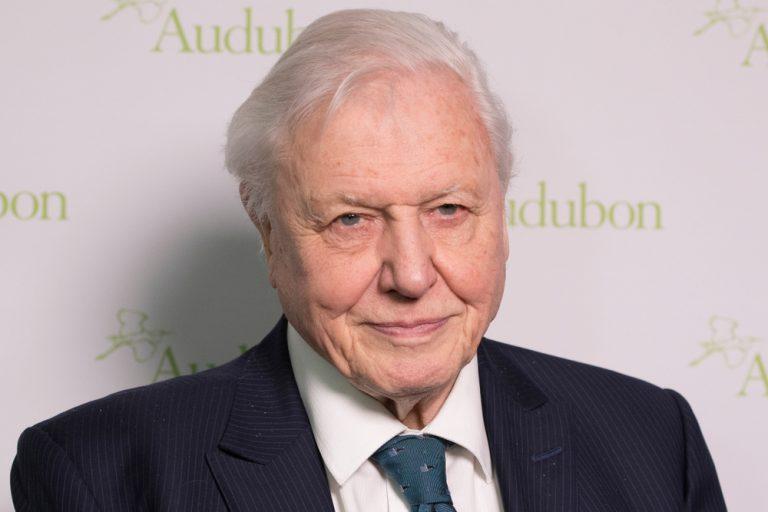
Sir David Attenborough made an appearance at Glastonbury 2019 to thank the festival for going singlue-use plastic free.
The English broadcaster and natural historian took to the stage to thank the crowd for cutting back on their use of plastic at the event.
In addition to Glastonbury Festival cutting back, several companies have made headlines recently for attempting to align themselves with environmentally friendly practices.
Boots announced that it had made the switch to brown paper bags, aiming to remove all plastic bags from its stores by 2020. The move is said to eliminate 900 tonnes of single-use plastic each year.
McDonalds joins Boots, deciding to remove plastic lids from its McFlurry ice cream in all UK restaurants by September.
“That is more than a million bottles of water that have not been drunk by you,” he said to the audience.
“Thank you. Thank you.”
“Those extraordinary marvellous sounds you’ve just been listening to were the sounds of the creatures that live in the sea and the great oceans. You may have heard some of them in a series that went out two years ago called Blue Planet 2,” Sir David Attenborough said regarding a montage of ocean scenes that kick-started his speech.
“There was one sequence in Blue Planet 2 which everyone seems to remember. It was one in which we showed what plastic has done to the creatures that live in the ocean. They have an extraordinary effect. And now, this great festival has gone plastic-free. That is more than a million bottles of water that have not been drunk by you at Glastonbury. Thank you. Thank you.”
“The oceans cover two-thirds of this planet of ours. Land only covers one-third of the globe.”
“There are seven great continents on which we human beings live. Each of them has its own marvellous creatures, birds, mammals and animals. Each of them has its own glory. Each of them has its own problems.”
“We have been making, for the last four years, a series about those things, about those seven very different continents. It starts later on this year. It’s called Seven Worlds, One Planet.”
“Here are a few glimpses of what awaits you in the next few months.”
A trailer of Seven Worlds, One Planet, was then played.
UK Investor Magazine recently featured the brand Chilly’s Bottles – the company that is trying to reduce the use of single-use plastic by offering consumers reusable alternatives.
Premier African Minerals shares dive on loss announcement

Tungsten producer Premier African Minerals (LON: PREM) has seen its share price go into free-fall during trading on Monday, as the Company’s financial performance figures reflect a year of failed prospect development and disappointment.
The Company revealed to investors that its pre-tax losses had narrowed on-year, up from negative $19.6 million to negative $7.8 million. This still represented a cause for concern, however, with 2018 seen as a period of achievements which failed to transpire.
Premier African comments
In the Company’s announcement today, Chief Executive George Roach spoke of his frustration and told investors that the company’s future ventures needed to be more diverse and independent.“2018 was disappointing with a number of achievements anticipated being stalled and generally due to circumstances not immediately under our control. Perfect hindsight may have avoided some of this and post year end events and decisions discussed in this report are targeted at mitigation, remedy and redirection, all intended to stabilise and then regenerate Premier African Minerals Limited (“Premier” or the “Company”). The prospect of restructuring the ownership at RHA Tungsten (Pty) Ltd (“RHA”), born out of the promise of a new Zimbabwe, failed to materialise and in its place the Zimbabwean National Indigenisation and Economic Empowerment Fund (“NIEEF”) proposed in late 2018 that they would fund RHA back into production whilst retaining their ownership,” said George Roach.
“Similarly, the failure to reach agreement on the proposed joint venture to develop Zulu Lithium (Pty) Ltd (“Zulu”) has been exacerbated by the ongoing frustrations associated with the delay in granting our Exclusive Prospecting Order (“EPO”) application over the on-strike extensions to Zulu.”
“It is abundantly clear to me today in late June 2019, that reliance exclusively on any event that is not entirely under our control risks further delay and frustration in returning value in our company. There is little doubt in my mind that Premier must diversify and identify revenue generating assets that are actually in production and profitable now.”Investor notes
Since markets opened on Monday, the release of the Company’s annual results drove its share price down 30.4% or 0.019p to 0.044p a share. Elsewhere in the mining and minerals sector, recent updates have come from; Pathfinder Minerals (LON: PFP), Arc Minerals Ltd (LON: ARCM), AfriTin Mining Ltd (LON: ATM), Ferrexpo Plc (LON: FXPO), Altus Strategies Plc (LON: ALS) and Kefi Minerals plc (LON: KEFI).Pathfinder Minerals books loss and continues to seek mining licence

Natural resources provider Pathfinder Minerals (LON: PFP) announced its annual results for 2018 today, and they revealed the Company had posted a loss for the full year.
Pathfinder told investors today that pre-tax losses for the year stood at £645,000, which represented a widened loss from £615,000 on-year.
The Company said that they remained confident following their Board appointment over the last year and their continued efforts to push for the reinstatement of mining licences in Mozambique. The Company also said they were, “optimistic about the range of options being proposed”.
Pathfinder comments
In their latest statement, the Company’s director Sir H C Bellingham attached the following comments on appointments and the Board’s outlook for the Company. “In August 2018, Nick Trew stepped down from the Board and Simon Farrell and Scott Richardson-Brown joined the Board in the roles of Non-executive Co-Chairman and Executive Director, respectively. Scott Richardson-Brown was later appointed to the role of Chief Executive Officer.” “Scott Richardson-Brown left the Company on 3 June 2019 to pursue other business interests, and the Board wishes him well with his future endeavours. John Taylor was appointed as the Company’s new Chief Executive Officer on the same date and I am happy to report there has been no let-up in the pace of operations and activity since then.” “Discussions are continuing to progress in a positive way both with regards to a transaction in respect of the Licence and with prospective funders who are conducting their own asset-level due diligence. Should a transaction be concluded, the Board anticipates that the effect on the business would likely be transformational.”Investor notes
Following the announcement, the Company have witnessed a modest rally during Monday trading, up 0.087% or 0.002p to 2.3p a share 01/07/19 13:19 GMT. Elsewhere in the mining and minerals sector, recent updates have come from; Arc Minerals Ltd (LON: ARCM), AfriTin Mining Ltd (LON: ATM), Ferrexpo Plc (LON: FXPO), Altus Strategies Plc (LON: ALS) and Kefi Minerals plc (LON: KEFI).First-time car buyers are not checking over their vehicle

Millions of first-time car buyers are purchasing a vehicle without checking it over, according to a new study commissioned by Parkers.co.uk.
Cars are traditionally one of the most expensive purchases; on average, motorists typically spend roughly £3,000 on their first car.
Data shows that 63% of new drivers fail to research their purchase or carry out relevant checks. Not only can this be costly for motorists, but also dangerous.
7 in 10 said that they were not too sure what they were looking for when purchasing their first car. Additionally, 40% said that they didn’t even take their vehicle for a test-drive.
The study therefore reveals that 49% regretted their purchase.
“Our study has revealed a lot of people are jumping straight in and buying a car without doing the necessary research or carrying out the relevant checks and this can create problems down the line,” said Keith Adams, editor of Parkers.co.uk.
Parkers.co.uk is the UK’s largest consumer advice and car review website. It has now created a free and easy quiz to test people’s knowledge of jargon related to the car industry.
“Buyers who rush their purchase or don’t carry out the correct checks could end up with a car that has outstanding finance on it, is an insurance write-off, or has technical and safety issues which could put them and others on the road at risk,” Keith Adams continued.
“With more than half-a-million people passing their driving test in the UK each year, there is no shortage of motorists looking for their first car.”
“It can be a complex process getting to grips with insurance, road tax, knowing what to look for during a test-drive as well as the pluses and negatives of each car.”
“We advise everyone to do their research to make sure they end up buying a safe and legal car that’s perfect for their needs.”
Elsewhere in the automobile sector, UK car manufacturing dropped for 12 consecutive months, according to new data revealed last week by the SMMT.
A no-deal Brexit is “not an option” now for the industry, according to the SMMT’s Chief Executive.
The UK new car market fell again in the month of May, data provided by the Society of Motor Manufacturers and Traders revealed.
OPEC relations in jeopardy with latest oil supply talks

Leaders of OPEC member states meet in Vienna on Monday to decide whether to extend the deal which places a cap on oil production volumes. The deal was struck in December 2018 and enforces a cut on oil production by 1.2 million barrels per day.
Extending the production curb
In the lead-up to the talks on the 1st of July, it appears likely that leaders will agree to extend the deal by either six or nine months. Only a day before the talks, United Arab Emirates Minister of Energy and Industry Suhail al-Mazrouei corroborated these ideas with a statement to Austrian press. He commented:“The current condition of the market, in my view, would require an extension,”Further, Russia will be present at a second meeting for non-OPEC members taking place on the 2nd of July. Prior to both talks, Russian leader Vladimir Putin spoke with Saudi Crown Prince Mohammed bin Salman at a G20 summit in Japan and later told press of the two countries’ intentions, “We will support the extension, both Russia and Saudi Arabia ” “As far as the length of the extension is concerned, we have yet to decide whether it will be six or nine months. Maybe it will be nine months.”
Iranian discontent
Following what has been an event two weeks for big oil players, Iran has today voiced its concerns surrounding a paradigm shift within the oil cartel – namely a shift towards Saudi-Russian cooperation and a shunning of what could be dubbed both smaller OPEC contributors and also more contentious members such as Iran. Speaking to Iranian media, Iran’s Oil Minister Bijan Zanganeh said, “Iran supports cooperation with non-OPEC states, but as long as some members of OPEC are hostile against other members, like Iran, OPEC’s understandings with non-OPEC states are meaningless and there is no room for cooperation.” He then told Austrian media today, “The important thing to me is that OPEC remains OPEC. It has lost its authority and it is on the verge of collapse.” “Iran is not going to leave OPEC… But I believe OPEC is going to die if these processes continue”OPEC disagreements and potential diplomatic incident
Iran is not averse to controversy, and certainly ignores Norman Angell’s rubric that conflict is bad for healthy international trade. With relations in the region already strained with a plethora of regional and international disputes – the US vs Iran and the nuclear non-proliferation dispute, Iran’s involvement in regional conflict in Iraq and recent allegations of shooting down a US drone to name a few – it isn’t beyond belief that today’s discussions are almost more important diplomatically then economically. Speaking on the significance of the recent Russia-Saudi interaction, RBC Capital Markets head of global commodities strategy, Helima Croft, noted, “It is something that the heavyweights in OPEC wanted so I would say the Gulf states, Saudi Arabia, UAE, the big non-OPEC player Russia… This is what they were looking to do but I think that is precisely why Iran is drawing the line in the sand on this.” “They have basically said they don’t want OPEC decisions being made by a small number of countries outside the secretariat. They are looking to take OPEC decisions back to Vienna, back to the OPEC secretariat and have all members involved in the decision-making process,” In a slightly more on-the-nose fashion, managing director at IMA Asia Richard Martin told CNBC, “Iran’s game is try and keep as many friends as it can in Europe, and if it creates a military incident or a blockage on supply, it will lose those European friends very quickly,” “I think the best Iran can do is wait for another president in the United States because for (Donald ) Trump, Iran is the perfect flag to wave to his base in the U.S. voting public, that’s what it is for him, ” “So, he can just keep the pressure on them as long as he likes. There’s no pressure on Trump to do a deal here at any point.” So, it would appear Iran are going to have to continue watching their quarters on all sides as they are framed as the comic-book villain by the US on one side, and the strength of their alliances teeters on the other. Outside of OPEC, more attention should be paid to the shelf life of the currently booming output of US oil, and despite the implications for market confidence, more should be done to prepare for the inevitable plateau of non-OPEC and non-Russian shale production. As it stands, oil prices have jumped on the day of the OPEC meeting, with international benchmark Brent crude futures up 2.58% to $66.41 per barrel and US crude futures spiking 2.46% to $59.91 per barrel. In the oil industry today, there have been updates from Nostra Terra Oil and Gas plc (LON: NTOG) and Prospex Oil and Gas Plc (LON: PXOG), and elsewhere in oil sector, there has been news from; TomCo Energy Plc (LON: TOM), Rose Petroleum PLC (LON: ROSE), Petrofac Limited (LON: PFC), Eco Atlantic Oil and Gas Ltd (CVE: EOG) and Mayan Energy Ltd (LON: MYN).Ofcom’s text-to-switch comes into play

Mobile customers can now leave their network by sending a free text following new Ofcom rules.
New Ofcom rules which allow mobile customers to leave their network but keep their number came into play on Monday.
In order to switch network but keep phone number, mobile users previously had to call their provider and request their PAC (porting authorisation code). This number was then given to a new provider in order for the switch to occur.
The phone call, however, would leave a lot of customers frustrated as they often would have to listen to their provider attempt to persuade them not to leave the network.
Under the new “text-to-switch” process, mobile users can now easily leave their network and keep their phone number by texting “PAC” to 65075.
The current mobile network provider will then respond within a minute with the PAC. This code is then valid for 30 days, ready to be given to the new provider.
Ofcom took to Twitter to announce the news:
https://platform.twitter.com/widgets.js “Switching between mobile providers can be a painful process for many. The hassle of getting your PUK code, waiting days to switch, and going through a period of not having your number activated, often makes people feel that switching provider simply isn’t worth it,” Holly Niblett, Head of Digital at Compare the Market, commented on Ofcom’s new text-to-switch process. “Cutting out these obstacles will make the process easier and ultimately help people to get a better deal. Increased switching rates could even help stoke further competition amongst providers, and we may start to see more innovative, cheaper products coming to market,” Holly Niblett continued. Telecommunications company Vodafone (LON:VOD) announced in May that it would cut its dividend by 40% ahead of the 5G launch. At the end of last year, millions of customers of O2, Tesco Mobile and Sky Mobile faced an outage.thank u, text – how do you tell your mobile operator it’s been great, but you’re ready to move on? With a simple text message, of course.#TextToSwitch is coming on Monday. Here’s how it works: https://t.co/VAIf18BxOl pic.twitter.com/HRpfvqKb6O
— Ofcom (@Ofcom) June 28, 2019
Aurora Cannabis targets expansion in Europe as the regulatory environment progresses

The opportunity for cannabis companies operating in Europe has been highlighted by the chief corporate officer of the world’s largest cannabis company, Aurora Cannabis (NYSE:ACB).
Cam Battley of Aurora Cannabis spoke at the inaugural European Cannabis Week in London and called for patient-focused progression in the European regulatory environment.
Aurora Cannabis is the world’s largest cannabis-producing company with a target output of over 500,000 kilos per year, operations in 24 countries and a market capitalisation of $7.7 billion.
Mr Battley admits he is sometimes referred to as the ‘squarest guy in the cannabis business’ overcoming initial reservations to join the cannabis industry, following a successful career at Eli Lilly and GlaxoSmithKline.
Building on his experience in major Pharma, Battley has overseen exponential growth at the Canadian-based cannabis producer.
Aurora has achieved the accolade of the world’s largest cannabis producer through a culture of compliance with regulations that Battley says runs through the company.
Aurora’s revenue has sky rocketed with the legalisation of consumer cannabis in Canada – net revenue for the nine months to 31st March 2019 increased 313%.
Aurora is now seeking out similar changes in European regulation for the next leg higher in sales.
However, consumer legalisation recently implemented in Canada is way off in Europe.
Europe has been some years behind North America to approve cannabis for medicinal use and despite sharing strong ties through institutions such as the European Commission, countries within Europe are moving at different speeds and implementing varied medicinal cannabis regulatory frameworks.
Despite being late to the party and lacking standardisation, Europe is seeing increased demand for what the Aurora CCO feels is the most ‘broadly therapeutically useful substance in the world’.
To meet this demand, Aurora have established a number of operations in Europe including 1 million square ft Danish production facilities that Battley says utilises some of the highest levels of agriculture technology anywhere in the world.
“What sets Aurora apart from all of our peers is our technology, our culture, and particularly I would say our medical focus and expertise, and investment in our clinical programme. Our cultivation technology is unique in the world, we’re the only ones in the world who have created mass scale facilities that are indoor with positive pressure, just like in pharmaceutical manufacturing, and they produce enormous amounts of Cannabis at very high volume, and at very low cost.”
As well as the production of Cannabis, Aurora invests significantly into research and development involving clinical trials in a patient centric approach to cannabis innovations.
The engagement in R&D is arguably preparing Aurora for the next chapter in European cannabis acceptance and when UK Investor Magazine met Cam Battley at European Cannabis Week, he eluded to a number of promising projects on the horizon including production facilities in Germany, Portugal and Denmark.
“We’re Canadians, we like Europeans, we like regulations that protect us, we like it when there’s a level playing field and very clear rules, not a Wild West,” said Battley of the regulatory environment and expansion in Europe.