
Poor weather hits Unilever’s ice-cream sales
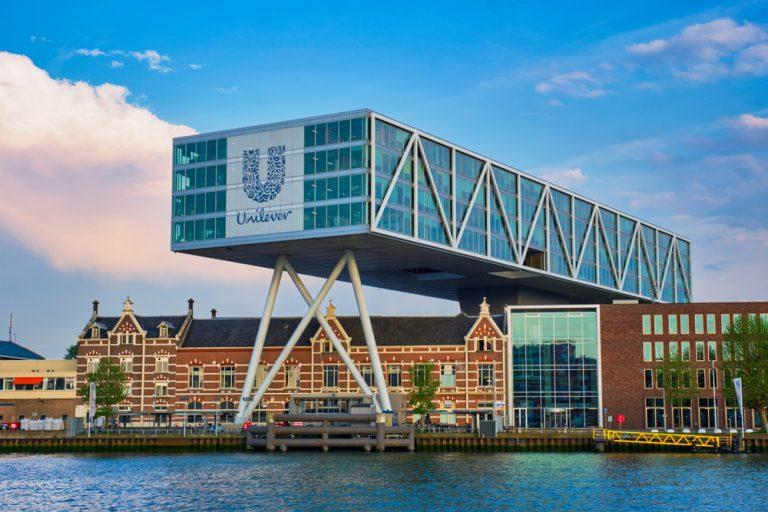
Consumer goods giant Unilever (LON:ULVR) posted its half-year results on Thursday, revealing that poor weather had hit its ice cream sales in Europe and North America.
Shares in Unilever were trading over 1% lower on Thursday morning.
Underlying sales were up 3.3% for the first half of 2019, led by its emerging market business which grew 6.2%.
Unilever added that growth in its markets was mixed, however. Market growth in Europe and North America was held back by the impact of the weather on ice cream sales.
In the emerging markets it continued to see good momentum, particularly in China and South East Asia.
India saw a strong market growth, though it moderated, which Unilever said was expected. Argentina remains hyperinflationary and high levels of pricing continue to weigh on consumer demand, Unilever added.
“We have delivered consistent growth within our guided range for 2019, led by our emerging markets,” CEO Alan Jope said in a company statement.
“Accelerating growth remains our top priority and we continue to evolve our portfolio and seek out fast growth channel and geographical opportunities, as well as address those performance hotspots where growth is falling short of our aspirations,” Alan Jope continued.
“For the full year, we continue to expect underlying sales growth to be in the lower half of our multi-year 3-5% range, an improvement in underlying operating margin that keeps us on track for the 2020 target and another year of strong free cash flow. Our sustainable business model and portfolio of purpose-led brands are key to delivering superior long-term financial performance.”
Earlier this year in April, Unilever revealed a stronger-than-expected growth in its underlying sales for its first-quarter of 2019.
In its full-year 2018 results, the consumer goods giant said it had seen continued profitable growth despite the “volatile” market conditions.
Shares in Unilever plc (LON:ULVR) were trading at -1.23% as of 09:46 BST Thursday.
GSK appoints HSBC’s Jonathan Symonds
GlaxoSmithKline (GSK) announced on Wednesday that Jonathan Symonds will succeed Sir Philip Hampton as Non-Executive Chairman of its board.
The British multinational pharmaceutical company said that this is set to come into effect later this year in September.
Jonathan Symonds is currently the Deputy Group Chairman of HSBC (LON:HSBA). He has also been a former Chief Financial Officer of both Novartis AG and AstraZeneca plc – GSK’s rivals.
“Jon has exceptional experience in life sciences, and in the financial management and governance of major, global companies. Throughout his career he has demonstrated a passion for science, and is known for his integrity and professionalism,” Vindi Banga, the company’s Senior Independent Director, said in a company statement.
“We are delighted that Jon will lead the Board through this next phase for GSK, and we look forward to him joining in September,” Vindi Banga continued.
Jonathan Symonds added: “I am delighted to be joining GSK, at what is a really important time for the company as it seeks to create value from its new R&D approach, and to create two, new world-leading companies, one focussed on Pharmaceuticals and Vaccines, the other on Consumer Healthcare.”
GSK, which is headquartered in Brentford, London, also posted its second quarter results on Wednesday, delivering growth in both its sales and earnings.
Group sales amounted to £7.8 billion, 7% higher than the same period last year. Meanwhile, adjusted earnings for the second quarter came in at 30.5 pence per share, up 9% on last year.
In June, pharmaceutical company Stada (OTCMKTS:STDAF), announced its acquisition of six brands, one of which was a paediatric cough remedy from GSK.
Shares in GlaxoSmithKline plc (LON:GSK) were trading at -0.1% as of 12:38 BST Wednesday.
Deutsche Bank reveals €3.1 billion loss after transformation charges

Deutsche Bank posted a second quarter net loss of €3.1 billion on Wednesday, following strategic transformation charges of €3.4 billion.
Shares in the bank were trading over 3.5% lower on Wednesday morning.
At the beginning of the month the German bank announced plans to radically transform its business model. It said that the restructuring actions will see it axe 18,000 full-time equivalent employees.
Deutsche Bank said that, since the announcement of the transformation plans, over 900 employees have already been given notice or informed that their role will be eliminated.
Had the transformation charges been excluded, Deutsche Bank said that second quarter net income would have been €231 million against €401 million in the prior year period. Meanwhile, pre-tax profit would have been €441 million compared to the €711 million euros in the second quarter of 2018.
“We have already taken significant steps to implement our strategy to transform Deutsche Bank. These are reflected in our results,” Christian Sewing, Chief Executive Officer, said in a company statement.
“A substantial part of our restructuring costs is already digested in the second quarter. Excluding transformation charges the bank would be profitable and in our more stable businesses revenues were flat or growing. This, combined with our solid capital and liquidity position, gives us a firm foundation for growth,” the Chief Executive Officer continued.
Earlier this year, Deutsche Bank and Commerzbank (ETR:CBK) abandoned talks of a potential merger amid shareholder concerns over the complexities of the proposed move.
Had the merger gone ahead, it would have created Europe’s fourth largest banking institution.
Shares in Deutsche Bank AG (ETR:DBK) were trading at -3.74% as of 11:53 CEST.
Shares in Commerzbank AG (ETR:CBK) were trading at -0.7% as of 11:54 CEST.
Snapchat owner adds 13 million daily active users in second quarter

Snap Inc., owner of the Snapchat app, said on Wednesday that it added 13 million daily active users in its second quarter.
For the quarter ended 30 June, the owner of Snapchat saw its daily active users surge by 13 million to 203 million, an 8% increase year-over-year.
The growth in daily active users comes after it struggled during 2018. Snap Inc. kicked off 2019 with a strong start in its first quarter, beating expectations.
Snap Inc. added that the average number of Snaps created every day grew to more then 3.5 billion over the period.
Its revenue increased 48% to $388 million in the second quarter, when compared to the same period a year prior. Revenue is earned through advertising on the app.
“The growth in our community, engagement, and revenue is the result of several transitions we completed over the past 18 months,” Evan Spiegel, CEO, said in a company statement.
“We look forward to building on our momentum and making significant ongoing progress in each of these areas,” the CEO continued.
The app’s AR lenses have been highly popular as it recently launched a new generation of AR lenses that use deep neural networks to modify a person’s appearance in real-time.
The owner of Snapchat also introduced a new lens that allows users to switch their gender in photos.
Over 200 million Snapchat users played with these new lenses in the first two weeks.
Additionally, by the end of the second quarter, over 500,000 lenses had been created by the Snapchat community through Lens Studio. Snap Inc. said that it saw more engagement with the lenses created by its community throughout the second quarter of 2019 than it did during the entirety of 2018.
As for the company’s outlook, Snap Inc. expects revenue to be between $410 million and $435 million in its third quarter, compared to the $298 million figure from the same period a year prior.
Shares in Snap Inc (NYSE:SNAP) were trading at +4.81% as of 04:46 GMT-4 Wednesday.
Aston Martin shares sent crashing on revised outlook

Aston Martin posted a trading update on Wednesday in which it cut its sales and profit expectations for its current financial year.
Shares in Aston Martin (LON:AML) were sent crashing over 20% following the announcement.
The company had confirmed its plans to float on the London Stock Exchange last year.
The iconic luxury British sports car manufacturer said that the challenging external environment it had previously highlighted in May has worsened, alongside macro-economic uncertainties.
“We anticipate that this softness will continue for the remainder of the year and are planning prudently for 2020,” Aston Martin said in a statement.
The company now expects wholesales for 2019 to be between 6,300-6,500, below the guidance announced earlier this year.
Adjusted operating profit margins are also anticipated to be lower than previously expected.
“Whilst retails have grown by 26% year-to-date, our wholesale performance is adversely impacted by macro-economic uncertainty and enduring weakness in UK and European markets,” Dr Andy Palmer, Aston Martin Lagonda President and Group CEO, said in a statement.
“We are disappointed that short-term wholesales have fallen short of our original expectations, but we are committed to maintaining quality of sales and protecting our brand position first and foremost,” Dr Andy Palmer continued.
“We are today taking decisive action to manage inventory and the Aston Martin Lagonda brands for the long-term. We remain focused on the successful execution of the Second Century Plan and on delivering sustainable long-term growth.”
Founded in 1913, Aston Martin is one of the UK’s most iconic brands and has become synonymous with James Bond.
Shares in Aston Martin Lagonda Global Holdings plc (LON:AML) were trading at -22.5% as of 09:18BST Wednesday.Boris Johnson as Prime Minister – thoughts and market reaction
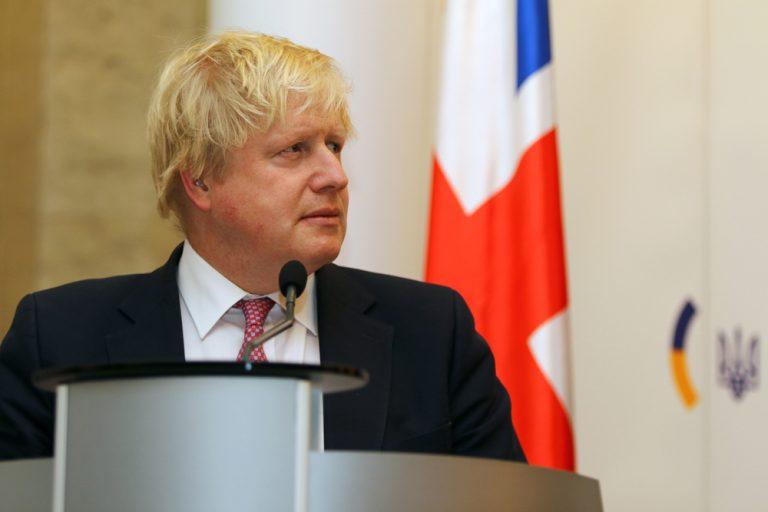
So, Boris Johnson is our new prime minister. Capturing 66% of party member votes, with an 87% turnout, for the man who we’re 99% sure is related to Donald trump.
While you might expect from that beginning that this is going to be something of a tirade against the man entering office; I see some scope for optimism. Agreed, Mr Johnson shares his American counterpart’s proclivity for dated social views – describing Black people as “piccaninnies” and gay men as “tank-topped bumboys” among his most cringeworthy soundbites – however we can try to look for chinks of light in what most of the establishment might see as the dark cloud of populism he supports.
https://platform.twitter.com/widgets.js What has certainly captured the public’s imagination so far are his attempts to be charismatic. I say ‘attempts’, because many think his shoot-from-the-hip style has seen him reveal parts of his character which make him unfit to stand as the figurehead of four nations. However, I believe this is exactly why he has gained his new position.I cannot think of a Tory leadership candidate more unfit to become the Prime Minister of this country than Boris Johnson, the worst Foreign Secretary of modern times who has caused huge offence to large numbers of our fellow citizens. A dark and depressing time for the UK.
— Chuka Umunna (@ChukaUmunna) July 23, 2019
Boris on Brexit, diplomacy and policy-making
Much like the US president, and regardless of whether he backs up his rhetoric or not, Mr Johnson’s outlandish and brash persona have enabled him to appear the strong and no holds barred character that swathes of disillusioned voters were begging for. Like him or not, I can only imagine people are hoping he can assert himself – and by extension the UK – on the international stage in the same way Donald Trump has (despite the tensions it has stirred up with China and Iran). People have likely grown tired of being told the world will burn down because of Brexit, and falling short of prophesising the revival of colonial sentiment, I think his supporters are hoping he will be more publicly assertive about Britain’s ambitions during Brexit proceedings. Ultimately, he has a lot of work to do to appear the strong and charismatic leader he has promised to be. If he wants to avoid igniting a revival of Labour party support, he needs to introduce what he might see as counter-intuitive policies on environmental issues and increase spending on housing, in addition to police and defence. After that, he has to keep his promise of leaving the EU on the 31st of October; specifically in a way that doesn’t make Britain look diplomatically weak, and more importantly in a way that does the least harm to British business in the long-run. That latter issue is the main problem to ameliorate, and I believe outside of Brexit not being what the established political centre ground wanted, it is one of the main reasons Brexit has not yet been delivered. Regardless of whether media lamentations of Britain being turned into a ‘post Brexit tax haven’ are true or not, the real question that must be addressed is who will be affected most (worst)? If those who were given new-found hope by Boris are the worst hit by possible economic uncertainty, he will quickly lose his mandate. As a cursory note – there is already discussion of what the new PM will mean to the Union. In response (and trying not to sound too reductionist), I would point out that SNP support has waned in recent years and Scottish Tories could be galvanised by a new style of leadership. Also, given that the Union survived brutal and prolonged austerity policies, partially caused by bankers in London, it is likely to survive Boris.https://platform.twitter.com/widgets.js4. And I will continue to advance the preparations to give Scotland the right to choose our own future through independence, rather than having a future that we don’t want imposed on us by Boris Johnson and the Tories. That is now more important than ever.
— Nicola Sturgeon (@NicolaSturgeon) July 23, 2019
Market sentiment on our new PM
The fact is we haven’t got much idea what will happen in the next couple of months. The bulls among us could hope Boris has a zany plan under wraps and markets will prosper as British exports get a second wind. Of course, after the pound fell through the floor with the ‘Leave’ verdict in 2016, UK exports were given a new lease of life. On the other hand, the bears will already be predicting the next crash, with Brexit and Johnson’s threat of a crash out of the EU on the 31st of October, offering another cause for market uncertainty. That all being said, today’s story is one of ‘sell the rumour, buy the truth’. Although I do enjoy hearing the doomsday predictions of my journalist colleagues, their pessimism was misplaced today. After seeing the Pound-to-Euro exchange rate fall to 1.1104 at 09:00 today, Sterling then recovered around 0.2% to 1.1153 just before midday, as Boris was giving a measured victory speech. Realistically this is no surprise. While it makes a dull day at the office for tabloids, Johnson’s place as the bookie’s favourite meant the market had already ‘priced in’ the impact of him assuming office – as such there will likely be little change when he officially takes office tomorrow. As stated by Esther Reichelt, FX Analyst for Commerzbank, “I was asked repeatedly over the past week what events I was keeping an eye on in connection with Sterling. The result of the Tory leadership contest being announced today really will only indirectly be part of them. The result will be announced around lunchtime. A clear victory by Boris Johnson is likely to be fully priced in. That means only a complete surprise victory by his adversary Jeremy Hunt would move the market.”https://platform.twitter.com/widgets.js Deliver, Unite, Defeat. That was Mr Johnson’s goal as he delivered his victory speech today. Hopefully the quality of his premiership will not match the unfortunate ‘DUD’ acronym of his new mantra. He did later add ‘Energise’, and while we can be sceptical about his past record and how well he will unite and better the country as a whole, we can at least hope he can energise British politics. With a view to revise Boris’s unfortunate acronym – and remain open-minded about what he brings to the table – good luck ‘DUDE’.Thank you all for the incredible honour you have done me. The time for campaigning is over and the time for work begins to unite our country and party, deliver Brexit and defeat Corbyn. I will work flat out to repay your confidence
— Boris Johnson (@BorisJohnson) July 23, 2019
10.5 million Brits believe they are in worst financial position ever, FairMoney.com research

A fifth of Brits believe that they are in the worst financial positions that they have ever been in, nationally representative research named Brexit Broke Me reveals.
The research, conducted by FairMoney.com, shows that 10.5 million people in the UK feel that they are in the worst financial position they have ever found themselves in.
Additionally, over half of Brits (53%), said that their average disposable income per week is less than £0.
The research coincides with the breaking news that Boris Johnson has been successful in succeeding Theresa May as the next Prime Minister of the UK. But will he be able to resolve the Brexit deadlock and ensure a resolution is found before the UK comes crashing out of the EU on 31 October?
The research also reveals that 22 million Brits do not understand how Brexit will affect household bills and 30 million believe that Brexit will increase the price of food and produce in supermarkets.
“At long last this laborious process has come to an end. We welcome the news of a new Prime Minister and urge that the concentration of the country is fully focussed on resolving the Brexit conundrum,” Dr Roger Gewolb, Founder and Executive Chairman of FairMoney.com, provided a comment.
“Our research at FairMoney shows quite demonstrably that millions of Britons are in their worst financial situation for years and quite frankly this process has taken valuable time from looking for resolutions to solve the Brexit issue,” Dr Roger Gewolb continued.
“Now that a new leader has been elected, for the good of the British people, we need to put the constant scaremongering that has dominated our political rhetoric on the back-burner, and get this country moving forward. This is not about personal politics, but for the good of the country. We need to ensure that the next Prime Minister can lead the country in a positive direction. That means restoring Great Britain’s mojo and getting our focus back.”
Fever-Tree sales lose their sparkle as growth slows
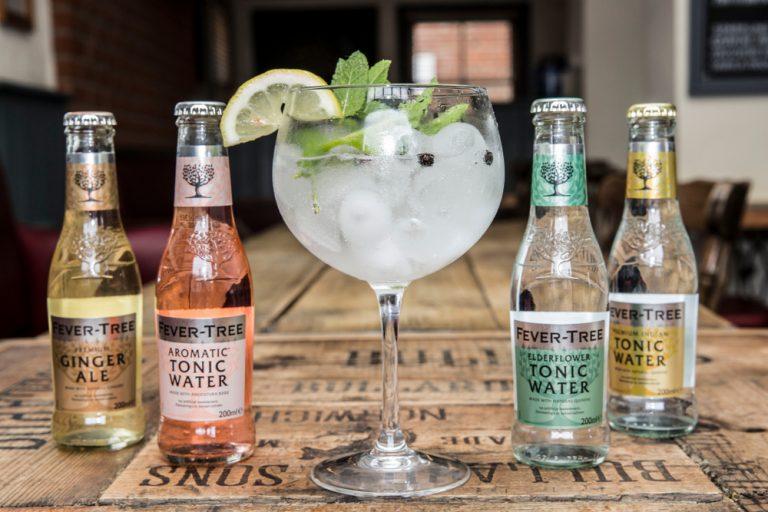
Fever-Tree, the producer of carbonated mixers for alcoholic spirits, said that the UK saw a moderation in growth rates for the first half of 2019.
Shares in Fever-Tree were down over 10% during Tuesday morning trading.
In the UK, Fever-Tree’s largest market, revenues were up 5% over the period, considerably less than the 73% half-year growth experienced a year ago.
Fever-Tree cited the poor weather in the past quarter as having a dampening effect on growth rates in the short term, a factor which has impacted several different sectors. This year’s summer has been unable to match the incredibly strong trading period experienced in summer 2018.
The company said that, in the UK, its range of flavoured tonics now accounts for over half of its total tonic sales at retail. Alongside the growth of the UK gin craze, its tonics continue to stimulate consumers’ appetites for exploring different flavour combinations.
As Britain’s unquenchable thirst for gin grows, consumers purchased 66 million bottles of gin last year, an annual rise of 41%.
In the US, revenue grew 31% compared to the first half of the previous year, which is a growth of 24% on a constant currency basis.
“It has been an encouraging first half for the Group with growth across all our four regions, most notably in the US, where we have made significant distribution gains and operational progress,” Tim Warrillow, CEO of Fever-Tree said in a company statement.
“While we have not been immune to the impact of the unseasonably poor weather in the UK, we have further strengthened our market leadership position within the UK and have seen positive momentum in Europe and the rest of the world reflecting our increasingly global footprint,” the CEO continued.
“The move to long mixed drinks is gathering momentum and starting to win share from beer and wine. Our broad range of high-quality mixers, relationships with spirits companies, brand strength and our growing international distribution network provide us with confidence in the significant global opportunity that lies ahead for the Group.”
“Whilst we remain mindful of the tough comparators over the remainder of the summer in the UK, the Board anticipates that the outcome for the full year will be in line with its expectations.”
Shares in Fevertree Drinks plc (LON:FEVR) were trading at -10.10% as of 11:13 BST Tuesday.Getlink posts decline in Eurotunnel traffic as no-deal becomes “very likely”

Getlink, the company which manages and operates the Channel Tunnel between England and France, revealed on Tuesday that Eurotunnel traffic decreased during the first half of the year.
The operator also said that a no-deal Brexit is looking “very likely” ahead of the new 31 October deadline for the nation’s departure from the European Union.
Truck and car traffic through the Eurotunnel were lower than last year. Car traffic decreased by 2%, and Getlink has cited the market-wide uncertainties surrounding Brexit as a reason for this decline.
The group revealed a 2% growth in revenue to €523 million, whilst group earnings before interest, tax, depreciation and amortisation (EBITDA) decreased 2% to €255 million.
“In the first half of the year, despite the jolts resulting from the political uncertainties of Brexit the Group has once again demonstrated the resilience of its business model with revenue growth for the tenth time in a row,” Jacques Gounon, Chairman and CEO of Getlink, said in a company statement.
“Without the recent strike by French customs officers, the Group’s EBITDA would also have increased. The Group remains confident in its ability to manage the next stages of Brexit and confirms the dividend growth policy,” the Chairman and CEO continued.
Getlink also provided its outlook for the year ahead, though it emphasised that its figures were in the context of the nation’s departure from the European Union.
“In the context of a UK’s exit from the European Union, the Group gave a financial objective of an EBITDA of €560 million in case of a ‘no-deal’ or €575 million in case of agreement. As the absence of an agreement on Brexit on 31 October is becoming very likely, the reference scenario for 2019 is now the “no-deal” one,” Getlink said in its results.
Shares in Getlink SE (EPA:GET) were trading at -0.81% as of 11:43 CEST Tuesday.
Supermarket sales suffer compared to last year’s, Kantar reveals
New data published on Tuesday by Kantar reveals the first overall growth decline in the supermarket sector since June 2016.
Year-on-year supermarket sales dropped by 0.5% in the 12 weeks to 14 July, marking the first overall growth decline in three years.
Kantar said that the tough period was not unexpected given the record sales experienced during last year’s summer heatwave. However, the market is expected to return to growth once the comparative 2018 summer period is over.
All major grocers faced a challenging 12 week period, with growth slowing at every supermarket other than Ocado.
Kantar said that the main factor behind the decline is shoppers heading out to stores less often. Given last year’s hot weather, consumers visited stores more frequently and closer to home in order to ensure their cupboards were stocked as they enjoyed the warm weather and the men’s football World Cup.
The difficulties in matching last year’s growth is clear from the sales figures of traditional summer categories. Consumers spent £75 million less on alcohol compared to last year, with beer down 11% and cider down 13%. Soft drinks sales dropped by £56 million and ice-cream by £55 million.
Lidl, which recently announced a plan to invest £500 million into opening new stores across London, was the fastest growing bricks and mortar retailer over the period as sales rose 7%. Additionally, Aldi reached a new record share of the market, accounting for 8.1% of sales.
Ocado (LON:OCDO) stood out over the period in terms of growth as it increased its sales by 11.9%.
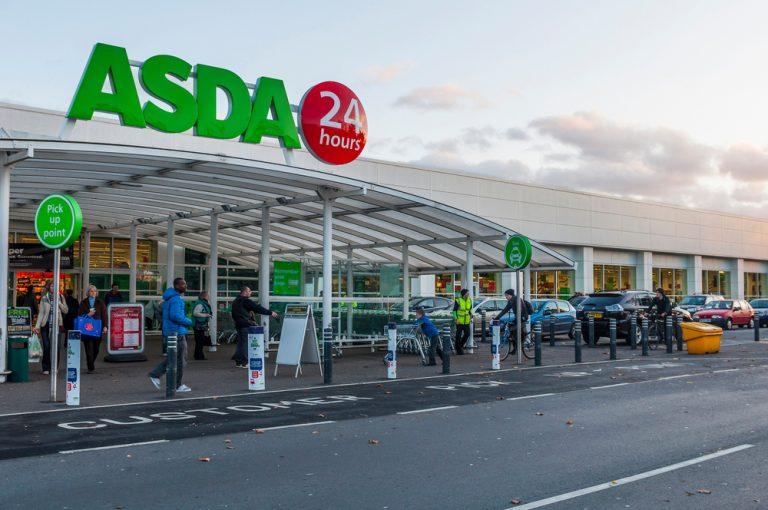
Asda’s (NYSE:WMT) performance faced a particularly difficult comparison compared to last year’s, during a time when sales grew at their fastest rate in over 6 years.
Sainsbury’s (LON:SBRY) sales dropped 2.3% over the period, and Tesco (LON:TSCO) now holds a 27.2% share of the market.
Earlier this year, Sainsbury’s £7.3 billion takeover of Asda was blocked by the Competition and Markets Authority (CMA) because it will create a “poorer overall shopping experience”.