
Anglo Asian Mining reports pre-tax profits of $25.2m, shares rally

Anglo Asian Mining shares rallied during Thursday trading on the back of a promising set of full-year results for 2018.
The AIM-listed mining company reported pre-tax profits of $25.2 million, up from US$5.7 million a year ago.
This was as a result of production proving to be at the upper range of the forecasts, at 83,736 gold equivalent ounces compared to expectations of between 78,000 to 84,000 GEOs.
Overall, total production for the full-year rose 17%, and on a year-on-year basis to 83,736 GEOs.
Gold production increased the most, up by 22%. Silver production also rose to 210,184 ounces, compared to 172,853 ounces recorded in 2017.
Conversely, copper production fell to 1,645, down from 1,991 the previous year.
The company recorded total annual sales of Gold bullion of 59,481 ounces, up from 43,496 ounces a year ago.
These were completed at an average of $1,265 per ounce, unchanged from 2017.
Meanwhile, the cost of gold production decreased in the lowest quartile to $541 per ounce during the period.
Anglo Asian Mining also announced a final dividend of $0.04 per share, resulting in a dividend of $0.07 per share for the year.
Shares in the London-listed firm are currently up 4.26% as of 13:13, as the market takes stock of the figures.
Anglo American rallies on diamond vessel approval
Mining multinational Anglo American Plc (LON:AAL) has seen its share price rally in morning trading following its announcement that its plans to construct a new diamond recovery vessel had been approved.
Strong start continues
The world’s largest provider of platinum was already reeling after it announced an extension to its dividend in February this year, and it seems that strong start to 2019 is set to continue. The firm announced that it expected some reduced output in its diamond and copper sectors compared to last year, but some of the fears surrounding any long-term depletion in diamond production should be at least partially offset by today’s announcement. The company’s plans to construct the custom-built diamond recovery vessel are set to go ahead, and marks the continued erosion of the lamented De Beers monopoly of the diamond industry which extended from the 19th century. That being said, these latest plans were approved by Debmarine Namibia, which is a 50:50 joint venture between the Government of the Republic of Namibia and De Beers.Increased yields prompting a positive outlook
“This highly attractive investment offers a three-year payback, a more than 25% IRR and an EBITDA margin of more than 60% – typical of the high quality of our brownfield growth options”, said Mark Cutifani, Chief Executive of Anglo American. “We will continue allocating appropriate levels of capital in a disciplined manner across Anglo American’s wider organic pipeline of near- and medium-term growth opportunities, including the world-class Quellaveco copper development in Peru, that we expect to contribute towards our 20-25% production growth by 2023.” Set to become the seventh component of the Debmarine Namibia fleet, the new vessel is set to add 500,000 carats to annual production, which would represent a 35% increase on Debmarine’s current output. The vessel is set to have a total capital cost of $468 million, and is expected to begin production in 2022.Anglo American portfolio potential
The company’s share price is currently trading up 58p or 3.03% since trading began on Thursday morning, with shares currently trading at 1,972p a share 16/05/19 11:55 GMT. Corporate analysts were unable to reach a consensus on rating Anglo American stock, with Citigroup reiterating their ‘Buy’ stance, Barclays Capital reiterating their ‘Equal Weight’ position, UBS remaining unchanged in their ‘Sell’ rating and Credit Suisse reiterating their ‘Outperform’ stance, having upgraded their rating earlier in May.Thomas Cook £1.5 billion loss and the Brexit effect
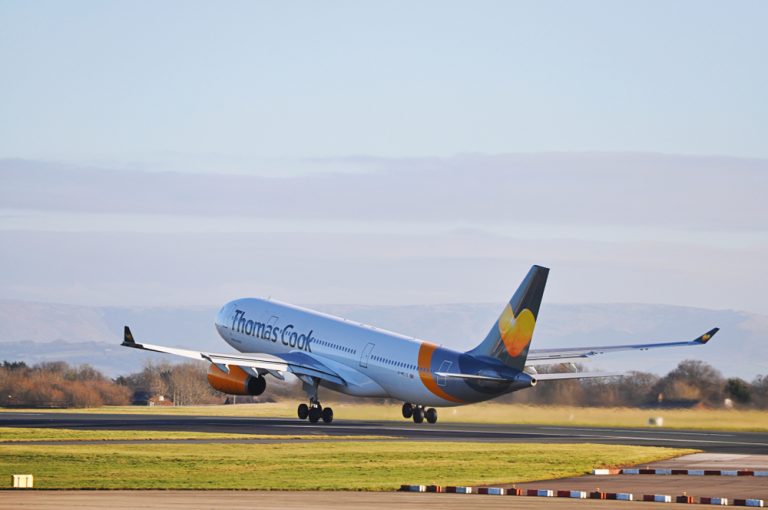
British travel company Thomas Cook (LON:TCG) has seen its losses widen in the first half, which has led the company to consider bids for its assets and revise its expectations for the second half.
Summer sun quells Winter fun
Much to the chagrin of Thomas Cook beneficiaries, the market wouldn’t emulate the trope of the HBO hit series – Winter did not come. “The prolonged heatwave last summer and high prices in the Canaries reduced customer demand for winter sun, particularly in the Nordic region, while there is now little doubt that the Brexit process has led many UK customers to delay their holiday plans for this summer,” said Chief Executive Peter Fankhauser. The travel giant posted an underlying EBIT loss of £245 million, which widened by £65 million during the six month period ending 31 March 2019. This, the company added, was driven by lower demand for its tour operator businesses and uncertainty across all its markets, the risk of which had only been partially mitigated by reducing capacity across the board.Writing down value, lowering expectations
Much of the recent figure has been attributed by analysts to the company writing down the value of its subsidiary MyTravel Group, which it acquired for £1.1 billion in 2007. Regardless of the reason, the company opted to tap the nerve of Brexit uncertainty and said that a great deal of the blame for ongoing market frigidity could be placed at the feet of consumer uncertainty and Brexit negotiations. “This combined with higher fuel and hotel costs, is creating further headwinds to our progress over the remainder of the year,” added Fankhauser. The result of this, the company said, was that it expected to revise its second half expectations, with H2 earnings set to fall short of the same period in the previous financial year.Bids and lending and an attempt to stop revenues freezing over
The once go-to holiday group is perhaps falling between the cracks of luxury long-haul and cut-price competitors, and perhaps its board recognises this. It said that it had already received “multiple bids” for the whole or parts of its airline business and has yet refused to rule out any possibilities, stating that it would provide an update, “in due course”. However, the company shouldn’t be written off just yet. The firm said that it has already secured a £300 million bank ‘financing facility’ with its lenders, which is set to work alongside its existing revolving credit and bonding facilities, which currently amount to £875 million and are set to mature in November 2022. The new facility is designed to help the company provide additional liquidity for the 2019-2020 Winter season, and Thomas Cook said its availability was dependent on its progress in carrying out the strategic review of the Group Airline. It will be available from the 1st of October this year and will mature on the 30th of June 2020.Thomas Cook as a portfolio prospect
Too big to fail or just a bigger FlyBe (LON:FLYB)? The firm’s share price has fallen 3.74p or 16.25% in morning trading, down to 19.26p a share 16/05/19 10:51 GMT. Analysts from UBS remain unchanged in their ‘Neutral’ assessment of Thomas Cook stock, while Numis have their stance ‘Under Review’.Burberry annual revenue flat despite turnaround plan

Burberry (LON:BURB) reported its final results for the year on Thursday, sending shares downwards.
The luxury brand said that revenue for the year to March-end was £2.72 billion, broadly flat on figure of £2.73 billion the year before.
However, pre-tax profit, climbed 7% to £441 million a reported basis, nevertheless, on a adjusted basis profit dropped 6% to £443 million.
Burberry is in the midst of implementing a turnaround plan amid years of faltering sales.
The brand announced the departure of longstanding creative director Christopher Bailey last year.
Ricardo Tisci, formerly at Givenchy, replaced Bailey, and has been tasked with revitalising the iconic British brand.
Since taking on the role, Tisci has re-worked the brand’s branding, introducing a new signature monogram print, designed by Peter Saville, into the collection.
https://platform.twitter.com/widgets.js Nevertheless, investors proved less than impressed with these latest results, particularly in light of weak single digit sales figures across Asia. Burberry has been particularly affected by the economic slowdown in China, which has deterred spending on luxury goods. Marco Gobbetti, chief executive of Burberry commented: “We made excellent progress in the first year of our plan to transform Burberry, while at the same time delivering financial performance in line with expectations. Riccardo Tisci’s first collections arrived in stores at the end of February and the initial reaction from customers is very encouraging. The implementation of our plan is on track, we are energised by the early results and we confirm our outlook for FY 2020.” Shares in the company are currently down -4.81% as of 11:21AM (GMT).Coming soon#ThomasBurberryMonogram @GigiHadid pic.twitter.com/6ooyjTj38t
— Burberry (@Burberry) May 13, 2019
Michelin set to acquire telematics company Maternaut
Michelin announced on Thursday that it has acquired Masternaut, one of the largest European telematics providers. The exact amount Masternaut was acquired for has not been specified.
According to Michelin, the acquisition will speed up the development of its Services & Solutions business for light vehicles, enable Masternaut to roll out its offering across the whole of Europe by taking advantage of the Michelin network’s geographical coverage and increase the volume of data captured, allowing it to provide its customers with the best solutions, increase product performance and develop its data science deployments.
Michelin said that the transaction was made on the basis of 8 times 2018 EBITDA before synergies.
“Michelin is consolidating its expertise in telematics, enabling us to optimize customer mobility and respond to the needs of a changing market. Masternaut represents a further step in the expansion of our Services & Solutions business, especially in Europe ad for light vehicle fleets,” Florent Menegaux, Managing General Partner of Michelin, commented on the announcement.
Based in Clermont-Ferrand, Michelin is a French tyre manufacturer and second largest in the world following Bridgestone.
Masternaut mainly operates in France and the UK. The business provides a technical platform that boasts the latest technology and offers on-board telematics solutions to optimize vehicle fleet management and monitoring.
Masternaut currently manages more than 220,000 mostly light utility vehicles.
Last year, the tyre manufacturer announced that it was set to close its Dundee factory, which employs 845 people at the time and has been open since 1971. The group said that the plant will shut by mid-2020 as a result of a decline in the demand for the specific tyres it produces, and competition in Asia.
At 09:13 CEST Thursday, shares in Cie Gnrl des Etblsmnts Michelin SCA (EPA:ML) were trading at -1.25%.
Nestle enters negotiations to sell Nestle Skin Health
Nestle (SWX:NESN) announced on Thursday that it had entered into exclusive negotiations with a consortium led by EQT for the sale of Nestle Skin Health for 10.2 billion Swiss francs.
EQT is a wholly owned subsidiary of the Abu Dhabi Investment Authority (EDIA).
Nestle said that the deal is subject to employee consultations and approval of regulatory authorities. It expects to close around the second half of the current year, when the company will provide an outline on the use of the proceeds and its future capital structure.
According to Reuters, sources have said that there was competition from a consortium of Advent and Cinven in addition to a U.S private equity firm KKR & Co Inc and European fund PAI partners.
Nestle is a leading Swiss food and drink company across the globe with its headquarters in Vevey, Vaud, Switzerland.
Established in 2014, Nestle’s Skin Health unit provides science-based solutions to address specific skin health needs of healthcare professionals, patients and consumers. Nestle said that it offers a range of leading medical and consumer brands through three complementary business units in prescription, aesthetics and consumer care.
Nestle Skin Health is headquarters in Lausanne, Switzerland, and employs over 5,000 workers across 40 different countries.
Last month Nestle confirmed its annual guidance following a good momentum in its US and China markets. Excluding businesses under strategic review, the group posted an organic growth of 3.2%.
As for its confectionary brands, the success of its well loved KitKat chocolate means that it does not need to add any new business to its portfolio. It also sold its U.S confectionary business to Italy’s Ferrero last year in a $2.8 billion deal, in order to position itself closer to health-conscious products. Because of its KitKat success, the company does not need to fill the confectionary-shaped gap following the sale to Ferrero.
Yu Group recovers following 2018 accounting issues, shares rise

Yu Group shares rallied on Wednesday after the company posted its annual results and said it had reviewed accounting issues discovered in 2018.
The energy supplier said that revenue increased by 77% in to £80.6 million in the year to December-end, compared to £45.6 million a year before.
The group swung to an adjusted EBITDA loss of £6.3 million after a series of accounting irregularities were discovered last year.
This meant that the company had invoiced for more money than energy it had actually supplied.
Yu Group said that it had implemented a new control, accounting and governance process, which was by also supported third-party review by PwC.
This resulted in the restatement of prior year accounts, with net assets reduced by £2.4 million.
Cash and cash equivalents totalled £14.6 million at the end of December, rising to £16.5 million at the end of April 2019.
Yu Group said it expects contracted revenue for the year of £88 million.
The company also said it raised £11.6 million from a share placing in March 2018.
Bobby Kalar, Group Chief Executive Officer, said:
“The accounting and system failings uncovered in the second half of 2018 have had a major impact on the Group and I would personally like to apologise to all our stakeholders for the mistakes made. We have made significant progress in implementing new systems and processes and the Board is confident that we have weathered the storm.
“The business rationale remains strong with an enormous potential market for a high-quality service provider of gas, electricity and water to the SME and corporate sector. I believe the Group is well placed to achieve long term profitable growth underpinned by the people and systems we have in place.”
Shares in the AIM-listed firm (LON:YU) are currently +65.14% as of 13:55PM (GMT), as investors react to the update.
Crest Nicholson maintains full-year guidance despite Brexit uncertainty
Crest Nicholson updated the market with a trading statement on Wednesday, maintaining its full-year guidance.
The house builder said sales per outlet week remained flat on the year before at 0.78 for the first-half of 2019.
Total sales value achieved to date and forward sold rose 4.2% year-on-year to £792 million.
Meanwhile, net debt and land creditors decreased by £40.9 million during the period.
As a result, Crest Nicholson said that earnings and dividend guidance for the year ahead remain unchanged.
Commenting on today’s statement, Chris Tinker, Interim Chief Executive said:
“The group has made good progress in implementing its strategy in the first half of the year. Improved forward sales in residential, commercial and land, and increased outlet breadth, provide a good platform as we enter into the second half of 2019.
We welcome the Government’s increased grant funding and focus on delivering a broader tenure mix. As a consequence, we will continue to grow our partnerships with Registered Providers who are playing an increasingly important role in the diversification of tenures. This strategy trades an element of margin for reduced risk and improved cash flows. Overall, we remain confident in our ability to deliver returns in line with Board expectations.
We maintain a strong balance sheet and operate a disciplined business model, generating good returns on our chosen investments. We have reduced debt in the half year and expect to be cash positive by the end of the year after paying ordinary dividends of 33 pence per share.”
Crest Nicholson announced the appointment of Peter Truscott as its new chief executive in March, amid the departure of Patrick Bergin. Mr Truscott is set to assume the role in September of this year.
Shares in the FTSE 250 Group (LON:CRST) are currently up +0.49% as of 12:46PM (GMT).
Kingfisher shares fall on mixed Q1 trading update
Kingfisher published a trading update on Wednesday, sending shares downwards on the back of a mixed set of figures.
Sales in the UK and Republic of Ireland rose 5% to £1.3 billion during the three months to 30 April, with like-for-like sales up 3.4%.
This was on the back of a strong performance at B&Q and its Screwfix stores.
However, investors were less impressed with performance in France, with total sales down 3.4%, and 3.7% on a like-for-like basis.
Sales at Castorama fell 2.4% during the period, down 2.4% on a like-for-like basis.
Kingfisher said that a positive start to the year was ultimately offset by
transformation-related activity in the region.
Similarly, sales at Brico Dépôt were down 4.5%, and a further 5.1% on a like-for-like basis, in large part due to low margins as a result of promotion activity.
Véronique Laury, Kingfisher’s Chief Executive Officer, commented on the quarter:
“The Group delivered positive sales growth in the first quarter, with sales of unified and unique ranges continuing to grow ahead of non-unified ranges. Screwfix, Poland and Romania delivered good sales growth while our performance in France was mixed within the quarter.
“This year we are focused on completing the building of our ‘engine’ and making our innovation more visible to customers. Our new outdoor range was rolled out to all markets in the quarter alongside a globally coordinated marketing campaign. We are also excited to be launching several new ranges this year which are unique to us and will further differentiate us from our competitors, including surfaces & décor and bathrooms across the Group, and kitchens in B&Q. In addition, we are piloting a new convenience store concept which we look forward to demonstrating at today’s Kingfisher Innovation Day.
“At this early stage of the year our expectations for the full year are unchanged, and we remain confident in our ability to deliver significant financial benefits over time.”
Shares in the FTSE 100 company (LON:KGF) are currently trading down -2.61% as of 11:59AM (GMT).
Ahead Of The Frame: An Interview with Art Entrepreneur Marine Tanguy

Whilst often labelled an alternative investment, the art world itself is still steeped in tradition and dominated by a few well-established names or elite insiders.
This often makes it seemingly inaccessible to the everyday investor or to a budding creative, striving to make their mark.
It can certainly prove a difficult market to crack, but Marine Tanguy, one of the art world’s youngest CEO’s, seems to have done just that.
At just 21, she managed her own art gallery in L.A.
Now 29, she is the founder of MTArt Agency, one of the world’s first talent agency for visual artists, and she has also been tipped as one of Forbes magazine’s 30 under 30.
She has also been recently featured, alongside one of her rising art stars, Adelaide Damoah, in a campaign for the French luxury fashion house Chloé, no less.
MTArt Agency is an art talent agency that aims to support, bolster and nurture the next up-and-coming artists by connecting them with investors, collectors, museums, cities and brands, as well as covering the costs of studio space.
Whilst investors will usually look towards the value of a particular piece of work, MTArt’s focus is the individual behind the art, in turn re-asserting the merit of prioritising people-power for the success of any business.
In an increasingly tech-oriented world, it is a refreshing return to prioritising human expertise and talent over the anonymity of algorithms.
The concept behind her business was very much inspired by her time in California, where she encountered the numerous celebrity-orientated talent agencies on offer stateside.
I sat down with Marine in Soho to find out more about her vision, and to discover why she is choosing to invest in the individual as opposed to simply the artwork.
When I ask Marine what first drew her to the industry, she emphasises the impact of the visual upon our world and our lives. For her, art truly is all around us.
“Everything is visual…from what you look at on your screen, inside your home, visually it is inspiring. Art adds enormous value to our society and influences so many different environments”, she explains.
This focus on the impact of the visual is something she has touched on at a TedX talk she gave back in 2018, where she focused upon the importance of Art on our wellbeing.
Immediately upon talking to her, it is clear that she truly believes in her business concept – and with a valuation of £2.5 million – clearly others do too.
This is an impressive feat given the art world’s reputation for being at times conservative, insular and still very much male-driven.
When I ask her if she has perhaps felt that some may have seen her age or gender as an obstacle, she doesn’t seem fazed or discouraged.
She does however admit there are indeed pros and cons to starting a business so young.
Still, Marine says her youth has actually played to her advantage; giving her the latitude to make mistakes, bounce back and most importantly – to be bold.
She answers, “success is not built on people-pleasing, it is built on people that go for things.”
“It certainly was very as a ambitious statement, I don’t know if I could go back and make the same statement”, she concedes.
Nevertheless, ambition is clearly an important asset to her. And it’s something she is clear to highlight as a standout trait she looks for when scouting out her next art protégé.
Despite taking a prominent role in her business, Marine doesn’t specifically decide whom the agency takes on the books.
That task is down to a dedicated selection committee who filter as many as 200 candidates a month to decide who has what it takes.
She does however highlight that in order to succeed as an artist, one must not be faint of heart.
“In loads of talent industries you will get knocked down plenty of times, it’s that resilience, it’s athletic in itself. That’s what we look for. We take very few people. They don’t take no for an answer. They have such a high amount of what they can take because they really want it”, she asserts.
So, what does it take to succeed in setting up your own business venture? For Marine, the key to building a business with real momentum is staying true to your moral compass.
“Get as much experience as possible,” she urges. “You will make mistakes, you will make them…it is difficult to avoid that”.
“Define a business around the values you hold. When you haven’t slept its easier to pitch for something you believe in than something you have compromised for. Don’t build a business for the sake of it.”
When I ask her what’s next for the future of MTArt, she is still aiming high. She emphasises her ambition of securing the highest valuation for an innovative non-tech company.
“I want to show you that having a people business can have a high-value. I am interested in sharing in the growth of a businesses that is not just number obsessed.”
MTArt is already expanding quickly, having recently opened its second location in Paris, alongside its original London operation.
The agency also has its sights on the Asian market with Hong Kong, alongside of course the city of talent – Los Angeles.
On a personal note, I ask her to narrow down some of her favourite art galleries, which is perhaps a challenging task for someone who clearly is so passionate about all aspects of the visual.
She does however settle on a few spots in London, such as the V&A, which she hails in particular for the diversity of its exhibitions.
Another favourite she lists is the Tate Modern, which was also recently named as the UK’s top visitor attraction, overtaking the British Museum.