
“Results from Carlsberg, Heineken, ABInBev for the third quarter overall reflect the hiatus in the March of Covid-19 after the Q1 and Q2 hit of earlier in the year. As a result, the quarter saw generally positive volume evolution from the brewers albeit some margin impact as business switched from eat out and drink out destinations to lower margin retail business. The outlook remains mixed with a general concern about the resurgence of Covid-19 being reflected in the outlook and passed dividends (ABinBev).”
Reflecting the uncertainty facing breweries, even a summer spike in drinking activity in non-retail outlets couldn’t save Carlsberg (CPH:CARL-B) revenues, down 2.1% during Q3 and falling over 8% during the year-to-date. Carlsberg’s CEO, Cees ’t Hart, said that, “The pandemic remains a concern for us, impacting our people, our customers and our businesses in many of our markets.” Though the outlook remains shaky at best, Mr Lynch remains at least somewhat positive: “[It] seems as though with cost cutting being actioned and more coming down the pipe and with a better grasp of the likely overall sales performance, that the brewers will demonstrate the resilience in profits and sales that we would expect from the consumer staples universe for 2020 overall and looking further into 2021.” Despite this optimism, breweries will now have to contend with a return to lockdown conditions, which will undoubtedly hamper their bottom lines as we venture further into the fourth quarter of the year. France, Germany, Spain, and now the UK are in lockdown. If Biden wins the presidential election on Tuesday, the odds of the US entering a second lockdown increase greatly – though still not guaranteed. For now, breweries will be concerned by the latest round of UK lockdown measures, which are more punitive on the alcoholic beverages sector than the first time around. The government has decided to ban alcohol takeaways from pubs, and this will see alcohol sales in bars, pubs and restaurants cancelled out in England and Wales, with the situation also bleak in Scotland with eateries in higher tiers banned from selling alcohol. Similarly, fewer grants being offered by the UK government will mean consumers will have less money at their disposal, to spend on non-essential goods such as booze. Speaking to the Sun, CAMBRA‘s National Chairman, Nik Antona, said that second lockdown comes as a “devastating blow”. “Pubs across the country have already invested thousands to reopen COVID-safe environments despite facing seriously reduced incomes.” “We also need a clear route map out of lockdown which is based on evidence, otherwise we will see many pubs and breweries close their doors forever.”Second lockdown may leave breweries flat in Q4
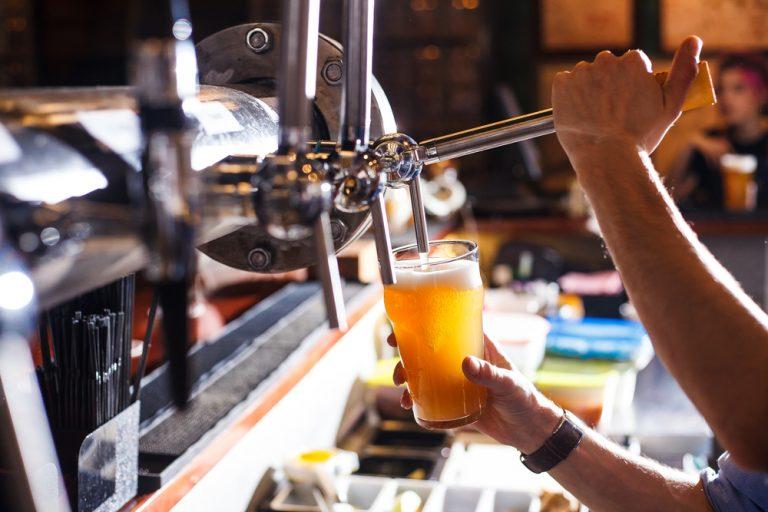
Appearing languid during the first half, the prime minister’s Halloween announcement of a second lockdown will do little to boost the balance sheets of breweries in the closing stages of 2020. Speaking on COVID challenges and the outlook for the beer industry, Mark Lynch, Partner at Oghma Partners, said:
Global equities likely to remain spooked well beyond Halloween
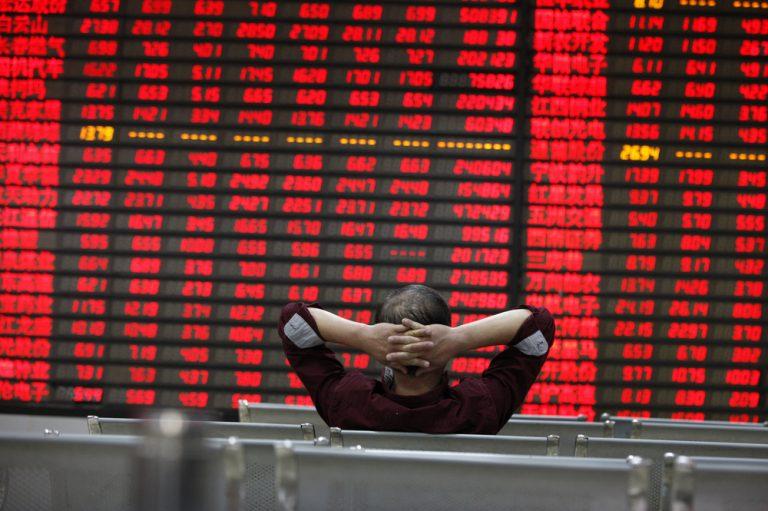
With daily COVID cases breaking the 500,000 threshold, the final bell on Friday marks the end of a week that global equities would rather forget. Unfortunately, this doesn’t seem likely, with a busy and nail-biting smorgasbord of headlines for investors to consider next week.
For today, the picture was rather bleak. Despite Eurozone GDP posting 12.7% growth during the third quarter, this received little-to-no response from traders, with fears of a double-dip recession stifling the excitement of short-term achievements such as these.
With this in mind, the CAC rallied by 0.54%, to 4,594 points, while the German DAX – which has led the week’s losses – fell by 0.36%, to 11,556.
On the US, IG Chief Market Analyst, Chris Beauchamp notes that, “[…] declines come despite outperformance across a host of major US tech earnings last night, with Alphabet, Amazon, Apple and Facebook all beating market sales estimates.”
Indeed, Amazon, Apple and Facebook all fell by more than 5% on Friday, and led wider market sentiment in moving lower. With this, the Dow Jones shed 1.11%, and fell to 26,363 points.
The FTSE, meanwhile, stood largely still. Despite some data coming out from equities such as IAG and NatWest, the British index decided to watch the explosions and rubble fly about it, while it sat tight and hoped COVID headlines wouldn’t discover it hiding under its blanket.
In the opinion of Mr Beauchamp, this tactic of delaying COVID policy will not avail British equities: “While the US and UK continue to hold off on a second nationwide lockdown, the feeling is that the longer you delay, the longer any lockdown will last.”
Discussing next week’s jam-packed calendar, Spreadex Financial Analyst, Connor Campbell, said:
“Next week is one of those ridiculously stacked periods that sees 4 or 5 headline stories all jostle for investors’ attention. Of course, there’s the election on Tuesday, the aftermath of which will run well beyond Wednesday due to a) the way mail-in votes are being counted in certain states, and b) the potential resistance Trump will put up if he loses.”
“Alongside that there’s a likely stimulus-expanding Bank of England meeting at Thursday lunchtime, a post-election Fed statement on Thursday evening, and October’s nonfarm jobs report on Friday. And that’s not to mention the ever-present coronavirus lockdown concerns that have so wrecked the markets in the past few days.”
“That could give next week a weird feel, with pre-vote jitters and covid-19 fears dominating the first half, and the election aftermath and central bank statements taking the lead in the second. Any hopes of leaving October’s volatility behind seem highly unlikely, regardless of how things pan out.”
Mr Beauchamp adds that: “From a US-perspective, the prospect of a dramatic rise in Covid-cases should bolster Biden’s election prospects. However, with Biden seemingly more willing to lock down the US in a bid to control the virus, a victory for the Democrat leader could see markets tumble as the prospect of a nationwide lockdown overshadows stimulus optimism.”Sainsbury’s partners with Deliveroo to meet demand
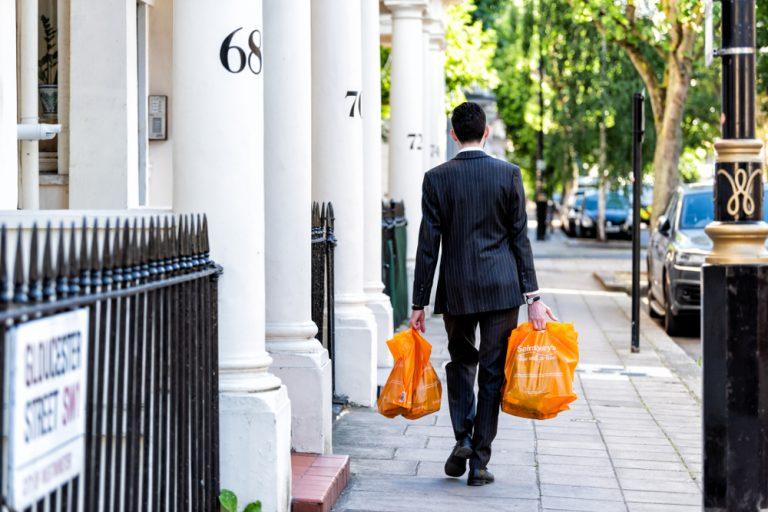
Sainsbury’s will be launching a partnership with Deliveroo.
Starting from the convenience store in Hammersmith, shoppers will be able to purchase up to order from more than 1,000 products through the Deliveroo app and have them delivered within 20 minutes.
Due to the surge in online grocery shopping amid the pandemic, Sainsbury’s is driving to develop and implement digital technologies to “improve customer experience and make sure they can shop quickly and conveniently whenever, wherever and however they want.”
Clodagh Moriarty, Sainsbury’s Group Chief Digital Officer said, “With more and more shoppers looking for convenient and affordable meals delivered to their doors, our trial with Deliveroo brings our great value hot food direct to customers’ homes. We’re committed to making it as quick and easy as possible for our customers to shop with us and we’ll be listening to their feedback throughout the trial to understand how we can best serve their hot food delivery needs. We’re excited to see what our customers think before deciding if, how and where we go next with the offer.”
Deliveroo has already partnered with including Waitrose, Aldi, and Morrisons this year as supermarkets hope to expand deliveries.
Ajay Lakhwani, who is the vice president of new business at Deliveroo, said: “Deliveroo’s on-demand grocery partnerships have proven vital for so many people during this difficult period, allowing families to get the food and household items they need and want quickly.”
Sainsbury’s shares (LON: SBRY) are trading -0.59% at 200,92 (1459GMT).
Lekoil oil shares down as loss widens

Lekoil shares (LON: LEK) are down almost 18% on Friday’s opening.
The oil and gas exploration and production company published interim results for the six months ended 30 June 2020.
Net loss widened from $2.7m last year to $7.9m.
Lekoil said that the first six months of the year were “challenging” for the oil and gas industry with the detrimental effects of the pandemic and the subsequent drop in oil price.
The group “has navigated this demanding period with steady production and cashflow generation from Otakikpo in conjunction with significant cost reduction initiatives which are beginning to pay off as the wider global economy improves. We remain committed to creating value and attractive returns for our shareholders, our partners, employees and all our stakeholders.”
Lekan Akinyanmi, the chief executive, commented, “Despite the challenges of the first six months of the year, we have navigated this demanding period with steady production and cashflow generation from Otakikpo while implementing a range of significant cost reduction initiatives across our operations.
“We are excited and encouraged by the interest received and the progress made towards raising the requisite financing to develop our high quality portfolio of assets and delivering on our drive to unlock the significant value that exists within them. We remain committed to creating value and generating attractive returns for our shareholders, our partners, employees and all our stakeholders.”
Lekoil shares (LON: LEK) are currently -17.65% at 1,75 (1027GMT).
Amazon’s Q3 profits triple amid online shopping boom
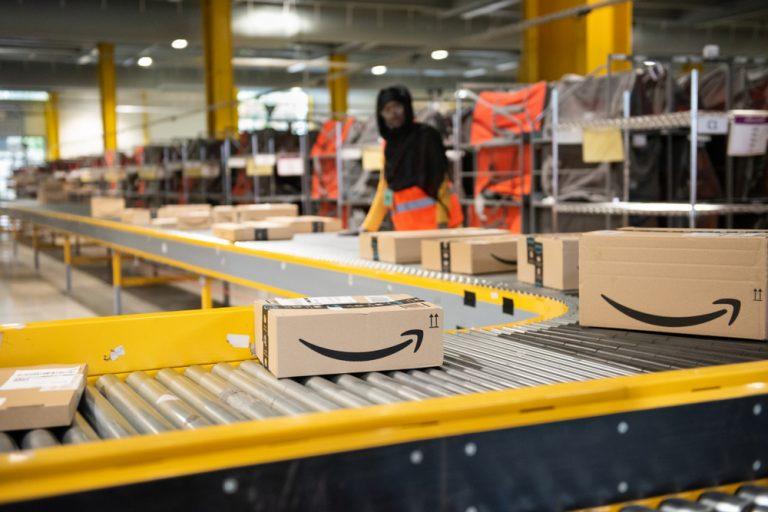
Amazon (NASDAQ: AMZN) has posted quarterly sales of almost $100bn (£77.4bn).
In the three months to the end of September, net sales increased by 37% whilst net profit grew from $2.1bn to $6.3bn.
Amazon’s founder and chief executive, Jeff Bezos, said in a statement: “Two years ago, we increased Amazon’s minimum wage to $15 for all full-time, part-time, temporary and seasonal employees across the US and challenged other large employers to do the same. Best Buy and Target have stepped up, and we hope other large employers will also make the jump to $15. Now would be a great time.”
The company is “offering jobs with industry-leading pay and great healthcare, including to entry-level and frontline employees, is even more meaningful in a time like this, and we’re proud to have created over 400,000 jobs this year alone”.
Amazon is seeing “more customers than ever shopping early for their holiday gifts, which is just one of the signs that this is going to be an unprecedented holiday season. Big thank you to our employees.”
Since the start of the year, the group has created 400,000 jobs. Earlier this week, the online retailer said it would create 100,000 seasonal jobs to the current workforce. Amazon has forecast revenue for Q4 to be between $112bn and $121bn, however, it warned that Covid-related costs could hit profits. “In total, we have incurred more than $7.5bn in incremental COVID-related costs in the first three quarters of 2020, and we expect to incur approximately $4bn in Q4,” said CFO Brian Olsavsky.IAG swings to €5.5bn loss
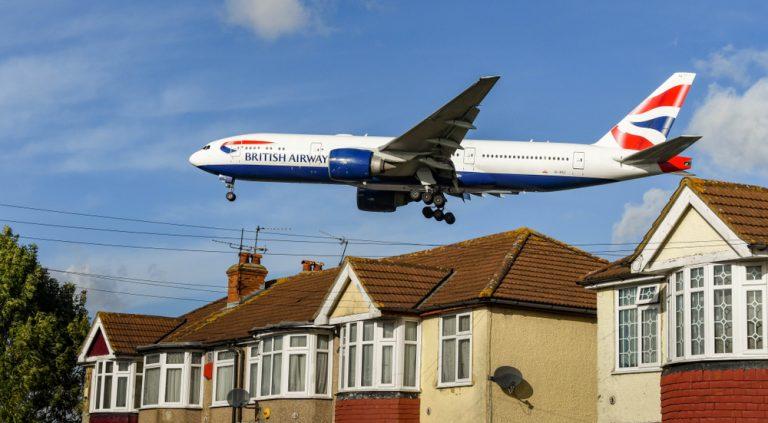
International Airlines Group (LON: IAG) has reported a €5.56bn loss for the first nine months of the year.
The British Airways owner posted a huge loss as passenger numbers have plunged amid the pandemic this year.
Compared to the pre-tax profit of €1.4bn last year, IAG is calling airport testing and the ending of the two-week quarantine.
Luis Gallego, IAG chief executive, said, “These results demonstrate the negative impact of Covid-19 on our business but they’re exacerbated by constantly changing government restrictions.
“This creates uncertainty for customers and makes it harder to plan our business effectively.
“We are calling on governments to adopt pre-departure testing using reliable and affordable tests with the option of post flight testing to release people from quarantine where they are arriving from countries with high infection rates.
“This would open routes, stimulate economies and get people travelling with confidence. When we open routes, there is pent up demand for travel.
“However, we continue to expect that it will take until at least 2023 for passenger demand to recover to 2019 levels.
“The Group has made significant progress on restructuring and we continue to reduce our cost base and increase the proportion of our variable costs,” he added.
Since the start of the pandemic, IAG has cut approximately 10,000 jobs and the group warned that normal levels of air travel are unlikely to resume until 2023.
IAG shares (LON: IAG) were up 2.3% in early Friday trading to 92.20p. They have fallen from this year’s previous high of 684.00p.
NatWest beats forecasts and returns to profit
NatWest (LON: NWG) has beat analyst expectations in the third quarter after posting a pre-tax profit of £355m.
Boosted by the number of loans issued during the pandemic, the lender’s profit was well above the expected £75m loss.
Looking towards the end of the year, NatWest has said that provisions are likely to be at the lower end of a £3.5-4.5bn.
Commenting on the Q3 results, chief executive Alison Rose said: “These results demonstrate the resilience of our underlying business and the strength of our balance sheet in the face of significant continued uncertainty. Our sector-leading capital position, strong levels of liquidity and intelligent and consistent approach to risk mean we can continue to provide our customers and communities with the support they need.
“Although impairments were relatively low in the quarter and we have seen some positive trends across our customer base, the full impact of Covid-19 remains very unclear. Challenging times lie ahead, especially as the current government support schemes come to an end and as new Covid-19 related restrictions are introduced. We continue to deliver well against our strategy, building a bank that champions potential and has the capability to grow.
“By building deeper relationships with our customers at every stage of their lives, simplifying the bank further, investing in innovation and partnerships and allocating capital well, we will deliver sustainable returns to our shareholders,” Rose added.
Throughout the first half of the year, NatWest fell into a loss due to a £2.9bn provision against potential loan losses.
In September, the lender launched a new savings account, for customers with little-to-no savings. NatWest said the new savings account would help consumers create a buffer zone during economic uncertainty, and that it would aid in efforts to help an additional two million customers to save by 2023.
NatWest shares (LON: NWG) remained steady in pre-market trading. This year to date they have fallen 46% and are currently at 116.75p (0735GMT).
Vietnam: How Asia’s blossoming economy tackled the pandemic
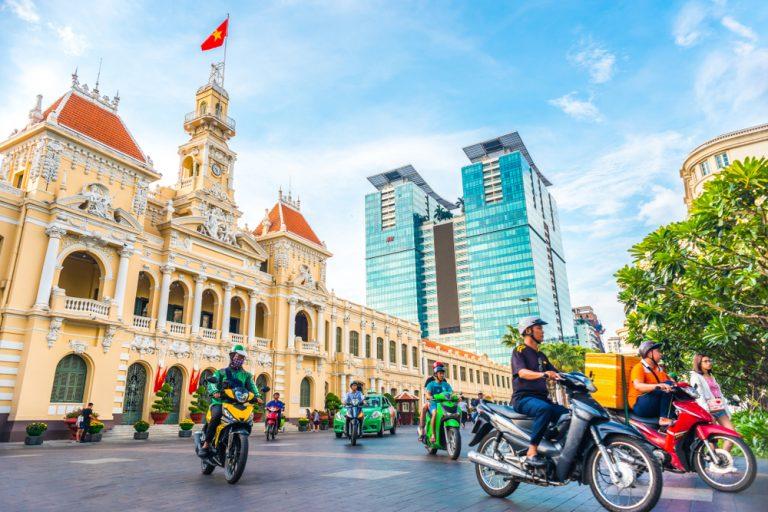
Vietnam is one of the few countries which has emerged from the Covid-19 pandemic in relatively good shape. To date, the South-East Asian country has registered just over 1,100 cases and only 35 deaths, thanks to a prompt and proactive response in clamping down on the virus early on in the year, and subsequently its economy has avoided the battering which has bruised the majority of countries in the West.
How did Vietnam manage the crisis?
Every single person who tested positive for coronavirus, regardless of the severity of their illness, was taken to hospital for treatment and monitoring. Anyone who had come into contact with an infected person – down to the fourth degree of separation – was instructed to self-isolate at home, while the army was drafted in to sanitise entire neighbourhoods. The Guardian described Vietnam’s pandemic response as “acting as if this were biological warfare”. Ultimately, it appears as if Vietnam’s draconian measures have worked. Compared to the swathe of countries across Europe now battling a second wave – with German Chancellor Angela Merkel warning of a “long, hard winter” ahead – Vietnam has so far avoided another surge in infections. Craig Martin, Manager of Vietnam Holding (LON:VNH) – a “closed-end investment fund dedicated to sustainable investments in Vietnamese equities” – commented on the country’s success in tackling the pandemic: “Vietnam’s handling of COVID-19 has rightly won praise and admiration from many other nations. Books will be written on how Asia as a whole dealt with the pandemic versus ‘the West’ and ‘the rest’. “It is too early to attribute any one factor as the key success factor, but certainly the cohesiveness of society and the single-mindedness of the people in taking on a threat has been a key part of the resilient response”. He emphasised the fact that Vietnam has prior experience in dealing with pandemic scenarios; it was one of the first countries to be affected by the SARS epidemic in 2003, and has a long track record of outbreaks of both Avian and Swine flu viruses which, like the coronavirus, are highly-contagious and can be fatal. Martin added that Vietnam’s experience from similar outbreaks has led to the country being able to develop “better responses, protocols and communications to deal with emerging infections, and indeed pandemics”. Even while the country embarked on a strict lockdown during the peak, Vietnam has been praised for its economic policy, striving to keep trade running even as the rest of the world shut its borders. Dien Vu Huu, Portfolio Manager of Vietnam Enterprise Investments Limited (LON:VEIL), hailed Vietnam’s economically savvy approach: “From early March air, land and sea borders were all but sealed to human traffic though not to trade. Formal lockdowns have been few, brief and localized, which has limited the economic impact while monetary and fiscal easing have been aggressive, with local government bonds now bearing negative real yields. “Hospitality and tourism have been affected of course, but domestic consumption has rebounded and stabilised and exports continue to grow”. Some may recognise an echo of British Prime Minister Boris Johnson’s recent – and controversial – regional strategy in Vietnam’s localised lockdowns. But while the UK government faces accusations of being too lax about the second wave, Vietnam’s government has mostly been praised for its ergonomic approach. That being said, the UK continues to battle a steep rise in Covid cases, whereas Vietnam’s relatively few recent cases have not even been home-grown, but the result of tourists travelling with the virus. All the latest cases were quarantined on arrival, and it looks as if Vietnam’s coronavirus success story is not in danger after all.Future investment opportunities to look out for
As Vietnam emerges from the pandemic, it is ripe for investors to dip their toes into its blossoming economy. Khanh Vu, Co-Manager of VinaCapital Vietnam Opportunity Fund (LON:VOF), urged investors to consider adding Vietnamese projects to their portfolios: “The main attraction of investing in Vietnam is that the country is following in the footsteps of other ‘Asian Tiger’ economies that came before it such as Japan, Korea and Taiwan. “So the future trajectory of Vietnam’s per capita income, consumer spending, and of the general wealth of its citizens is fairly clear”. Emily Fletcher, Portfolio Manager of BlackRock Frontiers (LON:BRFI), added: “Vietnam has been a poster child for frontier markets, having experienced strong economic and social development over the past two decades”. Indeed, Vietnam has enjoyed more than $149 billion in foreign direct investment inflows over the past two decades, supported by “accelerating supply chain migration from China – a trend that was established well before trade tensions between China and the US emerged”. This has driven “huge increases” in manufacturing production, with exports growing at a compound annual growth rate of 15.8% in the last 20 years. “Domestically,” Fletcher says, “demographics are in favour of sustainable growth”. Craig Martin emphasised that Vietnam is still steadily on an upward economic trajectory, and investors should seriously consider its potential: “Vietnam’s GDP per capita is expected to reach $5,000 by 2025, and by 2035 there could be a further 35 million middle-income consumers in the country. “We think this provides exciting prospects for investors. Vietnam is a very open economy from a trade perspective, with more than 200% of its GDP in exports and imports”. Since the 1990s, Vietnam has transformed its economy from primarily exporting raw materials, to producing “finished and semi-finished goods, as well as exporting services – such as information technology”.Which kinds of investment to consider
BlackRock’s Fletcher was keen to highlight Vietnam’s potential for consumer products, with technology and foods posed to be particularly lucrative in the years ahead: “The young, relatively well educated, and increasingly connected population has helped steer change in how businesses interact with consumers. “With over 51 million smartphone users, representing 80% of the population aged 15 years and older, awareness of mobile internet and usage has increased, sparking further evolution of retail services. “Similarly, the global trend of improving health and wellness has not been lost on Vietnam, leading to shifts in nutritional preferences and the way people shop for food. Seen through this lens, consumer related industries remain preferred areas for investment”. VinaCapital’s Vu, however, added that the manufacturing sector looks set to enjoy a post-pandemic boom: “Currently, the manufacturing sector accounts for less than 20% of Vietnam’s economy, but manufacturing contributed over 30% of GDP in each Asian Tiger economy at the peak. “This is an indication of the extent to which Vietnam’s future economic growth will be driven by the further development of the manufacturing sector – and the COVID-prompted relocation of factories from China to Vietnam will accelerate this development”.The road ahead
While the rest of the world’s economies shake off a coronavirus-induced slumber and tackle the dreaded second wave of infections, Vietnam has emerged from the crisis better than most Western countries, and with a renewed appetite for foreign investment ventures. Gabriel Sachs, Manager on Aberdeen Standard Asia Focus (LON:AAS), stated: “The country has been one of the fastest-growing markets in the region and we don’t see that changing. The government has handled COVID-19 very well which means the economy is operating rather normally now and the consumer is in reasonably good shape”.ECB stimulus and US GDP see global equites take a breather ahead of election

Portfolios have had to use their back-up parachutes this week, having used their first ones on March’s market free-fall. After three days of consecutive losses, global equities pretty much held their ground on Thursday, thanks to ECB stimulus and GDP announcements. Speaking earlier in the day, IG Chief Market Analyst, Chris Beauchamp, said:
“A degree of calm has descended on markets again today, with some overnight reversal for equity markets, ahead of a vital day of central bank news, GDP figures and of course a barrage of earnings reports. Whether this will be enough to stem the avalanche of selling that has dominated the week so far remains to be seen.”
Indeed, ECB chief, Christine Lagarde, indicated that the central bank will continue stimulus by expanding its bond-buying programme in December, as Europe prepares itself for a ‘very negative’ November, following lockdown announcements in France and Germany. In the US, a better-than-forecast Q3 GDP rebound of 33.1% – versus a 31.4% contraction in Q2 – was enough to give investors a boost of confidence, and mask the pain felt by the average American, which will likely be reflected more accurately in Q4 figures. In terms of where these updates leave global equities ahead of the presidential election, the answer is: pretty flat. As Mr Beauchamp said:“Investors have witnessed a tremendous reset in equities over the past few days, which for some is a harbinger of another sell-off like February and March (the rise in virus cases and the return of lockdowns providing support for this idea) but for others, particularly in the US, is merely a wave of pre-election jitters that might help set up equities for a bounce after the election, assuming that event goes smoothly.”
“With a few days left until the election however, there are unlikely to be many bargain hunters out shopping this side of the weekend, which sets up the potential for another flush in stocks to provide just the right kind of market turmoil as a backdrop to this hotly-contested presidential election.”
At the end of trading, Eurozone equities were up marginally, with the DAX rising 0.26% to 11,590, and the CAC up 0.070% to 4,574 points. Similarly, inteh US, the Dow Jones has so far rallied by 0.40%, to 26,626 points – though well shy of its 28,800 point levels seen a couple of weeks back.
Unfortunately, despite some cheery company data, the FTSE fell just the wrong side of the fence.
“There has been a slew of good company updates on the FTSE 100 this morning, although perhaps ‘less bad’ is a better description for the Q3 figures from the likes of Lloyds, Shell and BT,” Beauchamp adds.
Unable to be saved by Lloyds (LON:LLOY) reporting a plus-£1 billion profit and a share price increase of over 2%, the FTSE 100 slid just below where it started. Having at one point risen by around 30 points, the FTSE finished down by 0.019%, at 5,581 points.Octopus Renewables acquires 24MW construction-ready wind farm for £50m
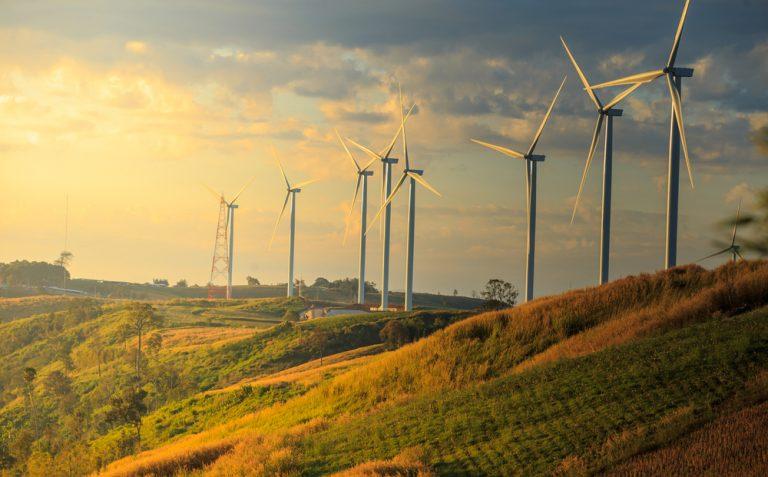
Octopus Renewables Infrastructure Trust plc (LON:ORIT) announced on Thursday that it had acquired 100% of the Cerisou wind farm, a construction-ready project in the Vienne department of France.
The project has been acquired from RES SAS, part of the RES Group, a global developer and operator of renewable energy assets. The deal was done for €56 million, or £50 million, including future construction payments.
Octopus Renewables said that construction will be carried out under a full-wrap contract by RES, and is set to be completed in the third quarter of 2022. Once in operation, the wind farm will have a 24MW capacity and will comprise 8 turbines.
It will also benefit from fixed, index-linked revenues for twenty years via the premium tariff under the demande de contrat de complément de remuneration 2017 Contract for Difference regime.
The acquisition will be ORIT’s fifth transaction following the buy-up of 14 windfarms and the Ljungbyholm Wind Farm, and will mean it has fully committed all of the proceeds from its IPO in December 2019.
Speaking on the company’s latest acqquisition, company Chairman, Phil Austin, stated:
“I am delighted to announce this fifth acquisition today, which signifies a milestone for ORIT with the full commitment of the IPO proceeds. Our manager has worked hard to identify compelling investment opportunities for the Trust and we have built a well-diversified portfolio for the Company.”
Chris Gaydon, Investment Director at Octopus Renewables, added:
“We are pleased to announce the acquisition of the Cerisou wind farm, which marks ORIT’s first wind farm in France, leverages Octopus Renewables’ experience in this market and meets our portfolio diversification goals. The French market is attractive to ORIT as long-term subsidies and political support continue to provide investment opportunities in new build renewable energy assets.”
Following the update, the company’s shares remained broadly flat, up by around a percent, at 110.50p 29/10/20. This is short of its six-month high of 116.00p, but above its recent nadir of 100.40p. Octopus Renewables also has a dividend yield of 0.96%.