
Is the Samsung 23% profit bounce a red herring?

Technology giant Samsung Electronics (KRX:005930) posted an enticing 23% year-on-year operating profit bounce, in its projections for the three months of trading ended in June. However, the substance of the projections were soon broken down, and some grey clouds begin to form over Samsung’s outlook.
Firstly, while profits may have risen far ahead of analysts’ estimates, consolidated sales fell over 7% year-on-year to 52 trillion South Korean won.
Secondly, while Bernstein analyst, Mark Newman, said that in: “The last few days Samsung’s been doing quite well as more and more expectations were that the numbers were going to be pretty good,” he added that a ‘large reason’ for its quarterly successes was a one-off payment to its display business made by Apple (NASDAQ:AAPL).
Newman said that the payment was Apple “making up for […] not buying enough displays last year,” and that it was a “[…] a one-time benefit that doesn’t really help the fundamental story so much.”
Whitbread looks to bounce back with reopenings and £1bn rights issue

FTSE 100 listed hotel and restaurant franchise and operator of Premier Inn, Whitbread plc (LON:WTB), announced on Tuesday that it planned to bounce back in style, after the lockdown period which perhaps hit hospitality and hotel sectors the hardest.
The company said that it had already reopened 270 of its UK hotels and 24 of its restaurants, with the majority of its remaining outlets set to reopen during July. It added that all 19 of its hotels were now open in Germany, including the 13 that had been refurbished and rebranded as Premier Inn during the lockdown period.
The company added that it had successfully completed a £1 billion rights issue, which will provide the company with additional funds to weather the transition back to normality, and even expand its existing offerings.
On the rights issue, Chief Executive Alison Brittain stated that it will: “[…] enable us to maintain our competitive advantage and financial flexibility, as we have both strengthened our balance sheet and secured the business so it can withstand a long period of low revenues.” With these additional funds and ‘strong’ balance sheet, the company will, “take advantage of enhanced structural opportunities that we expect to become available in both the UK and Germany. This will mean that we are in a position of strength to continue to invest, increase market share, and over-time create significant value for shareholders”, Brittain stated.Premier Inn and the pandemic
The company saw quarterly like-for-like sales dip by over 79% year-on-year, which of course reflected the widespread closure of hotels, restaurants and bars across the UK and Germany since March. With that in mind, however, Whitbread operated 39 hotels for key workers throughout the crisis, and the company stated that these hotels were run in accordance with social distancing practices. This, the company stated, has positioned it well to abide by new social distancing and hygiene expectations once it returns operations to full scale. The company not only has the experience to execute these procedures during a return to normal life but its new ‘flexible’ booking scheme and ‘unique ownership model’ will also help in the enforcement of safe practices.Speaking on the reopening of Whitbread destinations, Alison Brittain stated:
“It is still very early days and therefore too early to draw any conclusions from our booking trajectory, especially as there has been volatility in hotel performance in other countries that relaxed controls before the UK. However, in traditional regional tourist destinations, we are seeing good demand for the summer months, whilst the rest of the regions and metropolitan areas, including London, remain subdued.”Despite a largely optimistic update, the company’s shares dipped 4.59% or 112.00p, to 2,328.00p per share 07/07/20 13:14 BST. This is below the company’s median target price of 2,800.00p per share. Also, it is 43% year-on-year, and far from its level of 4,786.00p towards the latter stages of February.
Whitbread’s p/e ratio is currently 14.64, its dividend yield stands at 1.20%.H&M share price slips amid plans to axe 170 stores
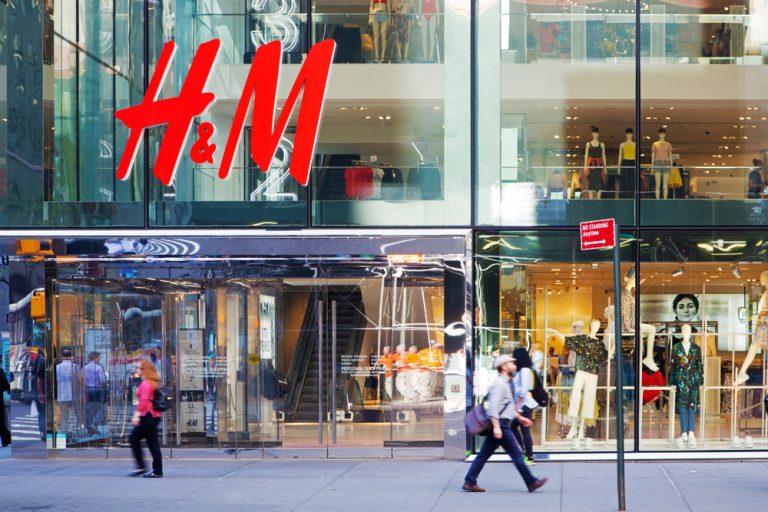
Swedish fashion tycoon Hennes & Mauritz AB (STO:HM-B) – popularly known as H&M – has announced its plans to permanently close 170 stores across Europe, knocking its share price down 1.40%.
The move is said to be a response to plummeting sales during the coronavirus crisis, which caused the retail sector to grind to a halt in March when governments worldwide implemented strict lockdown measures to contain the spread of the virus. H&M recorded an eye-watering 50% fall in sales during the peak of the crisis.
As well as shutting 170 sites across Europe, the closures are expected to put thousands of jobs at risk, adding to the record levels of UK unemployment. Last month, Chancellor Rishi Sunak warned of “tragic projections” for the jobs market in the months ahead as the government’s furlough scheme begins to wrap up by October.
It is not yet clear how many of H&M’s 300 UK stores will be affected by the brand’s decision, but the move follows the chain’s ongoing pledge to focus more on its online potential. The company already offers online shopping to 33 countries around the world. However, the widespread “stay at home” initiative during the pandemic caused a record surge in online sales, and H&M joins a long list of chains keen to capitalise on the shift towards remote shopping.
Since non-essential stores were given the go-ahead to reopen in England last month, hundreds of H&M sites have opened their doors to customers once again for the first time since March. High street footfall is still much lower than expected for this time of year however – down 53.4% on July 2019 – and the retail sector faces a steep uphill battle before it can recover to pre-crisis levels.
H&M chief executive Helena Helmersson remained optimistic despite the store closures, citing the brand’s resilience in the face of the pandemic and its historic commitment to online and sustainable fashion:
“I am full of admiration for our employees’ commitment, drive and perseverance during this very challenging time. As we have reopened our stores, sales have begun to recover at a faster rate than expected.
“Before the pandemic hit, we performed strongly – a result of many years of long-term investments to create the best offering for our customers and to meet the digital shift in the industry. This, combined with the fact that we have acted quickly to counter the negative effects of Covid-19 and that we are speeding up the transformation of the H&M Group, makes me convinced that we will come out of the current crisis stronger.
“To meet the rapid changes in customer behaviour caused by Covid-19 we are accelerating our digital development, optimising the store portfolio and further integrating the channels. With our ambitious sustainability work we want to continue to lead fashion retail towards a more sustainable future”.
Investor insight
H&M’s share price slipped 1.40% on the company’s news, down to SEK 140.55 at CEST 13:57 07/07/20, still decidedly better than the 24% free-fall on last year’s figures recorded in June. The chain’s dividend yield sits firmly at 6.94% and its P/E ratio at 46.45.JD Sports saw yearly revenues spike 30% before lockdown
Sports and fashion brand JD Sports (LON:JD) booked robust financial performance for the full-year ended February 1 2020, with Coronavirus lockdown since ‘constraining’ the company’s progress.
In its full-year results, though, the company were pleased to book a 30% year-on-year revenue bounce, up from £4.7 billion to £6.1 billion, while like-for-like sales in Sports Fashion were up by 12%.
This progress translated into similar success across its balance sheet, with the Group’s earnings (EBITDA) up 28%, from £488.4 million, to £623.6 million, while reported profit before tax increased by 3% to £348.5 million.
The company also lauded the development of its JD Sports brand, with 52 new stores opening across mainland Europe, 18 across the Asia-Pacific territories and 11 new outlets across the US, including a new flagship store in Times Square.
Speaking on the results, company Executive Chairman Peter Cowgill stated: “We were encouraged by the continued positive trading in the early weeks of the year prior to the emergence of COVID-19 and we firmly believe that we are well placed to regain our previous momentum. Looking longer term, there is inevitably considerable uncertainty as to what the effect of COVID-19 will be on consumer behaviour and footfall with future store investments highly dependent on rental realism and lease flexibility. Ultimately, however, we remain confident that we have a market leading multi-channel proposition which has the necessary flexibility and agility to prosper within a retail environment that may see profound and permanent structural change.” On the pandemic and what it might mean for the company going forwards, he added that: “Whilst COVID-19 has constrained our short term progress, it is important that we do not lose sight of the core retail standards and commercial disciplines which have underpinned our longer term growth to date. JD has a market leading multi-channel proposition which maximises its consumer relevance and reach by creating, and then maintaining, a deep emotional connection with its consumers who see JD as an authoritative and trustworthy source of style and fashion inspiration with influences drawn from both sport and music.” Following the news, and after dipping initially, JD Sports shares rallied 0.62% or 4.20p, to 678.80p per share 07/07/20 12:30 BST. This price is up over 8% year-on-year, with the consensus target price sitting at 730.00p per share. The company’s p/e ratio currently stands at 23.72, while its dividend yield sits at a modest 0.04%.Rishi Sunak to announce £3bn green package
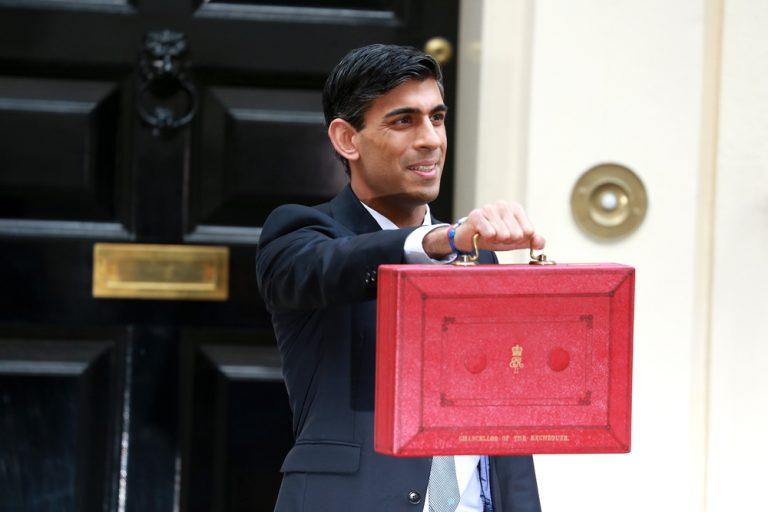
The chancellor is set to announce a £3bn green package, as part of the plans to rebuild the economy following Covid-19.
Rishi Sunak will use Wednesday’s summer statement to unveil the package that will cut emissions, create thousands of green jobs, and decarbonise public buildings.
Environmental groups have said the package is not far enough and should be considered a “down payment”.
“Surely this is just a down payment? The German government’s pumping a whopping £36bn into climate change-cutting, economy-boosting measures and France is throwing £13.5bn at tackling the climate emergency. £3bn isn’t playing in the same league,” said Greenpeace UK’s head of green recovery, Rosie Rodgers.
Of the total amount, £1bn will improve the insulation of public buildings and homes. Homeowners could receive vouchers of up to £5,000 for home-improvement insulation projects, which could as a result lower household bills.
Business Secretary, Alok Sharma, explained: “What [the scheme] ultimately means is lower bills for households, hundreds of pounds off energy bills every year, it’s supporting jobs and is very good news for the environment.”
However, according to Ed Miliband, the shadow business secretary, the plans will leave out one-third of the population who are in the social-renting or private-renting sector.
“This is not a comprehensive plan,” he said. “It also needs to be part of a much broader and bigger scale strategy for getting back on track for net-zero which includes a zero-carbon army of young people getting back to work, investment in nature conservation, driving forward renewable energy, helping our manufacturers be part of the green transition and a plan for our transport network.”
The remaining £2bn will be spent on creating “green” jobs in construction.
A spokesperson for the treasury said: “The government remains committed to decarbonising buildings to keep us on track to reach net zero emissions by 2050.”
“The funding expected to be announced this week represents a significant and accelerated down payment on decarbonising buildings, to help stimulate the economic recovery and create green jobs. Allocations for future funding will be determined in due course.”
Boohoo shares plunge on exploitation claims
Boohoo has pledged to investigate claims that workers in a Leicester-based factory are being paid only £3.50 an hour.
The Sunday Times reported on Monday that employees are being paid less than half of the minimum wage and working in unsafe working conditions when the city is in lockdown.
Boohoo, which owns brands including Pretty Little Thing and Nasty Gal, has seen a surge in sales during the lockdown.
The retail group saw shares plunge 23% on Monday when the news was first reported.
The group released a statement and said they plan to immediately investigate the claims.
“Our early investigations have revealed that Jaswal Fashions is not a declared supplier and is also no longer trading as a garment manufacturer.”
“It therefore appears that a different company is using Jaswal’s former premises and we are currently trying to establish the identity of this company”
“We are taking immediate action to thoroughly investigate how our garments were in their hands, will ensure that our suppliers immediately cease working with this company, and we will urgently review our relationship with any suppliers who have subcontracted work to the manufacturer in question,” it added.
Garment factories in Leicester have already been criticized by the National Crime Agency, where there is thought to be widespread exploitation.
“Within the last few days NCA officers, along with Leicestershire Police and other partner agencies, attended a number of business premises in the Leicester area to assess concerns of modern slavery and human trafficking,” said a spokesperson from the NCA.
Leicester is currently under lockdown, however, garment factories are still seen to have workers who are working in cramped conditions with no social distancing measures.
Health Secretary Matt Hancock said earlier this week that he was “very worried about the employment practices in some factories” found in Leicester.
Shares in Boohoo (LON: BOO) are currently trading -23.16% at 297.74 (1550GMT).
Big Four told to split audit and consultancy arms by 2024 in historic reform
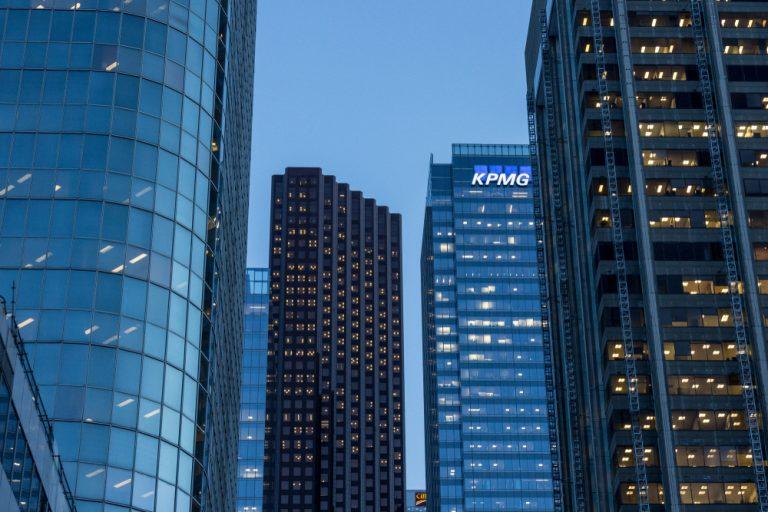
The UK’s “Big Four” largest consultancy firms (KPMG, PwC, Deloitte and EY) have been told by industry regulators, the Financial Reporting Council (FRC), that they must submit plans to ring-fence their audit and consultancy units by this October in a historic shake-up of the sector.
A precarious market
Following the high-profile collapse of companies such as auditor-approved Carillion and BHS, the industry has come under mounting pressure to reform the oversight of corporate finances – specifically by weakening the “stranglehold” on the audit market, which has essentially been monopolised by the infamous Big Four. Last year, a number of MPs called for the companies to “break-up” their audit and consultancy arms after it emerged from a government report that the Big Four had conducted audits on all but one of the UK’s 100 largest companies in 2019. Together, they audit 97% of FTSE 350 companies and collect 99% of audit fees. Labour MP Rachel Reeves said at the time: “The big four’s dominance has fostered a precarious market which shuts out challengers and delivers audits which investors and the public cannot rely on”. The FRC has set a deadline of this October for the Big Four to submit their separation plans, and expects the historic move to be fully completed by 2024. It said that the shake-up was ultimately “in the public interest” and would protect auditors “from influences from the rest of the firm that could divert their focus away from audit quality”.Why did the FRC step in?
After construction giant Carillion collapsed in 2018, the Big Four faced heavy criticism for its handling of the company’s finances. Over 2,400 people lost their jobs and the taxpayer was forced to shoulder a £148 million bill – according to the National Audit Office (NAO) – after racking up debts totalling £1.5 billion. A number of Big Four-backed companies have since followed in Carillion’s footsteps, including holidaymakers’ favourite Thomas Cook (audited by KPMG) and high street jeweller’s Links of London (overseen by Deloitte). In a shocking scandal just last month, German financial services firm Wirecard filed for insolvency after a £1.7 billion hole emerged in its coffers, paralysing the accounts of thousands of UK customers after it was subsequently banned by the Financial Conduct Authority (FCA). It was audited by EY. The FCR’s intervention comes as part of a wider scheme to overhaul the UK’s “dysfunctional auditing industry”, following three government-led reviews and years of lobbying and unfulfilled promises. Previous reports in 2006 and 2013 failed to incite tangible change, but a December 2019 review calling for “urgent reform” appears to have finally wet the appetite for ameliorations.New rules for the Big Four
The Big Four have agreed to a set of 22 operational principles outlined by the FRC, among them a new rule that audit practices should produce a separate profit and loss account from any overarching consultancy firm – designed to prevent consultancy work from unfairly subsidising audits. FRC Chief Executive Sir Jon Thompson welcomed the news, stating: “Operational separation of audit practices is one element of the FRC’s strategy to improve the quality and effectiveness of corporate reporting and audit in the UK. “Today the FRC has delivered a major step in the reform of the audit sector by setting principles for operational separation of audit practices from the rest of the firm. The FRC remains fully committed to the broad suite of reform measures on corporate reporting and audit reform and will introduce further aspects of the reform package over time”.Barratt Developments shares rally as company announces it will repay £25m in furlough fees
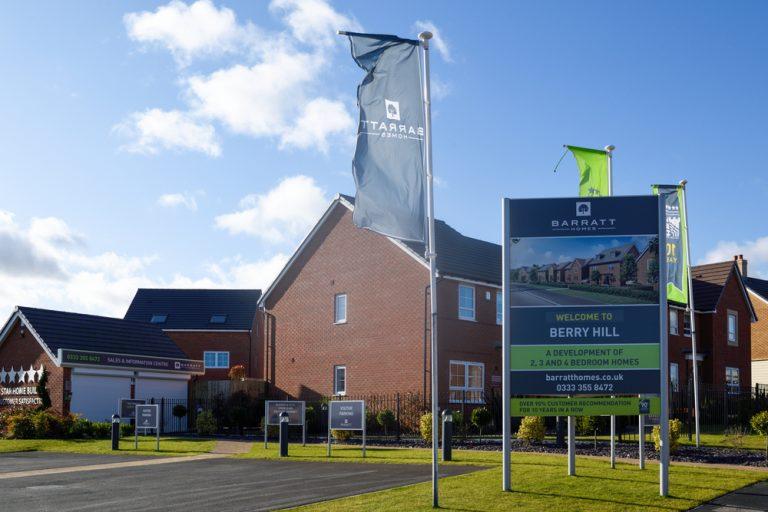
Residential property developers Barratt Developments plc (LON:BDEV) have announced that they are set to begin the new financial year with “cautious optimism” on the back of surprisingly resilient trading figures, and intend to pay back a total of around £25 million in furlough fees as it welcomes back its staff.
The company’s share price has rallied an impressive 6.67% on the news.
Incredible resilience, flexibility and commitment
Barratt – which is the UK’s largest housebuilding firm – released a trading update for the year ending 30 June 2020, outlining its “resilient” balance sheet with “year-end net cash of around £305 million (30 June 2019: £765.7m)” and “land creditors at around £800 million (30 June 2019: £960.7m)”. The firm’s forward order book is looking decidedly rosy, with total future sales as of 30 June 2020 standing at 14,326 homes (30 June 2019: 11,419 homes), at a combined value of £3,249.7 million (30 June 2019: £2,604.1m). Since reopening all of its operational sites, the company has recorded “high customer interest levels”, with net private reservations per outlet almost on par with the previous year at 0.63 (2019: 0.69) per week for the last six weeks running. Barratt “acted quickly” at the start of the coronavirus pandemic, closing all of its offices, construction sites and sales centres on 27 March 2020. The firm cancelled its interim dividend – which was due in May – and implemented a voluntary 20% reduction in base salary for “Executive Directors, the wider Executive and Regional Managing Director team, the Chairman and the Non-Executive Directors”. Although home completion rates were significantly impacted by the lockdown – only 12,604 total homes built including joint ventures during the year, compared to 17,856 in 2019 – the company’s strong forward order book and encouraging balance sheet offset the otherwise disappointing figures. During the government’s mandatory lockdown scheme during the peak of the pandemic, some 85% of Barratt’s 6,700 UK employees were placed on furlough. The company’s surprisingly strong results at the end of the quarter have afforded Chief Executive David Thomas the opportunity to pay the government back in full. In a message included in Barratt’s trading update, Thomas commented: “Prior to the Covid-19 pandemic, the group was delivering a strong year of progress on both volume and margin. The pandemic has caused significant disruption, but our highly skilled and experienced team have shown incredible resilience, flexibility and commitment, both through the peak of the crisis and in the careful reopening of our sites”.Optimism “not founded on thin air”
AJ Bell investment director Russ Mould weighed in on Barratt’s news, and was keen to congratulate the firm on its better than expected performance: “Any kind of optimism is welcome in the current climate, cautious or otherwise, so the tenor of today’s trading update from Barratt Developments struck a chord with the market. This optimism is not founded on thin air. The company has a growing order book, has seen high customer interest levels since the reopening of its sales centres, and it now has all its sites up and running”. Of course, there was not a complete crop of good news; Barratt’s home completions were badly impacted by the lockdown, and no doubt played a part in the near-paralysis of the UK housing market at the peak of the pandemic. “There was some bad news to balance out the good in Barratt’s statement – inevitably completions were down in the 12 months to the end of June and the average asking price also fell. Dividends remain off the table, but it doesn’t appear as if the market was expecting anything different on that score”. To stir the market back into action, Chancellor Rishi Sunak is set to announce a stamp duty holiday on properties under £500k as part of a “mini budget” on Wednesday. The news is sure to be welcomed with open arms, but while the market is in desperate need of liquidity, first-time buyers are still set to struggle to get onto the ladder in the first place.Investor insight
Meanwhile, Barratt’s share price has climbed 6.67% or 32.70p to 523.00p BST 13:41 06/07/20 on the back of the firm’s optimistic figures. The company’s dividend yield sits at 0.056% and its P/E ratio at 7.15.Cora Gold shares in disarray as it seeks out Sanankoro equivalent

Mali and Senegal focused mining company Cora Gold (AIM:CORA) announced on Monday that it had been collecting samples from other parts of the licences it owned as part of its Mali operations, and with this news, investors were entirely unsure how to act.
From its projects in West Mali and East Senegal, the company stated that it had identified a new target at its Madina Foulbé Permit, with assay values that included 57.2 g/t, 11.8 g/t, 5.99 g/t and 3.97 g/t of gold. Similarly, it announced two targets at the Diangounte Project Area, with values of 14.1 g/t and 12.1 g/t of gold.
It added that the partially completed reverse circulation drilling programme at Madina Foulbe had identified mineralisation zones of 47m at 0.63 g/t and 36 at 0.53 g/t.
In its Southern Mali Yanfolila Project Area, Cora Gold stated that initial results from rotary air blast drilling at its Tagan Permit had suggested a presence of 1.7 g/t of gold, while a similar drilling programme at its Winza site had a potential strike of over 1,000m with multiple gold zones.Speaking on its tests and efforts to find the company’s next big project, Cora CEO Bert Monro:
“Given the results generated during H1 2020, we are hopeful that we can discover, in time, another Project like Sanankoro from within our existing highly prospective licence package. Cora has an experienced exploration team that have worked together for well over a decade, based in West Africa, which enables us to operate in an efficient and cost-effective way constantly building up a future pipeline of new drill ready targets.”
“Cora’s main focus remains the Sanankoro Gold project with a very positive Scoping Study, with an 84% Internal rate of return (‘IRR’) at a US$1,400/oz gold price, completed on it and a recent US$21m mandate and term sheet signed for funding to support its future development.”
Following the fairly uneventful update, Cora Gold shares dipped by over 4.50%, before switching back and rallying 2.66%, to 9.08p per share 06/07/20 12:41 BST. This is about equal from the company’s previous year-to-date high in the last week of June, and well above its 4.25p nadir in mid-March.Sunak to announce stamp duty holiday for properties under £500k

Chancellor Rishi Sunak is expected to announce a ‘mini budget’ on Wednesday, in which he will propose a stamp duty holiday, similar to the proposal made by former Chancellor Phillip Hammond in 2017.
The move is expected to see the raising of the initial stamp duty threshold from £125,000 to as much as £500,000, in a ‘holiday’ designed to kick-start the UK economic recovery.
The Treasury’s current plans will affect England and Northern Ireland, who currently pay an average of 2% stamp duty on homes between £125,000 and £250,000, and an average of 5% on properties worth £250,000 to £925,000.
On properties worth £500,000, Peter Gettins of mortgage broker L&C Mortgages said first time buyers could expect to save up to £10,000 under the new scheme. Home movers buying property at the ONS’s average UK price of £248,000 can expect to save £2,460, while those buying a second property for the same price could expect to save £9,900.
The scheme is expected to be implemented in the Autumn, following the Coronavirus disruption which saw property prices fall for the first time in eight years. One issue that should be raised is that the stamp duty is normally most lenient towards those buying their first home, and thus the holiday will benefit them least. Today’s move, perhaps, should be seen as more of an effort to increase property market liquidity, than home ownership.
It serves the understandable purpose of encouraging economic activity, but by making it disproportionately easier for speculators to add to their portfolio, could actually make it more difficult for first time buyers to get on the ladder.
Speaking on the announcement, Managing Director of Ringley, Mary-Anne Bowring, said:
“A stamp duty holiday would no doubt cause a rush of transactions and help breathe life into a housing market that has been put into deep freeze in an effort to battle coronavirus.
“The government should be looking at long-term solutions as well as short-term sticking plasters when it comes to fixing the UK housing market.
“Millions of Brits were already renting, and that number was predicted to grow anyway with or without coronavirus. The disruption caused by coronavirus will likely see rental demand grow, as banks squeeze potential buyers with tighter lending restrictions and people put off buying or selling a home as it becomes clearer COVID-19 has caused continued uncertainty and disruption in the medium term.
“Eliminating additional stamp duty for buy-to-let investors would help stimulate the supply of rental homes while also driving wider activity in the housing market. Landlords are a crucial source of development finance through off-plan sales and will help support getting Britain building again.”