
Berkeley Group Holdings maintains profit guidance
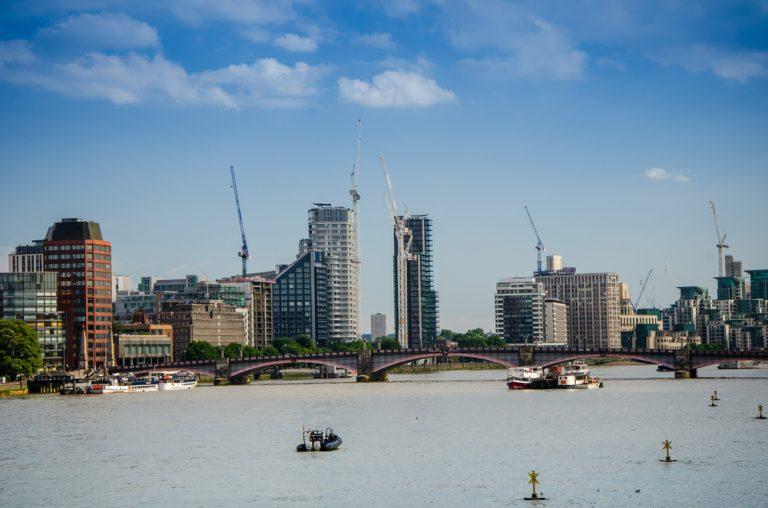
Berkeley Group Holdings (LON:BKG) has reaffirmed their guidance of pre tax profit for the full year in a trading statement released on Friday.
The house builder said they saw pre tax profit at £500m with sales being weighted to the second half of the year due to coronavirus pandemic.
Berkeley Group shares had gained 1.5% in morning trade on Friday following the news.
The company also said it remained committed to returning £140 million to shareholders through dividends and share buy backs by 31st March 2021.
“We now anticipate a more even split of profit between the first and second halves of the year, reflecting levels of production that have been better than initially anticipated and our decision not to furlough staff,” Berkeley Group Holdings.
“Production continues to be impacted by the need for modified working practices and increased supervision, with the health, safety and well-being of our people remaining uppermost in our minds at all times. However, the experience and expertise of our construction teams and subcontractors, supported by our Health and Safety professionals, means that disruption has been minimised and efficiency levels are now at around 90% of normal.”
Car sales fall 5.8% in August

UK car sales fell over August, according to new figures from the Society for Motor Manufacturers and Traders.
After a spike in sales throughout July, sales fell 5.8% with a total of 87,000 sold in August.
Sales spiked in July as it was the first full month after the lockdown. Sales increased by 11% due to pent-up demand.
Across the year so far, car sales are down 39.7% compared to this time in 2019.
The number of sales of plug-in hybrids surged by 221%.
SMMT chief executive Mike Hawes said:
“The decline is disappointing, following some brief optimism in July. However, given August is typically one the new car market’s quietest months, it’s important not to draw too many conclusions from these figures alone.”
“With the all-important plate change month just around the corner, September is likely to provide a better barometer. As the nation takes steps to return to normality, protecting consumer confidence will be critical to driving a recovery,” he added.
James Fairclough, chief executive of AA Cars, added: “September is traditionally one of the busiest in the calendar – with the market given a boost as new registration plates are introduced and dealers work hard to hit quarterly targets.”
Virgin Atlantic to axe further 1,000 roles, despite £1.2bn rescue deal
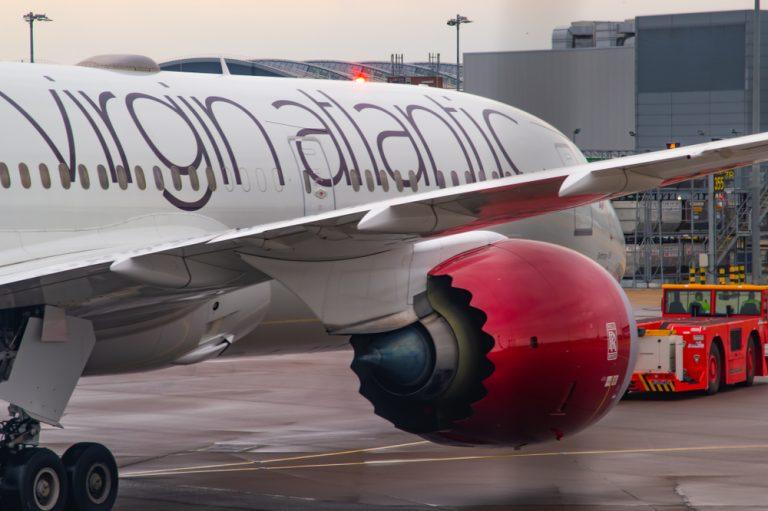
Soon after securing a £1.2bn rescue deal, Virgin Atlantic is preparing to axe a further 1,000 roles.
Since the pandemic, the airline has already shed 3,150 roles and announced the closure of its base a Gatwick airport.
Sky News learnt reported the news, which means that the number of employees will almost have halved.
The airline applied and was rejected for state support earlier this year, the group planned a privately-funded recapitalisation plan, which will fund the airline for the next 18 months.
After the UK courts had approved the rescue deal, a Virgin Atlantic spokesperson said: “Achieving this significant milestone puts Virgin Atlantic in a position to rebuild its balance sheet, restore customer confidence and welcome passengers back to the skies, safely, as soon as they are ready to travel.”
The aviation industry has been hit hard over the course of the pandemic. United Airlines revealed plans to cut 16,000 jobs, American Airlines said it would cut 19,000 jobs whilst British Airways is in the process of axing 10,000 roles.
Unilever to invest €1bn in removing fossil fuels from cleaning products
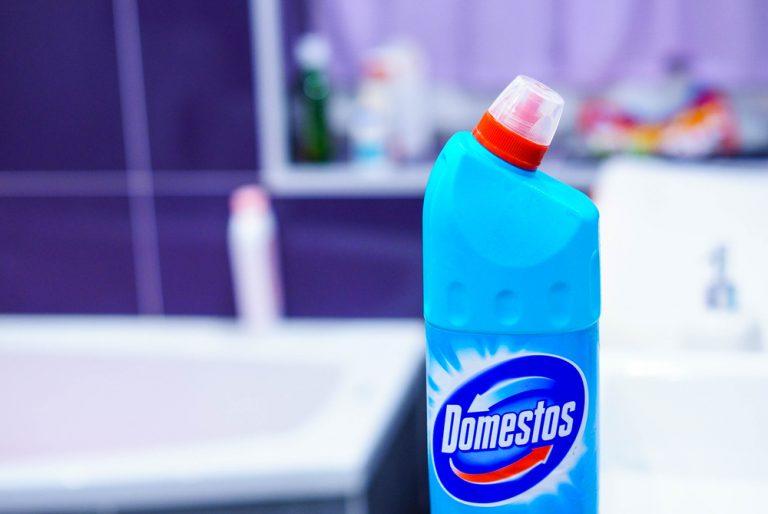
Anglo-Dutch consumer goods conglomerate Unilever (LON:ULVR) has announced its plans to invest €1 billion in cutting out fossil fuel from its cleaning products as part of a move “to transform the sustainability of global cleaning”.
The manufacturing giant – which boasts a number of household name brands such as Cif, Domestos, and Persil – stated its plans to “source 100% of the carbon derived from fossil fuels in its cleaning and laundry product formulations with renewable or recycled carbon” by 2030.
Unilever’s announcement comes as part of the company’s ‘Clean Future’ initiative, designed to “embed the circular economy principles into both packaging and product” and reduce the carbon footprint of its global operations, with a €1 billion investment drive into “biotechnology research, CO2 and waste utilisation, and low carbon chemistry”.
The ‘Clean Future’ project also aims to “create biodegradable and water-efficient product formulations, to halve the use of virgin plastic by 2025, and support the development of brand communications that make these technologies appealing to consumers”.
It is the first initiative of its scale in the cleaning industry, and represents a “critical step” towards the company’s pledge to achieve net zero emissions across all of Unilever’s products by 2039.
“Most cleaning and laundry products available today contain chemicals made from fossil fuel feedstocks”, Unilever said in a statement on its website, celebrating its move to renewables as a “deliberate shift away from the fossil fuel economy”.
Up to 46% of the carbon footprint of Unilever’s cleaning products is sourced from fossil-fuel derived chemicals, but the company said that it expects the ‘Clean Future’ initiative to reduce the carbon footprint of its product formulations by “up to 20%”.
Peter ter Kulve, President of Unilever’s €11 billion Home Care wing, explains:
“Clean Future is our vision to radically overhaul our business. As an industry, we must break our dependence on fossil fuels, including as a raw material for our products. We must stop pumping carbon from under the ground when there is ample carbon on and above the ground if we can learn to utilise it at scale.
“We cannot let ourselves become distracted from the environmental crises that our world – our home – is facing. Pollution. Destruction of natural habitats. The climate emergency. This is the home we share, and we have a responsibility to protect it”.
Unilever enjoyed a boom in cleaning product sales during the coronavirus pandemic, with a surge in consumer demand for bleach-based solutions to help disinfect surfaces potentially contaminated with infection.
Kulve commented that Unilever was “incredibly proud” of its role in keeping people safe from Covid-19, but warned that the company should not slip into complacency as the climate emergency continues to rapidly gain pace.
Shares at Unilever have bounced 2.26% to 4,526.00p at BST 10:37 02/09/20, maintaining modest growth despite a painful 14.82% fall over the past 12 months.
UK house prices reach 16-year high
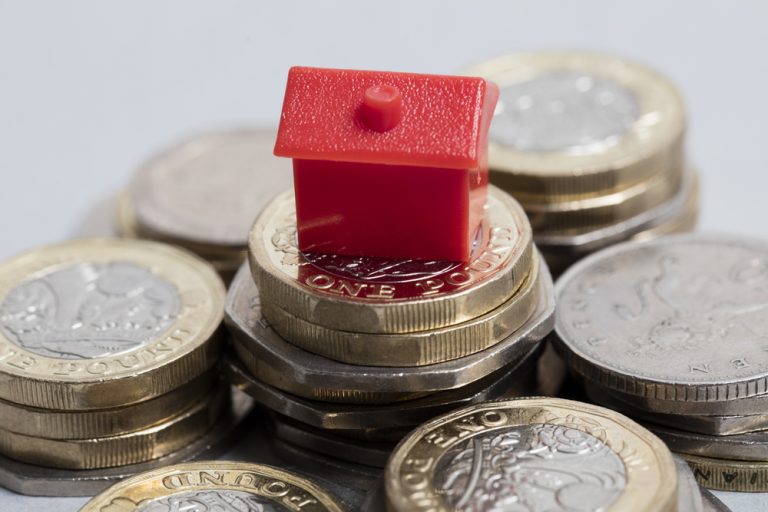
New figures from Nationwide have revealed UK house prices to hit a record high during August.
The average house price last month was £224,123, which rose by 2% just in August – the highest increase since February 2004.
“UK house prices rose by 2% in August, after taking account of seasonal effects, following a 1.8% rise in July,” said obert Gardner, Nationwide’s chief economist.
“This is the highest monthly rise since February 2004 (2.7%). As a result, annual house price growth accelerated to 3.7%, from 1.5% last month. House prices have now reversed the losses recorded in May and June and are at a new all-time high.
“The bounce back in prices reflects the unexpectedly rapid recovery in housing market activity since the easing of lockdown restrictions. This rebound reflects a number of factors. Pent up demand is coming through, where decisions taken to move before lockdown are progressing.
“Behavioural shifts may also be boosting activity, as people reassess their housing needs and preferences as a result of life in lockdown. Our own research, conducted in May, indicated that around 15% of people surveyed were considering moving as a result of lockdown.
“Moreover, social distancing does not appear to be having as much of a chilling effect as we might have feared, at least at this point. These trends look set to continue in the near term, further boosted by the recently announced stamp duty holiday, which will serve to bring some activity forward.
“However, most forecasters expect labour market conditions to weaken significantly in the quarters ahead as a result of the aftereffects of the pandemic and as government support schemes wind down. If this comes to pass, it would likely dampen housing activity once again in the quarters ahead,” he added.
New data this week from the Bank of England revealed that UK mortgage approvals jumped to 66,300 in July – suggesting a bounceback in the housing market.
Barratt shares rise on strong sales

Barratt shares (LON: BDEV) surged over 6% on Wednesday’s opening after the housebuilder revealed strong sales.
Despite the strong sales, the effects of the COVID-19 pandemic still hit, with pre-tax profit plunging 45.9% to £491.8m in the first half of the year.
The COVID-related costs for the housebuilder have been £74m. These are made up of safety costs, non-productive site costs and site-based employee costs.
Barratt will not propose an ordinary dividend for 2020.
“While Covid-19 has had a significant impact on our results, our priority has been to keep our people safe, mitigate the effect of the pandemic on our business and be able to emerge from the crisis in a resilient position,” said David Thomas, the chief executive.
“Although uncertainties remain, all of our sites are operational, we are seeing very strong consumer demand and our robust financial position means we enter the new financial year with cautious optimism.
“We are now renewing our focus on our medium term targets, on leading the industry in quality and service and on supporting jobs and economic growth by building the homes the country needs.”
Susannah Streeter from Hargreaves Lansdown commented: “Barratt’s full year results out today show just how badly the coronavirus hit the house builder…But all of Barratt’s operational sites reopened by 30 June, and since then customers have been flocking back to showrooms. The pent up interest has inevitably also been fuelled by the stamp duty holiday and the company says a robust financial position means that the firm is entering the new financial year with ‘cautious optimism’.”
Barratt shares (LON: BDEV) surged +6.90% and are trading at 538.36 (0908GMT).
The Gym Group posts £26.3m loss

The Gym Group has reported an adjusted pre-tax loss of £26.3m for the six months to the end of June.
As all sites were forced to close over the pandemic, profits for the first half of the year fell from £7.1m in 2019.
Revenue was £37.3m for the first half of the year, which is compared to the £73.9m revenue posted last year.
The Gym Group shut all sites on 20 March this year as the country went into lockdown and did not open until 25 July.
The group has suffered over lockdown and has put various cost-cutting measures into place as well as raise £40m through an equity placing.
“Following our decisive actions during lockdown to minimise costs and secure additional liquidity, we have reopened as the strongest capitalised company in the sector,” said Chief executive Richard Darwin.
“We anticipate the long-term structural growth of low-cost gyms will continue to be driven by the underlying interest in health and fitness, which is accelerating as a result of Covid-19 and the government’s initiative to reduce obesity.
“With the likelihood of a challenging economic environment in the coming months, gym-goers will increasingly look for great value and as the lowest-priced high quality gym operator we are well placed to meet this demand,: he added.
The Gym Group shares (LON: GYM) are trading at 155.51 (0853GMT)
STV shares rise, despite H1 loss

STV shares (LON: STVG) grew on Tuesday, despite the broadcaster posting a loss for the first half of the year.
Compared to a £9.1m profit for the same period last year, STV revealed a £4.9m loss for the first six months of 2020.
Revenue fell 19% to £44.7m as national advertising revenue plunged 23% and filming was put on hold over lockdown.
STV chief executive Simon Pitts admitted to the “challenging period”, however, remained positive due to the growth in viewing figures over lockdown.
Daytime viewers surged 48% in the height of lockdown, whilst STV news figures grew 40%.
“While our advertising and production revenues have been significantly impacted by Covid-19, we have been able to mitigate nearly half of the impact thanks to the proactive steps we have taken and our variable cost model. The successful share placing in July has also significantly strengthened the balance sheet and given us the confidence to continue to invest behind our growth strategy,” said Pitts.
“The outlook is much more positive in the second half, with advertising trends improving materially in July and August, and a strong schedule to look forward to on TV and online including the return of a full complement of weekly soap episodes from later this month, new drama like Des starring David Tennant, and entertainment juggernauts like the rescheduled BGT live finals and I’m a Celebrity.”
The group has revealed an interim dividend of 3p per share.
STV shares (LON: STVG) are trading +6.13% at 225.00 (1521GMT).
Is the housing market bouncing back?

New data from the Bank of England suggests that the housing market is bouncing back after lockdown.
UK mortgage approvals jumped to 66,300 in July – up from May’s low 9,000 in May and June’s 40,000.
Figures are still lower than February’s 74,000, however, remain strong and are higher than the expected 55,000 approvals expected by economists.
Capital Economics economist, Andrew Wishart, said: “Overall, these figures support other evidence that the economy continued to recover in July. But we still think that the realisation of more job losses after the furlough scheme started to be wound up in August will cause the recovery to slow.”
The growth in mortgage approvals during July is partly thanks to the stamp duty threshold being temporarily raised by Rishi Sunak. Part of the package to support the economy, the initiative is here until the end of March and can save buyers up to £15,000.
According to analysis by Zoopla (LON:ZPG), the scheme will take the total number of homes eligible for stamp duty exemption from 16% of all sales in England, to 89%, up 73%.
Sunak said the measures would “catalyse the housing market and boost confidence.”
Hugh Wade-Jones, from brokers Enness Global Mortgages, said: “There is no doubt that the huge surge of buyer demand seen once the market reopened has been seriously turbo-charged due to the stamp duty holiday announced shortly after.”
Ted Baker shares slide as retailer appoints new Board member
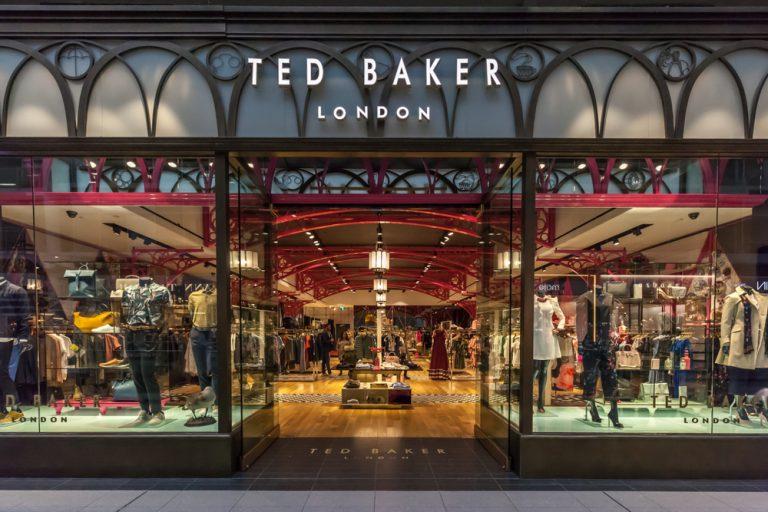
Ted Baker shares (LON: TED) fell this morning the appointment of Colin La Fontaine Jackson as the group’s new Non-Executive Director.
Jackson is a representative of founder Ray Kelvin, who owns over 10% of the company, and left the clothing retailer in 2019 after allegations of inappropriate behavior towards employees.
Following his departure, Ted Baker shares, and profits have fallen as the group warned of difficult trading conditions. The retailer has issued several profit warnings over the past year.
“We are pleased to welcome Colin to the Board and to be able to access Ray’s great experience in building the brand over the last 30 years as we continue to make progress with Ted’s new Formula for Growth,” commented John Barton, the Chairman.
The company has said in a statement that the partnership will bring “the benefits of access to Ray’s unique brand experience and insight, while at the same time introducing clear guidelines that will ensure board independence is maintained.”
Ted Baker shares (LON: TED) fell 5.5% on Tuesday after the announcement and are currently trading -7.60% at 102.38 (1144GMT).