
Sainsbury’s CEO set to retire, shares down
Sainsbury’s (LON:SBRY) shares were down on Wednesday after the supermarket chain announced that its Chief Executive is set to retire.
Shares in the company were down over 2% during Wednesday morning trading.
After almost six years as Chief Executive and fifteen years working for Sainsbury’s, Mike Coupe said that he will retire later this year.
“I feel very privileged to have spent almost six years running Sainsbury’s, in a period that has been the most challenging and competitive of my 35 year career in retail,” Mike Coupe said in a company statement.
“Sainsbury’s is a very different business today to the one I took over in 2014. I have focused on setting the business up to deal with the strategic challenges of our industry,” Mike Coupe continued.
Earlier last year, Sainsbury’s attempted to takeover Asda (NYSE:WMT), but it was blocked by the CMA after it ruled that consumers would not benefit from the merger.
Mike Coupe continued: “I am proud that almost 20% of our total sales now come from our online channels and that we are becoming one multi brand, multi channel business, able to continue to evolve and adapt with customers’ ever changing needs.”
“Adding Argos and Nectar to the business improves our ability to make shopping increasingly convenient for customers and to reward them for their loyalty. We have also been focused on investing in value so that customers feel confident they are getting quality food at great prices when they shop with us.”
“This has been a very difficult decision for me personally,” Mike Coupe said.
“There is never a good time to move on, but as we and the industry continue to evolve, I believe now is the right time for me to hand over to my successor.”
Retail and Operations Director Simon Roberts has been appointed as Mike Coupe’s successor.
Shares in J Sainsbury plc (LON:SBRY) were down on Wednesday, trading at -2.35% as of 10:20 GMT.
Wetherspoon see sales climb across festive trading, as Tim Martin has his say on Brexit
JD Wetherspoon PLC (LON:JDW) have once again given shareholders an impressive update on Wednesday over their recent activity.
Shares in JD Wetherspoon trade at 1,584p (-0.69%). 22/1/20 10:12BST.
The FTSE 250 listed firm reported a rise in like for like sales across the 12 weeks period ending January 19, which included the festive trading season notably.
Shareholders were given a sour note when JD Wetherspoon reported that its year-end net debt will be higher than initially expected.
Across the twelve weeks period, the firm saw total sales climb 4.2% with like for like sales 4.7% higher, an impressive feat to show the market.
Total year-to-date sales also rose by 4.9% which reflected the successful nature of the firm in the recent weeks.
Wetherspoon said that since their financial year ended on July 28, the business has opened one new pub and sold five.
The British pub chain said that it is expecting to open up an additional 10 to 15 and spending £80 million on new units and extensions at existing pubs.
Additionally, Wetherspoon alluded to £57 million so far this financial year that it has spent on freehold reversions of 18 pubs.
Although the company said it is in “a sound financial position”, come the July year-end net debt is expected to be between £780 million and £820 million, “slightly higher than previously anticipated, due to higher than anticipated capital expenditure.”
Wetherspoon talks on corporate governance
Commenting on corporate governance issues, the chairman of Wetherspoon, Tim Martin, said: “In an important high court case involving Wetherspoon, the judge said that he would assume written statements by witnesses were true, unless contradicted by barristers in cross-examination. “This sensible principle of justice is also implicit in the ‘comply or explain’ provisions of corporate governance guidelines (the ‘code’). “Comply or explain must mean that the code envisaged flexibility and did not advocate a ‘one-type-suits-all’ approach. “If shareholders say nothing in response to company explanations, which have been made in order to comply with the code, it is reasonable to assume their assent. “However, in reality, detailed explanations are ignored by many fund managers and their corporate governance advisers – comply or explain has been corrupted to mean ‘comply or be humiliated in public and voted off the board’ – a risk which most NEDs are understandably reluctant to take. “A likely reason for ignoring explanations, in defiance of the code, is that it’s simpler and cheaper to apply arbitrary standards such as the ‘nine-year rule’- rather than engaging with companies and considering their explanations. “Corporate governance adviser PIRC, for example, advertises for temporary staff for the company results’ “season”, and it appears to demand a blanket nine-year rule, almost irrespective of explanations. “In effect, PIRC purports to impose its own version of the code on companies, with no qualifications, or remit, for that approach. “In a further illustration of how the code operates in practise, Wetherspoon’s largest shareholder, Columbia Threadneedle (CT), withdrew support for two of our long-serving NEDs for non-compliance with the ‘nine-year rule’, with no advance warning or discussion, shortly before our 2018 AGM. “CT unilaterally took this action, in spite of detailed explanations in the preceding years in our annual reports. “CT and fellow shareholder Blackrock’s OWN boards however, very sensibly, do not observe the nine-year rule – both laud ‘independent’ NEDs with longer tenure than nine years. “In other words, one rule for CT and Blackrock – and another for UK PLC. “These issues were reviewed in some detail in our November 2019 trading statement (appendix 1). It would be beneficial if all shareholders could read this appendix. It is not boilerplate and the future of companies like Wetherspoon, and many others, is seriously undermined by the operation of the current code. “As in previous years, there has been no objection or critique whatsoever, in writing or in person, from any shareholder, individual or organisation, of the points raised in our November review. “It is an unfortunate reflection on complacency in the City and among unaccountable ‘rule-makers’ that institutions like Columbia Threadneedle, Blackrock – and corporate governance adviser PIRC – have not felt the need to issue a proper or detailed response to the serious issues raised by Wetherspoon. “The main consequence of the current governance system is short-termist and inexperienced boards, which have minimal representation from executives and the workforce – the people who are best placed to understand and run the business. “These factors are obviously damaging for customers, employees and the economy – as well as for shareholders. “The UK, of course, needs a sensible system of corporate governance. However, the current system is remote, counterproductive and inflexible, which are also the characteristics of many major shareholding institutions and their advisers.” As always, the Chairman of Wetherspoon had his say on Brexit. “It is disappointing to note that pro-remain organisations like the CBI and the Food and Drink Federation are, even at this late stage, doubling down on ‘project fear’ stories. “A dramatic headline on the BBC’s main news website (“Brexit: Price rises warning after chancellor vows EU rules divergence”, 18 January) predicted dire consequences in the event of ‘divergence’ from the EU. “The article contained a jobs warning from the CBI, which previously promoted the disastrous exchange rate mechanism and the euro, and a food prices warning from the Food and Drink Federation (FDF). “The CBI’s warnings about job losses and recession in the event of a leave vote in 2016 have proved to be mythical – over a million jobs have been created. “The FDF’s warnings about food price rises are absurd- the EU is a highly protectionist organisation which imposes tariffs and quotas on about 13,000 non-EU imports including many food and drink products such as bananas, rice, oranges, coffee and wine. “Elimination of tariffs will obviously reduce prices. “It is high time these organisations took a wise-up pill and supported the democratic decisions of the UK.”December job pledge
In December, Wetherspoon pledged to create 10,000 new jobs over the next four years as it expands its presence in the British pub market. The FTSE 250 listed firm has pledged to create 10,00 jobs as it plans to invest £200 million to open new branches in the UK and Ireland. The expansion will likely increase the size of Wetherspoon’s workforce by 25%, and came at a time where the British high street was apparently declining. Wetherspoon updated the market by saying that they plan to open between 50-60 new pubs and hotels. These new branches will be located within in small and medium-sized British towns and cities but also in London, Edinburgh, Glasgow, Birmingham and Leeds as well as the Irish cities of Dublin and Galway.Wetherspoon see strong third quarter
In November, the firm saw its shares spike following a bullish third quarter update. The company reported higher demand for coffee, pink gin, real ale and breakfast. Additionally beer sales rose significantly as British consumer trends changed by the quarter. The FTSE250 listed firm have been battling increased costs due to a mandatory minimum wage hike, higher property prices and power bills, however these rises were not to affect performance. J D Wetherspoon’s like-for-like sales rose 5.3%, which exceeded both market and analyst expectations. Wetherspoon’s reiterated their full year performance to be kept in line with annual expectations after a strong financial 2019, with increasing sales and continued political activism headlines from Chairman Tim Martin. Wetherspoon’s have certainly made a bold statement across the industry, and across 2020 with the planned opening of new chains combined with a jobs pledge, this year could be a bright one for the British business.Antofagasta fight political turbulence to give steady fourth quarter update
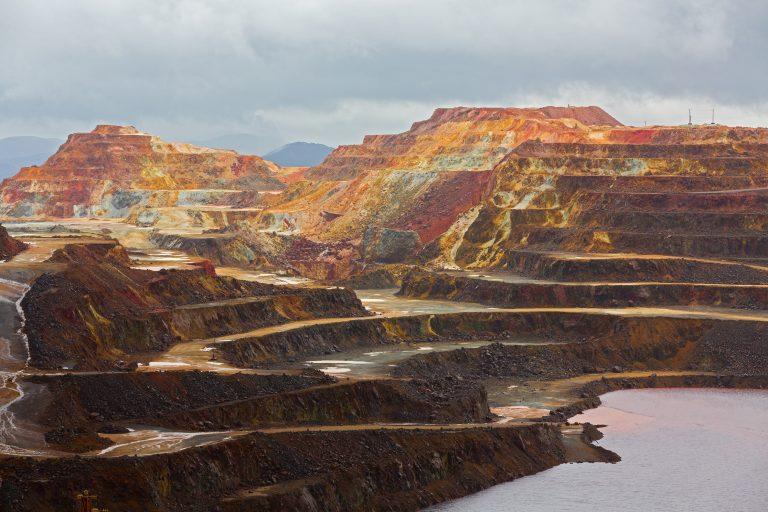
Antofagasta (LON:ANTO) have given shareholders a steady update regarding their quarterly activity.
The mining titan said that it had been hit by drought and political uncertainty, however the firm has managed got combat these.
Fourth quarter copper production totaled 185,500 tonnes, which saw a 5.8% decline from the third quarter.
Antofagasta said that this was due to planned lower grades and maintenance at their Centinela mine, combined with strikes at Antucoya and fuel delivery disruption at Los Pelambres due to social unrest in Chile.
In 2019, the firm saw copper production of 770,000 tonnes, which hit a new company record at the top end of guidance, which notably saw a 6.2% rise from the 2018 figure.
The firm had cut their guidance in November due to political unrest which hindered operations, as guidance was lowered to 750,000 tonnes to 770,000 tonnes off copper, from 750,000 tonnes to 790,000 tonnes before.
Looking at gold production, Antofagasta noted that this sector fell 28% quarterly to 55,600 ounces due to lower grades at Centinela.
Molybdenum production in the fourth-quarter was 2,300 tonnes, down 21% on the previous quarter, and annual production fell 15% to 11,600 tonnes.
Net cash costs for 2019 were $1.22, which was 5.4% lower than the year before and slightly below guidance which was something for shareholders to note.
Speculating for the next year, the firm said that copper production can be expected to be in the range of 725,000 tonnes to 755,000 tonnes in 2020, as previously guided. Gold output is guided between 180,000 ounces and 200,000 ounces and 12,500 tonnes to 14,000 tonnes off molybdenum.
Did Antofagasta take their chance?
Antofagasta plc CEO, Iván Arriagada said: “2019 was a good year operationally for Antofagasta. We had record copper production of 770,000 tonnes, at the top end of our revised guidance, and improved cash costs of $1.22/lb. I am also pleased to report that there were no fatalities during the year, a target we remain focused on as our top priority. “We expect a solid performance from the Group in 2020 as we continue to focus on improving the operating efficiency of our mines, enter into labour negotiations at Centinela and Zaldivar, and continue to optimise water usage across the Group and particularly at Los Pelambres. We will also complete the Centinela Second Concentrator feasibility study and continue to invest in our growth projects including the Los Pelambres expansion, the Esperanza Sur pit and the Zaldivar Chloride Leach project. Production is expected to be 725-755,000 tonnes of copper at a net cash cost of $1.30/lb.” “Following the civil unrest in Chile last year and the disruption of supplies at Los Pelambres, all of our mining operations have been operating in line with their respective plans, although the Transport division has had some interruptions due to occasional road blockages in the city of Antofagasta. “Our purpose remains robust – developing mining for a better future – and this means making decisions with the understanding that our activities make an important contribution to developing the world of the future while also providing societal benefits to our host countries and local communities. In line with this, and following a practice we introduced some years ago, we recently increased the minimum wage for our employees and contractors to a level that is now two thirds higher than the national minimum wage”.Political Unrest
In October, the firm faced a production disruption after tough political conditions outlined in their third quarter update. The strikes disrupted their copper production line, and as a result 15 people died. Antofagasta said that the disruption could cause problems in their supply chain and prevent workers getting to site, with the potential to lower output by about 5,000 tonnes. The union of national copper miners, Codelco were expected to join today’s general strike which would give huge backing to the demonstrations. Antofagasta operates four mines in Chile, with its flagship Los Pelambres project located 240km north-east of the capital.Production guidance is cut
One week on from the political strikes, Antofagasta cut their annual production guidance. The FTSE 100 listed firm doubled its production cut to 10,000 tonnes pointing to a bigger hit from the workers’ protests. The firm also added that its mines in the South American country have resumed operations. In addition, labour negotiations at the Antucoya mine have been successfully concluded, Antofagasta said. This has resulted in the end of the strike which started on October 16, but not before 4,000 tonnes copper output was lost. For 2019 as a whole, the London-based firm now expects production of between 750,000 and 770,000 tonnes. This is lower than the 750,000 to 790,000 tonnes forecast given previously. In 2018, total copper production totaled to 725,300 tonnes which shows little progress year on year. Antofagasta have certainly had a tough year, but the firm have shown their resilient nature to bounce back and produce results in testing waters. Shares in Antofagasta trade at 921p (-2.99%). 22/1/20 9:47BST.Coronavirus spread leaves markets feeling out of sorts

Asian markets fell sharply during the Tuesday session, with fears surrounding the fast-spreading potential of Coronavirus.
The virus, which first saw prevalence in Wuhan, China, has now claimed 6 lives, with 291 infected. Having thought the virus was passed from animals to humans, scientists have now confirmed that the virus can be transmitted from person to person.
It was also reported that Chinese hospitals had not been taking adequate steps to test and officially report cases of the illness, though the government is taking action to control its spread.
There is also concern surrounding the economic impact of the virus. Doubts are being voiced surrounding travel to and from China, with the upcoming Lunar New York travel rush. Similarly, questions are being asked about the safety of Chinese exports, with the first confirmed cases of the illness having been confirmed in the Philippines today, alongside existing cases in Japan, South Korea and Thailand.Apartment blocks in Shanghai being sprayed with disinfectant “powder” after a local resident was reportedly infected with the coronavirus. This video was posted by a friend and has not been officially verified pic.twitter.com/99vG22XX8O
— Michael Smith (@MikeSmithAFR) 21 January 2020
Australia announced it would be performing mandatory screening of all passengers from Wuhan, following confirmation that a man carrying the illness had entered the country. North Korea stated that it was temporarily denying access to foreign tourists, in light of the spread of the virus in neighbouring China. Reacting to the developments, the FTSE, CAC and DAX all dropped as trading began. A glint of light was delivered following the start of trading in the US, as the Dow Jones suffered only minor losses, and helped European indices to regain their footing. Speaking on Tuesday’s market movements, Spreadex Financial Analyst Connor Campbell stated,We remind everyone to continue practicing self-protective measures to reduce your risk to infections like #coronavirus.
Here’s how 👇🏽 pic.twitter.com/SjuyAb5c6D — World Health Organization Philippines (@WHOPhilippines) 21 January 2020
“The US open appeared to calm things on Tuesday, the Dow Jones not quite as afflicted by the coronavirus-fears that struck the Asian and European indices.”
“Losing 0.3%, the Dow slipped to 29250 after the bell. That’s far removed from the 1%-plus declines seen at the start of the European session, the difference in performance actually somewhat helping the likes of the FTSE and CAC reduce their losses.”
“The UK index is now down 0.7%, as is its French counterpart. Meanwhile the DAX, which was already outperforming its peers, cut its losses to just 0.2% following a far better than forecast pair of ZEW economic sentiment readings.”
“It is unclear at this point whether fears surrounding the coronavirus in China are already beginning to dissipate, or if it will remain one of the market’s underlying concerns over the coming weeks.”
“The pound received a lift on Tuesday, benefiting from a better than expected wage growth reading of 3.2%, including bonuses, against the 3.1% forecast. Combine this with Donald Trump talking up the potential for a ‘tremendous’ trade deal between the US and UK at the WEF in Davos and sterling was able to rise 0.4% and 0.3% against the dollar and euro respectively.”
“Looking ahead to this evening and Netflix releases its fourth quarter results. The update comes between the launches of Disney+ (NYSE:DIS) and Apple TV+ (NASDAQ:AAPL) last year, and the impending introduction of HBO Max (NYSE:T) and NBC’s Peacock (NYSE:CMCSA), meaning subscription numbers are going to be main driver of the post-release reaction. The company is expecting to add 7.6 million net new subscribers – 7 million internationally and around 618k in the US. Arguably even more important will be its guidance for Q1 2020, especially if it shows the impact of its emergent rivals.”
Highland Gold beat 2019 output guidance following Russian success

Highland Gold Mining (LON:HGM) have told the market that they have beaten their 2019 output guidance in a relatively impressive update.
The firm said that it had been helped out at the Mnogovershinnoye mine in Russia which allowed the firm to beat expectations.
In the fourth quarter to December 31, production from Highland’s four operating mines totaled 83,429 ounces of gold equivalent, a 27% year-on-year rise from 65,753 ounces of gold equivalent.
Across 2019, total output was 300,704 ounces of gold equivalent, which saw a 12% jump from the 269,500 figure one year ago.
Notably, total output exceeded Highland’s annual production guidance range of 290,000 to 300,000 ounces.
Novo output was 5.3% lower year-on-year and at Belaya Gora and Valunisty, both also in Russia, production was down 9.1% and 20%, respectively.
Looking forward, the firm said that it expects no significant production growth across 2020 and output will remain between the 290,000 and 300,000 guidance range.
Highland Gold said: “Mnogovershinnoye outperformed expectations, with production up 9% in the fourth quarter and 10% for the full year on the back of improved grades and higher processing volume.
“Novo also exceeded its production targets for 2019, with improved fourth quarter production making up for a weaker first half, although output was lower year-on-year.”
Highland build from September success
In September, the firm saw its profits boosted by increased sales volumes. The Company stated that its gold volume sold increased from 121,174oz for H1 2018, to 142,609oz for H1 2019. This led an increase in revenue on-year, from US$146.9 million to US$174.7 million. Highland Gold Mining operating profit rose from $50.67 million to $57.38 million, and their net profit spiked from $28.64 million to $45.69 million. The outlook was equally positive for shareholders, with their EPS rising from $0.088 to $0.125 in a comparison of the same periods.Russia looks fruitful for miners
Another competitor in the market, Eurasia Mining (LON:EUA) saw their shares rally following an update on their Russian operations. Eurasia reported that it is edging closer to securing the final approval for the Tipil permit, a platinum group metals target located in Russia. Eurasia said: “The application has been approved by the Russian federal bodies and requires only a formal meeting of the local mines commission.” Research in Russia found that the whole of Monchetundra, which includes areas where Eurasia does not currently have a licence for, has a potential 40 million ounces of platinum group metals. Highland Gold have made a bold statement to the market having exceeded their production targets, however the targets have remained consistent. Shareholders can expect 2020 to be stable consistent year for Highland. Shares in Highland trade at 182p (-0.60%). 21/1/20 14:40BST.Egdon Resources announce UK discoveries deal with Shell

Egdon Resources (LON:EDR) have seen their shares spike on Tuesday after the firm noted it had partnered with an oil major.
Shares in Egdon trade at 5p having spiked 2% on Tuesday. 21/1/20 14:21BST.
Egdon told the market that they had partnered with Shell (LON:RDSB) on two UK gas discoveries.
Egdon signed the exclusivity agreement in November with a “large internationally-recognised exploration and production company” covering the P1929 and P2304 offshore UK licences.
Shell will be taking a 70% working interest in the two licenses and will take over operations, whilst Egdon will keep the remaining 30%.
Shell will pay for the stake by funding 85% of the costs of buying and processing 3D seismic survey data for the Resolution and
Endeavour gas discoveries on the licences. The acquisition price is capped at $5 million, beyond which Shell will pay 70% of costs.
Mark Abbott, Managing Director of Egdon Resources plc, said:
“We are delighted to have signed a farm-in agreement with Shell in respect of these highly prospective licences. This transaction validates our views on the potential of these blocks and introduces a highly experienced and respected operator to progress appraisal activity on the Resolution and Endeavour gas discoveries. In difficult market conditions Egdon has secured a substantial carry on costs to the well investment decision whilst retaining a material 30% interest in the licences.
Our immediate focus will be to work with Shell to agree a forward work programme and timeline for the licences with the OGA. The first part of this work programme will be the acquisition of a marine 3D seismic survey to enable a decision on the contingent appraisal well. We look forward to working with Shell and benefitting from their substantial worldwide operational experience and expertise, including in the development of carbonate reservoirs of this type.”
Mixed few months for Egdon
Prior to today’s announcement, Egdon have seen a mixed few months.
In November, the firm saw its shares spike as it told the market it had received a six month extension for two UK offshore gas licenses.
The UK Oil & Gas Authority extended the period for the P1929 and P2304 licenses until the end of May 2020.
With the new extension, the firm will be able to execute a farm-in deal for the licenses to provide funding for the projects by the end of January.
P1929 has estimated contingent gas resources of 231 billion cubic feet of gas and P2304 another 18 billion cubic feet.
Shell expand and create new partnerships
Shell are continuing to expand their horizons through deals and parternships. Last week, a notable update hit the market which involved Shell.
The firm said last Thursday that they signed a memorandum of understanding with China National Offshore Oil Corp (HKG:0883) to build its first commercial scale polycarbonate production plant.
The deal that has been reached aims to build more production equipment at the new site in Huizhou and shows an active effort by the multinational to invest into China.
Shell have already made headways in Singapore for another plant in similar fashion to the one mentioned today, and this is being built at its Jurong Island Chemicals Plant as an interim step.
Egdon Resources would have impressed with the market and shareholders with the partnership with an oil titan in Shell.
The firm will be hoping that this partnership can prove fruitful and produce results for both parties.
Talktalk announce sale of Fibrenation for £200 million

TalkTalk (LON:TALK) have announced today that they have sold their fibre network roll-out business Fibrenation.
Shares in Talktalk trade at 113p (-0.47%). 21/1/20 13:50BST.
TalkTalk is selling FibreNation Ltd, as well as its two-thirds stake in Bolt Pro Tem Ltd, for a combined £200 million in cash to CityFibre Infrastructure Holdings Ltd.
The firm initially launched Fibrenation as part of a plan to roll out fibre network to over three million UK homes and businesses.
The firm said that the decision to sell the roll out business was made to simplify the business, and a sale was the best way forward.
The FibreNation business suffered an underlying pretax loss in the year to March 2019 of £6 million, TalkTalk noted.
TalkTalk said 58% of shareholders have approved the two sales, and it plans to use the proceeds to strengthen the balance sheet. The deal is expected to be completed in March.
Tristia Harrison, Chief Executive of TalkTalk, commented:
“We are pleased to announce today’s agreement with CityFibre, which is good news for TalkTalk, and good news for Britain and its full fibre roll-out ambition. Our investment over the last five years and the excellent work delivered by the FibreNation team, combined with CityFibre’s well-established platform, will support wide-geographic reach of full fibre and further drive competition in the market.
“The sale of FibreNation to CityFibre, in combination with a competitive wholesale agreement, enables us to continue our strategy to accelerate TalkTalk’s fibre growth for our residential and business customers, thereby delivering a superior customer experience at an affordable price.”
Talktalk see positive few months
In November, the firm reported that it had swung to an interim profit.
In the six months to September 30, revenue fell 3.6% to £792 million from £822 million last year, whilst a pretax profit of £1 million was reported from a £4 million loss last year.
Headline earnings before interest, taxation, depreciation and amortisation climbed 39% to £140 million from £115 million.
TalkTalk said: “Headline Ebitda outlook for the year remains unchanged, with increased Fibre penetration and headquarter move efficiencies driving a materially lower cost base.”
TalkTalk moved its headquarters to Salford, Greater Manchester, from London, a moved which delivered £7 million in first half cost savings.
The sale of Fibrenation will allow Talktalk to focus on the structure and operational side of the business, and with these changes shareholders will hope that 2020 can continue to bring success.
Caledonia Mining increase their stake in Blanket Mine to 64%
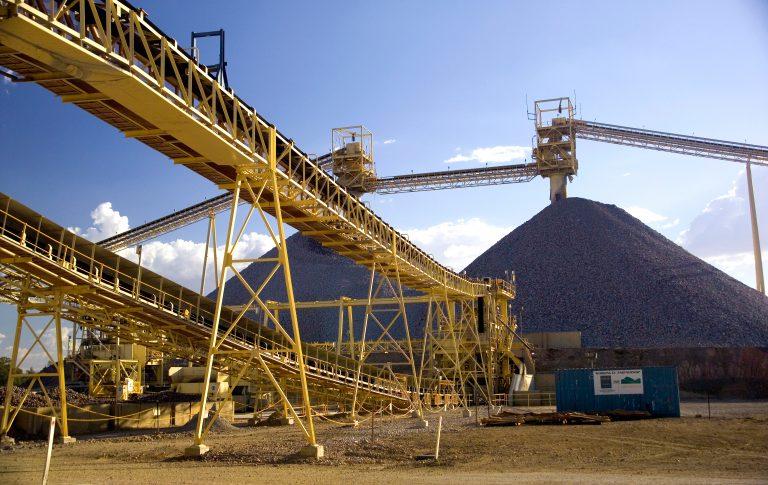
Caledonia Mining (LON:CMCL) have told shareholders that they have increased their holdings in the Blanket gold mine.
Caledonia initially held a 49% stake in the mine and this deal was approved in November 2018, however was only cleared last November following regulatory approval.
The firm on Tuesday told the market that it has increased its holding to 64%, which will please shareholders.
The miner will be paying $16.7 million to partner Fremiro Investments Pvt Ltd.
Caledonia is paying in both shares and the cancellation of a loan between Fremiro and Caledonia. Fremiro will have a 6.3% stake in Caledonia following the sale.
Steve Curtis, Chief Executive Officer, said:
“I am pleased to report that the Company has concluded its transaction with Fremiro to increase Caledonia’s shareholding in Blanket to 64 per cent. I would like to thank Fremiro for its support as a shareholder in Blanket during the last seven years and am confident that Fremiro, now as a significant shareholder in the Company, will continue to be supportive of Caledonia’s business going forward.”
Caledonia grow from strength to strength
Last week, the firm saw their shares bounce following record production figures from its Blanket Mine.
The mine produced 16,875 ounces of gold in the last quarter of 2019, a record for the firm. The figure was 24% higher than the quarter before and 13% higher year-on-year.
The firms total production in 2019 was 55,182 beating internal guidance which was pitched between 50,000 and 53,000 ounces.
The fact that Caledonia have increased their stake in the Blanket Mine following record production figures last week, is an impressive accomplishment and the firm will hope that the production can continue throughout 2020.
Looking to 2020, the Jersey-based company sees gold production between 53,000 ounces and 56,000 ounces. Curtis said: “I am delighted to report a production record at Blanket of 16,867 ounces in the fourth quarter. An improvement in the electricity supply and vigilant focus on grade control and production tonnage have resulted in an excellent production result for the final quarter of which our entire operational staff can be justifiably proud.Shares in Caledonia trade at 651p (-0.50%). 21/1/20 13:43BST.
Update: Stock Spirits hit back at Western Gate over dividend dispute

UPDATE: In a statement this afternoon, Stock Spirits have had their say.
“We have a strategy of both organic and M&A-driven growth which, as our recent full year results show, is driving a strong financial performance and is enabling us to pay consistently increasing dividends in line with our stated dividend policy,” said Stock Spirits in a statement.
“There is nothing erratic about this policy. As we have consistently said, we continue to assess a range of more meaningful and value-creating M&A opportunities in both existing and new categories and markets, but if such opportunities are not realised then we will of course consider making additional shareholder distributions.”
“It is our view that payment of a special dividend now would act as a significant constraint on our ability to execute on our strategy, which we firmly believe is the best way of improving returns for our shareholders,” the company continued.
Stock Spirits (LON:STCK) have faced public criticism from one of their largest investors, in the form ofWestern Gate.
Portuguese investor, Luis Amaral voiced his opinion to the board of Stock Spirits demanding that the firm pay a special dividend.
Western Gate own 10% of Stock Spirits, and the firm has previously said to Stock that they want a higher dividend paid.
Both the firms appear to be in lockdown, however Stock are set to host their annual general meeting in February where stakeholders will get their say.
Stock Spirits does not have to pay the special dividend even if shareholders vote for it, the company has noted, adding such a payout would limit its ability to grow both organically and through acquisition.
Western Gate said “Furthermore, given Stock Spirits’ performance and after the payment of a special dividend, the company would still have EUR70 million available for new acquisitions. This demonstrates the company has comfortable headroom to reward shareholders and conduct meaningful M&A.
“Given the lack of meaningful progress in acquiring profitable assets since 2015, there is a case for the company to reward shareholders’ patience and to re-set the capital structure. We believe the company should focus its capital allocation on shareholders, core markets, and products, rather than the current erratic acquisition track record.”
“Western Gate is a long-term shareholder in Stock Spirits, and we are generally pleased with the improvement in the company’s operational performance,” it continued.
“However, for several years we have felt the company is being run in the best interest of the board rather than all shareholders. We are concerned with governance following the unprecedented response to resolution 20. We feel the board should recognise the lack of meaningful growth and the long-term nature of its acquisitions and return capital to shareholders”.
Why the special dividend?
Stock Spirits in December, gave shareholders a very impressive update which caused the dispute over the price of the dividend.
The firm updated shareholders by saying it had delivered a year of good growth as its successful strategy of pre-imiumisation continues to make progress.
Stock Spirits said said for the financial year ended September 30 its revenue rose 9.2% to €312.4 million from €282.4 million in a comparative period a year ago.
Another impressive figure which caught shareholder interest was that pretax profit had risen 24% from €282.4 million to €312.4 million.
The company increased its annual dividend by 5.1% which would have put the icing on the cake for shareholders.
The dividend saw a 5.1% rise from €8.51 a year ago to €8.94, which is certainly impressive when you look at the global market state.
Certainly, the reasons why Western Gate want the higher dividend is a good one.
Stock Spirits have performed impressively however, the firm will want to make sure that this issue is resolved swiftly before any escalation occurs.
Shares in Stock Spirits trade at 215p. 21/1/20 13:09BST.
PetroTal set to invest $99 million into Peru to expand production across 2020
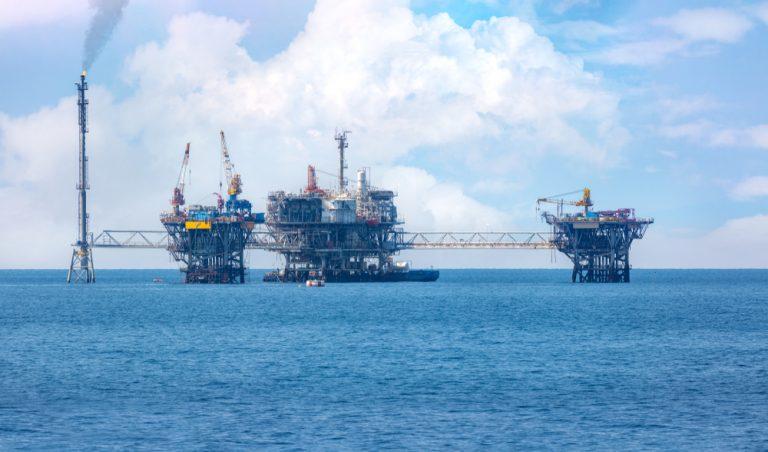
Petrotal Corp (LON:PTAL) have told the market that they are looking to expand their operations and production in Peru.
The firm said in the Tuesday update that they will set aside a budget of $99 million for work across 2020, as the hungry nature of the firm shines through.
The firm alluded to their new capital program, saying that it will allow them to be a “free cash flowing company”.
Petrotal hopes that this new injection of funds will allow the firm to achieve its production target of 20,000 barrels of oil per day from the Bretana oil field based in Peru by the end of 2020.
The firm outlined its target production over 2020 of 13,500 barrels per day which would be a significant rise from the 2019 figure.
Notably, fourth quarter average production was 7,757 per day and the new targets will certainly impress shareholders.
It has four horizontal production wells planned as well as a second water disposal well. Each well will cost around $13 million, with the water well costing $9 million.
Manolo Zuniga, President and Chief Executive Officer, commented:
“We are pleased with the success the Company has achieved to date developing the Bretaña oil field and plan to build on that success in 2020. PetroTal’s Board has approved the 2020 capital budget which is similar in scope to last year. and we are confident in our ability to execute it. With each new well drilled, we better understand the underlying reservoir, thereby enhancing our confidence in continued, focused growth in our two Peruvian blocks. The current and expected oil production levels provide a solid base which optimizes our cost structure and generates significant funds from operations.
Building on the 2018 goal of putting the original oil well online in just five months, 2019 became a successful catalyst year for determining the oil fields’ capacity for strong organic growth. 2020 is the year we expect to grow into a Company with long term production and cash flow stability. PetroTal remains committed to bring about a beneficial change for the populations within its scope of influence in the region. I sincerely thank the entire PetroTal team and Board, as well as all our shareholders, for their continued support.