Consort Medical shares dip following modest update

1

Consort Medical plc (LON: CSRT) have seen a dip in their shares following a modest update to shareholders on Tuesday afternoon.

Consort is a leading global contract development and manufacturing organization providing advanced delivery technologies, formulation and manufacturing solutions for drugs.

Shares of Consort Medical dipped 0.48% to 1,040p. 3/12/19 12:27BST.

A few weeks back, shareholders saw their shares rally following a deal that flirted with the idea of a potential takeover with Sweden based Recipharm AB (STO: RECI-B).

Analysts in the market considered the nature of the proposed £505 million deal, following the move by Swiss rival Rocge Holding Ltd taking over US firm Promedior.

Today, Consort said that interim profit was bruised due to an incident at its Aesica Cramlington manufacturing facility.

Consort’s pretax profit for the six months ended October 31 was £1.2 million, far less than the £9.6 million profit posted the year before as revenue fell 4.3% to £146.0 million from £152.5 million.

This was primarily caused by the Cramlington incident, in which a small area of the Northumberland-based operating plant was damaged in what was described by Consort at the time as “the rapid thermal degradation of a chemical resulting in the expulsion of material and contamination of the facility”.

The incident also dampened the performance of its active pharmaceutical ingredients and finished dose manufacturing unit, Aesica who saw revenues fall from £90.9 million to £81.1 million an 11% slump.

Consort Chief Executive Jonathan Glenn said: “The board’s expectations for the full year remain unchanged. We anticipate that the group’s performance in the second half of the year will benefit from continued growth in Bespak, recommencing manufacture of the specific product involved in the Cramlington incident and a reduction in the backlog at Aesica.

“The group is subject to a recommended offer from Recipharm Holdings Ltd. The board remains confident of Consort’s future prospects.”

On Monday, in the pharmaceuticals industry Yourgene gave shareholders a confident update, alluding to strong growth and high expectations.

As the pharmaceuticals industry becomes ever more saturated, a strong end to financial 19 will be required in order to please shareholders. With the support of Recipharm, there should still be a renewed optimistic vibe within the firm.


Takeaway.com accuse Prosus of scaremongering in ongoing Just Eat saga

1

Takeaway.com NV (AMS: TKWY) have accused Prosus (JSE: PRX) of scaremongering on Tuesday as the battle for the acquisition of Just Eat (LON: JE) continues to heat up.

The story of Just Eat has been spiraling news headlines for a while now, and in the most recent saga at the end of November, it appeared that both parties from takeaway.com and Just Eat looked to push a deal amid market pressures.

However, the persistence of Prosus (JSE: PRX) has stopped the two firms agreeing a deal, as Prosus have expressed strong interest in the FTSE100 listed Just Eat.

In the initial deal proposed at the end of July, Just Eat shareholders would get 0.09744 Takeaway.com shares for each Just Eat share held, which valued Just Eat at 731 pence per share based on Takeaway.com’s closing share price on July 26 of €83.55.

The bid submitted by Prosus showed a 20% appreciation to Takeaway.com’s offer.

On 25th November, Just Eat told shareholders to back the deal submitted by Takeaway.com and neglect the substantial £4.9 million bid that was proposed by Prosus.

Today, it seems that Prosus have used anticompetitive practice in an attempt to scare of competition.

Takeaway.com on Tuesday said it “believes Prosus has made a number of statements which should be seen as scaremongering in an attempt to persuade shareholders to sell out and accept Prosus’s low-ball cash offer.”

Jitse Groen, Takeaway.com’s chief executive, said: “Prosus has made a number of claims over the last few weeks in an attempt to make its highly opportunistic cash offer for Just Eat appear more attractive. It persistently makes contradictory assertions about large future investment requirements and significant risks for shareholders in remaining invested in Just Eat, while itself wanting to assume those apparent costs and risks.

“Our strategy, management team, operational capability and perfect geographic fit make us the ideal partner for Just Eat. The all-share merger with Takeaway.com gives Just Eat shareholders the ability to participate fully in the value creation opportunity. Takeaway.com’s management team has a proven track record and decades of experience within the online food delivery sector, which contrasts with Prosus who have never operated a business within it.”

The comments come as familiar reading following statements from Cat Rock Capital Management LP, who said on Monday that Just Eat shareholders would be better accepting the deal proposed by takeaway.com rather than from Prosus, who recently spun off from Naspers (JSE: NPN).

Cat Rock holds 17.7 million shares in online takeaway platform Just Eat, equivalent to a stake of around 3%. On Monday it sent an open letter to Just Eat’s shareholders, urging them to accept the Takeaway.com merger, and had every right to voice their interests seeing the size of their contributions in Just Eat.

Alex Captain, founder & managing partner at Cat Rock, said: “The Prosus offer of 710p per share is not remotely close to our assessment of fair value for Just Eat. We think a Prosus bid needs to be at least 5.0 times 2020 consensus revenue, or 925p per share, in order to compete with a Takeaway.com merger that we believe could comfortably be worth 1,200p per share by the end of 2020.

Captain also said that while Cat Rock is pleased Just Eat received a bid from Prosus, the level of the offer has left it “deeply disappointed”. He also lashed out at “a number of claims about Just Eat and Takeaway.com” which Captain said were “aimed at convincing shareholders not to support their merger”.

“If this occurs,” said Capitain, “Just Eat shareholders who choose not to accept the Prosus offer will be faced with the prospect of becoming minority shareholders in a publicly-traded entity with majority Prosus ownership. Therefore with a 50% threshold, Just Eat shareholders could feel compelled to accept a Prosus bid that is substantially below fair value, particularly if merger arbitrage funds continue to increase their ownership of Just Eat stock.

“We urge other Just Eat shareholders to join us in accepting the Takeaway.com offer that the Just Eat Board has unanimously recommended.”

Coro Energy set to sell off Italian portfolio to Zenith Energy

1

Coro Energy PLC (LON: CORO) have announced that they will sell their entire Italian gas portfolio to Zenith Energy Ltd (LON: ZEN) in an announcement made on Tuesday morning.

Shares in Coro Energy fell 4.58% after the announcement to 1.98p, whilst Zenith shares received a 3.11% boost to trade at 2.32p. 3/12/19 11:54BST.

The deal which has been formalized on Tuesday will value at £3.9 million, which led to the reflections in share price movements for both firms.

The initial consideration for the Italian natural gas production and exploration portfolio is £400,000, payable by Zenith to Coro in the form of 6.7 million new Zenith shares priced at 6.0 pence each.

Then, provided the portfolio achieves average daily production of 100,000 standard cubic metres per day on average for four successive months, a up to £3.5 million in Zenith shares will be due to Coro. This production figure represents approximately 590 barrels of oil equivalent per day.

Coro Chief Executive James Menzies said: “As the company continues to focus on the investment opportunities in south east Asia, the disposal of our Italian portfolio removes non-core assets and streamlines our geographic focus. The Italian portfolio requires significant management time and capital expenditure to sustain its production and in-line with our stated strategy, we believe that focusing our resources on the rapidly growing south east Asian market will provide greater opportunity to maximise shareholder value.”

Coro’s Italian operations consist of 100% working interests in four natural gas producing concessions, which are Sillaro, Rapagnano, Casa Tiberi and Bezzecca – as well as one which is development ready and two exploration concessions.

Following “a series of targeted interventions” over the next six to nine months, Zenith expects production from the portfolio to reach 113,000 standard cubic metres per day.

The deal will make Zenith one of Italy’s largest natural gas production operations with total production at 55,000 cubic meters per day.

Zenith CEO Andrea Cattaneo said: “There are a number of opportunities to increase production from current levels in the acquired assets through targeted relatively low-risk well interventions, also present in our existing Italian portfolio. Our newly enhanced technical team and financial resources will enable Zenith to apply renewed focus on its Italian portfolio.”

Separately, Coro announced it is seeking another six-month extension to the long-stop date on its attempted acquisition of a 43% interest in the Bulu production sharing contract offshore East Java.

Operations in the EU gas industry have been faltered over the last few weeks following fracking legislation, and both parties will need to get full regulatory clearance for the deal to happen.

Boohoo shares jump on back of record breaking Black Friday sales

3

Boohoo Group PLC (LON: BOO) have seen their shares jump on Tuesday morning after the firm reported a record number of sales across Black Friday weekend.

Boohoo.com is a UK-based online fashion retailer, aimed at 16–30 year olds. The business was founded in 2006, and had sales in FY2018 of almost £580m. It specializes in own brand fashion clothing, with over 36,000 products

Boohoo have had a very strong financial year, as the firm has seen its profits soar 83% as reported in September.

Once again, Boohoo have pulled it out of the bag in a time where competitors such as Koovs (LON: KOOV) have struggled, where Koovs saw its shares in red last week.

Boohoo said that it saw a record performance over the Black Friday weekend, as trading since the half year period had remained strong.

“Both warehouses have had a strong operational performance,” the online fashion retailer added.

Boohoo said: “Our new brands, Karen Millen, Coast, and MissPap, have been successfully integrated onto our platform. Initial ranges have been very well received, and we continue to broaden our product ranges as we progress our multi-brand strategy.”

In the year to the end of February, boohoo reported 38% growth in pretax profit to £59.9 million, as revenue rose 48% to GBP856.9 million.

Revenue growth across all territories and brands was strong, the company noted, with UK revenue up 37% and international revenue up 64%.

In the industry, competitors have slumped in a time where Boohoo continue to dominate the market.

FTSE100 listed Marks and Spencer (LON: MKS) saw a massive slump in their clothing division in November, which led to a very poor update.

Shareholders of Boohoo will remain confident in the firms ability to constantly produce impressive results in a time of tough trading, certainly shareholders will now look forward to the Christmas and Boxing Day trading periods where it will be likely that once again Boohoo will pull it out of the bag.

NewRiver REIT announce Bravo Inns acquisition

Newriver Reit PLC (LON: NRR) have announced the acquisition of pub firm Bravo Inns on Tuesday morning.

NewRiver REIT plc is a specialist listed real estate investment trust, focused primarily on retail and leisure property. The company owns 33 shopping centres, 25 retail warehouses, 14 high street units and over 650 public houses.

Only a few days ago, the firm announced that it had acquired a new Northern Irish park which caused its shares to spike.

On 25th November, Newriver announced that it had purchased the Lisburn Retail park for £40 million from property rival Intu Properties PLC (LON: INTU).

This was a significant purchase for NewRiver, as the park boasted anchor tenants such as such as Sainsbury’s and B&Q, owned by Kingfisher PLC who had both been through periods of tough trading.

The second merger in a short space of time comes as part of the firms strategy to grow and dominate the real estate market. Today, the firm announced that it had acquired with Bravo Inns for £18 million.

Bravo Inns owns 44 wet-led community pubs – meaning the pub focuses on drinks rather than food – which are mainly situated in north west England, and main competitor includes J D Wetherspoon (LON: JDW).

The acquisition is expected to generate £2.6 million in annualised outlet earnings before interest, taxes, depreciation and amortisation, equal to a yield on cost of 14%, and is also anticipated to be accretive to underlying funds from operations.

“The UK pub sector has experienced a recent revival in transaction activity and, as an early investor into community pubs, we have been tracking the success of Bravo Inns for some time. The transaction will increase our portfolio weighting in community pubs and demonstrates the value of our Hawthorn Leisure platform in identifying acquisitions that can deliver higher yielding sustainable cashflows with scale driven synergies,” said Chief Financial Officer Mark Davies.

The move from Newriver shows an active effort to expand and make a statement on the domestic real estate market, and certainly shareholders will be impressed with what looks like a shrewd bit of business.

Shares of Newriver REIT trade at 188p (+0.11%)/ 3/12/19 11:35BST.

New build homebuyer activity to increase in December

New build homebuyer activity is expected to spike, new research revealed on Tuesday. A new study by Stone Real Estate revealed that the level of new build properties being sold increases as we approach the December period. This contrasts sales across the regular market, which drop in the run-up to the festive season. The figures show that on average, and over the last five years, the number of new build transactions in the month of December makes up 11.9% of total new build transactions across the year. Additionally, December appears to be the only other month – along with June – where new build sales reach double-digits as a percentage of total yearly sales. Another trend identified by the research is that the number of new-build sales drops after June, slowly gaining momentum again as the festive period approaches. “The new build sector doesn’t come under the same seasonal strain when it comes to sales transactions when compared to the existing sector,” Founder and CEO of Stone Real Estate, Michael Stone, commented on the findings. “This is largely because new build sales involve one buyer and on the other side of the coin you have a professional entity that continues to work right up until the Christmas break to get a sale over the line,” the Founder and CEO continued. Michael Stone said: “This should be the case with any good estate agent, however, as there is no lengthy chain to deal with or any of the other complications that can come with an existing property sale, the process is all the quicker. As a result, when the December rush to complete before or just after Christmas hits, the new build sector is much better placed to facilitate a greater number of sales despite the shorter time frame.” “One common misconception is that Christmas is a great time to find a homebuyer bargain and while true to an extent, historically new build house prices tend to stand firm, and in many cases sit higher than many previous months in the year. That said, developers will often include some festive incentives to persuade homebuyers to take the plunge and this, of course, all helps favourably towards their end of year figures.”

Ryanair and Wizz Air release November passenger figures

2

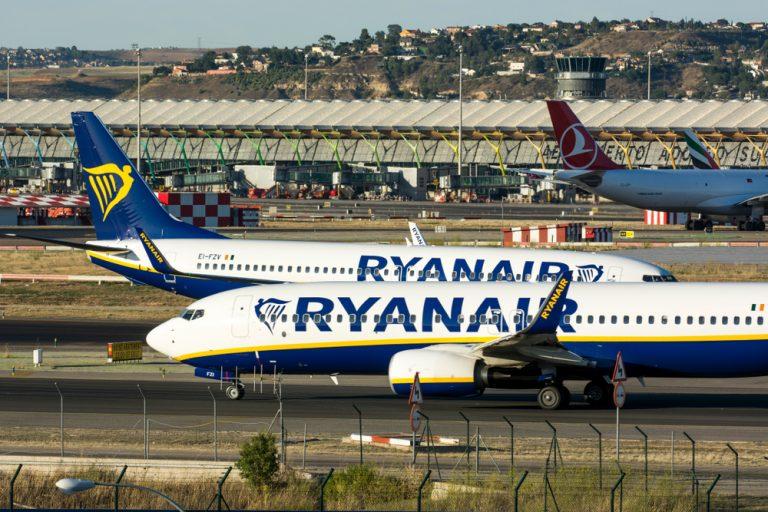
Shareholders of Ryanair Holdings plc (LON: RYA) and Wizz Air Holdings PLC (LON: WIZZ) have seen their shares in green on Tuesday after the firms reported their monthly passenger figures.

Shares of Ryanair currently trade at €13 (+0.35%), whilst Wizz Air shares have seen a 0.025% boost to 3,950p. 3/12/19 11:17BST.

Both firms have seen mixed results, in a time where the airline industry has appeared to be in decline. After the collapse of Thomas Cook in September, firms have been cautious.

At the start of November, Ryanair saw its shares rise despite lower profit expectations narrowing from €800 million to €900 million to €750 million to €950 million.

FTSE250 listed Wizz Air, raised their profit and capacity forecasts, but did not quite spark shareholder optimism as shares stayed in red.

The Irish carrier said group traffic rose by 5.8% to 11.0 million from 10.4 million in November 2018. The figure includes its eponymous Ryanair brand and Austrian airline Lauda.

In the Ryanair division, November traffic rose by 4.0% year-on-year to 10.5 million from 10.1 million and in Lauda, by 67% to 500,000 from 300,000 last year.

Wizz Air reportrefd a November capacity increase of 27% to 3.2 million from 2.6 million, while load factor rose 92.8% to 91.2%.

Available seat kilometres was up by 21% to 5.2 million from 4.3 million and revenue passenger kilometres grew by 4.9 million from 3.9 million in November 2018.

On a rolling annual basis, capacity is up 15% to 41.8 million, total passengers up by 17% to 39.1 million with load factor up 1.3 percentage points to 93.6%.

During November, the Hungarian carrier added 11 new routes, which included 4 in Poland, 2 in Ukraine and 1 in the UK.

While the airline industry gets ever more competitive, it seems that Fastjet (LON: FJET) are struggling to stay afloat. The firm saw its shares crash last week as it considered to sell its Zimbabwe operations.

Despite the apparent increase in passenger figures reported by both firms, it seems that many players in the airline industry are still treading cautiously, and firms may wait for more long term visibility before producing strong results.

European indices bounce back despite Trump’s threat to France

After a sore start to December, the Eurozone were keen on forgetting yesterday’s losses. After the bell, indices across the continent looked determined to live by the mantra of ‘it can’t get any worse’, and subsequently decided to shake off Trump’s overnight threats to implement a series of tariffs on $2.4 billion worth of French goods. And shake off the threats they did, somewhat successfully even. Most of the markets saw some form of rebound, and the French bourse didn’t even end up being the worst-hit casualty of morning trading – that coveted spot was reserved for the FTSE. Perhaps then, while uncomfortable and disruptive, Trump’s threats are just something indices will learn to live with and get used to, and with time, hopefully ignore. Speaking on Trump’s attempts to ruin markets’ fun, Spreadex Financial Analyst Connor Campbell commented,

“Severely stung by Trump restoring tariffs on Brazil and Argentina on Monday, the markets coped surprisingly well with the President’s overnight threat to France.”

“The Trump administration has proposed new tariffs on $2.4 billion of French goods, including typically Gallic fare like cheese and champagne, in retaliation to the country’s new digital services tax, one that quite rightly would hit the wallets of American tech monoliths Amazon, Google and Facebook.”

“Instead of suffering another round of serious losses, the Eurozone markets broadly rebounded. And, to be fair, they have plenty of ground to recover – Monday was a nasty, nasty start to December. The DAX jumped 80 points as it pushed back past 13000, with the FTSE MIB rising 1% and the IBEX up 0.5%. The notable, obvious exception was the CAC, which could only eke out a 0.1% increase; not bad, however, given the situation between the US and France.”

“The French bourse wasn’t even Tuesday’s worst performing major index. The FTSE sank another 0.4% after the bell, falling to a one and a half week low as it was hurt by the troubled state of its commodity stocks and a bounce from sterling.”

“The pound added 0.2% against dollar and euro alike, leaving it at a near 7-month peak against the former and back above €1.171 against the latter. This despite the Tories’ ever-shrinking lead in the polls and the prospect of a terrible, if improved, construction PMI.”

Elsewhere this morning; Nokia Corporation (HEL: NOKIA) announced it would transform Finland’s national grid to support renewables, Solid State plc (LON: SOLI) boasted significant profit growth during the half-year, Centamin PLC (LON: CEY) rejected a merger approach, and retail sales were down during November in a year-on-year comparison.

Ferguson shares dip despite growing US revenue

1

Shareholders of Ferguson PLC (LON: FERG) have seen their shares in red on Tuesday morning, despite a positive update from the firm.

Ferguson plc is a Jersey registered multinational plumbing and heating products distributor with its head office in Winnersh Triangle, United Kingdom. Ferguson has approximately 35,000 employees across three regions. Its brands include Ferguson Enterprises, Wolseley and William Wilson.

Ferguson told shareholders that revenue was up in the first quarter, as it impressed shareholders about expanding market share in the US.

The plumbing and heating products distributor recorded $5.21 billion of revenue in the three months to October 31, up 5.3% on the $4.95 billion seen the year before.

The FTSE100 listed firm saw its group trading profit rise 9.2% to $451 million in the first quarter, with underlying trading profit which excludes a $18 million accounting boost – rising 4.8% to $433 million from $413 million.

“Ferguson continued to take market share against a backdrop of flat US markets, and we remain firmly focused on maximizing organic revenue growth, while tightly managing gross margins and costs,” said Chief Executive Kevin Murphy.

“We are pleased that this disciplined approach enabled us to grow US trading profit in line with revenue growth in the quarter. Cash generation in the quarter was good and our balance sheet remains strong. We will continue to invest organically in our businesses and in selective bolt-on acquisitions which will be integrated into our network.”

Forecasting further, Murphy said: “We expect to make further good progress in the year ahead. While US market growth is currently broadly flat, we remain confident of outperforming our end markets and our order books support continued modest revenue growth in the months ahead. This strong focus on growth with continued cost and margin discipline gives us confidence in our expectations for the full year which remain unchanged.”

In the United States, revenue rose year on year by 6.1% to $4.89 billion, while revenue in Canada fell 5.8% to $315 million.

Ferguson’s UK revenue dropped 2.2% to $541 million, with trading profit down 17% to $15 million. The company said its UK demerger is progressing as planned, and is expected to be completed in 2020.

The company blamed the disappointing quarter in the UK on a backdrop of “uncertainty” in repair, maintenance and improvement markets, where the majority of Ferguson’s UK revenue is generated.

Shares in Ferguson fell 2.79% despite the update, which reflected the appetite from shareholders.

Shares now trade at 6,480p. 3/12/19 10:41BST.

Solid State boasts 61% profit growth during the first half

AIM listed manufacturer of computing, power and communications products, and value added distributor of electronic components, Solid State plc (LON: SOLI) boasted significant progress in its fundamentals during the six month period ended 30 September. The Group’s revenue for the period was £33.6 million, up 43% on a reported and 11% on a proforma basis in a year-on-year comparison. This led a 140bps bounce in the Company’s reported operating profit margin, which was up to 7.1%, alongside a staggering 61% hike in adjusted profit before tax, which shot up to £2.67 million. Solid State shareholders fared similarly well, with the Group’s interim dividend rising 25% on-year to 5.25p per share, and their adjusted diluted EPS spiking 64% to 27.8p.

The Group went on to laud its ‘significant contract wins’ for an order book of £37.8 million as Halloween came around, up 5.3% on-year.

It also added that it had and would continue to benefit from securing an enlarged Microchip franchise, investing in its Weymouth facility and investment in Business Development resources.

Elsewhere in the tech sector, IMImobile PLC (LON: IMO) posted strong half-year results, Wirecard AG (ETR:WDI) secured a partnership with Yeepay, AdEPT Technology Group PLC (LON: ADT) revenues bounced and Infineon Technologies AG (ETR: IFX) enjoyed financial progress.

Solid State comments

Adding insight on the Company’s results and prospects, Tony Frere, Chairman, said,

“I am very pleased to present a strong set of results which will be my last as Chairman of Solid State. In the five years of leading the Board we have worked very hard to build a resilient business with key points of difference in its industry. These record results vindicate our strategy and ensure a strong platform for future growth.”

Investor notes

Following the announcement, the Company’s shares rallied 9.11% or 43.00p to 515.00p per share 03/12/19. Analysts from finnCap reiterated their ‘Corporate’ stance on Solid State stock. The Group’s p/e ratio is 12.90, their dividend yield stands at 2.43%.