Senior shares fall over 9% following 737 MAX production halt

1

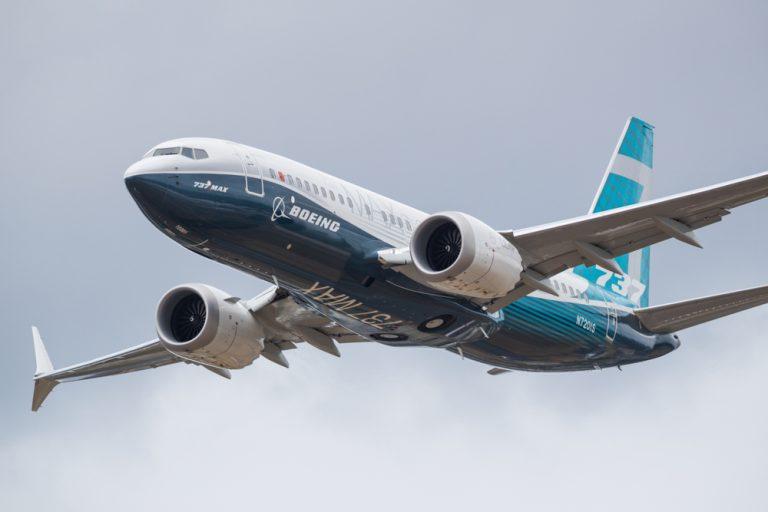
Shares of Senior plc (LON: SNR) have fallen over 9% on Tuesday afternoon, after Boeing (NYSE: BA) announced they would be stopping 737 MAX production.

Senior designs, manufactures and markets high-technology components and systems for the principal original equipment producers in the worldwide aerospace, defense, land vehicle and power & energy markets.

Last week, Senior announced that they would be working with Lazard Ltd on the potential divestment when it was reviewing its strategic options for its Aerostructures business.

Today, Senior said the announcement by client Boeing has sent their shares falling.

The firm tried to reassure shareholders that by saying it will provide concrete clarification in the new year on any performances that may be bruised by the production halt.

Senior said it continues to “work closely” with Boeing as the aerospace manufacturer seeks regulatory approval for returning its best-selling plane to the skies following a pair of fatal accidents.

“Senior will provide a further update on the potential implications to its 2020 performance once it has clarification from its customers,” the company added.

Senior continued: “The board’s expectations for the group’s 2019 performance remains unchanged.”

On Monday, Boeing announced that they will be temporarily suspending production of its its globally grounded 737 MAX jets next month as safety regulators delay the aircraft’s return to the skies after two fatal crashes in Africa and South East Asia.

The Federal Aviation Administration said that it could not approve the 737’s return to serviced before 2020, despite pledges from Boeing that that it could win approval before the year end.

Boeing and the Federal Aviation Administration have been under intense scrutiny and media spotlight for their responses to issues with the aircraft, including the flight-handling system involved in both accidents, the Maneuvering Characteristics Augmentation System.

The 737 Max has been hit under pressure as firms such as TUI (LON:TUI) reported that it may cost it as much as €300 million (£258 million), leading to the issuance of a profit warning when the 737 was grounded as consumers and businesses were hit.

Certainly, Senior will not be the only firm that is affected by this production halt.

Earlier in the year, International Consolidated Airlines (LON:IAG) announced that they ordered 200 737 MAX planes, and with the delay there has been a whole host of customers kicking down Boeing’s front door.

Senior shareholders will have to be patient as Boeing look to find compensation for both consumers and businesses hit by the production halt.

It seems that Senior shareholders were not too pleased however, as shares dipped 9.18% to 169p on the announcement. 17/12/19 13:51BST.
Roche completes $4.3 billion takeover of Spark Therapeutics

2

Roche Holding Ltd. Genussscheine (SWX: ROG) have told the market on Tuesday that they have completed the purchase of gene therapy specialist Spark Therapeutics Inc (NASDAQ: ONCE).

The deal is valued at $4.3 billion and the deal has been formally completed following clearance from the British and US competition authorities, and becomes Roche’s second acquisition in a short space of time following the recent deal with US based Promedior.

Regulators investigated the potential move to ensure that it will not lesson competition in the hemophilia A treatment market, however both the Federal Trade Commission and CMA approved the deal without demanding asset sales.

Roche has purchased US based Spark Therapeutics to expand in gene therapy and boost its market in hemophilia A, where Roche’s existing drug will surpass $1 billion in sales across 2019.

Spark is a relatively young company and has rivals such as Yourgene Health PLC who recently gave shareholders a confident expectation guidance to hit further growth for the full year.

Regulators had feared Roche might sabotage Spark’s hemophilia program to benefit Hemlibra, but came to another conclusion.

“The evidence developed during staff’s investigation did not indicate that Roche would have the incentive to delay or terminate Spark’s developmental effort for its hemophilia A gene therapy,” the FTC said after its 5-0 approval vote.

Regulatory clearance means that Roche will now likely become one of the market leaders in the treatment of hemophilia A.

Roche is making a real statement to the pharmaceuticals market, after the loss it saw in the immune therapies for cancer when both Merck (NYSE: MRK) and Bristol-Myers Squibb Co (NYSE: BMY) eclipsed it recently.

The firm has followed similar line as rivals to make an ensured effort to divulge into the gene therapy market. Notably, industry rival Novartis recently acquired AveXis, hence the move by Roche comes at no surprise, in order to keep up with rivals.

“That’s why the market was increasingly worried that the deal announced in February was taking so long,” said Michael Nawrath, an analyst at Zuercher Kantonalbank.

Roche have agreed to pay more than twice of what Spark’s closing price was, and as of today Roche holds more than 60% of Spark shares.

“Following completion of the merger, Spark will become a wholly owned subsidiary of Roche,” Roche said.

Shares in Roche trade at 303CHF (-0.31%). 17/12/19 13:19BST.

GSK set to rival Johnson & Johnson for multiple myeloma drug

1

British pharmaceutical firm GlaxoSmithKline (LON: GSK) have said on Tuesday that they are seeking US approval for a multiple myeloma drug.

GSK have seen a relatively stable 2019, with the firm reporting strong trading figures throughout the year.

Most notably, GSK reported a lift in their lift in their annual profit forecasts as the firm impressively told shareholders that turnover rose 11% to £9.39 billion in the three months ended Sept. 30 from a year earlier.

Additionally, last week the firm saw its shares boosted as GSK told the market about the submission of a new drug application to the US Food & Drug Administration, seeking approval of fostemsavir, through ViiV Healthcare.

ViiV Healthcare is majority owned by GSK, with rival firms Pfizer Inc and Shionogi Ltd as a minority shareholders.

In similar fashion to last week, GSK said that it had applied for US approval for its experimental multiple myeloma drug which had shown positive results in almost a third of patients.

This certainly is an interesting move by GSK, as rivals Johnson & Johnson (NYSE: JNJ) offer a similar type of drug, which could set up a war between the two pharmaceutical titans.

New data from the treatment, belantamab mafodotin, showed 30 of 97 patients experienced a reduction in their myeloma cells at the end of a mid-stage study, DREAMM-2.

The trial was testing GSK2857916, in patients who had received four to seven prior other treatments, including J&J and Genmab’s (CPH: GMAB) Darzalex.

GSK has submitted a marketing application to the U.S. Food and Drug Administration (FDA) in the 2.5 mg/kg dose. If approved, belantamab mafodotin would be the first anti-B-cell maturation antigen (BCMA) agent available in the United States, the company said.

Belantamab mafodotin targets the BCMA protein in cells characteristic of multiple myeloma – an area of focus for many drugmakers.

Axel Hoos, GSK’s oncology research and development head, said the rate of response – or the number of patients that experience a reduction in myeloma cells – should go up with every earlier cycle of treatment.

“We are pretty confident that we can actually achieve the same (response rates) if not more and eventually even beat Darzalex in some settings,” he said.

Shares in GSK were 0.15% to the good on Tuesday afternoon and trade at 1,766p. 17/12/19 12:57BST

Greatland Gold identify mineralization in Tasmania

1

Greatland Gold plc (LON: GGP) have seen their shares dip on Tuesday, despite reporting gold mineralization in Australia.

A fortnight ago, the firm saw its shares dip in similar fashion. In this update on December 3, the firm said that the results extend the zones of existing high grade mineralization at their licence.

Greatland added that, Newcrest Mining Ltd (ASX: NCM), which carried out the work at Havieron, has finished a $10 million first stage of a farm-in agreement, and a second stage also worth $10 million of expenditure has now begun.

Greatland have said today that further drilling at its wholly owned Firetower project in Tasmania confirmed the presence of additional broad widths of shallow gold mineralisation.

The firm said it completed a systematic grid-based drilling programme at Firetower, comprising 14 diamond holes with depths from 50 metres to 160 metres, for a total of approximately 1,530 metres.

The programme was designed to test the main zone of gold mineralisation and results to date have confirmed broad widths of gold mineralisation, Greatland said.

In addition, two further holes were drilled for around 670 meters to test the new targets identified by a 3D induced polarisation survey at Firetower East, approximately 500m east of Firetower.

Gervaise Heddle, chief executive officer, said: “We are pleased to report a second set of positive results from our recent drilling campaign at Firetower. They show a further improvement in the continuity between drill sections and highlight the potential for a robust, near-surface gold system.”

Back in September, the company had said that initial drill results from Firetower had confirmed “broad widths of gold mineralisation”.

Initial results included 54.5 metres at 1.4 grammes of gold per tonne of ore from surface, including 5 metres at 5.4 grammes per tonne from 45 metres.

Greatland Gold will be pleased that they have reported further positive results, although shareholders do not seem so keen on the announcement following this mornings stock price movement.

Fellow Australian gold miner Resolute Mining Limited have appointed a new CEO yesterday, in an attempt to stimulate business in a tough environment and look to develop discovery and mining operations to keep up with competitors such as Greatland

Resolute appointed Stuart Gale rom Australian iron ore company Fortescue Metals Group Ltd where he was group manager for Corporate Finance for nine years since 2010.

Resolute in similar Fashion to Greatland have seen results and discoveries made in Australia, and both firms will be hoping that operations can be enhanced going into 2020.

Shares in Greatland trade at 1.75p (-3.58%). 17/12/19 12:38BST.

deVere Group CEO gives warning to British business despite Boris Bounce

0
Today, CEO of one of the worlds largest independent financial advisory organizations in deVere Group has given a warning to British business, despite the Boris Bounce and Brexit.

The FTSE 100 saw a very strong start to the week of trading yesterday, as all firms bar four saw their shares boosted across Monday trading.

Dubbed the ‘Boris Bounce” many firms saw their shares rally after the landslide Conservative win on Friday.

Notable winners included the British Banking business sectors where Lloyds shares have jumped 6.4% to 65p on the election results.

Additionally, Barclays PLC shares rallied 7.77% to 185p on Friday, whilst Royal Bank of Scotland Group plc saw their shares spike 10.69% to 257p.

Another noteworthy winner was the homebuilding sector, where many businesses saw shares in green.

Taylor Wimpey saw their shares rally 14.88% to 200p, who happened to the biggest rise on Friday.

Berkeley Group Holdings PLC (LON: BKG) shares spiked 13.06% to 5,102p despite the timid update provided a few days ago.

However, it seems that the optimism from Friday’s election results is beginning to fade as markets restore normality and businesses continue to see their shares up and down.

Nigel Green, chief executive and founder of deVere group said that PM Johnson could spook financial markets in 2020.

Green added that investors must avoid complacency in what still seem to be uncertain times for British business.

Nigel Green affirms: “The decisive win for the Conservatives triggered one of the pound’s biggest ever rallies, the FTSE 250 index of UK shares climbed by 3.6 per cent and the FTSE 100 rose 1.3 per cent. “On Monday, European stock markets reached all-time highs. “This has been driven in part by investors’ relief that a hung parliament had not been delivered, meaning years of uncertainty and indecisions over the UK’s way out of the EU is coming to an end. Also, perhaps, because the Conservatives promised a more pro-business agenda.” He continues: “But Boris Johnson now has the daunting task of turning his powerful election campaign slogan of ‘Get Brexit Done’ into reality. “When Britain leaves on January 31, there will be only 11 months to thrash out the basics of the future relationship with the European Union. “The self-imposed end of December 2020 deadline is a mammoth challenge or Britain will fall through the ‘trap door’ of no-deal Brexit on January 1 2021.” The Prime Minister could request another extension for the transition period. The government has until 1 July 2020 to agree with the EU a one-off extension, until the end of 2021 or 2022. But, says Mr Green, this is unlikely. He notes: “I don’t believe that Johnson will use his significant majority to slow down or soften – the Brexit process. “Instead, his assumption from the election outcome will be that people want quick, easy answers. “Indeed, in an interview on Sunday, Michael Gove guaranteed that the Brexit transition period will not be extended.” He goes on to add: “The task ahead is monumental. The time frame in which to complete it is narrow. Failure to agree a free trade deal by the end of next year will mean the UK crashing out of the EU and all the far-reaching negative economic implications, including the likelihood of a recession. “With such uncertainty, following the election bounce, in 2020 investor confidence in the UK is likely to remain subdued and Boris Johnson’s Brexit stance could be a major source of volatility in financial markets.” The deVere CEO concludes: “Despite the markets currently surging, investors must avoid complacency. “2020 promises to be a year in which political factors – including Boris Johnson’s Brexit plan and the U.S. presidential election, amongst others – could potentially spook markets. “Investors should assess and, where necessary, rebalance their portfolios to take advantage of the potential opportunities and to mitigate the risks.” The risk to investors is still present, and despite some of the clarity which has been given following the UK election results, many issues are still cloudy. As Brexit negotiations will continue to unfold as the newly elected Conservative Government tackles these issues, the market will be cautious as nothing is certain as of yet.

Hunting hedge their bets on December performance to meet annual results

0

Hunting PLC (LON: HTG) have said that they expect annual profits to remain within their current market expectations, but are dependent on results in December.

Hunting manufacture premium, high end downhole metal tools and components required to extract hydrocarbons across the well construction, completion and intervention stages of the well’s lifecycle.

Shares in Hunting were bruised on Tuesday morning after the announcement, and trade at 383p (-6.19%). 17/12/19 11:47BST.

Hunting saw their shares in red a the end of October, as the firm speculated on lower profits following a US drilling slowdown.

The FTSE 250 listed energy company said that its third-quarter underlying profits had dropped below the $35 million and $42.4 million it had boasted in the first and second quarters respectively.

Again the firm today has seen its shares in red, as the firm hedged its bet on a solid December performance to allow it to meet guidance.

Hunting said, as anticipated, activity levels within the North American oil and gas industry continues to slow, with the pace of decline increasing in the US onshore market.

Further, the oil and gas contractor said “exhaustion” within its client base together with seasonal declines are hurting its fourth quarter results and “certain clients have closed facilities serving the US onshore sector due to the slowing market”.

Hunting added that operating profit and revenue in both October and November were below the average rate for the third quarter of the financial year due to the “slowing and highly competitive” US onshore market.

Hunting however did reassure shareholders saying that it continued to trade well and remained cash generative.

It expects to have around $110 million of cash at the end of the year, with $45 million of lease liabilities – resulting in a $65 million net cash position.

Hunting allude to the offshore and international oil market facing a slowdown, however there was a return to growth as Hunting Electronics business reported firm results.

Looking ahead to 2020, the company said: “At this time early announcements from Hunting’s publicly quoted clients indicate that capital spend in the year ahead will be lower than 2019, as the oil and gas industry endeavours to improve returns and increase cash generation for investors.”

In similar fashion to Hunting, fellow American operator Active Energy have seen their operations have stops and starts over the last week.

The firm said that it had begun it commercial production in Lumberton, North Carolina after the North Carolina Department of Environment & Natural Resources is continuing to review its application to operate.

At a time where oil prices continue to be volatile, and market trading is being hampered by both political and economic variables shareholders will hope that Hunting can pull out a strong set of results in December.

Trainline keeps its annual guidance as sales rise

1

Trainline PLC (LON: TRN) have given shareholders a positive update saying that they are keeping their annual guidance.

Trainline saw their shares dip at the start of December, as Jeremy Corbyn and the Labour party announced travel policies to rival Trainline.

The Daily Mail reported that the Labour government would would create a ‘one-stop shop’ for rail passengers to buy tickets online without booking fees, the Mail reported without citing its sources.

This came as part of Labour’s business and travel policy where it was also mentioned that it had intentions to nationalize BT (LON: BT.A) in an attempt to win voters.

However, looking back now knowing the election result it seemed that neither of these policies won voters.

Today, Trainline reiterated their annual guidance as the firm continued to deliver strong growth in ticket sales and revenue.

Within the nine months to November 30, Trainline’s climbed 26% to £198 million, with UK revenue up 22% to £178 million and International rising 90% to £20 million.

Revenue from the UK consumer segment climbed 31% to £133 million, though Trainline for Business revenue in the UK was flat at £45 million.

Trainline did note there was a slowdown in the third quarter of its year as large corporations cut discretionary travel spending.

Trainline offers a rail and coach ticket purchase platform saw net ticket sales of £2.86 billion within the none months, seeing an 18% climb year on year.

In the UK, net ticket sales were up 14% to £2.47 billion, with International climbing 49% to £390 million.

UK consumer net ticket sales rose 24% to £1.54 billion, with business sales rising 2% to £930 million.

Trainline praised the development of online ticket sale growth driven by demand from mobile users, as customer shift from paper to e-tickets.

Chief Executive Clare Gilmartin said: “We continued to deliver strong growth in the third quarter of the financial year while we focus on our mission to make rail and coach travel easier for customers worldwide, encouraging a much greener way to travel.

“We are on track to deliver our plans for the full year and will continue to invest both in the UK and internationally to deliver the significant growth opportunities for Trainline in the year ahead.”

Trainline remained optimistic for its guidance encompassing its financial year, which ends in February.

Trainline are now performing well in a market which is appearing to be in a period of tough market trading, as evidenced by rival FirstGroup who saw their shares in red as the firm considered selling their North American operations yesterday.

Shares of Trainline trade at 507p (-0.59%). 17/12/19 11:38BST.

Bunzl optimistic to meet expected revenue growth in tough market

1

Bunzl plc (LON: BNZL) have said to firms that they have remained optimistic to meet expected revenue growth in a tough market.

Despite the optimism, it seems that shares in Bunzl have remained in red on Tuesday.

Bunzl shares trade at 2,085p (-0.71%). 17/12/19 11:12BST.

Bunzl is one of the biggest British outsourcing companies, having specialist international distribution services all across the world. The firm is a main stay on the FTSE 100.

Bunzl yesterday had seen their shares in green, as the firm seemed to benefit over the Boris Bounce.

Bunzl saw their shares rise the third largest in the FTSE100, just behind Glencore (LON: GLEN) and British American Tobacco (LON: BATS) however all three of these firms saw their shares boosted by over four per cent.

It seems that the election bounce has now ended for Bunzl, as the firm said that it was on track to meet revenue growth figures however weak economic conditions were weighing down on trading.

Bunzl expects revenue for 2019 to rise by 2% with revenue at constant rates rising by 1%. Underlying revenue, London-based Bunzl noted, is set to be flat on 2018.

The firm saw a dip in its underlying revenue back in October, within its third quarter update and the firm alluded to economic conditions being a constraint on trading globally.

Shareholders will remain optimistic however, as the firm did announce the acquisition of Fire Rescue Safety Australia, which distributes specialist fire safety and personal protection equipment.

Chief Executive Frank van Zanten commented: “FRSA has a market-leading position in the provision of emergency response solutions in Australia and further expands and develops the scope of our operations there. We are delighted to welcome their employees to the group.”

“The group’s expectations for the year 2019 remain unchanged with overall trading consistent with the slowing underlying revenue growth indicated in previous announcements this year due to the impact of the continued mixed macroeconomic and market conditions across the countries and sectors in which the Group operates,” said Bunzl.

In the tough operating market, it does seem that Bunzl are doing well and having had a track record of fighting market slumps, shareholders can remain positive for future outlook.

Unilever shares crash following profit warning and Asian slump

1

Unilever (LON: ULVR) have seen their shares in red, as it gave shareholders a gloomy outlook for their annual results.

Unilever have seen a turbulent time of trading in 2019. In October, the firm saw its growth slump in both India and China, which alerted shareholders.

Unilever revealed an underlying sales growth of 2.9%, with 1.4% from volume and 1.5% from price. Meanwhile, turnover grew by 5.8% driven by sales growth.

Just a month on, the firm made a new Chairman appointment in Nils Andersen.

Andersen was brought into the firm to tackle the slowdown in Indian and Chinese business, having had experience working with AP Moller Maerskv , Carlsberg A/S and as a non executive director at BP.

Unilever today have seen their shares crash, as the firm reported that underlying sales growth will fall short of guidance due to economic slowdown in South Asia and tough trading conditions in West Africa.

The FTSE 100 listed firm initially had expected underlying sales growth in the lower half of its 3% to 5% multi-year range. However, it now expects underlying sales “slightly below” this guidance.

The main reason that Unilever alluded to this change was the challenges in the quarter in some markets”, including continued trouble in west African markets and a slowdown in south Asia, one of Unilever’s biggest markets.

Chief Executive Alan Jope said: “Due to challenges in certain markets, we expect a slight miss to our full year underlying sales growth delivery.

“Looking ahead to 2020, growth will be second-half weighted. While we expect improvement in H1 2020 versus this quarter, we expect that first half growth will be below 3%. Our full year underlying sales growth is expected to be in the lower half of the multi-year range.

“Growth remains our top priority and we are confident we have the right strategy and investment in place to step up our performance.”

Shares in Unilever crashed 5.03% to 4,397p on the announcement. 17/12/19 11:03BST.

Lloyds & RBS put under stress after failing Bank of England Test

3

Two of Britains biggest banks in Lloyds (LON:LLOY) and Royal Bank of Scotland Group plc (LON:RBS) have seen their shares dip after failing the UK’s most rigorous banking test.

Both the British banks had seen their shares in green since Friday, as the firms continued to ride a wave of optimism following PM Johnsons election win dubbed the ‘Boris Bounce’ by analysts.

However, today the picture is slightly more worrying for both of the British banks.

Both banks passed the Bank of Englands annual assessment in the balance sheet department.

However, plans to double a 100 basis point capital buffer designed to protect lenders in depressed economic conditions could put both bank’s 2020 share buyback plans in jeopardy, analysts said.

“Given we have not seen an acceleration in credit growth, we conclude this is being put in place to be, for lack of a better word, a “Brexit buffer” as the Bank of England has now determined that a 2% buffer is more appropriate in a “standardised risk environment,” Jefferies analyst Joseph Dickerson said.

The increase in the countercyclical buffer is seen likely to lead to a reduction in core tier 1 capital requirements by a similar amount, allowing major British lenders to absorb up to 23 billion pounds of losses in a downturn without restricting lending, as Reuters reported.

But near-term goals to deliver more than a billion pounds of shareholder rewards via a buyback bonanza must now be considered “best case”, according to analysts at KBW.

Lloyd’s have already been put into bad media spotlight earlier this year. The firm faced public scrutiny when they received criticism over the treatment of victims within the HBOS fraud scandal.

Certainly, this will do no favor to either firm especially at a time where the global banking industry and firms such as Lloyds and HSBC (LON: HSBA) have seen their profits take a bruising.

Certainly, being a big player in the banking industry does often lead to a lot of media coverage both good and bad, but not passing the Bank of England stress test may alert both senior management and shareholders.

Shares in Barclays dipped 4.29% to 249p. 17/12/19 10:49BST.

Shares in Lloyds fell further by 5.49% to 63p. 17/12/19 10:50BST.