Balance sheet Vertu

A decline in interim profit at motor dealer Vertu Motors (LON: VTU) marks the progress that the company is making. It is highly cash generative and has a strong balance sheet.
In the six months to August 2019, revenues were nearly 6% higher at £1.6bn, with like-for-like growth of 2.3%. Underlying pre-tax profit fell from £18.1m to £17.1m, if the effect of IFRS 16 is excluded.
This has been achieved at a time when car sales are declining, and the used car market was also more difficult in the period – although it has got better since. Vertu has been particularly successful in growing is fleet sales. Aftersales revenues continue to grow and margins improved because of a change in the way that Ford parts are accounted for.
There was a boost in van sales because of regulatory changes on 1 September, so some second half sales were probably generated in the first half.
Pound Slumps amidst Brexit uncertainty

The UK Pound has seen a slump to its lowest level in over a month amidst Brexit uncertainty. The Pound dropped to its lowest point against the Euro and Dollar since early September.
As the deadline for Brexit looms, the pound has fluctuated amidst speculation on Britain’s stance in the European Union.
Only a few weeks back, the pound surged to its highest value against the Euro in four months. This was after the Supreme Court concluded Johnson’s closing of Parliament was illegal. However, this was only a temporary surge.
Since Boris Johnson’s attempts to negotiate a deal with Angela Merkel, the Pound dropped by about half a cent against the Euro trading at €1.1132, whilst seeing a similar drop against the Dollar to $1.2225 today. David Madden, a currency analyst on twitter questioned whether there would be a further drop to 1.2205.
After the news came out stating a deal was “overwhelmingly unlikely”, the Pound traded 0.47% lower against the Dollar. John Goldie, a currency dealer at Argentex explained that “The pound has lost ground against all the major currencies over the course of the day so far – only the Canadian dollar has performed worse in the last week.” With much ambiguity left in the Brexit negotiations, the political climate may only add pressure to the Pound. Petr Krpata, the chief European currency strategist at the Dutch bank ING, said the pound could still fall below $1.20 against the dollar. “There is plenty of room for weakness,” he said. Whether Brexit gets pushed through by the end of October, there will still be much uncertainty in the exchange rate of the Pound. Amidst a revoke or no deal battle, the pound is still yet to face many fluctuations as seen in the last year. The Pound is set to face its toughest challenge later this month as PM Johnson attempts to strike a deal with the EU.Angela Merkel says Brexit deal ‘overwhelmingly unlikely’$GBPUSD pushes lower, next stop 1.2205? pic.twitter.com/OGhTdYJFvN
— David Madden (@dmadden_CMC) October 8, 2019
Hong Kong retracts on decision to bid for LSE

Plans for the takeover for the London Stock Exchange (LON:LSE) by the owner of the Hong Kong stock exchange have fallen apart as the group withdrew their £32 billion bid.
Almost four weeks from when the board of the London Stock exchange immediately rejected the proposed bid, the outcome of further negotiations showed determination not to let the London Stock Exchange fall into rival hands.
Charles Li, the chief executive of Hong Kong Exchanges & Clearing (HKEX) cited a line he attributed in a blog post “We only regret the chances we didn’t take”.
There were reports of many disagreements between the Hong Kong Exchange & the LSE’s shareholders. These included regulatory scrutiny, the feeble bid and the rising political tensions between China and Hong Kong.
However, this may prove beneficial for the London Stock Exchange in the long term. This clears the path for the LSE to go ahead with their proposed £21.9 billion deal to buy Refinitiv, a global provider of financial markets & institutions data.
Consequently, the shares in the London Stock Exchange slipped by 6% to 6995p.
This was around the same price as when the initial approach was made. However, shares recovered during the session as they moved up to 7,020p.
HKEX described this opportunity as “strategically compelling and would create a world-leading market infrastructure group”. However, the two boards failed to meet eye to eye.
The LSE Chairman, Don Robert described the challenges in this takeover. Political tensions in Hong Kong along with Chinese Governmental Pressure all added to the falling through of this deal.
Michael Hewson described the move “Even if HKEX had decided to up their offer, the deal was of questionable merit, given the problems in Hong Kong right now, along with the exchange’s management structure, which raised concerns about Chinese possible government influence.”
The move by the HKEX to take over the London Stock Exchange was brave. The bid at £32 billion was surely undervalued. As the HKEX already owns the London Metal Exchange as bought in 2012, it seems the reluctance of the LSE to make this deal happen has both political and financial motivations.
The HKEX joins a long list of failed takeovers by foreign investors of the LSE. Whilst institutions such as NASDAQ, Intercontinental Exchange of the USA & Deutsche Boerse have all bid for the LSE, it seems there is still a reluctance for an international merger with an overseas stock exchange.
In current affairs, there have been updates to Facebook (NASDAQ: FB).
GVC upgrades full year profit guidance, shares up
GVC (LON:GVC) upgraded its profit guidance range on Wednesday.
Shares in the sports betting and gaming group were up during trading on Wednesday morning.
The owner of the Ladbrokes brand increased its core profits forecast, predicting that they will now lie in the range of £670 million – £680 million for the full year.
Online gaming revenue increased 12% in the third quarter, GVC added.
“I am delighted that the Group’s financial performance has allowed us to upgrade our full year EBITDA expectations again,” CEO Kenneth Alexander said in a company statement.
Indeed, the profit guidance upgrade is GVC’s second this year.
In addition to the Ladbrokes brand, which is one of the most recognised in the UK, GVC also owns Coral and bwin.
The Coral brand has become synonymous with UK betting, whilst bwin is one of the leading online betting brands in Europe.
“Online momentum remains strong across all major territories, with NGR up 12% in the quarter despite the prior period containing part of the World Cup,” the CEO added.
“This performance continues to be driven by our industry-leading technology, products, brands, marketing capability, and people.”
“The launch in September of the BetMGM app in New Jersey, powered by the GVC technology platform, is a key milestone, and our US sports-betting joint venture with MGM Resorts remains very well-placed to capitalise on the US sports-betting opportunity. The integration of the Ladbrokes Coral businesses is progressing well with the migration of the Ladbrokes, Coral and Gala online brands due to commence in Q4 and complete by the end of H1 2020.”
GVC added that it is in the process of finding a successor to its current Chairman Lee Feldman. It said that it expects to make an announcement before the end of the year.
Shares in GVC Holdings plc (LON:GVC) were trading at +2.95% as of 11:04 BST Wednesday.
Trump imposes new visa regulations further fueling trade war

Donald Trump has just played his next hand in the economic feud between China & USA as a response to the treatment of Muslims in the Xinjiang Region.
The US President announced Chinese tourists would face further regulation in an escalation of the trade war.
Furthermore, the US Government plans to blacklist over 28 public security entities & officials following breaches of surveillance & detention legislation.
“The US calls on the People’s Republic of China to immediatly end its campaign of repression in Xinjiang, release all those arbitrarily detained & cease efforts to coerce members of Chinese Muslim minority groups” said Secretary of State Mike Pompeo.
A spokesmen from the Chinese Ministry replied aggressively saying “We strongly urge the U.S. to immediately stop making irresponsible remarks on the issue of Xinjiang” and to “stop interfering” in “China’s internal affairs, and remove relevant Chinese entities from the list of entities as soon as possible”
This is an interesting move by Trump, and the timing seems contentious. High stakes trade talks are meant to be commencing in Washington on Thursday.
Whilst the two biggest economic superpowers go head to head in a damaging trade war, it seems that no party is willing to give any middle ground.
This decision may also affect the ability for Chinese businesses to invest in the US, whilst US Exports to China may stagnate.
Following this legislation, many US stocks faced sharp drops as investors faced a period of uncertainty.
Notably, the S&P 500 dropped 1.6% to 2,893.06. Whilst the Nasdaq Committee fell slightly further by 1.7% 7,823.78.
The impact of the US-China Trade war seems to have affected future forecasts for GDP between the two nations, with GDP slipping by 0.7% & 1% respectively between 2021 – 2022.
Whilst Trump seems to be meddling with Chinese Foreign Affairs, he has also had a say in the battle of sovereignty between Hong Kong & China.
In an attempt to advocate humanitarian rights for Muslims in Xinjiang he may have just further hindered opportunities to settle this enduring trade war. However it will be seen on Thursday as to how negotiations commence in Washington.
Hays Travel acquires Thomas Cook’s UK retail stores
Hays Travel agreed on Wednesday to acquire 555 Thomas Cook (LON:TCG) stores around Britain.
Indeed, the collapsed travel company’s entire UK retail estate will be purchased by Hays Travel.
The country’s largest independent travel agent will also provide re-employment opportunities to a “significant number” of Thomas Cook’s retail workers.
News emerged at the end of September that the British global travel group, Thomas Cook, had collapsed, leaving thousands of British holiday makers stranded abroad.
Many took to Twitter to share their thoughts to customers stranded abroad and Thomas Cook staff.
The Civil Aviation Authority said that it will launch a new process for what is set to be the largest ever ATOL refund programme for Thomas Cook customers.
Hays Travel said in a statement that up to 2,500 jobs at the collapsed travel company could be saved as a result of the deal.
“This is an extremely positive outcome, and we are delighted to have secured this agreement,” Jim Tucker, Partner at KPMG and Joint Special Manager of Thomas Cook’s Retail division, commented on the deal.
“It provides re-employment opportunities for a significant number of former Thomas Cook employees, and secures the future of retail sites up and down the UK high street,” Jim Tucker continued.
“We are pleased to have achieved this in a short time frame and in the context of a complex liquidation process, which is testament to a lot of hard work from a number of parties.”
“Over the weeks ahead, we will work closely with Hays Travel and landlords to ensure a smooth transition of the store estate.”
David Chapman, Official Receiver, added that “I am pleased to announce we have reached an agreement with Hays Travel to acquire Thomas Cook’s entire UK retail estate, comprising 555 stores across the country”.
“This represents an important step in the liquidation process, as we seek to realise the company’s assets.”
Consumer demand for new homes falls as Brexit uncertainty weighs

Consumer demand for new homes dropped by 8% over the last year, new data on Wednesday revealed.
The Federation of Master Builders’ House Builders’ Survey showed that consumer demand for new homes fell to its lowest level since 2013.
The report found that 48% of small house builders blame the fall in buyer demand on a lack of consumer confidence.
Indeed, Chief Executive of the Federation of Master Builders, Brian Berry, said that Brexit uncertainty was weighing on consumer confidence.
“Small house builders are starting to see the effects of Brexit uncertainty taking its toll on consumer confidence,” the Chief Executive said.
“Many prospective homeowners are clearly holding off buying until there is more political and economic certainty,” the Chief Executive continued.
“Hopefully this is just a short-term pause, and that post-Brexit, demand will pick up once again. If not, and we enter a downturn period, the Government will need to consider how best to support SME house builders to avoid many firms leaving the sector.”
Indeed, as the nation has entered the final month of the Brexit deadline, the only certainty that prevails is additional uncertainty.
In other sectors, the UK new car market was also hit by Brexit uncertainty as it similarly weighed on consumer confidence – new data revealed earlier in October that the new car market declined in the first nine months of the year.
The Chief Executive of the Federation of Master Builders continued to add that “the main barriers facing small house builders have started to ease but they are still present”.
“This is the fifth consecutive year that small house builders have cited lack of access to available and viable land as the number one barrier. Small sites are the bread and butter of SME development, but unfortunately local authorities’ Local Plans are still far too focused on large sites.”
JLEN renewable infrastructure leads the way in making the ethical profitable

You’d have to be living under a rock, or some other equally weighty and soundproof implement, to not be aware of climate activist Greta Thunberg and the uproar caused by the unshakeable extinction rebellion. Greta laments elites and corporations alike, for focusing wholly on myopic ‘economic growth’ without any concern for the long-term implications of quarterly profit maximization. And to some extent she’s right to do so. Regardless of whether you like her message (or indeed her presentation), she highlights a wider structural inability within modern society: to reconcile market interests and socio-political obligations. A plethora of approaches have been offered to address this dilemma, the bulk of which focus either on adjusting consumer habits or government regulation – both of which are at worst untenable and at best disruptive. Alternatively, some companies have taken it upon themselves to act as the engines for change, though this has more often-than-not boiled down to little more than symbolic or shallow fads to peddle their respective marketing narratives. The subject of this article – JLEN (LON: JLEN) – provides a means of ameliorating short-term economic gain and larger-picture thinking, with a business model that makes the ethical, profitable.
With such a forthright opening, it’s only right I try to qualify my claims by sharing what I’ve learned. Some weeks back I had the pleasure of speaking to Chris Tanner and Chris Holmes, both of whom are involved with JLEN in an investment advisory capacity. In the most concise manner possible, Tanner told me the Company is,
“A diversified environmental infrastructure fund.”
They invest in an assorted portfolio of environmental infrastructure assets, which currently include; onshore wind, solar, waste management and waste water, run-of-river hydro (with co-located battery) and anaerobic digestion assets. I stress that ‘currently’ is the optimum word. Not only because JLEN has continued its efforts to branch out with recent acquisitions in the two latter-mentioned sectors, but because the Company have said further diversification is within its remit.
Diversification is key
This theme of diversity is something of a motif, not only within JLEN’s portfolio, but within its business model. I could repeat the word one hundred times over and I still wouldn’t be able to emulate the enthusiasm Tanner and Holmes conveyed in regard to this approach. Setting out the Company’s strategy, Tanner stated, “diversification means no one risk predominates. It gives us a good spread of risks. We have a high level of fixed price index linked revenues, and that in turn underpins our dividend.” With a view to continue the variation of their portfolio in future, the Company are currently excited about the potential returns of their anaerobic digestion offerings, including their recent Warren acquisition. “We think it offers a very good risk-return profile and a good opportunity to enhance the value of those assets,” said Holmes. He continued, “Where we can, we’d like to pick up some more assets in that sector. But we think there are other asset classes out there, for example biomass and energy from waste, that are of interest to us.” Already, then, while lauding the potential of their recently expanded anaerobic digestion offerings, the Company are already contemplating a presence in sectors such as biomass. Tanner explained that this asset class could prove favourable, not only on account of its straightforwardness and subsidy backing, but also the fact that JLEN has the opportunity to access the developed biomass assets listed on a first offer agreement it has with John Laing – all factors which combine to make this sector an ‘exciting investment opportunity’. Further, when asked about whether the Company would entertain an expansion into geothermal energy, Tanner stated that it was “within mandate”, but that JLEN is ultimately focused on expanding into what it deemed to be tried and tested asset classes. Geothermal energy will have to gain scale and post some encouraging yields before enticing this Company, then. After all, maximising the return on not-yet-commercial assets by spreading your risk base, only works if you don’t buy haphazardly into risky assets. Tanner summarised it perfectly, “We aim to be ‘steady as she goes’, which is why we invest in assets with a track record […] and support the dividend promise which is still a major feature for our investors.” Going forwards, the Company will explore more options following its change of financial advisor, to Foresight, earlier in the year. Additionally, it will look to involve itself more heavily outside of the UK, with a pipeline of potential assets amounting to around £200 million, with this predominantly being made up of wind assets.Dividends and risks
Alongside its asset strategy, one of JLEN’s major selling points is its inviting income potential. Due to the quality of its assets, the Company was able to pay a full-year dividend of 6.51p with a current cover of 1.2. This is forecast to increase to 6.66p for the full-year 2019/2020, which would represent a generous yield of around 5.60%. The Company identified one of the main risks posed to it fulfilling this target as being, like any energy-focused actor, their exposure to wholesale power prices. The fact that JLEN relies upon renewables appears more of a virtue than a vice, at least in the short term. On the one hand, Tanner pointed out, “Low wind speeds, low solar radiation, lower crop yields. These are all things that have an impact,” however, he went on to say that, “because we’re diversified, we’re not overly exposed to any one of these risks.” Further, their diversity means that they’re not left quite as stranded by volatile power prices, as some of their energy counterparts. For instance, Tanner pointed out that their anaerobic digestion assets’ revenues are largely made up of subsidies and feed-in-tariffs. Thus, aside from having different asset classes making money, the Company somewhat shields itself from volatility by having revenue streams coming from different sources. What is even more interesting though – and surprising given that “less than 1%” of its assets are overseas – is that that JLEN isn’t particularly fazed by the UK’s current diplomatic situation. In fact, Tanner said, “We don’t see any first order issues from Brexit, particularly from a disorderly Brexit. As a second order issue, we can speculate that if Brexit had a strong impact upon FX rates and the Sterling depreciated, you may see that come through in higher UK domestic electricity prices. Because the margin generator (the price setter) does tend to be gas, and gas is imported either in Euros or dollars, that may actually be a positive for funds like ourselves with UK-generating assets. That’s the main risk out there at the moment and it’s not one we see as particularly negative for us.” So, without being cynical and shorting the failure of other companies or the market itself, JLEN still sees Brexit as an opportunity. Can it get any better?Environmental and social added value
Actually, yes. Aside from offering what its track record shows as a consistent source of income, JLEN goes one step further by adding value to wider society, in the form of the social and environmental impacts of their operations. The Company predicted that each year, their assets produce an estimated 520 GWh of energy, which is equivalent to some 140,000 homes having their electricity and heading needs fulfilled. What this level of renewables implementation means in terms of emissions, is an avoidance of 370 kilotons of CO2 equivalent from being created, which equates to the effect of having 170,000 cars taken off the road. If that wasn’t enough – and demonstrative of the Company’s commitment to environmental ends – JLEN buys UK woodland tree planting carbon credits in order to offset the carbon emissions from all flights between their headquarters in Guernsey and their offices in London. Now, while a renewables infrastructure company lauding its eco-friendly merits may not seem too unsurprising, the Company’s commitment to social surplus should be applauded. Going beyond the mutualised business structure of old, where all parties involved would have a say and a stake in the business, JLEN commits to putting money back into the communities where it has a presence. In the full-year 2018/2019 alone, the Company delivered £350,000 worth of funding to local communities. This manifested near one of its anaerobic digestion sites, as heating units for residential care homes and funding for scout equipment. Near one of its wind assets, this materialised as a much-needed extension to the village hall and a refurbishment of local sports facilities. If by this point, you’re thinking JLEN offers a model for business conduct which should act as a benchmark for all those that follow, I would be hard-pressed to disagree. It’s almost alien to the senses to think something profitable can also be (for want of a better word) so wholesome, but the Company are fully aware that what they offer is something to be excited about. “For some people it is absolutely not enough just to say ‘this is a good financial investment’. They want to know what the impact is and whether their money is ultimately being channelled into something that’s doing good” Tanner told us. In turn, you could say the Company acts as an ideal case study for ethical investment. For those shying away from trading on the basis of moral queries, JLEN could offer the perfect solution. You know your investment is not only going to make money, but that it will help further the worthwhile causes the Company is committed to supporting.Renewables gaining scale
Aside from further expansion and hopefully more of the same, what does the future hold for companies such as JLEN, and will renewables surpass oil? “Its difficult to comment on oil per se” responded Holmes, “I think what we can talk about is government aspirations – the most recent one being net zero by 2050 – which in itself requires a huge expansion in the amount of renewable generation that’s on the system at the moment.” “The obvious place for that in terms of the scale required would be offshore wind, and you can see that already taking place with further tender rounds being released and the size and the scale of those assets would help to bridge some of that gap.” “I think the desire to get to that net zero target will stem the tide of renewables being rolled out.” The company think the likelihood of listed pure play renewable funds becoming more commonplace in the near future, is dependent upon the speed and scale at which unsubsidised wind and solar ventures become investable. Tanner added that this is already the case in some places in the UK, and that the question then becomes – will it only become investable in certain, very specific locations (in positions with high wind speed, an industrial user close to the site)? For now, though, we wish JLEN every success going forwards, as it treads the path which many of its counterparts could do little better than to follow. The Company has provided a means of tackling contemporary dilemmas in a way that is profitable, and can only wait as everyone else catches up. Elsewhere, there have been renewable energy updates from; Scottish government policy, Active Energy Group PLC (LON: AEG), Velocys PLC (LON: VLS), AFC Energy plc (LON: AFC), John Laing Environmental Assets Group Ltd PLC (LON: JLEN), SIMEC Atlantis Energy (LON: SAE), Aquila European Renewables Income Fund (LON: AERI), PowerHouse Energy Group (LON: PHE) and SIMEC Atlantis Energy (LON: SAE).The Scottish government should lean towards renewables to power prosperity
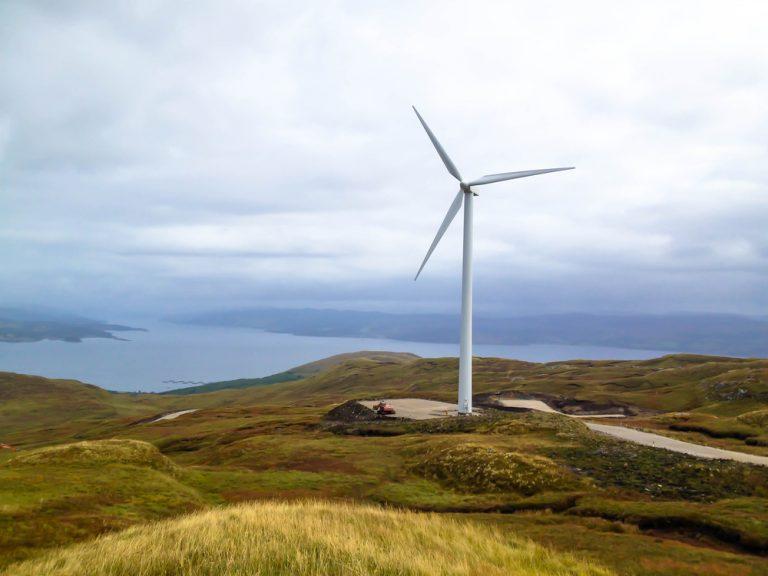
Scotland is currently a shining example of a clean energy policy taken seriously. By 2016 it had completely outstripped England, with almost 86% of its electricity coming from clean sources (renewable and nuclear – both around 43% apiece), compared to under 44% in England, and 25% or lower in Northern Ireland and Wales. By 2018, it was producing 26,408 GWh of renewable energy, which comprised 74% of its total electricity demand. Based on that trajectory, Scotland is well on track to fulfil its promise of achieving 100% renewable sufficiency for its electricity supply, by 2020.
Aside from the inevitable challenges it will face, and the coinciding criticism, the efforts of the SNP government should be lauded, and should act as an example upon which other Western countries should model themselves.