
Update: Brexit sends Pound into hysteria

The Pound has fluctuated massively in the early hours of Thursday trading. Following the events of Brexit, and uncertainty over PM Johnson’s approach to the EU, the exchange rate has been sent into frenzy.
As the Brexit deadline looms, market traders have been observes major fluctuations in the value of the Pound amidst reports of a deal being completed.
This morning Jean Claude-Juncker, told media officials that a deal was on the table and close to being completed.
Along with this, Angela Merkl described negotiations in the ‘final sprint’ phase, sparking trader optimism.
Analyst Kim Mundy, with Commonwealth Bank of Australia speculated further rises in the value of the Pound stating “The EU’s leader’s Summit begins today. Market participants are waiting for confirmation (or otherwise) that the EU and the UK have reached a new Withdrawal Agreement. News of an EU‑UK deal today could see GBP/USD hit a fresh five‑month high above 1.3000.”
The Pound spiked as high as 1.2990 against the US Dollar, peaking its highest level since May, however this may not be completely set in stone after the DUP commented saying negotiations were stalling.
However, a variety have now said that the deal will not be completed and has been held off.
Disagreements in the trade deal along with the rejection by the Northern Ireland Democratic Party (DUP) which supports the Conservative majority in Westminster have led to disagreements.
The DUP leader Arlene Foster said the EU sources cited by RTE were talking “nonsense” and that discussions were ongoing.
In a written statement Foster said “We have been involved in ongoing discussions with the Government. As things stand, we could not support what is being suggested on customs and consent issues and there is a lack of clarity on VAT.”
Foster added “We will continue to work with the Government to try and get a sensible deal that works for Northern Ireland and protects the economic and constitutional integrity of the United Kingdom.”
Market traders are currently caught up about when to buy the pound, as speculation ebbs and flows about a potential deal being completed.
As a result, this morning the pound surged valued at $1.29 for first time since May on reports that Brexit negotiations were progressing.
The British Pound has been up and down since talks commenced one week ago.
Stephen Gallo, European head of foreign exchange at BMO said “”A deal between the UK and EU was 60% in the price [of sterling] and now we stand to see if the remaining 40% come into play,”
News just in has reported that PM Johnson has agreed a ‘great deal’ for the UK, this involves a deal which appeases the EU and takes back control in the UK.
The two sides will continue to work on legal intricacies of the deal, but awaits the approval of both UK and EU Parliament.
With this renewed optimism on Brexit negotiations, the Pound has been quick to fall and surge in one of the most volatile periods in recent political history.
The Pound has been trading at near highs in recent months, and analysts are suggesting that the Pound should stay supported over the coming hours.
The fluctuations this morning confirm how volatile the Pound is on Brexit negotiations, and further fluctuations can be expected during the day.
Quek Ser Leang, a currency market analyst with United Oriental Bank in Singapore said “While the current rally is overbought, it is too early to expect a sustained pull-back. There is still room for further GBP strength but the pace of any advance is likely to be slower”
Further updates will provided as news from Number 10 and Brussels comes in, and there is expected to be further volatility in the Pounds value across coming weeks.
A prior update has been provided by the UK Investor Magazine.
In other current affairs, new stories have been about the London Stock Exchange (LON:LSE), Thomas Cook (LON:TCP), Facebook (NASDAQ: FB), Amazon (NASDAQ: AMZN) and Huawei (SHE: 002502)
Unilever growth slows in India and China
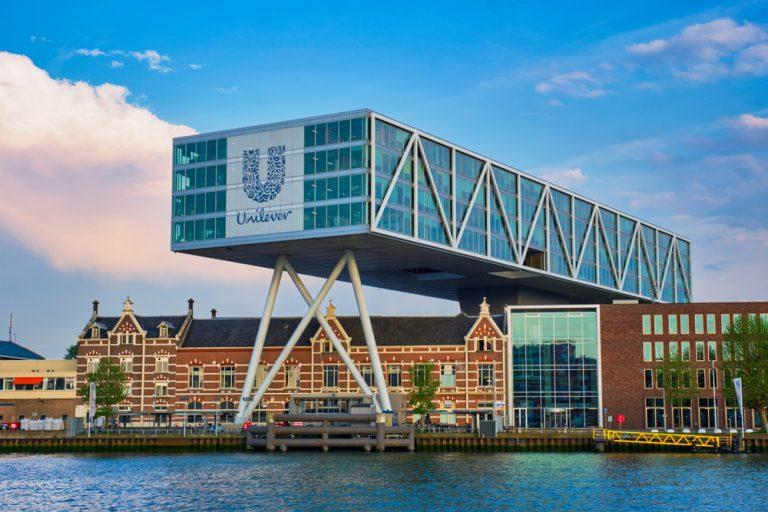
Unilever said on Thursday that third quarter growth continued to soften in India whilst slowing down in China.
Shares in the consumer goods company (LON:ULVR) were up during trading on Thursday morning.
Unilever revealed an underlying sales growth of 2.9%, with 1.4% from volume and 1.5% from price. Meanwhile, turnover grew by 5.8% driven by sales growth.
Underlying sales growth missed an average forecast of 3% from a company supplied analyst consensus, according to Reuters.
Beauty and Personal Care underlying sales were up 2.8%, Home Care increased 5.4% and Foods and Refreshment rose 1.7%.
“We have maintained momentum in the quarter, with a good balance between volume and price,” Alan Jope, CEO of Unilever, commented on the results.
“We will step-up competitive top line performance through innovation and portfolio evolution to serve the faster growing geographies and channels.”
“We are committed to delivering superior long-term financial performance and balanced, compound growth of the top and bottom line through our sustainable business model,” the CEO continued.
Alan Jope said that the company is “taking action to remain relevant to the consumer of the future, such as setting stretching goals on plastic use which we recently announced”.
“For the full year, we continue to expect underlying sales growth to be in the lower half of our multi-year 3-5% range, an improvement in underlying operating margin that keeps us on track for the 2020 target and another year of strong free cash flow.”
The consumer goods giant revealed in its half year results in July earlier this year that poor weather had hit its ice cream sales in Europe and North America.
It posted a stronger-than-expected growth in its underlying sales for its first quarter.
As for its full year 2018 results, the consumer goods business said it had seen continued profitable growth despite the “volatile” market conditions.
Shares in Unilever plc (LON:ULVR) were up trading at +0.92% as of 10:47 BST Thursday.
Pound drops as DUP threatens Boris Johnson’s Brexit olive branch
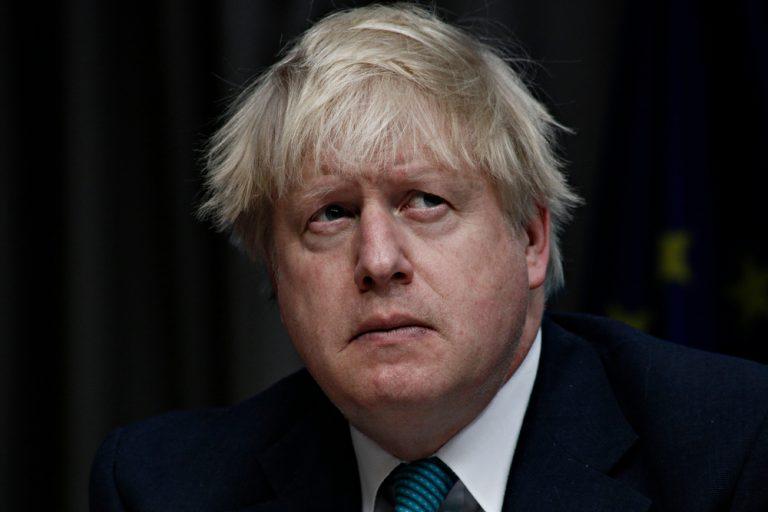
Prime minister Boris Johnson’s task at the EU summit just became a great deal more onerous, following a statement issued by the DUP this morning. After seemingly appearing on the brink of compromise, the prime minister will now enter talks in Brussels in the knowledge that he is to all intents and purposes, going to have to think on-the-fly, lest he find himself back to square one, as far as the deal-making process is concerned. The DUP are concerned about customs, consent and VAT, and even if Boris manages to ameliorate these issues, he will still have the ‘level playing field convention’ to hash out with the EU, on the employment and environment standards he seems loathed to guarantee. On these developments, the Pound and FTSE fell after the bell.
Speaking on market opening movements, Spreadex Financial Analyst Connor Campbell commented,
“It is going to be one of those days. As Boris Johnson heads to Brussels for a crucial 2-day summit, the DUP have made his trip much trickier.”
“The Northern Ireland party issued a statement this morning stating they ‘cannot support what is being suggested on customs and consent issues’ and that there is ‘a lack of clarity on VAT’. That means either Johnson needs to compromise further, the EU needs to accept the DUP’s demands, or the DUP themselves need to back down. The party did end its statement claiming it will ‘continue to work with the Government to try and get a sensible deal that works for Northern Ireland’, so progress is still possible. It just might need an extension to allow a deal to blossom.”
“Firmly strapped onto the Brexit rollercoaster, the pound tumbled following the DUP’s comments, shedding 0.4% against dollar and euro alike. That fall keeps the gains from this week intact, but takes it from yesterday’s fresh 5-month highs. Not that sterling will necessarily remain in the red; it opened in much the same way on Wednesday, only to end the session up thanks to the positive – but clearly not positive enough – Brexit chatter.”
“Like with Tuesday’s jobs data and Wednesday’s inflation figures, it is hard to see the latest UK retail sales reading meaning much to the pound. Nevertheless, it is expected to rise from -0.2% to -0.1% month-on-month.”
“Despite the pound being in an emotionally unstable place, the FTSE was unable to capitalise on the currency’s losses, instead starting Thursday flat at 7170. This as the Eurozone indices saw a muted open, with the DAX and CAC slipping 0.1% and 0.3% respectively.”
Other news has come from; Elsewhere in political and macro economic news, there have been updates from; Michel Barnier saying a deal is still possible, UK economy looks likely to avoid recession, Hong Kong protester shooting and China’s strategy, the Supreme Court rules against Boris, the collapse of Thomas Cook (LON: TCP), the bid for the London Stock Exchange (LON: LSE), Lloyds Banking Group PLC (LON: LLOY), Barclays (LON: BARC) and Deutsche Bank (ETR: DBK).Domino’s Pizza to quit international operations

Domino’s Pizza Group announced in a third quarter trading update on Thursday that it will end its international operations.
Shares in the pizza delivery chain (LON:DOM) were up during trading on Thursday morning.
It said that though the financial results have stabilised, international system sales remain “disappointing”.
“Although the financial results have stabilised, the performance of our international business remains disappointing,” David Wild, Chief Executive Officer, commented in a third quarter trading update.
“Over the past six weeks we have completed a review with external consultants, assessing each of our four international markets and the future prospects for our businesses,” the Chief Executive Officer continued.
David Wild said that the company has “concluded that, whilst they represent attractive markets, we are not the best owners of these businesses.
Domino’s Pizza will therefore “exit the markets in an orderly manner”.
The pizza delivery chain, which posted a 3.4% rise in group system sales, added that 12 stores opened in the UK and ROI in the third quarter.
UK online sales were up by 7.2%, whilst ROI online sales increased by 9.9%. Domino’s Pizza said that online now makes up 90.9% of delivery sales.
The company is continuing to sear for a new CEO, it added. Meanwhile, a search process for the new chair has started.
The Chief Executive Officer said that the businesses “delivered a solid performance in our core UK and Ireland markets, with system sales up 3.9%, against a market backdrop that remains challenging”.
“Normal working practices continue to be impacted by our franchisee dispute. As we said at our interim results, this situation is complex and we expect a resolution to take time, certainly into 2020.”
Earlier this year in August, it was revealed that Domino’s Pizza had spent £7 million to stockpile ingredients in the event that a no deal departure from the European Union disrupts its supplies.
Shares in Domino’s Pizza Group plc (LON:DOM) were trading at +3.7% as of 10:16 BST Thursday.
Angling Direct accquires Eric’s Angling Centre

Angling Direct Plc (LON: ANG) gained a boost during afternoon trading on Wednesday. This followed news that Angling Direct had bought Eric’s Angling Centre in a cash deal.
The deal was valued at £1.1 million as Angling Direct stampede their influence in the British Angling market.
Eric’s reported revenues of £5.2 million in 2018 and looks like a sound investment for Angling Direct.
After this purchase Angling Direct will own 31 stores in England, having stated that by the end of the financial year the target was 34 and this looks set to be achieved.
The fishing superstore have announced plans to rebrand and renovate many stores including the Farlows Lakes Store, whilst merging two stores in Leeds.
With these aims, there is a hope to accelerate the stores progress by consolidating the local retail selection.
Angling Direct’s Chief Executive Darren Bailly said “Erics is a premium business and that the company looks forward to welcoming its thousands of regular customers. Our strategy is to consolidate this highly fragmented market, delivering economies of scale and broadening our access to new customers through an increased retail footprint.”
Bailly also added “I also welcome the staff to the group. With their knowledge and experience, they are a valuable addition to Angling Direct and we will support them fully through the integration.”
Following the news of the acquisition, the share price of Angling Direct rose 2.52% higher, trading at 61p per share.
Eric’s angling own two stores in strong angling communities, and Angling Direct saw this opportunity to expand market dominance.
Steve Blow of Eric’s Angling commented on the move “It gives me great comfort to hand over the business, which I have assisted in building over the last 30 years, to Angling Direct”
Blow concluded “Whilst continuing to provide industry-leading products and excellent, reliable service, I believe Angling Direct will further enhance our customers’ retail experience. It has everything an angler could ask for, be it online or in-store.”
After operating for over thirty years, Eric’s saw this as potential to join forces with an angling superstore to widen customer base.
In wider retail news, updates have been provided on Laura Ashley Holding Plc (LON: ALY), Dunelm Group Plc (LON: DNLM), Amazon.com Inc (NASDAQ: AMZN) and Huawei (SHE: 002502).
NAO: risks to the UK border out of government’s control

The risks to the UK border in the event of a no deal Brexit is now, to a certain extent, out of the government’s control, a report on the nation’s preparedness for Brexit found on Wednesday.
The National Audit Office said that, though government departments have done a significant amount to prepare, the largest risks to the smooth operation of the border prevail and “resolving them is now, to some extent, out of government’s control”.
As the nation approaches the Halloween Brexit deadline at the end of the month, uncertainty over the future of the UK remains.
The National Audit Office said that the exact fate of the border in the event of a no deal departure from the European Union is not certain. However, the disruption of goods crossing the border and queues for businesses and the public are expected to occur.
“Preparing the UK border for EU exit with or without a deal is extremely complex and has required a huge amount of work from many government departments, agencies and third parties such as traders,” Gareth Davies, head of the National Audit Office, said in a statement.
“Despite their efforts, significant risks remain which may have consequences for the public and businesses,” Gareth Davies continued.
“Government will face new challenges in monitoring and responding to any disruption that may ensue following a no deal exit, and will need to replace temporary measures with sustainable long-term solutions to ensure the border is fit for purpose.”
On Wednesday the GBP/USD rose to a five-month high amid hope for a Brexit deal. The GBP/USD was trading above 1.28, which is the highest since May.
Signify agrees to buy US based Cooper Lighting Solutions

Signify NV, (AMS: LIGHT) have agreed to buy Cooper Lighting Solutions solutions from Eaton Corp (NYSE: ETN) for $1.4 billion in cash.
The acquisition is the largest by Signify, the former Phillips lighting before they companies parted ways.
This forms part of an intention to strengthen its market position in North America.
Signify said the deal would add to earnings per share, and lead to cost savings of $60 million annually within three years.
The deal is expected to be completed in the first quarter of 2020, subject to regulation and approvals.
Cooper reported sales of $1.7 billion in 2018 and earnings before tax, interest and depreciation of $187 million.
Signify have also stated the intention to keep dividends consistent, and shareholders will only see a rise after the acquisition.
The main focus will be to reduce the debt of the combined company, as one of the short term goals was identified.
However, two major benefits have bene identified by Signify. The first said that Cooper will boost its revenues from 42% to 53% of total sales.
The firm also concluded that the takeover will deliver $60 million, in savings for the first three years of the deal. Those savings derive from cost synergies in materials, supply chain and sourcing optimization.
Eric Rondolat, CEO of Signifiy said “Today’s announcement confirms the strategic importance of the North American market for Signify. This acquisition will substantially strengthen our position in this attractive market”
Rondolat added “We look forward to welcoming the team from Cooper Lighting. They have built a highperformance company based on professionalism, truly innovative offers and a long and strong relationship with their customers. We share a genuine passion and single focus for Lighting and a successful track record in innovation. We will join forces to further develop connected lighting and provide our customers with the highest level of service while optimizing operational efficiencies.”
As a result, Signify have seen a 2.38% rise in their share price, trading at €24.47 per share, whilst Eaton Corporation Plc saw a smaller increase of 0.11% trading at $82.27 per share 16/11/19 15:11 BST.
In the technology sector there have been updates to Facebook Inc (NASDAQ: FB), Castleton Technology Plc (LON: CTP) and Huawei (SHE: 002502).
Huawei sales increase 27% after strong Q3

Huawei Technology (SHE: 002502) produced a fine third quarter, seeing sales increase by 27% after smart phone sales surged.
The strong sales were driven by a surge in shipments from China launched before the blacklisting by the US, following the trade war.
Huawei is the world’s biggest producer of telecom equipment, and the second largest manufacturer of mobile phones.
Following the tensions of the US China trade war, President Trump banned all US involvement with Huawei disrupting the supply of production parts.
The recent release of the ‘Mate 30’ lacks access to a licensed version of Google’s (NASDAQ: GOOGL) Android operating system.
In a report released on Wednesday, the tech titan announced revenue figures of 610.8 billion yuan. This was a 24.4% increase across the first three quarters of 2019.
Revenue in the third quarter, which ended in September totaled 165.29 billion yuan according to Reuters calculations based on statements from Huawei.
Nicole Peng, Vice President from consultancy Canalys said “Huawei’s overseas shipments bounced back quickly in the third quarter although they are yet to return to pre-US ban levels. The Q3 result is truly impressive given the tremendous pressure the company is facing. But it is worth noting that strong shipments were driven by devices launched pre-US ban, and the long-term outlook is still dim.”
Huawei boasted their strong shipping figures of 185 million smartphones this year, according to analytics this shows a 29% rise in Q3 shipments.
According to these statistics, the legislation imposed by Trump has failed to stop Huawei revenue growth.
A company stated gave the following insight “”Huawei has maintained its focus on ICT (information and communications technology) infrastructure and smart devices, and continued to boost the efficiency and quality of its operations. This contributed to increased operational and organizational stability and solidified the company’s performance in the first three quarters of 2019.”
In addition, US firms such as Intel Corp (NASDAQ: INTC) and Micron Technologies Inc (NASDAQ: MU) found alternate paths to supply parts to Huawei.
Huawei have managed to be successful amidst US pressure, growth does look to be sustainable as tensions between China and US ease.
If a trade deal can be struck up, then Huawei will find it a lot easier to sell more smartphones on a larger scale and can expect higher gross revenues.
In the technology sector, there have been updates to Facebook Inc (NASDAQ: FB), Blue Star Capital Plc (LON: BLU) and Castleton Technology Plc (LON: CTP)
Alexion set to buy Achillion Pharmaceuticals

US based Alexion Pharmaceuticals (NASDAQ: ALXN) are set to buy Achillion (NASDAQ: ACHN) in a reported $930 million deal.
This will stampede Alexion’s dominance in the pharmaceuticals market for treating rare blood disorders.
Alexion has offered $6.30 per Achillion share, and including extra contingencies rise up to $8.30 per share.
Alexion faced a tough financial year in 2018, where several members of senior management resigned and a scandal involving sales practice of its top drug Soliris.
Soliris, Alexion’s flagship product is used to treat genetic disorders brought in in $3.56 billion revenue in sales last year, accounting for 86% total revenue.
Following the success of Soliris, Alexion have increase their medical portfolio by winning US approval for its successor Ultomiris.
Ludwig Hantson, Chief Executive Officer of Alexion commented “Alexion has demonstrated the transformative impact that inhibiting C5 can have on multiple rare and devastating diseases. However, we believe this is just the beginning of what’s possible with complement inhibition”
Hantson also added “Targeting a different part of the complement system – the alternative pathway – by inhibiting Factor D production addresses uncontrolled complement activation further upstream in the complement cascade, and importantly, leaves the rest of the complement system intact, which is critical in maintaining the body’s ability to fight infection. We believe this approach has the opportunity to help patients with diseases not currently addressed through C5 inhibition. We look forward to applying our nearly three decades of complement and development expertise to unlock the potential of oral Factor D inhibitors and bring these benefits to patients.”
As a result, shares of Achillion Pharmaceuticals rocketed during premarket Wednesday trading by 82%.
Today, Achillion has traded at $3.65 whilst Alexion saw a 3.42% increase trading at $104.81 16/10/19 13:40BST.
Despite a strong financial performance last year, shares of Alexion are low due to concerns about similar versions of Soliris being produced by competitors.
Joe Truit, President and Chief Executive Officer at Achillion said “We have established great momentum – discovering and advancing several small molecules into clinical development that have the potential to treat immune-related diseases associated with the alternative pathway of the complement system. Alexion is an established leader in developing medicines for complement-mediated diseases, and we look forward to working together to accelerate our objective of bringing novel therapies to patients as quickly as possible and ensuring that the broad promise of this approach is fully realized. We thank our employees, investigators and partners for their incredible work and commitment”
The immediate plan by Alexion to buy Achillion Pharmaceuticals will benefit shareholders of Achillion.
As shares are being offered at $6.30, this has the potential to rise very quickly if goals and objectives are met.
This will also add to the portfolio of Alexion and increase market dominance in treating rare blood disorders.
In the health sector, there have been updates to RA Pharmaceuticals Inc (NASDAQ: RARX), TekCapital (LON: TEK) and Yourgene Health Plc (LON:YGEN).
Barratt Developments show slow sales in update

Barratt Developments (LON: BDEV) reported lower sales and a fall in the value of homes sold in their trading update.
The midlands based home developers struggled to achieve medium-long term as forward sales were down in value.
With this change, Barratt Developments have swung in delivering low cost homes to recover ground lost.
Shares in Barratt Developments fell by 1.76% trading at 671p 16/11/19 12:26 BST.
David Thomas Chief Executive commented “We have started our new financial year well, with a good sales rate and a healthy forward order book. As the only major housebuilder to be awarded a 5 Star rating for customer satisfaction for ten years in a row, we continue to lead the industry in quality and customer service.”
Thomas added “Whilst there is economic and political uncertainty, we continue to be disciplined and have a strong balance sheet and cash position which we believe provide us with the resilience and flexibility to react to potential changes in the operating environment in FY20 and beyond. We maintain our focus on the delivery of operational improvements across our business, and our commitment to deliver the highest quality homes across the country.”
Once again, the property market has been hit by shocks amidst tensions with Brexit negotiations, and future speculation is hard to comment on.
UK House Price Growth has been leveling out for months as buyers worry about longer term shocks following Britain’s position with Brexit.
Efforts have been made by Barratt Developments to reduce costs, including changes of design of the houses they build, reduction of roof pitch and height houses along with reduced exposure to London.
Russ Mould, investment director at AJ Bell (LON: AJB) said “Barratt is still talking about achieving ‘margin improvements’, crucially without compromising quality – or in other words without building lower calibre houses
“Either Barratt has found an approach that has eluded its rivals or it seems likely shareholders will face disappointment at some stage” Mould concluded.
Barratt have said they expect the volume of house sales to grow toward the end of the of their medium-long term target range of 3-5% annually.
Total sales rose to 12,963 units from 12,903 earlier this year.
However, this was offset by a fall in the value of these homes by 2.4% to £3.07 billion.
Interest rates are still low by historical standards, giving an opportunity for new homeowners to pounce on this opportunity.
However, the low interest rates can only promote demand if the supply of housing were to increase in the UK, where evidently there is a massive shortage.
Despite political tensions, Barratt seem focused achieving their medium-long term goals, by riding out this slip due to Brexit.
In other current affairs, there have been updates. These include, London Stock Exchange (LON:LSE), Fuel Prices, Amazon (NASDAQ: AMZN), the collapse of Thomas Cook (LON: TCP) and Facebook (NASDAQ: FB)