Elon Musk bitcoin scam costs thousands of dollars

3
Elon Musk has hardly been left in want of Twitter (NYSE:TWTR) controversy in recent weeks, after his costly tweet and subsequent departure as Tesla (NASDAQ:TSLA) Chairman. However, this recent debacle only involved Musk in name. This time around, Musk’s identity was hijacked in order to carry out yet another Bitcoin scam, adding to the ongoing narrative surrounding security concerns with cryptocurrency. Hackers occupied several verified Twitter accounts held by corporations such as Matalan and Pantheon Books and then hijacked these accounts to carry out a scam whereby their details were replaced with the information and picture of the notorious entrepreneur. The following tweet was published:
“I’m giving 10 000 Bitcoin (BTC) to all community!” I left the post of director of Tesla, thank you all for your support,”
“I decided to make the biggest crypto-giveaway in the world, for all my readers who use Bitcoin… To verify your [bitcoin] address, send from 0.1 to 2 BTC to the address below and get from 1 to 20 BTC back.” As reported by The Independent, one address alone received bitcoin from 400 sources, all of which were under the false pretence that they would receive a slice of the fabricated $64 million giveaway. Gross transactions reached 28.2 bitcoins, which equates to $180,000. The worst affected victims sent up to 0.9995 bitcoins, which is worth over $6,000. Musk is no stranger to cryptocurrency scams on Twitter, even going on to Tweet, “I want to know who is running the Etherium scambots!” in response to a scam in July, “Mad skillz.” Musk’s Twitter account is currently suspended after Tweeting last month:
“Wanna buy some bitcoin?”

William Hill acquires Mr Green for £242m

Bookmaker William Hill Plc (LON:WMH) may not be enjoying the same prosperity as their counterparts Paddy Power Betfair Plc (LON:PPB), but is reeling off the back of a successful round of negotiations to acquire Swedish-based online gambling group, Mr Green (SS:MRG). After announcing its partnership with Eldorado Resorts earlier in the year, the firm announced on Wednesday that it had agreed to acquire Mr Green and Co for £241.8 million after successful negotiations that began last month. The bookmakers offered SEK 69 (Swedish Krona) per Mr Green share, which represented a 48% premium on the firm’s closing price at the end of Tuesday trade – Mr Green’s then recommended to its shareholders that they accept the bid. “This proposed acquisition accelerates the diversification of William Hill – immediately making us a more digital and more international business,” said William Hill chief executive Philip Bowcock said. “Mr Green will provide William Hill with an international hub in Malta with market entry expertise and strong growth momentum in a number of European countries.” “William Hill will move from a single brand to a suite of brands that can maximise growth opportunities moving forward in new and existing markets.” The UK firm’s shares are currently trading down 3.91% or 7.85p at 192.85p 14:42 GMT, which is a modest blip in comparison to the drop after yesterday’s profit forecast.

Midterm results match predictions, markets rally

0
The Midterm election results have left the US with a Democrat majority in Congress, while Republicans maintain control of the Senate. In real terms this has meant European stocks trading up and US stocks up sharply in pre-market trading – with the DOW Jones industrial average up more than 200 points in early-morning futures trading and US bond prices also on the rise. The result however, was widely expected by Wall Street, who feared a ‘blue wave’ that would have upset President Trump’s economic policy package. Instead, analysts are saying that a policy ‘gridlock’ is to be expected and while Democrats will have trouble reversing Trump’s tax cuts and business deregulation, Bankrate.com senior economic analyst Mark Hamrick has said,
“House Democrats will turn up the pressure on President Trump through investigations and oversight”.
Analysts from Rabobank stated that, “Foreign and trade policy is to a large extent the prerogative of the President, hence Trump will maintain considerable control, despite the Democratic majority in the House of Representatives. However, for the ratification of international treaties, he will need the approval of the House Democrats.” “In contrast, domestic policy is made in Congress, hence a Democratic majority in the House is likely to lead to gridlock. Infrastructure spending could be one of the few feasible policy options.” Overall, it is expected that the midterm election results will have a modest positive impact on markets, as the result was not only in line with market predictions, but past House gridlocks have not been detrimental to markets. Edward Jones Investment Strategist, Kate Warne, said that “a split Congress means that gridlock is more likely, and that’s been fine for markets in the past”. Further, elections are noted to be a time of market uncertainty and thus passing an election by relatively unscathed can only be good news.  

US midterms: Democrats take hold of the House, Republicans make gains in Senate

1
The US midterms drew to a close during the early hours of Wednesday morning, with both sides claiming respective victories. Whilst the Democrats ended the Republicans 8-year hold of the House of Representatives, Republicans made gains in the upper chamber of Congress. President Trump took to twitter to announced a press conference to discuss ‘success’ in the midterms. Marking a shift towards a more conciliatory tone, Trump also took the opportunity to congratulate Nancy Pelosi for becoming speaker of the house. He tweeted: https://platform.twitter.com/widgets.js Whilst perhaps not quite the ‘blue wave’ anticipated by Democrats, a House majority will enable greater checks upon executive power. This majority will make it significantly more difficult for President Trump to pass his legislative agenda through congress. Moreover, the House of Representatives can now also bring forward Impeachment proceedings against Trump, should they deem it necessary. Crucially, however, an Impeachment trial would be ultimately decided upon in the Senate, as was the case with Bill Clinton’s case in 1998. Overall, turnout proved unusually high for the midterms, with the Democrats gaining at least 26 House seats. Meanwhile, the Republicans gained at least 2 seats in the Senate. It also proved a good year for women in politics, with 92 women elected to the 435 member House. This beat a previous record of 84.

John Lewis chairman announces 2020 departure

0
John Lewis chairman, Sir Charlie Mayfield, has announced his departure from the group in 2020. The new chairman is set to be announced during the second half of 2019, and both internal and external candidates are being considered for the role. Sir Mayfield has been in the role as of 2007. In 2014, he received his knighthood ‘for services to business’ Mayfield said: “Although my departure is still a considerable way off, the appointment of my successor is a key responsibility. It is for this reason I have decided to lay out the timetable now to enable an open and thorough process to select the next chairman of the partnership.” It marks a difficult period for John Lewis. Last month the group reported a 99% fall in profits for the six months to July 28th. The company blamed a turbulent economic environment for retail, largely in part due to Brexit uncertainty. Due to the fall in profits over the course of the past year, John Lewis staff bonuses were cut for the fifth year in a row. Elsewhere across retail, Marks & Spencer (LON:MKS) posted a 2.2% fall in sales on Wednesday, causing shares to fall. In particular, clothing fell 1.1%, whilst food sales were down a further 2.9%.

Halifax cites house price growth at five-year low

0
Despite some signs of resurgence in the housing market, banking group Halifax (LON:HALP) have compounded ongoing woes for UK house prices in 2018, citing the lowest annual growth in the last five years. The Halifax House Price Index is the UK’s longest-running series that compares house prices and property price movements on a like-for-like basis. Though the last quarter (August-October) saw a 0.2% growth in house prices, today’s announcement echoed the figures delivered by financial services company Nationwide (LON:NBS), which noted that the annual 1.6% housing price increase through October was below the 2-3% range seen for the 12 months prior. On-month, Halifax said that house prices had increased 0.7% in October, pushing the nationwide average property price to £227,869. However, Bank of England said the number of mortgages approved to finance house purchases fell by 1.3% month on month to 65,269 in September. Russell Galley, the managing director of Halifax, said, “The annual rate of house price growth has fallen from 2.5% in September to 1.5% in October, which is the lowest rate of annual growth since March 2013. However, this remains within our forecast annual growth range of 0% to 3% for 2018. “House prices continue to be supported by the fact that the supply of new homes and existing properties available for sale remains low. Further house price support comes from an already high and improving employment rate and historically low mortgage rates which are creating higher rates of relative affordability. “We see this continuing to be the case over the coming months and we remain supportive of our 0% to 3% forecast range.” North London estate agent Jeremy Leaf said that harsh realities are “hitting home ” with sellers, many of whom now appreciate that the first offer they receive “could very well be their only one, however unpalatable it may be”. “However, listings are increasing and four out of five sellers are said to be buyers so there are some small grounds for optimism when the Brexit fog finally clears.” House market growth has slowed since 2016 with many analysts having predicted it would plateau this year. Only last month the Royal Institution of Chartered Surveyors forecast the market to, “grind to a halt in 2018” amid a trifecta of low sales, homes on the market, and low consumer confidence. In today’s report, Halifax cited the RICS as having said that, “Respondents to the RICS monthly UK Residential Market Survey continue to cite the mixture of affordability constraints, a lack of stock, economic uncertainty and interest rate rises as holding back activity to a certain degree”. Chief Economic Adviser at EY Item Club, Howard Archer, echoed these sentiments and noted the detrimental effect that Brexit has had on market liquidity. However, he went on to say that the 0.7% month-on-month increase last month was likely a correction on the sharp 1.3% dip in September, which added to a string of consecutive price dips. House prices look unlikely to spike amid ongoing market uncertainty and fraught consumer confidence, even with the addition of the Help to Buy scheme. In regard to housing market players, Redrow and Persimmon will face short-term uncertainty as both house-building firms face changes of leadership.

Lloyds questioned on restructuring and retraining

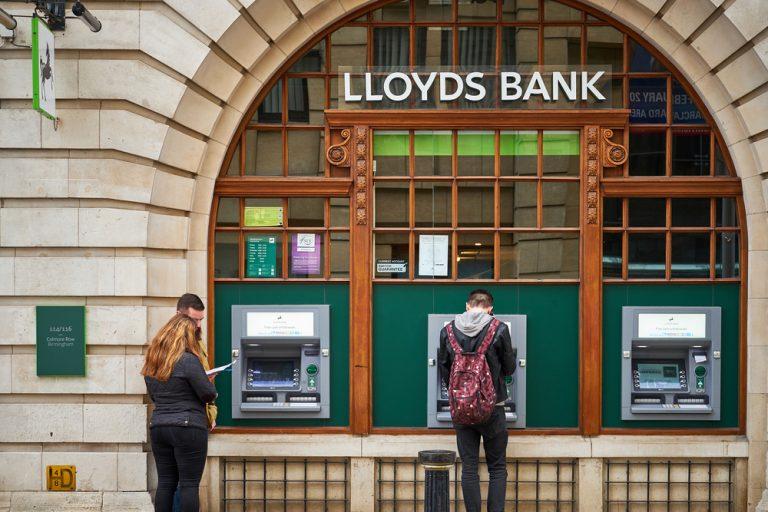
Banking group Lloyds (LON:LLOY) announced that they will be carrying out a drastic restructuring plan, which is centred around transferring a bulk of its operations to online and digital banking. Since the announcement, critics have called into question how realistic the retraining of staff will be, with over 6,000 earmarked for redundancy. The announcement stated that 6,240 backroom staff would be axed and in exchange 8,240 opportunities would open up for digital coding and online banking products. In what appears to be a silver lining amidst a storm, the banking group announced that it was committed to retraining as many of its soon-to-be redundant backroom staff as possible. It said that every effort would be made to minimise redundancies and “circa 75% of these new roles are anticipated to be filled by existing Lloyds colleagues”. As part of the £3 billion purse committed to this restructuring, the company said a total of 4.4 million retraining hours would take place over the next three years. However, compounding the woes of its backroom staff, the FT reported that Lloyds had amended its earlier announcement and that only 75% of the 6,240 staff could expect retraining – though this figure is still far-fetched. A Lloyds spokesperson has said: “The group […] will refresh some existing roles and create new roles within its structure.” It is perhaps unrealistic that after years of working in backrooms, staff can attend training sessions and come out as fully fledged banking app coders, the almost ironic euphemism of “refresh some existing roles”, perhaps speaks volumes about the realities of the firm’s strategic overhaul. These measures come in response to the digitisation of its competitors, and IT glitches suffered by TSB and HSBC. With Wednesday’s announcement, Lloyds shares bounced 1.31% or 0.76p to 58.47p in morning trading 11:54 GMT.

World Bank ranks New Zealand best place to do business

The latest rankings by the World Bank reaffirmed their previous stance, that New Zealand is the best country to start and run a business. The vote of confidence comes as the island retains the accolade for a second successive session – despite not making any economic reforms since the last rankings were published. While Norway enjoyed a ranking promotion to seventh place on the back of government reforms to business regulations and taxation, the UK was relegated to ninth place in the pecking order. This news only serves to compound previous worries about uncertainty in the British market, and comes as the City of London shows signs of fragility – though it is unlikely the City will fall anytime soon, and the rankings do not tell the British public anything they do not already know about fraught trade relations. The report particularly emphasised the steps taken by developing countries in the ‘most improved’ strata of the ‘doing business’ rankings. These candidates were largely made up of sub-Saharan countries which carried out a total of 107 reforms this year, including the implementation of electronic tax payment methods and making dispute settlement more efficient. The most celebrated candidate was Rwanda, who has carried out the most reforms of any member state, and is reeling off the back of a £30 million sponsorship with Arsenal Football Club and deals with hotel companies such as Marriott and notable Chinese players. “The latest improvements in Rwanda, which has carried out the most reforms since the inception of Doing Business 16 years ago, included making starting a business less costly by replacing electronic billing machines with free software for [VAT] invoices.” said the World Bank. Shanta Devarajan, the World Bank’s senior director for development economics and acting chief economist, said, “The diversity among the top improvers shows that economies of all sizes and income levels, and even those in conflict can advance the business climate for domestic small and medium enterprises.” The World Bank have however come under fire for their latest report, which holds countries such as Georgia and Mauritius aloft. The problem with this is that the former is sixth in the rankings with one of the highest levels of inequality and high rates of poverty, while the latter is only deemed good for business because its lack of regulation allows it to act as a tax haven. The World Bank Group’s president, Jim Yong Kim, said the private sector played an important role in, “creating sustainable economic growth and ending poverty around the world”. “Fair, efficient, and transparent rules, which Doing Business promotes, are the bedrock of a vibrant economy and entrepreneurship environment,” he said. “It’s critical for governments to accelerate efforts to create the conditions for private enterprise to thrive and communities to prosper.” These remarks have been rebutted by aid organisations such as Oxfam and bodies such as the Organisation for Economic Cooperation and Development, who state that the World Bank reward the aforementioned candidates as well as Macedonia, the United Arab Emirates and Malaysia with top 20 status, despite all ranking amongst the worst in the world for inequality. Similarly, Singapore has been cited by Oxfam as the world’s most unequal nation, and has been dubbed a model for post-Brexit Britain. Similarly, the rankings are only partially speculative, taking into account contemporary market uncertainty and tensions but not accounting for the possibility of macroeconomic phenomena – for instance a domino effect in developing markets, should either Turkey or Argentina default on loan payments.

Redrow boss and founder steps down

2
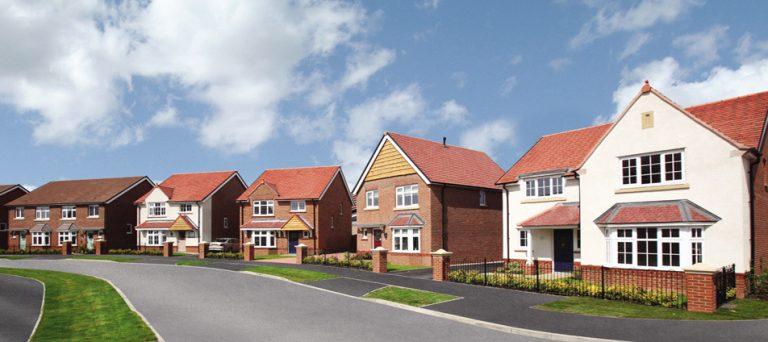
Steve Morgan, the founder and boss of Redrow, will retire from the group’s board at the end of March 2019. John Tutte, the housebuilding company’s chief executive, will replace Morgan as the executive chairman. Morgan will remain a major shareholder in the group. In a separate statement, the group also said that the group traded in line with expectations. “For the first 18 weeks of the current financial year, Redrow has traded in line with expectations,” said Morgan. “We continue to see good demand in our regional businesses with most sites sold well in advance. However, the London sales market has remained subdued affected by excessively high Stamp Duty tax and Brexit uncertainty.” The new Help to Buy scheme has helped enable the purchase of almost 170,000 properties. In early morning trading, Redrow (LON: RDW) shares fell 0.2% lower at 564p. Shares are currently trading -1.29% (1030GMT).

Mulberry reports £8.2m loss, shares fall

1
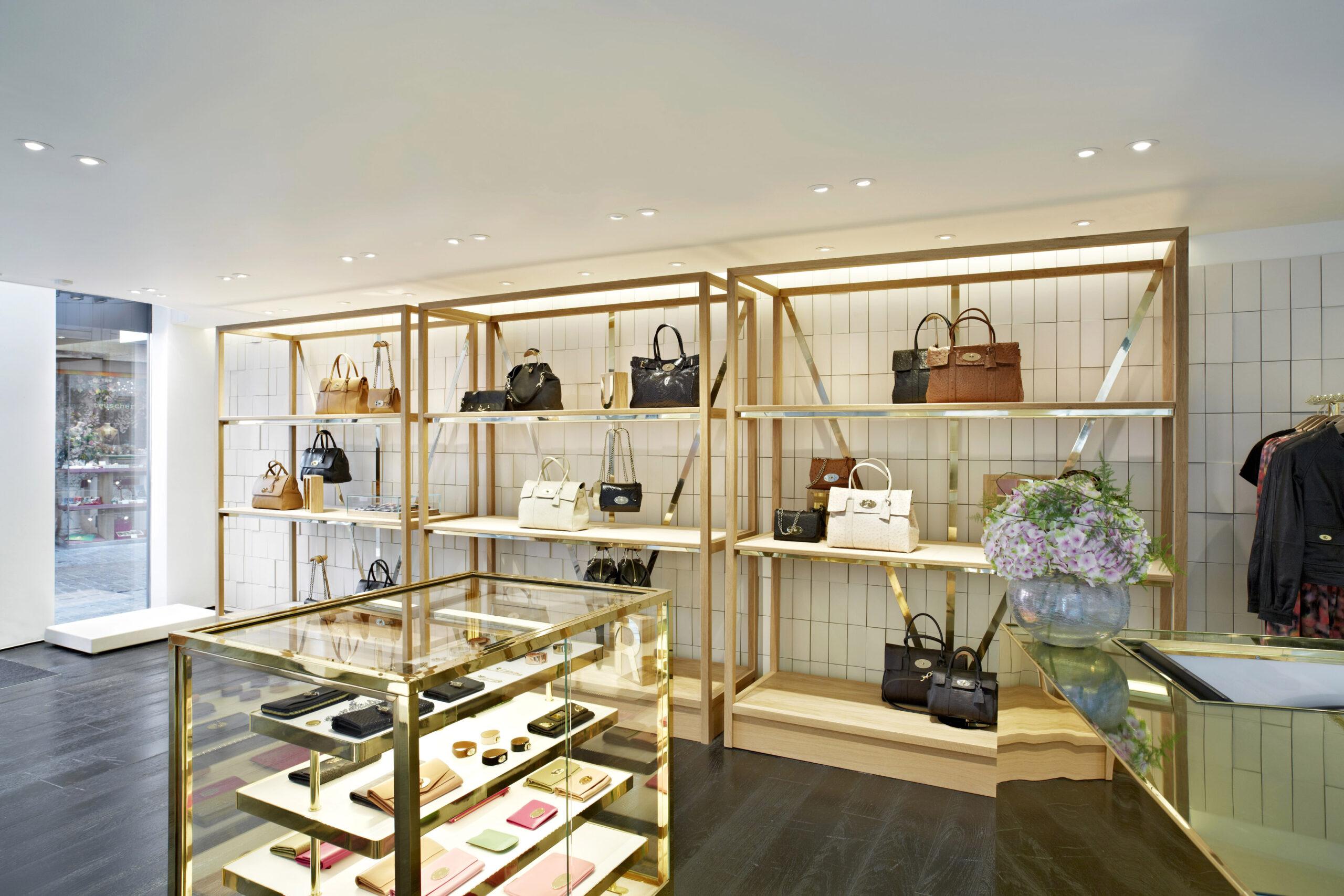
Shares in Mulberry were down 4.8% on Wednesday morning after the group reported a pre-tax loss of £8.2 million. Losses for the first six months of the year were £600,000 wider than the same period last year, whilst revenue also fell 8% to £68.3 million. The losses were mainly attributed to the £2.1 million one-off cost following the House of Fraser collapse and the £2.5 million cost to launch in Korea. Moving away from House of Fraser, the group has agreed on a deal with John Lewis. “We are delivering on the strategy to develop Mulberry as a global luxury brand with new subsidiaries in Korea and Japan, the creation of digital partnerships in China and the additions to our own store network in Asia,” said the chief executive, Thierry Andretta. “In the UK, our most important market, we are pleased to have signed a concession agreement with John Lewis & Partners, advancing our direct to consumer search.” Shares in Mulberry plunged 25% in August after the group revealed that it would take a £3 million hit from the collapse of House of Fraser. The group operated in 21 concessions in the department store, which is now owned by Sports Direct (LON: SPD) boss Mike Ashley. “The UK market has continued to remain challenging and sales in House of Fraser stores have particularly been affected,” the company said at the time. “If these sales trends continue into the key trading period of the second half of the financial year, the group’s profit for the whole year will be materially reduced.” Shares in Mulberry (LON: MUL) are currently trading -3.86% at 299,00 (1003GMT).