
Pret A Manger to close 30 stores due to “significant operating losses”

Coffee and sandwich chain Pret A Manger is set to close 30 of its 410 UK stores – jeopardising at least 1,000 jobs – as the company prepares to navigate the post-coronavirus high street. The company has warned that the impact of the pandemic has forced it to make a “difficult decision”.
Lloyds boss to step down after almost 10 years

The chief executive of the Lloyds Banking Group has announced plans to step down next year after almost ten years.
António Horta-Osório will leave the banking group in June 2021 and will have earned £60m during his time at the helm.
“It is of course with mixed emotions that I announce my intention to step down as Chief Executive of Lloyds Banking Group by June next year. I am lucky to have had the support of a superb Board and executive team on whom I will continue to rely as we complete our current strategic plan, transforming the Group into the bank of the future,” said Horta-Osório in a statement.
“Everyone at Lloyds has unified around our purpose of Helping Britain Prosper and our customers and communities are seeing our commitment to that now, more than ever.”
“I have been honoured to play my part in the transformation of large parts of our business. I know that when I leave the group next year, it has the strategic, operational and management strength to build further on its leading market position”.
Horta-Osório has been the leader of the group since March 2011 and has seen Lloyds through the transition back into private hands after the banking crash saw the government payout a £21bn bailout during the banking crash.
He also took the bank through the PPI scandal, which cost the lender around £22bn and was cut £234,000 from his bonus in 2015.
In a shakeup, Lloyds has also appointed a new chairman, Robin Budenberg, who will replace Lord Blackwell.
“I am delighted to welcome Robin Budenberg to the Board as my successor. His knowledge of the Group combined with his broad experience in both financial services and other strategic advisory roles give him an outstanding background to provide the Board leadership required to support the continued transformation of the Group,” said Blackwell.
Shares in Lloyds Banking Group (LON: LLOY) are trading 1.90% higher at 31.62 (0909GMT).
UK injects £400m stake into failed satellite firm OneWeb as part of UK-EU space race

The UK government has announced that it is set to spend £400 million on a stake in bankrupt satellite firm OneWeb, as part of its post-Brexit plan to replace the loss of access to the EU’s Galileo sat-nav system.
OneWeb declared itself bankrupt back in May after the company racked up $2 billion in debt, but the government’s pledge will see the UK able to access the firm’s 74 space-based satellites, building on its pledge from last month to make “high-risk, high-reward” investments in promising new technology.
The UK government joins India’s telecommunications tycoon Bharti Global – which is also due to make an equal £400 million contribution – in OneWeb’s project, designed to provide broadband from space. Together, the UK and India have boosted OneWeb with a total of $1 billion in new funding.
OneWeb currently operates 74 satellites in low Earth orbit, but the company’s press release fails to clarify if the Anglo-Indian investment is to be used to complete its original plans to install an extensive 650-satellite constellation before it filed for bankruptcy. Nevertheless, the response from the UK side of the deal has been overwhelmingly positive. Business Secretary Alok Sharma hailed the investment as the first step towards the “first UK sovereign space capability” and puts the UK in slightly better stead ahead of its long-awaited exit from the EU this October. In a statement on the news, Sharma brightly said: “This deal underlines the scale of Britain’s ambitions on the global stage. Our access to a global fleet of satellites has the potential to connect millions of people worldwide to broadband, many for the first time, and the deal presents the opportunity to further develop our strong advanced manufacturing base right here in the UK”. OneWeb stated on its press journal that the coronavirus pandemic has highlighted the “tremendous potential” and “demand for a new mix of connectivity services”. The UK’s nationwide work from home trend during lockdown has no doubt emphasised the importance of staying connected, and the bid for OneWeb’s satellite system shows that the UK government is well aware that it cannot afford to lose out on the broadband front once Brexit goes through. Adrian Steckel, OneWeb’s CEO, commented on the firm’s announcement: “We are delighted to have concluded the sale process with such a positive outcome that will benefit not only OneWeb’s existing creditors, but also our employees, vendors, commercial partners, and supporters worldwide who believe in the mission and in the promise of global connectivity. The combination of HMG [Her Majesty’s Government] and Bharti will bring immediate value as we develop as a global leader in low latency connectivity. This successful outcome for OneWeb underscores the confidence in our business, technology, and the work of our entire team. With differentiated and flexible technology, unique spectrum assets and a compelling market opportunity ahead of us, we are eager to conclude the process and get back to launching our satellites as soon as possible”. The deal is still subject to approval from the U.S. Bankruptcy Court, but is expected to be sealed by 2020’s fourth quarter. In the meantime, the UK government and Bharti are to work alongside OneWeb’s management team to “further develop the strategy and business plan” as the satellite firm prepares to relaunch its regular schedule in the coming weeks.We are excited to announce that a consortium of @beisgovuk & Bharti Global have committed to provide more than USD$1 billion to acquire OneWeb and fund the full restart of our business operations. (1/7)
— OneWeb (@OneWeb) July 3, 2020
Opportunities in the Future of Health Tech

The health sector is experiencing an ongoing uptrend in health optimisation and self care. This is supported by a global shift toward patient controlled records, allowing consumers to take control of their own health data. So which starts ups are leverage these opportunities in health tech?
While consumers collect more data about themselves every day, health results are arguably more confusing now than they were 10 years ago. The average consumer still gets lost in medical acronyms like HbA1c, LDL and CRP, measures like millimoles and micromoles and fitness scores like Vo2 Max, lactic threshold, and zone 3 heart rate.
Consumers are often overwhelmed with health data from wearables, other devices, work out apps, online nutritional programs and various medical and fitness tests. While new technology and start ups make health and fitness data more accessible, arguably they also make it more confusing for the average person.
 Start ups like Bioscore are working from the other side of this problem, planning to make health and fitness data both easier to understand and more visual.
Bioscore is a health and fitness platform that is centred around infographics that can be easily understood by end users and engaging digital reporting that can be easily used by health and fitness professionals to explain results to their clients and customers. The system contextualises health data with reference ranges, colour codes, targets, benchmarks, linked test histories and more. Results are delivered to users digitally with simple explanations and links for more reading.
The CEO of Bioscore, Matthew Reede said, “we see self care as an important growth area in health tech, so we are building a health and wellness platform that has user controlled records at its foundation with great visualisations for end users and easy to use reporting tools for health professionals”
Bioscore has built its proof of concept and is raising seed level finance to fund development through to the release of its minimum viable product.
If you are a UK based investor. SEIS and EIS are currently open for your tax considerations.
Crowdcube raise: https://www.crowdcube.com/companies/bioscore/pitches/Zpvy0q
Info website: www.bioscore.health
Short video: https://vimeo.com/373948133
IM, Pitch Deck and Questions: matt@bioscore.health
Start ups like Bioscore are working from the other side of this problem, planning to make health and fitness data both easier to understand and more visual.
Bioscore is a health and fitness platform that is centred around infographics that can be easily understood by end users and engaging digital reporting that can be easily used by health and fitness professionals to explain results to their clients and customers. The system contextualises health data with reference ranges, colour codes, targets, benchmarks, linked test histories and more. Results are delivered to users digitally with simple explanations and links for more reading.
The CEO of Bioscore, Matthew Reede said, “we see self care as an important growth area in health tech, so we are building a health and wellness platform that has user controlled records at its foundation with great visualisations for end users and easy to use reporting tools for health professionals”
Bioscore has built its proof of concept and is raising seed level finance to fund development through to the release of its minimum viable product.
If you are a UK based investor. SEIS and EIS are currently open for your tax considerations.
Crowdcube raise: https://www.crowdcube.com/companies/bioscore/pitches/Zpvy0q
Info website: www.bioscore.health
Short video: https://vimeo.com/373948133
IM, Pitch Deck and Questions: matt@bioscore.health
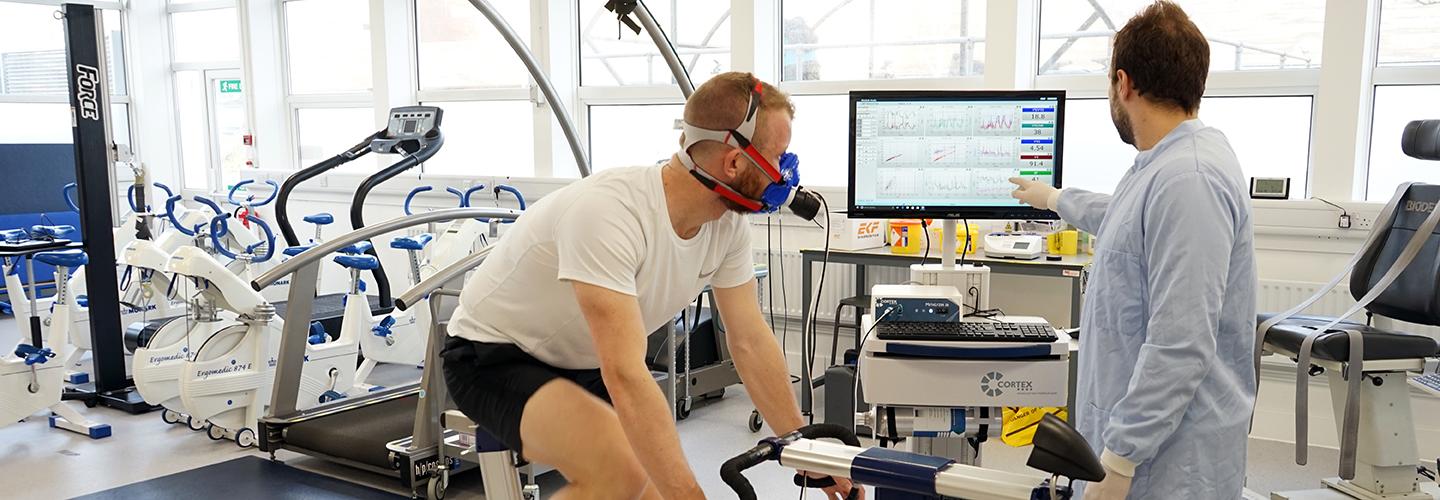 Start ups like Bioscore are working from the other side of this problem, planning to make health and fitness data both easier to understand and more visual.
Bioscore is a health and fitness platform that is centred around infographics that can be easily understood by end users and engaging digital reporting that can be easily used by health and fitness professionals to explain results to their clients and customers. The system contextualises health data with reference ranges, colour codes, targets, benchmarks, linked test histories and more. Results are delivered to users digitally with simple explanations and links for more reading.
The CEO of Bioscore, Matthew Reede said, “we see self care as an important growth area in health tech, so we are building a health and wellness platform that has user controlled records at its foundation with great visualisations for end users and easy to use reporting tools for health professionals”
Bioscore has built its proof of concept and is raising seed level finance to fund development through to the release of its minimum viable product.
If you are a UK based investor. SEIS and EIS are currently open for your tax considerations.
Crowdcube raise: https://www.crowdcube.com/companies/bioscore/pitches/Zpvy0q
Info website: www.bioscore.health
Short video: https://vimeo.com/373948133
IM, Pitch Deck and Questions: matt@bioscore.health
Start ups like Bioscore are working from the other side of this problem, planning to make health and fitness data both easier to understand and more visual.
Bioscore is a health and fitness platform that is centred around infographics that can be easily understood by end users and engaging digital reporting that can be easily used by health and fitness professionals to explain results to their clients and customers. The system contextualises health data with reference ranges, colour codes, targets, benchmarks, linked test histories and more. Results are delivered to users digitally with simple explanations and links for more reading.
The CEO of Bioscore, Matthew Reede said, “we see self care as an important growth area in health tech, so we are building a health and wellness platform that has user controlled records at its foundation with great visualisations for end users and easy to use reporting tools for health professionals”
Bioscore has built its proof of concept and is raising seed level finance to fund development through to the release of its minimum viable product.
If you are a UK based investor. SEIS and EIS are currently open for your tax considerations.
Crowdcube raise: https://www.crowdcube.com/companies/bioscore/pitches/Zpvy0q
Info website: www.bioscore.health
Short video: https://vimeo.com/373948133
IM, Pitch Deck and Questions: matt@bioscore.health
Tesla shares bounce 8% but does the inflated price have longevity?

Cult favourite tech innovation company Tesla (NASDAQ:TSLA) has seen its share price hit new heights, after soaring to unprecedented levels in February.
This week ended up being a romp for Elon Musk’s favourite project, with the company becoming the highest-value car company without making a profit. This followed a bumper second quarter, where Tesla churned out over 90,000 units.
The production figure was far ahead of analysts’ expectations, and saw the company defy its well-populated mass of shorters, who were ready to see the company repeat something similar to its February-March free-fall, where its shares dipped by almost $600 to $361 apiece. Instead, sales of some Tesla models surpassed expectations by 22%.
Tesla risk factors
While the company are flying high at the moment, its always worth noting one of its defining characteristics: its volatility. This volatility can be broken up into two parts, strategic and financial. On the financial side, it can be said that the company is loss-making, with huge expenditure on R&D and still struggling to meet demand for its existing range of products. While this is true, output has improved and talks are still underway for the potential ‘Giga-factory’ in Germany. Also, as far as investors are concerned, the company’s share price seems to rally irrespective of its difficulty making a profit, so that’s not fatal consideration. The Tesla share price itself, however, is certainly an area for debate. Though the company’s shares have rallied 7.95% on Friday, to 1,208.66p per share – to an all-time high – the sustainability of this rise can certainly be called into question. As stated before, Tesla shares hit their previous high of $913 just before Valentine’s Day, before crashing to just over a third of that amount three weeks later. While this was in large part led by Coronavirus hindrances and a correction of the price over-inflating, it is worth considering how rare it is to see such a vast company shed so much of its value in the space of three weeks. Aside from anything else, and not doubting the company’s potential for an overall upward trajectory, it should make us question whether Tesla is the right place to tuck away our hard-earned cash. By its very nature, as an innovative disruptor, it is exposed to volatility, as it balances not only success and failure but a split focus between ambitious scientific research and business management. This, and the fact that it is such a hotly-discussed and trend-driven company, makes me feel uneasy about where its price will go next. For my money, the next direction will be a second correction, unless the company has some other big news up its sleeve.What is the company getting wrong?
In terms of strategic volatility, we’ll begin with the obvious point – Elon Musk. I can’t decide whether he’s more arrogant or amusing, though certainly a memorable character. Mr Musk doesn’t appear to conform to many of the demands or expectations put upon him. While his sheer ability to come up with the next big thing may see him through, his erratic personality and sci-fi ambitions are often hard to marry with day-to-day business operations. In one sense he’s a menace, but overall the company wouldn’t be where it is, or what it is, without him at the helm. More worryingly, but a well-documented concern, are the inevitable challenges an innovative tech company will face. Over the years Tesla has produced everything from cars, to solar panels, to flamethrowers, and with such an array of inventions, there will naturally be some hiccups. Most recently, this has come by way of the National Highway Traffic Safety Administration investigating the Tesla Model S battery cooling system, with fears the component could be at risk of being defective. It follows from reports as far back as 2012, that the company had used this component, while knowing that the component had a ‘faulty’ design. Such concerns, much like its profit-making ability, may not be fatal, but they’re certainly a distraction, and enough to rock a share price. Finally, and perhaps most concerning, is a challenge to Tesla’s raison d’etre. Claiming to want to make the world a better place, the company has focused on decarbonising society with its tech, the cornerstone of which is its range of electric vehicles. The issue this mission statement has faced in the last couple of years is the source of the metals for its car battery components. Reports emerged in 2019 that Tesla had been relying on lithium from mines using child labour, and while injustice and questionable ethics are endemic to the business of resource extraction, it shouldn’t sit well with consumers who look to the company for a more wholesome alternative. Similarly, and looking ahead, the potential to extract lithium from underwater is becoming a more realistic prospect. In addition to the human cost of their battery production, lithium extraction is toxic to land and soon – maybe – the sea. That kind of ecological damage somewhat dilutes the electric vehicle industry’s moral high ground over fossil fuels, even if more in spirit than in actuality. My main issue, though, is that Tesla put its eggs in the wrong basket, by prioritising lithium over hydrogen. This isn’t to say that Tesla shouldn’t have opted to be the front-runner of electric vehicle innovation, but rather, as the pioneers of the vehicle industry, it seems like a missed opportunity that they haven’t made strides towards cultivating a much cleaner energy source. Hydrogen tech certainly isn’t new, and should someone else marketize it before Tesla does, it will be a huge blow. Sadly, however, it doesn’t seem like Tesla has any plans to branch into this energy source, and its customers seem content to gleefully overlook the problematic elements of Tesla’s battery production. As far as Elon Musk and hydrogen fuel cells are concerned, though, we should never say never.Manolete Partners profits surge 40% as insolvency activity gains pace

UK insolvency litigation financing company Manolete Partners (AIM:MANO) booked bumper full-year financial results, with the increased number of insolvencies likely offering the company an unusual range of opportunities.
The company was given a boost by a 36% year-on-year jump in revenues, up to £18.7 million, alongside a 139% increase in new core investments in UK insolvency cases, and an impressive ROI of 173%.
The saw Manolete Partners’ EBIT bounce by 36%, while gross profit soared 43% and profit after tax jumped 38% to £7.6 million.
The situation for Manolete shareholders was even more rosy. While diluted EPS spiked 70% to 17.00p, the company’s final dividend doubled year-on-year, to 3.00p a share.
Speaking on the company’s busy year and the opportunities business closures will offer the company going forwards, Manolete Partners CEO Stephen Cooklin commented:
“Despite the challenges of COVID-19, the activity levels within the business are at record levels, highlighted by the 47 new case investments (124% more than the same period last year) and 23 case completions (up from four in the same period last year) that the team has transacted in the first quarter of FY21. New case enquiries are also at all-time record levels, running at around double the rate we had this time last year. We entered FY21 with £8.4m of gross cash, a positive net cash balance and £12m of our HSBC Revolving Credit Facility unutilised. All these factors firmly underpin our confidence in the current and future trading performance of the business.
“With the widely reported economic disruption likely to ensue, we expect new case enquiries to increase over the foreseeable future and we will continue working to deliver outstanding returns to both insolvent estates and investors.”
Following the update, Manolete Partners shares rallied 6.87% or 35.05p, to 545.05p per share 12:28 BST 03/07/20. This is up on the company’s year-to-date nadir of 235.00p a share in March, but down from its high of 585.00p in mid-May. The Group’s p/e ratio is 39.23, their dividend yield is modest at 0.09%.Bella Italia owner collapses into administration

The owner of Bella Italia, Cafe Rouge, and Las Iguanas has fallen into administration.
The Casual Dining Group has 250 outlets, 91 of which will close immediately and lead to the loss of 1,900 jobs.
AlixPartners will handle the administration and are in the process of finding buyers for the remaining parts of the business
Clare Kennedy, from AlixPartners, said: “We appreciate that this is an extremely difficult time for all those associated with Casual Dining Group.”
“Our immediate priorities are to assist those whose employment has been affected by today’s announcement and to secure a sale for the group in order to protect jobs and provide the group’s much-loved brands with a sustainable platform for the future.”
The Casual Dining Group applied to appoint administrators back in May as the group struggled over lockdown to pay rents and saw revenues collapse as restaurants over the UK closed.
James Spragg, the chief executive of the Bella Italia owner, said: “We are acutely aware of our duty to all employees and recognise that this is an incredibly difficult time for them.”
“Working alongside the administrators, we will do everything we can to support them through this process, with a view to preserving as much employment as we are able to.”
The casual dining sector has suffered over the lockdown period. Many pubs and restaurants will be reopening on 4 July under social distancing measures.
Just this week saw Byron Burger announce plans to bring in administrators. SSP Group, the owner of Upper Crust and Caffe Ritazza owner said it plans to cut up to 5,000 roles.
“The casual dining sector was in distress before this crisis but this is what will tip many over the edge and towards collapse,” said Julie Palmer, a partner at the corporate restructuring firm Begbies Traynor.
“The make up of the high street before this crisis was such that one could not do without the other and they begin to spiral down together towards the bottom of their finances.”
US created record 4.8m jobs in June but Eurozone led the equities charge

The US Labor Department announced a non-farm payroll jump in June, with a monthly all-time-high of 4.8 million jobs created.
This surge was led by the reopening of factories and restaurants, and far surpasses both the 2.5 million joining the labour market in May, and the 3 million forecast for new jobs in June.
The Labor Department said that of the new jobs, over 2 million were in the hard-hit but high-staff-turnover hospitality sector. Other notable increases were 740,000 new employees in retail, 568,000 in healthcare and a 356,000 rebound in manufacturing employment.
The rally in new jobs was partially led by the government’s Payment Protection Program, which gives loans and partially waives some of the sums owed if the original loan has been put towards staff wages.
However, the jubilant reaction to today’s news involves a concerted effort to ignore the obvious grey clouds overhead. Funds for the PPP are running out, and in turn the job rally may lose some steam.
Similarly, all US optimism ignores the glaring fact that Coronavirus cases are rising at a worrying rate, with little to no contingency plans in place. Not only does this pose problems for consumer confidence and behaviour, but if it continues, could present challenges for US trade, travel and diplomacy – as seen with EU travel restrictions on US citizens.
In addition, as stated by Spreadex Financial Analyst Connor Campbell,
“The average hourly earnings showed a 1.2% contraction month-on-month, missing out on the forecast improvement. The weekly jobless claims reading showed another 1.427 million Americans filed for unemployment for the 7 days to June 27. And, crucially, those job additions across May and June barely account for a third of those lost in April.”
Oxford Economics described the fall in US employment (still estimated to be at 11%) and only a small reduction in new unemployment claimants (still at 1.43 million for the last week in June), as a “worryingly slow decline”.
Michael Pearce, Senior US Economist at Capital Economics, predicts that “the recovery from here will be a lot bumpier and job gains far slower on average”.Fed Chief Jerome Powell added that while June’s progress was an important marker for the economy entering a new phase, any prolonged success would be contingent on the US’s ability to contain the spread of the virus. With these bad omens in mind, US equities gains were comparatively muted versus their European counterparts. The Dow Jones was up 0.97% to 25,985 points while the S&P 500 rallied 1.01% to 3,148. In the meantime, the FTSE finished at 6,241 points, up 1.34%. The CAC and DAX stole the show, though, 2.49% and 2.84% to 5,049 and 12,608 points respectively.
746 arrested in ‘biggest ever’ crime sting as EncroChat phone network cracked

After cracking the code of encrypted phone service EncroChat, an international police effort has seen 746 criminals arrested in the ‘biggest ever’ organised crime bust.
EncroChat and criminal networks
The EncroChat service, which has since been taken down, had its encryption cracked by law enforcement agencies in April, with rumours about the breach beginning to swirl in June – which proved too late to alert many of the criminals using the service. The software, which was supplied via modified Android and Apple products costing £1,350 for a six month plan, had an estimated 60,000 users, including 10,000 in the UK. EncroChat claimed to offer ‘worry-free secure communications’, with features such as self-destructing messages and immediate device data wiping which required only a four digit PIN to be entered. The company had servers based in France, and Europol stated that French police were able to implement a “technical device” to access the messages. The Netherlands’ National Police added that while many criminals disposed of their devices, many of the messages had already been intercepted, and in turn few of the users were able to avoid detection.A ‘game-changing’ operation
Met Chief of Police Dame Cressida Dick said that the bust was ‘game-changing’ and ‘just the beginning’, with UK authorities responsible for 132 of the arrests on middle-tier and command-level gang members. The international name for the online crackdown was ‘Operation Venetic’, and between all involved authorities; 746 suspects were arrested, 4 grenades and 77 firearms including assault rifles, shotguns and 1,800 rounds of ammunition were taken, and two tonnes of class A and B drugs and 28 million Etizolam pills from an illegal factory were confiscated.Additionally, 50 high-end cars, 73 luxury watches and £54 million in cash were seized. Perhaps most impressive of all, though, is that the National Crime Agency claim over 200 threats to life were mitigated as part of the operation.While The Guardian reported there was a degree of luck in breaking the EncroChat encryption, once inside authorities were able to sit and watch criminals incriminate themselves. As well as plots for kidnappings, limb removals and acid attacks, authorities were also able to identify corrupt practice and involvement of Judges and Police Officers in these crime syndicates. Speaking on the operation, the NCA reported that one text message read: “This year the police are winning.” The NCA’s director of investigations, Nikki Holland, commented: “The infiltration of this command and control communication platform for the UK’s criminal marketplace is like having an inside person in every top organised crime group in the country.” “This is the broadest and deepest ever UK operation into serious organised crime.“ “Together we’ve protected the public by arresting middle-tier criminals and the kingpins, the so-called iconic untouchables who have evaded law enforcement for years, and now we have the evidence to prosecute them” she added.
What is the significance?
As far as the timing is concerned, this could not have come at a more opportune moment. Not only is the haul so huge, but today’s raid truly vindicates the dedication of resources to online and office-based police work, which is more able to tap into the goings on of high-end crime than officers on the street (though both are vital). Politically it is equally important. In what has been a difficult few months for police forces around the world, this is a rare high profile win to remind the public of the important role authorities play in protecting society. Home Secretary Priti Patel will also enjoy the refreshing change from the negative press she normally – rightly or wrongly – receives, and the NCA will use today’s breakthrough to make the case for more funding to be pushed its way. Among the few challenging questions that will be raised, however, is the fact that this successful operation was made possible by shared data and side-by-side cooperation with our European neighbours. While politicians will be keen to celebrate the victory that today’s bust truly is, do we have any guarantee that collaborative efforts such as these will continue unhindered, as the UK butts heads with mainland Europe?Booking surge buoys travel industry as quarantine rules to be lifted

Government sources have suggested that dozens of countries are to be made exempt from the current compulsory 14-day quarantine period upon arriving in the UK.
Last week saw a surge in holiday bookings as rumours began to swirl that the Foreign Office is set to relax its standing “essential travel only” advice to allow for overseas travel to certain low-risk destinations.
The move would mean previously-scrapped holiday plans to popular European sun traps, such as Spain and Greece, would be given the go-ahead without a lengthy quarantine on return.
The Eurotunnel website – managed by Parisian based railway company Getlink (EPA:GET) – was among the slew of sites which crashed as thousands of holidaymakers rushed to book a long-awaited summer break. Getlink’s director of public affairs John Keefe commented on the company’s record sales:
“The recent government announcement is great news for holidaymakers, bookings have surged since Friday; in fact we have had more customers accessing our online booking system this weekend than ever before”.
The company’s share price has since surged by 4.02%.
Ryanair (LON:RYA) leads the airline industry’s revival with reports of “very strong” bookings, as the company relaunched with 1,000 flights and 105,000 passengers on Wednesday. The budget airline’s share price has soared by 4.34% on Thursday afternoon in response to the encouraging news.
Joshua Mahony, Senior Market Analyst at IG, weighed in on speculation that the airline industry may be on track for a quick recovery:
“With airline activity expected to surge over the coming months, the ability to recover some semblance of normality for the typically busy summer months will be key to boosting the balance sheets after months of lockdown. The big question is whether we will see the Coronavirus cases kept low enough to allow for increased travel, with another lockdown or resumption of quarantine rules likely to deal a major blow to the travel sector if implemented”.
While a number of European countries begin to open their borders to British holidaymakers, rising fears that a second wave of coronavirus cases is imminent have been weighing heavily on global equities for weeks. Mounting cases across the US have caused states such as Texas and Florida to reverse their reopening plans, and the UK’s first local lockdown in Leicester has demonstrated that a quick and easy recovery may simply not be on the cards this summer.
Nevertheless, the hard-hit airline industry is surely grateful for the government’s change of heart. Last month, Ryanair, easyJet (LON:EZJ) and British Airways (LON:IAG) launched legal action against the government for its restrictive quarantine measures, which Ryanair boss Michael O’Leary described as “rubbish”.